
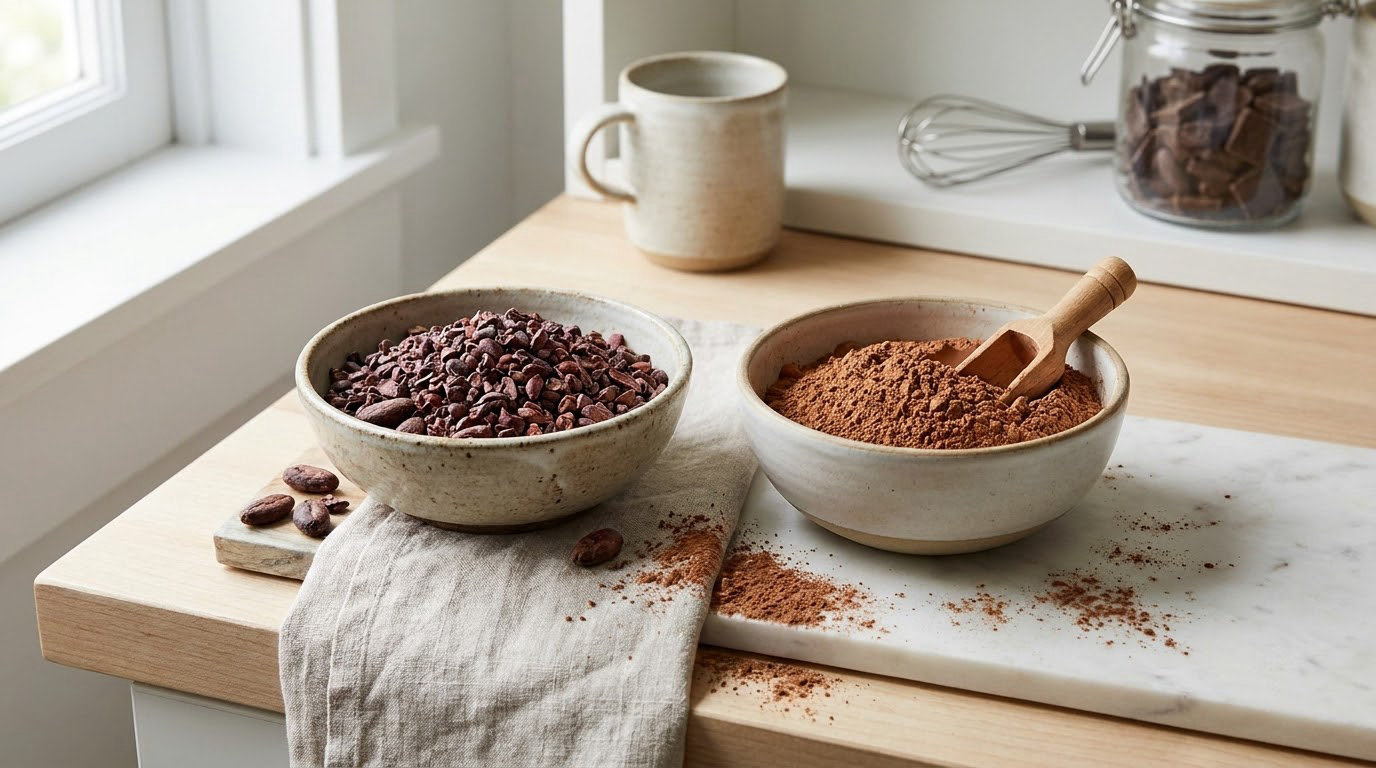
If your recipe calls for one of these two powders, reach for cocoa powder when you want dependable, round chocolate flavor and a dark crumb, and reach for raw cacao powder when you want something less processed, fruitier and noticeably more bitter. They come from the same beans, and the whole difference is what happens after harvest. Here is how raw cacao vs cocoa powder in recipes actually behaves, and when a straight swap works.
One more thing before the details: raw cocoa powder, the phrase a lot of recipes use, is not a real product. You will not find it on a shelf. What you will find is raw cacao powder or unroasted cacao powder. Search for the product, not the recipe wording.
Table of Contents
- Raw Cacao vs Cocoa Powder in Recipes at a Glance
- What Is the Difference Between Raw Cacao and Cocoa Powder?
- How Processing Changes Flavor, Color, and Texture
- Which One Is Better for Baking?
- Which One Is Better for Smoothies and No-Bake Recipes?
- Can You Substitute Raw Cacao for Cocoa Powder?
- How to Choose and Store Each Ingredient
- Frequently Asked Questions
- Is raw cacao healthier than cocoa powder?
- Can I use cocoa powder instead of raw cacao in smoothies?
- What can I use if I do not have raw cacao powder?
- Does raw cacao taste bitter like cocoa powder?
- Is cacao powder the same as cocoa butter?
- Should I choose alkalized or non-alkalized cocoa powder for baking?
- Conclusion
Raw Cacao vs Cocoa Powder in Recipes at a Glance
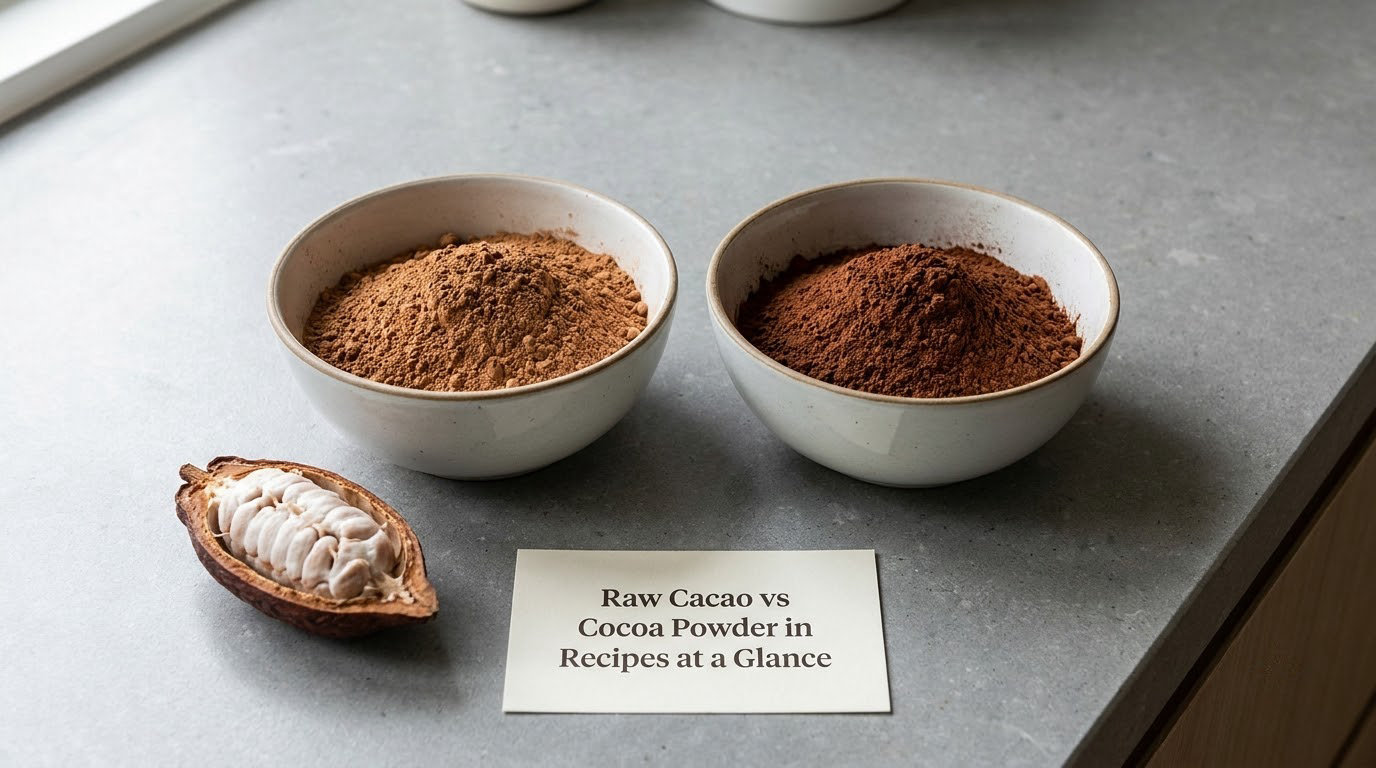
| What changes | Raw cacao powder | Cocoa powder |
|---|---|---|
| Roasting | Unroasted | Roasted, usually 110 to 150°C |
| Alkalization | None | Sometimes (Dutch-process) |
| Flavor | Fruity, earthy, sharply bitter | Round, mellow, warm chocolate |
| Acidity | Noticeably higher | Lower, especially when alkalized |
| Color in the batter | Reddish brown, can look slightly purple | Deep dark brown |
| Texture | Slightly grittier, can be stiffened with age | Fine and smooth |
| Remaining fat | Small amount, varies widely | About 10 to 12% by weight |
| Heat in the recipe | Taste sharpens as it cooks | Taste softens and deepens |
| Best for | Smoothies, energy balls, no-bake treats, savory glazes | Cakes, brownies, cookies, mousse, hot chocolate |
| Label language to look for | Raw, unroasted, unalkalized | Natural or Dutch-process, unsweetened |
The short version: raw cacao behaves like an ingredient, cocoa behaves like a flavor. Everything below explains why that matters once heat, sugar and leavening get involved.
What Is the Difference Between Raw Cacao and Cocoa Powder?
Raw cacao powder and cocoa powder are both made from the beans of the cacao plant. Raw cacao is ground from beans that are fermented and dried but never roasted, so it stays bitter, acidic and higher in flavanols. Cocoa powder is roasted, often alkalized, and has most of its cocoa butter pressed out, giving it a darker color and a milder, smoother flavor.
Getting from pod to powder takes five steps, and the two ingredients simply stop at different points on the same path.
- Ferment. Beans and white pulp are heaped and left for several days. The pulp ferments, heat kills the germ and the flavor precursors form.
- Dry. The beans are sun-dried or machine-dried until moisture is low. This is where much of the acid profile settles.
- Roast. Heat drives off moisture and creates the chocolate aroma. This is the step raw cacao skips, and the step cocoa cannot skip.
- Crack, winnow and grind. The beans are cracked, the husks blown away, and the nibs ground into a thick paste called cocoa liquor or mass.
- Press and alkalize. Pressing removes most of the fat, leaving a cake that is ground into powder. Some cocoa is then treated with alkali, which is Dutch processing.
Raw cacao branches off after step two and grinds the dried nibs, sometimes at low temperature. Some raw producers do not even winnow, so a portion of husk stays in the powder, which adds to the grit and the earthy note.
Here is the part that trips people up: the FDA does not define the terms cacao and cocoa. There is no labeling rule that says one is roasted and one is not. Cacao and cocoa are stages of one production process, and brands use the words loosely. The processing is what separates them, not the label. That is also why two products both printed as 100 percent cacao can have noticeably different textures and different flavor, and why people comparing macros on labels end up with numbers that look like they came from different foods.
How Processing Changes Flavor, Color, and Texture
Roasting is the whole personality of the bean. It breaks down the harsh astringency, creates hundreds of aroma compounds, and turns the reddish, grassy profile of an unroasted bean into something rounded and brown. Skip it and you keep the fruit, the grass, the tannic edge, and a very high bitterness that hits the back of the palate first.
Alkalization is a separate lever, and it matters when you substitute. Natural cocoa powder keeps an acidic profile, and that is why classic brownie and cake recipes pair it with baking soda, which neutralizes the acid and gives lift. Dutch-process cocoa has been treated with alkali, so it is much less acidic. Recipes built around Dutch-process cocoa call for baking powder instead, because there is no acid left for the soda to react with.
Raw cacao is un-alkalized by definition, so it behaves like natural cocoa on the leavening side. Swap raw cacao into a Dutch-process recipe and you will not get the same lift, because the recipe was never counting on acid. Swap it into a natural cocoa recipe and the chemistry mostly works, just with a sharper taste.
Color and texture move together. Raw cacao is reddish-brown and can look faintly purple against a white batter, and it tends to leave a faint grittiness if it is not sifted. Cocoa powder is finer, greyer-brown, and it will not budge once the batter is set. Sifting raw cacao through a fine mesh strainer before it meets any liquid fixes most of the grit people complain about.
Raw Cacao vs Cocoa Powder in Recipes: Flavor and Nutrition
Taste is where the swap is most obvious. Raw cacao tastes bitter, almost sour at the edges, with fruit and earth underneath. Cocoa powder tastes like chocolate: softer, warmer, rounder. Add heat and the gap widens, because cooking sharpens raw cacao while it mellows roasted cocoa. A brownie made with raw cacao will taste more bitter and slightly darker, which is the single most common report from home bakers.
On nutrition, both powders carry flavanols, theobromine, a small amount of caffeine, magnesium, manganese and iron. Raw cacao usually keeps a bit more of the flavanols and the fiber because it never saw the roast. Exact figures move a lot between brands, so read the label rather than trusting any single number, including the ones printed here.
One caveat belongs in any honest comparison: raw cacao is high in phytic acid, which binds minerals and limits how much of the iron, zinc and calcium in that same scoop your body takes in. So the nutrient density argument is not a straight line, and it is worth knowing before you eat several spoonfuls a day.
And the antioxidant edge is largely spent the moment you bake. The flavanols that survive roasting start degrading above roughly 200°C, which is inside the range most cakes and brownies occupy. Baking raw cacao in a hot oven buys you flavor, not a nutrition win. If that matters to you, the form of cacao that keeps the most of what it started with is the one you stir into a cold smoothie.
Keep portions modest either way. Cacao powder is calorie-dense in the way concentrated powders are, not in the way a whole bean is, so a rounded tablespoon is already a hundred-plus calories.
Which One Is Better for Baking?
Cooked and leavened recipes are where cocoa powder wins. Cakes, brownies, cookies and quick breads all depend on a flavor that stays readable after the oven has done its work, and roasted cocoa is built for exactly that. Its lower acidity and finer texture also give you a more even crumb.
Pick your cocoa to match the leavening already in the recipe.
- Baking soda recipes want natural, non-alkalized cocoa. The acid in the powder reacts with the soda for rise.
- Baking powder recipes can take Dutch-process. Less acidity means the powder does the lifting instead of the acid.
- Whisked bakes and ganache work with either, since there is no leavening chemistry to match.
Use raw cacao in baking when the result should taste like something other than plain chocolate: a sourdough loaf with a small percentage of raw cacao in the dough deepens the cocoa note and darkens the crumb. A dusting of raw cacao over a finished dessert looks more vivid too, and its bitterness is a fair trade for a more finished-looking plate.
Two adjustments are worth knowing before you commit. If you use raw cacao in a sweet bake, start a tablespoon under the sugar and taste the batter raw. The bitterness is sharper while the batter is cold, and a little too bitter in a bite of batter often settles into something pleasant once it bakes. If you want a darker, less sharp result without changing the recipe, blend the raw cacao with an equal weight of cocoa and use the mix.
Which One Is Better for Smoothies and No-Bake Recipes?
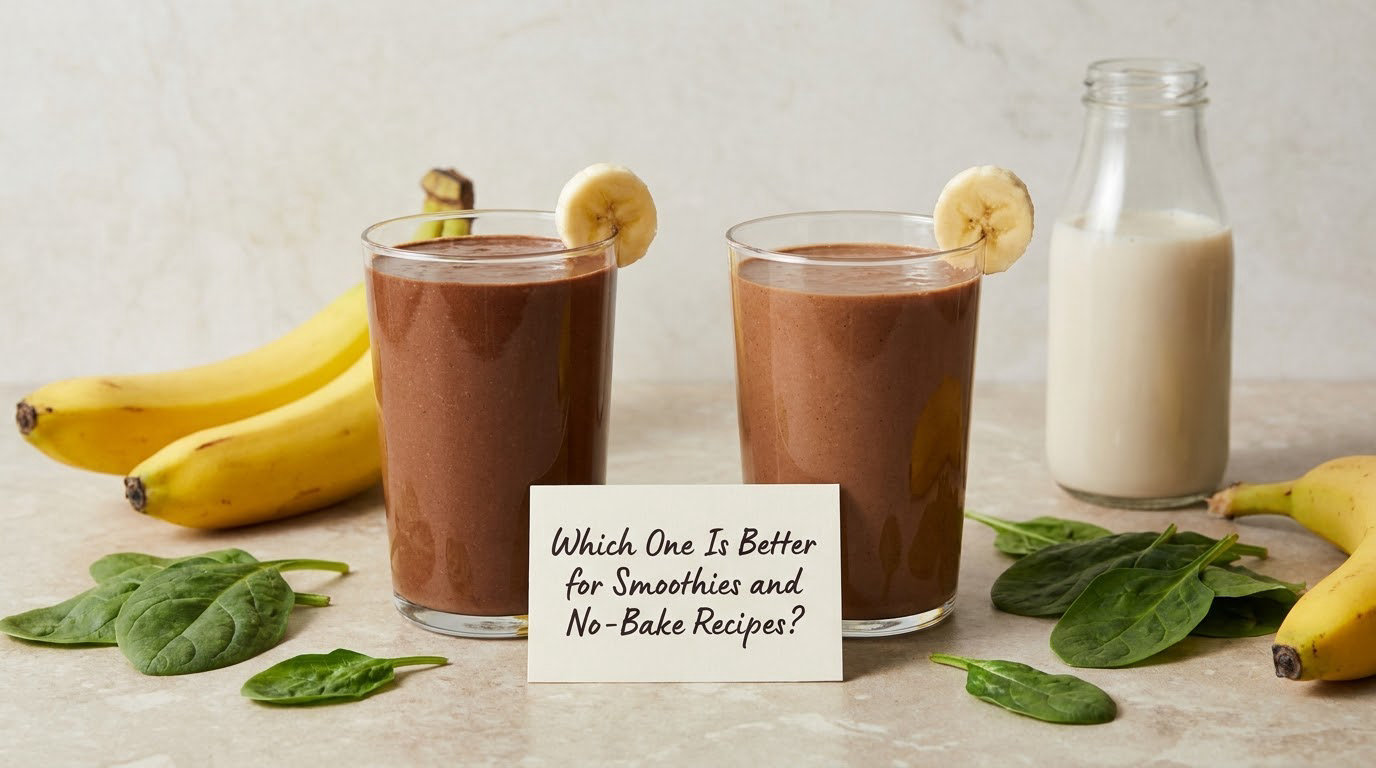
Cold applications are where raw cacao earns its place. Nothing heats it, so the fruit and earth notes stay intact instead of turning into generic chocolate, and the bitterness reads as intensity rather than as a fault. Blend one tablespoon into a banana and spinach shake and you get depth that a chocolate-flavored cocoa simply cannot give you.
Raw cacao also suits recipes that are meant to taste under-processed: energy balls, no-bake dessert bars, yogurt bark, rolled oats and homemade granola. In those, the ingredient is doing a job, not decorating a finished cake, so its character is a feature.
Cocoa powder still pulls ahead in a few cold spots. In a pudding, a no-bake cheesecake or a mixed-cream dessert, its smoothness disappears into the dairy and you get a clean chocolate taste with no grain. The same goes for ice cream bases and anything poured rather than blended. For hot drinks, cocoa is the more forgiving choice as well, since it dissolves and smooths out with less effort.
Smooth results come down to two habits. Sift raw cacao, or add it to the blender with a couple of tablespoons of the liquid first so it disperses instead of clumping in the corners. If it still tastes sharp in a sweet recipe, blend in half a banana or a spoonful of maple syrup before you adjust anything else.
Can You Substitute Raw Cacao for Cocoa Powder?
Yes. For most recipes, swap the two at one to one, by volume or by weight, and the structure of the bake holds. What changes is the flavor, not the chemistry of the batter. The catch is that this works best in one direction.
Going from cocoa to raw cacao is the easy swap. Five steps cover it.
- Measure 1:1. Use the same amount by volume, or the same weight if you weigh ingredients. Raw cacao is a little lighter in body, so a level spoon of it is not quite a level spoon of cocoa.
- Sift it. Push raw cacao through a fine strainer into the dry ingredients. This is the cheapest fix for a gritty result.
- Cut the sugar slightly. Drop about a tablespoon per cup of powder if the recipe is already sweet, then taste.
- Check your leavening. Raw cacao is un-alkalized, so it works with baking soda. In a Dutch-process recipe that depends on little or no acid, raise the baking powder by a small amount so the rise does not drop.
- Expect a darker, sharper, more colorful bake. That is the result, not a mistake. If you need round chocolate flavor specifically, the honest fix is to use cocoa.
Going the other way, from raw cacao to cocoa powder, is also one to one and usually even easier, since cocoa is the more predictable ingredient. Reduce nothing, but expect a sweeter, softer, more familiar chocolate flavor.
One exception worth calling out: a hot acid recipe with baking soda needs no change in either direction, but a very acidic batter built on raw cacao can tighten and rise differently. If you are halving or doubling a recipe, make the smaller test batch first. Cooks on Chef Talk and GardenWeb lean on the same cup-for-cup swap, with the same note that the finished thing tastes more bitter and a little darker when raw cacao goes in.
How to Choose and Store Each Ingredient
Label reading matters more than brand here, because the words are not regulated. Five checks tell you what is actually in the bag.
- Roast status. Look for raw, unroasted or minimally processed. If the label says nothing, assume it is roasted.
- Alkalization. Dutch-process, alkalized, Dutched or alkali processed on the ingredient panel means heat and chemical treatment were used. Absence of those words suggests natural cocoa.
- Added sugar and dairy. Sweetened cocoa blends and drinking-chocolate powders are a different product. You want 100 percent cacao or cocoa with nothing else in the ingredient list.
- Fat and fiber. A little fat is normal, but very low fat usually means the batch sat in a warehouse. For macro tracking, the two numbers that swing most between brands are fiber and fat, so this is the line that explains conflicting labels.
- Certifications. Fair trade, organic and single-origin tell you about farming and traceability, not about roast level. Single origin mainly tells you the flavor will be consistent.
Storage is easy and both powders are demanding about the same things. Keep them in an airtight container in the cupboard, away from heat, light, moisture and anything aromatic sitting next to them. Coffee, cinnamon and vanilla will get into an unsealed bag within days, and cocoa fat goes rancid in a warm kitchen, which turns a pleasant powder into something you would rather not eat.
If you live somewhere humid or you bake rarely, freeze what you will not use within a couple of months, in a sealed bag, and let it come to room temperature before opening. Sifting frozen powder straight into a batter is fine.
Frequently Asked Questions
Is raw cacao healthier than cocoa powder?
Both are concentrated sources of flavanols, theobromine and minerals, and neither should be treated as a treatment or a guaranteed health booster. Raw cacao usually retains more flavanols because it was never roasted, but it is also higher in phytic acid, which limits absorption of some of its own minerals. For most cooks the deciding factor is the dish, not the label. Talk to a doctor or registered dietitian about your own situation.
Can I use cocoa powder instead of raw cacao in smoothies?
You can, and most people will not notice much. Cocoa powder gives you a smoother texture and a rounder, sweeter chocolate taste, while raw cacao keeps more fruit and earth notes and reads as more bitter. If the smoothie is already full of sweet fruit, cocoa is the easier blend. If you are using a few greens and no fruit, raw cacao adds the depth that the greens cannot.
What can I use if I do not have raw cacao powder?
Unsweetened cocoa powder is the direct swap, at one to one. If the recipe was written with Dutch-process cocoa, use natural cocoa instead and add a small pinch of baking powder. You can also blend half cocoa and half raw cacao for a middle-ground flavor, or use cacao nibs in a recipe with a rougher texture, such as a cookie or trail mix. Avoid sweetened cocoa and drinking-chocolate mixes.
Does raw cacao taste bitter like cocoa powder?
Raw cacao is distinctly more bitter and more acidic, and the bitterness hits harder while the drink or batter is cold. Cocoa powder is roasted, which rounds off the sharp edges and leaves the familiar mild chocolate taste. In a baked good, the roast flavors of cocoa soften further while raw cacao stays aggressive, so most recipes that work well with cocoa want slightly less sugar when you switch.
Is cacao powder the same as cocoa butter?
No, they are two different parts of the bean. Cacao powder is what is left after most of the fat has been pressed out, and it is dry and bitter. Cocoa butter is the fat that was pressed out, and it is solid at room temperature with a mild, cocoa aroma. A bar of dark chocolate is both, combined, which is why the percentage on the wrapper describes the sum of the powder and the butter.
Should I choose alkalized or non-alkalized cocoa powder for baking?
Match the cocoa to the leavening in the recipe. Non-alkalized natural cocoa is acidic, so it pairs with baking soda, which neutralizes that acid and creates lift. Alkalized Dutch-process cocoa has had its acidity reduced, so recipes using it call for baking powder instead. Putting baking soda into a Dutch-process batter on its own will give you a denser crumb and a soapy taste.
Conclusion
Start from the recipe, not the powder. If it bakes, whisked, or sets by heat, use cocoa powder and match its alkalization to the leavening. If it is blended, rolled or eaten cold, use raw cacao for the fruitier, more intense result, sifted so it stays smooth. When you do substitute, go one to one, pull back a little sugar, and taste the batter before it goes in the oven. Last, check the ingredient list rather than the front of the bag, because cacao and cocoa are not regulated terms and the only reliable signal is what the label says was done to the beans.