
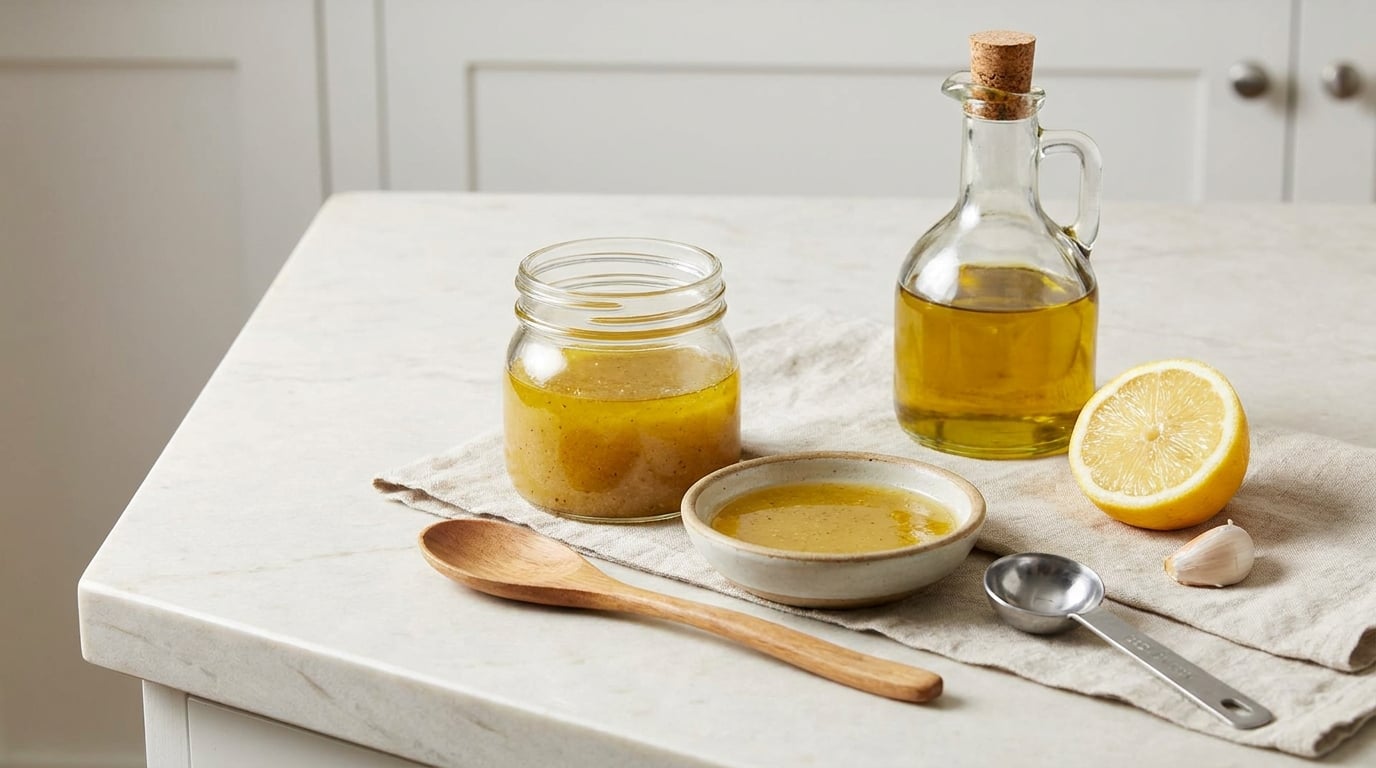
You can make salad dressing without store bought ingredients in about five minutes with four things you probably already have: oil, an acid like vinegar or lemon juice, an emulsifier such as Dijon mustard, and salt. Start with 3 parts oil to 1 part acid, shake it in a jar, and taste as you go.
The reason homemade dressing tastes better isn’t a secret technique. Bottled dressing is mostly oil, acid, sugar and a long list of preservatives, and the sugar is doing a lot of work. When you mix your own, you control how sweet, salty and sharp it is.
Table of Contents
- What You Need
- Step-by-Step: How to Make Salad Dressing Without Store Bought
- Common Mistakes
- Frequently Asked Questions
- What is the easiest way to make salad dressing without store-bought ingredients?
- Can I make salad dressing without oil?
- How long does homemade salad dressing last in the refrigerator?
- What can I use instead of mustard to help emulsify dressing?
- How do I make a creamy dairy-free salad dressing at home?
- How much dressing should I make for one large salad?
What You Need
Every dressing, from a three-ingredient splash to a rich ranch-style version, is built from the same parts. Learn the parts and you stop following recipes and start improvising.
- Fat: extra virgin olive oil for a peppery, grassy dressing, or a neutral oil like canola, grapeseed or avocado when you want the other ingredients to lead. Olive oil is also the least calorie-dense choice per tablespoon compared to, say, a buttery base.
- Acid: red wine vinegar for depth, white wine vinegar or rice wine vinegar for a lighter bite, apple cider vinegar for a soft round sharpness, balsamic for sweetness, and lemon or lime juice for brightness.
- Emulsifier: Dijon or yellow mustard, egg yolk, or mayonnaise. Mustard contains lecithin, which is what keeps the oil suspended instead of floating in a layer at the bottom of the jar.
- Seasoning: salt and black pepper are non-negotiable. Everything else, garlic, herbs, spices, honey, is optional.
Substitutions are generous here. Out of vinegar? Use citrus juice, or the pickling liquid from a jar of peppers. Out of mustard? A spoonful of mayonnaise or an egg yolk does the same job. Out of honey? Maple syrup works, and so does a pinch of sugar.
For creamy dressing, swap some or all of the oil for something thicker: Greek yogurt, tahini, blended cashews, or mayonnaise. Yogurt and cashews make the lightest creamy dressing, tahini adds a nutty bite, and mayonnaise is the richest of the four.
Step-by-Step: How to Make Salad Dressing Without Store Bought
Same method every time, so you never have to think about it again. Measure the acid first, add the emulsifier, then stream in the oil while you shake or whisk.
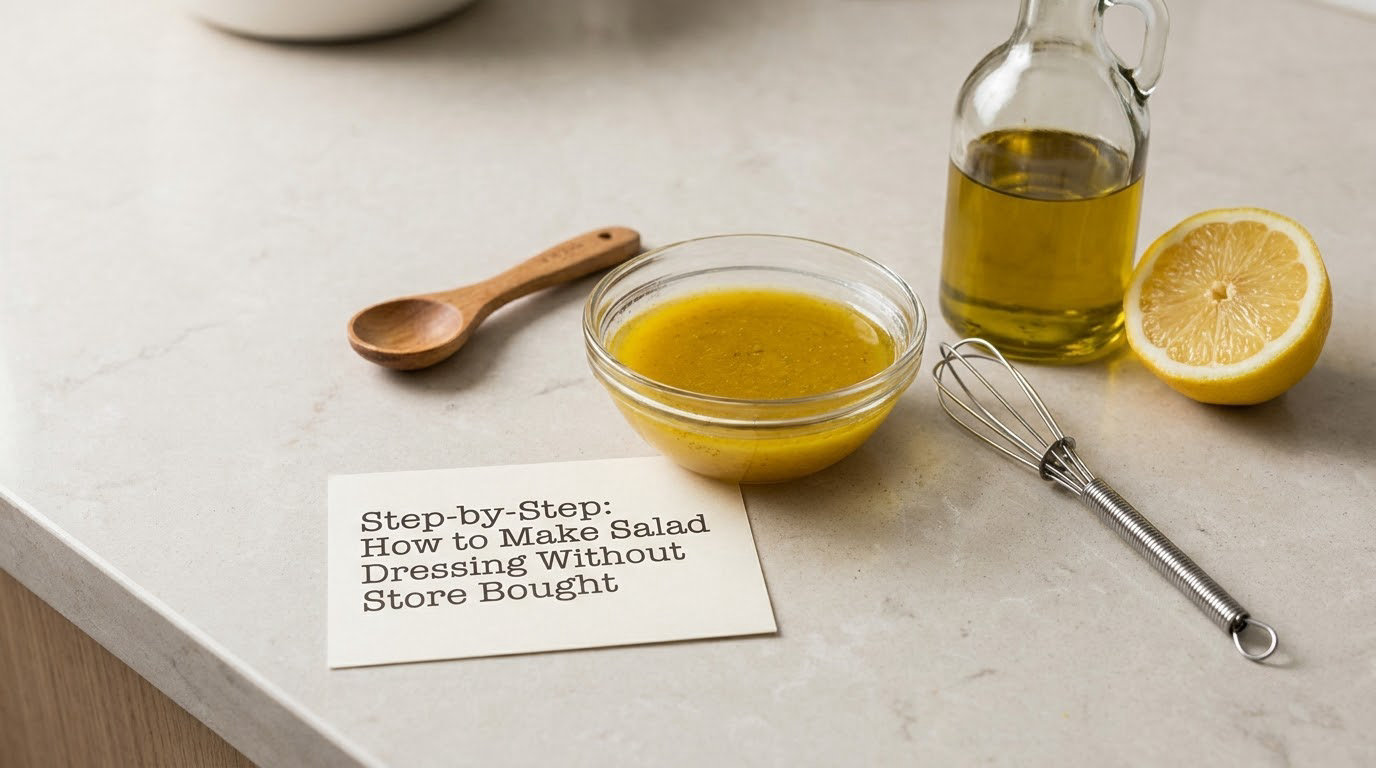
How to Make Salad Dressing Without Store Bought: Choose the Oil and Acid
Oil carries flavor and makes the dressing coat the leaves. Acid is what makes it taste fresh instead of heavy, and it is the part people get shy about adding more of.
The reliable starting ratio is 3 parts oil to 1 part acid. In real measurements that is 3 tablespoons of oil to 1 tablespoon of vinegar, or a quarter cup of oil to a quarter cup of vinegar. If the result tastes heavy, move to 2 parts oil to 1 part acid. If you want it richer and more traditional, 4 parts oil to 1 part acid works well with a sharp vinegar like red wine.
Which vinegar you reach for changes the whole dressing:
- Red wine vinegar is the sharpest of the common ones and pairs with assertive greens like arugula and kale.
- Balsamic vinegar is sweet enough to stand in for honey. Use less of it than you think.
- Apple cider vinegar is mellow and slightly fruity. It’s the one most home cooks land on because it isn’t harsh.
- White wine or rice wine vinegar are the lightest, and they suit mild lettuce and cucumber salads.
- Lemon juice tastes fresher than any vinegar and has none of the cooked note. Reduce it by a spoonful if the salad already contains fruit.
How to Make Salad Dressing Without Store Bought: Add Flavor
Season in layers rather than dumping everything in at once. Taste after the acid, taste after the salt, then taste again once the emulsifier has done its work. The order matters because emulsification rounds off sharpness.
Salt is the easiest flavor to get wrong. Table salt is finer and dissolves faster than kosher or flaky sea salt, so a spoonful of table salt is noticeably stronger. Start with a quarter teaspoon per tablespoon of acid and adjust upward.
Then build the rest in one of four directions:
- Savory: minced garlic, grated ginger, a spoonful of Dijon, anchovy paste, or a pinch of sumac for a lemony tang without citrus.
- Sweet: honey, maple syrup, or a teaspoon of sugar. This is the fix for a dressing that tastes sharp rather than fresh.
- Herbal: fresh parsley, dill, chives, basil or tarragon chopped in at the end, or dried oregano and thyme for a jar you keep all week.
- Spicy: red pepper flakes, black pepper, or a few drops of hot sauce.
One rule on garlic: smash the clove and stir it into the finished dressing, then pull it out after ten minutes. You get the aroma without the raw bite that turns bitter when the dressing sits. Grate half a clove in if you want the flavor to stay.
How to Make Salad Dressing Without Store Bought: Blend or Shake
Oil and acid don’t dissolve in each other, so a homemade dressing separates by default. Emulsification is the process of breaking the oil into tiny droplets suspended in the acid, and a mustard, yolk or mayo emulsifier keeps them there instead of letting them pool.
Jar shake: the best method for a week of lunches. Two tablespoons acid and a teaspoon of Dijon in a jar, seal it, then pour the oil in and shake hard for 30 to 60 seconds. The jar must be tightly sealed or it will spray. This is the method most people use once and never go back from.
Whisk: put the acid and emulsifier in a bowl first, then stream the oil in slowly while whisking. Add it too fast and the emulsion breaks. A wide bowl gives the whisk more room than a tall glass does.
Immersion blender: the fastest and most stable result. Put the acid and emulsifier in a deep container, start the blender, then drizzle the oil in. The emulsion comes out so stable that you often don’t need to shake it before use.
Blender: works fine, though the blades pull the dressing down out of reach of the oil stream. Blend in short bursts with the lid on and vent the cap.
A common question is whether to add oil or acid first. Always acid first, then emulsifier, then oil. Starting with oil means the emulsifier has nothing to disperse into.
How to Make Salad Dressing Without Store Bought: Adjust the Finish
Almost every bad bowl of homemade dressing is fixable in the next ten seconds. Work through these before you decide to start over.
- Too oily: add acid a teaspoon at a time and shake. A thin ribbon off a spoon is the target, not a puddle.
- Too tangy: add a little oil or a half teaspoon of honey. Sweetness is usually a better fix than more oil.
- Too flat: it needs salt. Nine times out of ten, a dull dressing is under-salted, not under-acided.
- Too sweet: add acid and another splash of oil. Never reach for more sweetener.
- Too thick: add water or lemon juice a teaspoon at a time if you built it with yogurt or tahini.
Match the weight to the salad. Mild greens like butter lettuce and cucumber want a light 2:1 with lemon so they don’t wilt. Bitter greens need more fat and a little sweetness to balance them. Grain bowls, roasted vegetables and coleslaw take something thicker and more acidic than a delicate vinaigrette. Greens with surface water repel dressing, so dry them properly before tossing.
Common Mistakes
Using too much oil. The fix is to start at 2:1 instead of 3:1, then add oil until it tastes right. Halving the oil in a finished bowl makes it taste watery rather than lighter, because the acid now dominates.
Skipping the emulsifier. No mustard, yolk or mayo means you will be shaking the jar before every single use. One teaspoon of Dijon buys you a week of stability.
Over-acidifying. Sharpness that makes you puckering isn’t brightness. Pull it back with oil or sweetener instead of adding more of the same.
Using dried garlic or onion in a big batch. Dried garlic and dried onion are fine in a jar dressing kept in the refrigerator for a week or two. Beyond that, people report the flavor turning flat and slightly off, so make a smaller batch and use it fresh.
Storing it wrong. Fresh garlic and cut herbs limit a jar dressing to roughly three days in the refrigerator. A plain oil and acid batch with dried seasonings keeps for weeks. Keep everything refrigerated, shake before use, and discard it if it smells off or the oil looks cloudy and thickened.
Over-dressing the salad. Add half the dressing, toss, taste a leaf, then decide. You can always add more. You can’t take it back out, and soggy leaves can’t be un-sogged.
For consistent results, measure with a spoon instead of pouring freehand. Use the same jar. Write the formula on a strip of masking tape on the lid, because the version you love is usually the one you’d never guess again.
Frequently Asked Questions
What is the easiest way to make salad dressing without store-bought ingredients?
Put a tablespoon of vinegar and a teaspoon of Dijon mustard in a jar, add three tablespoons of oil, seal it and shake hard for 30 seconds. Season with salt and pepper and you have a finished vinaigrette. The whole method takes about five minutes, and the jar rinses clean under warm water afterward.
Can I make salad dressing without oil?
Yes. Swap the oil for plain Greek yogurt and you get a creamy dressing that is much lighter than an oil-based one. Tahini, blended cashews and mayonnaise work the same way. These bases are already emulsions, so you whisk in vinegar, salt and herbs directly and skip the shaking step entirely.
How long does homemade salad dressing last in the refrigerator?
A plain oil and vinegar dressing with dried seasonings keeps in a sealed jar in the refrigerator for two to three weeks. Fresh garlic, cut fresh herbs or raw onion shorten that to about three days, because they break down and turn bitter. Creamy yogurt-based dressings also keep about three to four days. Always refrigerate and shake before use.
What can I use instead of mustard to help emulsify dressing?
An egg yolk is the closest match, since the lecithin in the yolk is the same lecithin that makes mustard work. Mayonnaise is an easy substitute because it is already an egg yolk emulsion. A spoonful of honey with the immersion blender also holds the oil together, as does tahini, which is thick and sticky enough to suspend the oil.
How do I make a creamy dairy-free salad dressing at home?
Stir together a quarter cup of plain unsweetened plant yogurt, a tablespoon of lemon juice, a teaspoon of Dijon or tahini, half a teaspoon of salt and any herbs you like. Whisk it in a bowl rather than shaking it, and add water a teaspoon at a time if it is thicker than you want. It works well on coleslaw and cucumber salads.
How much dressing should I make for one large salad?
Plan on about two tablespoons per person, so a large family-sized salad needs roughly half a cup. In the base formula that is about three-eighths cup of oil and an eighth cup of acid. Toss a little at a time and taste a leaf rather than pouring the whole lot in, since undressed leaves absorb dressing faster than you expect.
Start with the version you’ll actually make on a Tuesday: three tablespoons of oil, one tablespoon of vinegar, a teaspoon of Dijon, a pinch of salt and pepper, shaken in a jar. Once that tastes right, start changing one thing at a time, and you’ll never open a bottle again.