
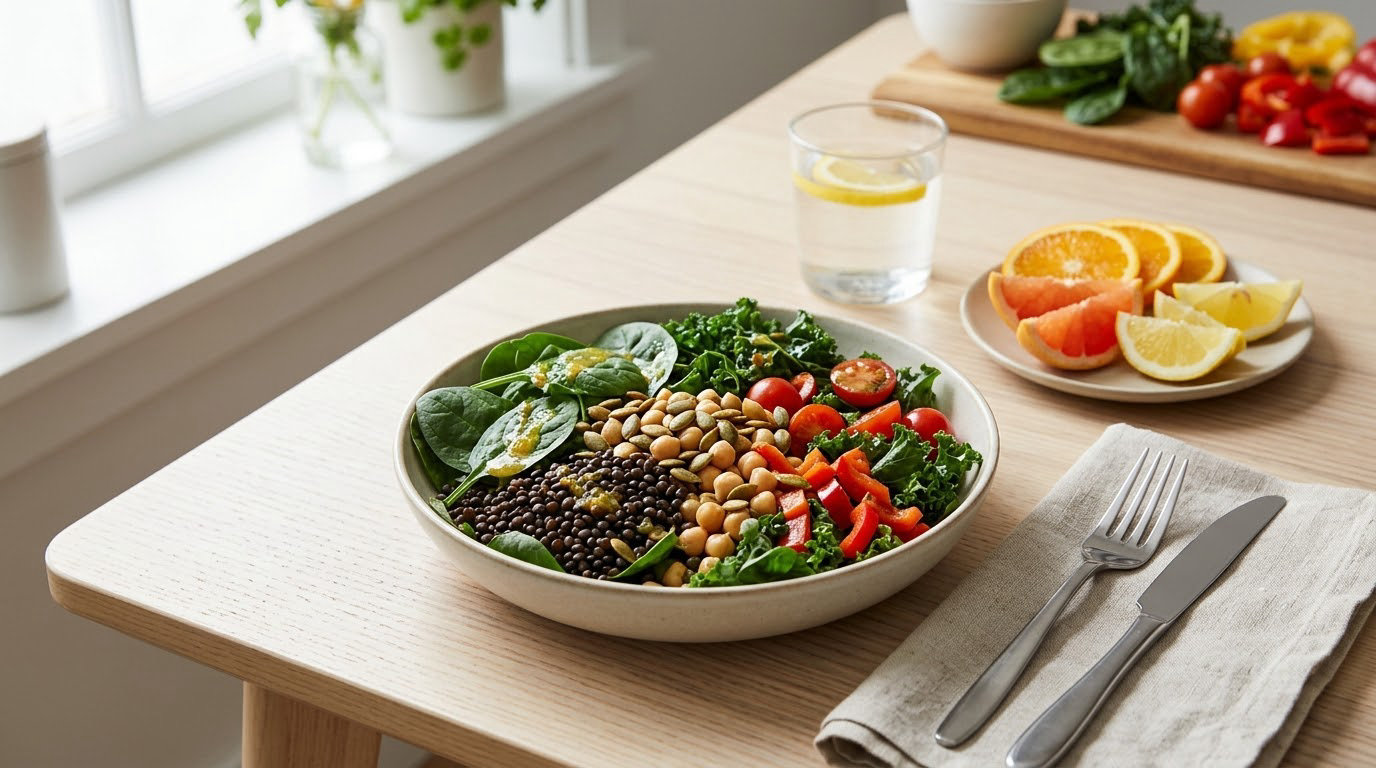
Iron from plants is called non-heme iron, and your body absorbs it far less efficiently than the iron in meat. That does not make plant-based eating a losing game. If you know which iron rich plant foods you are eating, pair them with vitamin C at the same meal, and keep tea, coffee and dairy away from that meal, the number you actually absorb changes a lot.
I have eaten a mostly plant-based diet for years, and the thing that tripped me up most was not a missing food. It was pairing a plate of lentils with a mug of coffee and wondering why nothing happened. Fix the pairing, not the menu.
This guide is general nutrition information, not medical advice. Anyone with symptoms of low iron, or who suspects a deficiency, should talk to a doctor or registered dietitian rather than self-treating.
Table of Contents
- Iron Rich Plant Foods and How to Absorb More Iron
- Which Plant Foods Are Richest in Iron?
- How Much Iron Do You Need From Food?
- What Helps Your Body Absorb More Iron From Plants?
- Which Foods and Drinks Can Reduce Iron Absorption?
- How Can You Prepare Plant Foods to Keep Their Iron Benefits?
- How Can You Build Iron-Rich Meals Throughout the Day?
- Who Should Ask a Healthcare Professional About Iron?
- Frequently Asked Questions
Iron Rich Plant Foods and How to Absorb More Iron
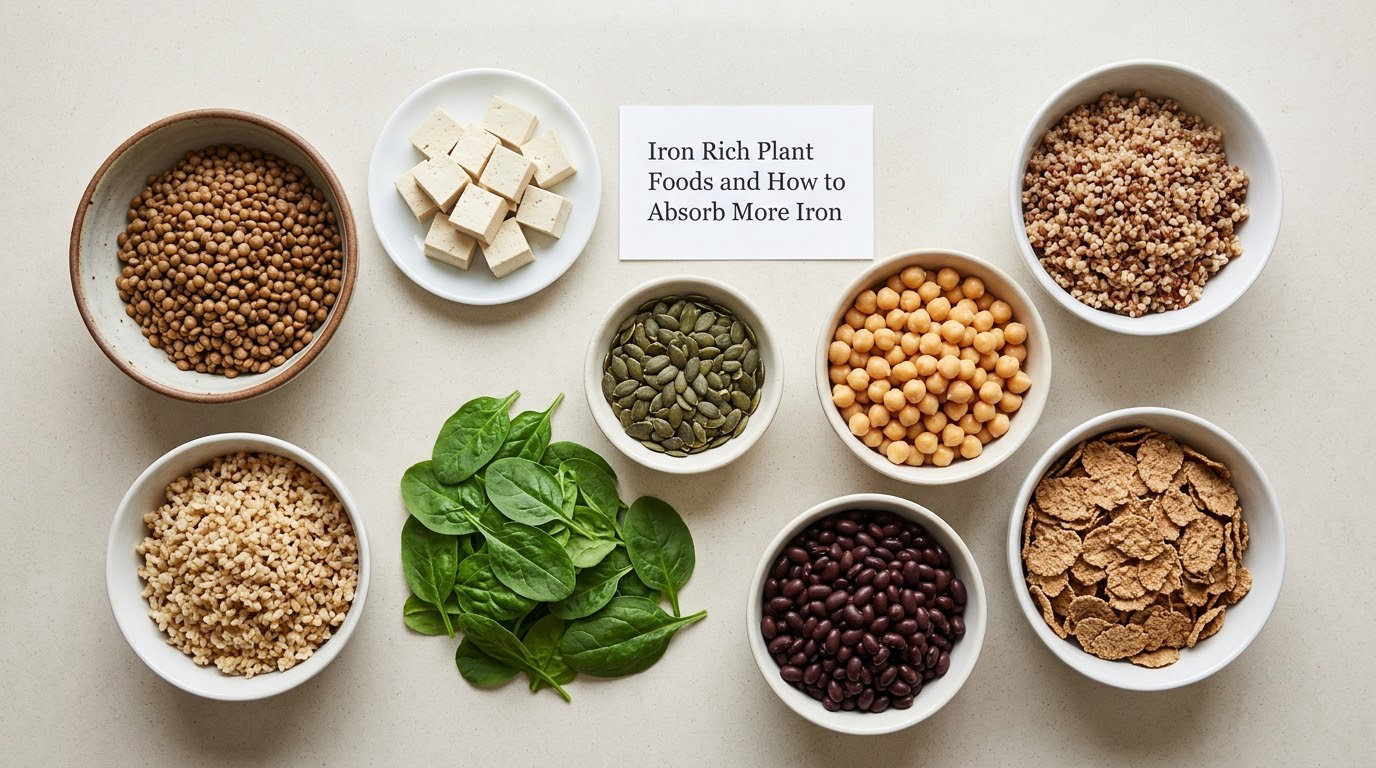
Legumes, tofu and tempeh, seeds, whole grains, dark leafy greens and fortified foods are the most practical iron rich plant foods, and vitamin C at the same meal can raise absorption of that iron several times over. Tea, coffee and calcium-rich foods work the other way, cutting uptake when they land in the same meal.
Here is the part that surprises people. Iron from plants is non-heme iron, and a fully plant-based diet absorbs roughly 1.8 to 5 percent of the iron eaten unless you actively change the picture. People on the vegan forums and in the r/Anemic community are blunt about this: eating the right foods is not the same as absorbing them, and the gap is usually made of tea, timing and phytates.
The three levers that actually move the number are simple enough to apply tonight. Add a vitamin C food to every iron-containing meal. Leave an hour or two between that meal and your coffee or tea. Give beans and grains a soak or a sprout before they hit the pot.
Which Plant Foods Are Richest in Iron?
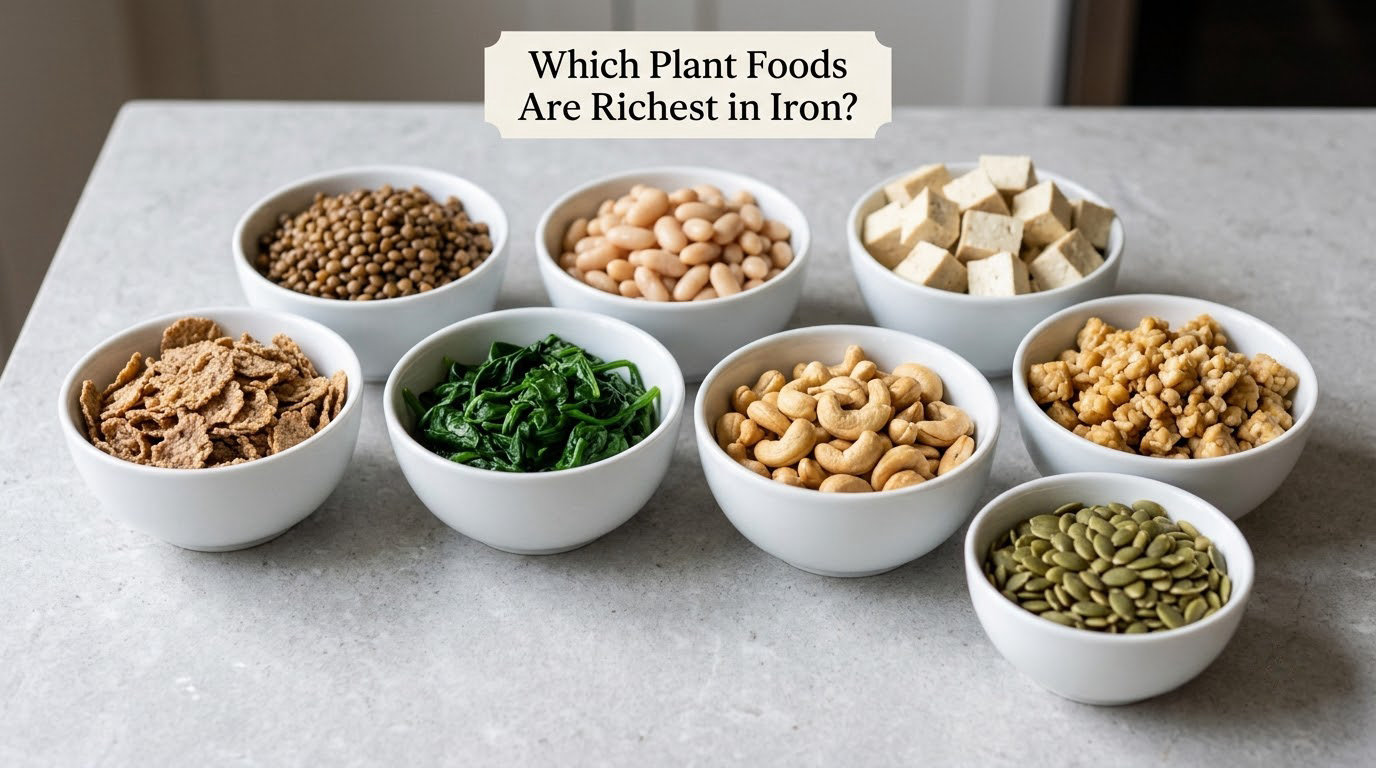
Per-serving iron varies enormously across plant foods, and the two richest categories are not whole foods at all. Fortified cereal and fortified plant milk deliver iron added during manufacturing, often several milligrams in a single serving, while naturally occurring iron clusters in legumes, seeds and some greens.
Values below are approximate and drawn from standard USDA composition data. Treat them as a ranking guide, not a prescription.
| Plant food | Serving size | Iron (mg, approx.) | Best vitamin C pairing |
|---|---|---|---|
| Fortified breakfast cereal | 1 cup | up to 18 | Strawberries or orange juice |
| Cooked white beans | 1/2 cup | 3.3 | Salsa, tomatoes, bell pepper |
| Cooked lentils | 1/2 cup | 3.3 | Roasted red pepper, lemon |
| Blackstrap molasses | 1 tablespoon | 3.5 | Stir into oatmeal with kiwi |
| Cooked spinach | 1/2 cup | 3.2 | Lemon juice, or add red pepper |
| Calcium-set firm tofu | 1/2 cup | 3 | Broccoli, bok choy, citrus |
| Tempeh | 1/2 cup | 2.7 | Cabbage slaw with citrus dressing |
| Cooked chickpeas | 1/2 cup | 2.5 | Tomatoes, guava, oranges |
| Pumpkin seeds | 1 ounce | 2.2 | Dried apricots and a clementine |
| Fortified plant milk | 1 cup | about 1 | Cereal with strawberries on top |
| Quinoa, cooked | 1 cup | 1.5 | Black beans and lime |
| Cashews | 1 ounce | 1.7 | Mixed with dried fruit and citrus |
| Dried apricots | 3 halves | 1.5 | Pair with seeds and an orange |
Two practical notes on reading the numbers. Fortified products only count if you actually eat them, and label amounts vary a lot between brands, so check the nutrition panel rather than trusting the word fortified. And a percentage of any serving size can look impressive in a label while being a small slice of what you need across a day.
How Much Iron Do You Need From Food?
Recommended intake depends on age, sex and life stage, and the gap between groups is large. The NIH Office of Dietary Supplements publishes these reference amounts for healthy people in the United States.
| Group | Recommended iron per day (mg) |
|---|---|
| Children 1 to 3 years | 7 |
| Children 4 to 8 years | 10 |
| Children 9 to 13 years | 8 |
| Teens 14 to 18, menstruating | 15 |
| Adults 19 to 50, menstruating | 18 |
| Adults 19 to 50, not menstruating | 8 |
| Adults 51 and over | 8 |
| Pregnancy | 27 |
| Breastfeeding, 19 to 50 | 18 |
Vegetarians and vegans are often advised to aim for about 1.8 times the general recommendation, precisely because the iron they eat is less bioavailable. Adults should also stay under the tolerable upper intake level of 45 mg a day from all sources, which is one reason more is not automatically better.
These are population reference numbers, not a target for you. Pregnancy, a recent blood donation, an endurance training load, a heavy menstrual pattern or a restrictive diet all change the picture, and a clinician can work from your actual bloodwork rather than a general table.
What Helps Your Body Absorb More Iron From Plants?
Seven habits do most of the work. None of them require a supplement, and together they are enough to change how much of your meal you actually absorb.
- Put a vitamin C food on the plate with every iron source. Ascorbic acid converts non-heme iron into a form the gut takes up more readily. Studies suggest 25 to 75 mg of vitamin C in the same meal can lift absorption two to three times, with larger multipliers reported in controlled settings.
- Keep the pairing on the same plate, not the same day. The effect depends on vitamin C being present in the gut at the same time as the iron. A lemon squeezed over lentil soup works. A vitamin C tablet at breakfast does nothing for the lentil soup at dinner.
- Move your coffee and tea away from iron meals. An hour or two is a reasonable, realistic gap. You do not have to give up coffee, and one cup a day in the wrong window is not a catastrophe.
- Soak, sprout or ferment beans, lentils and grains. This is the main lever on phytates, the compound in seeds, legumes and grains that binds iron in the gut.
- Watch the dairy and calcium timing. Calcium competes with iron for the same absorption pathway, so a large serving of milk or yogurt right beside a lentil dish works against you.
- Cook in cast iron where it is practical. A modest contribution, not a fix, and evidence for meaningful amounts is limited, so treat it as a habit rather than a treatment.
- Spread iron across the day. Several moderate servings absorb better than one enormous serving, because the body regulates absorption and the effect of inhibitors at a single meal is proportionally larger.
You will also see the phrase 60-second rule floating around. The idea is that adding one vitamin C food to an iron meal takes about a minute and is the single highest-return change most people can make. It is also the change that survives a real week, which is the only kind that matters.
Iron Rich Plant Foods and How to Absorb More Iron: Pair Foods Strategically
Pairing is easier when you think of a template rather than a rulebook: one iron source, one vitamin C source, one or two hours clear of tea, coffee and a large dairy serving. Vitamin C foods worth keeping on hand include bell peppers, broccoli, tomatoes, citrus, kiwi, strawberries, guava and peas.
- Lentils plus roasted red pepper. A lentil bowl with peppers, and a squeeze of lemon over the finished dish.
- Tofu plus broccoli. Tofu stir-fried with broccoli, with lime or orange segments on the side.
- Fortified cereal plus strawberries. Half a grapefruit or a kiwi alongside, coffee moved to later.
- Beans plus tomatoes. Black bean and tomato salsa on a baked sweet potato with pumpkin seeds.
- Quinoa plus black beans plus lime. A grain bowl that carries three iron sources in one meal.
- Oatmeal with blackstrap molasses plus kiwi. A drinkable iron source for people who find supplements hard to tolerate.
What matters more than any single superfood is the pattern across weeks. One badly timed meal does very little, and a month of consistent pairing does quite a lot.
Which Foods and Drinks Can Reduce Iron Absorption?
Tea and coffee reduce non-heme iron absorption the most in everyday life, because they are consumed daily and often sit right next to the meal. Their tannins and polyphenols bind iron in the gut, and both black tea and herbal tea carry polyphenols to varying degrees, so switching blend is not a full fix. If you take one thing from this section, take the timing, not the ban.
Other things that get in the way:
- Calcium and dairy. Large servings of milk, yogurt and cheese at the same meal compete with iron absorption.
- Tea and coffee tannins. Stronger in black tea than green, and present in cocoa and chocolate as polyphenols.
- Phytates. In beans, lentils, chickpeas, whole grains, nuts and seeds. This is the plant-specific inhibitor, and unlike coffee it is reduced by preparation rather than by timing alone.
- Eggs. Protein from eggs, and phosvitin in the yolk, can interfere with iron absorption from a mixed meal. Two eggs a day is fine nutritionally; eating them alongside your main iron source is the part that costs you.
Realistic spacing is an hour or two either side for coffee and tea, and a couple of hours for a large dairy or calcium supplement. If you cannot manage that, eating the iron-rich food at a different meal from your coffee works about as well.
How Can You Prepare Plant Foods to Keep Their Iron Benefits?
Phytic acid is the main thing preparation can change, and it is also the compound that makes beans, grains and seeds nutritionally excellent in every other respect. Reducing some of it is a bonus, not an excuse to stop eating them.
- Soak. Dried beans, chickpeas and lentils soaked overnight, with the soaking water discarded, lose a meaningful share of their phytates. Sprouted beans carry a similar benefit.
- Cook. Soaking plus cooking reduces phytates further than either alone. Ordinary cooking methods do not destroy iron.
- Ferment or use sourdough. Fermented grain products and sourdough bread rely on microbial phytase activity, which breaks phytates down during the process.
- Add seeds and nuts near the end. A tablespoon of pumpkin seeds over lentil soup raises the iron content of the bowl. Pair them with citrus.
- Use fortified foods deliberately. Fortified cereal and plant milk are the highest-dose everyday sources, so serving them at breakfast with fruit is a simple way to get a meaningful amount.
- Mix iron sources across meals. A tofu scramble, a lentil soup and a fortified cereal in one day gives you three separate doses with three separate pairing opportunities.
Nothing here requires a special appliance or a special diet. Soaked lentils and fortified cereal cover the practical middle of the road for most people.
How Can You Build Iron-Rich Meals Throughout the Day?
Here is one ordinary day, using serving sizes you would find in a normal kitchen. Breakfast is fortified cereal with strawberries and a splash of fortified plant milk. Lunch is lentil soup with roasted red pepper and a lemon wedge, with coffee after the office rather than at your desk. Dinner is tofu and broccoli stir-fry over quinoa, finished with lime.
Snacks do the quiet work here. A handful of pumpkin seeds and cashews with a clementine between meals, or a few dried apricots, keeps the pattern going without anyone planning it.
If you eat animal products, the same framework works with different foods: a 3-ounce portion of cooked beef or liver delivers iron with a higher absorption rate, and pairing habits still help, just less dramatically. The list of iron sources gets shorter, not harder.
If you are managing a restricted or difficult-to-eat diet, options still exist. Fortified cereal, tofu, cashew butter, seeds blended into smoothies and cooked lentils mashed into sauces all count. People managing ARFID have found fortified cereal and tofu among the most workable iron sources precisely because they are easy to tolerate, and supplements are often the hardest thing on the list to manage.
If you are tracking iron per calorie, the practical picks are fortified cereal, cooked tofu, cooked lentils and dried apricots, which is the same short list that comes up repeatedly in calorie-counting communities. The single biggest lever remains pairing with vitamin C, which costs nothing.
Who Should Ask a Healthcare Professional About Iron?
Get evaluated rather than adjusting your diet indefinitely if you have persistent fatigue, weakness, dizziness, headaches, shortness of breath on stairs, pale skin, brittle nails, hair thinning, mouth ulcers, an unusually restless legs feeling at night, or any unexplained change in your energy that lasts more than a few weeks.
Some groups should be proactive about it. People with heavy or frequent menstrual bleeding, pregnant or breastfeeding people, endurance athletes, frequent blood donors, anyone with a restrictive eating pattern, and anyone eating fully plant-based with low ferritin results have reasons to be tested rather than to guess.
Two practical points about testing. Ferritin is the storage marker and hemoglobin is the level in red blood cells, and they are not the same test or the same story, which is why results often confuse people. And iron supplements should not be started on your own, because excess iron is harmful, the dose depends on your own results, and supplements commonly cause constipation and stomach upset. A doctor, pharmacist or registered dietitian can tell you whether testing makes sense and what your options are.
Frequently Asked Questions
Is spinach an iron-rich plant food?
Spinach contains a decent amount of iron per serving, roughly 3 mg in a half cup cooked, but the number on the label overstates what you absorb. Oxalates bind much of it, and absorption from spinach is commonly estimated at only about 1.8 to 5 percent. Spinach is still a nutritious vegetable, it just should not be treated as a primary iron source on its own.
Which plant foods have the most iron?
Per standard serving, fortified breakfast cereals lead with up to 18 mg, followed by legumes such as white beans, lentils and chickpeas at roughly 2.5 to 3.5 mg, calcium-set tofu and tempeh near 3 mg, and blackstrap molasses at about 3.5 mg per tablespoon. Seeds, nuts and whole grains trail behind at 1 to 2 mg. Fortified products deliver the largest dose, naturally occurring foods deliver the most consistently.
Does vitamin C really help absorb iron from plants?
Yes. Vitamin C converts non-heme iron into a form your gut absorbs more readily, and 25 to 75 mg in the same meal can raise absorption two to three times, with larger multipliers reported in controlled studies. Half a kiwi or a small bell pepper is enough. The catch is timing: the vitamin C has to arrive in the gut at the same time as the iron, not hours earlier.
Can coffee or tea interfere with iron absorption?
They can, and of everyday habits they interfere the most. Tannins and polyphenols in both bind iron in the gut, which mainly matters for plant-based iron. You do not need to quit. Leaving an hour or two between your coffee and your iron-rich meal, and drinking it between meals instead, is enough to protect most of your intake.
Are fortified plant foods a better source than natural iron?
Fortified cereals and plant milks deliver the largest per-serving amounts, often several milligrams, but the label value only counts if you eat the product regularly, and amounts differ between brands. Naturally occurring iron from legumes, seeds and greens has no manufacturing step involved and is a more dependable part of a varied diet. Most people do best using both.
When should I ask a doctor about low iron?
Ask for an assessment if you have persistent fatigue, weakness, dizziness, breathlessness, pale skin, brittle nails, hair thinning or an unexplained change in energy lasting more than a few weeks. Testing matters especially with heavy periods, pregnancy, frequent blood donation, endurance training or a restricted diet. Do not start supplements on your own, since excess iron is harmful and the right dose depends on your results.
Start with one change tomorrow: put a vitamin C food on the same plate as whatever iron-rich plant food you already eat most often, and move your coffee out of the meal window. If you have symptoms or a known low result, take them to a doctor or registered dietitian rather than to a food list.