
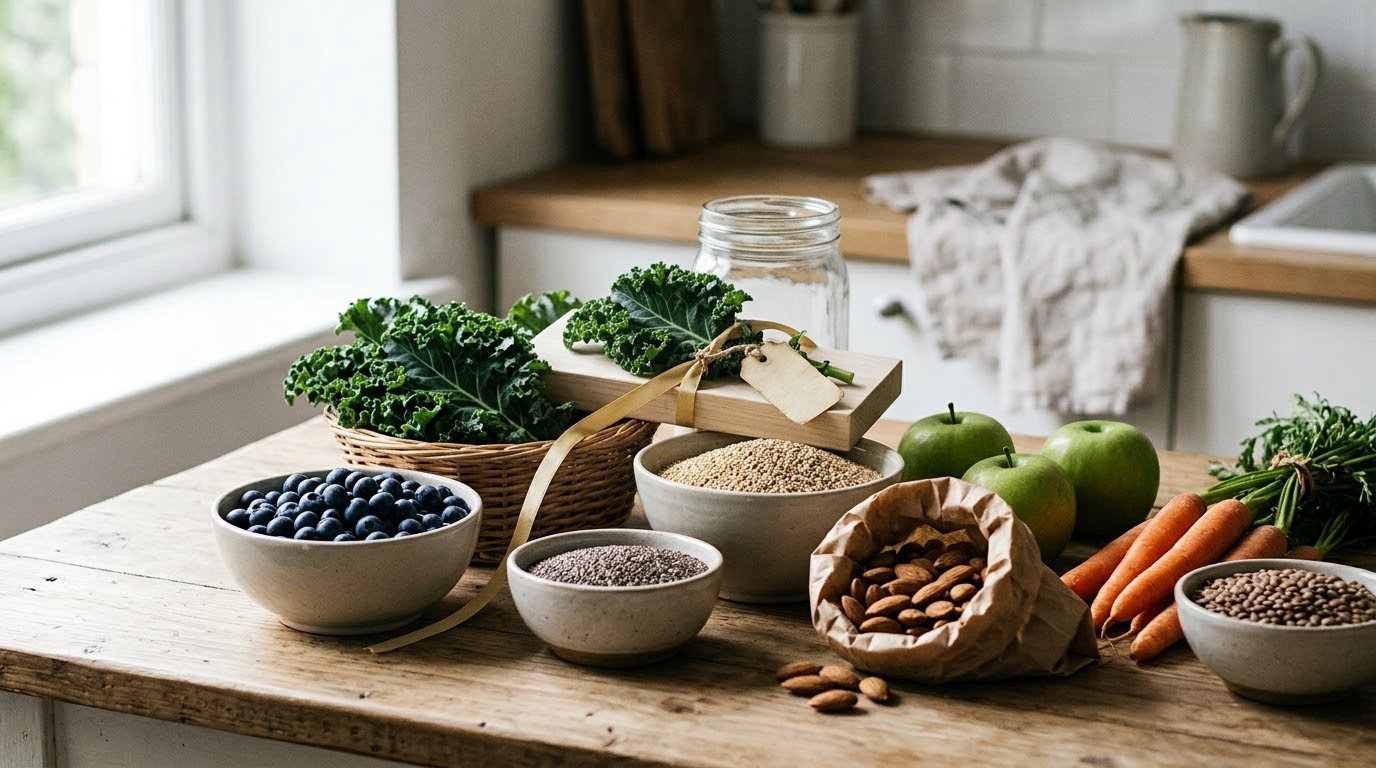
Superfood is a marketing word, not a regulated or scientific food category. No government agency or nutrition body defines it, so any food can carry the name. Many foods sold under it are genuinely nutritious, but the label itself tells you nothing about quality, safety or proven health effects.
I have bought the powder tubs. I have also paid far more than I should have for a bag of freeze-dried berries that tasted like a cough drop. Both things can be true, and holding them at the same time is the whole argument of this article.
The word does real work in a supermarket aisle. It lifts a price, borrows credibility from nutrition science it was never tested against, and then travels into headlines and social feeds long after the evidence that launched it faded. This guide covers where the term came from, why nobody regulates it, what actually makes food nutritious, and how to test any superfood claim before you pay a premium for it.
Table of Contents
- Why Superfood Is a Marketing Word?
- Where Did the Term Superfood Come From?
- Does the Superfood Label Have Any Official Definition?
- What Makes a Food Nutritious?
- Why Are Some Superfoods Expensive?
- How to Spot Senseless Superfood Marketing
- Are Superfoods Safe?
- What Should Shoppers Look for Instead?
- Frequently Asked Questions
- Conclusion: Start with the Label, Not the Marketing Word
Why Superfood Is a Marketing Word?
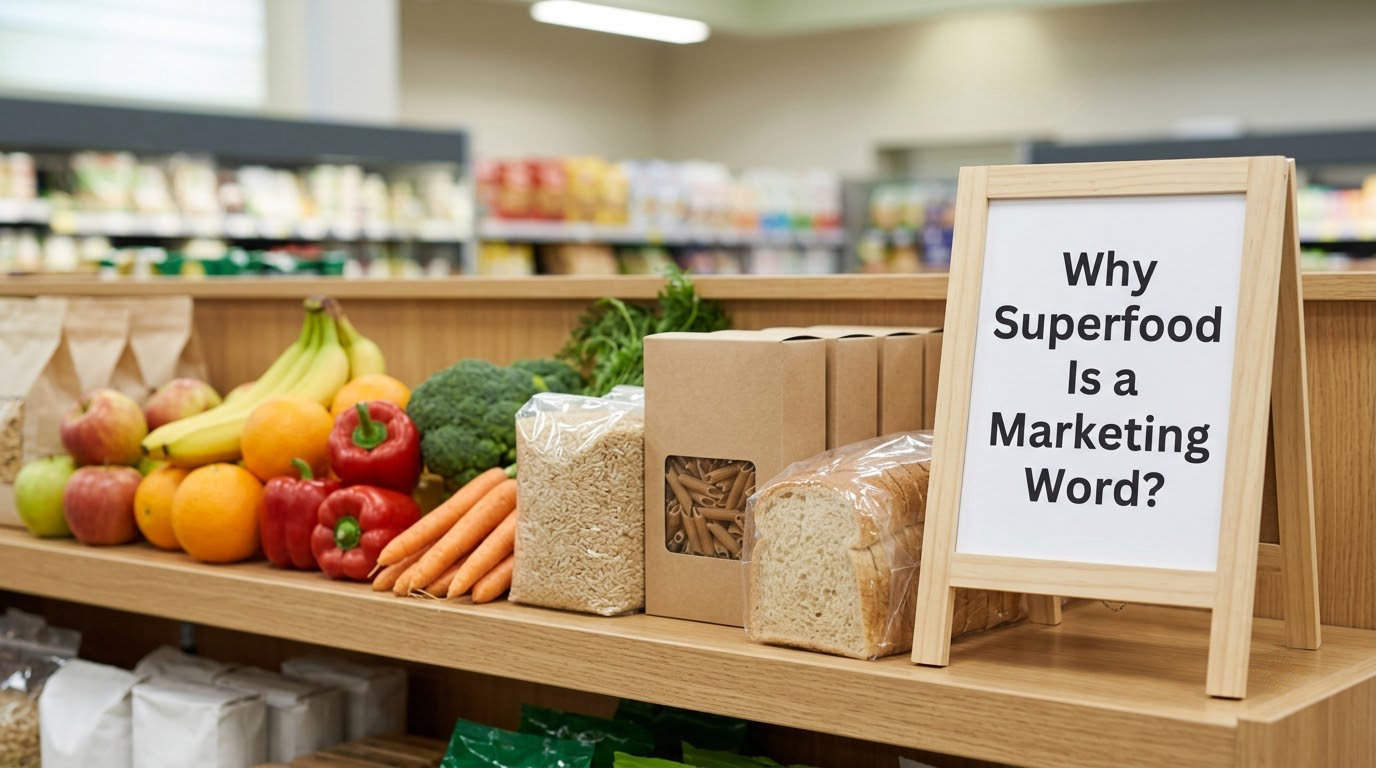
Because the term has no legal definition, companies can attach it to anything, and the payoff is a price premium rather than a nutritional guarantee. The mechanisms behind that are consistent enough to name.
- No regulator defines it: Neither the U.S. Food and Drug Administration nor the European Food Safety Authority sets a standard for what counts as a superfood, so the word carries no legal weight on a package.
- Unregulated labels create free range: A regulated term such as organic or gluten-free comes with rules, inspections and a definition. Superfood comes with none, which means a brand can use it without qualification.
- The premium follows the name: Once the label is on the front of the bag, shoppers assume the contents are worth more than the ordinary version, and the price follows the assumption.
- Marketing funds the research: Trade groups and producers have funded studies on specific foods, which is why you can find a headline about one berry in every news cycle. Marion Nestle, a professor at NYU, put the incentive plainly when asked why producers would fund that research: marketing, of course.
- The media cycle extends the life: A study gets press, a campaign builds on the press, and shelves fill for years. The blueberry case below is the clearest example, and the effect was measurable.
Mintel tracked a 36 percent jump in superfood-labelled product launches in 2015 alone, which tells you the word was doing serious commercial work that year. A Nielsen survey found roughly 80 percent of consumers already thought of food as medicine before any label told them so, and marketers simply moved in next to that belief.
Here is the part that keeps me from throwing the word out entirely. Kale is nutritious. Blueberries are nutritious. Beans, oats, chia and salmon are all perfectly good foods. The problem was never the food, only the marketing word wrapped around it, and the habit of expecting one food to do work that only an eating pattern can do.
Where Did the Term Superfood Come From?
The word is roughly a century old and it was advertising copy long before it was a food category. The first big modern use was a fruit campaign, and the pattern has repeated ever since with whatever crop was fashionable.
The first superfood was a banana
In 1917 the United Fruit Company circulated a pamphlet titled Points About Bananas, part of a campaign to raise American banana consumption. The pamphlet made claims about bananas that would look familiar on a package today, and bananas went from an odd imported fruit to a national habit.
Marketing historians read that pamphlet as the opening of the superfood era, and it is a fair call. A single food was given an outsized health story, the story travelled through popular media, and sales followed. Nobody checked whether the claim met a standard, because there is no standard to meet.
The blueberry decade and the ORAC score
The best-documented version of the cycle ran from 1991 through the 2010s. In 1991 researchers developed a laboratory test called ORAC, the Oxygen Radical Absorbance Capacity, used to measure how well a food absorbs free radicals, the oxidizing molecules linked with cell damage.
The Maine Wild Blueberry Commission then ran a marketing campaign beginning in 1992, and between 1997 and 2000 it put about half of its marketing resources behind the message that blueberries were exceptional. The USDA promoted the antioxidant angle, and at one point half of all American households were buying blueberries as a result.
Then the science did not hold up. ORAC scores measure antioxidant capacity in a test tube, not what happens in a body, and the database was widely criticised for overstating the health meaning of the numbers. The USDA withdrew the ORAC database in 2012 and stopped publishing those figures. Blueberry growers had a real problem, since the evidence had been the campaign.
Blueberry production roughly doubled between 1998 and 2006 anyway, and the category is still going strong. That is the point of the story. The food did not need the science to keep selling, because the label had already been established.
Each decade gets a new crop
Bananas made way for blueberries, then kale, quinoa and chia, then açaí bowls, goji berries and matcha, and now powders, greens blends and functional mushrooms. The foods change. The sales pattern does not.
Does the Superfood Label Have Any Official Definition?
No. That is the short answer, and it is worth sitting with, because everything else follows from it.
The FDA regulates food labelling in the United States but has never defined superfood. The EFSA does the same job across the European Union and has not defined it either, and the term is not a regulated nutrient claim, so a brand cannot be penalized for using it loosely.
Compare that with a word shoppers treat as settled. Organic has a legal definition, certified inspectors and a production standard. Gluten-free has a defined threshold in the United States. Those words cost money to earn, which is exactly why they carry weight.
| Term | Regulated? | What the word guarantees |
|---|---|---|
| Superfood | No | Nothing beyond the seller wanting you to pay attention |
| Organic | Yes | Production and handling standards set in law |
| Gluten-free | Yes | A defined level of gluten in the product |
| High in fibre (UK) | Yes | A set amount of fibre per serving |
| Antioxidant-rich | Generally no, as a blanket claim | Marketing language until a nutrient claim rules apply |
What can a superfood label establish? Only that a seller paid for the word. It cannot tell you the food is better than an alternative, that it was tested, or that any health effect has been shown. That last point matters, because the FDA also restricts disease claims on food packages, and the superfood label is often the pressure valve that lets a brand stay suggestive without making one.
What Makes a Food Nutritious?
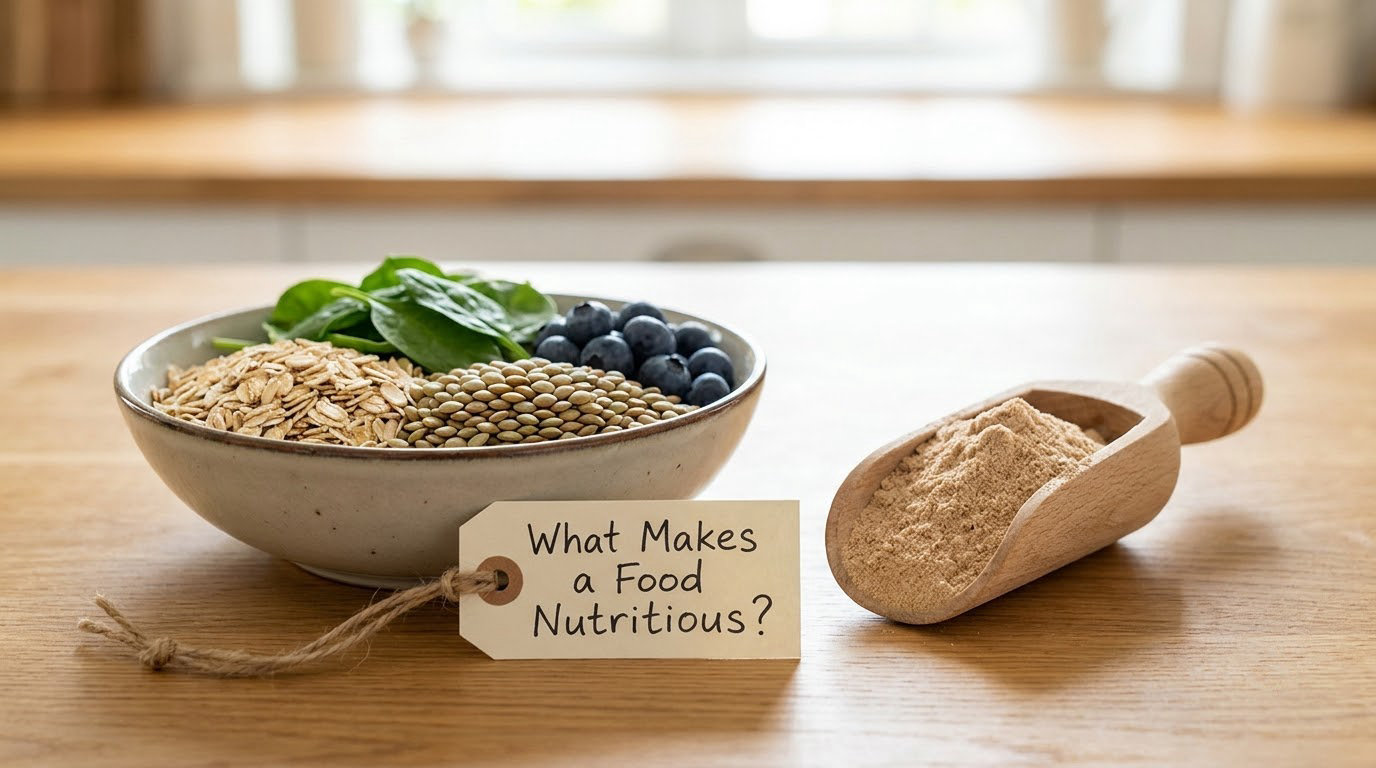
Nutrient density, which simply means how much of the nutrients you need a food delivers relative to how much it fills you up. Everything else on a good shopping list, from fiber to protein to unsaturated fats, is part of that same bigger picture, and variety across weeks matters more than any single ingredient.
This is where most superfood talk quietly goes wrong. It treats one food as the answer when the actual guidance is a pattern, and a pattern is the opposite of a single miracle ingredient.
| What you read | The question it actually answers | What it cannot tell you |
|---|---|---|
| A nutrient claim such as high in fibre | How much of that one nutrient is in a serving | Anything about the other nutrients, or the whole diet |
| Serving size | What counts as one portion and how many are in the pack | Whether the portion is realistic for you |
| Added sugars and salt | What has been taken away or added in processing | The quality of a food eaten in small amounts |
| Ingredient list order | What is actually in the product, by weight | Whether any ingredient benefits your health in that amount |
| The word superfood | That the seller wants attention | Quality, safety, dose or proven effect |
Two habits do more work than any label. Rotate your colors across the week, which is a rough proxy for the different plant compounds you are getting, and eat a mix of food groups rather than chasing a single one. If you want the structured version, Harvard’s Nutrition Source Healthy Eating Plate is a useful starting point.
The foods sold as superfoods are, for the most part, ordinary foods that happen to be nutrient-dense. The honest list of what is genuinely worth eating is short: legumes, whole grains, nuts and seeds, fatty fish, leafy greens, and whatever fruit you actually enjoy. Eat them, enjoy them, and stop ranking them.
Why Are Some Superfoods Expensive?
Usually because the label works, but also for reasons a shopper can actually verify. If a food is genuinely hard to grow, air-freighted, imported from one region, certified organic, specially processed, or harvested in small amounts, its cost is explainable. If none of those apply, you are paying for the packaging and the story.
Common cost drivers worth thinking about:
- Scarcity and short harvest windows
- Import and air freight, which matters most for fresh exotic berries
- Organic or other certification costs
- Freeze-drying, cold pressing and other specialized processing
- Subscription models and premium retail margins
- Powder blends, where a small amount of many ingredients replaces one recognizable food
The practical test is simple. Divide what you would spend by the number of servings you would actually eat, and ask whether a familiar staple gives you the same nutrition for less. When I compared a bag of freeze-dried fruit against the frozen fruit in my regular supermarket, the difference was mostly moisture and packaging.
Nobody needs the cheapest food on the shelf. The question is whether a premium buys you something measurable, and whether a cheaper swap of the same nutrient would do the job just as well.
How to Spot Senseless Superfood Marketing
Five checks, in the order I would run them. If a product fails two or more, the premium is buying advertising.
- Health promises with no evidence attached: the package implies a result rather than reporting a nutrient. Watch for words like detox, boost, heal, clean, reset and repair, and treat a named disease mentioned anywhere on the pack as a reason to walk away.
- Vague science-sounding language: phrases such as adaptogenic, bioavailable, antioxidant-rich or supports optimal function borrow the shape of research without the content. Ask what was measured, in how many people, and whether it was published.
- Ancient-culture and celebrity appeals: an ingredient that has been eaten for a thousand years is still an ingredient. Centuries of use are not trials, and a famous name endorsing a product is marketing, not evidence.
- Missing quantities: if the front of the pack celebrates a hero ingredient but the back lists it unquantified, or hides it behind a proprietary blend, you cannot judge the dose. Proprietary blends exist specifically to keep amounts out of view.
- Miracle before-and-after stories: testimonials and dramatic transformations sell; controlled research does not. One person’s result tells you very little about what will happen to you.
The strongest question you can ask any of it is simple: is this claim about a nutrient, or is it a promise about a life? Nutrient claims can be checked against the panel. Promises cannot.
Are Superfoods Safe?
Whole foods carrying a superfood label are generally as safe as any other food of that type, and this is not where the risk usually sits. Being careful is still reasonable, and none of this replaces advice from a doctor, pharmacist or registered dietitian about your own situation.
- Allergies and intolerances do not change because a food is fashionable, and blends of many ingredients make hidden exposure more likely.
- Powders and supplements are concentrated and are not held to the same rules as whole food. The NIH National Center for Complementary and Integrative Health is a solid starting point for what a supplement can and cannot promise.
- Contamination and adulteration risk is higher in some imported and unbranded products, which is where third-party testing certification actually means something.
- Interactions matter, particularly for concentrated extracts, and a pharmacist can check a product against anything you already take.
- Preparation is another variable. Unpasteurized juice and raw products carrying a health halo still carry food-safety risk, and general safe handling and temperature guidance applies.
Stop and get medical advice rather than relying on this article if you are pregnant, managing a condition, taking regular medication, or reacting to a food. Seek urgent care for signs of an allergic reaction, which is different from ordinary stomach upset.
What Should Shoppers Look for Instead?
Compare the product in your hand to a familiar alternative and ask three questions. How much nutrient per serving, how much of it is added sugar or salt, and what does one serving cost you? If the superfood version does not clearly win, buy the everyday version.
| Often sold as | Everyday swap that covers the same ground | What to look for on the label |
|---|---|---|
| Goji berries | Any dried fruit you enjoy, including raisins or a tangerine | Added sugar, which is common in the sweetened versions |
| Açaí bowls and frozen purées | Frozen berries blended with a banana | Sugar content, which in bowls is often very high |
| Chia pudding | Oats soaked overnight, or ground flaxseed | Protein and fiber per serving, not per scoop |
| Spirulina and greens powders | A handful of spinach, kale or frozen peas | How little actual vegetable is in the scoop |
| Matcha everything | Strong green tea, or brewed tea of any kind | Added sugar in the blends, which is common |
| Quinoa and ancient grains | Oats, brown rice or barley | Protein and fiber, which are comparable |
Other habits that beat any label: buy seasonal produce, cook more than you snack from a bag, read the ingredient list before the nutrition panel, and treat a supplement as a product that owes you evidence rather than an automatic upgrade. If you enjoy a superfood and it fits your budget, eat it. There is no prize for buying the humblest option.
Frequently Asked Questions
Is superfood a marketing term?
Yes. Superfood is a promotional label, not a scientific, regulatory or nutritional category. The FDA and the European Food Safety Authority have never defined it, so any food can legally carry the name. Many foods sold as superfoods are genuinely nutritious, but the label tells you nothing about quality, safety, dose or proven health effects.
What defines a superfood?
Nothing official does. No government body, university or nutrition organization publishes a threshold that separates a superfood from an ordinary vegetable. In practice the word is assigned by whoever is selling it. You can still judge a food well, just by measurable qualities: nutrient density, fiber, protein, unsaturated fats, minimal processing and how they fit into a varied diet.
Are superfoods worth the hype?
The foods usually are, the label is not. Kale, blueberries, beans, oats and chia are ordinary nutrient-dense foods that are perfectly good to eat regularly. The hype is aimed at the idea that one food delivers a health result on its own, and at the price premium that follows. Buy what you enjoy, in amounts you can afford, and get your variety from the whole week.
Where did the term superfood originate?
It is about a century old and began as advertising. In 1917 the United Fruit Company circulated a Points About Bananas pamphlet promoting bananas on health grounds, and the pattern repeated with blueberries in the 1990s, then kale, quinoa and chia, then açaí and goji, and now powders and functional mushrooms. Each wave gets a new food and the same persuasive technique.
Is there any downside to eating superfoods?
Not from the food itself in most cases. The downsides come from the label. Chasing one promoted food tends to narrow dietary variety, which is the thing nutrition science actually values. Concentrated powders and supplements carry more risk than whole food, blends hide quantities behind proprietary formulas, and repeated disappointment with promised effects can drive all-or-nothing eating. Talk to a doctor or registered dietitian if you take regular supplements.
What are three red flags for nutrition marketing?
First, health promises that name a result rather than a nutrient, such as detox, boost or heal. Second, vague scientific language like adaptogenic or supports optimal function with nothing measured behind it. Third, missing quantities, where a hero ingredient is celebrated on the front but unquantified on the back, often hidden in a proprietary blend. Miracle testimonials are a fourth, and usually the loudest.
Conclusion: Start with the Label, Not the Marketing Word
Superfood is a marketing word, and an unregulated one. That does not make the foods bad, and it does not mean you have to stop eating them. It means the word on the front of the package is not evidence of anything.
So do one thing before your next shop. Put the product next to a familiar whole-food alternative and compare the nutrition facts, the ingredient list and what you pay per serving. If the superfood version does not clearly win, buy the ordinary one and spend the difference on more variety, which is the part that actually does something for you. 2026 is a good year to start reading panels instead of headlines.