
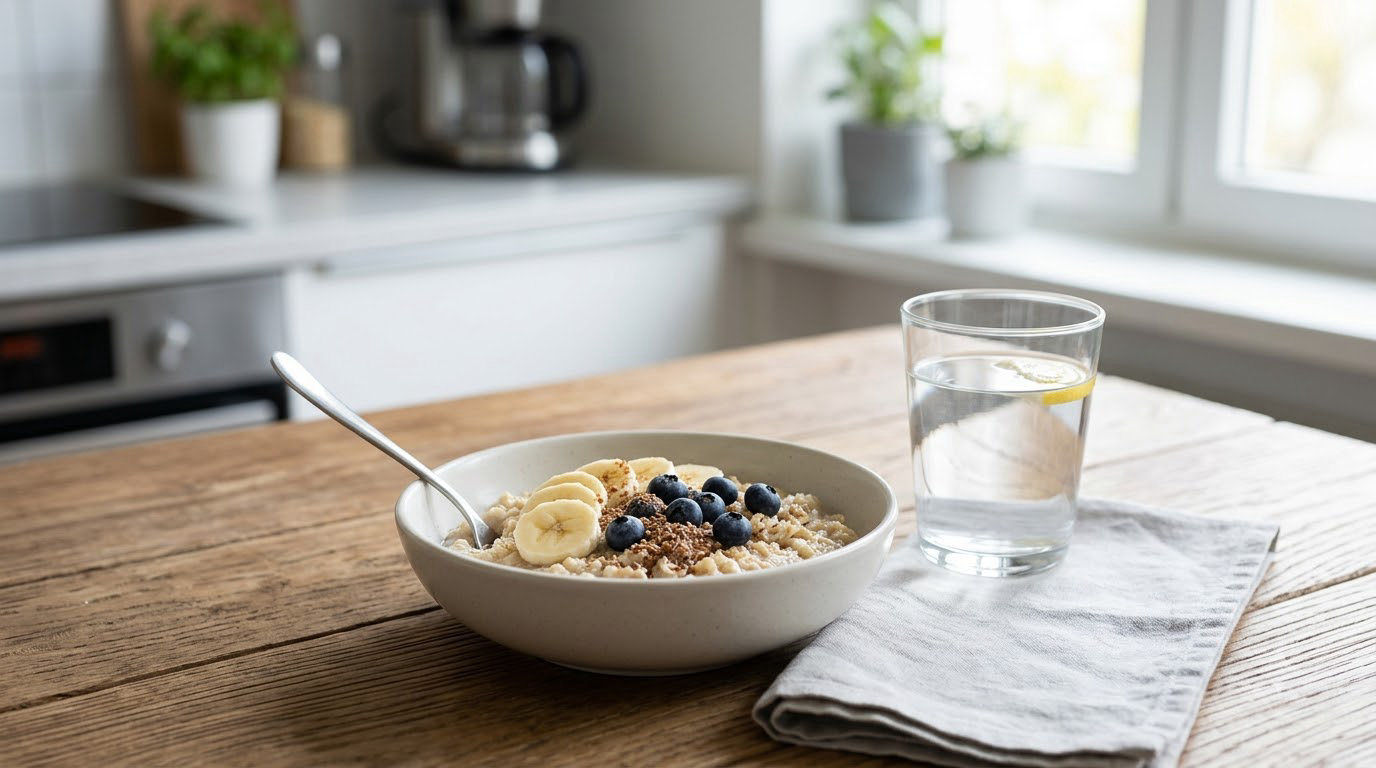
If you want to know how to increase fiber without bloating, the short answer is: add 3 to 5 grams every few days, drink about 8 cups of water across the day, and start with slow-fermenting foods like oats, chia, kiwi, and lentils rather than beans, wheat bran, and raw cabbage. Most discomfort people hit isn’t a fiber allergy. It’s a jump that was too fast.
Two to three weeks of patient, boring increases usually fixes it. Nobody’s gut goes from a typical 15 to 20 grams a day to 30 grams in a single Monday.
What You Need
Nothing special. This is a food plan, not a project that needs equipment or a membership.
- A water bottle you actually use. Fiber holds liquid in the gut to move things along. Without it, fiber can sit and feel worse, not better.
- One fiber-rich food you already eat without thinking. Oats, berries, apples, bananas, carrots, broccoli. You build from a habit that exists, not from a new one you have to remember to create.
- A way to note changes. A paper notebook, a notes app, a photo of your meals. Something that remembers last Tuesday when your gut doesn’t.
- Two to three weeks of patience. That is the whole timeline.
You do not need a fiber supplement, a special powder, or a clean-eating reset. If you like greens but hate the taste, how to add greens to food without tasting them is worth a look, since leafy greens are a low-bloat fiber source most people overlook.
Step-by-Step
Four steps, in this order. Rushing the order is what causes the bloat, not the fiber itself.
Start With Small Changes

Before you add anything, estimate what you’re eating now. Most adults in the US land around 15 to 20 grams a day. A rough tally: half a cup of dry rolled oats is about 4 grams, a medium apple with skin about 4, a cup of raspberries about 8. Two ordinary meals probably gets you into the teens without a single “high-fiber” product.
Then make one swap and hold it for three or four days. White bread to whole-grain bread. White rice to brown rice or quinoa. That is the whole first move, and it’s the advice the AI Overview on this query reduces to: one refined food swapped for a whole-grain option each week.
Most of the internet says “go slow” and stops there, which isn’t much help. Here’s the ladder:
| Week | Added fiber | Example change | What to watch for |
|---|---|---|---|
| Week 1 | +3 to 4 g | Half a cup of oats at breakfast, or one tablespoon of chia seeds | Any change in stool consistency or a little windiness |
| Week 2 | +4 to 5 g | A second whole-grain swap, plus berries or two kiwis | Bloating should be settling or gone by day 10 |
| Week 3 | +5 g | A quarter cup of lentils or black beans, rinsed well | Gas that arrives two hours later is normal at this stage |
| Week 4 onward | +5 g per week | Second helpings, fruit with skin, whole grains at lunch and dinner | Reassess the whole plan every four weeks |
You’ll know it’s working when digestion feels boring. Softer, easier stools in the morning, no afternoon puffiness, and no awareness of your gut at all. That’s the target, not the absence of every single bubble.
Add Fiber-Rich Foods You Already Enjoy
The gentlest way to raise fiber is to add to meals you already eat, not to build a new meal. Some realistic per-serving numbers so you can do the math:
- Raspberries, 1 cup: about 8 g
- Lentils, cooked, half a cup: about 8 g
- Black beans, cooked, half a cup: about 7 to 8 g
- Chia seeds, 1 tablespoon: about 5 g
- Rolled oats, half a cup dry: about 4 g
- Quinoa, cooked, 1 cup: about 5 g
- Pear with skin, medium: about 5 to 6 g
- Broccoli, cooked, 1 cup: about 3 to 4 g
- Kiwi, medium: about 2 to 3 g
- Ground flaxseed, 1 tablespoon: about 2 g
Sprinkle chia on yogurt you already eat. Add a spoon of ground flaxseed to a smoothie. Put black beans in the soup you make on Sundays. If you want more vegetables without another 30 minutes of chopping, how to eat more vegetables without cooking every night covers the batch-cook side.
Not every fiber food treats everyone the same, so sort them by how fast your gut ferments them:
| Bloat potential | Examples | Why it happens | How to make it easier |
|---|---|---|---|
| Low | Oats, chia, ground flaxseed, kiwi, oranges, blueberries, peeled potatoes, cooked carrots, quinoa | Soluble fiber that ferments slowly and holds water | Eat as-is; ground flaxseed is gentler than whole seeds |
| Medium | Lentils, chickpeas, edamame, tempeh, apples with skin, broccoli, brown rice, Brussels sprouts | More fermentable carbohydrate reaching the colon | Cook vegetables fully, start with half a cup of legumes, build up over weeks |
| High | White beans and chickpeas in large portions, cabbage, onion, wheat bran, prunes, large amounts of dried fruit | Fast fermentation, plus fermentable sugars known as FODMAPs | Soak and rinse dried beans, cook them well, add bran by the teaspoon rather than the scoop |
A worked day built only from low and medium bloat foods: oats with raspberries and chia at breakfast (roughly 17 g), quinoa and roasted vegetables at lunch (about 9 g), lentil soup with a pear at dinner (about 12 g). That’s around 38 g in a day that most people would describe as unremarkable.
If you eat mostly plants, check how you are balancing protein before adding more fiber on top, since fiber-heavy meals with thin protein portions tend to bloat: how to eat enough protein on a vegetarian diet without powder.
Pair Fiber With Fluid and Regular Meals
Water is not an optional extra here. Soluble fiber works like a sponge in the bowel, drawing water in to form a soft gel. If there isn’t enough fluid, that gel becomes dry and slow, which feels like cramping and pressure rather than relief. Eight cups, about 2 liters, spread through the day beats chugging a liter at dinner.
Spreading fiber across meals matters just as much as the total. One “health bomb” bowl of salad with beans, bran, seeds, and raw vegetables can be 15 grams in a sitting, and your gut will feel that 15 grams all at once. Three meals with 8 to 10 grams each feels entirely different.
Two habits from gut-health communities that actually hold up: cook vegetables thoroughly rather than eating them raw, and walk for 10 to 15 minutes after a meal. Movement stimulates the natural contractions that push gas along instead of letting it sit.
Adjust and Monitor Your Response
Keep a simple food diary for a few weeks: what you ate, roughly when, and whether your belly felt fine, windy, or swollen. Most people find one repeat trigger within two weeks, usually a food they eat daily rather than the food they blame.
Keep the foods that sit well and drop the ones that don’t, rather than restarting the whole plan. If you’re already bloated, back off to the last comfortable level for two or three days, then resume from there.
If you do want a supplement, start at half a dose for a week. Psyllium, inulin, and wheat dextrin are common and work well for many people, but they can produce gas early on, so the dose you start at matters more than the label. Acacia fiber is fermented more slowly and is often the better first pick for a sensitive gut. Powders clumped in cold water often make people quit, so mixing into something warm with an actual spoon beats shaking it into a cold glass. If your symptoms persist for more than two or three weeks at a slow, steady increase, talk to your doctor or a registered dietitian.
Common Mistakes
Almost every fiber-related bloating story is one of five self-inflicted causes. They’re all fixable.
Changing four things in the same week. Beans, whole grains, seeds, and raw vegetables all at once is the single most reported trigger. The fix is arithmetic, not willpower: one swap per week, each held long enough to see whether it suits you.
Jumping straight to 30 grams. Going from 16 to 30 grams overnight is a doubling. The fix is the ramp table above, 3 to 5 grams at a time, with three or four days at each level.
Adding fiber and skipping water. Dry fiber with dry meals is the standard version of making things worse. Eight cups spread across the day, including with meals.
Starting a supplement at the full dose. Labels assume tolerance you may not have. Half dose for a week, then increase, and drink it with more liquid than feels necessary.
Ignoring individual triggers. Advice fatigue is real, because everyone says “eat more fiber” and nobody says how. Keep the diary and find your own two or three problem foods instead of assuming fiber itself is the enemy.
What to do when the bloating already happened
If you’re mid-bloat, the relief is unglamorous. Drink warm liquid slowly, walk for 10 to 15 minutes, sip peppermint or ginger tea, and skip the next high-fiber meal. Most people feel noticeably better within a few hours and back to normal the following day.
When to see a clinician
Get medical advice rather than adjusting food if you notice unexplained weight loss, blood in your stool, persistent abdominal pain, symptoms that wake you at night, or a family history of bowel cancer or inflammatory bowel disease. Chronic bloating after eating fruit or bread can also point to IBS or an intolerance rather than a fiber problem, and that needs a diagnosis, not a food diary. A doctor can rule out the things worth ruling out, and a registered dietitian can help you build a plan that fits.
Frequently Asked Questions
How quickly should I increase fiber without bloating?
Add no more than 3 to 5 grams of fiber every three to four days. Most bloating comes from the size of the jump, not the fiber type, so hold each new level until digestion feels normal before going higher. Reaching 25 to 30 grams usually takes three to five weeks from a typical 15 to 20 gram diet. If symptoms are still noticeable after ten days at a given level, stay there for another week.
Which high-fiber foods are less likely to cause gas?
Oats, chia seeds, ground flaxseed, kiwi, oranges, blueberries, quinoa, peeled potatoes, and well-cooked carrots sit at the low end of the bloat scale. They are mostly soluble fiber, which ferments slowly and holds water in the gut. Start with one tablespoon of chia or half a cup of oats, not a full helping of bran, and add from there.
Do I need to drink more water when increasing fiber?
Yes, and more than most people expect. Soluble fiber draws water into the bowel to form a soft gel that moves easily; with too little fluid it can become dry and slow, which reads as cramping and pressure. Aim for roughly 8 cups, about 2 liters, spread through the day rather than in one large amount, and include a glass with each fiber-heavy meal.
Can fiber supplements cause bloating?
They can, especially at the starting dose. Psyllium, inulin, and wheat dextrin ferment relatively quickly, so a full scoop on day one often produces gas and cramping. Acacia fiber ferments more slowly and is frequently easier to tolerate. Start at half the labeled dose for a week, take it with plenty of liquid, and increase only once your digestion is settled.
How much fiber should I aim for each day?
Guidelines for adults generally land between 25 and 38 grams a day, with about 30 grams a practical middle target. Most people start closer to 15 to 20 grams, so there is room to grow. Fiber matters for regularity, cholesterol, blood sugar, and gut health, but working up to it gradually matters just as much, because a target you abandon on day four helps nobody.
When should bloating after eating fiber prompt medical advice?
See a doctor if bloating comes with unexplained weight loss, blood in your stool, persistent abdominal pain, symptoms that wake you at night, or a family history of bowel cancer or inflammatory bowel disease. Symptoms lasting more than two or three weeks despite slow increases also deserve a check, since recurring bloating after fruit or bread can point to IBS or an intolerance rather than fiber itself.
Conclusion
Do one thing tomorrow: add a single modest fiber change to a meal you already eat, pair it with water, and hold it for four days before deciding how you feel. That single swap, repeated patiently with adjustments along the way, is how you increase fiber without bloating and actually keep the habit.