
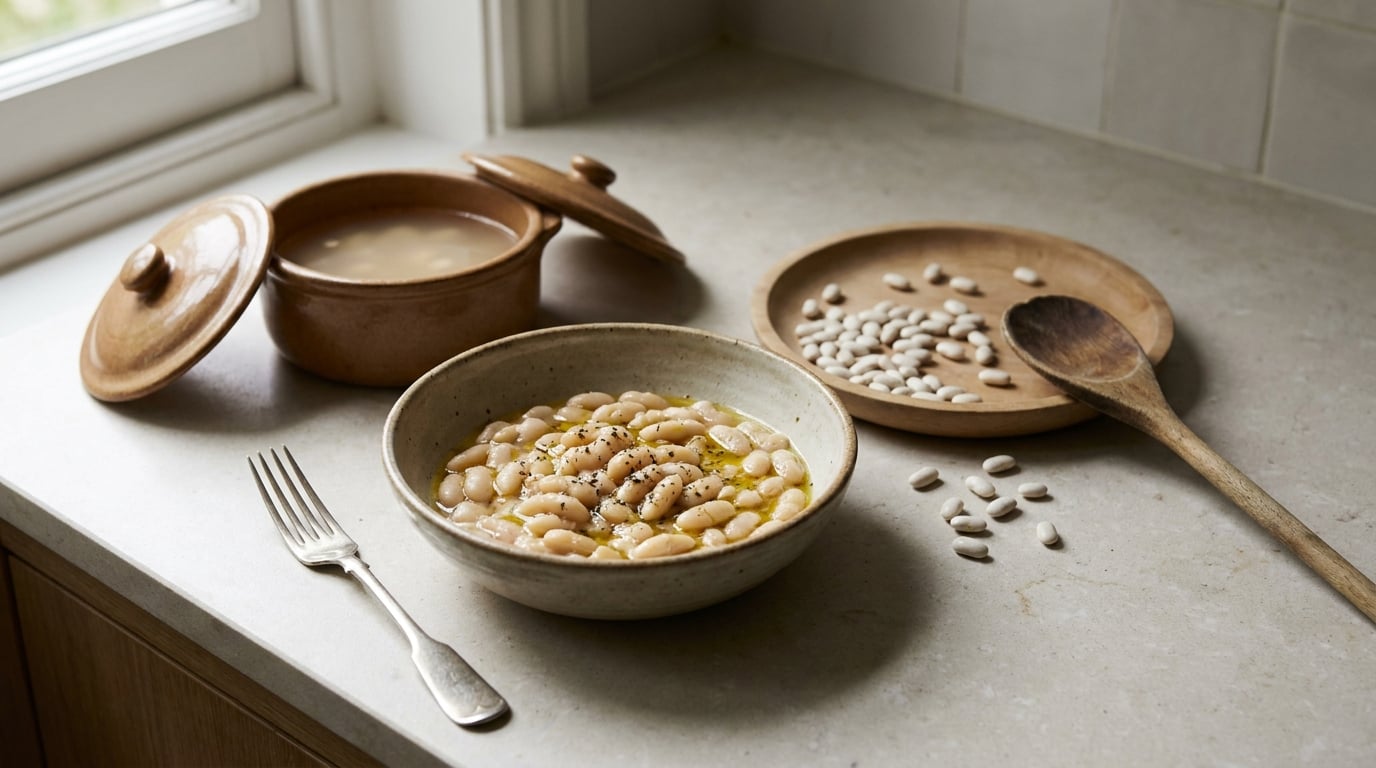
Yes, you can cook dried beans without soaking them first. Rinse and sort the beans, cover them with cold water, bring them to a full rolling boil for 10 minutes, then turn the heat down and simmer until a fork slides into a bean with no resistance. It takes longer than the soaked method, but the beans come out just as creamy and it all happens in one pot on the same day.
The catch is the rolling boil, and it is not optional. Ten full minutes at a hard boil is what makes unsoaked beans safe to eat, and it is the single step most people skip when they go straight to a gentle simmer.
Soaking is a shortcut, not a requirement. It softens the skins ahead of time so the cook is shorter. Skip it and the beans soak themselves up during cooking instead, which means more liquid in the pot and more time on the stove. Plan on 90 minutes to two and a half hours for most dried beans on the stovetop, plus about five minutes of actual work.
Table of Contents
- What You Need to Cook Dried Beans Without Soaking
- Step-by-Step
- Common Mistakes
- Frequently Asked Questions
- Can you really cook beans without soaking them first?
- How long do beans take to cook without soaking?
- Why must kidney beans be boiled for 10 minutes?
- Can a slow cooker replace soaking and stovetop cooking?
- Should salt or acidic ingredients be added at the beginning?
- How can I tell when beans are cooked without biting through their skins?
- Conclusion
What You Need to Cook Dried Beans Without Soaking
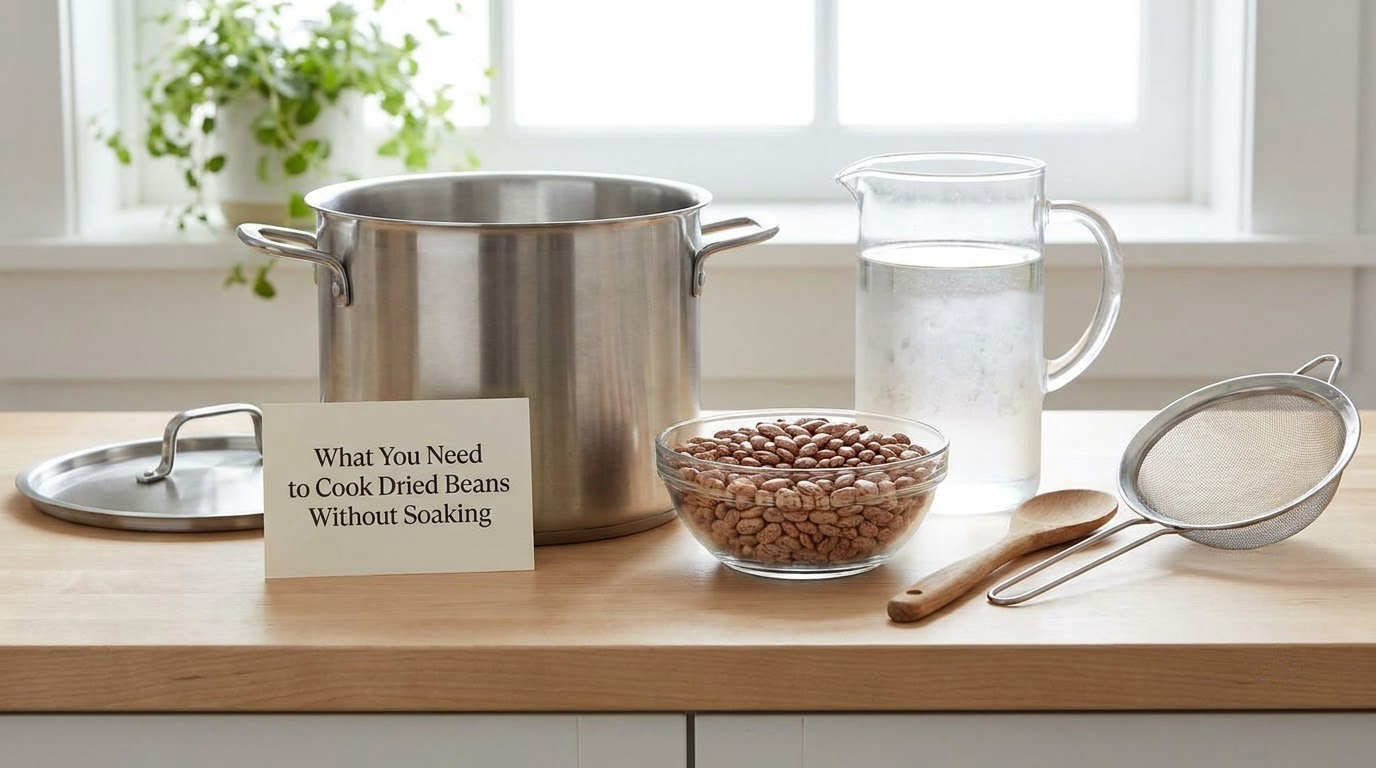
You need less than most people expect: the beans, cold water, a pot with a heavy lid, a spoon and something to drain with. No soaking bowl taking up counter space, no timer running overnight, no second pot of water to throw away.
- Dried beans: one cup of dry beans gives you roughly three to four cups cooked. That is about a cup and a half per person for a full meal.
- Cold water: enough to cover the beans by about two inches. Beans roughly double in size as they cook, and unsoaked beans absorb more water than soaked ones.
- A large pot with a lid: fill it no more than two-thirds full. A crowded pot drops below a proper simmer and the beans cook unevenly, with some hard and some breaking apart.
- A wooden spoon or spatula: for stirring and for skimming foam.
- A strainer or colander: for draining, plus a bowl or second pot underneath.
- Optional: a kitchen thermometer for the simmer, a bay leaf, onion, garlic or chili, and a teaspoon or so of baking soda.
Check the package before you start. Cooking instructions on the bag assume the beans were soaked, so the times there are shorter than what you need. What matters more is the bean size and how recently it was processed, both of which change the cook time more than any brand difference does.
Step-by-Step
How to cook dried beans without soaking: rinse and inspect the beans
Spread the beans on a light-colored baking sheet or a folded towel and pick through them. Look for stones, shriveled or split beans, and anything that is clearly not a bean.
Rinse the good beans under cold running water until the water runs clear. That takes about 30 seconds and it washes off field dust and starch that would otherwise make the cooking liquid cloudy and slightly bitter.
Put the beans in the pot. Do not soak them first, and do not skip this rinse because you are in a hurry. It is the fastest step in the whole process.
Cover the beans with fresh water
Add cold water until it sits about two inches above the beans. Starting with cold water lets the beans heat up gradually instead of their skins tearing from a sudden shock of heat.
Using fresh water also means you never have to think about the quality of a soaking liquid that sat out for a day. There is no soaking step to manage, which is half the appeal of this method.
Bring the beans to a vigorous boil
Set the heat to medium-high or high and wait for a full rolling boil, where big bubbles break the surface constantly and the whole pot is moving. Give the beans one stir as they come up so nothing is sticking to the bottom.
A layer of pale foam will rise to the top. That is starch and protein, and it is harmless. Skim it if it bothers you, but plenty of people just leave it and stir it back in.
Leave the pot uncovered at this stage. You want extra water to evaporate so the beans stay covered by liquid rather than sitting in half a pot of it.
Boil for 10 minutes, then simmer
Keep that hard boil going for at least 10 minutes. This is the food safety step. Raw kidney beans in particular contain a lectin called phytohaemagglutinin that is destroyed by sustained high heat, and 10 minutes of rolling boil is the standard advice from food safety authorities. Slow cooking them gently from cold is not equivalent.
After 10 minutes, turn the heat down until the water barely moves. You want occasional bubbles breaking the surface, a gentle simmer, not a second boil. A boil this low fries the outside of the beans while the inside stays hard.
Put the lid on, offset so steam can escape if the pot is splashing, and keep the heat low. You are cooking the beans slowly and gently from here.
Cook until tender
There is no honest single number, because the bean, the age of the bean and your altitude all matter. Use these ranges as a map, not a timer:
- Split peas: 20 to 30 minutes without a soak
- Lentils: 20 to 30 minutes
- Chickpeas: 60 to 90 minutes
- Black beans: 60 to 90 minutes
- Pinto beans: 90 to 120 minutes
- Kidney beans: 90 to 120 minutes
- Cannellini and great northern beans: 90 to 150 minutes
- Navy beans: 90 to 120 minutes
- Adzuki beans: 60 to 90 minutes
Small firm beans cook faster. Large beans, and any beans that have been sitting in a pantry for a couple of years, take longer. At high altitude water boils below 212 degrees Fahrenheit, so beans simmer more slowly and usually need extra time.
Start checking 20 minutes before the top of the range. Pull one bean out, let it cool for a few seconds, then press a fork gently into it.
Season, taste, and drain
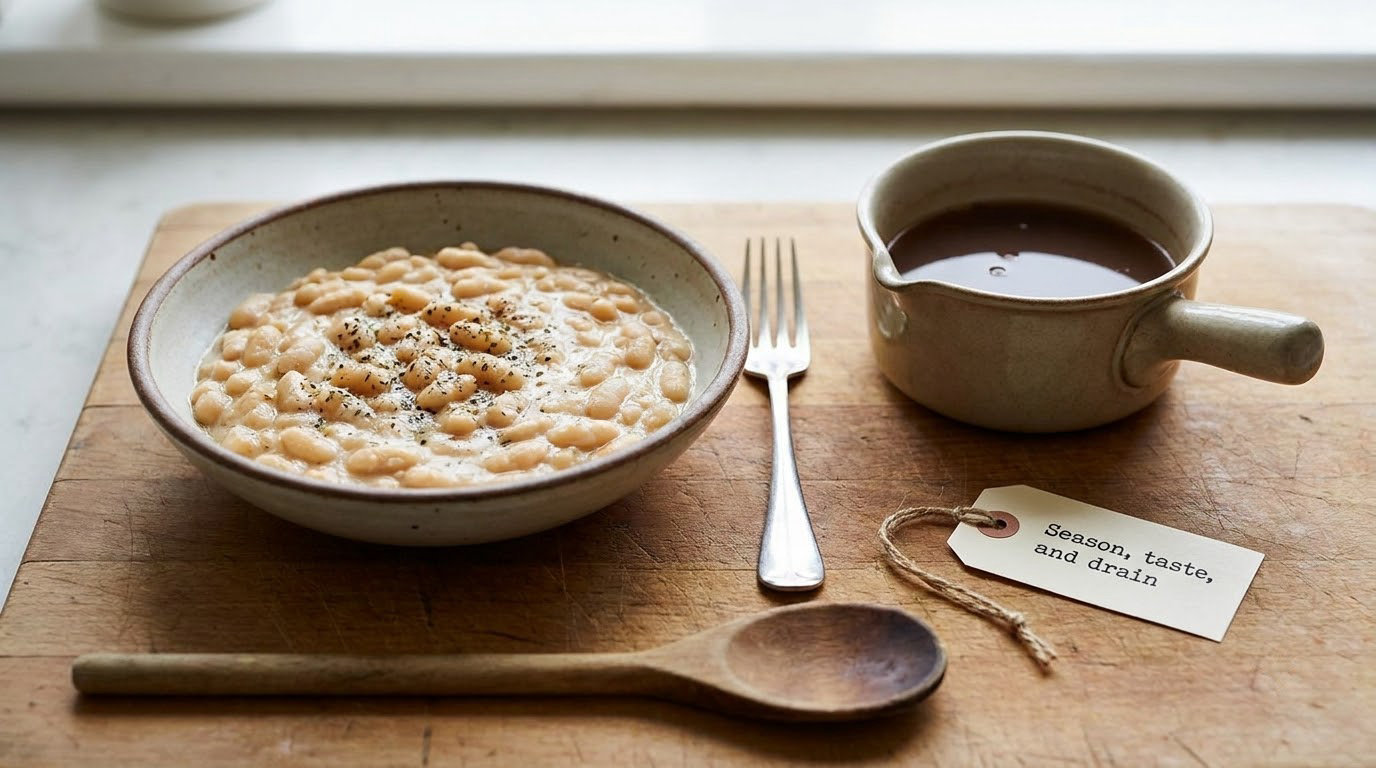
Salt the beans near the end, once the skins have started to soften. Adding salt at the beginning is the classic advice about hard beans, and while the effect is smaller than people claim, waiting costs you nothing and keeps the texture predictable.
Save the acid for the same reason. Tomatoes, vinegar, citrus and other acidic ingredients slow the softening of skins, which is why a pot of beans simmering in canned tomatoes takes longer than plain water. Add them when you are finishing the dish.
Onion, garlic, bay leaves and spices are fine from the start, since they are not acidic and they give the cooking liquid a good flavor.
The beans are done when a fork slides in with no resistance and the skins have loosened enough to wrinkle. If you bite into one, check the texture you actually want, not just that it is cooked. Leave room for the beans to keep firming up as they cool and absorb the rest of the liquid.
Save the cooking liquid in a jar in the fridge before you drain. It is starchy and good for soups, chili and bean salads, where the beans need something to sit in. It also works as aquafaba in place of egg white when baking, if you are the type who keeps it around for that reason.
Common Mistakes
Beans are still crunchy. Almost always one of three things: the beans are old, the simmer was too gentle, or the pot was too full. Check the package date first, since age is the one nobody suspects. Then look at your heat, and lift the lid to confirm water is actually bubbling.
The liquid dried up and the beans scorched. Common in the oven and in a slow cooker, and it can happen on the stovetop during a long cook. Add two to four cups of hot water, scrape the bottom gently, and carry on. One reader dried out a batch of cannellini after two hours and fixed it with four more cups of water and another hour, and ended up liking the firmer texture.
Beans turned mushy. You went too far past tender. Next time start testing earlier, and pull the pot a few minutes before you think they are done, because they keep cooking in the hot liquid.
Some beans burst while others stayed whole. That points to a boil that was too hard, a pot packed too full, or a big age gap within the batch. Use a gentle simmer and give the beans room.
Everything is bland. Seasoning went in at the start and got diluted over a long cook. Salt at the end and taste again.
You skipped the rolling boil. The most serious mistake on this list, because it is a safety issue for kidney beans and not just a texture one.
More gas than usual. Unsoaked beans have more of the fermentable sugars that live in the endosperm, and cooking from cold without a soak tends to make those sugars more digestible in one sitting but not always gentler on a sensitive gut. A long cook, a baking soda pinch, or a rinse after cooking all help.
A teaspoon of baking soda raises the pH and softens skins faster, at the cost of making the liquid more alkaline and the flavor slightly soapy if you overshoot. Half a teaspoon to a teaspoon in a pot of water is the usual amount people use successfully.
Doubling the batch does not double the cook time, but a bigger pot of beans does take longer to reach a simmer and needs more liquid. Give it another 15 to 30 minutes and check the water level halfway through.
A sturdy pot with a heavy lid is worth the investment here, because a thin lid lets heat out and the simmer keeps dropping to a lazy crawl. And when a pot turns out tough, remember that anyone cooking beans who says they follow the clock exactly is telling you about their beans that day, not yours.
Frequently Asked Questions
Can you really cook beans without soaking them first?
Yes. Soaking softens the skins ahead of time and shortens the cook, but it is not required for safe or good results. Rinse and sort the beans, cover them with cold water, boil hard for 10 minutes, then simmer gently until tender. The beans take roughly 30 to 60 minutes longer than soaked beans, and unsoaked beans need more water in the pot.
How long do beans take to cook without soaking?
On the stovetop, expect 20 to 30 minutes for lentils and split peas, 60 to 90 minutes for chickpeas, black beans and adzuki beans, and 90 to 150 minutes for pinto, kidney, navy, cannellini and great northern beans. Age and altitude shift these numbers, so start checking 20 minutes before the top of the range and test with a fork.
Why must kidney beans be boiled for 10 minutes?
Raw kidney beans contain phytohaemagglutinin, a lectin that can cause nausea and vomiting if the beans are eaten undercooked. Sustained high heat destroys it, which is why food safety authorities advise boiling red kidney beans for at least 10 minutes at a full rolling boil before simmering them gently. A slow cooker on low from cold is not enough on its own.
Can a slow cooker replace soaking and stovetop cooking?
A slow cooker works for most dried beans without a soak, including pinto, black and kidney beans. Skip the soaking, add water so the beans stay submerged, and cook on high for about 2 hours or on low for 8 to 10 hours. Watch the liquid near the end, since a slow cooker can dry out and brown beans that have not softened yet.
Should salt or acidic ingredients be added at the beginning?
Hold both until the beans are nearly tender. Acidic ingredients like tomatoes, vinegar and citrus slow the softening of the skins, and salt early can tighten them. Onion, garlic, bay leaves and other non-acidic aromatics are fine from the start, and you can always add salt at the finish to taste.
How can I tell when beans are cooked without biting through their skins?
Press a fork gently against one bean. When the beans are done, the fork slides in with little or no resistance and the skin has begun to wrinkle and loosen. Take a bean out to cool for a few seconds first, since the beans and liquid are far hotter than the pot rim suggests. Season only after they pass this test.
Conclusion
Rinse and sort the beans, cover them with cold water by two inches, boil hard for 10 minutes, drop to a gentle simmer, and taste until a fork goes through without resistance. Season after the texture develops and save the cooking liquid before you drain.
Start tonight instead of tonight’s soak and tomorrow’s cook. Five minutes of prep, one pot, and beans on the table in a couple of hours.