
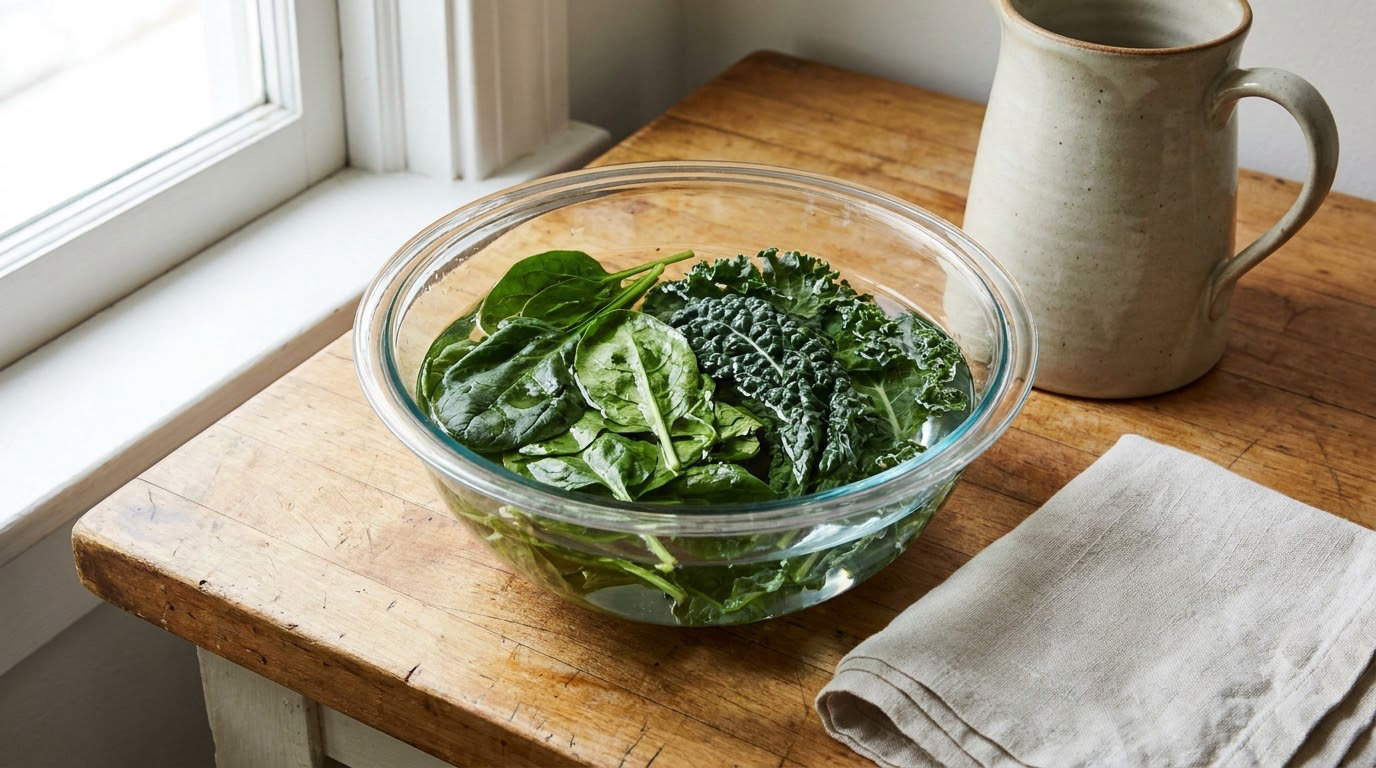
Learning how to revive wilted greens takes about 15 minutes and mostly uses things already in your kitchen. Separate the good leaves, submerge them in ice water for 15 to 30 minutes, dry them thoroughly, and they will crunch again. The one thing no method can undo is rot, so start by smelling the leaves.
Wilting and spoiling are two different problems. A head of romaine that went soft and lost its crunch in the crisper drawer is dehydrated, not dangerous, and cold water pulls the water back into the cells. Slimy leaves with dark spots, a sour smell, or fuzzy mold are decomposing, and no soak brings those back.
Updated for 2026.
Table of Contents
- What You Need
- Step-by-Step: How to Revive Wilted Greens
- Common Mistakes When Reviving Greens
- Frequently Asked Questions
- What is the fastest way to revive wilted greens?
- Can I revive wilted kale and romaine lettuce the same way?
- How long should leafy greens soak in ice water?
- Why should I dry greens after soaking them?
- How long do revived wilted greens last in the refrigerator?
- Is it safe to eat greens that are still wilted or slimy?
- Start With the Ice Bath
What You Need
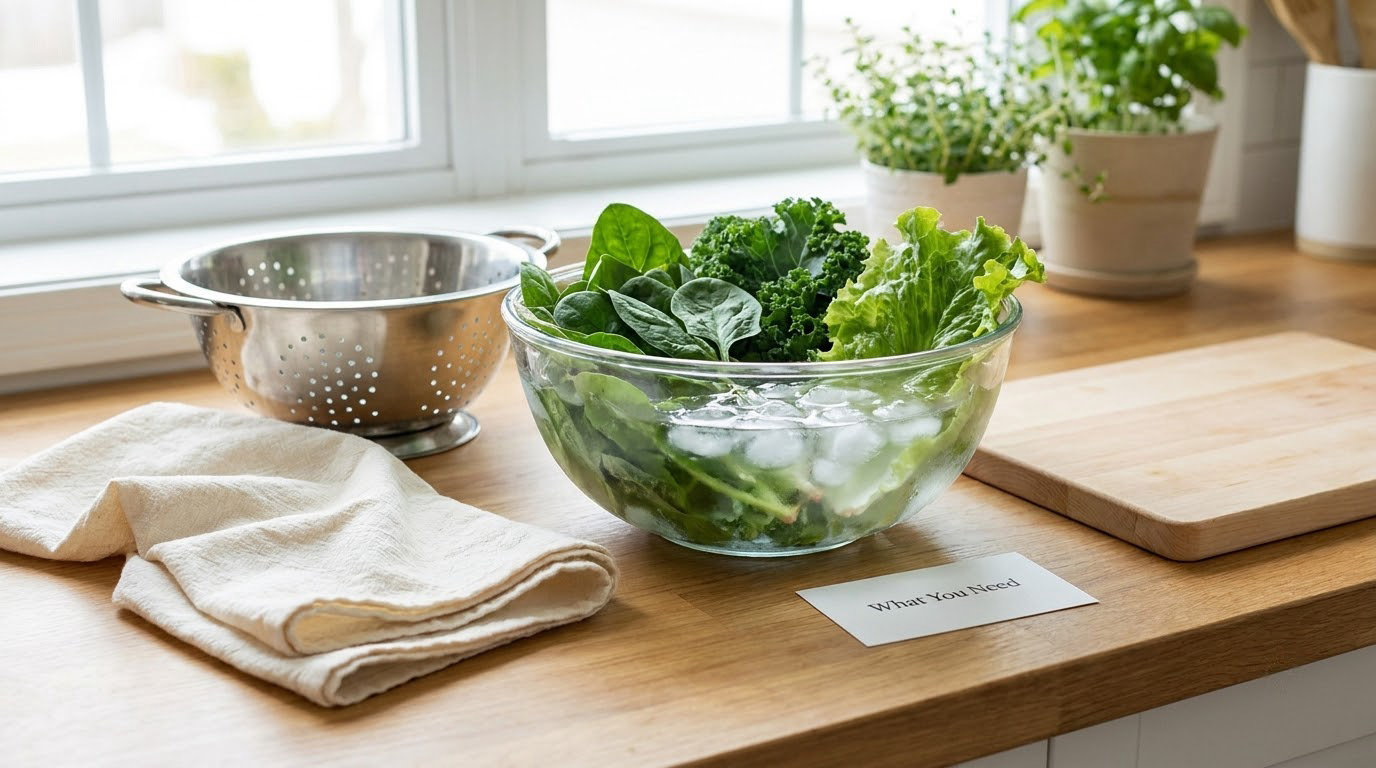
You need very little. The whole job is submerging leaves fully in cold water, then getting them bone dry before they go back near anything else.
- A large bowl or a stock pot — wide enough that leaves lie flat and covered. Crowding is the number one reason an ice bath underperforms.
- Cold water and ice — enough to make the bath noticeably cold, roughly half ice by volume is plenty.
- A colander — for lifting leaves out without crushing them.
- A salad spinner, or a clean kitchen towel — drying is not optional, it is the step that decides whether the leaves stay crisp.
- Optional: a small pinch of salt or a teaspoon of diluted vinegar — only for leaves with a light surface film, never for mushy ones.
- A cutting board and a sharp knife — for separating leaves and trimming any brown or bruised edges.
A paper towel matters more than it sounds. Keep a couple of dry sheets nearby because you will use them for drying and again for storage.
Step-by-Step: How to Revive Wilted Greens
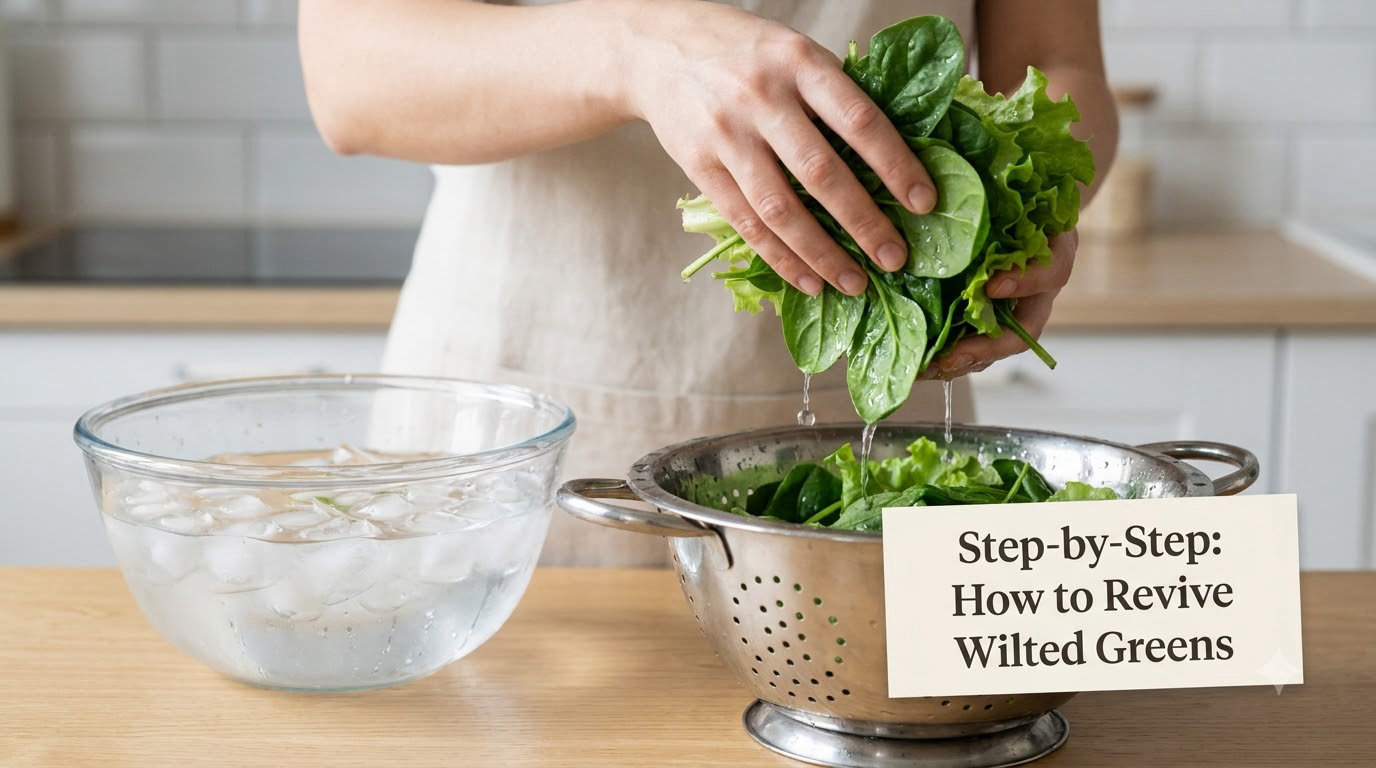
Here is the sequence I use. It works for romaine, spinach, kale, arugula, celery, carrots, beets, asparagus, and broccoli.
- Smell and sort the greens first. Pull out anything slimy, dark, or sour smelling and drop it in the compost.
- Separate the leaves. Break the head apart, pull the leaves off the core, and cut away damaged ribs or stems.
- Fill a bowl with cold water and ice. Use a container with room for everything to float freely.
- Submerge the leaves and weight them down. A plate or a bowl on top keeps stubborn romaine under the surface. Soak 15 to 30 minutes.
- Lift, dry, and use. Drain in a colander, spin or pat completely dry, then serve or refrigerate.
After the soak, leafy greens need 15 to 30 minutes, while sturdier vegetables can take an hour. Herbs only need 10 to 20.
| Vegetable | Water | Soak time | What you get back |
|---|---|---|---|
| Romaine, butter lettuce, green leaf | Ice water | 15 to 30 minutes | Full crunch, ribs included |
| Baby spinach | Ice water | 10 to 15 minutes | Soft but no longer limp |
| Kale, collards, Swiss chard | Ice water | 15 to 20 minutes | Firm leaves, stems still snappy |
| Arugula | Ice water | 10 minutes | Better bite, wilts fast again |
| Celery, broccoli, asparagus | Cold to ice water | 20 to 30 minutes | Crisp stalks and florets |
| Carrots, beets, radishes | Cold water | 30 to 60 minutes | Firm bite, sliced thin works best |
| Cilantro, parsley, dill | Ice water | 10 to 20 minutes | Upright stems for a glass of water |
| Zucchini, summer squash, tomatoes | Do not bother | Not worth it | They soften instead of reviving |
Use an Ice-Water Bath to Revive Wilted Greens Fast
An ice-water bath is the fastest method that does the best job. Fill the bowl with cold water, add ice, submerge the leaves for 15 to 30 minutes, lift them out, and dry them well.
Greens are more than 80 percent water, and that water sits under pressure inside rigid plant cells. That pressure, called turgor, is what makes a cold leaf of romaine snap. Harvesting and a few days in the fridge drain water out through the cell walls, pressure drops, and the leaf collapses.
Soaking reverses the movement. Water crosses the cell wall back into the leaf through osmosis, pressure climbs, and the leaf firms up. Very cold water slows tissue breakdown at the same time, which is why ice beats room temperature for restoring crunch.
Some sources tell you to use warm water for about 30 minutes instead, the way some supermarket produce departments do. Warm water does soften limp leaves and it works fine on very flat butter lettuce, but it softens the leaf structure too and it does nothing for bacteria on the surface. My rule: ice water when you want crunch back, warm water only as a last resort on leaves that are nearly flat and about to be served that same hour.
Use a Brief Boiling-Water Shock for Wilted Lettuce
For leaves that are completely flat but still bright and fresh, a few seconds in boiling water followed by an ice shock firms them faster than a long soak. This is the same move cooks use for iceberg lettuce.
Bring a pot of water to a boil and prepare a bowl of ice water alongside it. Drop the leaves in for 3 to 5 seconds only, then move them straight into the ice bath for a few minutes. Drain and dry.
This is a blanch, not a soak, and it changes the texture. Use it when you are serving the greens warm, in a stir-fry, or in soup. Raw salads want the ice bath instead.
Use a Salt or Vinegar Soak When Greens Are Slightly Slimy
A very light surface film on otherwise fresh leaves can be lifted with a mild soak. Add about a teaspoon of salt to a bowl of cold water, or a teaspoon of vinegar diluted in a quart of water, and submerge the leaves for no more than 10 minutes.
Rinse under running water afterward and dry as usual. More salt or more vinegar than that starts pulling water out of the cells, which is the opposite of what you want.
Be clear about the line here. A mild slippery film that smells fresh is a washing problem. Soft, wet, decomposing leaves that smell sour or like ammonia are a spoilage problem, and those go in the compost bin.
How to Tell When the Greens Are Ready
Lifted leaves are ready when they bend without folding over and feel heavy in your hand. Look for bright color with no new translucent patches, and touch a rib to confirm it has gone from rubbery to crisp.
Dry matters as much as crisp. Run the leaves through a salad spinner twice, then blot any thick pieces with a towel. Water trapped in the folds is what turns revived greens into soggy greens again within a day.
Wait about 30 minutes before dressing them. Ice-cold wet leaves repel oil and dressing, so your salad tastes under-seasoned. Dry leaves and a short rest give you a salad that actually takes the dressing.
Common Mistakes When Reviving Greens
These are the errors that turn a rescue job into a compost job.
- Crowding the bowl. Leaves packed together never get the water in contact with them. Use two bowls instead of one overloaded one.
- Using warm or room-temperature water. It rehydrates slowly and leaves the leaf soft. Cold water with ice is faster and crisper.
- Skipping the ice. Ice is not decoration. It holds the temperature down for the whole soak instead of warming up halfway through.
- Soaking for hours. Over 60 minutes and delicate leaves go from revived to waterlogged and grey.
- Not drying the leaves. Residual moisture speeds rot, and wet greens will not hold dressing. Spin and blot every time.
- Reviving greens that are already spoiling. Smell the leaves first. Sour, slimy, spotted, or moldy means compost, no matter how nice they look after a soak.
Two habits prevent most of this in the first place. Store greens dry, never wet, since the water you rinse them in is what turns the crisper drawer into a swamp. And replace the paper towel in a bag of pre-washed greens every couple of days; people on cooking forums report that swapping out the damp towel alone buys another 2 to 3 days before the bag turns.
Keep your refrigerator at 40°F or below, wash greens just before you eat them, and use stored leafy greens within 3 to 5 days of purchase. Trimmed leaves in the revived state will not outlast about two days.
Frequently Asked Questions
What is the fastest way to revive wilted greens?
Submerge the leaves in ice water for 15 to 30 minutes. A bowl or pot with plenty of room keeps them from bunching up, and a plate on top holds stubborn romaine under the surface. Lift them out, spin or pat them dry, and they are crisp within about half an hour.
Can I revive wilted kale and romaine lettuce the same way?
Yes, both take the same ice-water soak. Kale is tougher, so it firms in 15 to 20 minutes, while romaine usually needs the full 30. Thick kale stems are better trimmed and eaten separately, or soaked for a full hour in cold water.
How long should leafy greens soak in ice water?
Soak delicate leafy greens for 15 to 30 minutes and herbs for 10 to 20. Heartier vegetables such as carrots, beets, and celery can soak up to an hour. Going past an hour leaves delicate leaves waterlogged, soft, and grey rather than crisp.
Why should I dry greens after soaking them?
Because trapped water is what causes rot. Greens hold water in the folds and ribs, and that moisture speeds bacterial growth in the fridge. A salad spinner plus a pat with a towel gives you dry leaves that stay crisp for days instead of turning soggy overnight.
How long do revived wilted greens last in the refrigerator?
Use revived greens within two days, stored fully dry in a paper-towelled bag or container in the crisper drawer. If you cannot get them bone dry before refrigerating, skip the fridge and use them the same day. Keep your refrigerator at 40°F or below.
Is it safe to eat greens that are still wilted or slimy?
Wilting alone is safe. Limp or dry leaves that still smell fresh, hold their color, and have no slime are fine to eat. Discard greens that are slimy, mushy, spotted, moldy, or give off a sour or ammonia-like smell, since smell is the most reliable test.
Start With the Ice Bath
If you do nothing else, sort the leaves, soak them in ice water for 15 to 30 minutes, and dry them properly. That single routine rescues limp romaine, spinach, kale, celery, and herbs that would otherwise be thrown out, and it costs nothing but fifteen minutes.
To keep it from happening again, store your greens dry, swap out the paper towel in every bag, and keep fruit such as apples and bananas away from the crisper drawer. Learn how to revive wilted greens once and it becomes habit rather than an emergency.