
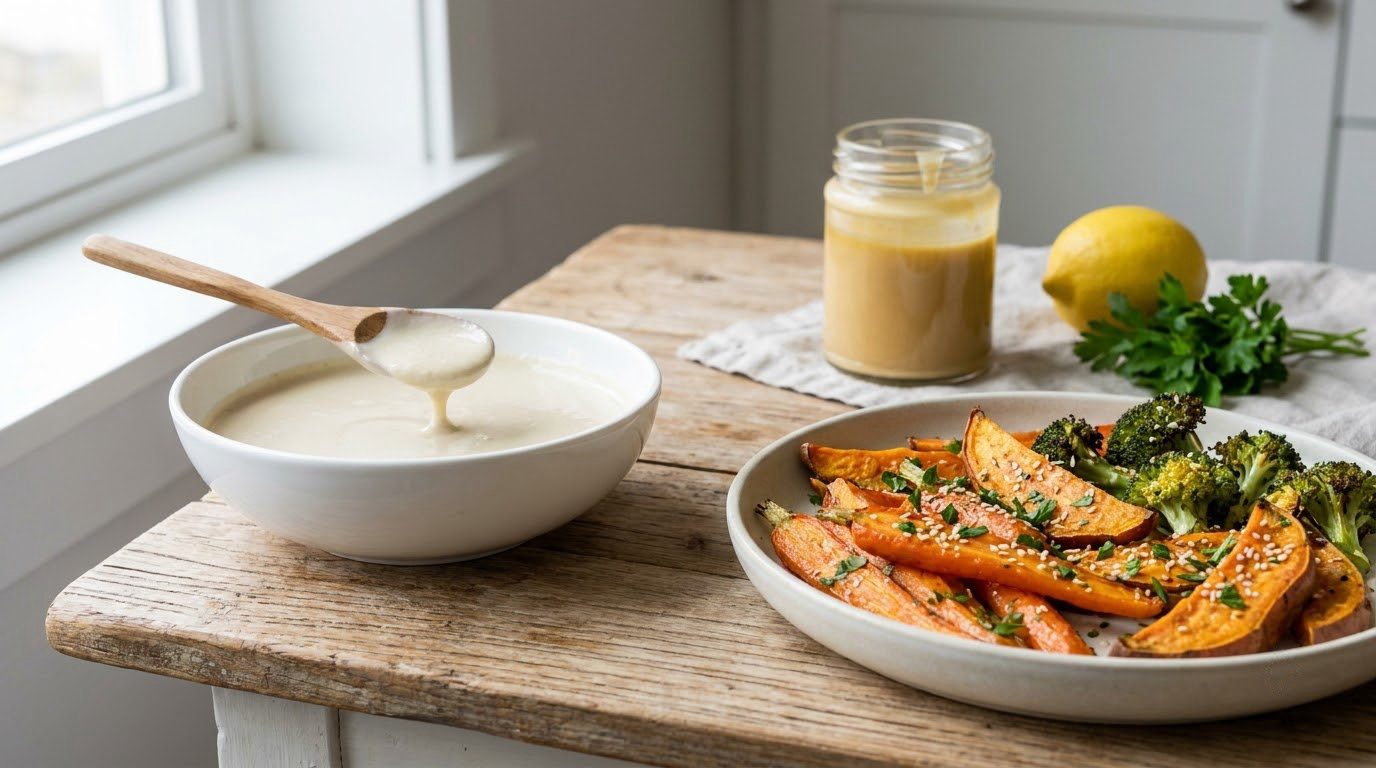
Tahini is a paste made from ground roasted or raw sesame seeds, and it works far beyond hummus. If you are wondering how to use tahini beyond hummus, the short answer is simple: treat the jar like a dairy-free cream, a nut-butter binder, or a savory sauce base, and it becomes a weeknight ingredient instead of a one-recipe purchase.
I know the pattern. You buy a jar for one recipe, make it once, and then the tahini sits at the back of the fridge until the smell gets stale enough that you toss it. The leftover-jar problem comes up again and again in cooking forums, along with two complaints that always travel together: the sauce seizes the moment lemon hits it, and the flavor turns bitter enough that people decide they simply do not like tahini.
Neither problem is your fault. Tahini is a thick sesame paste that needs liquid added slowly, and bitterness usually comes from a jar made with heavily toasted seeds. Everything below still holds in 2026, because tahini has not changed in a thousand years and neither has the way it behaves in a bowl.
Here is what you can make with a jar, organized so you can find the right one fast. Each section gives you the ratio, the method, and a specific dish to try it on.
Table of Contents
- How to Use Tahini Beyond Hummus: Quick Guide
- 1. Make a Creamy Tahini Salad Dressing
- 2. Turn Roasted Vegetables Into a Tahini Sauce
- 3. Build a Nutritionally Rich Tahini Grain Bowl
- 4. Add Tahini to Pasta Sauces
- 5. Thicken Soups and Stews with Tahini
- 6. Cream Up Overnight Oats and Smoothies
- 7. Make Tahini Toast, Flatbread, and Pizza
- 8. Bind Burgers, Meatballs, and Veggie Patties
- 9. Dress Potatoes and French Fries with Tahini
- 10. Spoon Tahini Over Eggs and Breakfast Bowls
- 11. Add Tahini to Chocolate and Desserts
- 12. Make Tahini Sauces for Frozen Treats
- Frequently Asked Questions
How to Use Tahini Beyond Hummus: Quick Guide
Here is the whole list at a glance, with the flavor each use leans toward and how the tahini behaves in the dish. The right-hand column tells you whether tahini works on its own or needs liquid mixed in, which is the single most useful thing to know before you start.
| Use | Best for | Flavor profile | Texture | Alone or mixed |
|---|---|---|---|---|
| Salad dressing | Chickpea, cucumber and herb salads | Bright, garlicky, nutty | Pourable | Mixed with lemon and water |
| Roasted vegetable sauce | Carrots, cauliflower, broccoli, sweet potato | Smoky, tangy | Spoonable | Mixed with lemon and spice |
| Grain bowl drizzle | Quinoa, brown rice, greens | Bright, herby | Loose and silky | Mixed |
| Pasta sauce | Tomato, white bean, pasta water | Savory, creamy | Coating consistency | Mixed into sauce |
| Soup thickener | Lentil, chickpea, vegetable soups | Nutty, savory | Creamy | Mixed into the pot |
| Oat and smoothie thickener | Overnight oats, chia pudding, smoothies | Nutty, sweet | Creamy | Mixed |
| Toast and flatbread spread | Sourdough, pita, flatbread, pizza | Nutty, sweet-savory | Spreadable | Alone or thinned |
| Binder | Chickpea patties, veggie burgers, meatballs | Savory, nutty | Firm, holds shape | Mixed with a starch |
| Potato dressing | Baked potatoes, sweet potato, fries | Tangy or warmly spiced | Drizzleable | Mixed, or used as a rub |
| Egg topping | Poached and scrambled eggs, avocado | Savory, spicy | Thin drizzle | Alone or thinned |
| Dessert drizzle and binder | Baked apples, dates, energy bites | Sweet, roasted | Thick | Mixed |
| Frozen treat sauce | Frozen bananas, non-dairy ice cream | Sweet, tangy | Creamy after blending | Mixed with a splash of liquid |
1. Make a Creamy Tahini Salad Dressing
A basic tahini dressing is a quarter cup of tahini, the juice of one lemon, and cold water added until it pours. Whisk the tahini and lemon together first and let it seize into a stiff paste, which is exactly what should happen, then trickle in cold water a spoonful at a time while whisking. The sauce loosens into something smooth and pourable after about half a cup of water, and cold water beats ice water except when the sauce refuses to loosen.
Build it over a bowl of chickpeas, cucumber, cherry tomatoes, and a heavy hand of parsley or mint. Add a teaspoon of garlic, a pour of olive oil, and a pinch of salt, and you have the dressing people ask for most in the cooking forums: a sauce base that makes plain greens, bowls, and roasted vegetables taste finished.
2. Turn Roasted Vegetables Into a Tahini Sauce
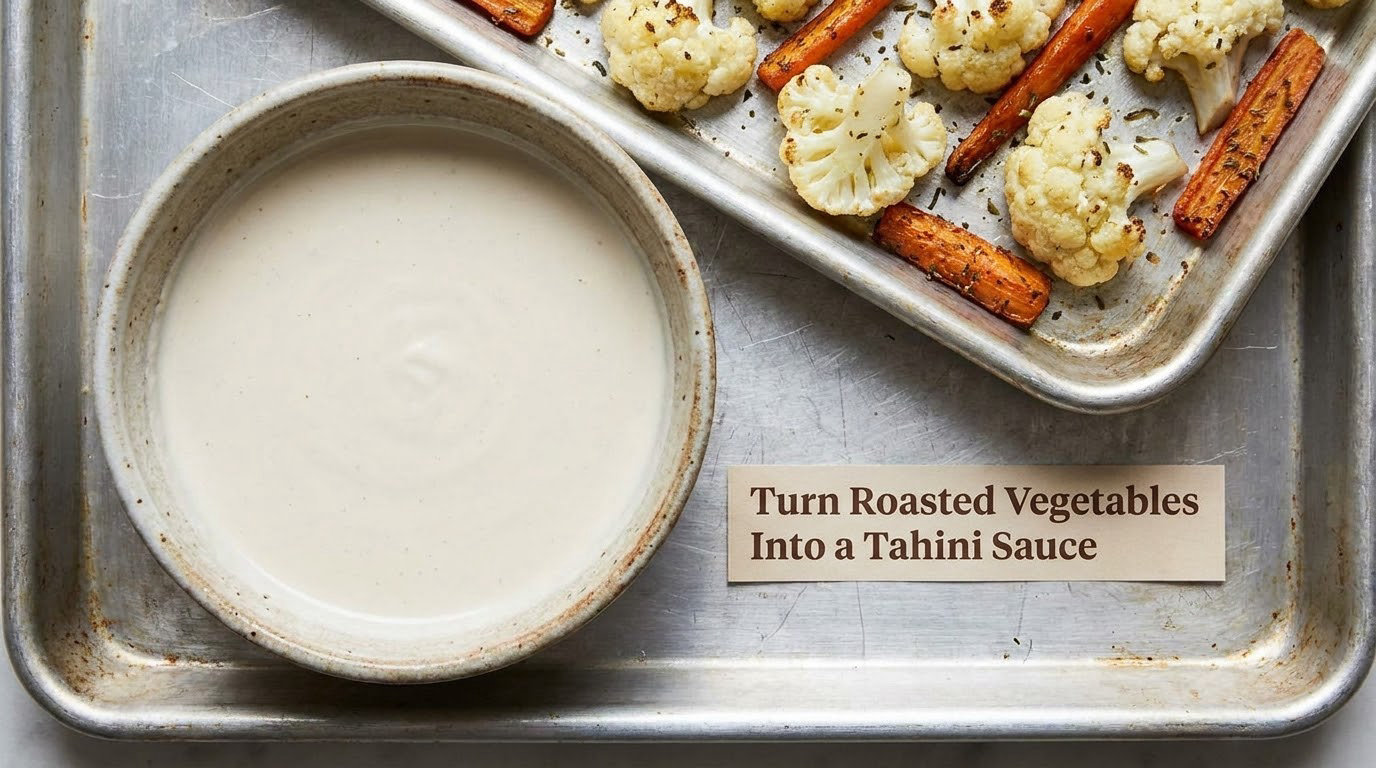
Roasted vegetables are bland on their own because caramelization gives you sweetness but no fat. Spooning tahini sauce over them at 425°F (220°C) for the last few minutes of roasting is the fix, and the sauce browns slightly in the tray oven without burning, which gives you something far better than a cold drizzle.
Whisk two tablespoons of tahini with the juice of half a lemon, two to three tablespoons of water, and half a teaspoon of smoked paprika. The lemon and water thin it to a spoonable consistency that sits on a floret instead of sliding off, and the paprika adds smoke that plays off the char. If the sauce looks gluey, add a teaspoon of water at a time until it runs off the spoon.
3. Build a Nutritionally Rich Tahini Grain Bowl
A grain bowl is the easiest place to use up a lot of tahini at once. Start with cooked quinoa or brown rice, add roasted vegetables, chickpeas, greens, and fresh herbs, then drizzle a lemon-tahini sauce over everything while the bowl is still warm.
The difference from a heavy dressing is quantity and salt. Use a tablespoon of tahini per two cups of grain rather than pouring until it looks covered, and season the bowl itself with salt, pepper, and a squeeze of lemon so the sauce does not have to do all the work. A pinch of sumac or za’atar on top gives it a savory edge that plain olive oil cannot.
4. Add Tahini to Pasta Sauces
Tahini thickens and enriches a tomato sauce without cream, which matters if you cook dairy-free. Whisk two tablespoons into a cup of warm tomato sauce with one crushed garlic clove, a small handful of spinach, and enough pasta water to make it coat the noodles.
It also works in a white bean sauce, where tahini and cannellini beans are almost the same texture. Keep the pan off high heat while you stir and add a splash of starchy pasta water if the sauce tightens up. Tahini does not curdle the way an egg yolk does, but boiling hard can make it grainy, so give it a gentle simmer only.
5. Thicken Soups and Stews with Tahini
For body without cream, whisk one tablespoon of tahini into about two cups of warm soup. Red lentil and vegetable soup is the best demonstration: the lentils give the soup its own creaminess, and tahini adds a roasted, savory note that plain stock never has.
Stir it in off the heat if you can, and do not let the pot come to a rolling boil afterward. There is no blending step, which is the quiet reason tahini beats cream as a thickener for weeknight cooking. Chili, ginger, and curry powder all sit well with it if you want the soup to lean warm rather than Mediterranean.
6. Cream Up Overnight Oats and Smoothies
A teaspoon of tahini in a berry oat bowl makes the oats taste closer to a cooked, creamy porridge than a cold bowl of raw oats. Stir it in with the milk of your choice, then let the oats chill overnight. Dates, a spoon of maple syrup, or a splash of vanilla cover the savory edge that a less sweet fruit can leave behind.
In smoothies, a tablespoon works as a thickener that adds body without turning the drink chalky, especially with banana and oats. The rule is the same in both cases: pair tahini with something sweet and something acidic, and the savory note disappears. Berries, banana, and citrus all do this well.
7. Make Tahini Toast, Flatbread, and Pizza
Spread tahini thin on hot toast and finish it while the bread is still warm, which lets the toast drink the sauce instead of sitting on top of it. Honey and flaky salt is the classic pairing, and a pinch of chili flakes turns the same breakfast into something with edges.
On flatbread and pizza, drizzle tahini over the top after baking rather than before, so it stays nutty instead of drying out in a hot oven. Roast a tray of vegetables, pile them on the flatbread, and add the tahini with herbs at the end. Add delicate ingredients such as fresh herbs, seeds, and greens only after the heat is off, or they wilt.
8. Bind Burgers, Meatballs, and Veggie Patties
Tahini is an egg-free binder that also brings flavor, so patties made with it hold together without the rubbery texture breadcrumbs give you. For a standard batch of about eight chickpea and vegetable patties, mash two cups of chickpeas, mix in two tablespoons of tahini, one tablespoon of flour or ground oats, garlic, salt, and pepper, then rest the mixture in the fridge for fifteen minutes before shaping.
The resting step is the one people skip and then wonder why the patties fall apart. If the mix is loose, add a spoon of oat flour; if it is dry, a teaspoon more tahini fixes it. The same ratio works for lentil patties, tofu burgers, and meatballs made without egg, and it makes tahini a nut-free substitute for peanut butter in a stir-through or spread.
9. Dress Potatoes and French Fries with Tahini
Baked potatoes and fries do not need a heavy sauce when you have a good lemon-herb drizzle. Whisk a tablespoon of tahini with the juice of half a lemon, a teaspoon of Dijon or honey mustard, three tablespoons of water, and chopped dill or parsley. It is light, sharp, and cuts straight through a buttery baked potato.
For roasted sweet potato, use tahini as a seasoning instead: toss the cubes with olive oil and salt, dust them with a spoonful of tahini, and roast at 425°F (220°C) for 25 to 30 minutes. Keep the tahini layer thin or it scorches, and for crisp oven fries, brush on oil first so the tahini sticks to the surface rather than sliding off.
10. Spoon Tahini Over Eggs and Breakfast Bowls
A teaspoon-level drizzle of tahini is all a poached egg needs. The simplest version is tahini thinned with a little warm water, spooned over the egg, and finished with flaky salt; a bolder version adds hot honey and a pinch of chili flakes, which is the combination people most often make on repeat.
It works the same way over scrambled eggs, boiled eggs halved on toast, and avocado, where the nuttiness stands in for the butter you would normally add. For milder breakfast bowls, blend tahini with lemon, olive oil, and water into a pourable sauce and serve it on yogurt, fruit, or breakfast grains rather than on the egg itself.
11. Add Tahini to Chocolate and Desserts
Tahini in sweet cooking is about balance. Cocoa and maple syrup or dates pull against the roasted bitterness, so swirl two tablespoons of tahini into a bowl of chocolate hummus, or roll energy bites with a spoonful of tahini and a drizzle of maple to hold them together.
Baked apples are the easiest demonstration: core an apple, fill the hole with a spoonful of tahini and a drizzle of maple syrup, and bake until the edges caramelize. A date and tahini bite is the fastest version, since the date supplies the sweetness and stickiness. Tahini also works as a straight drizzle over a warm brownie, where it cools the chocolate and adds a savory edge.
12. Make Tahini Sauces for Frozen Treats
Whisk tahini with a splash of water, lemon, or coffee until it runs, and you have a sauce for frozen bananas or non-dairy ice cream that softens slightly in seconds. A strawberry version is the one to make first: mash four strawberries with a teaspoon of maple syrup, then stir in a tablespoon of tahini and a squeeze of lemon.
Thickenness changes once the mixture chills, so loosen it at serving time with a few drops of water rather than guessing up front. Tahini also works as a coating for frozen yogurt bars, mixed into a granola cluster with oats and honey, or stirred into a smoothie bowl that has been sitting out for ten minutes.
Frequently Asked Questions
What can I use instead of tahini?
Sunflower and pumpkin seed butters are the closest swaps, with the same creamy texture and neutral nuttiness, and both are nut-free if sesame is the allergen in your house. Almond butter works too, though it brings its own flavor. For a thinner sauce, use any unsweetened nut butter with extra liquid, since nut butters carry more oil than tahini and thicken faster.
How long does tahini last after opening?
Tahini is unusually shelf-stable because sesame oil stays fresh longer than many cooking oils. An opened jar keeps for several months in a cool cupboard and longer in the fridge, as long as you use clean spoons and stir any separated oil back into the paste. If it smells like old crayons or nail polish remover, throw it out without tasting it.
How can I make tahini taste less bitter?
Bitterness usually comes from sesame that was toasted too dark, not from the seeds themselves. Switch to a lighter jar, add acid such as lemon juice or vinegar, and add something sweet like maple syrup, honey, or a chopped date to round out the edge. Blending the sauce smooth also helps, because grit reads as harsh flavor.
Is tahini healthy, and what is a typical serving size?
Tahini is calorie-dense and nutrient-dense: roughly 90 calories, 3 grams of protein, 2 grams of fiber, and about 8 grams of mostly unsaturated fat per tablespoon. A tablespoon or two a day is a reasonable serving for most people, and more than that is meaningful extra energy. If you have a medical condition, ask your doctor or a registered dietitian first.
Can I use tahini sauce on raw vegetables?
Yes, and it is one of the easiest ways to make a plate of raw carrots or cucumber worth eating. Thin the sauce with lemon juice and water until it pours, then serve it as a dip for carrot, cucumber, bell pepper, or fennel sticks. Make it fresh and keep it cold, since a raw-vegetable dip sits out longer than a cooked dish would.
Should tahini dressing be refrigerated?
Refrigerate homemade tahini dressing and use it within about four to five days, especially if it contains fresh lemon juice, garlic, or herbs. A jar of plain tahini does not need refrigeration at all. Cold dulls the flavor slightly, so bring the dressing out of the fridge about fifteen minutes before serving.
Start with the dressing. Whisking a quarter cup of tahini with lemon and water takes about two minutes, and it teaches you the one behavior that trips everyone up: the sauce gets thick before it gets thin, and that is the sauce working, not failing.
After that, pick one of the uses that matches how you already eat. Tahini on roasted vegetables and pasta takes no extra planning, tahini as a binder turns leftover chickpeas into patties, and the drizzle versions work on whatever is already in the fridge. Keep a spoon in the jar instead of pouring, stir the oil back in before you use it, and you will stop buying tahini for a single recipe.