
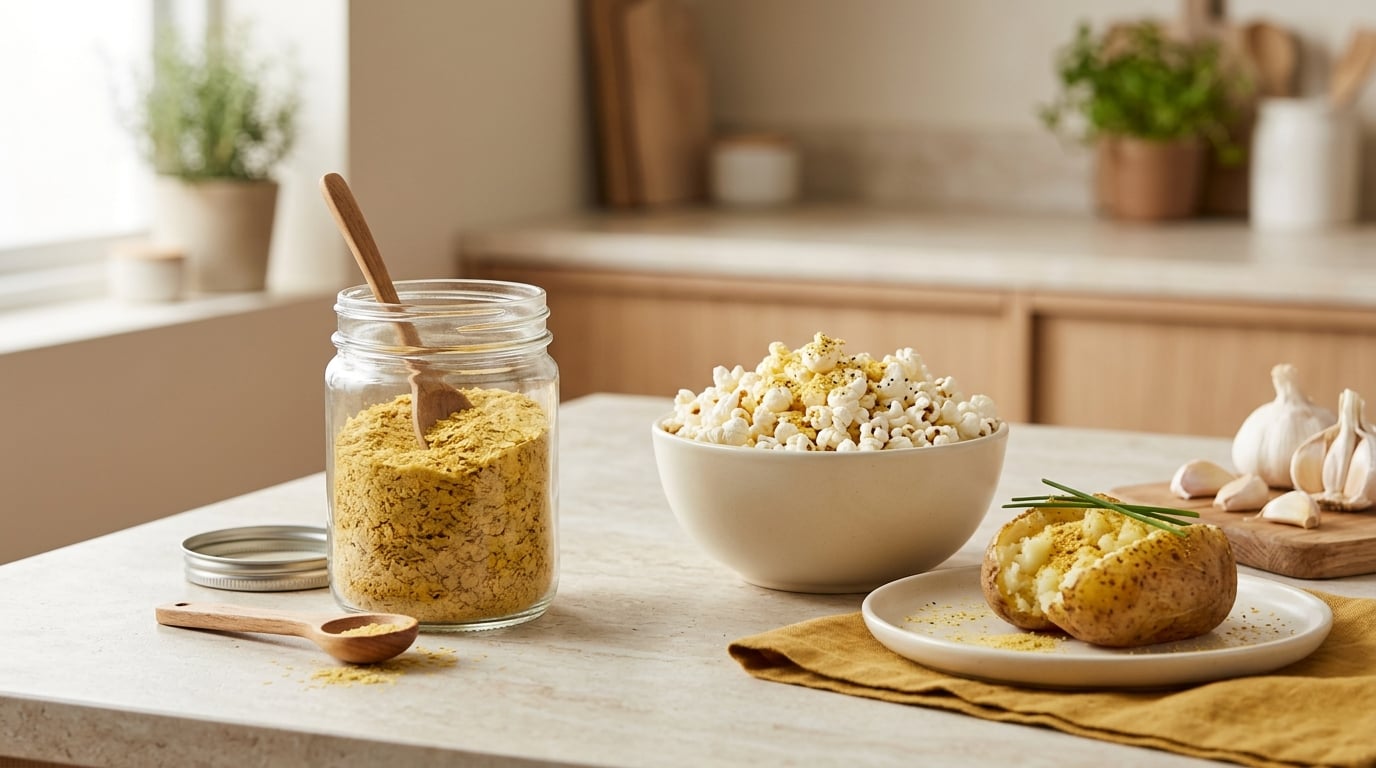
Nutritional yeast is the fastest way to add a savory, cheese-like taste to almost anything: sprinkle it on popcorn, whisk it into a warm sauce, or fold it into mashed potatoes. Learning how to use nutritional yeast in cooking takes about five minutes and no special equipment, and the whole thing rests on one rule — start small, taste, then add more.
Table of Contents
What You Need
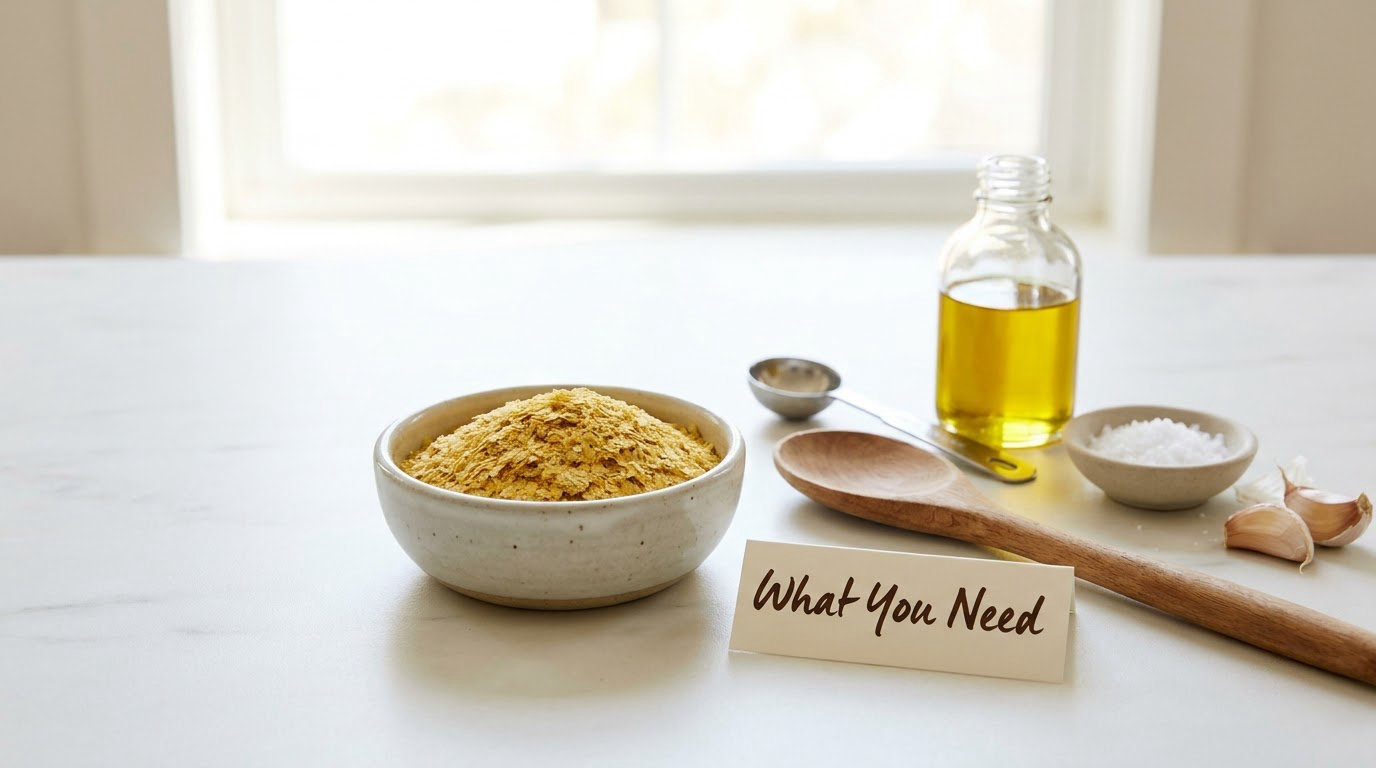
Before anything else, it helps to know what you actually bought. Nutritional yeast, often called nooch, is a deactivated strain of the same yeast used in baking, dried and stopped so it can no longer leaven bread. It is not a cheese, and it is not active dry yeast, so it will not make your dough rise.
Real vegan cheese, by contrast, is blended from cashews, coconuts, or similar ingredients. It has a completely different texture and often a much milder flavor, which is why cooks reach for nutritional yeast when they want a sharp, parmesan-style hit. Check the label for the yeast source, the added B vitamins, and how much is in the blend.
Once you know what you have, the rest is a short list.
- Nutritional yeast, flakes or powder
- Whatever you are already cooking: pasta, popcorn, potatoes, vegetables, soup, tofu, eggs, or grains
- Garlic powder, smoked paprika, dried herbs, salt, and pepper for seasoning blends
- A neutral oil or butter if you plan to bloom the yeast in a pan
- Vegetable broth, plant milk, or pasta water for creamy sauces
- A small jar or shaker, if you want to make your own seasoning blend
- A grater or food processor for a quick vegan parmesan
A tablespoon measure matters more than any tool. Beginners consistently underestimate how strong a little nooch can be.
Step-by-Step: How to Use Nutritional Yeast in Cooking
Choose the Right Nutritional Yeast for Cooking
Look for unflavored nutritional yeast with a short ingredient list. Plain deactivated yeast gives you full control, and fortified varieties add B vitamins that vary by brand, so compare labels if that matters to your diet.
Flakes versus powder is a texture decision more than a flavor one. Flakes keep their shape, which makes them ideal for finishing on popcorn, salads, or a baked casserole. Powder dissolves almost instantly, so it is the better choice for sauces, soups, and anything you want smooth. Buying both is common among regular cooks, and honestly it is not an expensive habit to start.
Add It to a Warm or Hot Dish
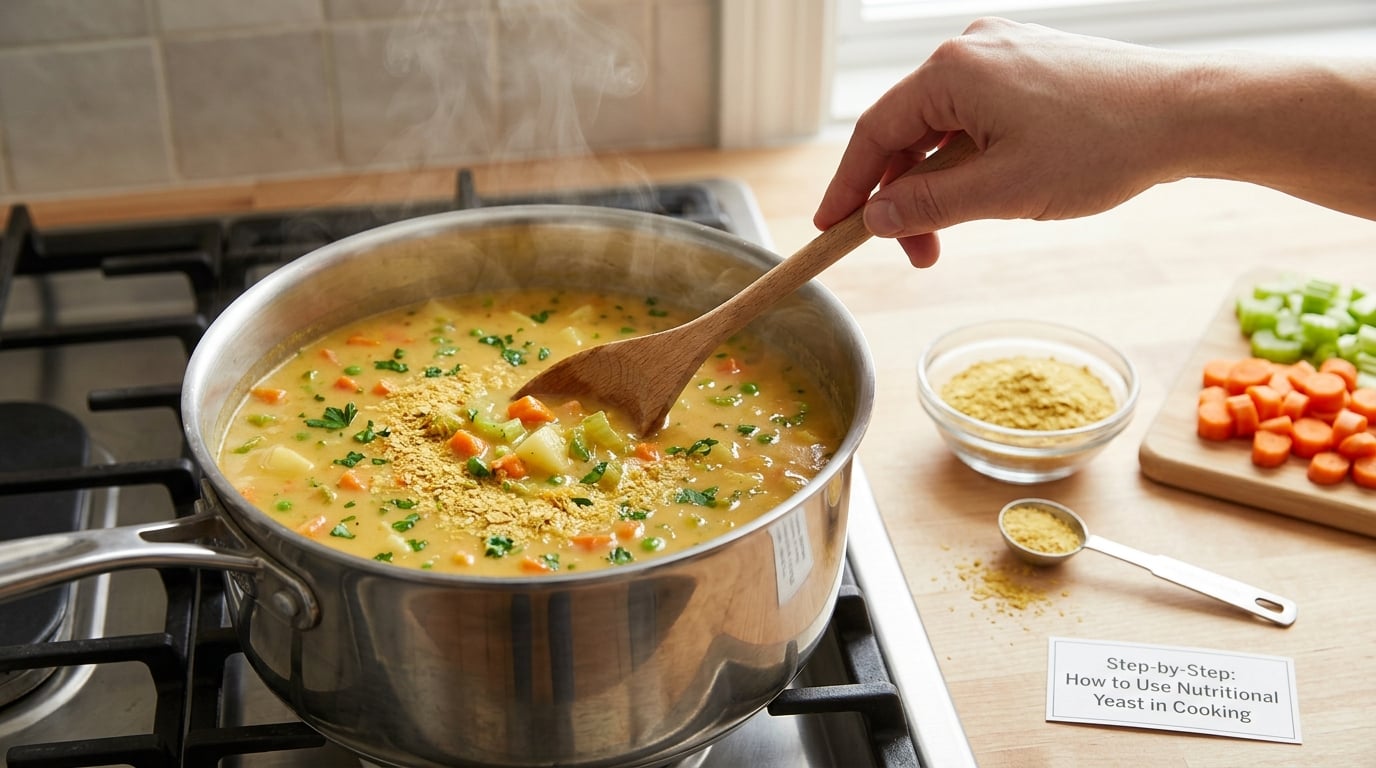
Warm food blends the flavor in; cold food leaves you tasting the yeast itself. For a warm dish, start with one tablespoon for roughly two servings, stir it in near the end of cooking, and give it a minute to work through the sauce.
Soups and stews are the friendliest place to begin. Warm the broth, add your seasonings, then stir in the yeast off the heat. A potato chowder or a bowl of lentil soup tastes noticeably more finished with a spoonful stirred in at the table.
If you like the flavor deeper, bloom it first: warm a spoonful of oil in a pan for thirty seconds, add the yeast with a pinch of garlic powder, and stir until the pan smells toasty. That takes about a minute and works well before you add pasta water or broth.
Mix It Into a Dry Seasoning Blend
This is the most useful trick for people who bought a canister and did not know what to do with it. A dry blend keeps for months, needs no cooking, and works on anything that comes out of an oven or a microwave.
- Everyday nooch salt: 3 parts nutritional yeast, 2 parts salt, 1 part garlic powder and black pepper
- Italian-style blend: 2 parts nutritional yeast, 1 part each dried oregano, dried basil, garlic powder, and a pinch of red pepper flakes
- Curry dust: 3 parts nutritional yeast, 1 part each smoked paprika, ground cumin, coriander, turmeric, and a pinch of salt
- Cheesy popcorn mix: 3 parts nutritional yeast, 1 part nutritional yeast-free butter substitute or a little melted vegan butter, plus salt
Shake these on warm popcorn, roasted broccoli, baked potatoes, scrambled eggs, or roasted cauliflower. Home cooks on cooking forums describe mixing nooch with a little oil and salt as a dressing for rice and broccoli, and it works about as well as it sounds.
Make It Creamy Without Dairy
This is where powder earns its place. Warm a splash of oil with garlic and red pepper flakes, pour in vegetable broth or plant milk, and whisk in the yeast off the heat until the sauce looks glossy rather than grainy.
A simple master version uses two tablespoons of nutritional yeast, one cup of plant milk, one tablespoon of starch or a spoonful of blended cashews for thickness, and salt to taste. Drizzle it over baked potatoes, coat roasted vegetables, or fold it through cooked pasta with a splash of pasta water.
Mashed potatoes get the same treatment. Warm the potatoes, then stir in a tablespoon or two with a little plant milk and salt, and mash again. It thickens the mash and gives it a savory edge that plain olive salt never does.
Use Nutritional Yeast as a Topping
Yes, you can just sprinkle nutritional yeast straight onto food — that is how it is used most often. Flakes work best here, and the surface wants a little moisture to cling to, so a pasta with olive oil, a bowl of soup, or a baked potato with a pat of vegan butter all hold it well.
Toss it through a grain bowl, over roasted vegetables, or across a salad with chopped nuts. For a quick parmesan, pulse half a cup of flakes with a quarter cup of raw nuts in a food processor until sandy, then keep it in the fridge and spoon it over pasta or soup for up to a week.
It is not only for vegan cooking. Chicken, fish, eggs, and roasted potatoes all benefit from the same finishing sprinkle, and a seasoned crumb coating of yeast, garlic powder, and paprika gives fried tofu or chicken a crisp, savory shell.
Common Mistakes When Using Nutritional Yeast
Adding too much. This is the mistake almost every beginner makes once. The flavor builds rather than announces itself, so if a dish tastes slightly weak, add another teaspoon and taste again rather than pouring in the rest of the canister.
Shaking straight from the container. Powder puffs, and a cloud of it settles on everything nearby. Measure with a spoon or keep your own shaker with a small hole in the lid.
Using it like bread yeast. Active dry yeast needs warmth and time to come alive, and it is not interchangeable with deactivated yeast. Using bread yeast where nutritional yeast is called for gives a breadiness that has no place in a sauce.
Adding it at the wrong time. Adding nutritional yeast to boiling liquid, or simmering it for a long stretch, can leave a flat or slightly bitter note. Stir it in after the heat is off, or in the last minute of cooking, and keep the pan moving.
Choosing a strongly seasoned product. Blended varieties with heavy garlic, smoked paprika, or added salt can overpower a mild dish. Plain nutritional yeast lets you control the salt and spice level yourself, which is why most experienced cooks buy it plain.
Using flakes where powder belongs. Flakes will not dissolve in a cold sauce and can leave the texture grainy. Powder belongs in liquids; flakes belong on top.
Frequently Asked Questions
What does nutritional yeast taste like?
Nutritional yeast tastes savory, nutty, and a little cheesy, with a depth that works like an umami booster. Plain varieties are mild enough to blend into sauces, while the darker ones have a stronger, almost broth-like taste. Most people describe the flavor as similar to parmesan with a faint yeast note underneath.
Is nutritional yeast the same as baker’s yeast?
No. They come from the same species, but baker’s yeast is alive and active, and it needs warmth and moisture to make bread rise. Nutritional yeast is deactivated, meaning it can no longer leaven dough. You can eat it raw or mixed into a cold dish, and swapping one for the other changes both the texture and the flavor of a recipe.
How much nutritional yeast should I add to a recipe?
Start with one tablespoon for about two servings, then taste and adjust. A single tablespoon gives about three grams of protein, so larger dishes such as a pot of soup or a tray of roasted vegetables can take two or three. Dry seasoning blends use a smaller ratio, roughly one part yeast to two or three parts salt and spices.
Can nutritional yeast replace cheese in sauces and pasta?
It can replace the flavor, though not the stretchy melt of dairy cheese. Whisked into a warm sauce with plant milk and a thickener, it produces a creamy result that works over pasta, potatoes, and vegetables. Sprinkled dry, it stands in for grated parmesan on finished dishes. Adding a little miso or nutritional yeast to a tomato sauce deepens it without dairy.
Does nutritional yeast need to be cooked?
No, and cooking is not always better. It works fine raw on popcorn, salads, and finished soups, and that is the fastest way to use it. Warming it in a pan with oil for a minute before adding liquid develops a toastier, deeper flavor, which some cooks prefer in sauces. Boiling it for long periods can leave a flat taste.
How should nutritional yeast be stored?
Keep it sealed in the pantry, in a cool and dry spot away from sunlight. Refrigeration is not required for a standard block or shaker, though you can refrigerate it to keep it crisp for longer, particularly in humid weather. A blender or food processor keeps homemade seasoning blends fresh for a few months, and a refrigerated vegan parmesan lasts about a week.
Conclusion
The easiest way to start is a tablespoon stirred into something warm you are already making, such as a soup or a creamy pasta sauce, or a dry seasoning blend shaken over popcorn. Measuring it out small, tasting, and adding a little more is the whole technique, and once you get the habit, a canister lasts a long time.