
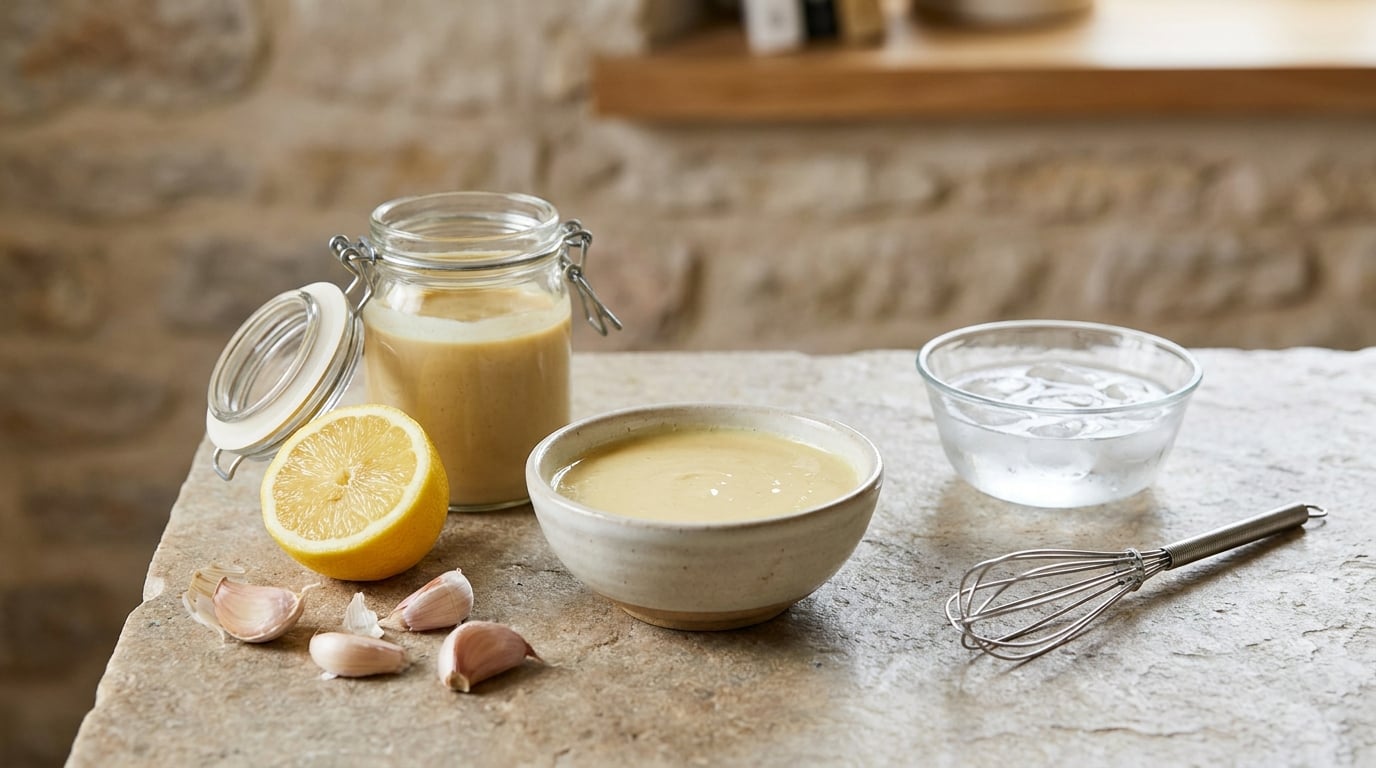
If you have ever whisked tahini with lemon and ended up with something that tastes outright bitter, the good news is that the cause is almost always one of three things, and none of them need fancy equipment. Taste the tahini straight from the jar first, then loosen it with ice water a tablespoon at a time, whisking constantly, and finish with lemon juice and salt. It takes about five minutes.
Good tahini dressing should taste creamy, nutty and gently sweet, with a clean bright finish from the lemon. A faint nuttiness is normal. Harsh, lingering bitterness that stays at the back of your tongue after the dressing is gone is not.
The confusing part is that the fix people reach for first, a spoonful of honey or maple syrup, treats the symptom and not the cause. If the bitterness is coming from a jar that has gone rancid, no amount of sugar will save it. Work through the causes in order and most bowls turn around on the first try.
Table of Contents
- What You Need
- Step-by-Step: How to Make Tahini Dressing That Is Not Bitter
- Common Mistakes That Make Your Tahini Bitter
- Frequently Asked Questions
- Why does my tahini taste bitter?
- How can I make a tahini dressing that is not bitter without sugar?
- How do I fix a bowl of tahini dressing that is already bitter?
- What kind of tahini is not bitter?
- Why did my tahini dressing turn out thick and grainy?
- Are you supposed to refrigerate tahini after you open it?
- Conclusion
What You Need
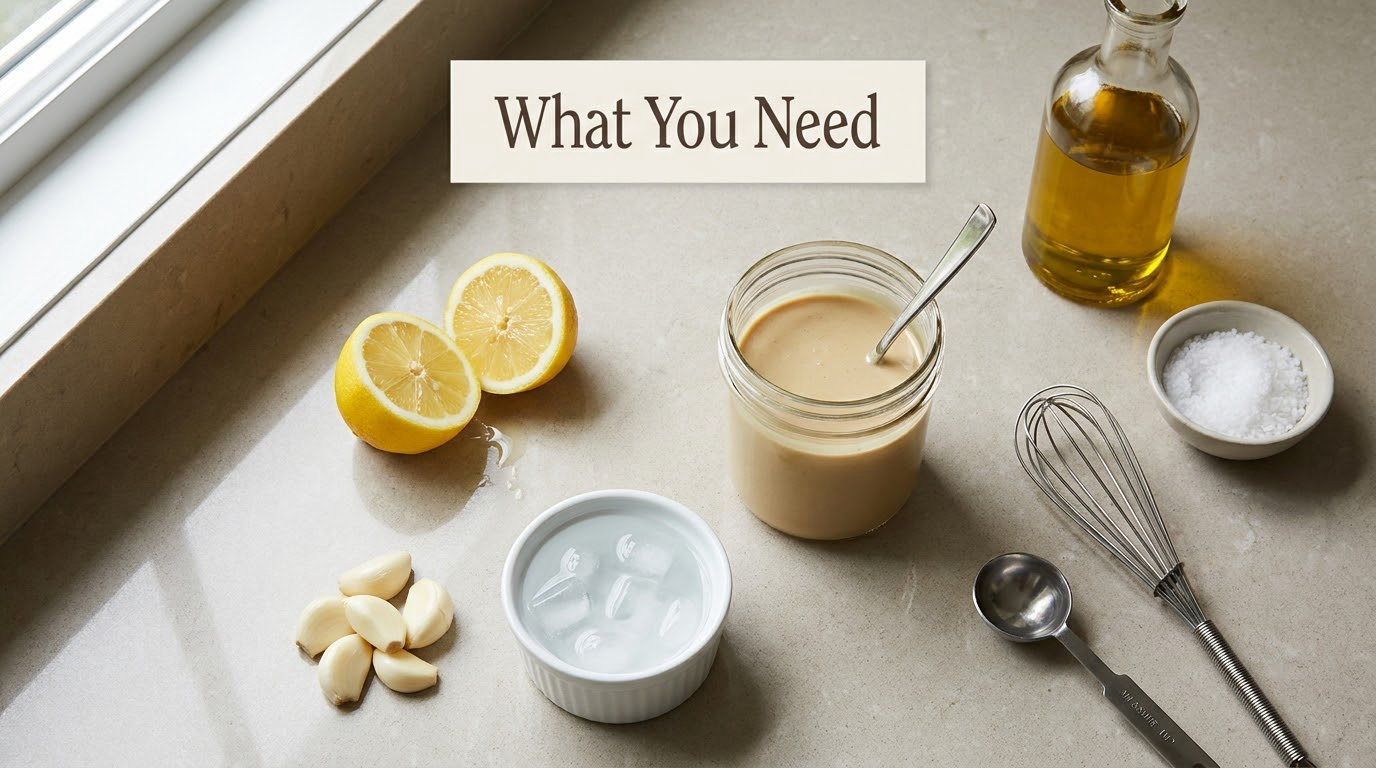
This makes roughly half a cup, enough for a big salad or a sheet pan of roasted vegetables. It keeps five days in the fridge.
- 3 tablespoons tahini from a jar listing nothing but sesame seeds.
- 2 tablespoons fresh lemon juice, plus a little zest if you have it.
- 1 small garlic clove, grated or minced fine.
- 2 to 4 tablespoons ice water, more if you like it pourable.
- Half a teaspoon fine sea salt.
- 1 teaspoon Dijon mustard, optional but it adds a savoury edge that pushes bitterness down.
- 1 to 2 teaspoons olive oil, entirely optional.
Every item there earns its place. The tahini is the body and most of the potential bitterness, the lemon supplies the acid that lifts it, the ice water does the emulsifying, and the salt makes all of it louder.
Skip the olive oil if you like. Tahini releases its own sesame oil as you whisk, and an oil-free version is lighter, cheaper and keeps for longer in the fridge. Many cooks make it this way permanently.
If you avoid sugar, erythritol or monk fruit sweetener work about as well as honey for pulling bitterness down, and a single teaspoon of either disappears against the lemon. Mashed ripe banana or one soft date blended in works too, though it shifts the sauce toward sweet rather than savoury.
Step-by-Step: How to Make Tahini Dressing That Is Not Bitter
Whisk the Tahini and Seasoning Together
Put the tahini, garlic, Dijon, salt and lemon juice in a bowl and whisk before you add a single drop of water. The mixture will be stiff, almost paste-like, and will resist the whisk. Keep going until it is uniformly smooth.
Building the flavour while it is still concentrated is the part most recipes skip, and it is why a lot of homemade dressing tastes flat. You are seasoning roughly five times less volume than the finished sauce, so a quarter teaspoon of salt here tastes like a proper pinch later.
The tell that you are done is simple: no streaks of white, no dry pockets, and the paste pulls into a heavy rope when you drag the whisk across the bowl.
Add Liquid Gradually Until Smooth
Now the part that makes people give up. Add one tablespoon of ice water and whisk hard. The tahini will seize almost immediately, going pasty, clumpy and stiff, sometimes stiff enough to sit in a lump in the middle of the bowl.
That is not a mistake. Tahini is a solid fat and water emulsion, so when you introduce water the fat and water repel each other for a moment before they reorganise. The seize stage is the messiest part of making this sauce and it is completely normal.
Keep whisking and add another tablespoon. Most times the third addition is where it suddenly loosens into a smooth, pale cream that pours in a thick ribbon. Taste at that point before adding more.
On ice water versus warm water, the argument online goes both ways and both have some truth. Ice water gives a lighter, brighter result because cold fat stays firm and emulsifies more readily. Room temperature or barely warm water is kinder if your kitchen is hot or your tahini has been sitting in the sun, and it helps a sauce that has gone stiff in the fridge loosen again. Use ice water unless your jar is rock solid.
If the sauce goes pasty and refuses to loosen no matter how much water you add, the usual cause is pouring too fast. Starting over is rarely necessary. Another tablespoon of water and forty seconds of steady whisking almost always finishes it.
Tune the Flavour and Texture: How to Make Tahini Dressing Less Bitter Without Sugar
Put a small amount on a spoon and wait a moment before you judge it. The finish matters more than the first taste, because bitterness that lingers is the flavour you want to correct.
Too bitter and you have three levers, in this order. Add more lemon a quarter teaspoon at a time. Add salt, which suppresses bitterness more effectively than anything else in the bowl. Then add sweetness, a teaspoon of honey, maple syrup, agave, monk fruit or erythritol, or soften the whole thing with an extra tablespoon of ice water and a little more salt.
Adding more tahini to a bitter bowl makes it worse. This is the most common mistake and the one that costs people their patience, because more paste reads as more flavour when it is actually more of the bitter ingredient. Loosen what you have instead.
A second rescue worth knowing: a tablespoon of Greek yogurt or a drizzle of full-fat cream rounds out bitterness by adding fat and mild protein. Both work on a savoury salad dressing, neither works on a strict vegan one.
For a thinner sauce for drizzling, beat another tablespoon of ice water in at the end. For a thicker one for falafel or grilled vegetables, leave the last tablespoon out. Served alongside, stir in extra lemon and salt separately at the table rather than diluting the whole bowl.
Use and Store the Dressing
This is a salad dressing, a drizzle and a dip, all at once. It works over roasted cauliflower, chickpeas or sweet potato, thinned with a splash of water into a pourable sauce. It is good on grain bowls with cucumber and herbs, on falafel and hummus plates, on torn bread with grilled vegetables, and as a sandwich spread where a mayonnaise usually goes.
Store it in a sealed jar or airtight container in the fridge for up to five days. Do not leave it on the counter, where the sesame oil oxidises faster and pushes the sauce toward rancid rather than merely bitter.
Almost every jar that comes out of the fridge too stiff is fine. It just needs loosening. Put a lid on, sit the jar in a bowl of warm water for five minutes, then whisk in a tablespoon of water at a time until it pours again. If a slick of oil has pooled on top, whisk the whole jar hard rather than skimming, and the emulsion comes back together.
Stir the jar again before each use. Tahini dressing will separate in the fridge, and that is normal rather than a sign it has gone off.
Common Mistakes That Make Your Tahini Bitter
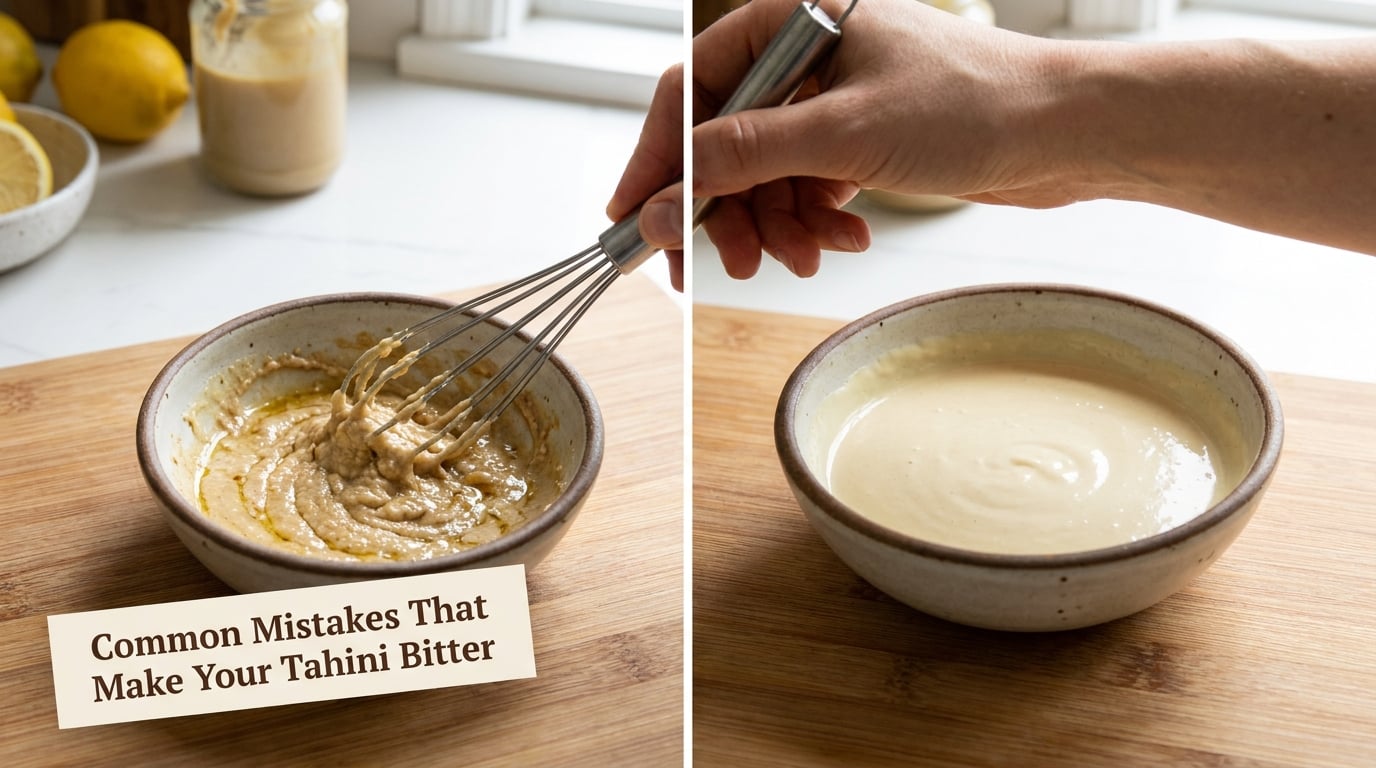
Bitterness comes from one of four places, and the table below sorts the symptoms so you can match what you are tasting to what caused it.
| What the dressing tastes like | Likely cause | What to do |
|---|---|---|
| Bitter and grainy, almost chalky | Water poured in too fast, or a cold jar | Add ice water one tablespoon at a time and whisk without stopping. Let the bowl sit at room temperature for five minutes first. |
| Bitter but perfectly smooth | Too much tahini for the amount of liquid | Add two more tablespoons of ice water and a squeeze of lemon. Do not add more paste. |
| Bitter and sharply sour | Lemon juice added on top of undiluted tahini | Whisk in ice water to dilute before tasting again, then add lemon in smaller steps. |
| Bitterness only appears after a few days in the fridge | Oxidised sesame oil, often from storing the jar warm or in daylight | Taste the tahini alone. If it is bitter on its own, replace the jar. |
| Bitter at the first spoonful, whatever you do | The tahini itself: unhulled seeds, over-roasted beans or a bitter brand | Switch to a jar listing only sesame seeds, ideally a lighter or paler colour. |
| Watery, oily and split | Liquid added in one go and the emulsion never formed | Whisk hard, or use the split sauce as the base for a fresh smaller batch. |
Choosing a jar that starts out less bitter
Bitterness is a property of the beans before it ever reaches your bowl. Sesame seeds contain lignans, mainly sesamin and sesamolin, which turn bitter as they oxidise. Hulled seeds have the coating and much of the pigment removed, so they taste cleaner and less bitter. Unhulled tahini is darker, grittier and noticeably more assertive, and home cooks who toast and grind their own seeds often get a harsher result than a well-made shop jar.
Read the ingredient panel and look for one word: sesame seeds. Some jars list a processing oil as well, which keeps the texture smooth in the jar but leaves you with a thinner, oilier sauce that goes off faster. A single-ingredient paste is the safer bet.
Colour is a decent shortcut too. Pale and creamy tahini is usually milder, while a very dark, almost grey paste tends to be more bitter by the spoonful. Taste before you commit if the shop lets you.
Brand variance is real and people hit it hard. One long-running thread on r/Cooking describes the same recipe, the same jar size and the same proportions, tasting completely different after switching brands. If your dressing has always been slightly bitter and you change nothing else, the jar is the first thing to suspect.
The garlic route instead of the sugar route
The most-upvoted answer on that same thread, and the one that has convinced me, is that extra garlic is the honest fix. Grated garlic carries its own bitterness and its own heat, so it reads as savoury depth rather than something to be scrubbed off the palate with sweetness. Half a clove more does more for a bitter bowl than a spoonful of syrup, and it leaves the dressing tasting like food.
Other mistakes worth naming
- Throwing tahini into a blender with everything else at once. A blender adds air and makes the sauce foamy and grainy. Whisk it, or use an immersion blender held low in the bowl.
- Bottled lemon juice. It has the acidity but almost none of the aroma, so the dressing reads as sour rather than fresh. Fresh is worth the few minutes of squeezing.
- Jarred garlic in oil. It arrives with olive oil that carries a garlic flavour, and it is a different flavour from grated garlic in a lemon dressing. Use fresh.
- Measuring by eye. Tahini packs down in the jar, so a heaped tablespoon can be twice what you intended. Level it, and scrape rather than scoop.
- Stopping at the seize. The clumpy stage comes before the good stage. Most grainy bowls were abandoned one tablespoon early.
- Treating every jar the same. A bitter tahini needs more acid and salt. A mild one needs less lemon or it will taste sour.
Frequently Asked Questions
Why does my tahini taste bitter?
Three causes account for almost all bitter tahini. First, the tahini itself: unhulled sesame seeds, beans roasted too dark, or simply a bitter batch, all of which taste bitter straight from the jar. Second, oxidation: sesame oils darken and turn acrid once exposed to air, heat or sunlight, so an old jar is worse than a new one. Third, technique, where too much paste relative to liquid leaves you tasting concentrated sesame. Taste the tahini on its own before you blame the recipe.
How can I make a tahini dressing that is not bitter without sugar?
Add lemon a quarter teaspoon at a time, then salt, which suppresses bitterness more effectively than sweetness does. A teaspoon of monk fruit or erythritol sweetener works if you want that route and it vanishes against the citrus. Extra grated garlic also helps, because its own bitterness reads as savoury depth. The final fix is dilution: two more tablespoons of ice water with a little more lemon will clear a bowl that has too much tahini in it.
How do I fix a bowl of tahini dressing that is already bitter?
Whisk in ice water one tablespoon at a time, then taste. Thinness dilutes the bitter paste, and it takes about two tablespoons for a typical three-tablespoon batch. Once the bitterness is diluted, sharpen with a squeeze of lemon and a pinch of salt. If the tahini tastes bitter straight from the jar, no adjustment in the bowl will help, because the problem is the ingredient rather than the ratio.
What kind of tahini is not bitter?
Choose a jar whose ingredient list says only sesame seeds, with no added processing oil. Pale, creamy tahini is usually milder than a dark grey paste, because hulled seeds have lost the pigment and much of the bitterness that unhulled seeds carry. Roast level matters too, and lighter-roasted beans taste cleaner than beans roasted to the edge of burnt. If possible, taste a spoonful before committing to a large jar.
Why did my tahini dressing turn out thick and grainy?
Almost always because the water went in too quickly. Tahini seizes the moment it meets liquid, going pasty and clumpy before it loosens, and a grainy bowl is usually one tablespoon short of smooth. Whisk steadily and add more ice water, and it will turn silky. A sauce that thickened overnight in the fridge needs the same treatment, only gentler: stand the jar in warm water for five minutes, then whisk in liquid until it pours.
Are you supposed to refrigerate tahini after you open it?
Yes. Once opened, keep the jar sealed and in the fridge, and expect it to last around three to six months. Cold makes the paste stiff and pale, which is harmless: stand the jar in warm water for a few minutes to soften it before measuring. Keeping it out of the fridge is fine for short periods in a cool cupboard, but warmth and daylight speed up oxidation of the sesame oil, and rancid oil tastes bitter and stale rather than nutty.
Conclusion
The first thing to do is taste a spoonful of the tahini on its own. If it is bitter before it ever meets lemon, the fix is a different jar, and nothing you add to the bowl will change that.
If it tastes clean, whisk it with the lemon, garlic and salt first, then add ice water a tablespoon at a time and keep going through the clumpy stage. Taste as you go, correct with acid and salt before sweetness, and you will get a dressing that tastes like roasted sesame rather than like a problem. Updated for 2026.