
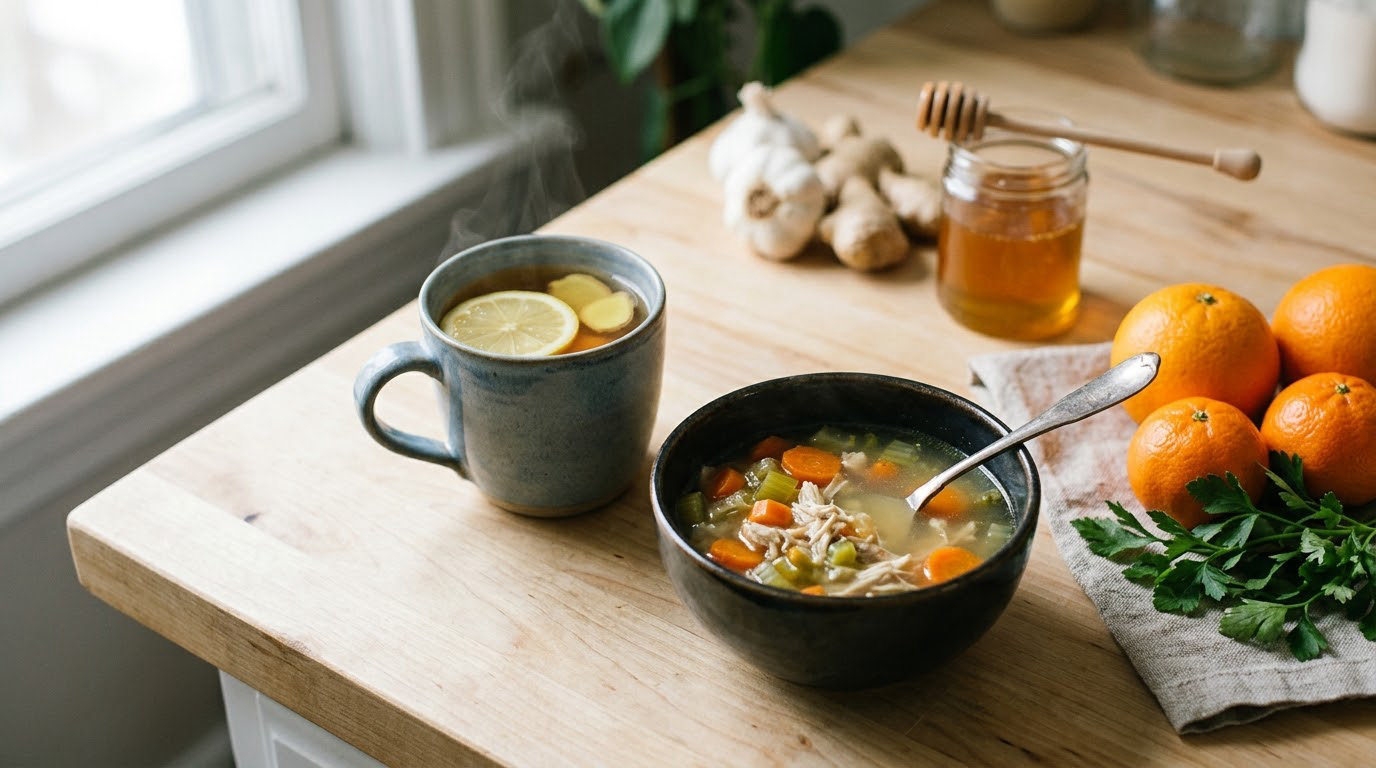
The first tingle in your throat, the nose that starts running an hour before you noticed anything wrong, the tiredness that arrives without warning. When that happens, most advice is aimed at a person who is already properly sick, and you are somewhere earlier than that.
How to eat when you feel a cold coming on comes down to three things: fluids, soft warm food that takes no effort, and whatever your own stomach tolerates. This guide covers the hours right after you notice the signs, including what to eat, what to drink, and how to adjust as the day goes on. No single food cures a cold, but what you eat in that first stretch shapes how the rest of the day feels.
Table of Contents
- How to Eat When You Feel a Cold Coming On: The Basics
- What Should You Eat When You Feel a Cold Coming On?
- Which Foods Feel Easy on an Upset Stomach?
- What Can You Drink When You Have a Cold?
- How to Eat When You Feel a Cold Coming On: A Daylong Example
- Foods and Habits That May Not Help
- How Long Should You Keep Eating Lightly?
- Frequently Asked Questions
- Conclusion: Start With Fluids and What You Can Tolerate
How to Eat When You Feel a Cold Coming On: The Basics
When a cold is coming on, drink plenty of fluids, mostly warm ones, and eat food that is soft, warm and easy to digest, such as soup, broth, oatmeal, bananas and cooked vegetables. Food cannot cure a viral infection, but it keeps you hydrated and fed while symptoms build, and some symptoms need a clinician rather than a kitchen.
Three rules cover most of it. First, fluid before food, because a runny nose, a fever and even shallow breathing pull water out of you. Second, low effort, because the person who feels terrible should not be the person standing at the stove. Third, personal tolerance, because the food that works for a person with no appetite is not the food that works for someone whose throat is on fire.
I keep a pot of stock in the freezer for exactly this reason. It is the only sick-day preparation I never regret, and it turns a person who can barely stand up into someone who only has to find a mug.
What Should You Eat When You Feel a Cold Coming On?
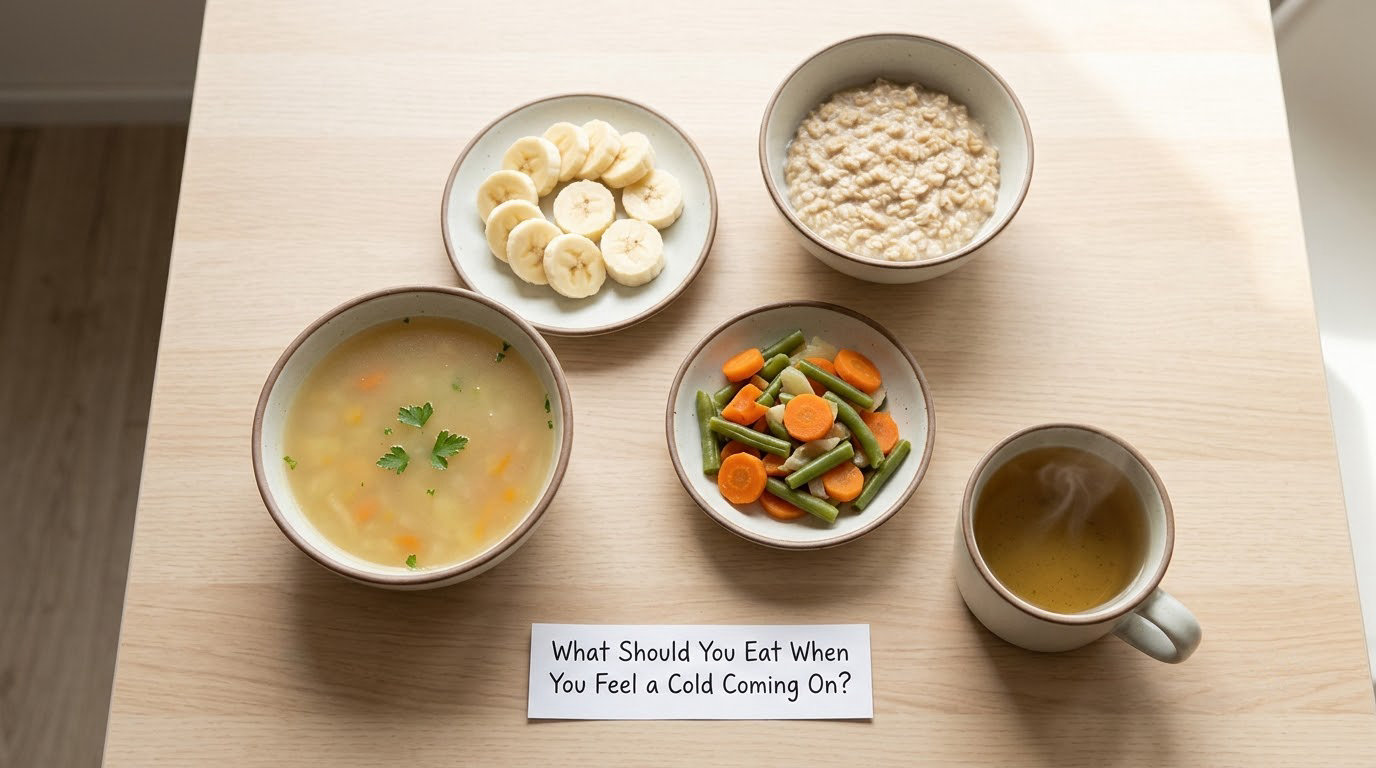
The useful principle is texture and temperature, not a specific diet. Warm and moist food needs almost no chewing and little digestion, which matters when your throat hurts and your appetite has quietly disappeared. Soft also means less work for a stomach that is already queasy.
| Food group | Examples | Why it works in the first day |
|---|---|---|
| Warm broths and soups | Chicken soup, bone broth, miso, vegetable soup, ramen broth | Fluid plus salt and electrolytes in a form that goes down fast. A small University of Michigan study published in Chest in 2000 measured nasal mucus flow after people ate chicken soup and found it increased, which is part of why the hot bowl feels like it clears something. |
| Soft grains | Oatmeal, cooked rice, toast, plain pasta, couscous | Comfortable to swallow and steady energy without a sharp spike and crash. Bland enough to keep down when nothing else appeals. |
| Cooked fruit and vegetables | Baked sweet potato, cooked carrots, squash, avocado, bananas | Fiber, potassium and carotenoids in a form that sits well. Vitamin C appears here too, though food sources matter less for immunity than people expect. |
| Easy protein | Eggs, yogurt, fish, tender chicken, lentils, tofu | Protein supports repair during recovery. Eggs in particular take almost no energy to prepare. |
| Warm drinks with a little sweetness | Ginger tea with honey and lemon, chamomile, warm milk or oat milk | Soothes a scratchy throat and gives you a few easy calories when eating feels like a chore. |
| Anti-inflammatory and antioxidant foods | Berries, leafy greens, mushrooms, garlic, ginger, olive oil | Long-term eating patterns around these foods support immune function. Treat them as background support, not treatment. |
How to eat when you feel a cold coming on, hour by hour
Someone asked in a Reddit food thread what people actually order when a cold starts, and the honest answer was something hot and savory, often spicy. Rather than a flat shopping list, here is how I sequence the first day.
- First few hours: a warm drink, then something small and soft, such as toast with butter or a bowl of oatmeal. Nothing large. Your stomach is not ready and you will regret the big meal.
- Middle of the day: a real plate, built around broth or soup with a soft grain and a cooked vegetable. This is your main nutrient intake of the day, even if it feels small.
- Late afternoon: something easy and handheld, like yogurt, a banana or a slice of homemade bread. You are often hungrier here than you expect, because the warm drink carried you further than you thought.
- Evening and overnight: a light dinner with protein, then a mug of something warm an hour before bed. A dry throat at 3 a.m. is the reason you wake up feeling worse than you did.
Which Foods Feel Easy on an Upset Stomach?
When nausea comes with a cold, the list narrows fast, and bland wins. Toast, plain rice, bananas, oatmeal, baked potatoes and clear soups are the usual shortlist. They have low fat, low fibre and very little smell, which are the three things that usually set a queasy stomach off.
A cold and a stomach bug can also arrive together, and if yours does, that changes the priority. Start with fluids taken in small, frequent sips rather than large glasses, and add solid food only once you want it. Bananas, dry toast and plain crackers are unglamorous and they work.
If nothing sounds good at all, do not force a meal plan. Small amounts of food eaten often beat one heroic dinner. And if you cannot keep fluids down for more than a few hours, that is a reason to contact a healthcare professional rather than a reason to keep trying different soups.
What Can You Drink When You Have a Cold?
There is no mechanism that flushes a cold out of your body, despite what a lot of search results imply. What actually helps is replacing fluid and electrolytes steadily enough to support your kidneys, your mucus and your temperature regulation.
- Water, room temperature or warm. The unglamorous baseline, and it works well with a fever.
- Broth and bone broth. Salt, fluid and some protein in one cup.
- Herbal tea. Chamomile is the usual pick. Milk thistle and rooibos also work without caffeine.
- Ginger tea. Sipped slowly, it settles nausea better than almost anything else in the cupboard.
- Honey and lemon in warm water. Soothing on a sore throat. Keep it in a cup, not a cough drop habit, if you are watching your sugar intake.
- Coconut water or an oral rehydration solution. Useful when you have been sweating, vomiting or running a temperature for hours.
Skip alcohol, obviously. Be careful with caffeine after mid-afternoon, since it works against the sleep you need. And choose whole fruit over juice if you can, because a glass of orange juice is sugar with a vitamin C label on it, and the crash lands a couple of hours later when you are already tired.
Some people are on fluid restrictions for heart, kidney or liver reasons. If that applies to you, the right amount is whatever your clinician told you, not a general guideline in an article.
How to Eat When You Feel a Cold Coming On: A Daylong Example
Here is an ordinary day with food most people already have in the cupboard.
Breakfast
Oatmeal made with water or oat milk, a spoonful of honey and a banana sliced on top, with tea alongside. Soft, warm and about ten minutes of work. If you have no appetite at all, halve it and eat it slowly.
Lunch
A mug of warm broth with a piece of toast, or a small bowl of soup with cooked rice. Add a boiled egg or a spoonful of yogurt if you have it, because this is your protein anchor and it is easy to skip.
Snack
Banana, a few plain crackers, or yogurt with berries stirred through. Whole berries rather than syrup keeps the sugar load gentle. Have the snack even if you are not hungry; you are doing this so that 6 p.m. is not the first time you have eaten.
Dinner
Something warm and soft with a vegetable in it, such as a vegetable soup, a bowl of mashed potato with braised greens, or plain pasta with olive oil and grated cheese. Eat earlier than usual so you are not lying down right after.
If dairy is not for you, swap oat milk, coconut yogurt or fortified soy yogurt in every spot above, and drop the cheese for olive oil, nutritional yeast or a spoonful of tahini.
If your appetite never shows up, run the day on drinks instead: broth and honey-lemon water by the mug, a ginger tea for nausea, a banana or two, and a smoothie you can drink from a glass without sitting up straight. It is not a good meal, and it is better than nothing.
Foods and Habits That May Not Help
Heavy, greasy food is hard to digest and tends to sit badly. Spicy food does not cause a cold and it will not cure one, but the people who reach for hot chili when they feel a cold coming on are not being foolish, since capsaicin makes the nose run and the warmth feels good. For most people it is a reasonable craving, and for some it is genuinely unpleasant.
Heavily processed food is the thing worth trimming. A sugary drink or a large portion of refined carbs on a low-activity day tends to produce a spike and a crash, and you feel worse a few hours later on top of feeling ill. That is a comfort you cannot afford at 3 p.m. when you have a meeting.
What matters more than any of this is keeping your usual nutrition rather than starting a restrictive diet. If you normally eat a balanced diet, keep eating it in a softer, warmer, smaller form. Sudden restriction during an illness is more likely to leave you short than to help.
How Long Should You Keep Eating Lightly?
Most colds run their course in several days, and lighter eating is really for the first 24 to 48 hours, or as long as your appetite is low. Once you can eat normally without feeling wiped out, go back to your normal pattern.
Eat more than light food, not less. People lose weight when sick, and it is nearly always water and reduced intake rather than fat or muscle, but a day or two of poor eating still leaves you flatter than you were.
Some symptoms are food questions. Others are not, and these deserve a phone call to a clinician: trouble breathing, chest pain, confusion, severe dehydration or being unable to keep fluids down, a fever that stays high or keeps returning, symptoms that get worse after a few days of improvement, or a cough bad enough to wake you at night.
General information like this cannot account for your health history, your medications or your age. If you are pregnant, managing a chronic condition, caring for a very young child or caring for an older adult, ask a doctor or pharmacist directly rather than adapting this guide yourself.
Frequently Asked Questions
Is soup a good choice when I feel a cold coming on?
Yes, and it is the single most useful food for the first day. Soup is fluid, salt and electrolytes in a cup that takes minutes to prepare and seconds to swallow, which matters when your throat hurts. Warm liquid also loosens nasal mucus; a small University of Michigan study published in Chest in 2000 found chicken soup increased nasal mucus flow. It supports how you feel, but it does not shorten the cold.
Should I avoid dairy when I have a cold?
There is no good evidence that dairy increases mucus or makes a cold worse, though many people feel more congested after milk and some milk proteins can irritate an already inflamed throat. If dairy does not feel good to you, swap it easily: oat milk in oatmeal, coconut yogurt with berries, nutritional yeast over pasta. Keep it if it sits fine, since it is a convenient source of protein and calcium.
What should I eat if I have no appetite?
Stop trying to eat meals and start eating small amounts often. A banana, a few crackers, oatmeal, yogurt or a mug of broth every few hours is a workable plan for a day. Keep fluids up even when food feels impossible, because dehydration makes a cold feel far worse. If you cannot keep liquids down for several hours, contact a healthcare professional rather than experimenting with more food.
Do vitamins or herbal supplements treat a cold?
No supplement cures a common cold, and trials of vitamin C show the benefit for the average person is small, though starting it at the first sign may shorten symptoms a little. Zinc lozenges have modest evidence behind them when started within a day. Elderberry and echinacea studies are mixed. Supplements are not a substitute for fluids, rest and food, and they can interact with medication, so ask a pharmacist before taking anything.
How much fluid should I drink when I am sick?
There is no fixed number for everyone, and it changes with fever, sweating, vomiting, age and any medication you take. Most adults with a cold do well by drinking steadily through the day and keeping their urine pale. Thirst is a reliable guide for most people, more so than drinking a set number of glasses. Fluid targets from a clinician always take priority over general advice.
When should I see a doctor about cold symptoms?
Contact a clinician for trouble breathing, chest pain, confusion, signs of dehydration, a fever that stays high or returns after improving, symptoms that get worse after a few days instead of better, or a cough that keeps waking you at night. Also call early if you are pregnant, managing a chronic condition, or caring for a very young child or an older adult, since the same symptoms carry more weight in those groups.
Conclusion: Start With Fluids and What You Can Tolerate
The first move is simple: drink something warm, then eat a small familiar meal like soup, oatmeal or toast with a banana, and let portions follow your appetite rather than a plan. Keep drinking through the day, keep your usual nutrition in a softer form, and skip the alcohol and the sugary drinks.
And if you notice trouble breathing, cannot keep fluids down, run a high or returning fever, or feel worse after several days instead of better, that is a call to a healthcare professional. Food takes care of comfort and hydration. It does not take care of those.
This guide was last reviewed in 2026 and is general information, not medical advice. Always check with a qualified healthcare provider for diagnosis and treatment.