
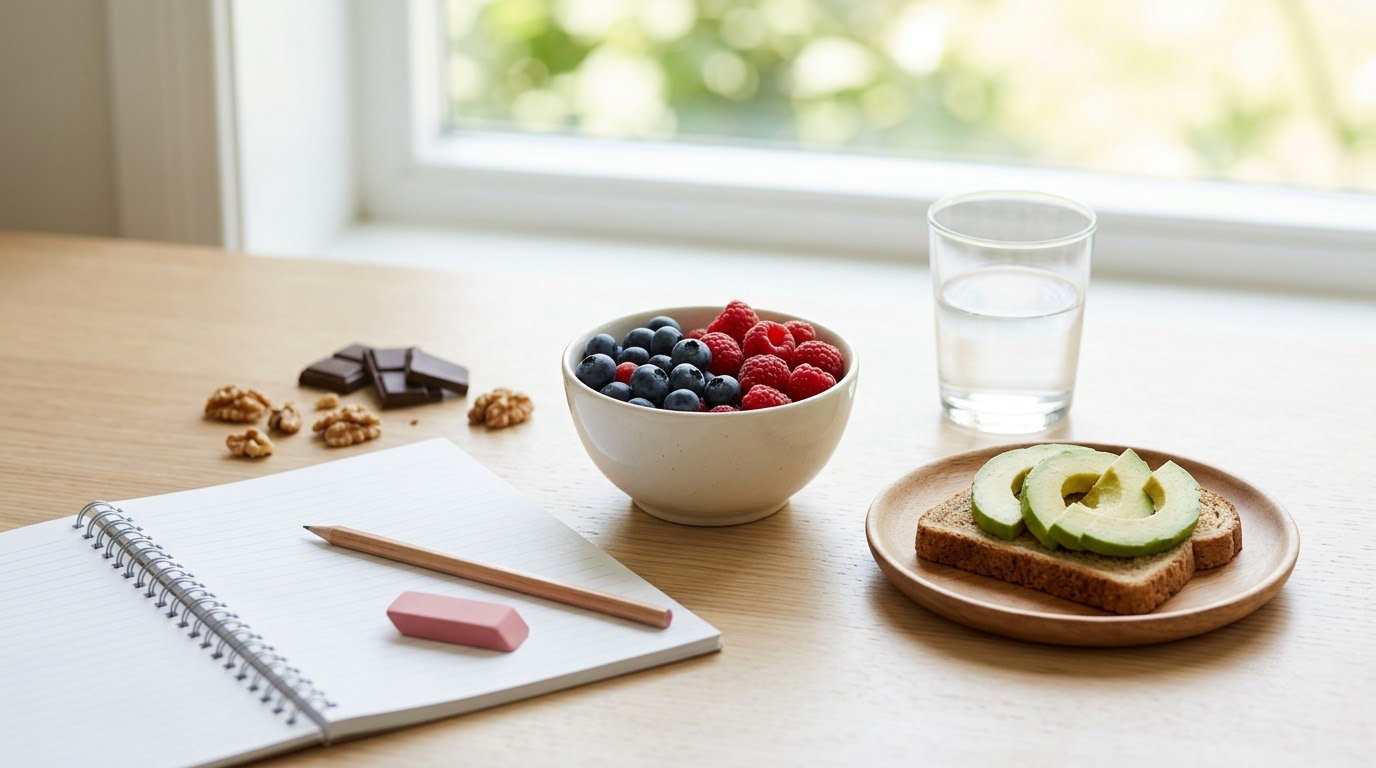
Brain foods for kids and studying are simply everyday foods that supply what the brain runs on: omega-3 fats, choline, iron, iodine, B vitamins, fiber, water and unsaturated fat. No single food makes a child smarter, but a pattern of steady meals and snacks built from the list below supports concentration, mood and memory far better than a sugary breakfast and an empty afternoon.
Parents of toddlers through teens and students in the middle of exam season come to the same shortlist. These twelve foods are cheap, available, and easy enough to pack, and each one earns its place for a specific reason.
What are brain foods? Brain foods are nutrient-dense foods that supply the raw materials the brain needs to build itself and stay powered – especially omega-3 fatty acids (DHA and EPA), choline, iron, iodine, zinc, B vitamins, antioxidants and water. They support memory, focus, mood and healthy brain development in children, and steady energy during long study sessions. Eating patterns built around them matter more than any single ingredient.
This is general nutrition information, not medical advice. If your child is struggling with attention, fatigue or mood, talk to your pediatrician or a registered dietitian rather than changing their diet on the strength of a web page.
Table of Contents
- Brain Foods for Kids and Studying at a Glance
- 1. Blueberries for Colorful, Snackable Focus Fuel
- 2. Bananas for Portable Energy Before Study Time
- 3. Walnuts for Omega-3 Fat and Easy Portions
- 4. Eggs for a Simple, Protein-Filled Breakfast
- 5. Oats for Steady Morning Energy
- 6. Plain Yogurt for a Protein-Packed Snack
- 7. Leafy Greens for Nutrient-Dense Meals
- 8. Sweet Potatoes for Colorful, Fiber-Rich Sides
- 9. Beans and Lentils for Plant-Based Protein
- 10. Avocado for Creamy Whole-Food Fat
- 11. Salmon for a Complete Protein and Omega-3 Option
- 12. Fortified Whole-Grain Cereal for a Quick Study Snack
- Frequently Asked Questions
- A Simple Place to Start
Brain Foods for Kids and Studying at a Glance
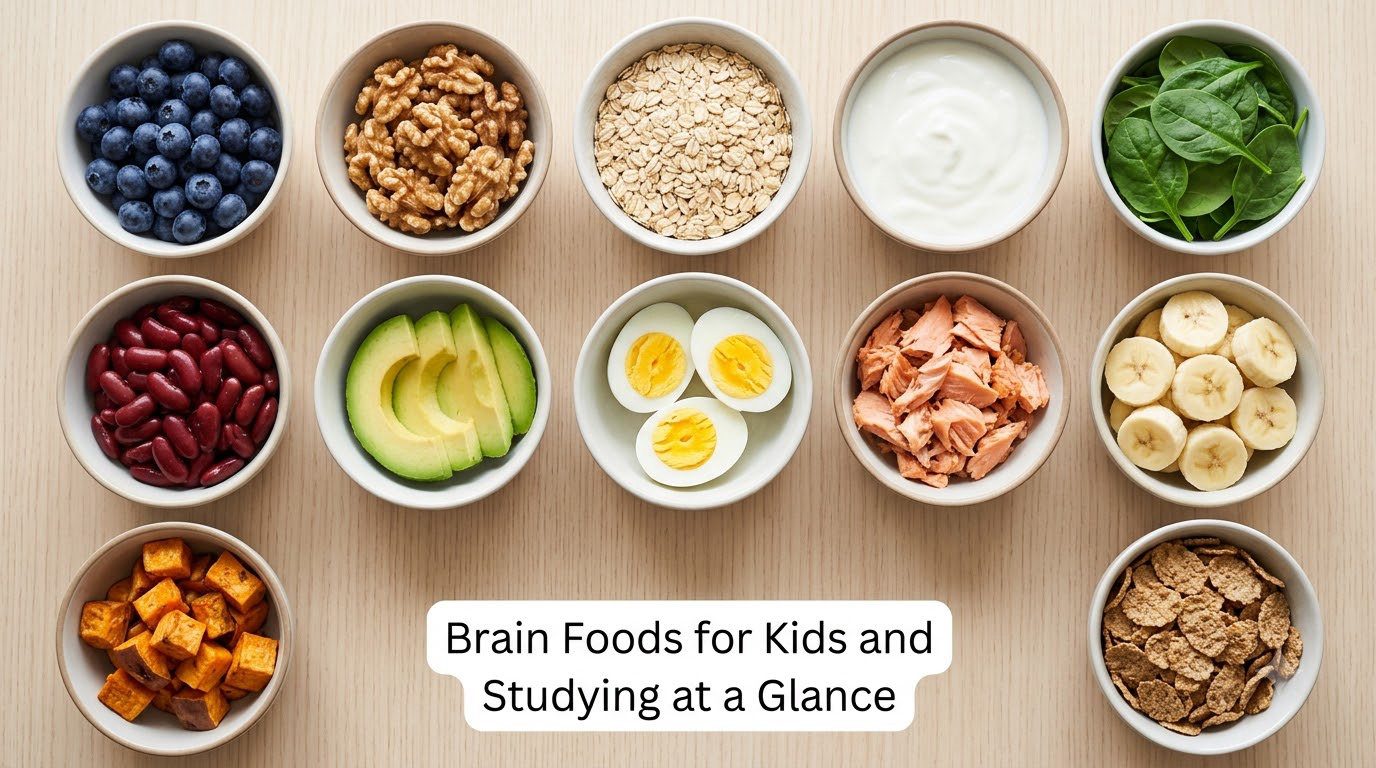
| Food | Nutrient focus | What it supports | Best time to eat | Kid-friendly serving |
|---|---|---|---|---|
| Blueberries | Anthocyanins, vitamin C, fiber | Antioxidant protection, steady snacking | Breakfast or lunchbox | Frozen berries in yogurt or oatmeal |
| Bananas | Carbohydrates, potassium, fiber | Quick energy, digestion | 30-60 minutes before study | Half a banana with nut or seed butter |
| Walnuts | ALA omega-3 fat | Cell membrane structure | Snack or topping | Chopped over oatmeal, a small handful |
| Eggs | Choline, protein, B12 | Memory-related neurotransmitters | Breakfast or study snack | Boiled, scrambled or an omelet |
| Oats | Soluble fiber, complex carbohydrate | Slow release of energy | Morning | Overnight oats with milk and fruit |
| Plain yogurt | Protein, calcium, B12 | Satiety between classes | Snack | Plain yogurt with berries and oats |
| Leafy greens | Folate, vitamin K, lutein, magnesium | Balanced plate, overall nutrition | Lunch and dinner | Spinach blended into a smoothie |
| Sweet potatoes | Beta-carotene, fiber, potassium | Colorful slow carbohydrate | Lunchbox or dinner side | Baked wedges, skin on |
| Beans and lentils | Plant protein, iron, fiber | Steady energy, plant iron | Lunch or dinner | Hummus, lentil soup, tacos |
| Avocado | Unsaturated fat, fiber, potassium | Satiety, fat-soluble vitamins | Breakfast or lunch | Mashed on toast, a few slices in wraps |
| Salmon and other oily fish | DHA and EPA omega-3, protein | Brain and eye development | Two servings a week | Canned salmon in a sandwich, baked fillet |
| Fortified whole-grain cereal | Whole grain, iron, B vitamins | Quick, iron-fortified breakfast | Breakfast | Cereal with milk and a banana |
One food cannot carry a day of studying or a whole week of school lunches. What works is rotation: pick two or three from this table for breakfast, one from it for lunch, and one more for the after-school crash window.
1. Blueberries for Colorful, Snackable Focus Fuel
Blueberries are one of the easiest brain foods to serve because almost nobody refuses them. They carry anthocyanins, the pigments that give them that blue-purple color, plus vitamin C and a modest amount of fiber.
Anthocyanins act as antioxidants, which means they help protect cells from the kind of oxidative damage that comes with inflammation. That is a long game, not an afternoon effect, and it is worth being honest about that.
For serving, frozen berries are the trick most parents miss. Blend them into a smoothie and they soften into a purple slush that reads as a treat. Stirred into oatmeal or plain yogurt they add color and mild sweetness without a spoon of sugar.
A school lunchbox portion of a quarter to half cup is plenty. If you enjoy making your own, 12 foods that help skin look less dull covers why the same antioxidant story applies topically.
2. Bananas for Portable Energy Before Study Time
Bananas are the most portable item on this list, which is why they turn up in so many study plans. They supply carbohydrate for quick energy, potassium, and fiber that slows the release a little.
The timing matters more than people expect. A banana roughly 30 to 60 minutes before a study session gives energy without arriving as a heavy meal right when someone needs to concentrate. Half a banana with a spoon of peanut, almond or sunflower seed butter is a better balanced snack than the banana alone.
Freezing sliced bananas and blending them with milk makes a smoothie that tastes like soft serve. It is a reliable after-school hit, and it sneaks a serve of dairy in without a fight.
3. Walnuts for Omega-3 Fat and Easy Portions
Walnuts are the plant-based answer to the omega-3 question, and the honest detail is that they provide ALA, not the DHA and EPA your brain uses most directly. The body converts some ALA to those longer-chain fats, just not efficiently.
For children, portions stay small. A small handful, roughly an ounce, is plenty, and more is not better. Whole walnuts are also a choking risk for younger children, so chop them or use walnut butter until they are old enough to handle them safely.
Chopped walnuts over overnight oats, stirred into plain yogurt, or mixed into a banana toast all work. In a nut-free classroom or home, pumpkin seeds and chia seeds carry some ALA too, and sunflower seed butter does the job for a spread.
4. Eggs for a Simple, Protein-Filled Breakfast
Eggs are one of the cheapest sources of choline, a nutrient that feeds the production of acetylcholine, the neurotransmitter most associated with memory and attention. They also deliver complete protein, vitamin B12 and selenium in a package most people will actually eat at 7am.
Preparation matters for safety. Cook whole eggs until the yolk and white reach 160°F, the USDA minimum for eggs in any dish, and avoid runny yolks for young children. Dishes with raw egg, such as homemade Caesar dressing or partially cooked egg, carry the same requirement.
Serve them with vegetables and a whole grain so the meal has staying power: a spinach and cheese omelet with toast, or hard-boiled eggs with apple slices and a handful of walnuts. Egg allergy is common in children, and a pediatric dietitian can help you plan a swap rather than guessing.
5. Oats for Steady Morning Energy
Oats are a whole grain full of soluble fiber, and that fiber is the point. It slows digestion so glucose arrives steadily rather than all at once, which is what prevents the mid-morning crash after a sugary cereal.
Overnight oats solve the morning time problem. Stir rolled oats with milk or a fortified plant milk, a spoonful of yogurt and some chopped fruit the night before, and it is ready when everyone is. Add cinnamon for flavor instead of brown sugar.
For younger children, serve smaller portions and check that the oats are thick enough not to be a swallowing hazard. For teens heading into a long school morning, oats with milk, banana and peanut butter is about as low-effort as balanced gets.
6. Plain Yogurt for a Protein-Packed Snack
Plain yogurt is a protein-rich snack that many people mistake for a dessert. The protein and calcium are the useful part, and both are far higher in a plain pot than in a fruit-flavored one.
This is where reading the label pays off. Flavored yogurts regularly carry enough added sugar to rival dessert, and the ingredient list is the fastest way to tell. Our guide to how to spot hidden sugar in packaged foods covers the naming tricks, from concentrated fruit juice to syrups listed further down the ingredients.
Build it as a small bowl: plain yogurt, a spoonful of oats, some berries, and a teaspoon of seeds. Children who cannot tolerate dairy can use a fortified soy or oat alternative, though plant yogurt usually carries less protein unless it is labeled otherwise.
7. Leafy Greens for Nutrient-Dense Meals
Spinach, kale and their relatives bring folate, vitamin K, lutein, magnesium and a stack of micronutrients that rarely appear elsewhere on the plate. Brain foods for kids work best when they are part of ordinary meals rather than a special intervention.
The problem is real: most children reject a pile of greens. Blend a handful of spinach into a fruit smoothie and the color and texture disappear. Chopping kale finely into pasta sauce, tacos or soup works about as well as anything.
Keep the exposure going even when the vegetable is not eaten. A small amount of spinach in a smoothie, frozen into a juice cube, or folded into rice gives a child repeated low-pressure contact with the flavor. You can see what I mean about labels in how to spot hidden sugar in packaged foods, since most store-bought smoothie blends are exactly where sugar sneaks back in.
8. Sweet Potatoes for Colorful, Fiber-Rich Sides
Sweet potatoes deliver beta-carotene, which the body converts to vitamin A, along with fiber, potassium and a slow carbohydrate. The orange color is a handy signal that a plate has variety on it.
Baking them whole or in wedges takes about 40 minutes at 200°F and needs almost no attention, which is the honest reason families keep them on the menu. Leave the skin on for the fiber and slice into finger-sized pieces so they work as a lunchbox item.
Mash with a little milk and butter for younger children, or serve roasted wedges with Greek yogurt as a dip. Cinnamon and a small amount of brown sugar make them sweeter without the sugar load of a frosting.
9. Beans and Lentils for Plant-Based Protein
Beans and lentils are the cheapest serious protein on this list, and they also bring fiber, folate and non-heme iron. Vitamin C from a vitamin-C-rich food in the same meal helps the body absorb plant iron, which is a small trick that makes a lentil curry work harder.
Kid formats that actually get eaten: hummus with carrot and cucumber sticks, lentil soup, black bean tacos with cheese, split pea soup, or beans folded into a rice dish. Hummus has become the go-to stealth lunchbox item for a reason.
Canned beans and lentils are fine. Rinse canned beans to lower their sodium, and check labels on flavored dips because flavored hummus can carry a surprising amount of added oil and salt. For children who avoid beans, red lentils cook down into a texture that reads more like a sauce than a legume.
10. Avocado for Creamy Whole-Food Fat
Avocado brings unsaturated fat, fiber, potassium and a soft texture that works in foods children already like. Fat also helps absorb vitamins A, D, E and K, so an avocado alongside vegetables improves what the body gets out of them.
Serve it mashed on toast, sliced into wraps and sandwiches, cubed into a salad, or blended into a smoothie with banana and milk. For toddlers, mash it with a little yogurt or serve soft slices alongside something else rather than as the whole meal.
Portion awareness helps here. Half a medium avocado is a normal serving for an older child. Avocado is nutrient-dense and calorie-dense at the same time, so it complements a meal rather than replacing one.
11. Salmon for a Complete Protein and Omega-3 Option
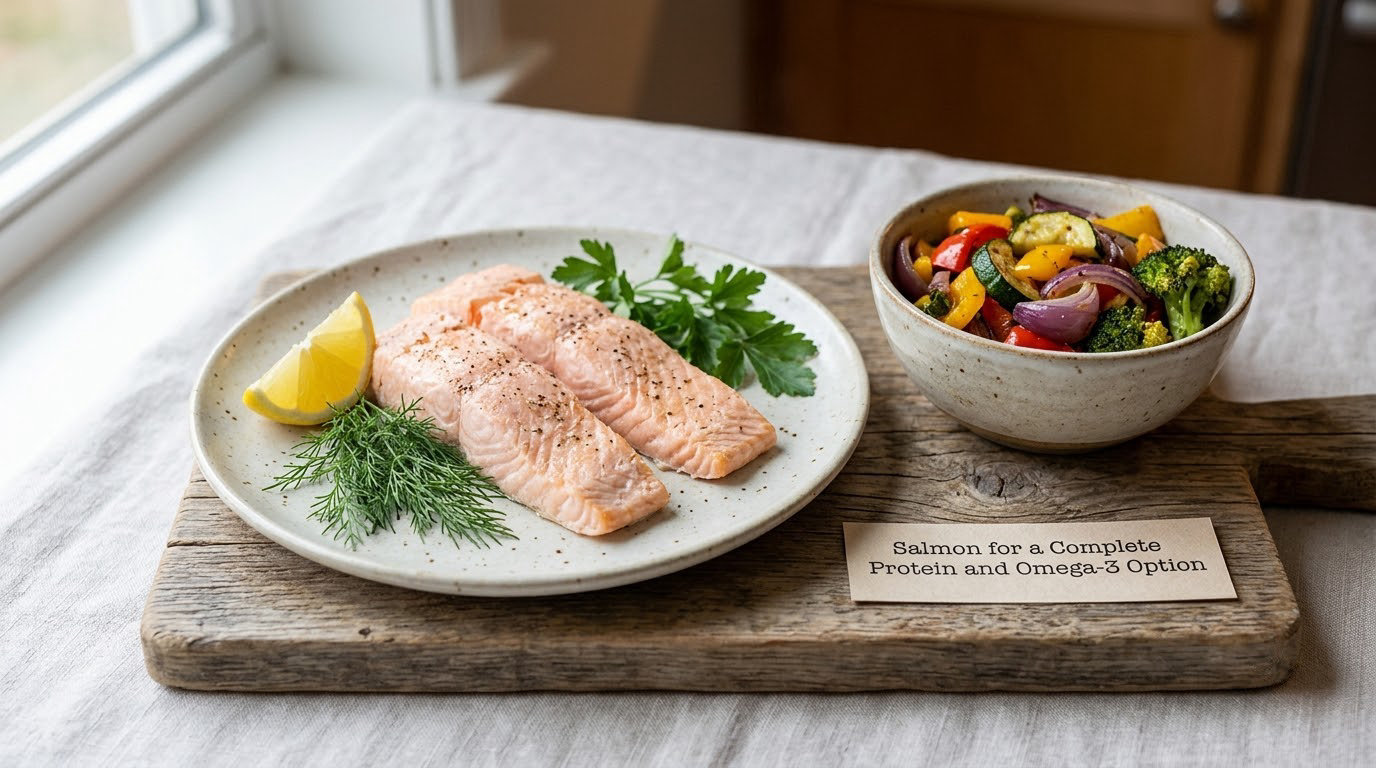
Salmon is the most direct dietary source of DHA and EPA, the long-chain omega-3 fats that make up a large share of brain cell membranes. It is also complete protein, and one fillet covers a good share of a day’s needs for both.
Cooking it to 145°F, the USDA minimum for fish and shellfish, means it flakes cleanly and stays moist. Baking at 200°F for 12 to 15 minutes, pan-frying skin-side down, or cooking a tin of canned salmon into a sandwich all take less effort than most parents expect.
Canned salmon is not a compromise. Canned light tuna and sardines work in the same slot, and for families avoiding fish, ground flaxseed and walnuts supply ALA instead. Be aware that some tuna types accumulate more mercury than others, so vary the fish rather than leaning on one type.
12. Fortified Whole-Grain Cereal for a Quick Study Snack
A fortified whole-grain cereal is the fastest brain food on this list to put in front of someone in a hurry. Look for whole grain or oats as the first ingredient, iron on the nutrition panel, meaningful fiber, and low added sugar.
The label does the work here. Compare cereals and look at the sugars per 100g, the fiber content and whether iron is listed. Many cereals marketed to children as healthy fail on those numbers despite the packaging.
Pair it with milk for protein and vitamin D, or with plain yogurt for extra protein and calcium, and add sliced banana or berries so there is fruit and fiber in the bowl. Cereal with only fruit-flavored shapes and no whole grain is candy with a crunch, however colorful the box.
Brain Foods for Kids and Studying Across a Real Day
Timing does more work than most people expect. Here is how the same twelve foods spread across an ordinary weekday.
- Breakfast: oats with milk, banana and walnuts, or eggs with spinach and whole-grain toast.
- Lunchbox: whole-grain crackers with plain yogurt, cucumber and hummus, plus a small portion of blueberries or sweet potato wedges.
- After school, around 3pm: a banana with seed butter and a glass of water. This is the slot that prevents the late-afternoon slump.
- Revision snack, 30-60 minutes before studying: half a banana, or plain yogurt with oats. Something with protein and carbohydrate, not a large greasy meal.
- During a long session: water, and a small piece of dark chocolate if the child is old enough, kept away from bedtime because of the caffeine.
- Dinner: beans, lentils or salmon with brown rice or sweet potato and a green vegetable. Cook fish or eggs to their safe internal temperatures.
How to Build a Balanced Brain-Food Routine
Routine is what turns a list of good foods into a working system. Three habits carry most of the weight: regular meal and snack times so nobody arrives at a session genuinely hungry, water within reach at every desk, and a mix of colors across the week.
Protein at each meal and snack matters more than any single nutrient. Pair a carbohydrate with a protein and the energy release steadies, which is the difference between a child who makes it to 5pm and one who does not.
For hydration, water is the default. Dehydration shows up as headache, tiredness and poor concentration, which adults and children both mistake for a focus problem. Electrolyte drinks only make sense after sustained exercise or in genuine heat, not for a desk-based revision session.
Two habits do more for studying than any food on this list: consistent sleep, and movement during breaks. A 20-minute walk between study blocks is worth more than a fourth cup of coffee, and for teens especially, caffeine close to bedtime disrupts the sleep that the studying was meant to protect.
Keep the whole thing relaxed. Restriction and guilt around food create their own distraction, and a child told that carrots are for brains simply eats fewer carrots. Variety across a week matters more than any single serving.
Frequently Asked Questions
Do brain foods really work?
They work in the way any food works: through a consistent pattern, not a single serving. Foods rich in omega-3 fats, choline, iron, B vitamins and fiber support normal brain development and steady energy. Research on any one food improving test scores in healthy children is weak. Expecting a measurable jump from one superfood is the part that does not hold up.
What is the best brain food for studying?
No single food wins, but oats and eggs are the strongest all-round choices for a study session. Oats give slow-release carbohydrate from soluble fiber so energy lasts, and eggs add protein plus choline. Pair either with a banana 30 to 60 minutes before revising, keep water nearby, and skip heavy or sugary meals right before a session.
What is the most powerful food for the brain?
There is no single winner, and anyone who names one is overselling. Fatty fish is usually the most nutrient-dense entry because it delivers DHA, EPA and complete protein in one food. That is a reason to include it twice a week, not a reason to drop everything else from the plate.
What should kids eat before an exam?
A familiar meal with protein, slow carbohydrate and some produce, eaten two hours before rather than right at the test. Oatmeal with milk and banana, or eggs with toast and fruit, both work. Avoid anything new, anything heavily fried, and anything with a lot of added sugar, because an unfamiliar meal before an exam tends to sit badly.
What are good brain food options for kids at school?
Foods that survive a lunchbox and do not need heating: mixed nuts or seed mixes where the school allows them, oat or wholegrain crackers, whole-grain cheese crackers, plain yogurt in a cool pack, carrot and cucumber sticks with hummus, canned tuna or salmon sandwiches, boiled eggs, apple or orange slices, banana, and small portions of berries or sweet potato wedges.
Are supplements like ginkgo or fish oil worth it for a child?
Generally no. For children eating a varied diet, mainstream pediatric guidance does not recommend ginkgo or brain supplements, and ginkgo in particular has no good evidence for cognitive benefit in healthy kids. Fish oil capsules are not needed when fish is eaten regularly. Talk to your pediatrician before giving any supplement, and treat supplements as a conversation rather than a shortcut.
A Simple Place to Start
Pick two foods from this list your household already eats. Add a piece of fruit or another produce item to the next three meals, put a protein at each snack, and fill a water bottle before the school run starts.
Then stop trying to fix everything at once. Regular meals and snacks built from ordinary foods like these beat any restrictive plan, and brain foods for kids and studying are far less complicated than most search results make them sound.
If a child has a diagnosed condition, a food allergy, or ongoing trouble with attention or energy, your pediatrician is the right person to ask before changing their diet.