
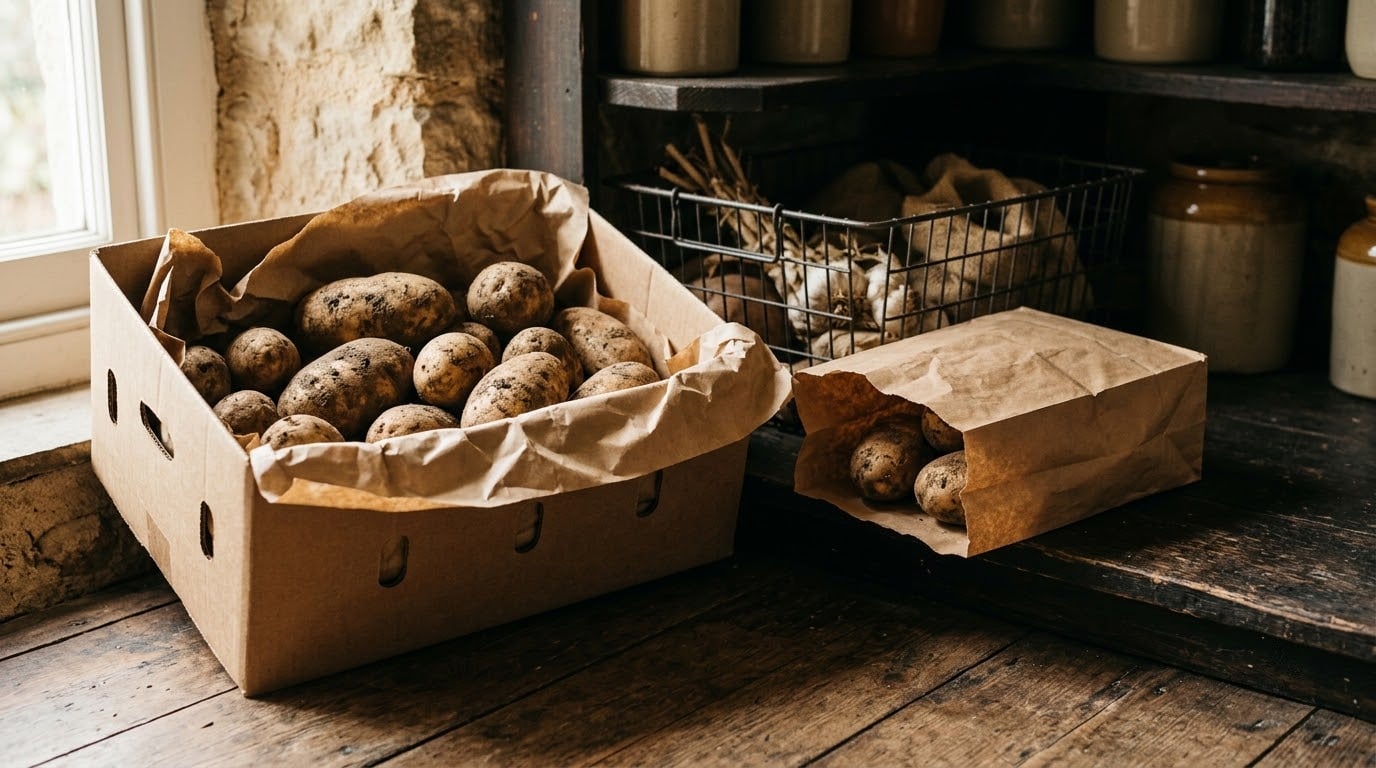
Sprouting happens because potatoes are still alive after harvest, and they sprout when the conditions say it’s time to grow. To store potatoes so they do not sprout, keep them unwashed in a dark, cool, ventilated space around 45 to 50°F (7 to 10°C) and away from onions. It takes about five minutes to set up and costs nothing beyond a paper bag.
The single most common mistake is sealing potatoes in plastic and stacking them somewhere warm and bright. That setup traps moisture, and moisture plus warmth is exactly what rot and sprouts feed on.
Table of Contents
What You Need
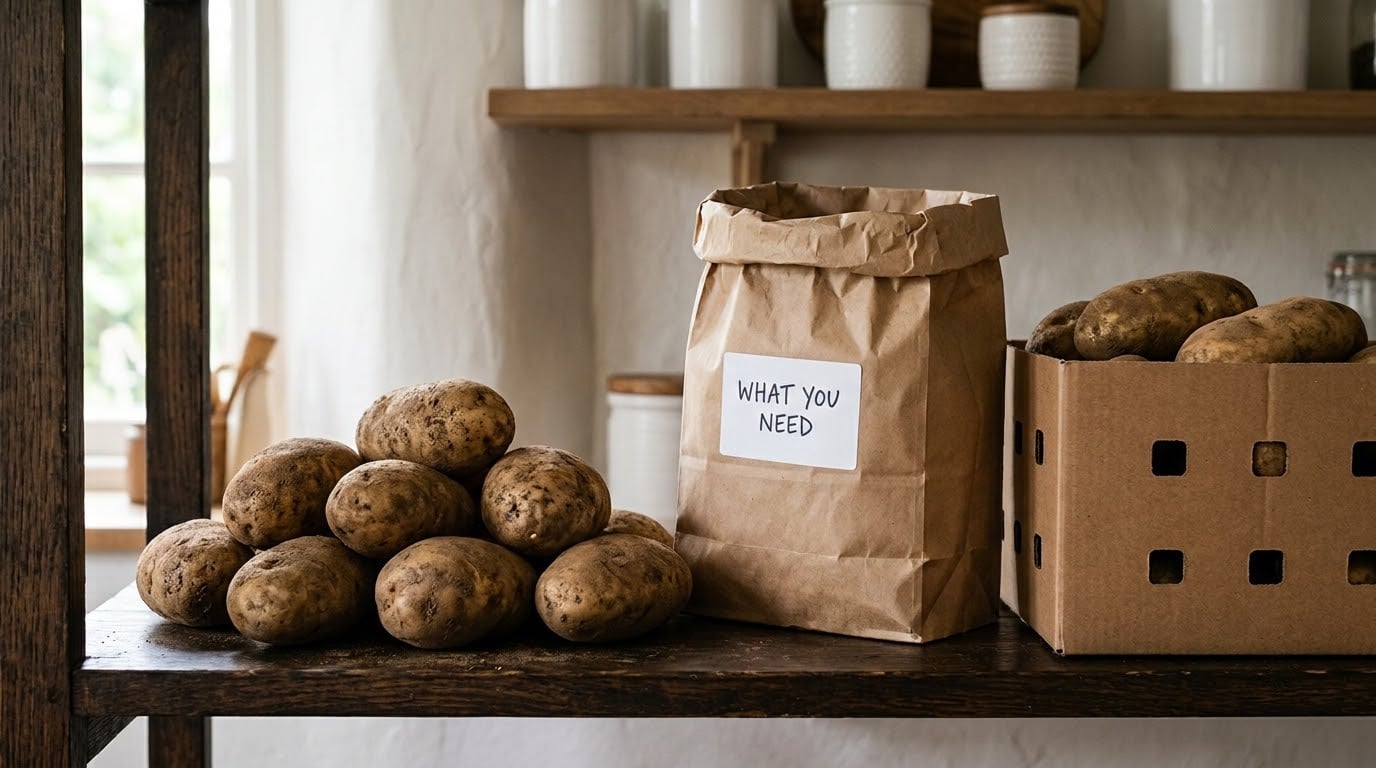
You do not need special equipment. A grocery paper bag, a ventilated cardboard box, or an open basket on a wire shelf all work.
- Fresh, unwashed potatoes. Buy loose ones if you can, so you can pick out bruised or sprouting spuds before they go in the box.
- A paper bag or breathable cardboard box. For a box, cut or poke a few holes in the sides so air moves through.
- A cool, dark spot. A pantry shelf, the back of a closet, or a cool corner of the basement works. Aim for roughly 45 to 50°F.
- An airtight container or sealed bag for cut, peeled, or cooked potatoes only. Those go in the refrigerator, and they are the exception to everything below.
How to Store Potatoes So They Do Not Sprout: Step-by-Step
Choose Firm, Unwashed Potatoes
Start by sorting what you brought home. Skip anything with a soft spot, deep bruise, green patch, or sprouts already forming.
Leave the skin on and do not wash. Washing leaves moisture on the skin, and that trapped moisture shortens storage life far more than a dusty potato does. If you want to clean them, do it right before you cook.
Skip tiny new potatoes for long-term storage. Their skins are thin and they lose water quickly, so eat those first and store the big firm ones.
Keep Whole Potatoes Cool, Dark, and Ventilated
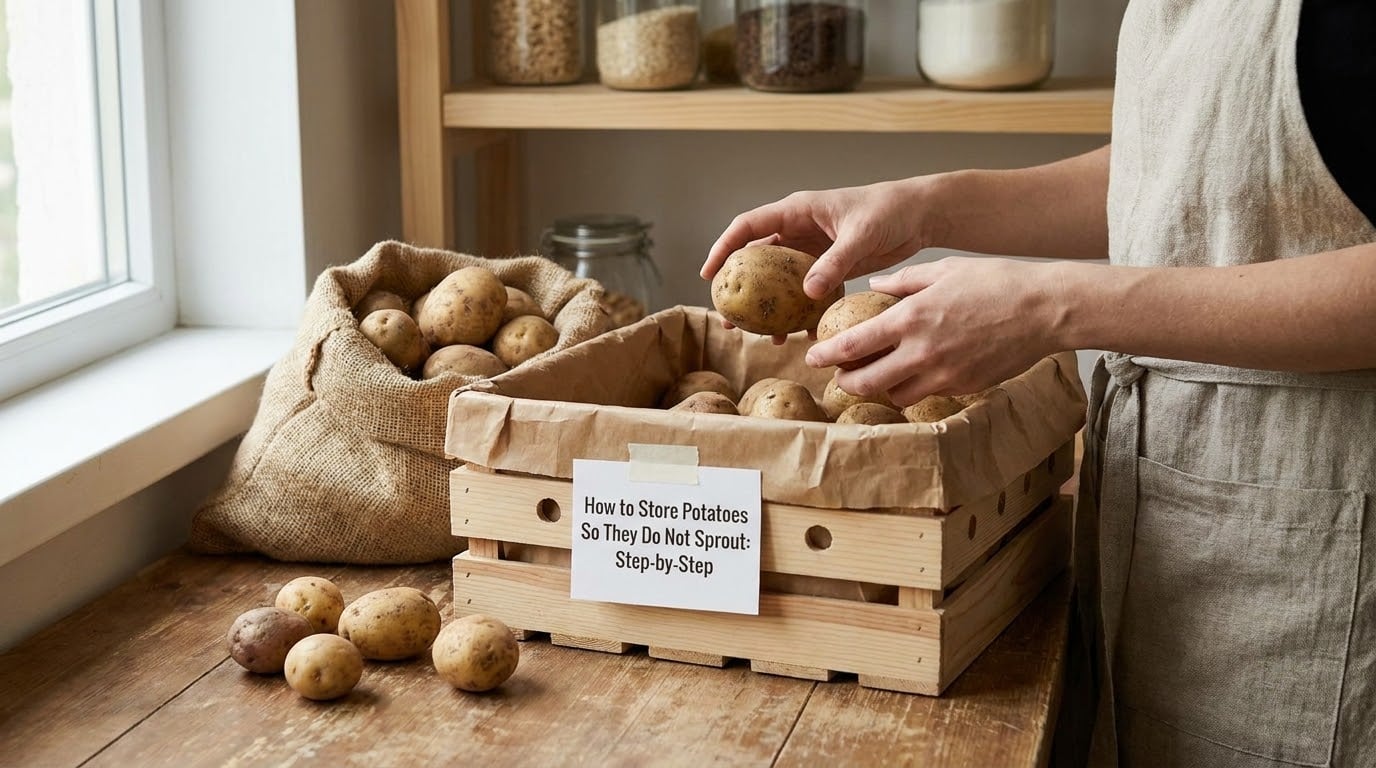
This is the core method, and it matters more than any container. Line the bottom of a cardboard box or a paper bag with a single layer of potatoes, then add a second layer without packing them tight. You want air between them.
Store the box somewhere dark and cool. A pantry cupboard is better than an open shelf, and a basement or garage corner is better still as long as it does not freeze or heat up. Keep the box away from the oven, the dryer, and the water heater, because radiated heat is what wakes up potatoes and pushes them toward sprouting.
Do not store potatoes next to onions, garlic, or fruit such as apples and bananas. Onions release moisture and gases that speed sprouting and rot in a sealed-ish space.
Check the box once a week and pull out anything that feels soft or looks damp. One bad potato in a closed box will take its neighbors with it within a few days.
Refrigerate Cut or Peeled Potatoes
Once a potato is cut or peeled, the rules change completely. Cover cut pieces tightly or submerge them in cold water, then refrigerate. Cut potatoes left at room temperature should be used within about two hours, and water-soaked pieces within 24 hours.
Cooked potatoes go in an airtight container in the refrigerator and keep for three to four days. Reheat them thoroughly before eating.
Whole raw potatoes do not go in the refrigerator. Chilling them below about 42°F converts their starch to sugar, so they fry and brown unevenly, and the browning produces more acrylamide when they cook.
Check Stored Potatoes Before Use
Small sprouts on an otherwise firm potato are not automatically a problem. Trim the sprout and a generous margin of flesh around it, then use the potato promptly.
Discard the whole potato if the sprouts are long and soft, if the flesh is shriveled or wrinkly, if there is mold, or if green patches extend deep into the flesh. Cutting around a small green spot on the surface is fine, but a potato that is green, sprouted, and soft all at once is not worth the gamble.
For the rest of your fridge-storage questions, how to store leafy greens so they stay crisp covers the same cool-and-dry logic that keeps greens crisp for days.
Common Mistakes
Washing potatoes before storing them. The wet skin invites mold. Store them dusty, wash before cooking.
Sealing whole potatoes in a plastic bag or airtight tub. Moisture collects and rot starts. Whole potatoes need airflow; only cut potatoes need airtight.
Storing potatoes beside onions or in a fruit bowl. Keep the two in separate rooms or at opposite ends of the pantry.
Leaving them in direct light. Light turns skin green, and green skin carries solanine, a natural toxin. A closed cupboard or a covered box solves this.
Putting cut potatoes back on the counter. Once cut, they belong in the refrigerator or in cold water for no more than a day.
Forgetting about them. A box in the back of a busy kitchen gets missed until it turns to mush. Set a weekly reminder on your phone and sort through it.
Storing in a hot garage or a damp, musty basement. Unheated space is fine if it stays cool and dry. A musty cellar is a rot risk, and a summer garage pushes potatoes straight into dormancy-breaking heat.
Root vegetables need the same darkness and airflow treatment. How to store fresh ginger so it lasts and how to store fresh turmeric root both cover the paper-bag approach for knobbly roots.
Frequently Asked Questions
Why do potatoes sprout in storage?
Potatoes are living tubers that stay dormant only while conditions are right. Warmth, light, and ethylene from onions or fruit all break that dormancy, and once it breaks the buds at the eyes start growing. Keeping potatoes cool at 45 to 50°F, dark, and ventilated holds dormancy longer than any container trick.
Should I store potatoes in the refrigerator?
Not for whole raw potatoes. Below about 42°F their starch turns to sugar, so they cook unevenly and brown more when fried. Cold storage does make them last longer, which matters if you have bought a large bag, so keep the fridge for peeled, cut, or cooked potatoes and leave whole ones in a cool pantry.
Can I remove small sprouts from potatoes?
Yes, if the potato is otherwise firm and the sprouts are short. Cut well past each sprout and remove the green tint underneath with it. Discard the potato entirely when sprouts are long and soft, when the skin is wrinkled, or when green patches reach deep into the flesh.
Should potatoes be stored with onions?
No. Onions release moisture and ethylene gas that make potatoes sprout and rot faster, which is why the traditional advice is to keep them in separate containers in different parts of the pantry. The same applies to garlic, apples, bananas, and any other ethylene-producing fruit or vegetable.
How long do whole potatoes last in a pantry?
Two to three months in a normal kitchen pantry at cool room temperature, and four to six months in a proper cool, dark space near 45 to 50°F. Storage in a paper bag or ventilated box beats a sealed plastic bag every time. Check weekly and remove anything soft before it spreads to the rest.
Are potatoes with green patches safe to eat?
A small green patch on the skin can be cut away, along with a generous margin of flesh, and the rest is fine to eat. Green skin and sprouts contain solanine, a glycoalkaloid that can cause nausea and stomach upset, and the concentration is highest in the skin, sprouts, and any green or bitter flesh underneath. If the potato is green all over, soft, or bitter tasting, throw it out.
Conclusion
The first thing to do tonight is move your potatoes out of any plastic bag or open shelf and into a paper-lined, ventilated box in a cool, dark cupboard, away from onions and appliances. Check the box every week and pull out anything soft.
Once a potato is cut or peeled, refrigerate it in an airtight container or hold it in cold water for no more than a day. If you are not sure whether a potato has gone too far, remember the rule: trim small sprouts on firm flesh, discard anything green, soft, or wrinkled. Follow the same dark-and-dry approach for other roots, and you will waste a lot less of what you bring home.