
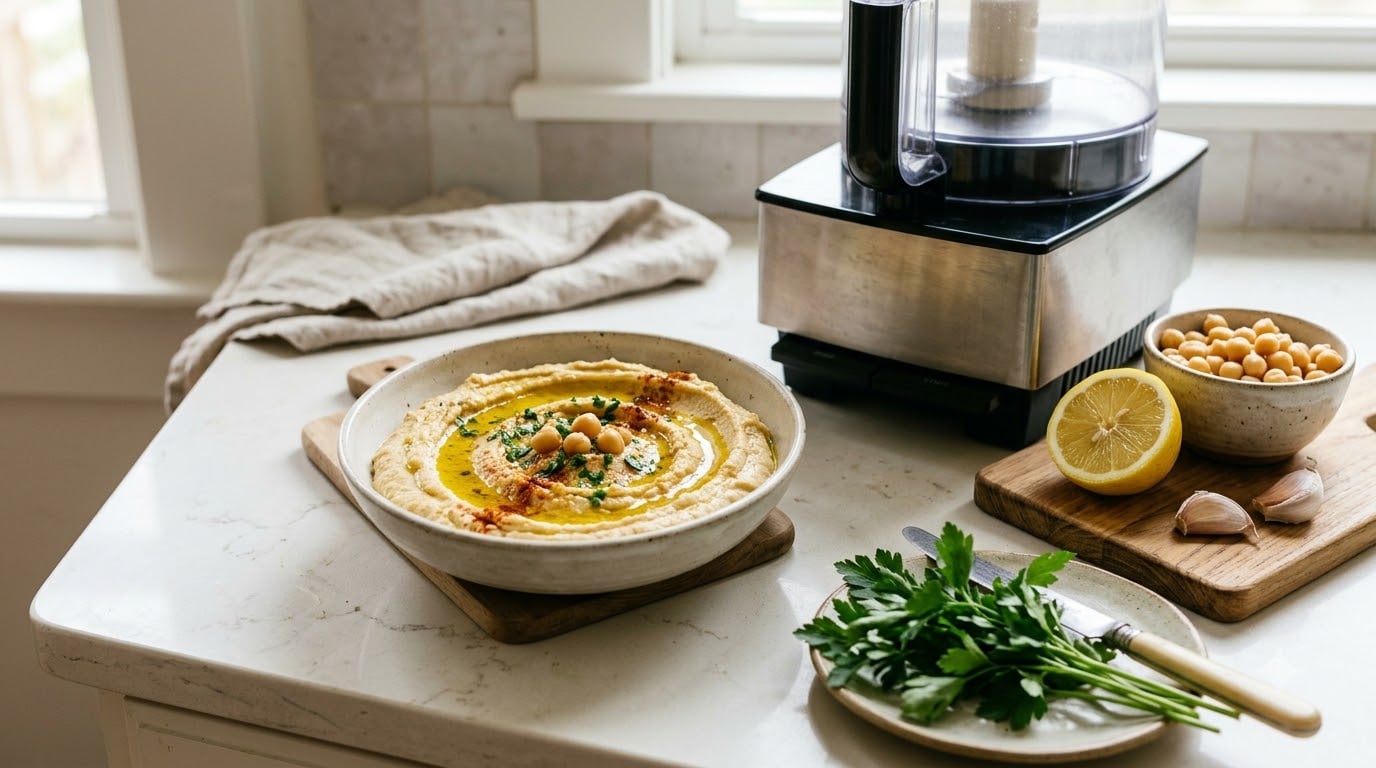
Yes, you can make hummus without tahini, and how to make hummus without tahini is easier than most recipes suggest: blend chickpeas, reserved chickpea liquid, lemon juice and garlic, then stream in olive oil until it turns silky. Tahini is a paste of ground sesame seeds that supplies creaminess and nutty depth, so replacing it takes two jobs: aquafaba for body and olive oil for emulsification. Ten minutes, one can of chickpeas, about eight servings.
The honest tradeoff is texture. Without tahini, chickpeas stay a little more chickpea-forward, and the dip leans on lemon and salt more than a traditional version. Adding the right liquid in small amounts fixes almost all of that. This recipe has been made with a food processor, a blender and nothing more than a fork, and the adjustments below are the ones that actually changed the result.
Table of Contents
What You Need
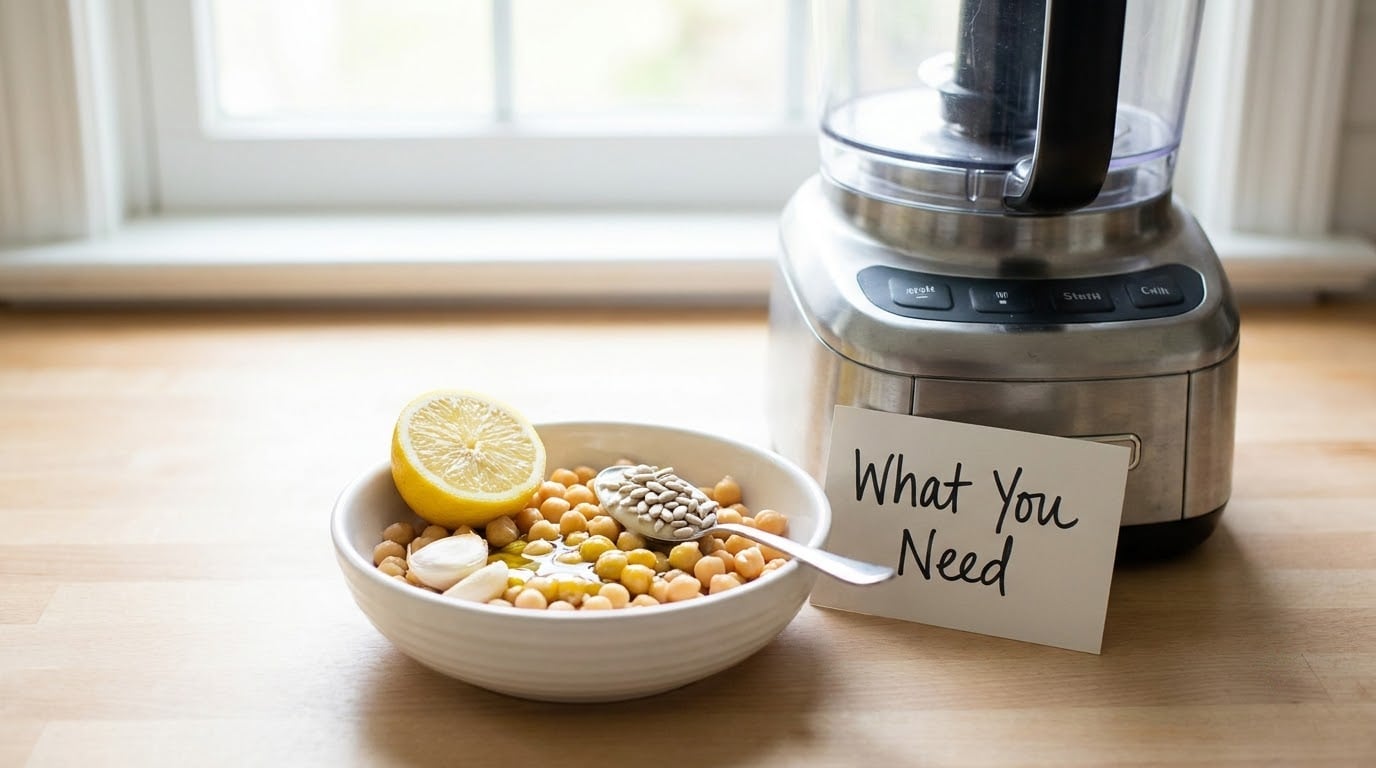
Core ingredients for one 15 oz (425 g) can of chickpeas, which makes roughly 8 two-tablespoon servings:
- 1 can chickpeas or garbanzo beans, 15 oz (425 g), with the liquid reserved
- 1/4 cup (60 ml) aquafaba, the starchy liquid from the can
- 2 tablespoons (30 ml) extra virgin olive oil, plus more for drizzling
- 2 tablespoons (30 ml) fresh lemon juice
- 1 small garlic clove, roughly 1 teaspoon grated
- 1/2 teaspoon ground cumin
- Salt to taste, starting at 1/2 teaspoon
That is a seven-ingredient hummus, close to the shortest honest version. Optional additions earn their place: 1 teaspoon smoked paprika for warmth, 1/4 teaspoon sumac for a sour lemony edge, 2 tablespoons chopped parsley or dill stirred in at the end, and a tablespoon of chopped roasted red pepper for sweetness and body.
For equipment, a food processor works best, and a blender is the second option. A high-speed blender gets a finer purée but heats the mixture, which dulls the lemon. A fork and a bowl genuinely work too, though you will want to mash for a full minute or two and accept a coarser dip.
If you want tahini back later without committing to it up front, how to use tahini beyond hummus covers twelve ways to use the jar.
Tahini substitutes: what to use and how much
There is no single replacement for tahini, so pick based on whether you want body, depth or just a sesame flavor note. Amounts below scale to one 15 oz can.
| Substitute | Amount per can | Flavor effect | Texture effect | Best for |
|---|---|---|---|---|
| Aquafaba | 1/4 cup (60 ml) | Neutral | Silky, light | Smoothest result, no sesame at all |
| Plain Greek yogurt | 1/4 cup (60 g) | Tangy, dairy-rich | Thick, stable | Fixing a runny batch or adding body |
| Roasted garlic | 2 cloves, 400F for 40-45 min | Deep, sweet umami | Neutral | Rebuilding nutty depth without sesame |
| Sunflower seed butter | 1 tablespoon (16 g) | Mild, nutty | Thickens | Sesame-free versions that still taste rich |
| Sesame oil | 1 teaspoon, only | Toasty, intense | No change | Flavor finish, not a bulk swap |
| Peanut butter | 1 tablespoon (16 g) | Roasty, sweet | Thickens | Only if nuts are safe for you |
One caution for anyone with a sesame allergy: check cumin, paprika and sumac labels for cross-contact, since many spice brands run sesame on shared equipment. Sumac also works as a paprika substitute for color. Peanut butter and sunflower seed butter are not automatically safe if you are avoiding nuts too.
Step-by-Step
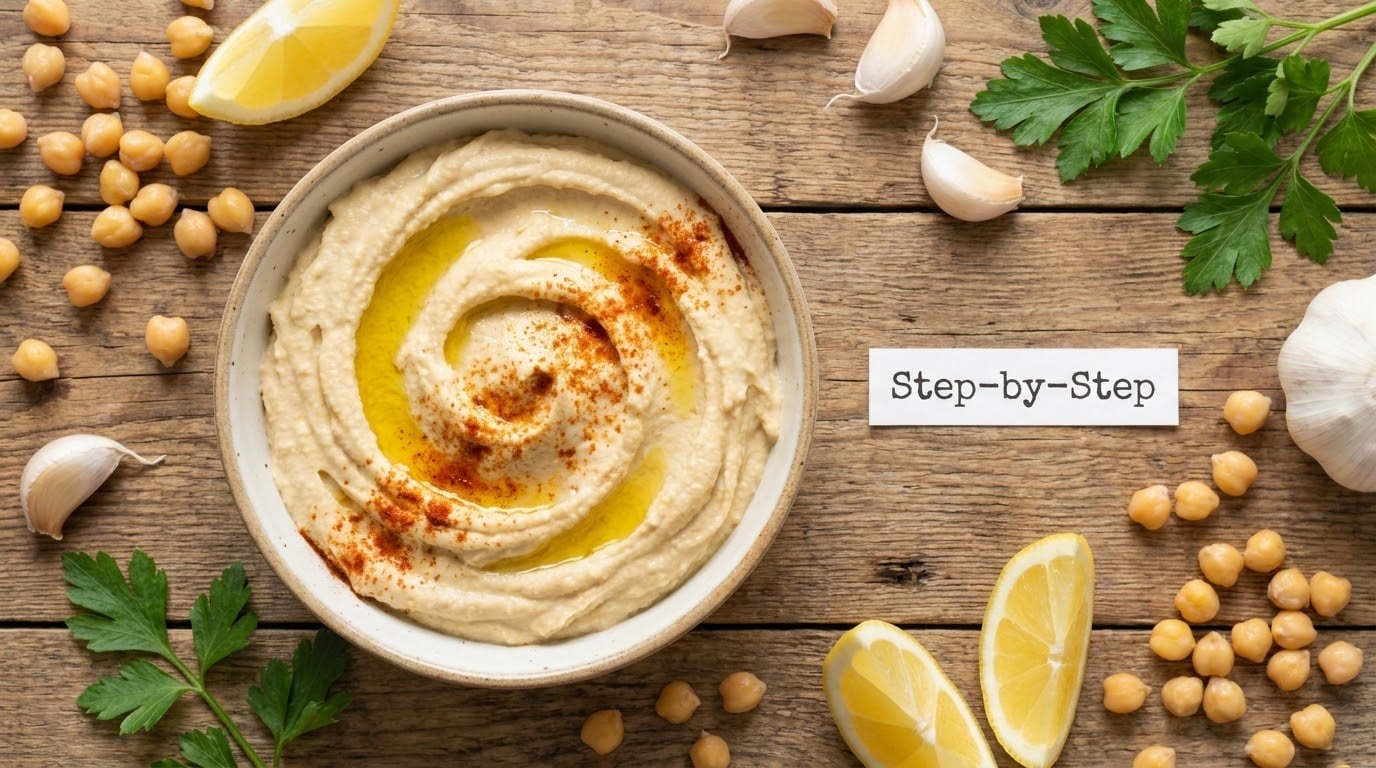
How to make hummus without tahini comes down to liquid control and blend time. Start with a small amount of aquafaba and build from there, because you can always thin a dip but never thicken it back without going lumpy again. Here is the order that works most reliably.
Soften the Chickpeas
Canned chickpeas need no soaking. Drain them, but keep the liquid, and pour 1/4 cup of that liquid back into the bowl. Most of the canned flavor that some people dislike comes from the canning liquid, so rinsing under cold water is worth 30 seconds.
Dried chickpeas give a better result but need planning. Soak them overnight in plenty of cold water, then simmer in fresh water for 60-90 minutes until they bend easily between two fingers. Save that cooking liquid too; it is starchier than the canned liquid and makes a thicker, silkier purée. Rub a few skins off between your fingers if you want the smoothest possible texture, which is the single biggest difference between restaurant hummus and a quick one.
Blend the Creamy Base
Put the chickpeas, 1/4 cup aquafaba, garlic and lemon juice in the food processor first, with no oil. Pulse a few times to break everything down, then run continuously for a full minute. Scrape the bowl down once, because the mixture hides against the wall and stalls the blades.
With the motor running, pour the olive oil in a slow, thin stream from the top. This is the emulsification step that replaces tahini’s job, and it only works if the oil goes in gradually rather than all at once. You will see it turn from loose and grainy to noticeably glossy and thick within about 30 seconds. Add one or two ice cubes near the end for a lighter, aerated texture; the cold does something a long blend alone will not.
Add Flavor and Adjust the Texture
Stop the processor, scrape down again, and add the cumin, smoked paprika if you are using it, and 1/2 teaspoon salt. Pulse to combine and taste with a clean spoon. It will need more than you think: without tahini there is less fat to carry flavor, so salt and acid are doing more of the work.
Now judge the consistency. It should hold a soft peak when you lift the spoon and slowly slump. Too thick means more aquafaba, one tablespoon at a time, with a pulse in between. Too loose means a second squeeze of lemon, or a spoonful of Greek yogurt if you want body back. A little thin after resting usually fixes itself in the fridge, since the mixture sets as it chills.
Taste again at the end and add salt in small increments. Then swirl the surface, drizzle with olive oil, and finish with sumac, parsley or a dusting of paprika.
Common Mistakes
Grainy or chickpea-forward texture means the blend was too short or the chickpeas too firm. Blend another full minute and add cold aquafaba. Watery hummus comes from adding liquid all at once; spoon it back in slowly next time, and use aquafaba instead of water because it carries starch and does not dilute the flavor.
Gummy hummus happens when you over-blend warm chickpeas and the starch turns pasty. Let cooked chickpeas cool before they go in, and stop the motor the moment the texture turns smooth. Bland hummus is usually under-salted; the fix is salt and lemon, not more olive oil.
For storage, refrigerate in a sealed container for up to 4 days and always use a clean spoon. It darkens slightly in the fridge, which is harmless; press plastic wrap onto the surface if that bothers you. Freezing works: leave a finger of headroom in the container, freeze for up to 3 months, thaw overnight in the fridge, then stir and add a splash of aquafaba, since thawed hummus seizes up and needs liquid worked back in.
Frequently Asked Questions
What can I use instead of tahini in hummus?
The best replacement is aquafaba, the liquid reserved from the can, which adds body and silkiness without changing the flavor. Plain Greek yogurt works if you want tang and extra thickness. Roasted garlic rebuilds nutty depth, and sunflower seed butter or peanut butter add richness in small amounts. Sesame oil is a flavor finish only; it has no emulsifying body, so more than a teaspoon tastes harsh.
How do I make hummus without tahini that is not chunky?
Use aquafaba rather than plain water, add it one tablespoon at a time, and blend for a full minute after everything is combined. Peel the chickpeas if your can has loose skins. Two ice cubes and a slow stream of olive oil poured in while the motor runs make the biggest difference. Home cooks often report adding an extra quarter cup of liquid, but doing it gradually is what keeps the texture even.
How do restaurants get their hummus so creamy?
They blend much longer than feels necessary, often several minutes, and they add ice to keep the emulsion light instead of warming it. Olive oil goes in slowly with the motor running, which is what makes the mixture glossy. Some kitchens peel the chickpeas and use a splash of ice water. Without tahini in the bowl, that extra blending time and the oil timing do most of the work.
How long does homemade hummus without tahini keep in the fridge?
About 4 days in a sealed container at or below 40F, using a clean spoon each time you serve. No-tahini versions often tighten a little as they chill, so leave a splash of aquafaba or olive oil in the container and stir before serving. If the color has dulled or there is a sour smell, discard it rather than trying to fix the flavor.
Can you freeze tahini-free hummus?
Yes, and it freezes better than many dips because there is less oil to turn rancid. Freeze in a container with a finger of headroom for up to 3 months. Thaw overnight in the fridge, never on the counter, then stir hard and add a tablespoon of aquafaba or lemon juice at a time until it loosens back to a dippable texture. Do not refreeze it more than once.
Is hummus still hummus without tahini?
In Arabic, hummus bi tahina literally means chickpeas with tahini, so a tahini-free version drops the second half of the name. In practice it is still a chickpea dip, and plenty of cooks make it permanently because of a sesame allergy or a taste preference. Call it whatever you like, but expect a coarser texture and a sharper lemon note than a traditional batch.
Conclusion
Start with soft chickpeas and a small splash of aquafaba, not a full half cup, and add more only when the spoon tells you to. Blend longer than you think you need, stream the olive in slowly, then salt until it tastes slightly too sharp. That is the whole recipe, and it takes about ten minutes.
Two related reads if you are cooking more this week: how to make kimchi without special ingredients and how to eat more vegetables without cooking every night.