
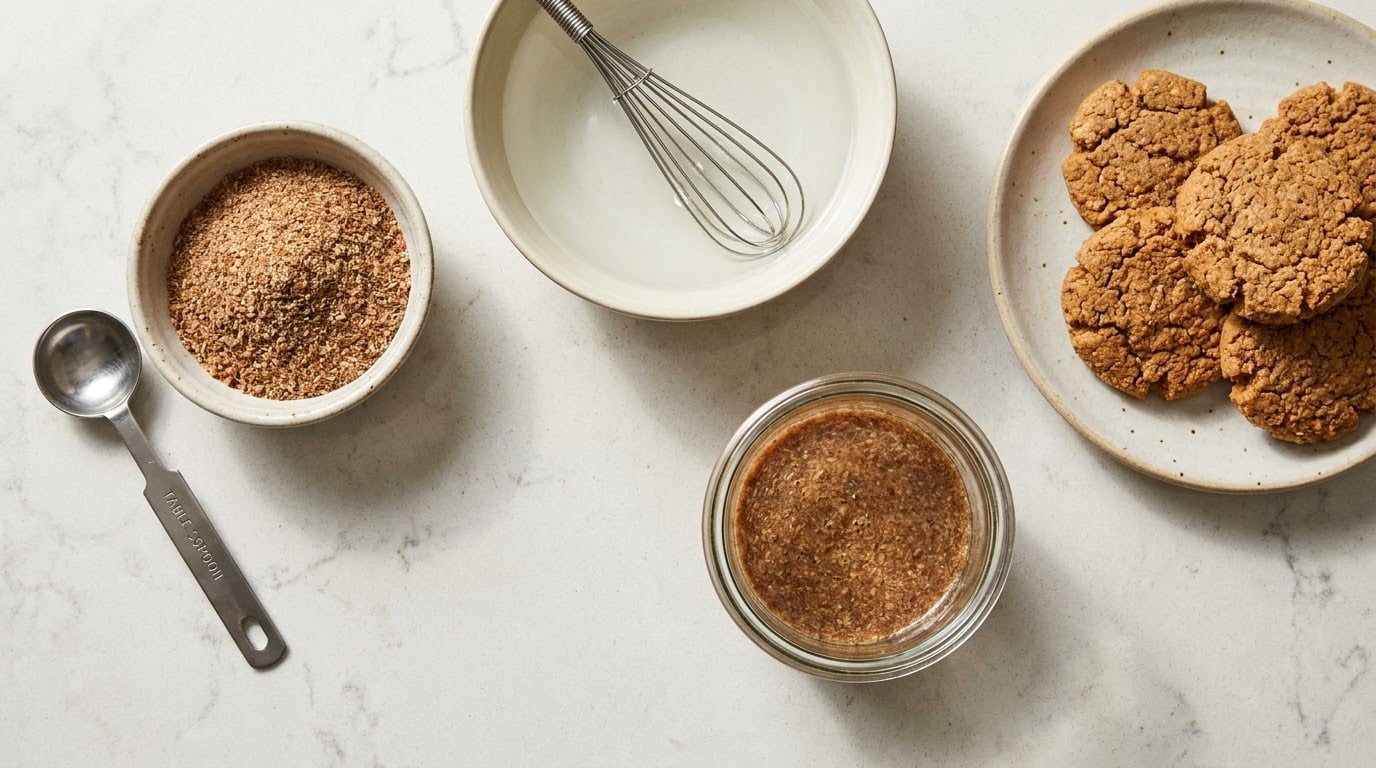
A flax egg is two ingredients: 1 tablespoon of ground flaxseed mixed with 3 tablespoons of water, then left to sit about 10 minutes until it thickens into a gel. That gel does the binding job an egg would do in cookies, muffins, quick breads, brownies and pancakes, so knowing how to make a flax egg for vegan baking takes about ten minutes of mostly waiting.
It is the cheapest, most useful egg replacement in a plant-based pantry, and the ratio scales cleanly. Two eggs means 2 tablespoons of flaxseed meal and 6 tablespoons of water. Three eggs means 3 and 9. The only real rule is that the flaxseed must be ground, because whole seeds will not gel.
Table of Contents
What You Need
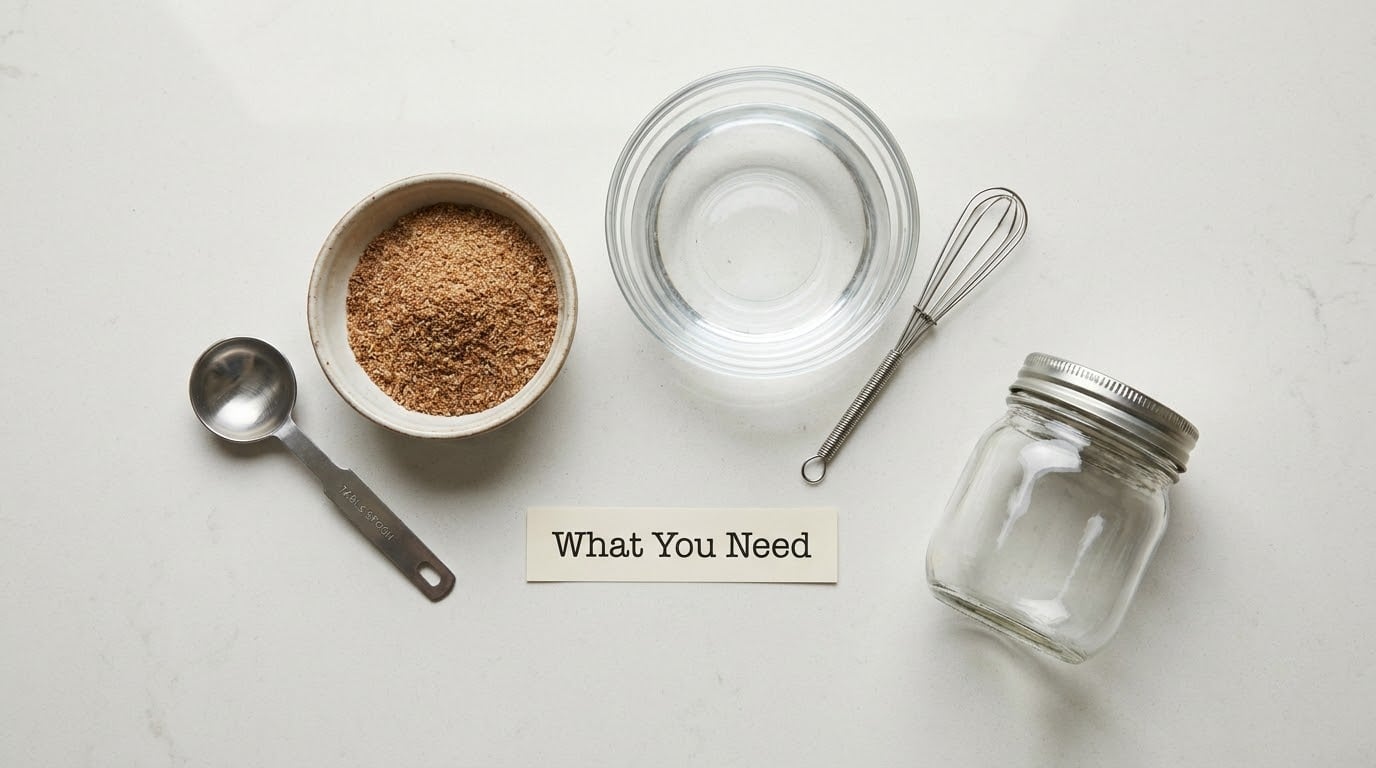
Two ingredients and one small bowl. Ground flaxseed, also sold as flaxseed meal or milled flaxseed, plus water. That is genuinely the whole list.
You also want a fork, a whisk or a small jar with a lid. The fork works, the whisk is faster, and the jar is the one to reach for when you are making a batch ahead.
One tablespoon of ground flaxseed mixed with three tablespoons of water replaces one conventional egg. Do not use whole flaxseed in place of the ground stuff. Whole seeds pass straight through the batter as hard little beads and release no gel, which is the single most common reason a first attempt goes wrong.
If you only have whole seeds, grind them first. A coffee grinder or a spice grinder does the job in a few seconds. Pulse rather than blend, or you will get a paste instead of a meal. A blender also works, just scrape it down a couple of times.
Brown flaxseed and golden flaxseed behave the same way. Golden is the one to buy for a white cake or a pale cookie, since the darker flecks show. Brown flaxseed carries a slightly nuttier flavor, which disappears fine in anything chocolatey.
One more thing worth knowing: ground flaxseed is full of fragile oils and goes rancid faster than whole seeds. Buy small containers, or grind a few tablespoons at a time and keep them in the freezer.
Step-by-Step: How to Make a Flax Egg for Vegan Baking
Step 1: Combine the Flaxseed and Water
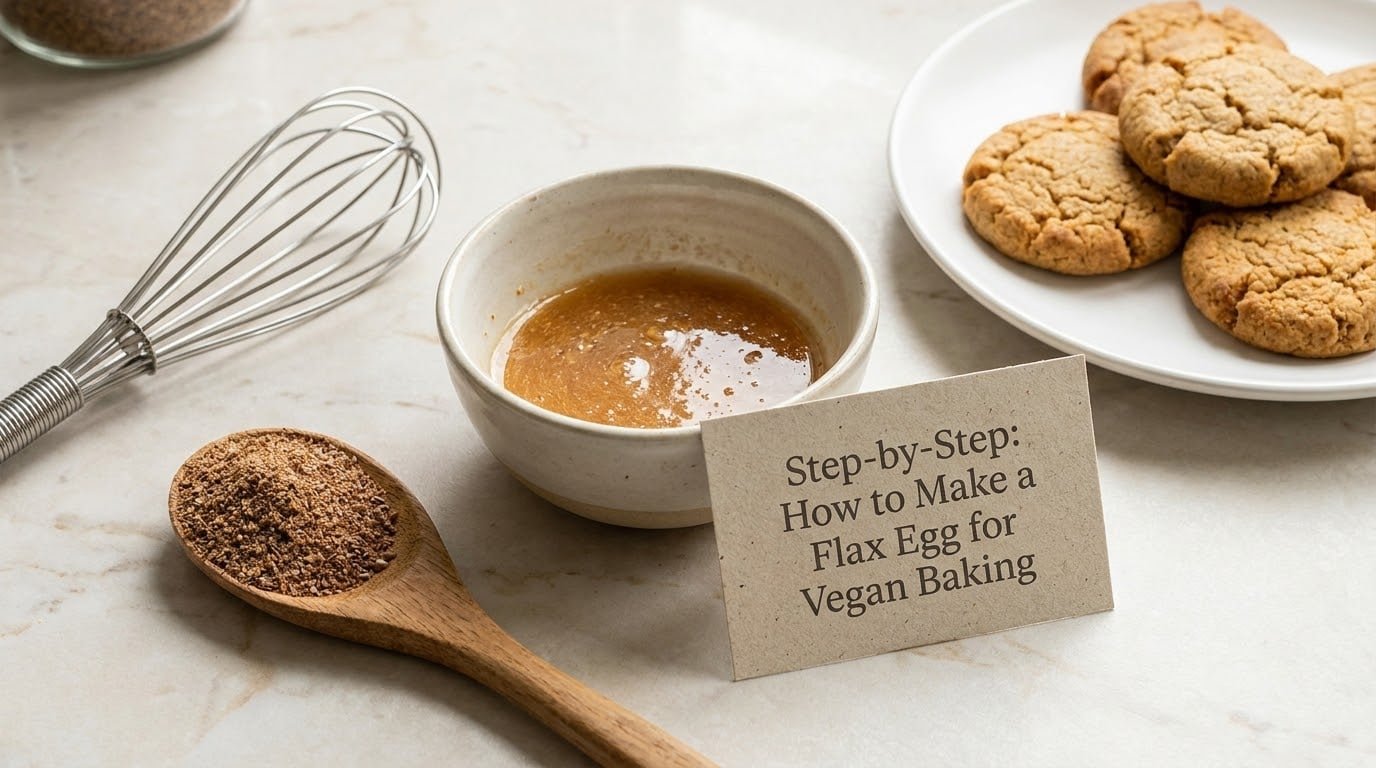
Stir 1 tablespoon of ground flaxseed with 3 tablespoons of water for one egg. The flaxseed wants to clump and sit at the bottom, so mixing is the part people rush.
Whisk hard, or stir with a fork in quick circles, and keep going until every dry pocket disappears. Scrape the sides and the bottom of the bowl. What you want before you stop is a smooth, even slurry with no dusty patches, not a mound sitting in clear water.
Measure the flaxseed level. A tablespoon scooped loosely and one packed tight differ noticeably, and that difference throws off the ratio. Fill the spoon, tap the excess off against the bowl rim, and level it with a knife.
Step 2: Let the Flax Egg Thicken
Cover the bowl and leave it for about 10 minutes. Room temperature water is the standard. Some bakers use hot water to speed things along, and it does thicken in under five minutes, but it gives you less time to catch lumps and there is no real need to rush a ten-minute wait.
Leave it on the counter for 10 minutes or refrigerate it for the same stretch. Refrigerating gives you a firmer gel that is easier to scoop, and it is the better choice if your butter or other fats are already soft.
You will know it is ready by look and touch, not by the clock. The flax egg is ready when it has a gel-like consistency similar to a raw egg: thick, cohesive, and it holds a soft peak when you tilt the bowl. If it slides like water, wait longer. If it is stiff and pasty, you went heavy on the flaxseed, so add a spoonful of water and mix again.
Step 3: Use the Flax Egg in Your Recipe
Pour the gel into the wet ingredients first and whisk it through before any flour goes in. Adding the gel to a wet bowl lets you see whether there are lumps before the flour hides them. If a lump survives, push it through the whisk or press it against the side of the bowl.
One flax egg replaces one egg, one for one, up to two eggs in a recipe. Beyond that, results get patchy.
Where it works: cookies, muffins, quick breads, banana bread, brownies, pancakes and waffles, oatmeal bars, meatless patties and vegan burger binders, and savory things like stuffed peppers or tofu casseroles. The gel holds moisture, so brownies and quick breads turn out particularly good.
Where it does not: meringues and anything needing whipped whites, angel food cake, custards, and cakes that call for three or more eggs. Flax binds, it does not leaven, and it carries none of the protein structure that makes an egg cake rise tall and light.
One adjustment to keep in mind. Because the gel holds water, a bake can come out gummy if the recipe is already heavy on liquid. When that happens, trim a couple of tablespoons of oil or butter, or add an extra teaspoon of baking powder. Fold the dry ingredients in gently in two additions rather than all at once, and you will keep more of that lift.
For a brushed top instead of an egg wash, thin a flax egg with a teaspoon or two of water and brush it on before baking. It browns nicely and adds a faint shine. It works on savory pies and hand pies the same way it does on a sweet tart.
How to Store a Flax Egg
A prepared flax egg keeps in the fridge in a sealed container for up to 24 hours. Some bakers push to two days and get away with it, but past 24 hours the gel starts to smell nutty in a way that is not pleasant, and that is the point where I stop.
Batch prep works well. Mix six flax eggs at once, rest them, then portion the gel into an ice cube tray and freeze, the same freeze-and-scoop trick behind how to make banana ice cream without an ice cream maker. Pop a cube straight into your mixing bowl, no thawing needed, and you have made-ahead binder for a few weeks. Frozen cubes sometimes separate a little, so swirl them with a spoon before using.
Keep dry ground flaxseed in a sealed jar in a cool cupboard, and label it with the month. Grinding a fresh tablespoon each time you bake costs you thirty seconds and avoids the rancid flavor that puts people off flax eggs entirely.
Common Mistakes
Why is my flax egg not thickening? Nearly always whole seeds, a loose or uneven measure of meal, or a stir that left dry pockets. Whisk it again and give it another few minutes. If it stays watery, you probably have too much water in there.
Using whole flaxseed. It will not gel. Grind the seeds or use a pre-ground meal. This is the mistake that makes people declare flax eggs don’t work.
Too much or too little water. Too much and you get a thin drink that never sets. Too little and you get a stiff paste that bakes into a brick. Three tablespoons per tablespoon of meal is the balance point, and loosening a stiff paste with a splash of water is always the safe fix.
Skipping the rest. Adding the gel straight away means the fiber has not swollen yet, so the binder never arrives in the batter. Ten minutes, and the visual cue matters more than the timer.
Adding the gel to very hot batter. Heat can tighten a flax gel, which gives you a tighter crumb than you wanted. Mix it into the room-temperature wet ingredients first.
Replacing three eggs or more. Bakers online are consistent about this: past two eggs, the replacement gets unreliable, and the bake comes out dense. In a recipe with three or more eggs, blended silken tofu holds structure far better.
Expecting a rise. A flax egg binds and it retains moisture. It does not trap air. If your cake sinks or sinks flat, add leavening or cut the liquid before you blame the flax.
Too much, in a pale bake. Flecks show in a white batter. Use golden flaxseed, or strain the mixed gel through a fine sieve.
One savory note: the same binder works outside the oven. A flax egg mixed into mashed beans or tofu holds patties together instead of falling apart in the pan, which is handy if you already make a cashew cheese sauce for the same kind of meals.
Frequently Asked Questions
How much ground flaxseed and water make one flax egg?
Mix 1 tablespoon of ground flaxseed with 3 tablespoons of water. That single flax egg replaces one conventional egg in most baking recipes. Scale it one for one: two eggs need 2 tablespoons of flaxseed meal and 6 tablespoons of water, three eggs need 3 and 9. Level the spoon rather than scooping it loosely, since a heaped tablespoon changes the ratio.
Can I use whole flaxseed instead of ground flaxseed?
No. Whole seeds do not release the mucilage that forms the gel, so they pass through the batter as hard flecks and bind nothing. Grind them first in a coffee or spice grinder, pulsing a few seconds at a time until you have a fine meal. Ground flaxseed meal bought from the shelf works too, but it goes rancid faster, so store small amounts in the freezer.
How long should a flax egg sit before using it?
About 10 minutes at room temperature, or 10 minutes in the fridge for a firmer gel. Judge it by texture instead of time: the flax egg is ready when it is thick and cohesive like a raw egg and holds a soft peak when you tilt the bowl. A watery mixture needs longer, and a stiff paste just needs a spoonful of water mixed back in.
What recipes work best with a flax egg?
Cookies, muffins, quick breads, banana bread, brownies, pancakes, oatmeal bars, and savory binders such as vegan patties and burgers. These bakes want binding and moisture retention, which is exactly what the gel delivers. Avoid meringues, angel food cake, custards, and cakes calling for three or more eggs, since flax binds but does not leaven or add the protein structure an egg provides.
Can I make flax eggs ahead and store them?
Yes. Keep a prepared flax egg covered in the fridge for up to 24 hours. For longer storage, portion a batch into an ice cube tray and freeze, then drop a cube straight into your wet ingredients with no thawing. Frozen gel sometimes separates slightly, so swirl it with a spoon first. Store your dry flaxseed meal separately in a cool, sealed jar.
How do I replace two or three eggs with flax eggs?
Scale the same ratio: 2 tablespoons of ground flaxseed to 6 tablespoons of water for two eggs, 3 tablespoons to 9 tablespoons for three. Two flax eggs per recipe works reliably. At three or more, the replacement gets patchy and bakes come out dense, so use blended silken tofu instead, about a quarter block per egg, when you need genuine lift and structure.
Conclusion
One tablespoon of ground flaxseed, three tablespoons of water, whisk hard, wait about 10 minutes until the gel holds a soft peak, then use it one for one in your recipe.
Mix it right before you bake so the gel is at its best, and level the spoon so the ratio stays honest. If a recipe is new to you, replace just the first egg with a flax egg and leave the rest alone. You will learn what the swap does to that bake before you commit to a full conversion.