
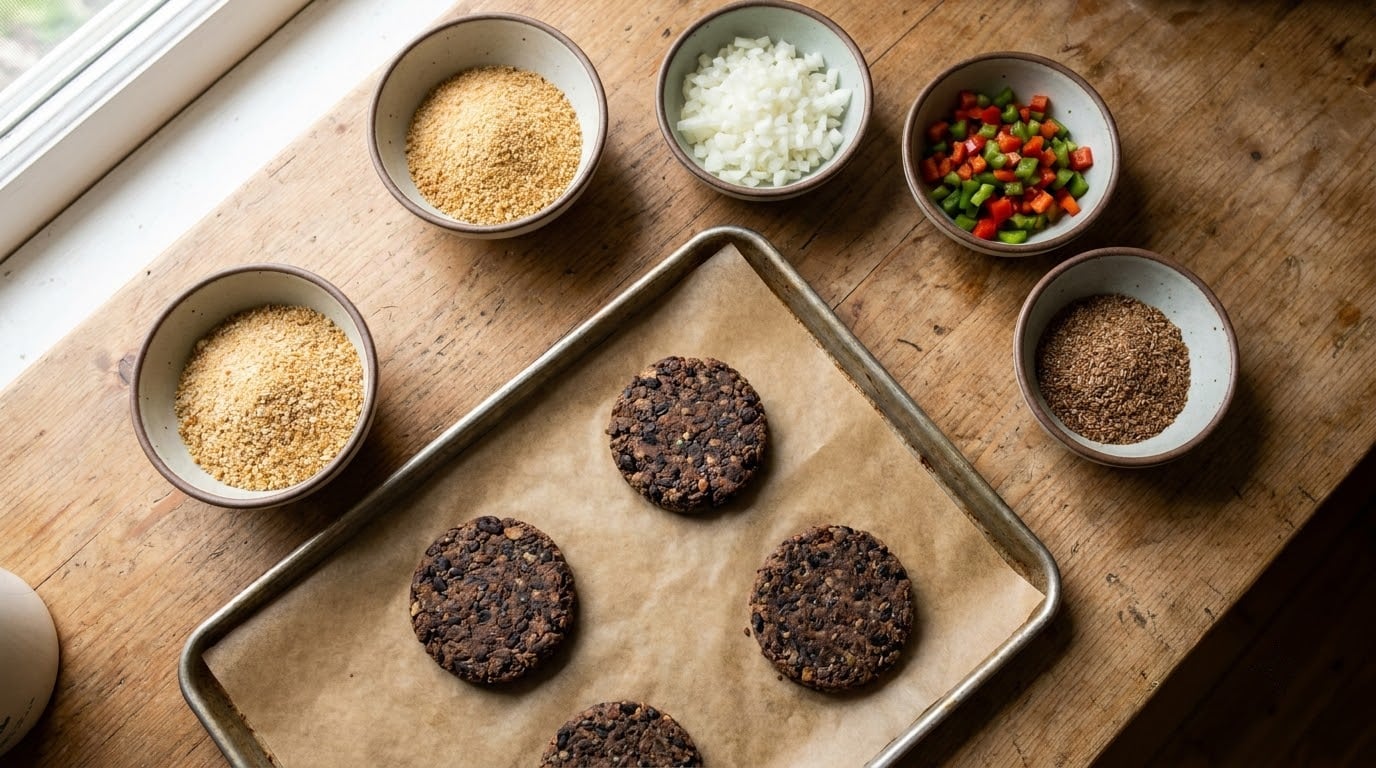
Black bean burgers fall apart for one reason: the beans are already cooked, so there are no raw proteins left to bind into a springy patty the way a meat patty does. Fix it by drying the beans thoroughly, adding roughly a quarter cup of a starch binder per 15-oz can, keeping some beans whole for texture, chilling the formed patties, and cooking them on medium heat over a solid surface.
That sounds like a lot of small instructions, but the whole method takes about 40 minutes and most of it is waiting. The part people rush is the part that matters: patties that go straight from the bowl to a ripping-hot pan break on the first flip, every time.
I have made these roughly two dozen times, and the version that finally stopped falling apart is the one below. It is also the method most home cooks use for how to cook lentils so they hold their shape, since the problem with any legume patty is the same one.
Table of Contents
- What You Need
- Step-by-Step: How to Make Black Bean Burgers That Hold Together
- Common Mistakes
- Frequently Asked Questions
- What binder works best for black bean burgers?
- Do black bean burgers need to be cooked all the way through?
- How do I keep black bean burgers from falling apart?
- Can I make black bean burgers ahead of time?
- What can I add to make black bean burgers taste better?
- Can I cook black bean burgers in an air fryer?
- The Short Version
What You Need
The core list is short enough that you can build it from pantry staples. Four patties is the working yield here, which means two 15-oz cans of black beans.
The base and the binder
- Two 15-oz cans black beans, rinsed and drained. Canned works better than cooked-from-dried here, because it is starchy and sticky enough to mash into a paste.
- About half a cup of binder for two cans. Panko or plain breadcrumbs are the easy default. Oat flour or cornstarch also work, and both are gluten-free if you use certified oats.
- One egg if you eat them. Skip it and use one tablespoon of ground flaxseed mixed with three tablespoons of water instead.
Moisture and flavor
- Finely diced red onion and bell pepper, about a quarter cup each. Cook them briefly first if you want flavor without water.
- Garlic, cumin, smoked paprika, salt, pepper to taste. A teaspoon of adobo sauce from a can of chipotle in adobo adds smoke and salt at once.
- A tablespoon or two of oil for the pan, plus enough sauce or tahini for the bun. On that last part, I keep a bottle of how to make a tahini dressing that is not bitter on hand for exactly this.
Tools
A potato masher or a fork does the mashing. A food processor makes short work of it if you pulse rather than puree. A wide, thin spatula matters more than any other tool here, because a narrow or stiff one is what tears patties. A jar lid lined with cling film, or a ring cutter, gives you uniform rounds with almost no effort.
Step-by-Step: How to Make Black Bean Burgers That Hold Together
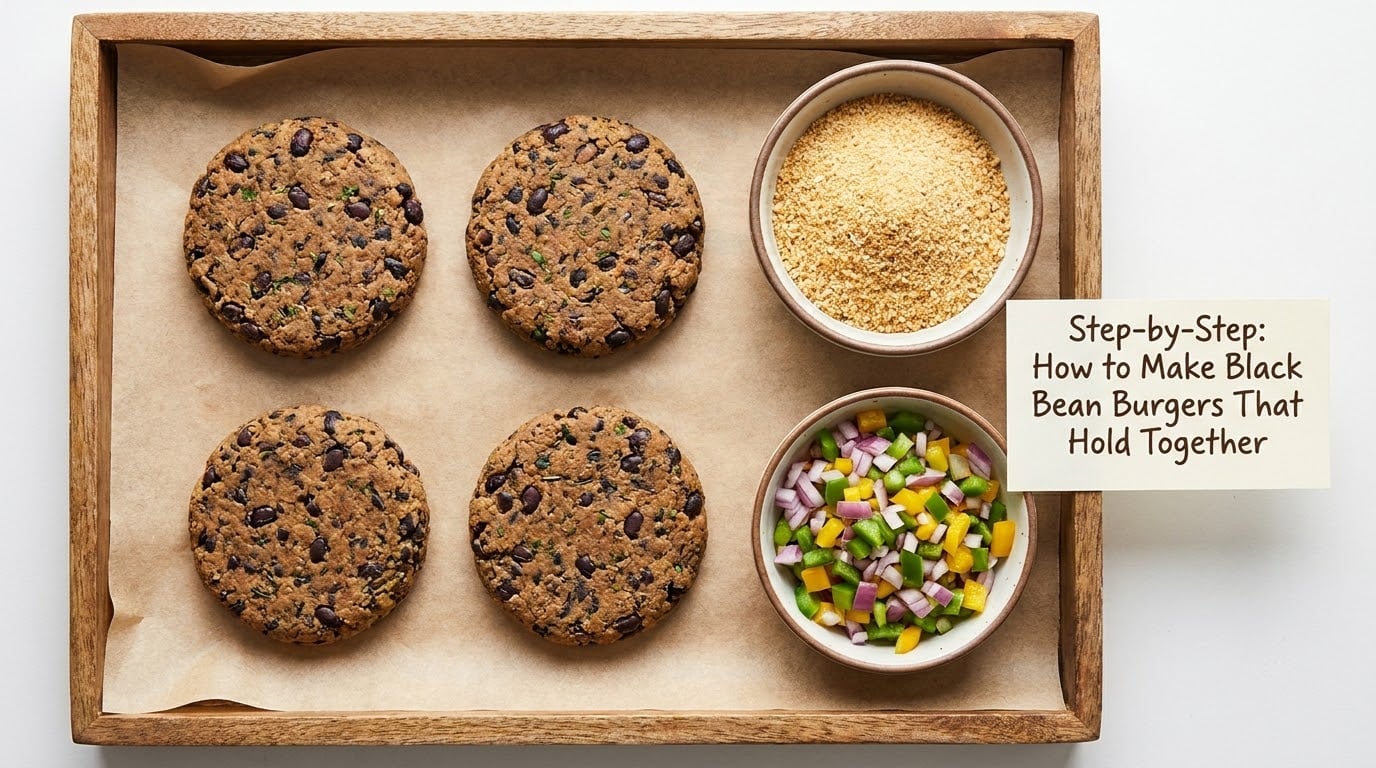
Read all six steps before you start, because steps five and six are where the patty is actually won and lost.
1. Drain the beans and dry them properly
Rinse both cans and drain them in a colander for a full ten minutes. Then spread them on a towel and roll them around until the skins look dull rather than glossy. That visible water is the single most common reason a bean mixture feels loose and a patty cracks.
How you know it worked: the beans feel almost dry to the touch, and when you pick one up it does not leave a puddle on the towel.
2. Mash about two thirds of the beans, keep the rest whole
Put about two thirds of the beans in a bowl and mash them with a potato masher or the back of a fork until the mixture holds a shape when you press it. Leave the last third whole. Whole beans are what stop a patty from tasting like paste, and they also give the binder something chunky to grip.
How you know it worked: mashed beans that are lumpy and slightly pasty, with a scatter of intact beans across the top.
3. Add the binder and seasonings, then mix gently
Add the binder, the egg or flax mixture, the diced vegetables, and the seasonings. Use your hands and fold until it just comes together. Stop there.
Overmixing is the mistake that turns a good bean patty into a bad one. You are looking for a mixture you can pinch and have it hold its shape on your knuckle without smearing. If it will not hold, add another tablespoon of binder. If it feels tacky and sticky, add a tablespoon more dry binder rather than trying to cook the moisture off.
4. Form four equal patties
Divide the mixture into four roughly equal portions and press each one into a patty about a quarter inch thick and as wide as your bun. Even size is not a detail here. A thin patty dries out and cracks before the thick one sets, so they cook at different rates and the thin one is always the one that breaks.
Press firmly with the palm of your hand. Compact is the goal, and that is the opposite of what most recipes tell you to do gently.
5. Chill or freeze the formed patties
Put the patties on a parchment-lined plate and refrigerate for 20 to 30 minutes, or freeze them flat on a parchment-lined sheet for an hour. Chill time is what gives the binder time to set, and it is the step people skip because it feels optional. It is not.
Freezing formed patties before cooking is a good option when you batch them. For eight or more, freeze flat with parchment between each layer, then cook from frozen with an extra minute per side.
6. Cook on medium heat and do not touch them
Heat a tablespoon of oil in a nonstick or cast iron skillet over medium heat, not high. Add the patties and leave them alone for about four minutes, until the edges look set and a crust forms underneath.
Flip once with your wide spatula, cook three to four minutes more, and check that the center is hot through and cooked to at least 160F. If you want to be precise, a probe thermometer in the middle of the thickest patty is the way. Then move the patty to a bun with the spatula, not your hands.
How you know it worked: the patty stays in one piece on the spatula and does not bend or crack when you lift it.
Common Mistakes
Almost every falling-apart burger traces back to one of a handful of things. Here is what I see most often, and the fix for each.
- Beans were not dry enough. Wet beans mean wet patties. Drain ten minutes, towel them, and mash only once you are handling dry beans.
- The mixture was pureed. A food processor run too long turns beans into glue and a patty into a hockey puck that crumbles when pressed. Pulse eight or ten times, then leave some beans whole.
- Not enough binder, or too much. Start at a quarter cup per can and adjust with the pinch test. Too little and the patty crumbles; too much and it turns dense and dry.
- Patties were flipped too early. No crust means nothing to grip, so the spatula tears through. Four minutes on medium heat, untouched, fixes this.
- Heat was too high. A ripping-hot pan blackens the outside before the inside sets. Medium heat gives the whole patty time to firm up.
- Patties were not equal size or thickness. Thin ones cook faster and dry out, then split. Weigh the portions if you can.
- The grill was too open. This one gets blamed on the recipe when the cooking surface is the problem. Wide, thin patties over grates fall through, and that is why the same patty works in a skillet and fails outdoors. Use a two-zone fire, cook over indirect heat with the lid closed, or put a flat sheet pan or cast iron griddle on the grate for the patties.
What to do if your black bean burgers still fall apart
Next time, add two things rather than changing the whole recipe: another two tablespoons of binder and 30 minutes of chilling. If they are falling through a grill, move them to a solid surface rather than adjusting the mixture again. If the problem is breaking when they land on the bun, use the spatula for the last transfer, all the way to the plate.
Frequently Asked Questions
What binder works best for black bean burgers?
Breadcrumbs are the reliable default at about a quarter cup per 15-oz can. For a gluten-free or vegan patty, use oat flour, quinoa flour, or cornstarch, and replace the egg with one tablespoon of ground flaxseed plus three tablespoons of water. The right amount is whatever passes the pinch test, so add it gradually and stop when the mixture holds its shape in your hand.
Do black bean burgers need to be cooked all the way through?
Canned black beans are already cooked, so there is no raw protein to worry about, but the patty still needs to be cooked through so the binder sets and the center firms up. Cook four minutes per side on medium heat and check the thickest part. For reheating leftovers, bring the patty to at least 160F all the way through.
How do I keep black bean burgers from falling apart?
Dry the beans well, mash only two thirds of them, add roughly a quarter cup of binder per can, press the patties firmly and to an even thickness, and chill them for 20 to 30 minutes before cooking. Cook on medium heat and flip only once, after a crust has formed. If you are grilling, cook over indirect heat or on a sheet pan so the patty never meets open grates.
Can I make black bean burgers ahead of time?
Yes. Form the raw patties, lay them on a parchment-lined tray, and refrigerate for up to three days, keeping the parchment so the patties do not stick together. For longer storage, freeze them flat in a single layer first, then stack with parchment between each layer and bag them. Cook from frozen with an extra minute per side.
What can I add to make black bean burgers taste better?
Sauté the diced onion and bell pepper in a little oil before mixing them in, which gives you flavor without adding water. Then season generously with cumin, smoked paprika, garlic, and salt, and add a teaspoon of adobo sauce from chipotle in adobo. Chopped walnuts add bite and more structure, and a crumbled feta or cotija on top adds saltiness without making the patty wet.
Can I cook black bean burgers in an air fryer?
Yes, and it suits the method well because the basket is solid and the hot air firms the patty without a searing surface. Set the air fryer to 375F, place the patties in a single layer, and cook for about 10 to 12 minutes, turning once at the halfway mark. Chill them first as you would for any other method.
The Short Version
Start with the beans, not the binder. Rinse two cans, drain them for ten minutes, towel them dry, mash two thirds and leave the rest whole. Add about half a cup of breadcrumbs, an egg or a flax mixture, and your seasonings, then fold gently until a pinched portion holds its shape.
Press four even quarter-inch patties, firm and compact, and give them 30 minutes in the fridge before they go anywhere near heat. That cooling step, plus medium heat and one patient flip, is what separates a burger that survives the bun from one that does not. Updated for 2026, and still the same method I use every time.