
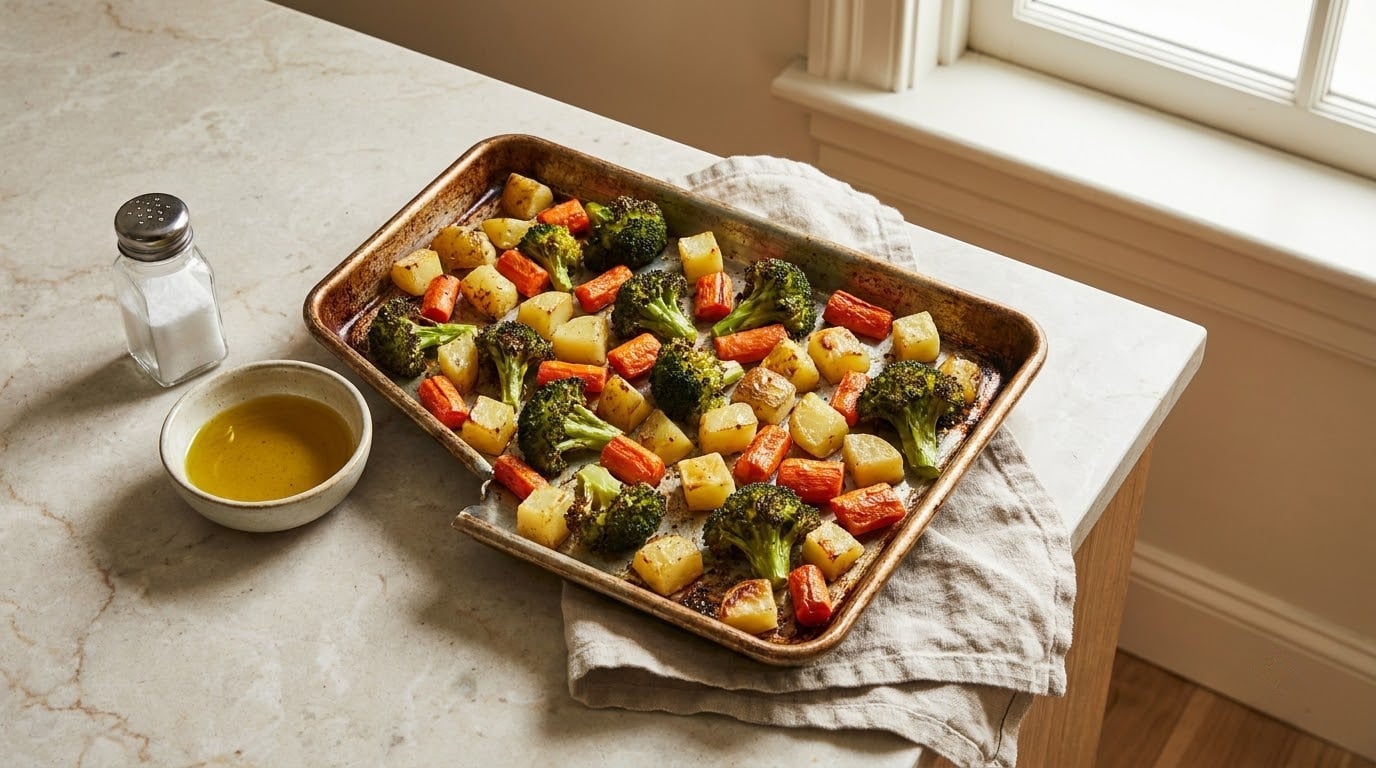
Roasted vegetables turn soggy when they steam instead of brown, and that happens for a handful of predictable reasons. Knowing how to roast vegetables so they are not soggy comes down to three levers: a hot oven, a dry surface, and enough space between the pieces for moisture to escape. Set the oven to 425°F, preheat the empty pan, cut everything to the same size, and spread it in one uncrowded layer. Most weeknight pans take 25 to 40 minutes, and the whole job is about ten minutes of prep.
The mechanism is simple. Most vegetables are 80 to 95 percent water, and in a hot oven that water turns to steam. If the pieces are touching, or sitting in a puddle of their own released liquid, the surface never dries out and never gets hot enough to brown. Browning is what gives you the crisp edge and the concentrated flavor, and skip it and you have steamed vegetables with good seasoning on them.
Table of Contents
What You Need
You need less than most people expect. No thermometer, no special tray, no spray bottle of oil.
- A rimmed metal sheet pan, half sheet size works well for a family portion
- Parchment paper, or simply enough oil that nothing sticks
- A large bowl for tossing
- Clean tongs or a spatula for turning pieces
- Fresh vegetables, cut to roughly one inch
- Olive oil and kosher salt, plus whatever seasoning you like
Two things on that list matter more than the rest. A pan with no rim lets juices run onto the oven floor and creates a steamy oven, and a deep casserole dish works exactly like a steamer because the walls trap moisture. Use a flat, rimmed sheet pan and you have solved the equipment half of the problem.
Skip the parchment if you like direct contact with hot metal, since it browns the cut faces better. Parchment is worth using for delicate vegetables or when you want the pan washed in ten minutes.
Step-by-Step
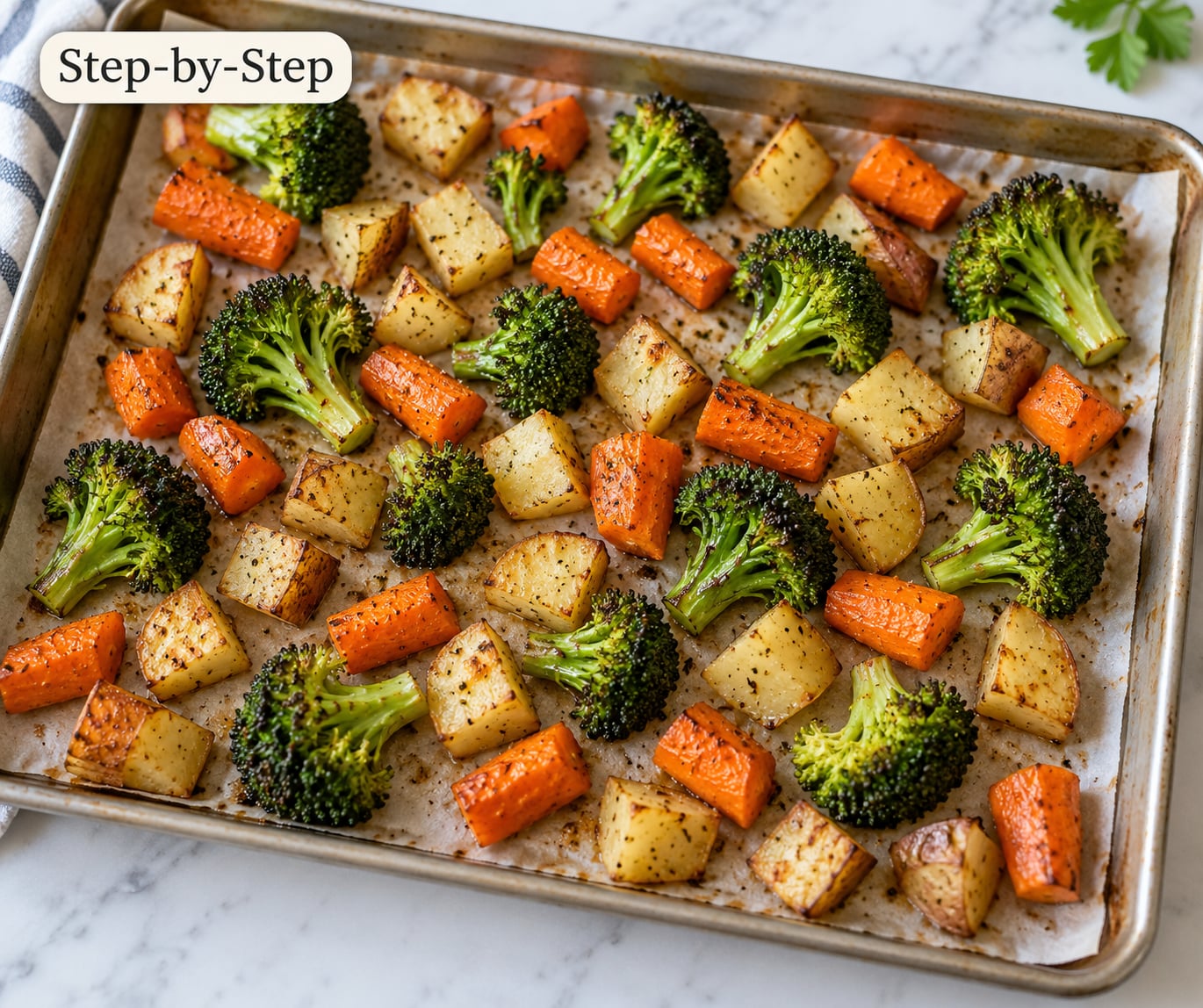
1. Heat the oven and pan properly
Set the oven to 425°F and let it run for a full 15 minutes before anything goes in. Put the empty pan in there during that preheat so the metal itself is hot when the vegetables land on it. A cold pan costs you several minutes of the roast while the oven heats through the food from the outside in, which is exactly how you get soft, pale results.
Convection at the same temperature is fine, just cut the time by about a quarter since the fan speeds up moisture loss. A hot pan plus moving air is the best combination you have for getting surface water off.
2. Cut the vegetables into even pieces
Uniform size is the difference between an evenly roasted tray and one with burnt peppers next to raw carrots. Aim for roughly one inch cubes, and if you are roasting a mix, match the sizes to the cooking times rather than to the vegetables themselves.
For example, cut carrots and broccoli into bite-size pieces of about the same volume. Carrots and broccoli then finish at roughly the same time, which is around 30 minutes at 425°F. A dense winter squash needs to go in about ten minutes earlier as smaller pieces, and a delicate leafy green or tomato goes in at the end.
3. Dry and lightly season the vegetables
Pat everything dry with a clean towel or a salad spinner before oil goes anywhere near it. Water on the surface has to boil off before browning can start, and that delay is the whole difference between crisp and limp. Wash first, dry second, then season.
Coat with a thin layer of oil rather than a heavy one. Enough oil to prevent sticking, not enough to pool. More oil blocks browning instead of helping it, since the surface stays wet and the vegetables essentially fry in their own coating at a lower temperature. A drizzle, a pinch of salt, and your hands is plenty.
Parboiling or soaking is unnecessary and works against you, because it adds water back in. The one exception is high-water vegetables such as zucchini, eggplant and mushrooms, which benefit from salting, waiting 20 minutes, then blotting and roasting at 425°F for a shorter time of about 12 to 15 minutes.
4. Arrange everything in a single layer
Leave a finger’s width of empty pan between every piece. If the tray looks full, that is the problem. A half sheet pan comfortably holds about two pounds of vegetables in one loose layer, and going beyond that means steam, so use a second pan instead of doubling up.
Put the vegetables cut face down where you can. That flat face is the surface that hits the hot pan and becomes the browned side you are after.
5. Roast until browned and tender
Roast uncovered and leave the pan alone for the first half of the cook time. Stirring releases the outside moisture that has started turning brown and gives the pieces a second steaming phase. If you want to turn them, do it once, halfway, and keep it to that.
Check for doneness by sliding a fork or the tip of a knife into a thick piece. It should meet almost no resistance. The color cue matters just as much, since deeply browned edges and caramelized spots signal that the water has left.
- Carrots, potatoes, sweet potatoes, beets: 35 to 45 minutes at 425°F
- Cauliflower, broccoli, butternut squash, red onion: 25 to 35 minutes
- Zucchini, peppers, green beans, mushrooms, eggplant: 15 to 20 minutes
- Tomatoes and asparagus: 10 to 15 minutes
If the middle of the tray is browning faster than the edges, rotate the pan at the halfway mark. For pale flat faces, finish under the broiler for the last two to three minutes with the door cracked and the pan on a middle rack, watching it the whole time.
Never cover vegetables while roasting. Foil and lids trap the steam, and steam is the thing you are trying to escape. Oven bags do the same thing, just in a more expensive package.
6. Serve immediately for the best texture
Move the vegetables off the hot pan and onto a cool plate or serving dish right away. Leaving them sit on the metal keeps cooking them, and any trapped steam keeps softening the crust. Ten minutes on the pan can undo a good roast.
For storage, let them cool uncovered on a rack for about 20 minutes, then refrigerate in a container with a paper towel in a single layer. Reheat at 425°F for 8 to 10 minutes, uncovered, so the trapped moisture has somewhere to go. The microwave heats the water inside the vegetable and softens it in about a minute flat, which is why reheated roast vegetables almost always go limp. The same dry-then-seal logic applies to raw greens, so my guide to storing leafy greens so they stay crisp is worth a read if leafy vegetables are your weak spot.
Common Mistakes
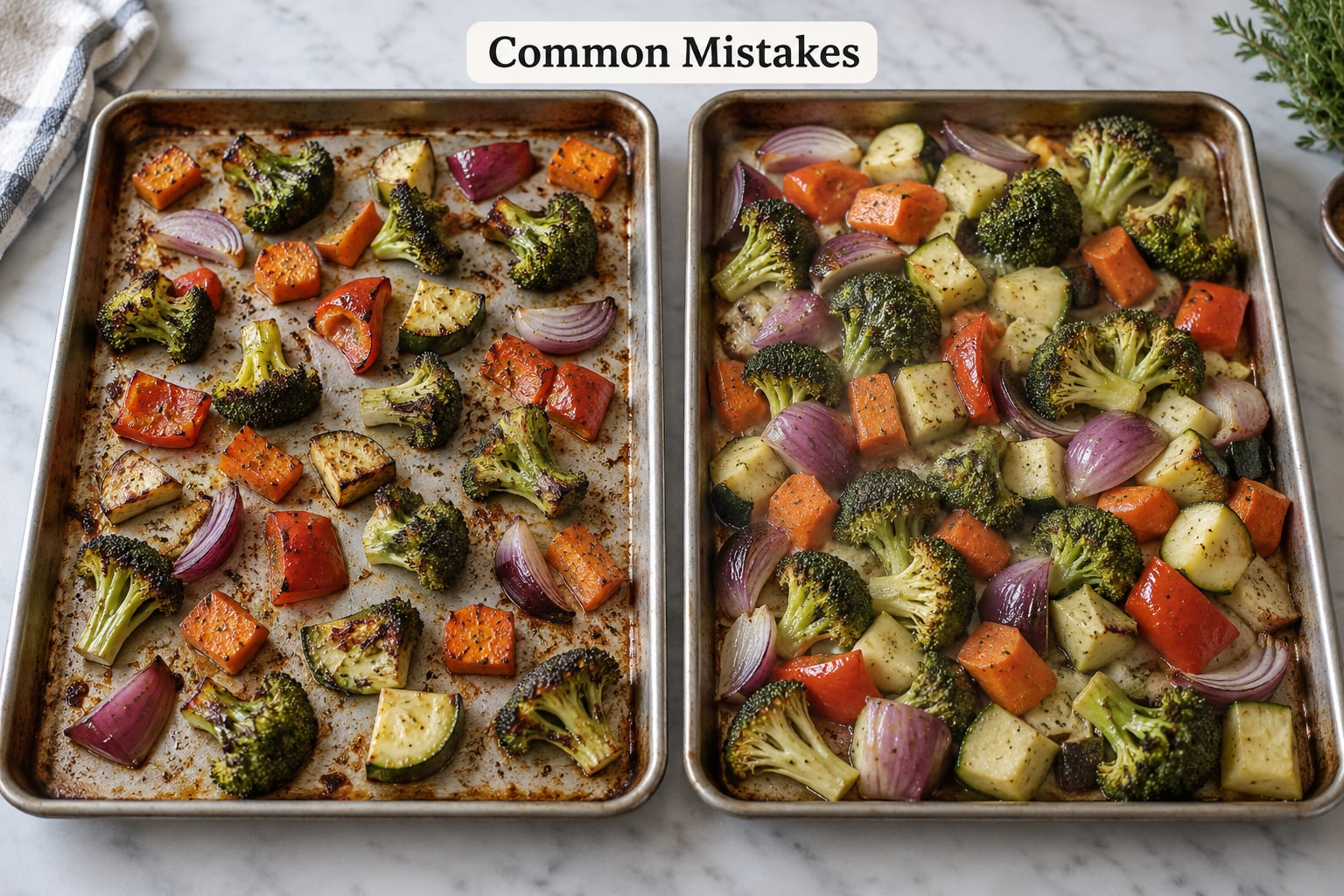
Almost every soggy tray traces back to one of these. Work down the list and the problem usually shows itself.
The pan is crowded. Touching pieces steam each other and the pan never gets hot enough to brown the base. Fix: one layer, space between every piece, second pan for the overflow.
The vegetables are wet. A rinsed vegetable carries surface water into a hot oven, and it has to boil off before browning starts. Fix: wash first, then dry thoroughly before oiling.
The oven is too cool. Below about 400°F there is not enough energy to drive off the moisture before the surface has time to collapse. Fix: 425°F as your default, 450°F for sturdy root vegetables when your oven runs cool.
There is too much oil. A thick coat keeps the surface wet and stops the browning. Fix: enough to prevent sticking and no more, roughly one tablespoon per pound of vegetables.
You stir too often. Each stir sends the moisture back to the surface. Fix: leave the pan untouched for the first half of the cook, then turn once if needed.
You used a deep pan. High sides trap steam around the food. Fix: a flat, rimmed sheet pan every time, with the low sides that let heat circulate.
You covered them. Foil, lids and oven bags all hold steam in. Fix: always roast uncovered.
You used a cool pan. A room-temperature sheet pan absorbs heat instead of searing the food. Fix: five to ten minutes in the hot oven before loading it.
The 60-Second Checklist Before You Put the Pan in the Oven
Scan this before the tray goes in: oven at 425°F, pan already hot, pieces all about one inch, surfaces dry, one loose layer with gaps, light oil coating, nothing covered, no stirring for the first twenty minutes. Every soggy tray I have seen was missing at least one of those, and most were missing two.
If your vegetables are already soggy rather than doomed to be, you can rescue them. Spread them back out on a hot pan, dry them off with a paper towel, and give them a three to five minute blast under the broiler. Refreshing them that way will not make them as good as a fresh roast, but it takes a soft tray from limp to decent in about five minutes.
Frequently Asked Questions
What is the best temperature for roasting vegetables so they are not soggy?
425 F is the best default for most home ovens. It gives the surface enough energy to evaporate moisture and start browning before the inside has time to collapse. Drop to 400 F only for very large, dense pieces such as whole cauliflower or big sweet potato chunks that need a gentler ride, and push to 450 F for sturdy root vegetables when you want deeper caramelization and your oven runs cool.
Should I parboil vegetables before roasting them?
No. Parboiling adds water, and every extra drop of water has to evaporate before browning can start, which is why soggy vegetables stay soft. If you want a head start on a dense vegetable such as a large sweet potato, cutting it into smaller, more uniform pieces does the same job in less time and without the extra moisture.
Why do my roasted vegetables become soggy?
Almost always because they steamed rather than roasted. Overcrowding the pan is the leading cause, and wet produce, a cool pan, a low oven temperature, a heavy coat of oil, or covering the pan all produce the same result. The vegetables release water as they cook, and if that steam cannot escape it re-wets the surface so the pieces never crisp or brown.
Do I need parchment paper to roast vegetables?
No, and you will get slightly better browning without it, since the vegetables touch hot metal directly. Parchment is worth using for delicate items such as fish or thin vegetable slices, or when you want an easy cleanup. If you skip the oil entirely and use parchment, add a light spray or brush of oil on the vegetables themselves so the browning still happens.
How do I reheat roasted vegetables without making them soggy?
Use a 425 F oven or a toaster oven, spread the vegetables on a sheet pan, and leave them uncovered for 8 to 10 minutes. Never use the microwave: it heats the water inside the vegetable cells first, which softens everything within about a minute. If you are reheating something that already sat wet in a container, pat it dry first and give the pan a few minutes under the broiler at the end.
Conclusion: Start With a Hot, Uncrowded Pan
Start by heating a rimmed sheet pan in a 425°F oven for five to ten minutes, then load it with dry, evenly cut vegetables in one loose layer. That single move does more for crispness than any amount of extra oil, and the whole technique takes under ten minutes of prep. Roast uncovered, leave the pan alone for the first half, and move the vegetables to a cool plate the moment they are deeply browned and fork tender. If you only remember one thing, remember the space between the pieces.
If your weeknights need a plan beyond the oven, my how to eat more vegetables without cooking every night guide covers the shortcuts, and how to get kids to try new vegetables is where I would send you if the crisp edges are not winning the table over.