
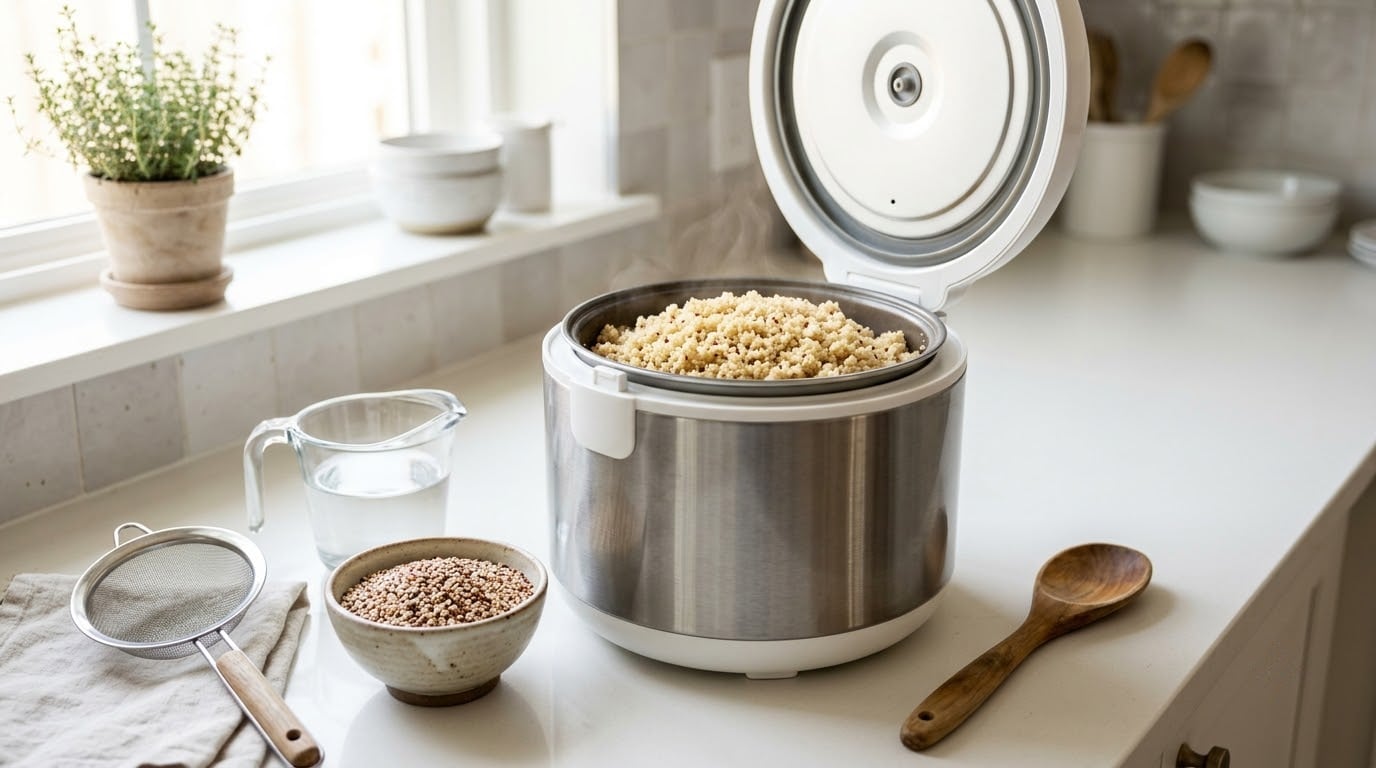
To cook quinoa in a rice cooker, rinse 1 cup of dry quinoa well, add 2 cups of water or broth, and run the regular white rice setting. Let it sit for 5 to 10 minutes after the cooker switches to warm, then fluff it with a fork. From measuring to serving you are looking at roughly 25 minutes, most of it hands-off.
Quinoa is a gluten-free seed that behaves like a grain, and it has a reputation for being fussy on the stove. A rice cooker removes most of that fuss. The appliance heats until the liquid is gone, then flips to keep-warm, so nothing scorches while you are at work.
Rinsing is the one step people skip, and it is the step that matters most. The bitter coating on quinoa grains is a natural compound called a saponin, and a quick rinse under cold water clears it off. Skip the rinse and you will notice it in the first bite.
What You Need
The equipment list for this method is short, and most kitchens already have all of it.
- A rice cooker with a standard white rice setting — any basic model works. A dedicated quinoa or grains setting is a bonus, not a requirement.
- A measuring cup — use the cup that came with the cooker if you have it, since the grain and water lines are printed on it.
- A fine-mesh sieve or strainer — a slotted spoon leaves too many grains behind and lets the water stay cloudy.
- Dry quinoa — white, red, black, or tricolor all work in the same method.
- Water, broth, or coconut water — 2 cups for every 1 cup of dry quinoa.
- A teaspoon of oil, optional — a light coat on the inner pot helps with cleanup.
- Salt and any seasoning, optional — a pinch of salt, a squeeze of lemon, or a spoonful of chopped herbs.
If you are only buying one thing to make this method better, make it the fine-mesh sieve. Everything else here is optional.
Step-by-Step
Follow these four stages in order and the results are repeatable. Each stage has a clear sign that it worked, so you can check rather than guess.
How to Cook Quinoa in a Rice Cooker: Measure and Rinse
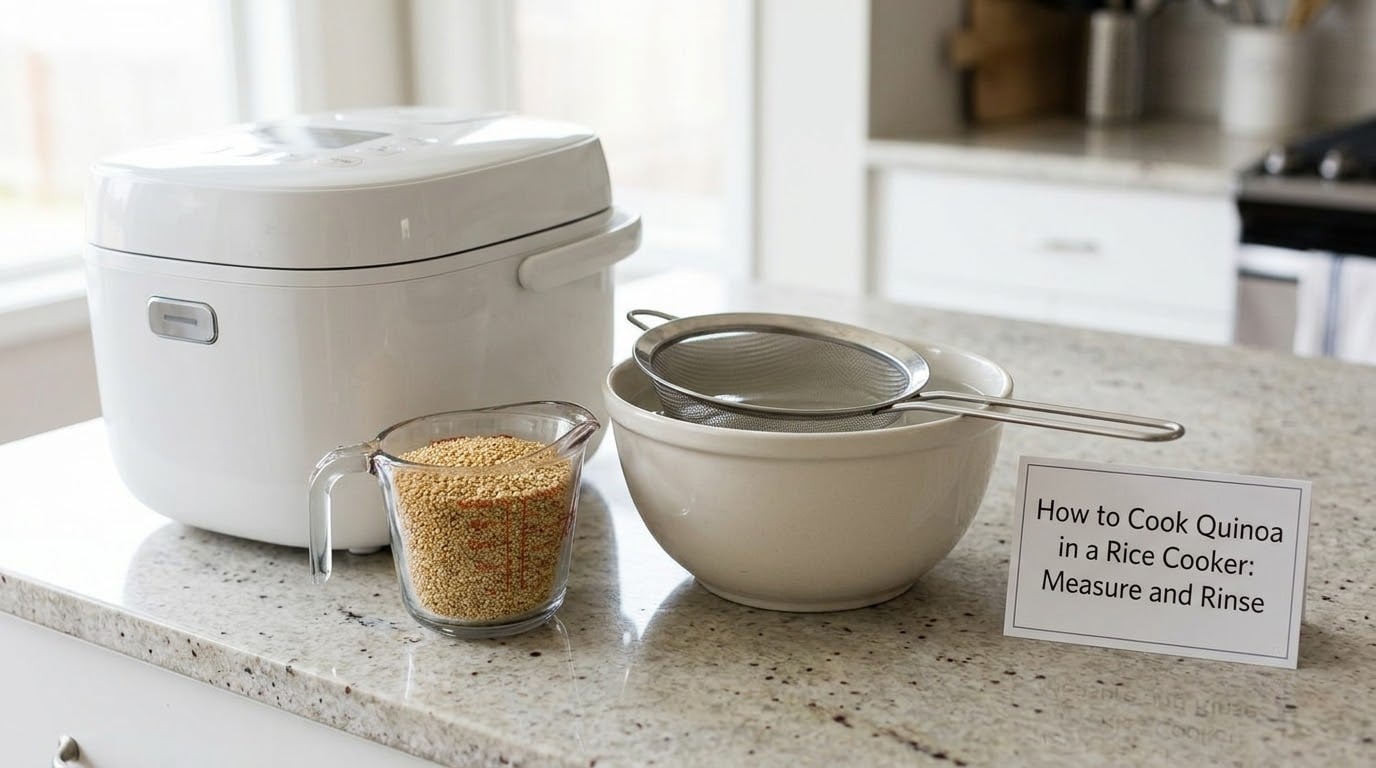
Measure 1 cup of dry quinoa with a dry measuring cup. Level it off with the rim of the cup or the back of a knife, and do not pack it down.
Put the quinoa in a fine-mesh sieve and run it under cold water for about 30 seconds. Swirl the sieve a few times so every grain gets hit, and you will see a faint foam on the surface as the saponins wash away.
Drain the quinoa for a minute. This is the step that separates good quinoa from great quinoa, and it takes less time than finding your phone.
How to Cook Quinoa in a Rice Cooker: Add the Ingredients
Transfer the rinsed quinoa into the inner pot. Pour in 2 cups of liquid for every cup of quinoa, which is the golden ratio most rice cookers are calibrated for.
Seasoning at this stage is fine, with one exception. A small amount of oil and a pinch of salt will not stop the cooking cycle. Heavy sauces, thick vinaigrettes, or large chunks of vegetables can hold moisture against the grains and make the bottom layer wet.
If you want more flavor, swap the water for vegetable broth or chicken broth. Broth carries salt of its own, so taste before you add more.
How to Cook Quinoa in a Rice Cooker: Start the Cooking Cycle
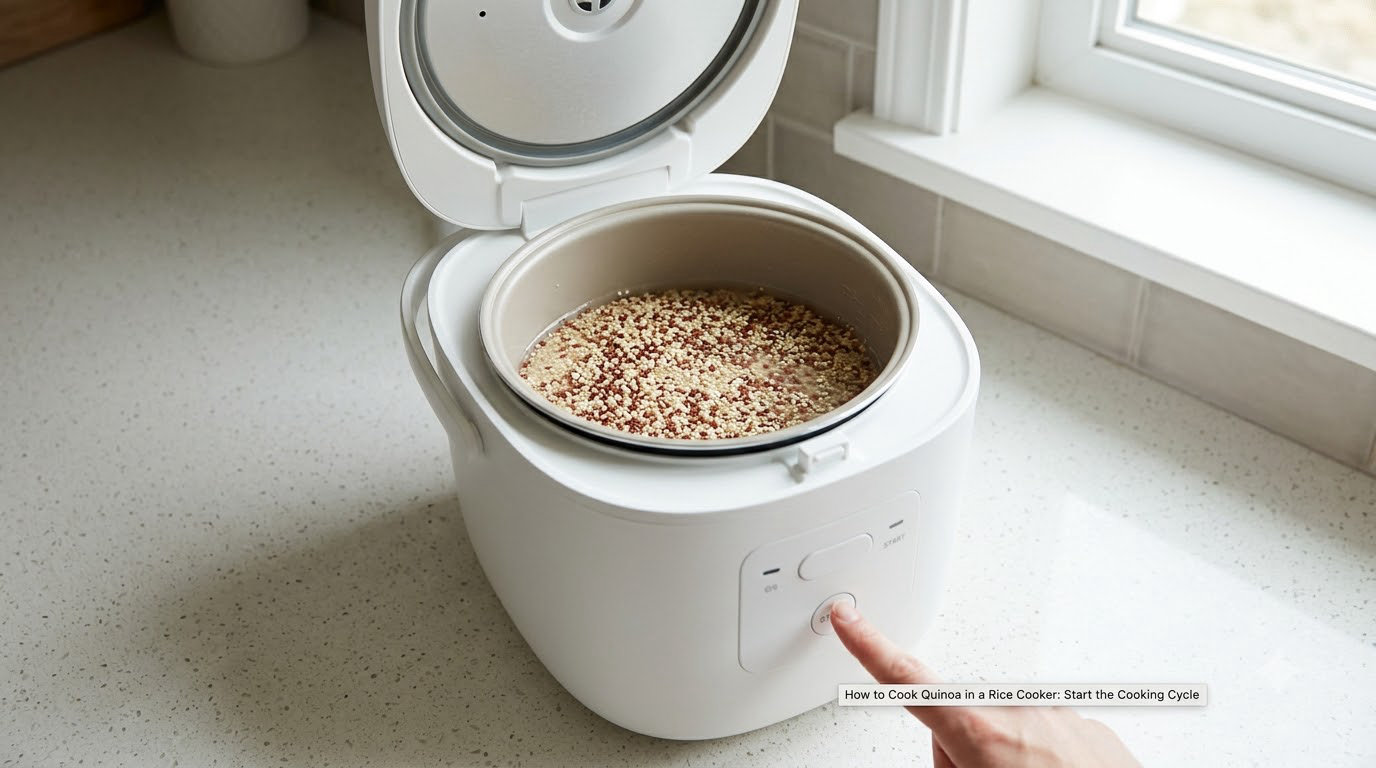
Close the lid and set the cooker to the regular white rice setting. Press start and leave it alone. The cycle usually runs 15 to 20 minutes.
If your cooker has a quinoa or grains setting, use it. That setting is calibrated for a grain that absorbs water quickly, which is exactly what quinoa does.
If your cooker only has white and brown rice settings, use white. Brown rice cycles run longer and run hotter, and quinoa will overcook before they finish. If you have a generic or multi-cook button with no grain program, white rice is still the safer pick.
Do not lift the lid while it cooks. Each opening lets steam escape, which slows the absorption and leaves you with crunchier grains than you want.
How to Cook Quinoa in a Rice Cooker: Rest and Fluff
When the cooker clicks over to keep-warm, leave the quinoa alone for 5 to 10 minutes. The residual steam finishes softening the center of the pot, and this rest is the difference between fluffy and gummy.
Open the lid and look. If you see no free liquid pooling at the bottom and the grains look tender with a visible white ring in each one, it is done. A white spiral in the center is the classic sign of properly cooked quinoa.
Fluff gently with a fork, lifting from the bottom rather than stirring. A fork separates grains without crushing them, and it avoids the dense, sticky texture that a spoon tends to produce.
Season and serve right away, or cool it before storing. If you want more ideas for the cooked grain, how to batch cook for the week without getting bored has some useful combinations.
Common Mistakes
Most disappointing batches trace back to one of a handful of habits. Each has a fix that takes under a minute.
Skipping the rinse. The result is a faintly bitter, soapy-tasting grain. Rinse until the water runs mostly clear, usually 30 to 45 seconds.
Too much liquid. This is the number one cause of mushy quinoa. Stick to 2 cups of liquid per cup of dry quinoa for the first batch, then adjust from there. If you like softer grains, add a tablespoon of water at a time rather than a quarter cup.
Too little liquid. Crunchy, hard little beads mean the water ran out before the center softened. Add 2 to 3 tablespoons of hot water, close the lid, and give it five more minutes on warm.
Lifting the lid mid-cycle. Every peek releases steam. Commit to leaving it shut until the switch.
Overcooking on keep-warm. Cookers hold the finished grain for hours, and quinoa keeps absorbing moisture the whole time. Fluff it within 10 minutes of the switch if you are not serving right away.
Adding wet ingredients. Fresh vegetables, salsa, or a heavy dressing added at the start can trap steam and stall absorption. Add them after cooking.
Skipping the rest. Serving straight off the switch gives you grains that are tender on the outside and still firm in the middle. Those 5 to 10 minutes of rest fix it every time.
Scalating without scaling properly. Double the recipe doubles the liquid, but a full inner pot also changes how long the cooker takes to reach boil. Most home cookers handle up to about three times the base recipe. Beyond that, cook in two batches.
Storage matters too. Cool cooked quinoa quickly and refrigerate it in a sealed container for up to four days. For longer storage, freeze it flat in a single layer first, then transfer to a bag; it keeps for about three months and reheats in a skillet with a splash of water in a few minutes.
Red and black quinoa follow the same method but usually want a little more water and a few extra minutes, since the bran is denser. White and tricolor quinoa cook closest to the 2:1 ratio.
Frequently Asked Questions
What is the best quinoa-to-water ratio for a rice cooker?
Two cups of liquid per one cup of dry quinoa is the ratio most rice cookers are calibrated for, and it produces grains that are tender with a visible white ring. Start there every time. If your results run dry, add liquid a tablespoon at a time until the ratio feels right for your specific cooker, and note it for next batch.
Can I use broth instead of water when cooking quinoa in a rice cooker?
Yes, and it is the easiest way to add flavor without extra work. Vegetable broth works well for a savory grain bowl, chicken broth for a side dish, and coconut water for a slightly sweeter profile. Broth brings salt along with it, so taste the cooked quinoa before adding any more seasoning.
How do I make quinoa fluffier in a rice cooker?
Three habits do most of the work. Rinse the quinoa thoroughly first, use exactly 2 cups of liquid per cup of grain, and let the finished batch rest 5 to 10 minutes on keep-warm before you touch it. Then fluff with a fork instead of a spoon. Avoid any oil or sauce with a high water content in the pot before cooking.
Can I freeze cooked quinoa?
Freezing works well and most people are surprised by how well it holds. Let the quinoa cool completely, spread it in a single layer on a tray, and freeze that until solid. Move it to a sealed bag or container and keep it for up to about three months. Reheat in a skillet with a splash of water.
How much quinoa can I cook in a rice cooker at one time?
Most standard home rice cookers handle roughly three times the base one-cup recipe, which is about 3 cups of dry quinoa and 6 cups of liquid. Larger models go further. A fuller pot takes longer to reach boil, so give it extra time and check for free liquid at the bottom before you call it done.
Conclusion
Learning how to cook quinoa in a rice cooker comes down to three things: the regular white rice setting, the 2:1 liquid-to-quinoa ratio, and a rest of 5 to 10 minutes before you fluff. Everything else is seasoning and preference.
Start by rinsing the quinoa properly, then measure your liquid. Once you have one batch under your belt, adjust by the tablespoon and the method will fit your cooker and your taste. For a side-by-side look at how quinoa stacks up against another everyday grain, see quinoa vs brown rice for everyday meals.