
Learning how to cook spaghetti squash in the microwave is mostly a matter of two things: cutting the squash into shallow pieces and giving it water to steam in. Start at 5 minutes on high, add 1/2 inch of water to a covered dish, and check at the halfway mark. Most squash is fork-tender in 8 to 12 minutes, with 3 to 4 minutes of prep and a 10-minute rest before you scrape the strands.
That is faster than a 40-minute oven roast, and it needs no oil. The tradeoff is texture: microwave squash is soft and moist rather than caramelized, so it works best under a sauce instead of standing alone.
Below is the method I use most often, plus the fixes for the five ways it goes wrong. The timing is broken out for 700-, 1000- and 1200-watt microwaves, so you can match it to the one on your counter.
Table of Contents
- What You Need
- Step-by-Step
- Common Mistakes
- Frequently Asked Questions
- How long do you microwave spaghetti squash?
- How do you know when spaghetti squash is done in the microwave?
- Why is my microwave spaghetti squash watery and mushy?
- Can I microwave spaghetti squash without plastic wrap?
- Should I microwave spaghetti squash whole or cut it first?
- Is baking spaghetti squash better than microwaving it?
- Conclusion
What You Need
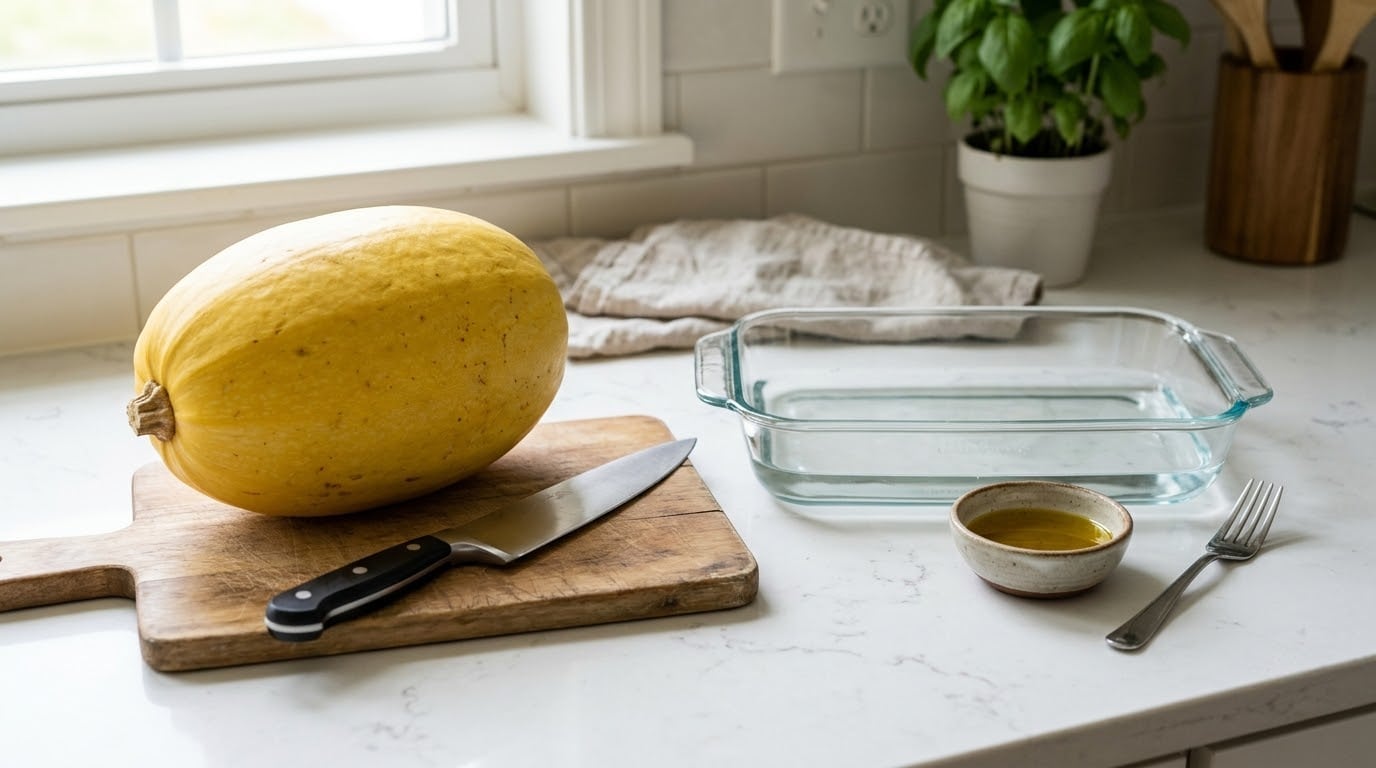
You need a microwave-safe dish that can hold a shallow layer of water and take a lid or an upside-down plate, a sharp knife that you are comfortable with, and a fork. That is the whole required list.
- Microwave-safe baking dish or pie plate — wide and shallow works better than a deep bowl, because the squash needs to sit in an even layer of water.
- A lid, a microwave-safe plate, or a silicone cover — something to trap steam. Skip plastic wrap; a plate does the same job without the questions it raises.
- Chef’s knife — raw winter squash skin is hard, so a sharp blade matters more than force.
- Fork — for the doneness test and for scraping the strands.
- 1/2 to 1 inch of water — this is what creates the steam that cooks the flesh.
- Optional finishing — olive oil, salt, black pepper, garlic powder, grated Parmesan, or a jar of marinara warmed in the same dish.
Skip the colander and the pot. Nothing gets boiled or drained in this method, which is also why there is so little cleanup.
Step-by-Step
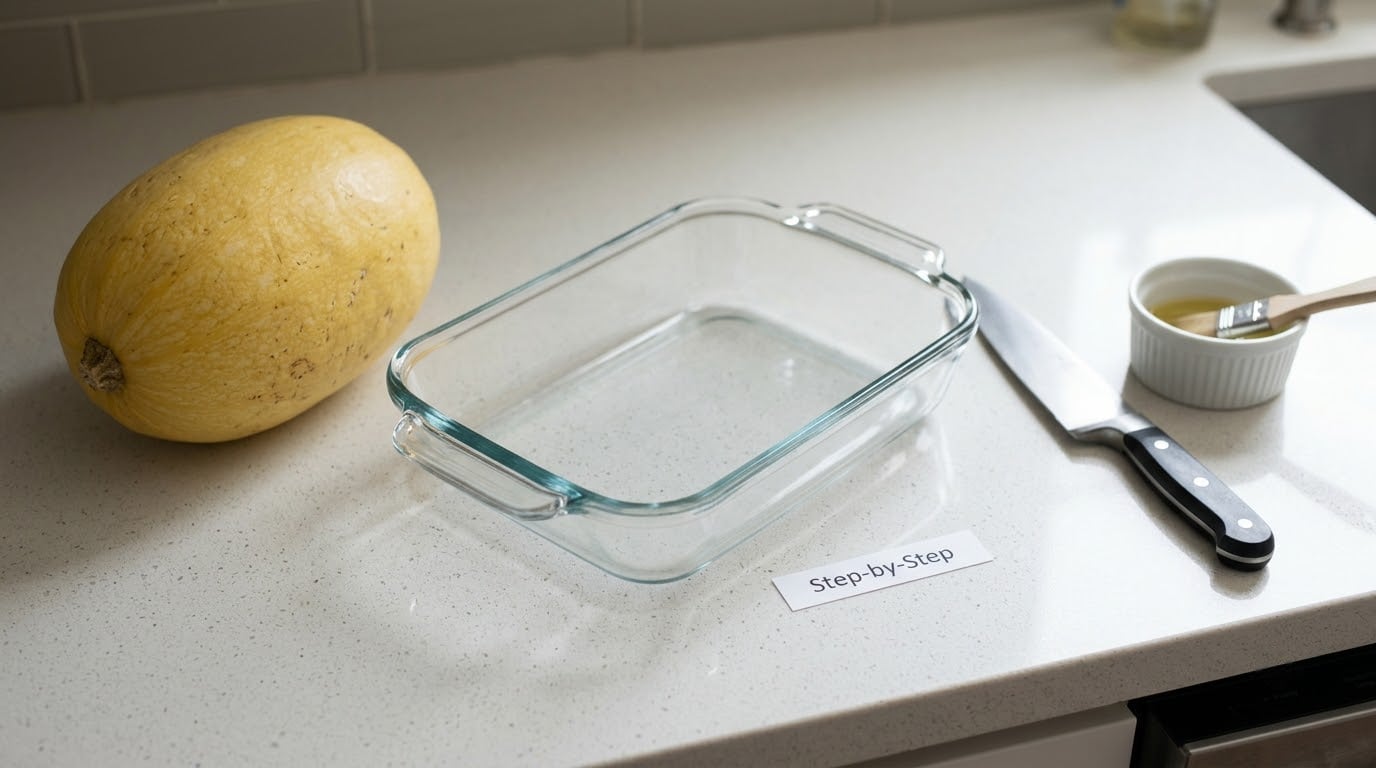
Learning how to cook spaghetti squash in the microwave comes down to one order every time: trim, halve, seed, sit in water, cover, 5 minutes, turn, test, rest, shred. Rushing the rest step is what turns good strands into mush, so give it the full 10 minutes.
Cut the Spaghetti Squash Into Halves
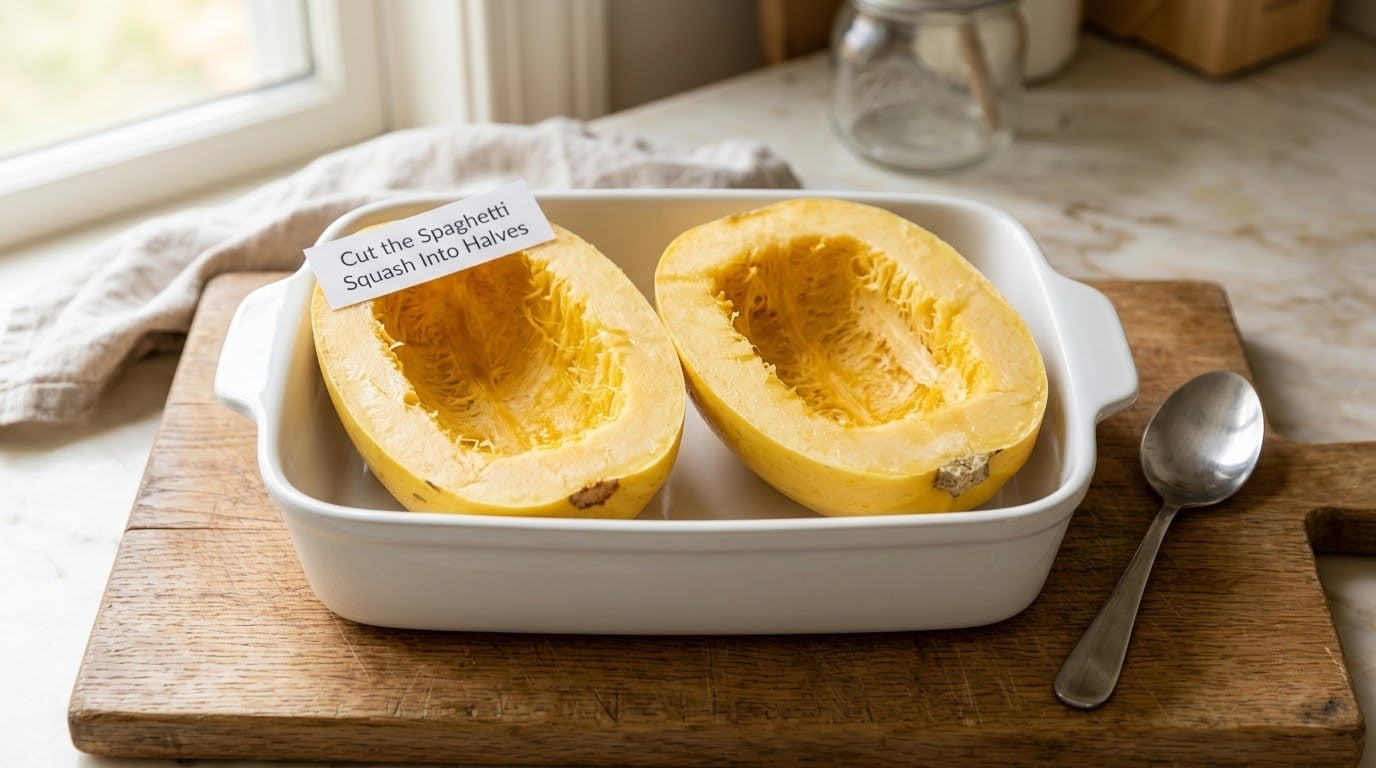
Cut the squash in half lengthwise so the strands run long, and remove the seeds and stringy pulp with a spoon. Scoop them out and dry them on a towel later if you want roasted seeds, since they roast like pumpkin seeds at 350°F for about 15 minutes.
- Slice about 1 inch off each end of the squash. Those flat ends make the round squash sit still instead of rolling while you cut.
- Stand it upright on one flat end and cut lengthwise through the middle with a steady press.
- Set the halves cut-side down on a board and scoop out the seeds and pulp from each half.
- For a squash over about 4 pounds, cut each half into two wedges. Thicker wedges cook evenly; paper-thin slices turn to mush before the middle catches up.
If a knife will not cut through the skin, do not force it. Microwave the whole squash for 3 to 5 minutes first, let it cool for 5 minutes, and it will cut like a ripe melon. That is the whole-first trick, and it is the safer option for anyone who finds raw winter squash intimidating.
Cook the Spaghetti Squash
Cook the squash at high power for 5 minutes first, then test it, because microwave wattage and squash size shift the finish time more than anything else. Pour 1/2 inch of water into the dish — enough to keep the bottom from scorching — and nestle the pieces in cut-side down.
Cover with a microwave-safe lid or an inverted plate and microwave on high for 5 minutes. Then pull the dish out with oven mitts, lift the cover away from you so the steam vents away from your hands, and turn each piece cut-side up. Add 1 to 2 more minutes and start testing.
At the 7-minute mark, push a fork into the thickest part of the flesh, right up through the skin. It should slide in with almost no resistance. If the flesh is still firm, give it 2 more minutes and test again. If the strands are already separating at the edges, stop, because the rest period will finish the job.
A squash weighed before you start is the most reliable guide:
| Squash weight | 700-watt | 1000-watt | 1200-watt |
|---|---|---|---|
| About 2 pounds | 9 to 10 minutes | 7 to 8 minutes | 6 to 7 minutes |
| About 3 pounds | 11 to 12 minutes | 9 to 10 minutes | 8 to 9 minutes |
| About 4 pounds | 14 to 16 minutes | 12 to 13 minutes | 10 to 11 minutes |
These are start times for the covered cooking, measured from the moment the squash goes in. Lower wattage means more time because the water produces steam more slowly.
Let It Rest and Season
Wait 10 minutes before you touch it, and use that time to warm your sauce. Carryover heat keeps cooking the strands during the rest, and the flesh firms up just enough to scrape cleanly instead of smearing.
Hold one half cut-side up in your palm and run a fork along the flesh, in the same direction the strands run from end to end. Against the grain you get short, broken bits; with the grain you get long, noodle-like strands. Scrape the strands free and set them on the plate, then season lightly with salt, pepper and olive oil.
Sauce goes on after, not during. A watery strands problem usually shows up because the squash sat in a puddle of water at the bottom of the dish, so drain any liquid before serving and keep marinara, pesto or Alfredo in a separate pan.
Common Mistakes
Nearly every bad batch traces back to one of five problems, and each one has a simple fix:
- Uneven cooking — the thick middle is still hard while the edges fall apart. Cut wedges of even thickness, no more than 1.5 inches, and turn the pieces cut-side up for the last few minutes so the heat reaches the top.
- Watery or soggy strands — you used too much water or lifted the cover too often. Hold the water at 1/2 inch, keep the cover on, and drain the dish before scraping.
- Tough skin that resists the fork — undercooked, or cut too thick. Give it 2 more minutes and test at the thickest point again. Also check that the water is actually simmering under the cover; a cold dish underpowered the whole thing.
- Steam burns or a burst squash — you cooked it whole without venting, or peeled a cover toward your face. Pierce the whole squash 8 to 10 times with a fork before any whole-squash microwaving, keep whole cooking to 5 minutes at a stretch, and always lift covers away from you.
- Rubbery, overcooked strands — you kept adding time after the squash was already tender. Microwave cooking has no recovery point, so test every 2 minutes from the halfway mark and stop the moment the fork slides in.
Two habits fix most of the rest. Pick a squash that is heavy for its size with a matte, creamy yellow rind and no soft spots, since a very dense squash takes longer to soften. And if your microwave runs hot, drop the timing by 1 to 2 minutes and lean on the fork test instead of the clock.
If you are cooking for a household where carbohydrate counts differ, the same squash can be served two ways, which is handy when you are planning how to cook for a family with different diets.
Frequently Asked Questions
How long do you microwave spaghetti squash?
For a 2 to 3 pound squash cut into halves or wedges, start with 5 minutes on high, then test and add 2 minutes at a time. Most squash is fork-tender somewhere between 8 and 12 minutes on a 1000-watt microwave. Add about 2 minutes per extra pound, and check the last 4 minutes closely so the strands do not go rubbery.
How do you know when spaghetti squash is done in the microwave?
Push a fork into the thickest part of the flesh, through the skin. Done means the fork slides in with almost no resistance and the strands start separating at the edges of the cut face. Firm flesh means 2 more minutes. If the strands are already pulling apart, pull it out, since the 10-minute rest finishes the cooking.
Why is my microwave spaghetti squash watery and mushy?
Two causes account for most of it. You used more than about 1/2 inch of water, which leaches moisture into the flesh, or you cooked past the point where a fork slides in easily. Use less water, keep the lid on for the whole cook, test every 2 minutes after the halfway mark, and drain the dish before scraping the strands.
Can I microwave spaghetti squash without plastic wrap?
Yes, and it is the method used here. Cover the dish with a microwave-safe plate set upside down, a glass lid, or a silicone steamer cover. Any of them traps the steam that cooks the squash, and none of them carry the questions people have about heating plastic. Leave a small gap so steam can vent when you lift it.
Should I microwave spaghetti squash whole or cut it first?
Cut first for speed and control, since halved squash cooks in 8 to 12 minutes. Microwave whole when the squash is very hard to cut: pierce the skin 8 to 10 times, cook 3 to 5 minutes, let it cool 5 minutes, and it will slice easily. Then finish it in halves using the timing chart above.
Is baking spaghetti squash better than microwaving it?
Baking gives you roasted, caramelized edges and takes 40 minutes or more at 425°F. The microwave is four times faster, needs no oil, and cooks the flesh evenly enough to shred into strands, though it stays moist instead of browned. For a quick weeknight noodle base, the microwave wins. For flavor depth in a roasted side dish, the oven wins.
Conclusion
Start at 5 minutes on high with 1/2 inch of water and a plate on top, then check the fork at the halfway point and add 2 minutes at a time until it slides in. Give it the full 10-minute rest before you scrape, run the fork with the grain for long strands, and keep the sauce in a separate pan. If the squash is bigger than 4 pounds or your microwave is under 1000 watts, add time from the chart rather than guessing.
Cooked this way, the squash also reheats well and holds 5 to 7 days covered in the fridge, which makes it a useful addition to a week of batch-cooked lunches. If you build meals around other sturdy, low-carb staples, the same batch-cooking approach works for lentils that hold their shape too.