
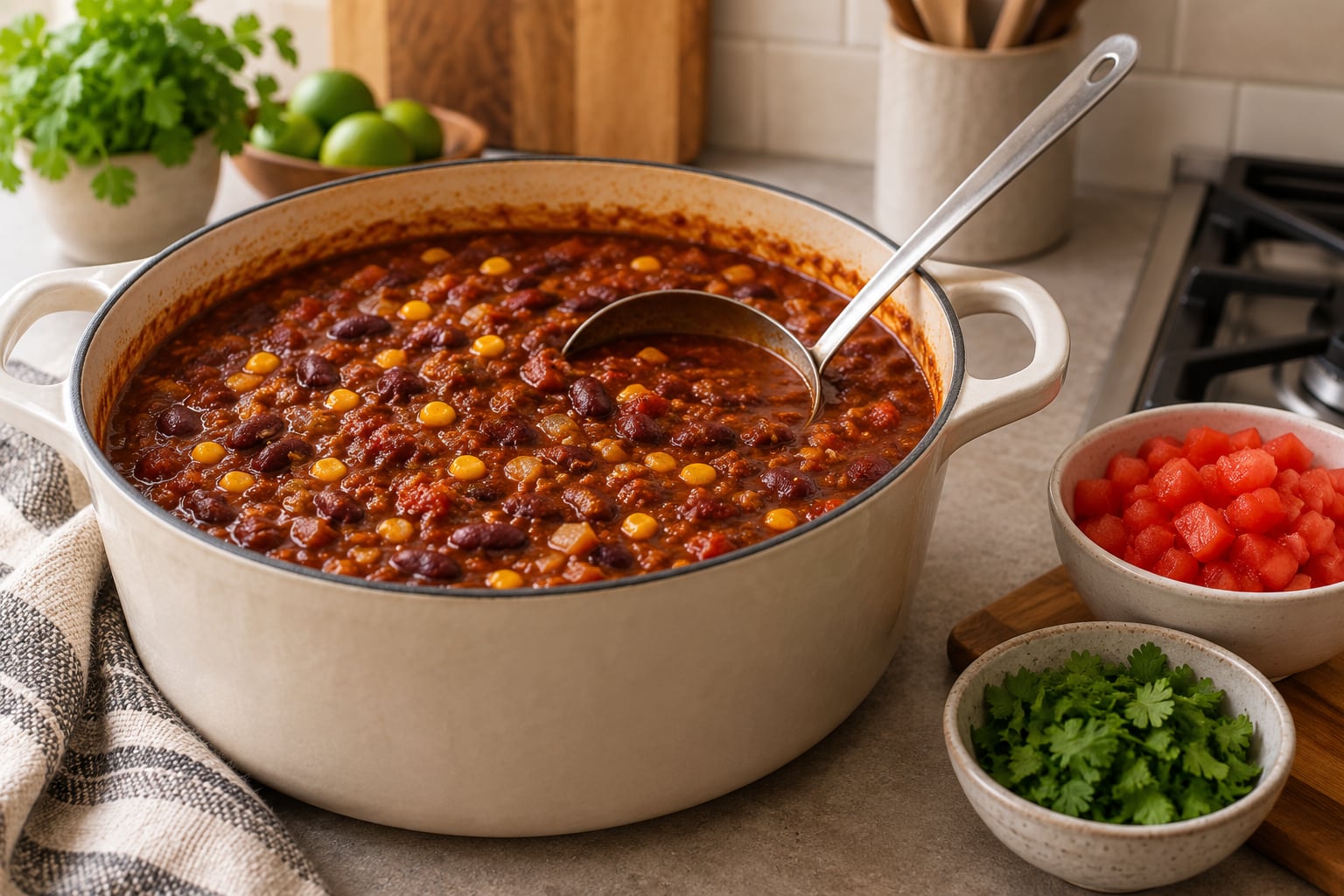
Hearty vegan chili is thick enough to hold a spoon upright and savory enough to pass at a table full of beef eaters. The reason most plant-based chili disappoints is that it skips the three things ground meat actually does: chew, fat, and umami. Here is how to make a vegan chili that is hearty with nothing but pantry staples, three kinds of beans and one pot, in about 50 minutes.
Build it the way I do, and you get a stew that reheats well, freezes well, and carries roughly 20 grams of plant protein per bowl alongside a serious amount of fiber and iron. If you like cooking with what is already in the cupboard, a homemade vegetable broth from kitchen scraps is a fine stand-in for the carton.
Table of Contents
- What You Need
- Step-by-Step
- 1. Drain, dice and press (15 minutes)
- 2. Saute the vegetables until they soften and color (8 minutes)
- 3. Bloom the spices in the oil (1 minute)
- 4. Build the tomato base (2 minutes)
- 5. Add beans and liquid in stages (3 minutes)
- 6. Simmer uncovered and thicken (25 to 30 minutes)
- 7. Season, acid and rest (5 minutes)
- How to make it mild or hot
- Common Mistakes
- Frequently Asked Questions
- Conclusion
What You Need
Everything below comes from a normal grocery run, and prep takes about 15 minutes. Cook time is roughly 35 minutes, and the pot makes six to eight servings, which is one dinner plus two or three lunches.
- 2 tablespoons olive oil for sauteing and blooming the spices.
- 1 yellow onion, 1 bell pepper, 2 carrots, 2 celery stalks, all diced small. Small dice matters here, because the vegetables cook down into the body of the chili instead of sitting in it as chunks.
- 4 garlic cloves and 1 jalapeno, minced. Leave the jalapeno out or use seeded mild chiles if you cook for kids.
- 2 tablespoons chili powder blend, 1 tablespoon ground cumin, 2 teaspoons smoked paprika, 1 teaspoon dried oregano, plus cayenne or one chipotle in adobo for smoke.
- 2 tablespoons tomato paste, cooked into the spices rather than dumped in.
- 1 large can (28 oz) crushed or fire-roasted tomatoes.
- 3 cans of beans, 15 oz each — kidney, black and chickpeas. Two cans works if you are cooking for four.
- 2 to 3 cups vegetable broth, added in stages.
- One umami booster: 1 tablespoon soy sauce, 2 tablespoons nutritional yeast, or 1 tablespoon white miso.
- Salt, lime juice and cilantro to finish.
- Optional: 14 oz extra-firm tofu or 8 oz tempeh for chew, one can of coconut milk for a creamy broth, corn for sweetness, nutritional yeast or vegan shredded cheese on top.
No tomato paste on hand? A tablespoon of miso plus a splash of broth thickens less but seasons well. Out of smoked paprika, a pinch of liquid smoke or a tiny chipotle carries the smokiness instead.
Swaps worth knowing before you start
Cannellini and great northern beans give a creamier, thicker result than black beans, and navy beans hold their shape best. Pinto beans are the classic choice and mash beautifully for thickening. Kidney beans sit somewhere in the middle, which is why most chili recipes use at least two kinds.
Canned tomatoes and canned beans are fine, and cooking beans from scratch buys you almost nothing here. What matters is draining and rinsing them, because the starchy liquid in the can is the single most common reason a pot of chili turns out thin and pale.
How to make a vegan chili that is hearty without beans
Beans are the default, not the requirement. Press 14 oz of extra-firm tofu for 20 minutes, cube it, dust with cornstarch and salt, and brown it in the oil before anything else goes in — that browned edge is what reads as meaty. Brown 8 oz of tempeh the same way and you get a nuttier chew.
For a bean-free pot, use browned tofu plus brown or green lentils, which hold their shape and cook in about 25 minutes. Bulgur wheat cooked in vegetable stock is another option that adds bulk; add it in the last 15 minutes with extra broth. Diced button mushrooms, browned hard, add savory weight for almost no cost.
Step-by-Step
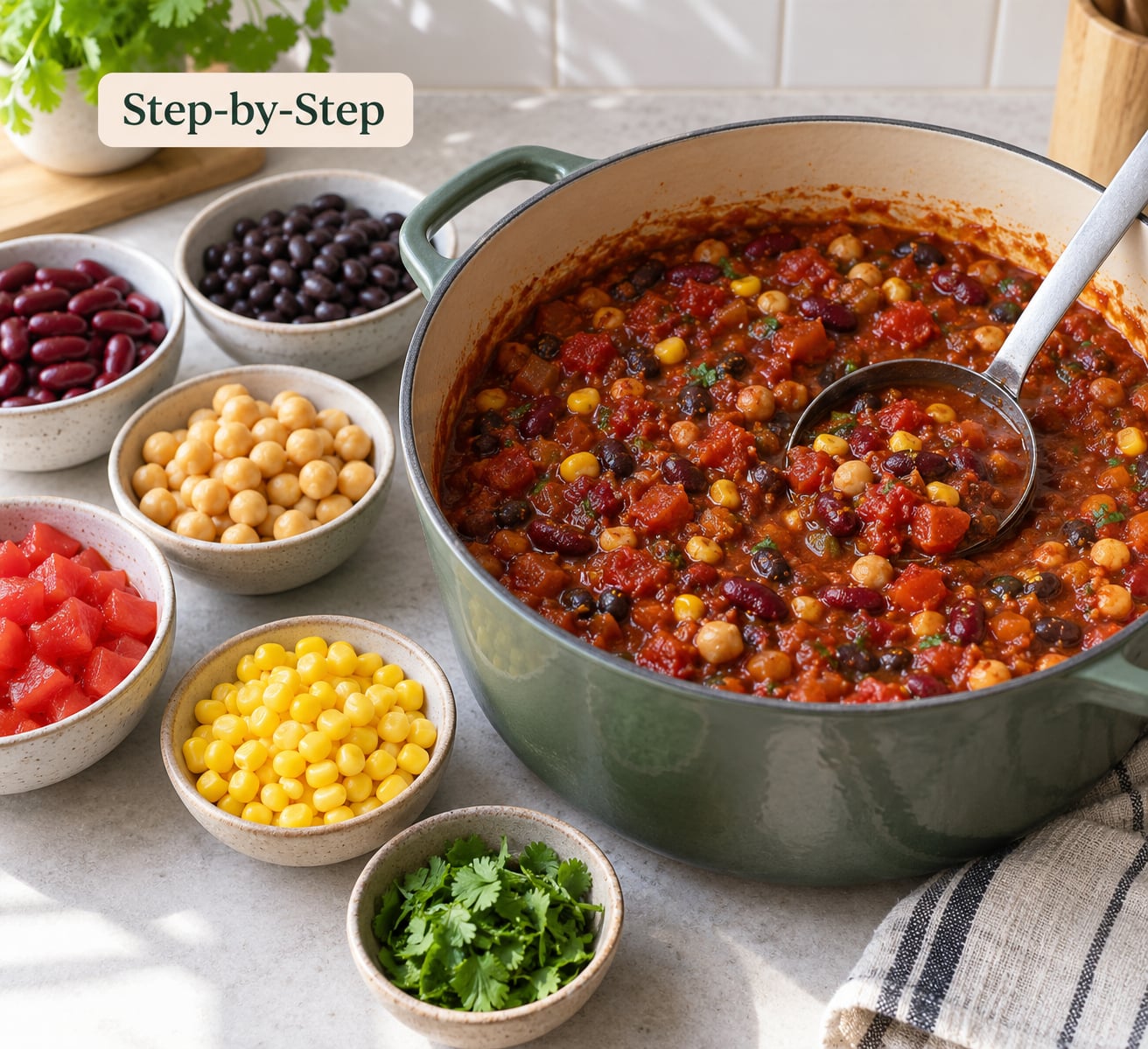
1. Drain, dice and press (15 minutes)
Drain and rinse the three cans of beans and set them aside. Dice the onion, bell pepper, carrots and celery into roughly quarter-inch pieces, and mince the garlic and jalapeno. If you are using tofu or tempeh, press the tofu now so it firms up while you do everything else.
2. Saute the vegetables until they soften and color (8 minutes)
Heat the oil in a wide pot over medium heat. Add the onion and bell pepper with a pinch of salt and cook 5 to 6 minutes until soft with golden edges. Add the carrots and celery for two more minutes, then the garlic and jalapeno for one minute. You want the onions translucent and just beginning to brown, not soft-soggy — that browning is flavor you cannot get later.
3. Bloom the spices in the oil (1 minute)
Stir in the chili powder, cumin, smoked paprika, oregano and cayenne. Keep the pot moving for 30 to 60 seconds until the spices smell toasty and darken a shade. If they hit the pan dry or smell burnt, scrape them out and start that step again with a little more oil. Then stir in the tomato paste and let it cook against the hot pan for a full minute.
4. Build the tomato base (2 minutes)
Pour in the crushed or fire-roasted tomatoes and half a cup of broth, scraping the bottom of the pot clean as you stir. Bring it to a bare simmer and cook for two minutes so the tomato flavor concentrates. Add the chipotle or the soy sauce, miso or nutritional yeast now, while the sauce is still thin enough to dissolve them.
5. Add beans and liquid in stages (3 minutes)
Tip in all three cans of drained beans and one cup of broth. Bring back to a simmer, then drop the heat to low and add the lid ajar or leave it off. Add the rest of the broth only once you see how loose the chili looks. Stop while the sauce still moves like thick stew; the reduction in step 6 will finish the job.
6. Simmer uncovered and thicken (25 to 30 minutes)
Simmer at a bare simmer, stirring every few minutes so nothing catches on the bottom. Watch for three cues: the beans look plumped and coated rather than sitting in liquid, the sauce coats the back of a spoon, and a spoon drawn across the bottom of the pot leaves a clean line for a second before filling back in.
Roughly halfway through, scoop out about half a cup of beans and mash them in a bowl with a splash of broth, then stir them back in. That mashed portion is the starch that turns thin bean soup into chili. Add a tablespoon of tomato paste at the same moment if you want more body.
7. Season, acid and rest (5 minutes)
Turn the heat off, taste, and salt more than feels right — beans need more salt than most cooks expect. Add the juice of half a lime and a handful of cilantro. Letting the chili sit off the heat for five or ten minutes before serving firms it up further and lets the spice flavor settle.
How to make it mild or hot
For a family table, leave out the chipotle and use mild chili powder, then put sliced jalapenos and hot sauce on the table instead of in the pot. For medium, add one chopped chipotle in adobo. For genuinely hot, bloom 2 teaspoons of cayenne with the other spices and finish with a teaspoon of hot sauce at the end rather than during, since long simmering flattens heat but keeps flavor.
Common Mistakes
The chili is watery. Almost always one of three causes: undrained beans, too much liquid, or a pot that was kept at a rolling boil. Drain and rinse canned ingredients, add broth in stages, and simmer uncovered at a bare simmer. You cannot add water back out, but you can add a mashed scoop of beans or a tablespoon of tomato paste.
The chili tastes flat or bland. Skipped the spice blooming step, added liquid late, or forgot to salt. Toast the spices in oil for a full minute, use 3 tablespoons of chili powder rather than 1, and add acid at the end — a squeeze of lime does more for a flat chili than another pinch of salt. A spoonful of miso or soy sauce fixes a pot that tastes thin but properly spiced.
The vegetables are soggy. You added them late, cut them too small, or simmered hard. Dice the carrots and celery no finer than a quarter inch and give them the full eight minutes in the pan before any liquid arrives. Zucchini works, but add it in the last ten minutes so it stays tender and does not release water into the pot.
The beans turned to mush. They cooked for too long, or at too high a heat. Hold the simmer low and check at 20 minutes — most canned beans need 25 to 30 minutes total and go soft after 40. Pull it off the heat the moment the sauce looks right, because residual heat keeps softening them.
The heat is uneven and the bottom is catching. Use a wide pot rather than a tall one, stir more often than feels necessary, and lower the heat. A splash of broth lifted from the edges and poured over the hot bottom also solves it without thinning the sauce.
It tastes flatter the next day. Expected, and easy to fix. Warm it gently with a splash of broth or water rather than at full heat, taste for salt, and finish with fresh lime juice. Keep avocado, cilantro, pickled onions and any shredded cheese out of the pot so they stay fresh.
Frequently Asked Questions
Can I make vegan chili without beans?
Yes. Brown cubes of pressed extra-firm tofu or tempeh in oil first, then simmer them with brown or green lentils, which hold their shape and cook in about 25 minutes. Diced button mushrooms, browned hard, add savory weight. A tablespoon of tomato paste or a small scoop of blended lentils restores the thickness beans usually provide.
How can I make vegan chili thicker?
Ranked by how well they work: mash half a cup of the cooked beans and stir them back in, add a tablespoon or two of tomato paste and simmer five more minutes, then keep the pot uncovered until the sauce reduces. A cornstarch slurry of 1 teaspoon cornstarch in 2 tablespoons cold water works in a pinch, but add it last or it will turn gluey.
What vegetables work best in a hearty vegan chili?
Onion, bell pepper, carrots and celery are the base and cook down into body. Diced butternut squash, zucchini, potatoes, corn and bell peppers all work, all cut small. Skip watery vegetables such as cucumber and add zucchini only in the last ten minutes, and add leafy greens near the very end so they wilt instead of disappear.
How long should I simmer vegan chili?
On the stovetop, 25 to 30 minutes at a bare simmer after the pot comes to a boil, with the lid off or ajar. A pressure cooker cuts that to about 25 minutes total on high, and a slow cooker works on low for 6 to 8 hours. Check at the low end of any range, because beans go soft fast once they are fully cooked.
Can I make vegan chili ahead of time?
It is genuinely better the next day, since the beans soak up the seasoning overnight. Cool it fast, spread it shallow in a container, and refrigerate for up to three to four days. Reheat gently with a splash of vegetable broth so it does not dry out, then taste for salt and add fresh lime juice right before serving.
How do I store leftover vegan chili?
Move it into shallow containers and refrigerate within two hours of cooking; USDA guidance gives three to four days for cooked leftovers. For freezing, cool it completely, leave it slightly thinner than you want it, and freeze flat in bags or boxes for two to three months. Thaw overnight in the fridge and loosen with broth while it heats.
If you are serving a mixed-diet table, put the toppings out separately — diced avocado, pickled red onion, cilantro, lime wedges, shredded vegan cheese and a homemade dressing thinned with broth for dipping cornbread — so everyone builds their own bowl. Getting picky eaters to try vegetables one at a time is easier with sides on the table, too; these tips for getting kids to try new vegetables work well at a chili bar.
Conclusion
The whole technique in one line: cook the vegetables until they color, bloom the spices in that oil, and let the chili simmer uncovered long enough for the sauce to coat a spoon. Then taste it before it leaves the stove.
If it needs more, the fastest fixes in order are salt, a squeeze of lime, a spoonful of tomato paste, and a small umami booster such as miso or soy sauce. Serve it with your favorite toppings and keep the rest for the week.