
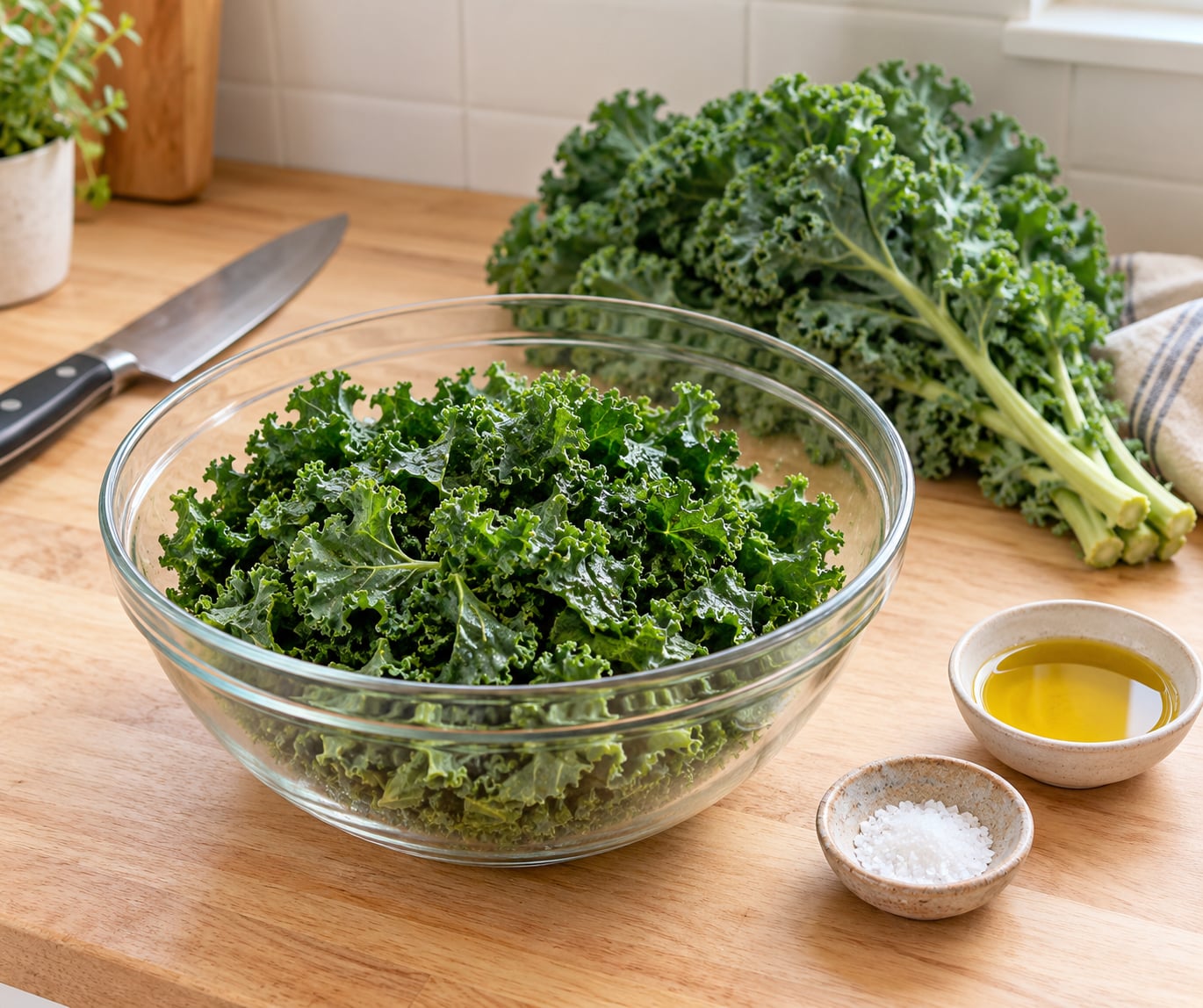
To massage kale for salads, strip the thick ribs, chop the leaves, rub them with a tablespoon of olive oil and a pinch of salt for one to three minutes, and stop when the leaves turn deep green and limp in your hands. It takes about five minutes of prep and barely any technique to get right.
Raw kale is stiff and faintly bitter straight from the bag. That is not a flavor problem you can fix with more dressing, it is a texture problem, and the fix is mechanical. Rubbing the leaves crushes the cell walls, softens the fiber, and lets a vinaigrette coat every piece instead of pooling at the bottom of the bowl.
I do this two or three times a week, and the giveaway that it worked is simple: the pile in the bowl is roughly half the size it was when I started, and the leaves drape over my fingers rather than sticking out stiff. Below is the exact order I use, updated for 2026.
Table of Contents
What You Need
You need almost nothing, which is part of why this technique has survived. The list:
- One bunch of sturdy kale, about 4 to 6 cups once shredded. Curly green and lacinato (Tuscan, dinosaur) both work.
- A large mixing bowl, wide enough that you can grab a fistful of leaves at a time.
- A sharp chef’s knife, or your hands, for pulling the leaves off the stems.
- A salad spinner or a clean towel, for getting the leaves properly dry.
- One to two tablespoons extra-virgin olive oil.
- A small pinch of fine salt. Any kind works, and this is the one ingredient I would not skip.
No tool is required. If you prefer one, a pastry brush or the flat of a knife blade works fine, but bare hands give you the best pressure control and it costs nothing.
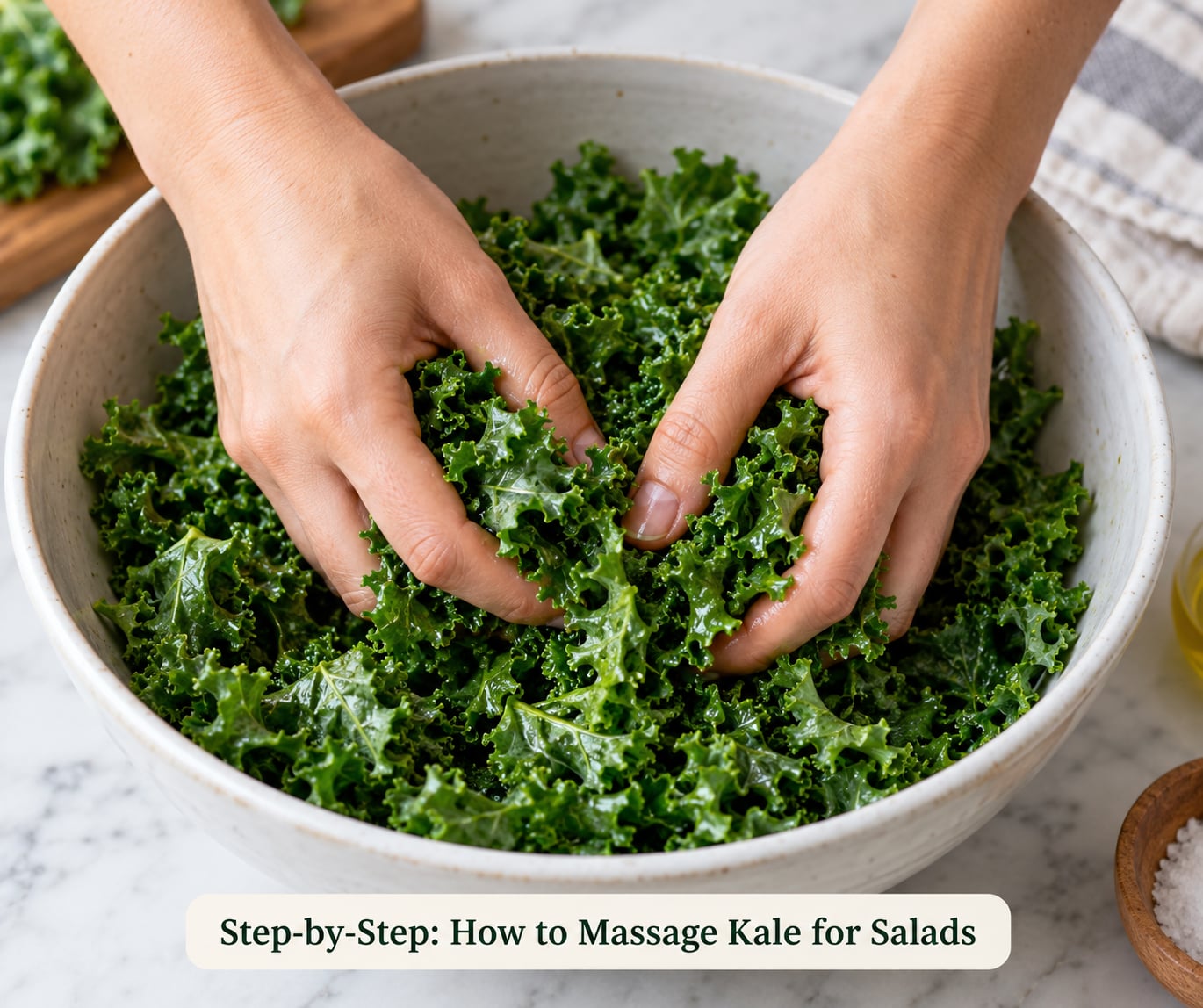
Step-by-Step: How to Massage Kale for Salads
1. Remove the tough stems and tear the leaves
Hold the kale by the base of the stem and pull the leaf away from the rib. The rib is the thick, pale spine running up the middle, and it is fibrous enough to stay chewy even after you have massaged everything around it.
Slide your thumb down the rib and tear the green leaf off in two halves. For curly kale the leaves are crinkly and small, so this goes fast. For lacinato the leaves are long and flat, and the rib takes more work to clean. If a piece of rib is still attached, run the knife blade backwards along it and shave the leaf off.
Then tear or slice the leaves into pieces you can actually pick up with a fork, roughly 2 inch squares. A big bunch becomes about six packed cups at this stage. Do not throw the stems away, by the way. Chopped stems go into vegetable stock and they firm up in about twenty minutes.
2. Add a small amount of salt or oil
Put the chopped kale in the dry bowl and add a small pinch of salt plus one to two tablespoons of olive oil. The salt is what actually softens the leaf. It pulls water out of the cells, which is the process that turns a stiff leaf into a floppy one.
The oil coats the surface so the leaves are slippery enough to bend without tearing your knuckles, and it helps the dressing cling later. If you are dressing with a fat-based dressing anyway, use less oil here so the salad does not go slick. If you want to keep the fat down, skip the oil and use a squeeze of lemon juice, or massage with plain water and a pinch of salt.
One thing to avoid: massaging kale straight out of the wash. Surface water forms a barrier that keeps the oil and salt from reaching the leaf properly, and you will end up with watery kale that never softens. Spin it or pat it dry first.
3. Massage the kale with your hands
Grab a handful and squeeze. Compress it firmly, then release, then compress again, rotating the leaves as you go. Think of it less like stirring and more like wringing out a dish towel.
Keep the motion slow and deliberate, about three or four seconds per handful, and keep turning the pile so you are not rubbing one spot for five minutes while another sits untouched. You want the flats of your fingers rubbing the leaf surface, not just squeezing it into a ball.
On timing, the varieties are not the same job. Lacinato and Tuscan kale are thin and tender, so about one minute of firm rubbing is plenty. Curly kale is denser and crinkled, and most cooks need the full three to five minutes. If you can only give it two, use lacinato.
Baby kale and pre-shredded bagged kale are a different case. Baby leaves are already tender and will turn to mush under pressure, so give them a gentle toss, ten seconds, no more. The bagged shredded kind needs almost nothing too, just a light toss to coat it.
4. Check the texture and add the dressing
Stop when the leaves look deep, saturated green instead of bright and dry, and the pile has shrunk noticeably. You are looking for a soft drape, a slight sheen, and edges that look a little translucent. Pick up one leaf and fold it: it should bend without snapping.
Then add your dressing. Most vinaigrettes work at a tablespoon per packed cup of kale, and you add it in stages, tasting between pours. Lemon juice and a pinch of salt is the simplest version, and it is the one that lets you taste the kale itself.
Let the salad sit ten to thirty minutes before serving if you have the time. The leaves finish softening while they wait, and the flavors settle into each other. Past about an hour, though, add the crunchy toppings, because they will go soft sitting in the dressing.
Common Mistakes
Massaging too long. This is the most common complaint, and it is the one that ruins a batch. Push past the soft stage and the leaves go slimy, release water, and never recover. The near-universal advice in cooking communities is to stop while the kale still has a little life in it, so pull back the moment it feels right rather than cooking by the clock.
Massaging wet kale. If the surface water is still there, the salt and oil slide off instead of working in. Dry first, every time.
Skipping the de-stemming. Massage cannot fix a rib. The worst piece in the bowl will be the one with the thickest spine left on it, which is usually why people think the method did not work.
Rubbing the same handful for too long. Even pressure across the whole bowl matters. If you feel raw spots, turn the pile over rather than adding more force to the part that is already soft.
Salting a day ahead and storing it wet. Salt plus hours of contact time turns the leaves into a watery pile in the bottom of the container. If you are prepping ahead, de-stem and chop the kale and store it dry with a paper towel, then massage and dress it the day you eat it.
Using baby kale or bagged shredded kale. Both are already tender. Massaging them is the fastest way to produce the mushy result people are trying to avoid.
One leftover tip: if you always end up with more chopped kale than one salad needs, keep the extra in the freezer rather than the crisper. My method for that is in how to freeze spinach and kale for smoothies, and the same bag works for a soup night later in the week.
Frequently Asked Questions
How long should I massage kale for a salad?
One to three minutes is the usual range, and the variety sets the number. Lacinato and Tuscan kale only need about a minute of firm rubbing, while curly green kale usually needs closer to three to five. Time is a poor guide on its own though, so watch the leaves instead. They are done when they turn deep green, shrink noticeably in volume, and fold without snapping.
Do I need to massage kale before adding salad dressing?
Yes, massage first and dress second. Massaging is what breaks down the fiber and softens the leaf, and it only works well on kale that is dry with salt and oil on it. Adding a full vinaigrette beforehand gives you too much liquid to work with, and the acidic part dulls the color. Massage with salt and a little oil, then add the dressing and taste.
Is massage good for curly kale or only Tuscan kale?
Both benefit, but they are not the same job. Tuscan kale, also called lacinato or dinosaur kale, is thin and tender, so about a minute of rubbing is enough. Curly kale is denser with a crinkled surface and needs the longer end of the range, around three to five minutes. A thick mature bunch of curly kale also needs more work than a small one from the top of the plant.
How do I know when kale has been massaged enough?
Look for three changes. The color shifts from bright green to a deeper, saturated green, the pile drops noticeably in volume, and the leaves take on a soft sheen with slightly translucent edges. Pinch test one: it should fold and drape over your fingers instead of creasing stiffly or cracking. If it feels slimy and heavy with water, you have gone past the point and should stop there.
Can I use a kitchen tool to massage kale?
Hands work best because you feel the texture changing as you go, but a tool is fine. A pastry brush, the flat of a knife blade, or even the bottom of a sturdy cup can replace your hands. The technique matters more than the implement: compress, release, rotate, and keep moving across the whole bowl. Skip anything with a serrated edge, which will tear the leaves.
Why does massaged kale get soggy?
Sogginess comes from overworking the leaves or from water you never removed. Once the cell walls are broken, the leaf keeps releasing liquid, so five extra minutes of scrubbing turns a silky leaf into a limp one that releases water into the bowl. Dry the kale thoroughly before you start, use a firm but controlled grip, and stop as soon as the texture changes.
Start with the boring part that people skip: pull every rib off, then get the leaves genuinely dry. Add a pinch of salt and about a tablespoon of olive oil, and rub firmly for two to three minutes, turning the pile so nothing gets five minutes while something else gets none.
Stop the moment the leaves turn deep green and fold without resistance. Massage earlier than you think, and keep the crunchy toppings out of the bowl until serving, because that is what keeps a kale salad tasting like a salad and not like a bowl of warm dressing.