
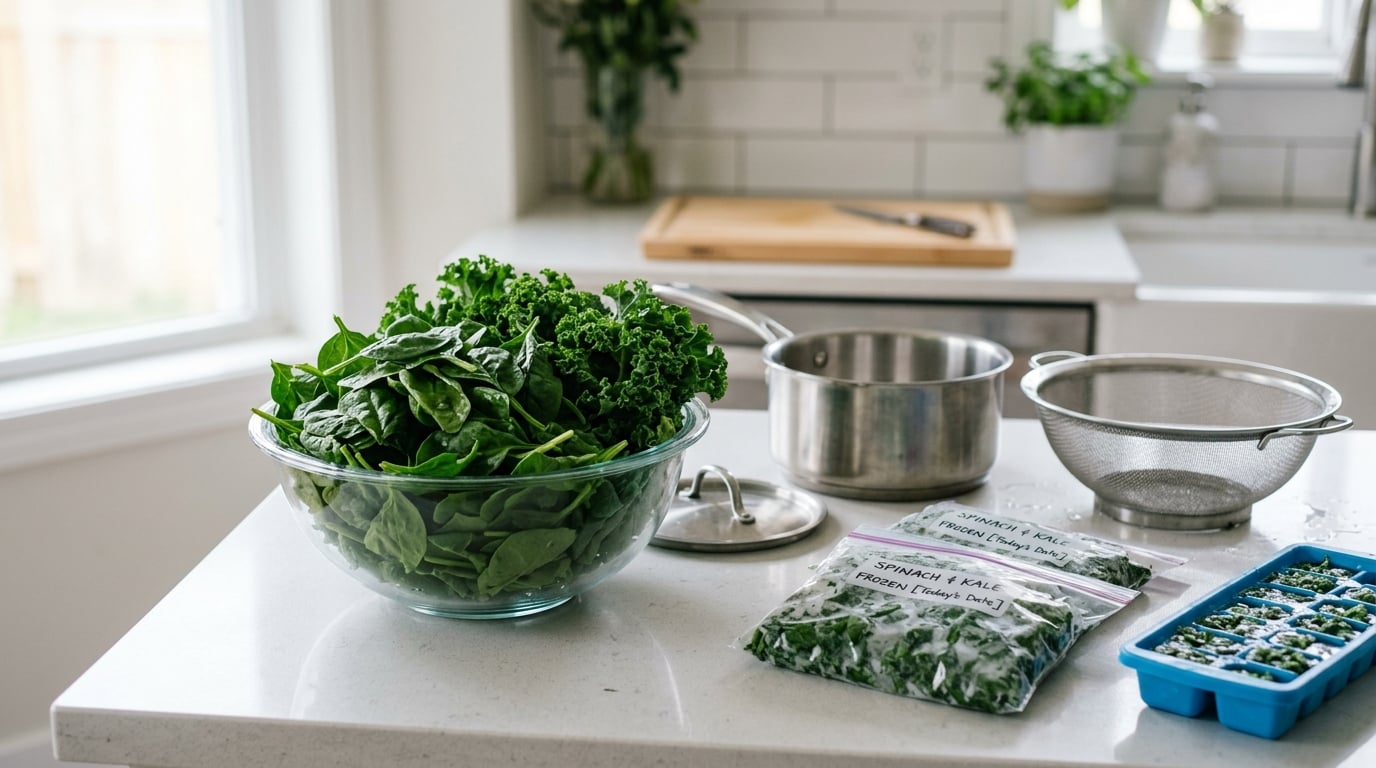
To freeze spinach and kale for smoothies, you have two good options: wash the leaves, dry them completely, and pack them loosely in airtight freezer bags, or blend them with a splash of water and freeze them as single-serving purée cubes. The bag method keeps the greens versatile, and the cube method gives you a grab-and-go serving with no leafy chunks. Either way, drying the greens well and squeezing the air out of the bag is what separates good frozen greens from an ice brick. The whole process takes about 15 minutes of prep and an hour of freezing, and it is beginner-friendly.
I keep a bag of frozen greens on hand all year for the mornings I did not plan ahead, and it is the single most useful thing my blender prep has ever produced. Fresh spinach lasts maybe a week in the fridge before it goes slimy, which is a waste of a whole bag. Frozen properly, the same greens keep for months.
Table of Contents
- How to Freeze Spinach and Kale for Smoothies: What You Need
- Step-by-Step
- Frequently Asked Questions
- Do you have to blanch spinach and kale before freezing them for smoothies?
- How long can frozen spinach and kale last?
- Can I freeze spinach and kale without blanching them?
- Should I thaw frozen greens before adding them to a smoothie?
- How much frozen spinach or kale should I add to one smoothie?
- Why are my frozen greens watery or clumpy?
How to Freeze Spinach and Kale for Smoothies: What You Need
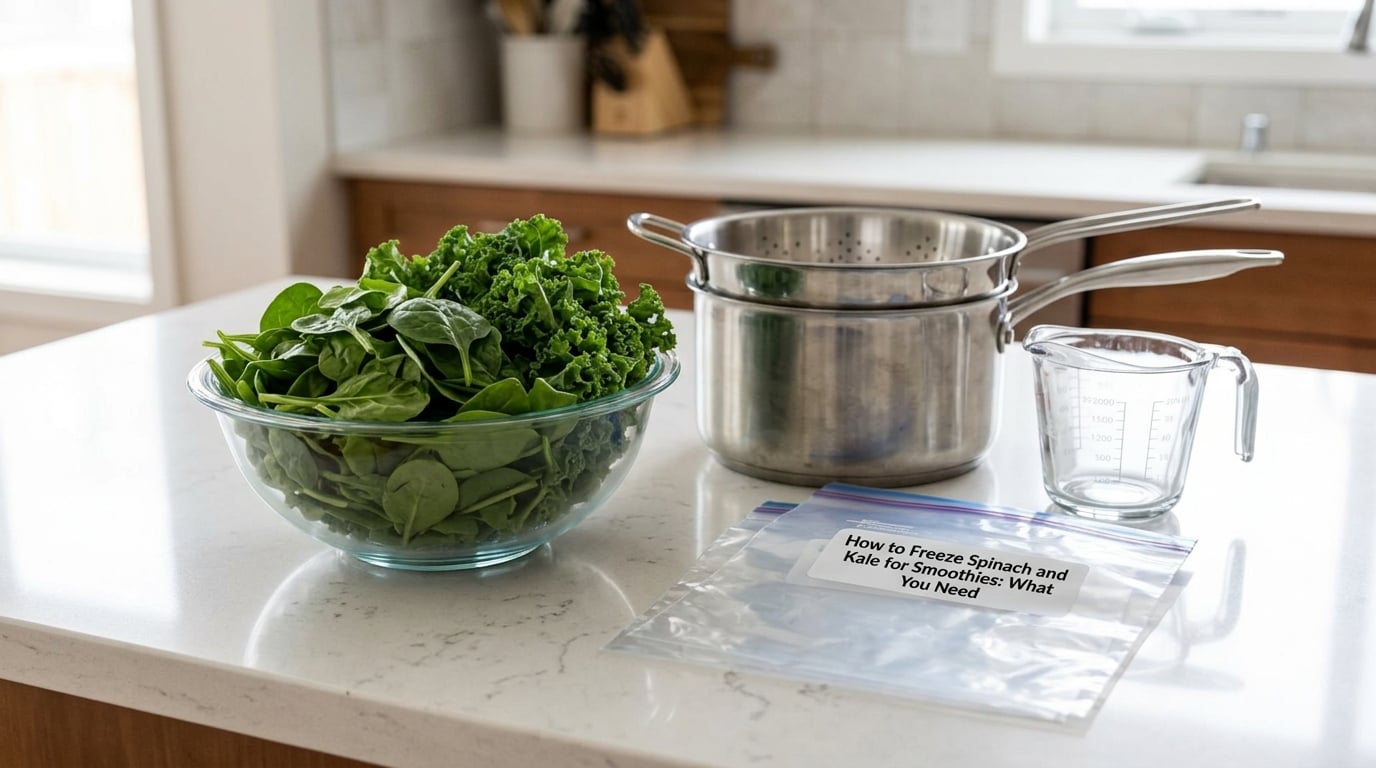
You do not need much. Everything here is something most kitchens already own.
- Fresh spinach and kale, or bags of pre-washed greens. If you are buying in bulk, curly or lacinato kale both freeze well; curly stays a little more neutral in flavor, lacinato is slightly earthier.
- A large pot for blanching, plus a colander for draining.
- A bowl of ice and cold water for the ice bath.
- A salad spinner or clean kitchen towels for getting the leaves genuinely dry.
- Freezer-safe bags or airtight containers, ideally in quart size, and a marker to label them.
- Ice cube trays for the cube method, and a splash of water or coconut water to blend with.
Step-by-Step
Step 1: Wash and Prep the Greens
Start by inspecting the leaves and throwing out anything yellow, slimy, or bruised. Fresh spinach usually comes ready to use, but kale is a different story: the thick rib down the center turns woody and unpleasant in a blender unless you strip it.
De-stem the kale by holding the base of the stem in one hand and sliding your other thumb and forefinger up the rib. The leaf separates from the stem cleanly once you reach the leafy part. For a smoothie, you can leave a little stem attached to a small leaf, but the thick woody ends always go in the compost.
Wash the greens in cold water, swishing the leaves around rather than just letting them sit. Fill the sink with cold water, add the greens, and agitate them for about a minute, then lift them out. Repeat once if you buy dusty or loose-leaf kale.
Now dry them, and do not rush it. A salad spinner gets most of it, then roll the leaves in a dry towel and press. Any water left on the surface freezes into ice crystals that ruin the texture and make the blender output watery and pasty. You want leaves that feel dry to the touch, not merely damp.
Step 2: Blanch the Spinach and Kale
Blanching is optional for smoothies, but it is the step that makes frozen greens taste better later. A short boil followed by an ice bath stops the enzymes that break down color and texture, and it reduces the soluble oxalates in leafy greens, which is the compound that makes raw spinach and kale taste slightly chalky and can bind calcium and iron. USDA guidance for freezing vegetables recommends blanching greens before freezing specifically to preserve quality.
Bring a large pot of water to a rolling boil. For spinach, drop the leaves in and blanch for about 2 minutes. For kale, give it about 3 minutes, since the leaves are thicker and sturdier. The greens are done when they look faded and dark and collapse easily under the surface of the water.
Do not let the greens sit in the hot water after blanching, and do not walk away. A pot of spinach left boiling on the counter while you answer an email turns to liquid. Work in batches and keep the rest of the greens in the fridge until the water is ready.
Skip blanching if you are freezing greens strictly for smoothies and plan to use them within a couple of months. The nutrition difference is small, the texture will be softer, and nobody will notice inside a blended drink with fruit and coconut milk.
Step 3: Cool, Drain, and Remove Excess Water
Have your ice bath ready before you start blanching, because the greens need to go straight into it. Transfer them with a slotted spoon or tongs, plunge them around, and let them sit until the leaves are cool to the touch, roughly 1 to 2 minutes.
Drain the greens in a colander, then squeeze out as much water as you can. For a bag of loose leaves, work in handfuls and press the water out over the sink with both hands. For the cube method, squeezing this hard is what keeps a cube from being a mostly-ice brick. Kale holds more water than spinach, so it needs a firmer squeeze and often a second towel pass.
Water control is the whole game here. Greens that go into the freezer soaked come out as a wet, mushy clump that waters down your smoothie instead of thickening it.
Step 4: Portion, Label, and Freeze
Decide how you actually use your greens before you bag them, because that dictates the portion size. If you scoop greens by handful in the morning, pack them in single-serving bags. If you blend them into a recipe, pack larger 2-cup batches so you only open the freezer once a week.
Press as much air as possible out of each bag before sealing it. Air is what causes freezer burn, which shows up as a papery, off-tasting coating on the leaves months later. Squeeze the bag down flat, seal out the excess, and double-bag anything you plan to keep past a few months.
Label every bag with the green, the quantity, and the date it went into the freezer. Unlabeled freezer bags are how I once thawed mystery greens in February. A freezer also stacks in a way that makes old bags slide to the back, so a date turns the bottom of the pile from a guessing game into a two-second check.
Lay the bags flat in the freezer until the greens are solid, then stack them upright. If you want greens that never clump into a single brick, spread the leaves on a baking sheet and flash-freeze them for about an hour before bagging. Once solid, they keep their shape and you can scoop a portion without thawing the whole thing.
For the cube method, blend the prepared greens with just enough water, coconut water, or a splash of juice to make a smooth liquid, pour it into ice cube trays, and freeze for about 4 hours. Pop the cubes into a bag once solid. About 6 cubes equals roughly 1 cup of fresh spinach, which is a normal serving in a 16-ounce smoothie.
| Method | Prep time | Best texture in a smoothie | Keeps in the freezer |
|---|---|---|---|
| Raw leaves in bags | 15 minutes | Soft, slightly watery | About 10 to 12 months |
| Flash-frozen then bagged | 15 minutes plus 1 hour in the freezer | Loose and scoopable | About 10 to 12 months |
| Blanched and dried | 25 minutes | Clean and mild | About 10 to 12 months |
| Puréeed cubes | 10 minutes plus 4 hours freezing | Smoothest, no leaf bits | About 4 to 6 months |
| Fruit and green smoothie bags | 15 minutes | Mixed, thaw at the same time | About 2 to 3 months |
Step 5: Use Frozen Spinach and Kale in Smoothies
Frozen greens go into a high-speed blender straight from the freezer. No thawing, and no waiting. Frozen cubes actually blend smoother than fresh leaves because the freezing process breaks down some of the cell walls, which is why so many people use them instead of raw.
Start small. Add 4 to 6 cubes, about a half cup of greens, along with your liquid and fruit, and blend. Taste it, then add more if you want a stronger green flavor. Going straight to a double handful in an unfamiliar blender is how you end up with a drink that tastes like grass.
For kale, be a little more generous with fruit than you would for spinach. Kale has a stronger flavor that hides behind banana, berries, pineapple, or apple, while spinach is mild enough to disappear almost completely. Both also freeze well with other greens: Swiss chard, romaine, and parsley handle the same process, and frozen fruit like mango or banana makes a good base that does not need much added sweetener.
Frozen greens do not only belong in smoothies. Thawed cubes work in soups, sauces, curries, and omelets, where the cooking step softens the texture anyway. Just expect a thawed raw green to be softer than a fresh one. That is normal, and it is why nobody defrosts a bag of frozen spinach to put on a salad.
Common Mistakes That Ruin Frozen Spinach and Kale
Freezing wet leaves. This is the big one. Surface water becomes ice crystals, and the greens come out watery and mushy. Spin them dry, towel them dry, then freeze them.
Blanching too long. More than 3 minutes and kale turns to sludge, losing the flavor you were trying to keep in the first place. Time it, and pull the leaves while they still have shape.
Leaving air in the bag. Air is freezer burn. Press the bag flat, seal out what you can, and label the date so you use the oldest bags first.
Thawing the whole batch. Portion before freezing. Six cubes, or a one-handful bag, means you never open a brick of frozen greens to use two tablespoons.
Adding a double handful on the first try. Frozen greens concentrate flavor as the ice melts into the drink. Start at 4 to 6 cubes, taste, and adjust.
Skipping the label. Free spinach and kale look nearly identical once frozen, and neither bag has a date. Write both down. It takes eight seconds.
Frequently Asked Questions
Do you have to blanch spinach and kale before freezing them for smoothies?
No, not for smoothies. You can freeze both greens raw after washing and drying them thoroughly, and the nutrition difference in a blended drink is minimal. Blanching does deactivate enzymes that cause texture loss and reduce soluble oxalates, which is worth it if you want the best flavor and color. If you are freezing for smoothies only, raw is the faster route.
How long can frozen spinach and kale last?
Frozen leafy greens keep their best quality for about 10 to 12 months at 0°F, according to standard USDA freezing guidance, and remain safe to eat beyond that if kept continuously frozen. Puréeed cubes and prepacked fruit-and-green bags are best used within about 4 to 6 months and 2 to 3 months respectively, because blended greens and cut fruit oxidize faster than whole frozen leaves.
Can I freeze spinach and kale without blanching them?
Yes. Washing, drying, and freezing raw is a common approach, and the greens will still be perfectly good in a smoothie. The trade-off is softer texture, a slightly more watery result, and flavors that dull a little faster in the freezer. If you plan to use the greens for soups or cooked dishes later, blanching is the better choice because it holds color and texture much better.
Should I thaw frozen greens before adding them to a smoothie?
No, and you should not. Frozen spinach and kale blend better straight from the freezer, and the ice helps chill the drink and thicken it. Thawing first wastes time, and thawed raw greens turn soft and watery in the jar. The one exception is if you are blending a small amount in a low-power blender and the leaves are not breaking down, which a splash of liquid fixes.
How much frozen spinach or kale should I add to one smoothie?
For a 16-ounce smoothie, start with 4 to 6 frozen cubes, which is roughly half a cup of fresh greens, or one loosely packed handful of frozen leaves. Add more only after tasting. If you want a greens-heavy smoothie, kale can carry up to a full cup of leaves, while spinach is easier to push past a cup because it is milder.
Why are my frozen greens watery or clumpy?
Watery greens almost always come from freezing leaves that were still wet. Surface water freezes into ice crystals that melt into the blend, and it also glues the leaves into a single brick you cannot scoop from. Spin or towel the leaves bone-dry before freezing, portion the bags or trays so greens do not sit in one mass, and flash-freeze bagged leaves on a baking sheet for about an hour if clumping is a recurring problem.
If you only do one thing differently after reading this, dry the greens properly before they go in. Everything else, blanching, flash freezing, labeling, works fine on greens that were dry going in, and none of it rescues greens that were frozen wet.