
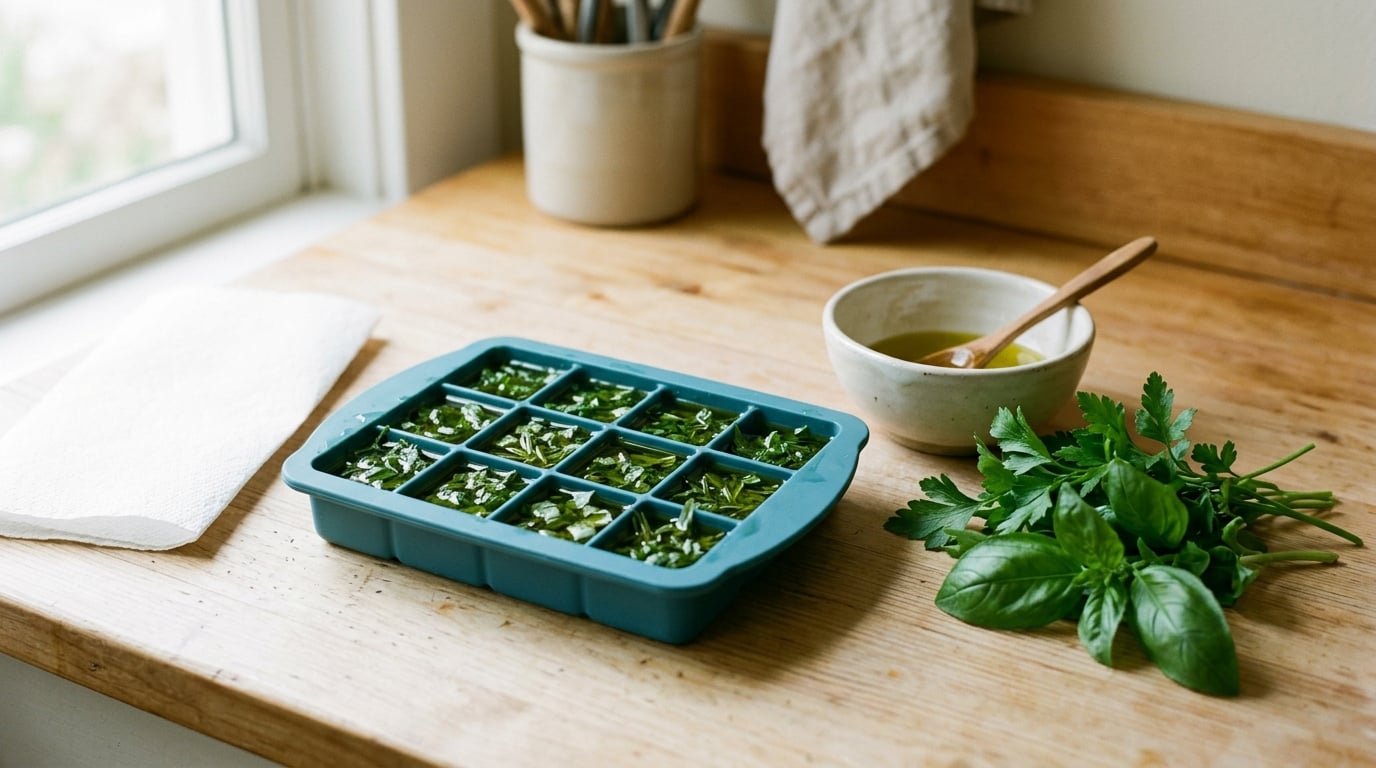
Freezing fresh herbs in oil takes about 15 minutes of prep and one night in the freezer: chop the herbs, dry them completely, pack them tight into an ice cube tray or jar, pour olive oil over the top until every leaf is submerged, then freeze. The oil seals out air, which is what stops herbs from browning and getting freezer burn, and the leftover oil comes out flavored and ready for dressings.
This is the method most home cooks land on after the herb bunch in the fridge starts to go black at the edges. If you have ever cut a bunch of basil only to find it slimy a week later, this solves that problem without blanching or drying anything.
Table of Contents
- What You Need
- Step-by-Step: How to Freeze Fresh Herbs in Oil
- How to Freeze Fresh Herbs in Oil: Prepare the Herbs
- How to Freeze Fresh Herbs in Oil: Pack the Herbs Into Your Container
- How to Freeze Fresh Herbs in Oil: Cover the Herbs Completely With Oil
- How to Freeze Fresh Herbs in Oil: Choose a Storage Method
- How to Freeze Fresh Herbs in Oil: Thaw and Use Without Spoilage
- How to Freeze Fresh Herbs in Oil: Common Mistakes
- Which Herbs and Oils Work Best?
- Frequently Asked Questions
- Conclusion
What You Need
You need less than people expect. The ingredients are the herbs, the oil, a container, and a label. The only step people rush is drying, and that is the one that decides whether the batch keeps.
- Fresh herbs — basil, parsley, cilantro, chives, dill, mint, tarragon, rosemary, thyme, sage, or oregano. Fresh or frozen-thawed both work; dried herbs do not need this method.
- Olive oil or another stable oil — extra virgin olive oil for flavor, or grapeseed, canola, avocado, or sunflower oil when you want a neutral taste and lower cost.
- A container — a standard ice cube tray, a silicone ice cube tray, a mini muffin tin, small 4 ounce jam jars, or a silicone spatula mold.
- Paper towels or a salad spinner — for getting the herbs genuinely dry.
- A permanent marker and freezer tape — write the herb and the month on the bag or lid the day you make it.
- Optional: a pinch of salt — salt in the oil draws out moisture and seasons the herb, which helps delicate ones like basil.
How your container changes the result
A standard ice cube tray gives you roughly 1 tablespoon per cube, and a mini muffin tin gives you closer to 2 tablespoons. That difference matters: a single tablespoon is right for a pan sauce, but most pasta and stew recipes call for a quarter cup, so you would be dumping in three or four cubes at once.
Small jars are the better choice if you use herbs in bigger quantities, since you can scoop out what you need with a clean spoon. Whichever container you use, the rule is the same: leave room for the oil to expand when it freezes, so fill no more than two-thirds of the way.
Step-by-Step: How to Freeze Fresh Herbs in Oil
How to Freeze Fresh Herbs in Oil: Prepare the Herbs
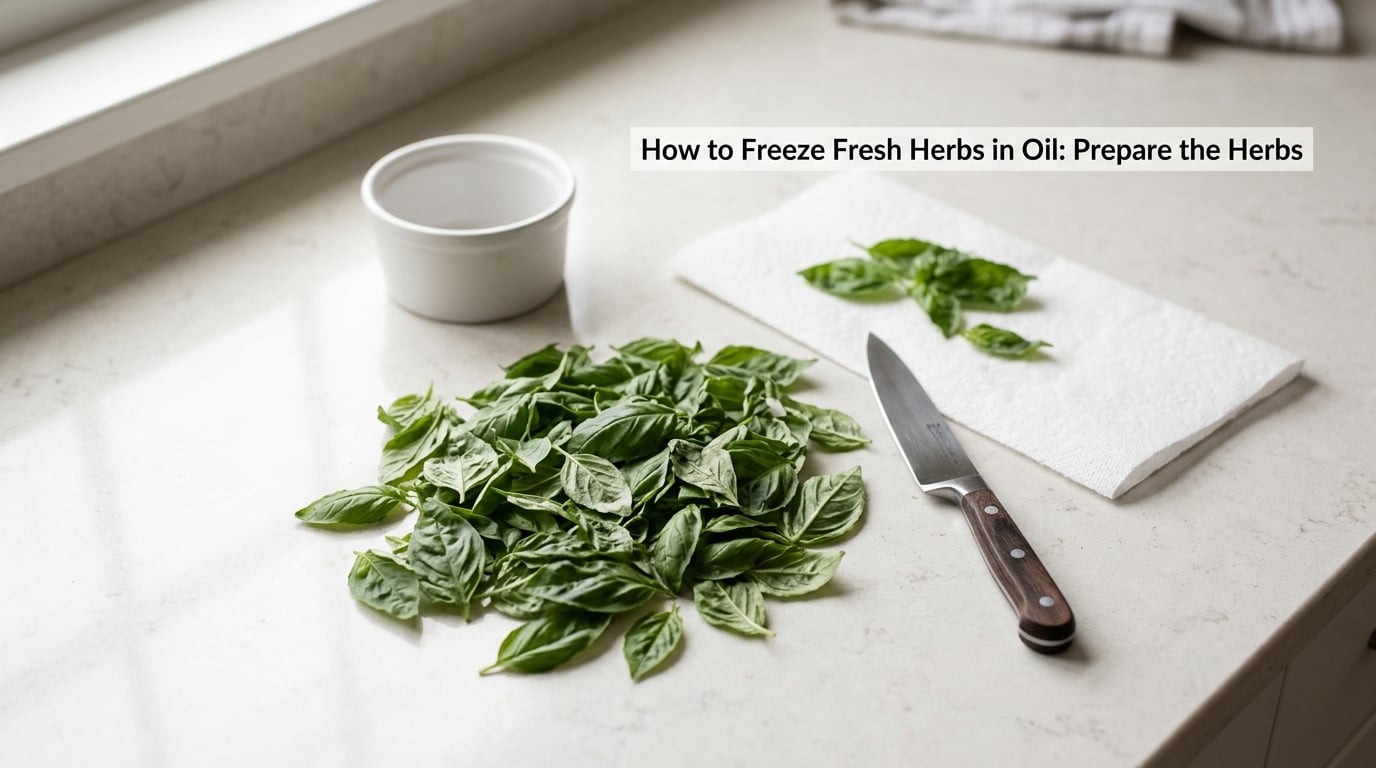
Wash the herbs in cold water and strip the leaves off the stems. The oil needs direct contact with the leaf surface to coat it, and stems sitting above the oil line is the number one reason cubes come out freezer-burned.
Dry them properly. Lay them on a paper towel, blot the tops dry, and give it 20 to 30 minutes in a warm spot or 10 minutes in a salad spinner. Herbs are dry when the leaves feel papery rather than cool and damp, and you should not see water clinging to any leaf before chopping.
No blanching is needed for oil-freezing, and blanching would actually work against you. Boiling water dilutes and cooks the aromatics you are trying to keep, and it leaves extra water in the leaves. Blanching matters when you freeze herbs dry, in water, or for drying.
Chop leaves loosely with a sharp knife, larger pieces for sturdy herbs like rosemary and sage, small pieces for soft ones like basil and cilantro. Packing leaves loose rather than puréeing them keeps the texture readable after thawing.
How to Freeze Fresh Herbs in Oil: Pack the Herbs Into Your Container
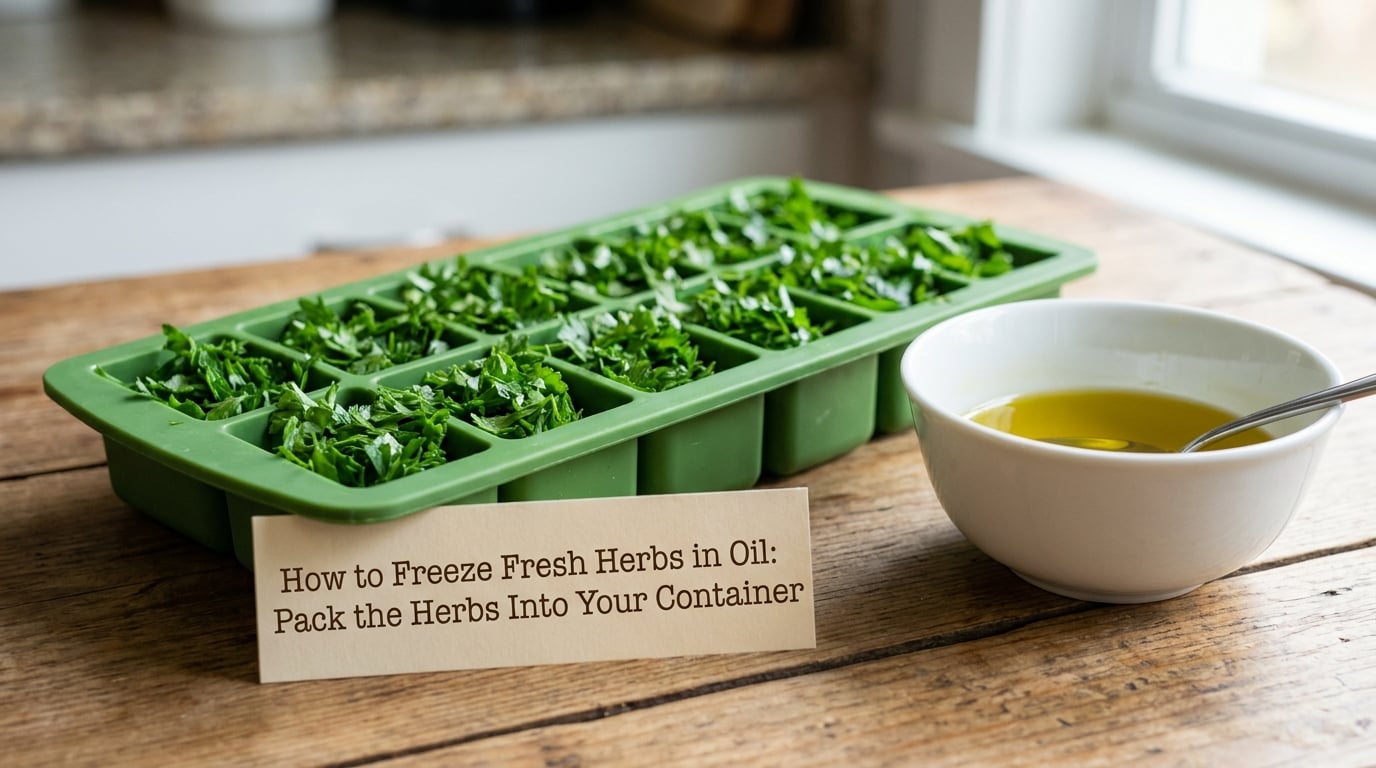
Pack the herbs into each compartment, pressing gently until it is roughly two-thirds full. Press just enough to keep them from floating to the top in a loose cloud; crushing them into a dense brick means you cannot break the cube apart later.
Sweep any stray pieces off the outside of the tray so the lid seats flat. A silicone tray flexes when you push a cube out, a plastic tray usually needs a firm twist, and a small jar can be tapped against the counter to loosen the top layer before you spoon in oil.
How to Freeze Fresh Herbs in Oil: Cover the Herbs Completely With Oil
Pour extra virgin olive oil over the packed herbs until they are submerged, with about a quarter inch of oil above the top of the herbs. That headspace of oil is what keeps air away from the leaves, and any piece poking above the surface will darken and go papery instead of staying green.
Use roughly 1 to 2 teaspoons of oil per tablespoon of herb. There is no need to drown the tray, and more oil does not preserve better; you just have a fattier cube later.
Push down with a small spoon or knife tip to release air pockets around the leaves. Air bubbles trapped under the oil are the second most common cause of browning, right after moisture.
How to Freeze Fresh Herbs in Oil: Choose a Storage Method
You have three realistic options, and they are not interchangeable.
Freezer (best for long storage). Cover the tray with plastic wrap or a flat lid, freeze on a level shelf for at least 4 hours or overnight, then pop the cubes out and move them to a labeled freezer bag or airtight container. Frozen herb cubes in oil keep their flavor for about 3 to 6 months. Some home gardeners report hardier herbs like thyme and rosemary tasting fresher than dried ones after thawing; soft herbs like basil and cilantro do turn limp and darker, and that is normal.
Refrigerator (best for using them within the week). Skip the tray and pack the herbs straight into a small jar with enough oil to cover them. This is the practical choice when you want herbs for the next three or four days, not for the winter. Use the jar within about 4 days to a week, keep it on the coldest shelf, and use a clean utensil every time you dip in.
Neither (freezer is not optional for storage). Fresh herbs sitting in oil at room temperature are the version people read about in botulism warnings, and it is a genuine risk. The plant material is low in acid and the oil leaves room for growth, which is why food safety guidance says to refrigerate those jars promptly or freeze them, and never to treat a room-temperature oil jar as pantry food. Freezing is the safe version, which is the whole point of the method.
Whichever route you pick, label it: herb, and the month. Unlabeled freezer bags are how people discover a mystery green cube six months later.
How to Freeze Fresh Herbs in Oil: Thaw and Use Without Spoilage
Move a jar to the refrigerator the night before you plan to cook, and thaw cubes in the fridge or in a sealed bag in cool water. Thawing at room temperature on the counter is the one step to skip, because the cube passes through the temperature range you avoided in the first place.
Look before you sniff. Healthy cubes are solid with green or dark green flecks and clear oil around them. Discard anything that shows cloudiness in the oil, a slimy film, a fermented or sour smell, or a swollen or leaking jar, and do not taste a cube to test it.
Drop a frozen cube straight into a simmering pasta sauce, soup, or stew and let it melt while you stir; no thawing needed for the freezer method. For a cold dish such as a vinaigrette, thaw the cube first, then whisk it with a little extra oil or vinegar.
Use a thawed cube within a day or two. Refreezing a thawed cube is not recommended, because the herbs have already gone through one thaw cycle and the texture suffers a second time.
How to Freeze Fresh Herbs in Oil: Common Mistakes
- Damp herbs. Moisture freezes into ice crystals that tear the leaves and turn the oil cloudy. Pat dry, then dry again for another 10 minutes.
- A wet jar or tray. A single drop of water ruins a whole compartment. Wash and dry the container completely before packing.
- Herb sticking above the oil line. Press the herbs down after pouring, or top up with a little more oil until everything is submerged.
- Overpacking. A tightly bricked compartment freezes into a block that will not release from the tray. Leave it loose enough to flex.
- A glass tray or a jar filled to the rim. Oil expands as it freezes and will crack the container. Two-thirds full, always.
- Garlic, mushrooms, or fresh ginger in the jar. These are low-acid and higher in moisture than a leaf, and they are the ingredients that show up in botulism advice about infused oils. Keep them out, or freeze them separately in a known-safe method.
- Cubes fused together. A thin layer of oil between cubes before the lid goes on, or a rigid container instead of a soft bag, prevents this. If it happens, run the tray under warm water for 20 seconds rather than reaching for a hammer.
- Skipping the tray entirely when the herbs are sturdy. For rosemary, thyme, sage, and oregano, chopping them and freezing them loose in a freezer bag works well. Crush the bag against the counter to break the leaves into usable pieces, which is the version most people in home-cooking forums actually use.
- Keeping them too long. Past six months in the freezer, herb flavor fades and the oil takes on a stale, waxy note. Write the date on the bag so you stop guessing.
Which Herbs and Oils Work Best?
Soft herbs and hard herbs behave differently under freezing, and it is worth knowing which category you are dealing with before you plan portions.
Soft herbs — basil, cilantro, parsley, dill, mint, tarragon, chives — are full of water and turn limp and darker when frozen. Freeze them for cooked dishes where texture does not matter: sauces, soups, curries, and pestos. Basil held in a jar with oil for a week is also the base for a gift, and it flavors the oil by the time you drain it.
Hard herbs — rosemary, thyme, sage, oregano, bay — hold their shape and flavor better frozen than dried, because they have less water to break down. Chop them finer than you would for fresh use so a spoonful is evenly distributed through a dish.
Oils that work: extra virgin olive oil for taste, plus grapeseed, canola, avocado, sunflower, or peanut oil when you want the herb to lead. Coconut oil is solid below about 76 degrees Fahrenheit, so it makes a workable frozen cube but turns to a solid again in a cold fridge, which makes portioning awkward.
Oils to skip: homemade infused oil meant to sit on a shelf is a different project with different rules, and it is not one to improvise with fresh herbs. Also avoid any oil you would not happily eat plain, since the flavor concentrates in the cube.
Leave these out: raw garlic, mushrooms, fresh ginger, and other moist low-acid ingredients. Salt used in a properly tested canning recipe changes water activity enough to matter, and that recipe already accounts for it; a jar of herbs and oil in your fridge does not.
Frequently Asked Questions
Can you freeze fresh herbs in oil?
Yes, and it is one of the safest ways to keep them. The oil excludes air, which prevents the browning and freezer burn that ruin herbs frozen dry. Chop, dry, and pack the herbs, cover them completely with oil, then freeze. Use them in cooked dishes within about 3 to 6 months, and refrigerate anything you plan to use within a week.
What is the best oil for freezing fresh herbs?
Extra virgin olive oil is the most popular choice and adds flavor as the herbs infuse it. Grapeseed, canola, avocado, and sunflower oils work well too and let the herb taste lead. Use about 1 to 2 teaspoons of oil per tablespoon of chopped herb, and make sure the herbs stay fully submerged, since anything above the oil line will dry out and darken.
How long can herbs frozen in oil stay refrigerated?
A jar of herbs packed in oil keeps in the refrigerator for roughly 4 days to a week, assuming you use a clean utensil each time and return it to the cold shelf promptly. For anything longer, freeze it instead. The same jar left on a counter is the form food safety guidance warns about, because fresh plant material in oil at room temperature can support Clostridium botulinum growth.
Can I freeze herbs in olive oil instead of refrigerating them?
Freezing is the better choice for long storage, and it is what most cooks do. In a refrigerator jar the herbs soften within days, while frozen cubes hold their flavor for about 3 to 6 months. Fill containers only two-thirds full, since oil expands as it freezes, and thaw a cube in the fridge rather than on the counter before using it in a cold dish.
How do I know if herbs preserved in oil have gone bad?
Toss the batch if the oil turns cloudy or thickened, if a film forms on the surface, if the herbs smell sour, yeasty, or faintly rotten, or if the jar is swollen, leaking, or oddly soft. Any of those signs outrank how recently you made it. If in doubt, throw it out, since the cost of a bunch of herbs is low compared with a food poisoning illness.
Conclusion
Start by drying your herbs all the way, longer than feels necessary. Chop them, pack two-thirds of a clean ice cube tray, pour olive oil over the top until every leaf sits below the surface, cover, and freeze overnight. Transfer the cubes to a labeled freezer bag and reach for them in cooked dishes for the next three to six months.
That is the whole method. Keep raw garlic and mushrooms out of the jars, and keep jars that you did not freeze off the counter and into the refrigerator within a day.