
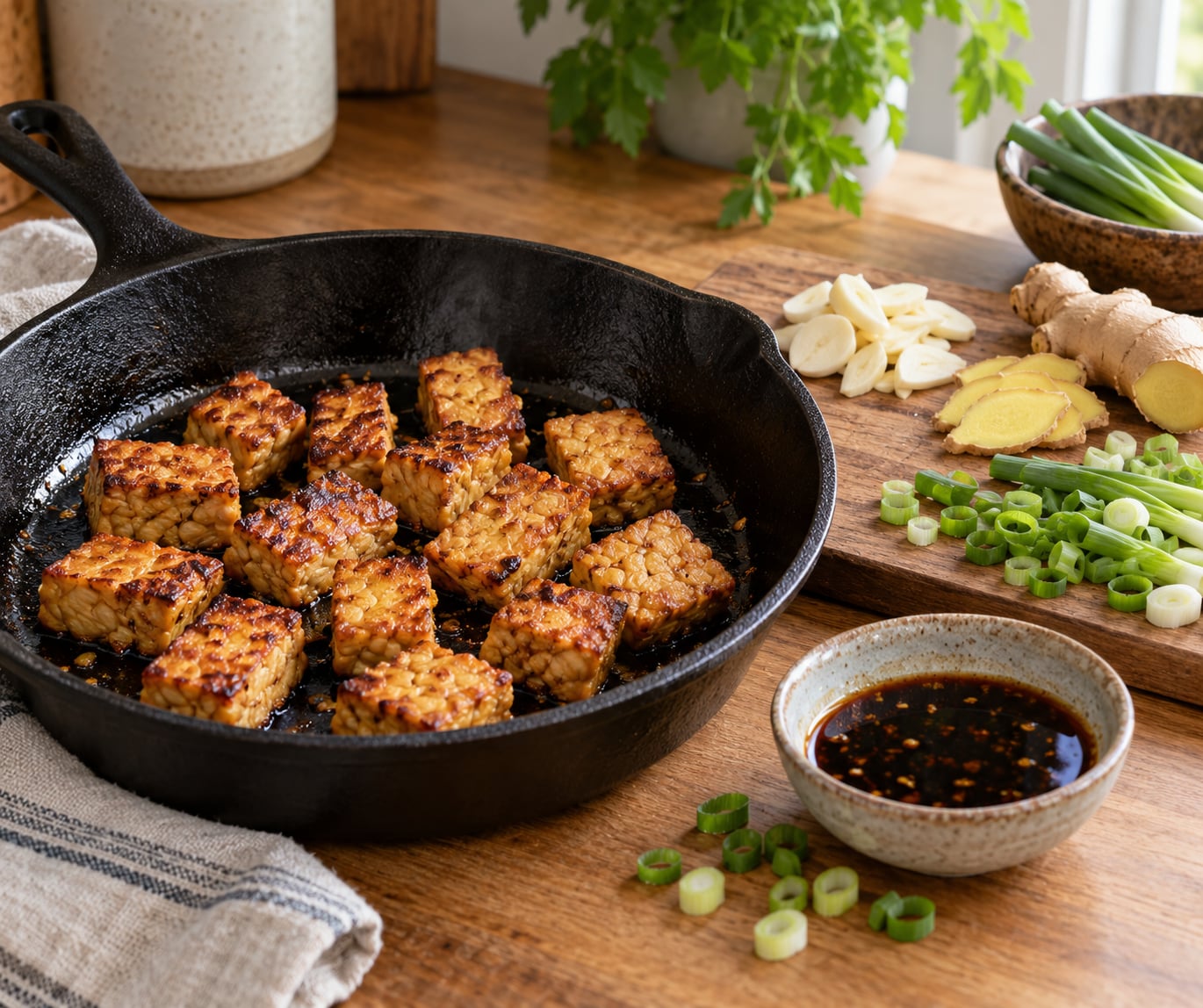
Most bitter tempeh is not a bad ingredient. It is over-fermented, cut badly, or cooked too hot for too long. If you learn how to cook tempeh so it is not bitter, the fix takes about 25 minutes: cut the block into even cubes, steam or simmer it for 10 to 15 minutes, then brown it in a single uncrowded layer over medium heat and season in layers while you taste.
That sounds like three separate jobs, and it is. But once you get the order right, tempeh stops being that grey block you keep pushing around the fridge and turns into the protein you actually look forward to cooking.
This is a vegetarian kitchen method with no special equipment. A skillet, a knife, and a plate are enough. If you like, you can compare it with how to cook lentils so they hold their shape, which solves a similar texture problem with a completely different technique.
Table of Contents
What You Need
The ingredient list is short because the bitterness lives in the tempeh itself, not in a sauce you can wash off later.
- Tempeh: one 8 oz block, ideally from the fridge with a use-by date that is still a week or more away.
- Neutral oil: about 1 tablespoon, enough to stop the pieces sticking without frying them.
- Water: for the steaming or simmering step, plus a small splash for the pan if it looks dry.
- Salt: for seasoning in stages rather than all at once.
- Optional aromatics: garlic, ginger, scallion, a spoon of miso, tamari, lemon juice, smoked paprika, cumin, or chili flakes.
- Equipment: a skillet or wok with a lid, a sharp knife, a spatula, and a small plate for the doneness test.
A steamer basket is nice, but not essential. Tempeh sits in a shallow layer of simmering liquid perfectly well, and a microwave does the same job in five minutes if you are short on equipment.
Step-by-Step: How to Cook Tempeh So It Is Not Bitter
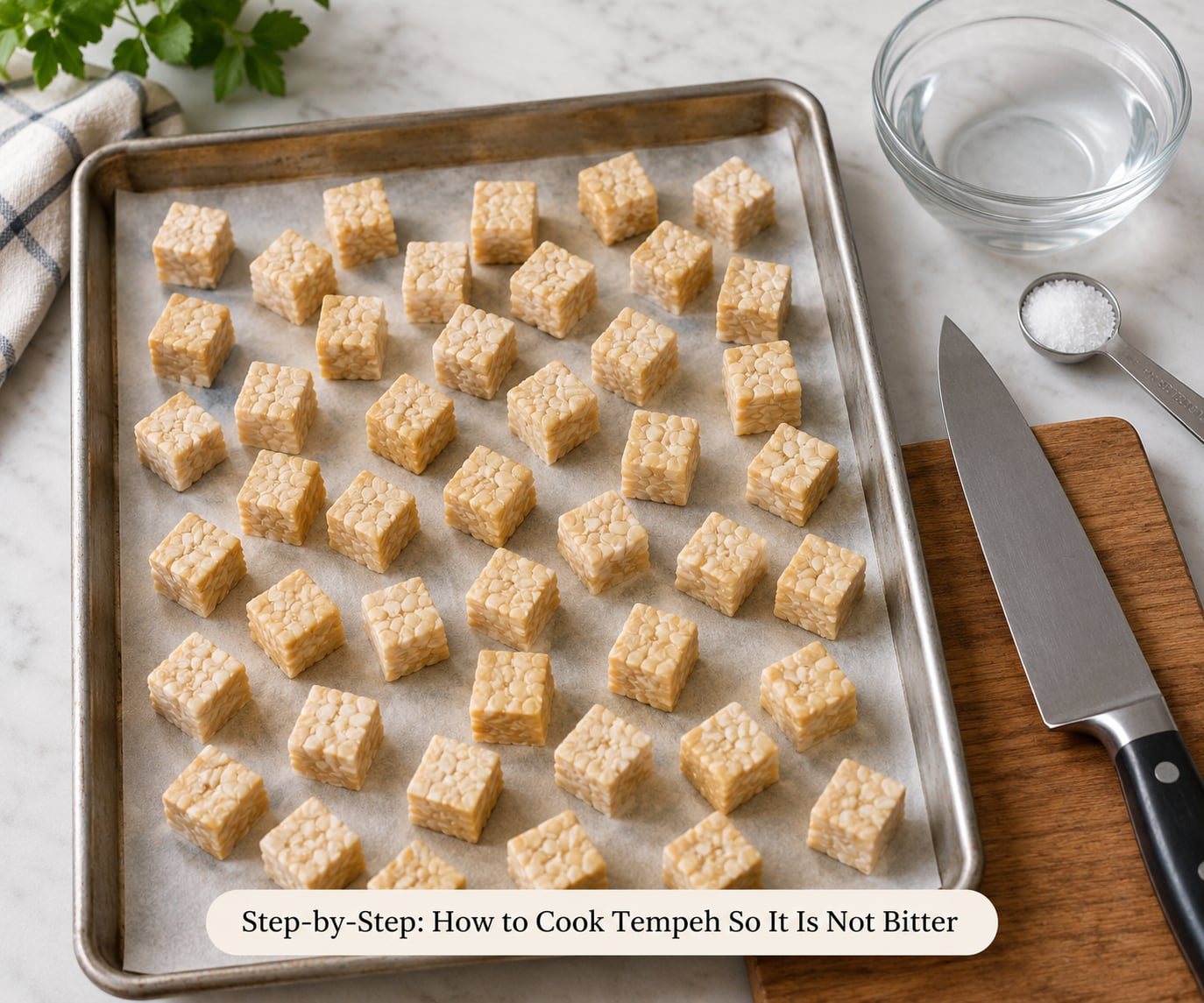
How to Cook Tempeh So It Is Not Bitter: Prepare It Gently
Cut the tempeh into even cubes, about half an inch to three-quarters of an inch on a side. Even size is the whole trick, because a piece twice the size of its neighbour takes twice as long to soften and sits through the whole of it getting stronger.
Cut instead of grating or blitzing. A food processor turns tempeh into a paste, and that paste concentrates every bitter compound into a smaller volume, so it tastes worse, not better. Tearing the block apart by hand works fine too, and gives you ragged edges that catch sauce later.
Some blocks come wrapped in a thin plastic or leaf wrapper, and that wrapper does not need peeling, though removing it costs nothing. Most brands do not ask you to rinse or soak, and soaking waterlogged tempeh and washes away the very compounds you are trying to keep. If the package says rinse, rinse. Otherwise, pat the cubes dry with a towel.
Age matters as much as technique. Fermentation keeps developing in the fridge, which is why a block bought three days ago can taste noticeably sharper than one from yesterday. White bloom or a grey haze is normal; a fuzzy green or blue patch is not.
Cook the Tempeh in Batches Over Moderate Heat
Heat a tablespoon of oil in a skillet over medium heat, not high. Add the cubes in one uncrowded layer. If they touch, they steam instead of browning, and you get pale, soft cubes with the raw fermented edge still sitting there.
Leave each piece alone for about three minutes before turning. You are looking for a golden brown face and a faint smell that has moved from sour-earthy to nutty-toasty. If the pan is hissing loudly or the edges are going dark brown within a minute, turn the heat down.
Four or five minutes per side gets you there for cubes. Then push the pieces to the edge, add a tablespoon of water, cover, and let them steam for three more minutes so the centres finish tender without the outside burning. Taste one. If the centre still has a chalky core, give it another minute in the covered pan.
The visual cue to watch for is the surface: golden brown in patches, with the porous face slightly roughened. Those open pores are the reason the next step, seasoning, works at all.
Steam or Simmer the Tempeh When the Pan Method Is Too Strong
For tempeh that is already on the sharper side, or for anyone who is very sensitive to fermented flavours, soften the cubes before they ever meet oil. Four methods do this well, and each takes the same ten minutes of attention from somewhere else.
- Stovetop steam: Put the cubes in a steamer basket over about two inches of simmering water, cover, and steam for 10 to 15 minutes. A bamboo basket over a pot works fine.
- Simmer: Drop the cubes straight into simmering water or vegetable broth for 10 to 20 minutes, then drain. Broth adds flavour while it softens, which is why it beats plain water when you are working with an older block.
- Microwave: Place the cubes in a bowl with a couple of tablespoons of water, cover loosely with a plate, and microwave on high for about 5 minutes. Stir halfway. This is the fastest route for a single serving.
- Pressure cooker: Add a cup of water and the cubes, seal, and cook on high pressure for 4 to 5 minutes with a quick release.
There is one advanced trick worth knowing. Freezing the block first, thawing it, then steaming it pulls off more of the bitter compounds than steaming fresh tempeh does. It costs you a day of planning and it is the fix I would try before giving up on a brand you dislike.
After any of these, the pieces should bend easily when you press one with a fingertip and show no chalky white centre. Drain well and dry the surface, because wet cubes will spatter in the pan and steam rather than brown.
Season in Layers and Taste as You Go
Salt is the fastest correction for a sharp tempeh. Add a small pinch, toss, wait a minute, taste, then decide whether you need more. Adding all your seasoning at the end leaves you guessing and usually overshooting.
Build in layers. Tamari or a spoon of white miso brings savoury depth and its own salt. Garlic and ginger cut through the earthy note. Smoked paprika and cumin push it toward barbecue and warmth. Chili flakes or a little gochujang handle heat, and a squeeze of lemon at the very end lifts the whole thing.
Keep enough liquid in the pan. A tablespoon of water, broth, or sauce, tossed in the last two minutes, stops the cubes drying out and gives the seasoning something to cling to. A spoonful of cornstarch shaken in before that final toss also gives you crisper edges later.
Marinating works too, and it works better the longer you wait. Twenty minutes is a light seasoning; overnight in the fridge is a real flavour, because the porous surface drinks it in while you sleep. That is the single biggest upgrade most home cooks skip.
Serve the Tempeh While Tender and Still Warm

Overcooking is what turns pleasant tempeh into chalk. Once the cubes are golden and tender, they have done their job. Another five minutes in a dry pan dries the centre and sharpens anything bitter that was left behind, so pull them while they still bend.
From there they go almost anywhere. Spoon them into a grain bowl with roasted vegetables, toss them through a salad with a lemon dressing, tuck them into tacos with pickled onion, add them to a stir-fry in the last minute, or drop them into a curry for the final ten minutes. They also crumble easily for bolognese, chili, or breakfast patties once you have cooked them in pieces rather than slices.
Add sauces and toppings after cooking, not during. A spoonful of peanut sauce, teriyaki glaze, or tahini dressing on a warm cube does far more than another five minutes in marinade.
The final check takes four cues together: a nutty aroma, golden brown colour, a tender bite with no chalky core, and a taste that reads savoury rather than sour. Miss one of those, and the next piece tells you which one to fix.
Common Mistakes
Almost every bitter tempeh plate traces back to one of these.
Cooking it too hot, too fast
High heat scorches the outside before the centre softens, and scorched soy is bitter in a way that steam cannot fix. Medium heat, one layer, and a covered finish for the last few minutes gets you tender and browned at the same time.
Crowding the pan
Tempeh releases water as it cooks. Touching cubes steam each other and never develop colour, so you get the raw fermented edge carried straight onto the plate. Two batches of ten cubes beat one crowded batch of twenty, and it takes barely longer.
Using tempeh that has been sitting too long
This one is outside your control at the stove. Buy tempeh you can use within five to seven days, and if a block has been in your fridge for a fortnight, expect it to taste sharper no matter what you do. Steaming longer or simmering in broth helps; replacing the block helps more.
Overcooking it
Tempeh goes from chewy to dry to unpleasant to eat, and the middle stage is where the bitterness concentrates. Take the pieces out the moment the centre is tender, even if the edges are not uniformly golden.
Seasoning all at the end, or too heavily
A single heavy pour of sauce at the table will not reach the inside of a cube, so the first bite is salty and the second is still bitter. Salt early in small amounts and finish with sauce, and you get seasoning all the way through.
Rinsing, draining, or soaking
Unless the package tells you to rinse, water works against you here. Soaking leaches flavour out of the block and leaves it spongy, and draining soaked tempeh hard squeezes out what you just dissolved in.
A few practical notes. Cooking a full block gives you four to five servings of protein for the week, and cooked tempeh keeps three to four days in the fridge in a sealed container. If you want to freeze it, blanch the cubes for five minutes first, cool them, then freeze in a single layer before bagging so they do not clump. To bring them back, pan-fry from frozen with a splash of water and the lid on for two minutes. For variety across the week, our guide to how to batch cook for the week without getting bored has flavour rotation ideas that work just as well with tempeh as with grains.
Frequently Asked Questions
Why does my tempeh taste bitter?
Tempeh is fermented with a mould called Rhizopus oligosporus, and the fermentation leaves behind acids and other compounds that taste earthy and sharp. That is normal in small amounts. Bitterness gets stronger when a block ages in the fridge, when it is fried at high heat until scorched, or when it is overcooked until dry. Steaming or simmering for 10 to 20 minutes mellows those compounds noticeably.
Do I need to rinse or soak tempeh before cooking it?
Usually no. Most commercial tempeh is ready to cut and cook, and rinsing or soaking washes out surface flavour along with some of the fermentation compounds you are trying to soften. Pat the cubes dry after cutting, and cook them from there. The exception is tempeh made with added vinegar, which some packages recommend rinsing. Follow the label when it says something specific.
Should I remove the wrapper or outer skin from tempeh?
Most tempeh comes with a thin plastic or leaf wrapper that is meant to be left on. It protects the block and it steams fine inside it. Some blocks have no wrapper at all. If you want to remove it, tear the plastic off before cutting or peel the leaves after the cubes have steamed, since a warm, softened wrapper slips off far more easily than a cold one.
How long should I cook tempeh on the stovetop?
For cubes, give them 4 to 5 minutes per side over medium heat in an uncrowded layer, then three minutes covered with a splash of water so the centres finish tender. If you steam or simmer first, that softening step takes 10 to 20 minutes and the pan time drops to 2 to 3 minutes per side, since you are browning already-tender pieces.
Can I cook frozen tempeh without thawing it first?
Yes, and freezing can actually help with bitterness. Cook the cubes straight from frozen in a lightly oiled pan over medium heat, with a lid and two tablespoons of water, and let them steam for the first three to four minutes before uncovering so the centres soften without burning the outside. There is no need to thaw first, though thawed cubes brown more evenly.
How do I store cooked tempeh and keep it from becoming dry?
Let cooked tempeh cool uncovered for 20 minutes, then refrigerate it in a sealed container for up to three to four days. Airtight matters: the surface dries out fast without it. For longer storage, blanch cubes for five minutes, cool them, freeze in a single layer, then bag them. Reheat in a pan with a splash of water and the lid on, never in a microwave on its own.
Conclusion: Start With Fresh Tempeh and Moderate Heat
Three actions do most of the work. Buy a fresher block, cut it into even cubes and cook those in a single uncrowded layer over medium heat, then season in small stages and taste between each one.
Before you commit to the whole block, cook two cubes and eat them. That two-minute test will tell you whether the problem was the tempeh or the method, and it is a lot cheaper than a plate you do not finish. If you are cooking for people with different tastes at the table, our guide to cooking for a family with different diets covers how to serve one seasoned dish and a mild one without doubling the work.