
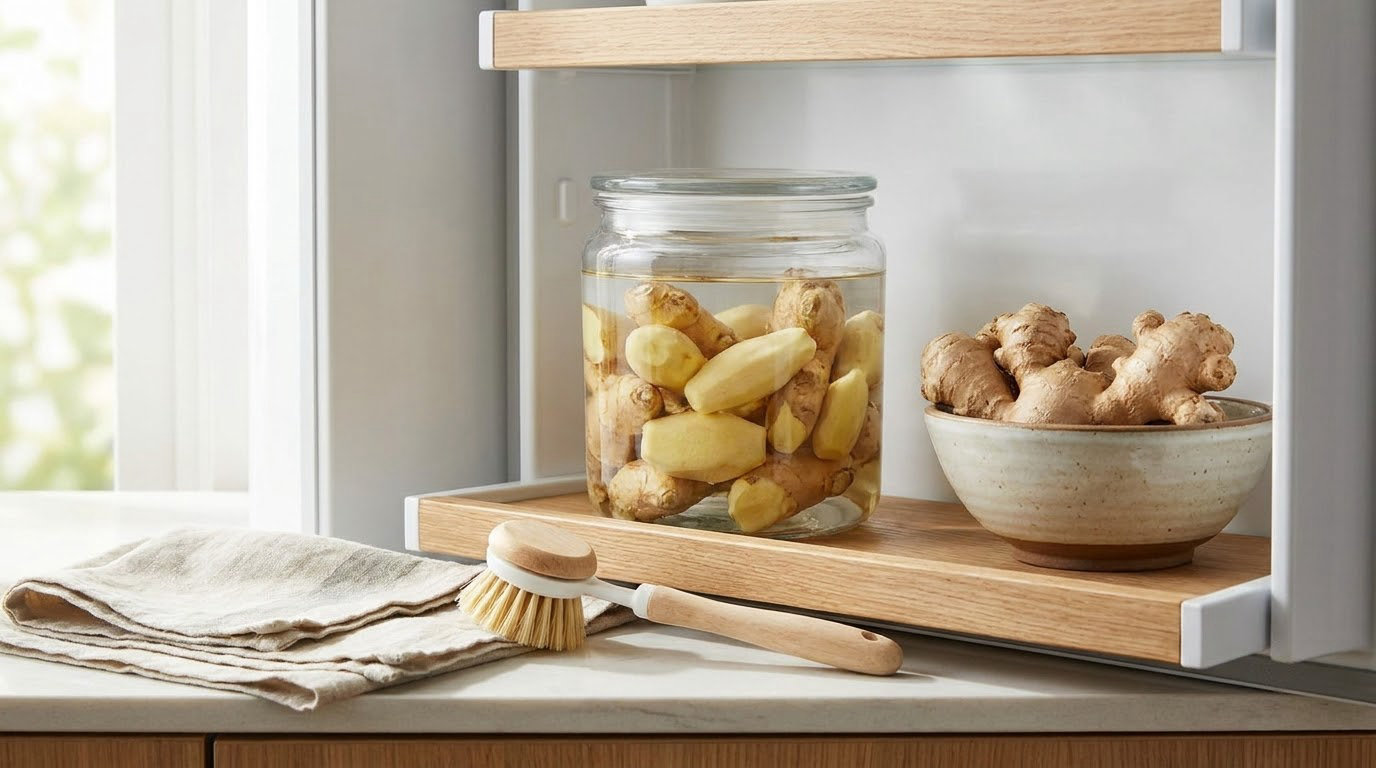
To store fresh ginger so it lasts, keep the skin on, skip washing, and seal it away from air. Refrigerate the whole root in an airtight bag for two to four weeks, or freeze it unpeeled for up to six months and grate straight from frozen with a microplane. Cut and peeled ginger goes in the freezer, not the crisper.
I go through a lot of ginger in this house. Tea most mornings, stir-fries most weeks, and the occasional big bag from the Asian grocery store that was too good a deal to walk away from. The ginger that actually got wasted was never the kind I forgot about; it was the kind sitting in a loose plastic bag in the crisper, slowly shriveling while I reached for the freezer paste I bought months earlier.
Two things decide how long ginger lasts: water leaving the root, and water sitting on it. Air moving past the skin pulls moisture out. Damp sealed surfaces let mold settle in and spread. Every method below works by managing one or both of those, and the right one depends mostly on when you plan to eat the ginger.
Table of Contents
What You Need
You need very little, and most of it is already in your kitchen drawer. The list below is grouped by which storage method it serves.
For the refrigerator and freezer methods:
- Resealable freezer bags or ziplock bags in two sizes. A small one for a single hand of ginger, a larger one for a bulk haul.
- An airtight glass container with a tight lid, if you would rather not rely on plastic. Mason jars work well for grated or chopped ginger.
- Parchment paper or wax paper for lining containers and separating cut pieces.
- A paper towel for the crisper method, where a small amount of trapped moisture helps and too much does not.
- A peeler, or the back of a spoon if you would rather not risk cut knuckles on a serrated edge. Skin comes off easily with either once ginger has been frozen.
For portioning and prep:
- A microplane grater if you plan to freeze whole roots and grate them frozen. This is the single most useful tool for the method.
- Ice cube trays for water-based or oil-based ginger portions.
- A small plate for freezing ginger paste portions before bagging them, so you never have to chisel a frozen block out of a jar again.
- A marker or masking tape to label bags with the date and the prep state. Frozen ginger that looks identical three months later is a bad surprise.
You do not need a vacuum sealer, and you do not need preservatives. Both are optional extras, not requirements.
Step-by-Step
Step 1: Choose the Storage Method
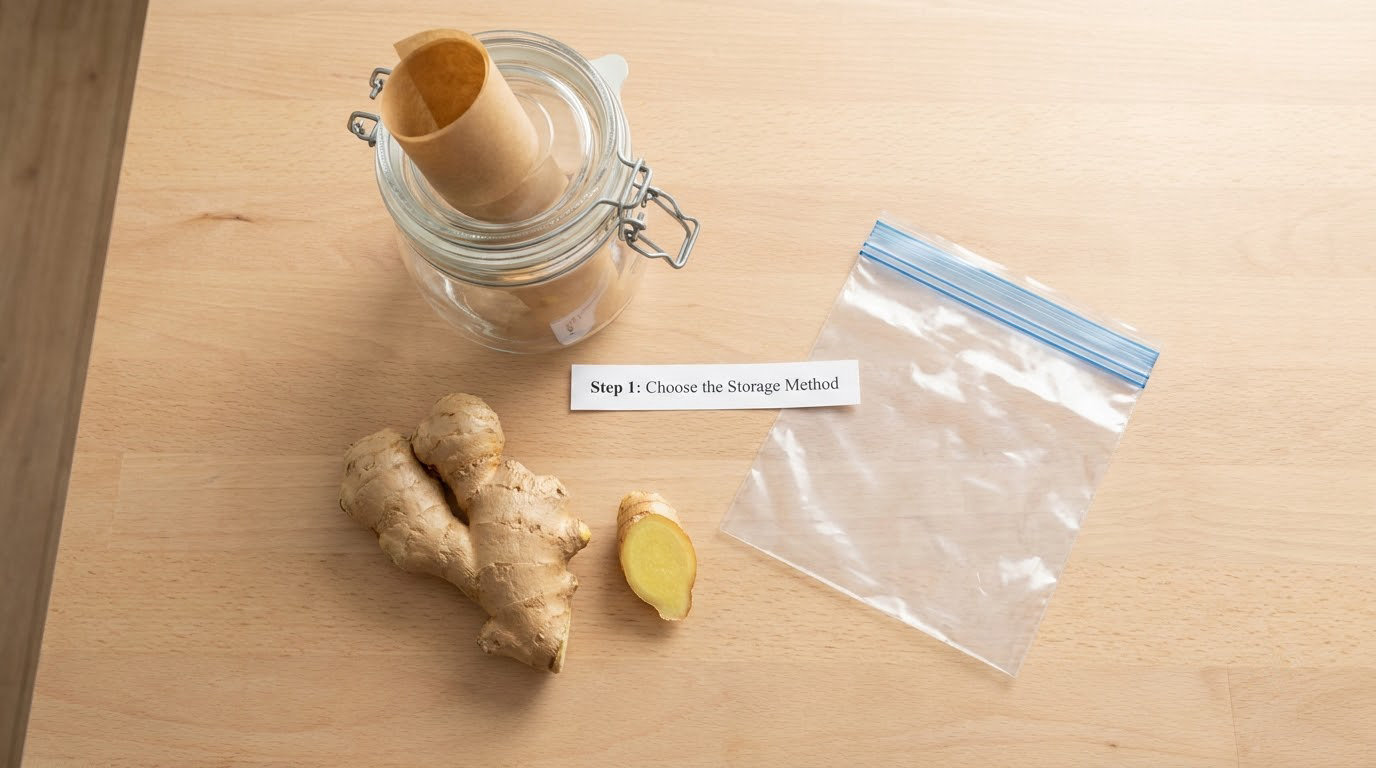
Match the method to the clock. Ginger you will use within a month belongs in the refrigerator. Ginger you bought in quantity belongs in the freezer. Ginger you want on hand for months without a freezer comes next, and the fourth option covers no fridge and no freezer at all.
| Method | Prep | Container | How long it lasts | Best for |
|---|---|---|---|---|
| Refrigerator | Whole, unpeeled | Sealed bag, air squeezed out | 2 to 4 weeks | Weekly cooking, a small amount at a time |
| Freezer | Whole, unpeeled | Airtight freezer bag | Up to 6 months | Grating and slicing straight from frozen |
| Freezer | Chopped, sliced or grated | Bag laid flat, or a jar | 6 to 12 months | Ready-to-cook portions, stir-fries |
| Freezer | Paste, no added water | Frozen portions in a bag | 6 to 12 months | Tea, marinades, curries, one spoon at a time |
| Fridge or pantry | Peeled and sliced | Covered in sherry, vodka, white wine or syrup | A year or more | Keeping a ready jar open in the kitchen |
| Cool dark pantry | Whole, unpeeled | Dry sand, dry soil, or wrapped in paper | 2 to 3 months | No refrigerator, or a cool unused corner |
The refrigerator method is the one most people try first, and it works fine as long as the bag is genuinely airtight. The crisper is the right drawer: it runs a little cooler and a little more humid than the rest of the fridge, which is exactly what a root wants.
The freezer method is the one most people underestimate. A whole unpeeled hand of ginger in a sealed bag keeps its flavor for months, and you can grate or shave it straight from hard. It is the method to reach for whenever the answer to “how will I use all of this” is not clear.
The submersion method, discussed at length on the Discuss Cooking fresh ginger thread, is the outlier that works far better than people expect. Ginger packed into a jar and covered with sherry, vodka or white wine keeps for a year, and in that thread several cooks describe the same jar going for years, topped up as the ginger and the liquid run down.
And if you have no fridge and no freezer, a cool dark pantry still works. More on that in Step 3.
Step 2: Prepare the Ginger
Preparation is short, and the most important decision is what you leave on. The skin is the root’s outer layer of protection, and cutting it off before storing exposes the moist flesh underneath, which is where mold and drying show up first.
Inspect the ginger first. Look for soft spots, sunken areas, split ends with grey growth, or anything that feels slimy. Cut damaged sections away rather than storing the whole hand and hoping; one bad patch spreads to the rest of the root in a sealed bag.
Do not wash the ginger. This is the mistake behind most fridge mold, and a search of the r/vegan storage thread makes it clear: cooks who rinse first are the ones who find fuzzy white edges a week later. Washing leaves a film of water on the skin, and sealed into a bag that film becomes the perfect place for mold to start.
If a piece of ginger is visibly dirty, wipe it with a dry cloth or brush off the dry soil. If it truly needs rinsing, dry it completely before it goes into anything.
Leave the skin on for whole roots, frozen or refrigerated. If you are cutting it, peel or scrub just that piece, then pat the cut faces dry with a paper towel before they go into a container. Trapped surface moisture is the whole reason chopped ginger spoils faster than a whole hand.
Step 3: Store It for Best Freshness
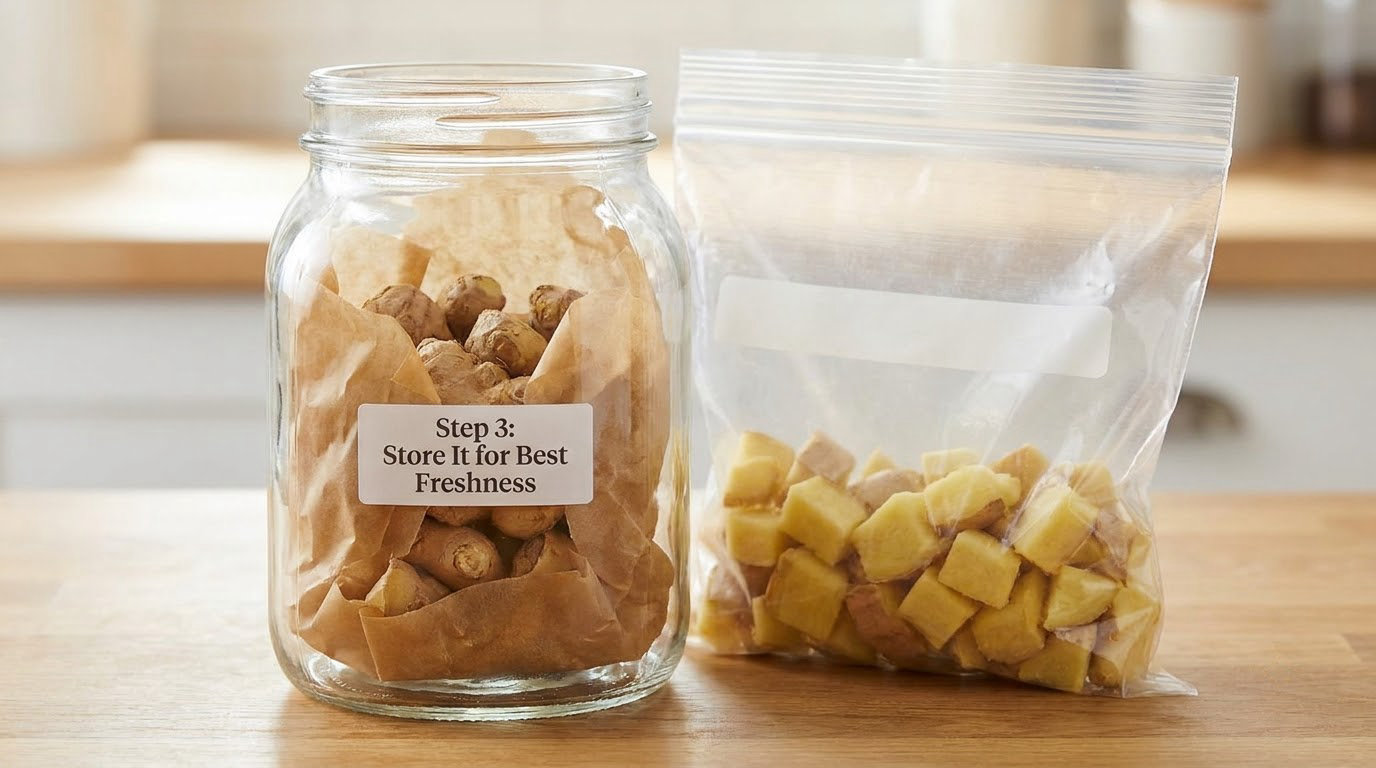
Whole root in the refrigerator. Put the unpeeled, unwashed hand in a resealable bag, press out the extra air, seal it, and put it in the crisper. For a little extra insurance, wrap the root in a dry paper towel first, inside the bag. The towel catches condensation; change it if it feels damp. Expect two to four weeks, longer for a firm, heavy hand with thick skin.
There is a second fridge method that circulates widely and is worth naming so you can see its limit. Wrapping ginger in a paper towel, sealing it in a bag and leaving it in the crisper for weeks is a reasonable method for a week or two. It is not a month-plus method. The towel slowly saturates, the trapped moisture rises, and ginger that was supposed to last ends up soft and grey at the cut end.
Whole root in the freezer. Bag the unpeeled hand, squeeze the air out, seal, label with the date, and lay it flat in the freezer. Do not blanch it and do not peel it. Frozen for up to six months, it grates on a microplane straight from hard, which is the fastest way to get ginger into a dish when the recipe called for fresh. Slice with a sharp knife or shave with a peeler while it is still firm.
The texture changes after freezing, and it is worth knowing where that matters. Ginger comes out softer and slightly more fibrous, which is invisible in a stir-fry, curry or soup and obvious in something like a garnish or a raw salad. It also has one small perk: after thawing, the skin rubs off with a fingernail.
Chopped, sliced or grated ginger. Cut on a wooden board so the blade does not bruise the edges, then spread the pieces in a single layer on parchment, freeze for 30 minutes to stop them clumping, and tip them into a freezer bag. Freeze them flat rather than in a clump, then stand the bag upright so you can break pieces off as you need them. For grated ginger, work it into a jar with a little oil or water to protect the surface from freezer burn.
Ginger paste portions. Peel, grate finely, and blend to a paste without adding water. Drop half-teaspoon blobs onto a flat plate, freeze until solid, then pop them off into a bag. Half a teaspoon is roughly one serving, so the portioning does the thinking for you. Freezing paste straight into a jar is the version to avoid: the next time you need a spoonful, you will be chiselling at it with a knife.
Peeled or cut ginger in a jar. Cover the pieces completely with sherry, vodka, white wine, or an equal mix of vinegar and sugar boiled into a syrup. Keep the jar in the refrigerator and use from it as you cook, topping the liquid back up as the level drops. A vinegar syrup is the answer for anyone avoiding alcohol, which came up as its own question on Cooking Stack Exchange.
No fridge, no freezer. Ginger is a rhizome that grows underground, and dry, dark, ventilated conditions mimic that better than a plastic bag ever does. Set the unpeeled roots in a box of dry sand or dry soil, bury them partway, and keep the box in the coolest, darkest corner of the house. Check it monthly. Expect two to three months. Alternatively, wrap each root in newspaper or plain paper and store it somewhere cool and out of direct light. This method is the one most often missing from ginger storage guides, and it works best in a genuinely cool climate or a cellar, not a warm suburban kitchen.
Whichever method you use, label the bag or jar with the date. Frozen ginger looks the same next month as it does next year, and knowing when it went in is how you keep the six-month figure honest.
Step 4: Check It Before Using
Fresh ginger is firm, heavy for its size, and the skin is smooth with a little elasticity when you press it. Cut surfaces are bright, moist and pale yellow with no discoloration.
Dried out ginger looks different from spoiled ginger, and telling them apart is the single most useful thing here. Dried out means the skin has gone wrinkly and papery, the root has lost weight, and the cut face looks pale and dull. It is dehydrated, not dangerous. Grate or slice off the dry outer layer and the firm core underneath is usually perfectly usable. It will taste a little milder, so use slightly more.
Mold is different. Look for fuzzy white, green, grey or black growth, especially in the crevices of the knuckles and at cut ends, plus any slime, sour smell or dark wet patches. Mold means discard the whole root. Cutting the affected end off and using the rest is not safe, because the hyphae run well past what you can see on a root with this much surface area and no way to wash it clean.
Slimy texture, a fermented or off smell, or a hollow, collapsed root also means it goes in the bin.
When the signals conflict, throw it out. Ginger is cheap, and food poisoning is not.
Common Mistakes
Washing before storing. Water left on the skin, sealed into a bag, is the most common cause of ginger mold in a refrigerator. Store it unwashed and rinse only at the moment you use it.
Sealing damp or wet ginger into anything. Chopped pieces and peeled chunks should be patted dry before they go into a jar, a bag, or an ice cube tray. Surface moisture plus an airtight seal is a mold incubator.
Storing it beside strong-smelling food. Ginger is porous and picks up odors. Keep it away from raw onion, garlic, raw meat and strong cheeses, especially in a sealed bag where the odors have nowhere to go.
Leaving peeled or cut ginger exposed. Once the skin is off, the root loses moisture quickly. Peeled ginger belongs in the freezer or under alcohol or syrup, not sitting in the crisper. My rule: skin on for the fridge, skin off means freeze.
Freezing one solid block. A frozen brick of ginger is all-or-nothing, and thawing it to get a tablespoon ruins the rest. Freeze pieces flat, or freeze paste in individual portions, so you only ever break off what the recipe needs.
Assuming room temperature is always safe. A cool, dark pantry or cellar can keep whole ginger for months, but a warm kitchen counter will dry it out and invite mold in a couple of weeks. If your house runs warm, treat ambient storage as a short-term option and move it to the fridge.
One more that comes up constantly: storing ginger for weeks in a paper-towel wrap in the crisper. It works for a short window, then the towel becomes the problem. If you want the fridge to carry you past about two weeks, freeze instead.
Frequently Asked Questions
Can I store fresh ginger at room temperature?
Yes, if your room is genuinely cool and the ginger is whole and unpeeled. A dark pantry, cellar or unheated corner keeps whole roots usable for two to three months, because ginger grows underground in cool, dry, ventilated conditions. A warm kitchen counter is a different story, and ginger there dries out and picks up mold within a couple of weeks. Peeled or cut ginger should not be left at room temperature at all, since it loses moisture fast without its skin. If in doubt, move it to the refrigerator or the freezer.
Should I wash ginger before storing it?
No. Washing before storing is the most common cause of mold on refrigerated ginger, because the water left on the skin gets sealed into the bag and gives mold a wet surface to start on. Brush off dry soil with a dry cloth or paper towel instead, and rinse the ginger only at the moment you use it. If a piece is dirty enough that it needs water, dry it thoroughly before storing. For peeled or chopped ginger that must be rinsed, pat the cut surfaces completely dry first.
How long does peeled ginger last in the refrigerator?
Peeled ginger lasts roughly one to two weeks in the refrigerator, much shorter than a whole unpeeled root at two to four weeks. Without its skin, the exposed flesh loses moisture quickly and picks up condensation, so it tends to dry out, darken at the edges or turn slimy well before a whole root would. For longer storage, freeze peeled pieces flat in a bag for six to twelve months, or cover them completely with sherry, vodka, white wine or a vinegar sugar syrup, which keeps them usable for a year or more.
Can I freeze fresh ginger without blanching it first?
Yes, and blanching is unnecessary. Ginger is not a green vegetable, and there is no need to blanch or steam it before freezing. Put whole unpeeled roots straight into a sealed freezer bag, or freeze chopped pieces flat on parchment before bagging them. Neither needs blanching. Garlic and other alliums benefit from a brief blanch, which is likely where the habit comes from, but ginger stores better raw and frozen, and blanching softens the flavor you are trying to keep. Use the frozen ginger within about six months for the best flavor.
How can I tell if fresh ginger has gone bad?
Mold is the signal to discard: fuzzy white, green, grey or black growth in the crevices or at cut ends, any slime, a sour or fermented smell, or dark wet patches. Discard the entire root rather than cutting the affected end off, because mold runs past what is visible. Shriveling, wrinkly skin and a dull, pale cut face are a different problem. That ginger has simply dried out, and the firm core inside is still good, just milder. When the signals conflict, throw it out.
Start with the method that matches when you plan to eat the ginger. If a bag from the grocery store is sitting in front of you and there is no plan, leave the skin on, squeeze the air out of a freezer bag, and freeze it. That is the whole trick: skin on, unwashed, airtight, and cold. Check it every month or so, and you will have fresh ginger for tea, stir-fries and curries without buying another bag every two weeks.