
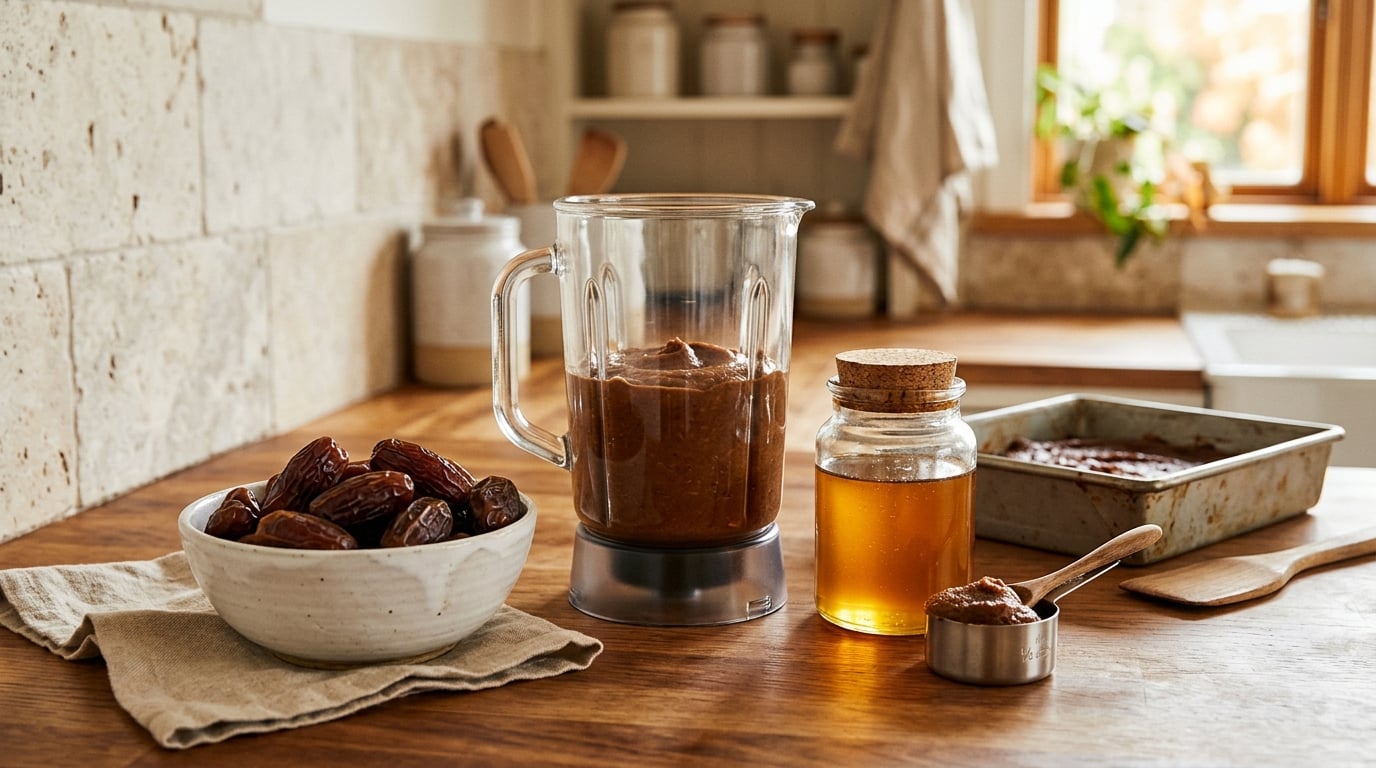
To use dates as a sweetener, you blend softened pitted dates into a paste, simmer them into a syrup, or dry and grind them into a sugar, then swap that form for the sugar your recipe calls for. The reliable starting point is roughly 1 cup chopped dates for every 1 cup of sugar, with about a quarter cup less liquid in the recipe. It takes about 15 minutes of work for the paste method, and the tricky part is not the blending, it is adjusting the moisture.
I kept a bowl of Medjool dates soaking while I wrote this, and the paste has become the one I reach for almost every week. Smoothies, oatmeal, brownies, a vinaigrette for a roasted carrot dish. The syrup takes longer and I make it in batches. The powder sits in a jar in the cupboard until I remember it is there.
Table of Contents
What You Need
Everything for the paste method fits in one small bowl, which is why it is the easiest place to start.
- Dates: fresh or dried, pitted, soft enough to bend without cracking. Medjool and Deglet Noor both work. Barhi is worth seeking out if your shop carries it, because it is soft and creamy.
- Water: for soaking, and a small splash for blending. Hot water softens faster, but any water is better than none.
- The original sweetener: a measured amount of whatever the recipe already calls for, so you can taste side by side rather than guess.
- A blender or food processor: a high-speed blender gives the smoothest paste, but a food processor works if you give it more time. A standard blender can leave grit behind.
- A small saucepan: for the syrup method.
- An oven or dehydrator: only if you want date sugar.
Check the dates before you start. Fresh dates are plump, glossy and moist. Dried dates are wrinkled, firmer and far sweeter per bite, which matters for flavor as much as for texture. A dried date that snaps when you bend it wants a longer soak.
If your dates have sat in an open bowl or bag rather than sealed packaging, give them a rinse and dry them thoroughly. Loose dates pick up dust and kitchen smells faster than anything else in the fruit bowl.
Step-by-Step: How to Use Dates as a Sweetener
The method depends on what you are making. Batters and doughs want dates that have been softened in water. Drinks and sauces want a thin syrup. No-bake mixtures and bars are happy with chopped dates straight from the knife. Pick the version that matches the recipe and you will rarely need more than a taste test at the end.
1. Choose and Prepare the Dates
Medjool dates are large, soft and very sweet, with a caramel depth that reads well in brownies and coffee. Deglet Noor dates are smaller, drier and less sweet, so they are the better pick when you want the date flavor to sit quietly behind, say, a cinnamon or a strong coffee.
Pit them by slicing lengthwise and pulling the stone out, then check for a second one. Around one in ten dates has a second seed, and a stray stone in a smoothie is a bad surprise. Weigh the pitted dates rather than counting them, because sizes vary more than most people expect.
Use fresh dates for smoothies, sauces and anything you are serving the same day. Use dried dates for baking, where you want concentrated sweetness without extra water in the batter. A good weighing habit is one kitchen scale for everything: a quarter cup of chopped dates, one cup of sugar, one cup of your other liquid.
2. Soak Dates for Batters and Doughs
Cover the chopped dates with hot water and wait 10 to 20 minutes. They will look plumper and feel softer when you drain them. Add them to the batter straight away, still damp.
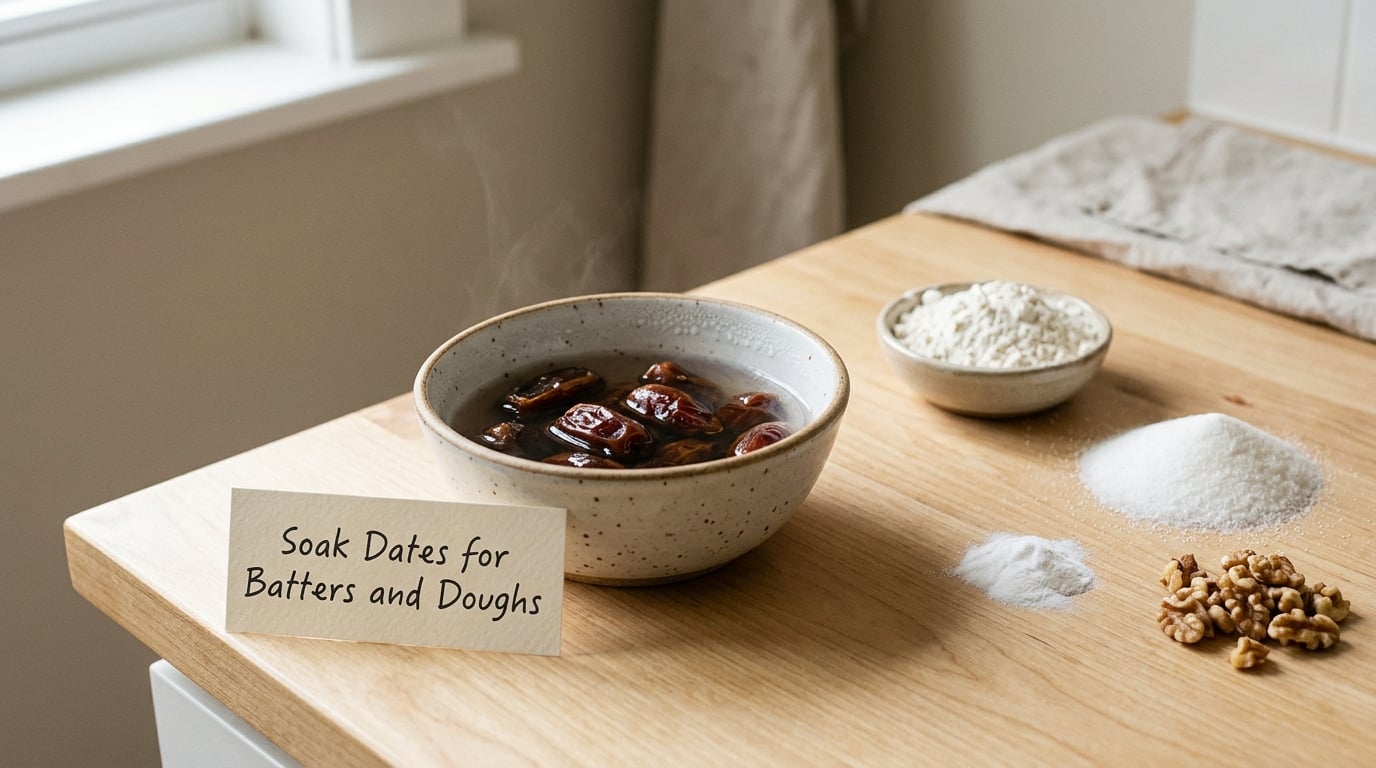
Soaking is worth it for muffins, quick breads and cookies because it stops the chopped dates from pulling moisture out of the dough as it bakes, which is what gives you hard little date bricks instead of chewy ones. Do not throw the soaking water away: use it as part of the recipe’s liquid and cut the rest.
3. Blend Dates Into a Paste Without Sugar
Put 1 cup pitted dates and about a quarter cup of warm water in a blender. Start on low, then work up to high speed for 60 to 90 seconds. Scrape down the sides once, because the paste likes to hide there.
Stop while it is still thick. A paste that pours like cream is easier to handle in batters; too thin and it will throw off the liquid ratio in whatever you are making. Add water a teaspoon at a time if it fights the blades, and add a teaspoon more of date if the paste is grainy rather than smooth.
This is the workhorse form. It works in oatmeal, overnight oats, energy balls, smoothies, ice cream, and about half of the brownies I bake. Kitchen forums like r/PlantBasedDiet treat blended paste as the default entry point, and the reason is speed rather than virtue, but speed counts when it is 8pm and you forgot dessert.
4. Use a Date Syrup in Drinks and Sauces
Blend 1 cup pitted dates with 1 cup water, then strain through a fine mesh sieve if you want a clear liquid. Simmer the strained liquid for 15 to 30 minutes until it coats the back of a spoon, and cool it down.
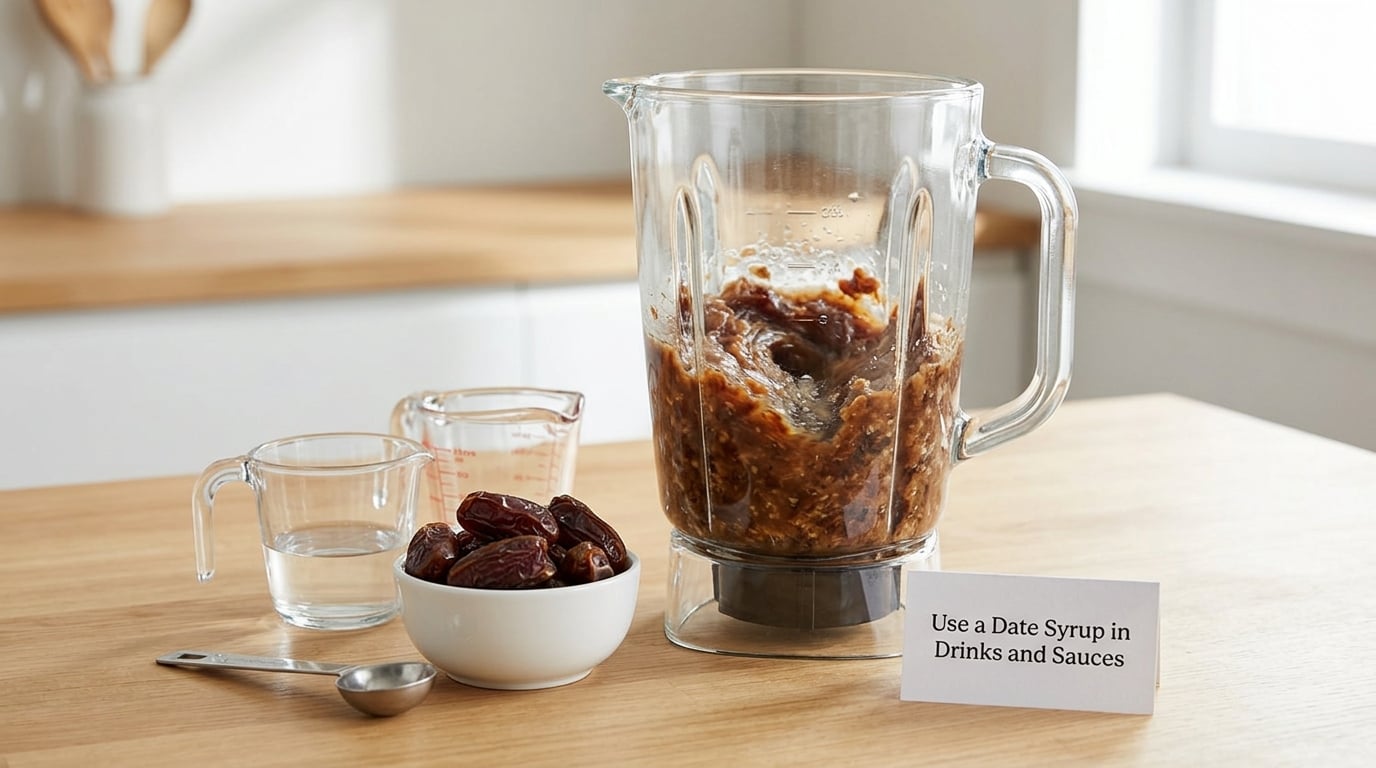
Date syrup is thinner than paste and more concentrated than the soaking water, which makes it the right choice for coffee, chai, smoothies and oatmeal. It also works well as the sweet element in a salad dressing, a glaze for roasted vegetables or chicken, and a pan sauce. People also call it date molasses, date honey or dibs.
Homemade syrup keeps about three to four weeks in the fridge, and six months in the freezer. Pour it into a jar with a date kept in it, because the label always falls off. Portion the paste in an ice cube tray the same way: about two tablespoons per cube, and four cubes stand in for half a cup of sugar.
5. Swap Dates Into Baked Goods
Date paste works best in dense, moist bakes: brownies, blondies, banana bread, muffins, oatmeal cookies and quick breads. Replace the sugar cup for cup with paste, then cut about a quarter cup of the recipe’s other liquid, since the fruit brings its own water along.
If the recipe already uses honey, maple syrup or corn syrup, count that too. Cutting two sweeteners at once is how you end up with something flat and gummy. Do a partial swap first, maybe half the sugar, and taste the batter before you commit to a full conversion.
Leave the recipes where sugar does a structural job. Meringues, angel food cake and thin crisp cookies all depend on sugar staying dry, and date fibre holds moisture exactly where those bakes need it free. The result is a heavy, chewy cookie that never crisps.
6. Add Dates Directly to No-Bake Recipes
Chop or pulse dates and fold them straight in for energy balls, granola bars, overnight oats and chilled desserts. A useful starting ratio is roughly half dates to half everything else by weight, whether the other half is oats, nuts, seeds or nut butter.
If the mix sticks to your hands, add a spoon more of the dry ingredient. If it crumbles instead of holding, add a spoon more nut butter or a splash of syrup. To stop chopped dates clumping in a dry mix, toss them with a spoonful of the recipe’s flour first, which coats each piece.
Common Mistakes
- Too sweet: you went past the sugar point and the date flavor piles on top. Use drier Deglet Noor dates, or drop the sugar by a quarter cup and add a pinch of salt, a splash of vanilla or a little citrus zest.
- Gritty paste: not enough blending or not enough water. Give the mixture another 30 seconds and scrape the sides, or press the finished paste through a fine mesh sieve.
- Dry cake or dense crumb: the opposite problem. Dates are hygroscopic, so they hold onto moisture and keep a bake from drying out, but they will not create lift. Add a little liquid, or accept a heavier texture that suits brownies better than sponge cakes.
- Soggy or gummy batter: too much liquid and too much fruit. Cut the recipe’s water or milk, and remember that a quarter cup of soak liquid replaces part of it rather than adding to it.
- Pale crust: sugar browns through the Maillard reaction, and date paste browns more slowly. If the colour matters, brush the top with a little more syrup partway through the bake.
- Poorly set no-bake bars: the mixture was too wet to hold. Press it down firmly in the pan, and give it a couple of hours in the fridge before cutting.
Weigh your dates every time, and keep one written ratio you trust instead of improvising a new one each bake. Most bakers who give up on dates overcook the moisture problem, not the flavor.
One honest caveat. Dates are roughly two-thirds sugar by weight, with fiber and minerals attached, and a single large Medjool carries around 16g of sugar. That is a useful swap for refined sugar, and it is not a low-sugar food. Anyone managing blood sugar should talk through portions with a registered dietitian or their clinician.
Frequently Asked Questions
How many dates replace a cup of sugar?
About 1 cup of pitted, chopped dates replaces 1 cup of sugar in most recipes, blended into a paste or soaked until soft. Dates also carry their own water, so cut roughly a quarter cup from the recipe’s other liquid. For a syrup, use between one-third and two-thirds cup per cup of sugar, then let the liquid reduce. Bake a small test batch before converting a full recipe.
Do I need to remove the pits before blending dates?
Yes, always. A high-speed blender will grind a pit into grit you cannot strain out, and roughly one date in ten carries a second smaller stone. Slice each date lengthwise, pull the seed out, and check the cavity before the dates go near the blades. Store pitted dates in an airtight container so they do not dry out.
How do I make date sugar at home?
Pit the dates, spread them on a tray, and dehydrate or bake them at 140F until fully dry and leathery, which takes several hours. Cool them, then grind them in a food processor until fine, pulsing and scraping down often. Sift through a fine mesh sieve to break up any lumps. One cup of packed date sugar equals about 1 cup of sugar, and it is the driest of the three forms.
Which type of date works best for date paste?
Medjool dates give the smoothest paste and the deepest caramel flavor, because their soft flesh breaks down with very little water. Deglet Noor dates are drier and less sweet, so they suit recipes where you want less date flavor and a shorter ingredient list. Barhi dates fall somewhere between the two and are often the cheapest option if your shop stocks them.
Is date paste better for you than sugar?
Date paste keeps the fiber, potassium and magnesium that processing strips from refined sugar, and it tastes more like caramel than plain sweetness. But it is still a concentrated sugar, with roughly two-thirds of its weight as sugar, so portion size matters more than the swap itself. If you are managing blood sugar, ask a registered dietitian or your clinician how much fits your plan.
Conclusion
Soak dates when they are going into a batter, blend them into a thick paste for oatmeal, no-bake bars and brownies, and simmer a batch of syrup for coffee, dressings and glazes. Start with one measured swap, taste it, then adjust the liquid before converting a whole recipe.
Published October 2026.