
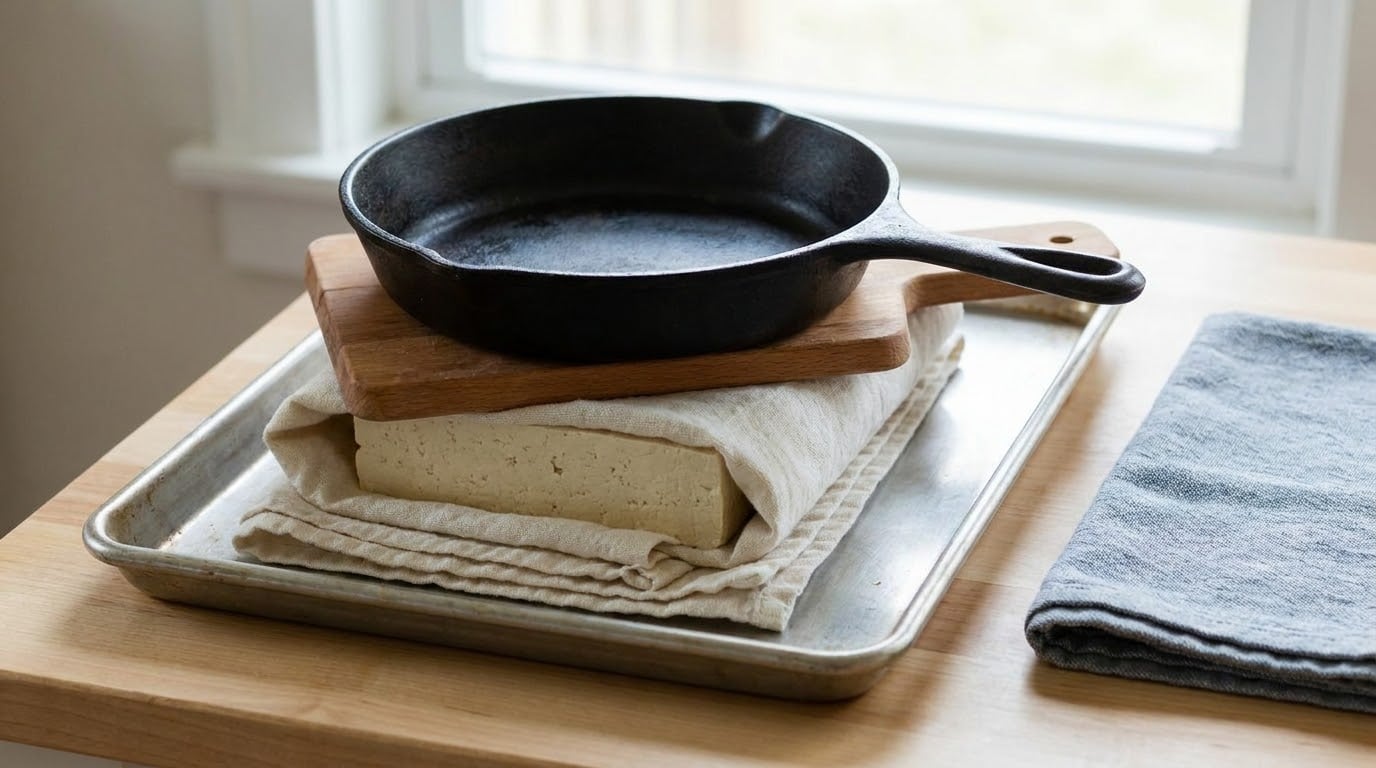
Learning how to press tofu without a tofu press takes nothing more than a clean towel, a rimmed plate, and something heavy and flat. Wrap the block, stack a cast-iron skillet on top, and leave it for 20 to 30 minutes. That is the whole method, and it costs nothing.
Tofu arrives packed in water, and that water is what keeps it from browning. Press it and the block firms up, holds its shape in a hot pan, drinks up a marinade instead of diluting it, and turns brown and crisp rather than pale and spongy. Most of the moisture comes out in the first half hour, so a longer press gets you diminishing returns.
Do you have to do it every time? No. If you are making a smooth sauce, a tofu scramble, or anything where the block gets mashed or blended anyway, a thorough pat-down is plenty. Pressing earns its keep for pan-frying, baking, grilling, and deep-frying.
Table of Contents
What You Need
Every item here is something already in your kitchen.
- The tofu. Firm or extra-firm. Silken and soft tofu do not need pressing and do not take it well.
- A clean kitchen towel or a stack of paper towels, roughly large enough to wrap the whole block.
- A rimmed plate or a rimmed baking sheet so the water that comes out has somewhere to go. A flat dinner plate works; a cutting board with no rim sends a puddle across your counter.
- One flat, heavy weight. A cast-iron skillet is the best of them, but a small cutting board, a stack of hardback cookbooks, or two or three large cans of beans laid on their sides all work. The weight needs to sit flat and cover most of the block.
- Time. 20 to 30 minutes for everyday cooking, up to 60 for a very firm block, or overnight in the refrigerator for the firmest result of all.
Two optional tools make it tidier. A second rimmed sheet or a shallow bowl under the plate catches anything that seeps past the towel, and a pair of hands and a clean damp towel are all you need for cleanup.
Step-by-Step: How to Press Tofu Without a Tofu Press
How to Choose the Right Tofu
Extra-firm tofu is the best candidate. It has the lowest water content of the firm varieties, so most of what comes out is packaging water rather than something the tofu needs. Firm tofu works well too and often improves more visibly.
Silken and soft tofu are a different food. They are coagulated with agar or nigari and are meant to stay delicate, so pressing them leaves you with something grainy and crumbly. Blot the surface with a paper towel, use it in the dish, and move on. Medium tofu sits somewhere in the middle: press it if you want texture, skip it if you are blending it into a sauce.
How to Press Tofu Without a Press: Wrap and Set Up
Open the tub and pour off the liquid. Slice the block in half horizontally, like closing a book, so each slab is about an inch thick and presses faster. Lay two sheets of paper towel or a folded kitchen towel on a rimmed plate, set one tofu slab on top, cover with two more sheets, and add the second slab.
The double layer matters. Paper towels sitting directly against the tofu soak up surface moisture quickly, while the outer towel keeps the whole stack from falling apart when you put a weight on it.
Add Weight and Let the Tofu Press
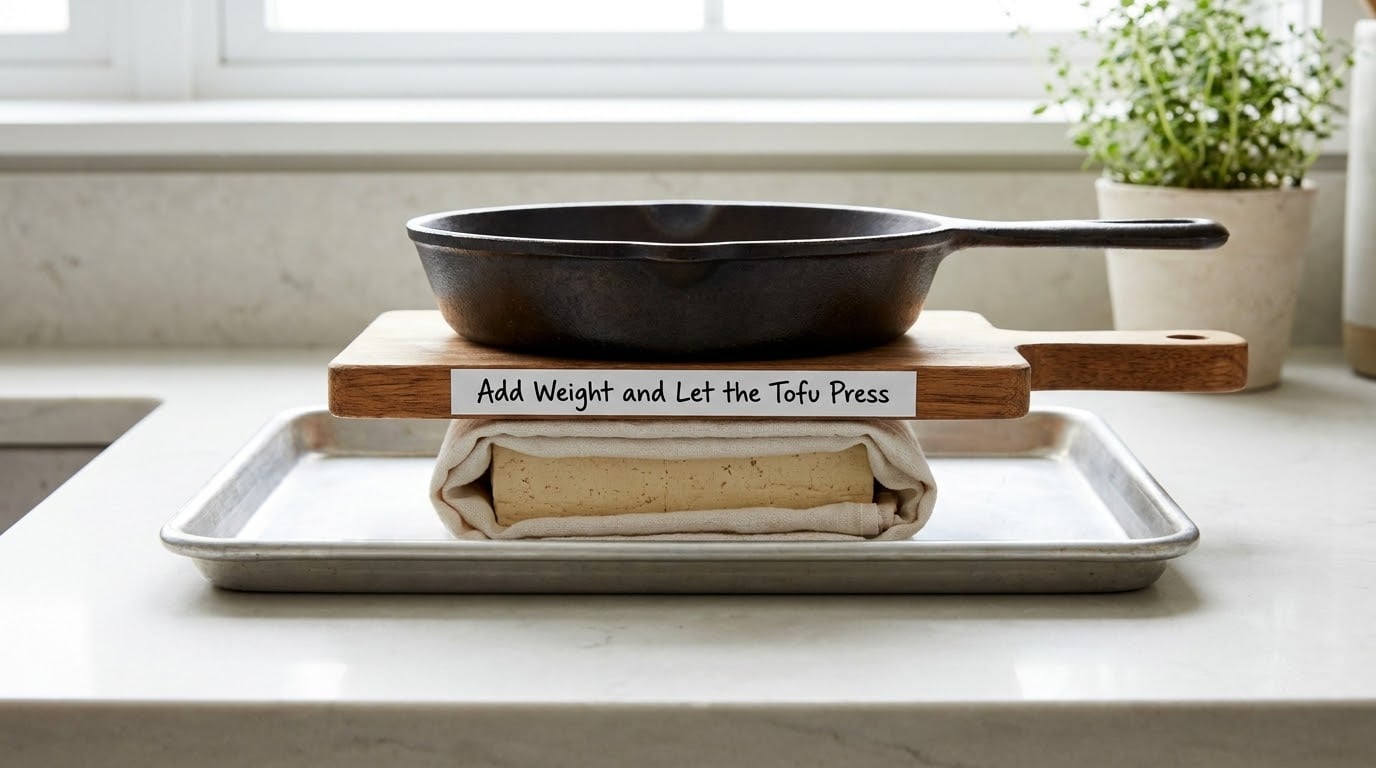
Slide the whole stack under a rimmed baking sheet or a second plate to stop it from tipping, then set your weight on top. A cast-iron skillet gives the most even pressure. Canned goods work, but lay them on their sides so the weight is flat, and keep anything tall and wobbly off the top. A hardcover book is steadier than a paperback.
Pressing for 20 to 30 minutes gives you tofu that is noticeably firmer and noticeably drier. Give it 60 minutes if you are frying, and consider an overnight press in the refrigerator if you are baking or frying at high heat for a long time.
One practical note: if you are pressing longer than an hour, put the plate in the refrigerator rather than leaving it on the counter. Cool, covered, refrigerated food is the safe way to hold it for hours, and cold tofu also comes out with a cleaner bite.
Check the Texture and Use the Tofu
Done tofu looks slightly compressed, matte instead of wet, and about a quarter smaller than it did out of the tub. There will be a visible damp ring on the towel. Press it with a finger and the surface dents like firm tofu rather than like a sponge. If a puddle is spreading under the block after 30 minutes, it needs more time or a heavier weight.
From there it behaves normally. Pan-fry in a thin layer of oil over medium-high heat, coat in cornstarch or flour first if you want a serious crust, and leave the pieces alone for a few minutes so they can brown before you move them. Bake at 425°F, air-fry, or drop it into a stir-fry the same way you would any protein.
Pressed tofu keeps a few days sealed in the refrigerator. If you only pressed half the block, press the other half as soon as you unwrap it so it is ready for the next meal.
Common Mistakes
Almost every disappointing batch traces back to one of a handful of small things.
- Too little weight. A single paperback presses almost nothing. Use a skillet, a cutting board, or a stack of hardcovers, and cover most of the block’s surface.
- Not enough time. Ten minutes barely does anything. Thirty is the useful number, and the towel should be visibly damp when you unwrap it.
- Too much time. Pressing overnight at room temperature dries the outside while leaving the center the same, and pressed tofu can turn chalky if it goes too far. Refrigerate it and keep it to a night.
- Wrapping too loosely. A bag of loose paper towels shifts under weight and leaves half the block untouched. Fold the towel flat and wrap it snugly around the block so the pressure lands where you want it.
- Uneven pressure. A round weight on a square block pushes down on the middle and leaves the corners alone. Add a flat plate on top so the force spreads across the whole slab.
- Pressing the wrong tofu. Silken tofu pressed hard crumbles into grains in the pan. Pat it dry and use it soft.
- Water going everywhere. No rim on the plate means a wet counter and a soggy towel. A rimmed baking sheet solves it in one move.
Then match the press to the dish. Light pat-down for scrambled tofu and sauces. Full 30-minute press for stir-fries and baked tofu. Long refrigerated press for anything deep-fried. If you are working with a thin coating like cornstarch, a good pat-down gets you most of the way.
If you want more ideas for the kind of cooking this fits, our guide to adding greens to food without tasting them covers the same no-fuss, high-protein meals, and eating nutrient-dense food without imported powders is a good companion read.
Frequently Asked Questions
How long does tofu need to be pressed for?
For most home cooking, 15 to 30 minutes takes a firm block from wet to pan-ready. Give it the full hour when you are deep-frying or baking at high heat and want the firmest bite. An overnight press in the refrigerator removes more water than any towel method, and it is the one I use before big batches.
What can you use instead of a tofu press?
A cast-iron skillet is the best stand-in because it is heavy and flat. After that, a small cutting board, a rimmed plate used as a second press surface, a stack of hardback cookbooks, or two or three large cans laid on their sides all do the job. Whatever you use should sit flat and cover most of the block.
Do you have to drain silken tofu?
No, and pressing it usually makes things worse. Silken tofu is set soft and high in water on purpose, so heavy pressure turns it grainy and crumbly. Pour off the tub liquid, blot the surface with a paper towel, and cook it gently in soups, sauces, and puddings. Reserve the pressing method for firm and extra-firm tofu.
How long should you microwave tofu for?
Wrap the block in a clean kitchen towel, set it on a microwave-safe plate, and heat it on high for 60 to 90 seconds, checking every 30 seconds. It dries the surface fast, which helps when you forgot to press ahead. The interior stays softer than towel pressing, so give it a short 10-minute press afterward if you want more bite.
How can I bake tofu without pressing it?
Pat the block dry with a clean towel, tear it into rough pieces instead of cutting smooth cubes so more surface is exposed, and coat it in cornstarch or flour before it goes in the oven. Leave space between the pieces so air circulates, and use the fan setting if your oven has one. The starch coat does most of the work.
Is the water in tofu good for you?
The liquid in the tub is mostly water with a little dissolved calcium sulfate or magnesium chloride from the coagulant. Draining it does not take meaningful protein or minerals out of the block, and you lose very little food. If you like it, pour it into soup or a sauce; otherwise let it go down the sink.
Start with 30 minutes of towel pressing under a skillet on a rimmed plate. That is the version of how to press tofu without a tofu press you will end up reusing, and it costs nothing. If you are cooking ahead, press the block overnight in the refrigerator and skip the step entirely on the night you cook.
If you want more from the same kitchen basics, our guide to cooking dried beans without soaking uses the same pantry-first approach.