
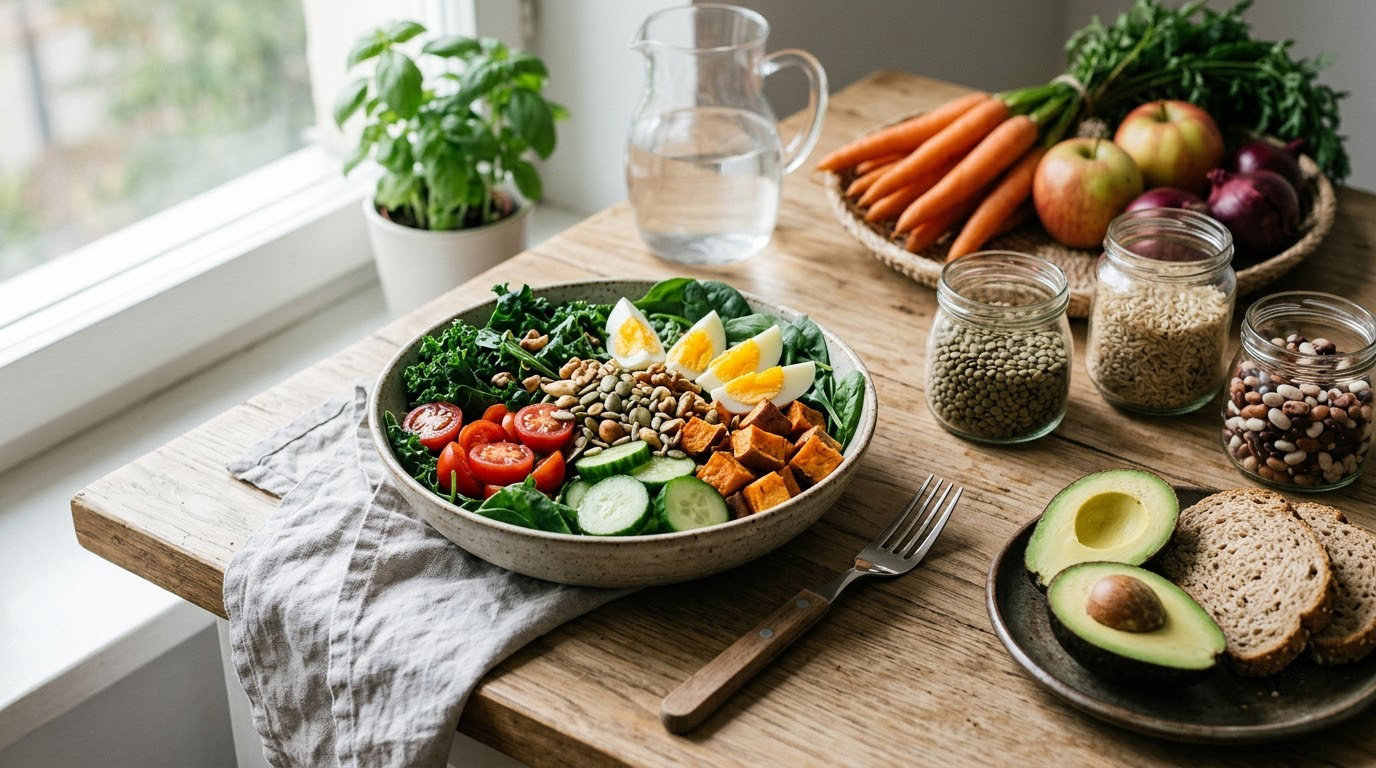
The answer is simpler than the packaging suggests: build meals from a varied grocery basket instead of a shelf of specialty powders. A can of beans, a bag of oats, frozen broccoli, a carton of eggs and a jar of peanut butter will get you further than any imported tub of greens powder, and you can shop for all of it in one trip.
This guide lays out a six-step method for eating nutrient-dense food every day with ordinary whole foods, plus what to do about the nutrients people usually buy powders for. Nothing here needs a blender, a dehydrator or a special shop.
Table of Contents
- What You Need to Eat Nutrient Dense Food Without Buying Imported Powders
- Step-by-Step
- Step 1: How to Eat Nutrient Dense Food Without Buying Imported Powders
- Step 2: Build a Rotation From Everyday Foods
- Step 3: Add More Color Without Special Powders
- Step 4: Include Protein and Healthy Fat at Every Main Meal
- Step 5: Use Flavor, Texture, and Variety for Consistency
- Step 6: Shop and Prepare for the Week
- Common Mistakes
- Frequently Asked Questions
- What are the most affordable nutrient-dense foods I can buy at a regular grocery store?
- Are frozen fruits and vegetables as nutrient-dense as fresh produce?
- How can I get enough protein from whole foods without protein powder?
- Do I have to eat everything raw to follow a whole-food diet?
- Can meal prepping help me avoid expensive specialty health foods?
- Are superfood powders necessary for a healthy diet?
- Conclusion: Start With One Better Plate
What You Need to Eat Nutrient Dense Food Without Buying Imported Powders
You need four food groups on regular rotation, a short list of pantry staples, and about twenty minutes of cooking on a weeknight. That is the whole requirement list.
Food groups to keep rotating
- Complex carbohydrates: oats, brown rice, whole-grain bread, sweet potatoes, corn, whole-wheat pasta.
- Protein: beans, lentils, eggs, plain Greek yogurt, cottage cheese, tofu, chicken, canned sardines or salmon.
- Healthy fat: olive oil, avocado, nuts, seeds, peanut or sunflower seed butter.
- Color: leafy greens, cruciferous vegetables, root vegetables, berries, citrus, tomatoes, fresh herbs.
Pantry staples worth having on hand
Dried or canned beans and lentils, rolled oats, brown rice, canned tomatoes, plain yogurt, eggs, frozen vegetables, frozen fruit, nuts or seeds, olive oil, canned fish, and a few spices you actually like using. A dozen eggs in the fridge and two cans of beans in the cupboard turn a bad week into six decent meals.
Optional equipment, none of it required
A sheet pan, a pot with a lid, a knife and a cutting board cover ninety percent of the method here. A blender is handy for sauces and smoothies but nothing in the six steps depends on one, and a food processor only earns its counter space if you cook often enough to notice the difference.
Basic preparation tools
A colander for draining beans, a can opener, measuring cups, and containers that stack in the fridge. If you like to keep things tidy, one sheet pan and one wide pot do more for you than any gadget marketed as a nutrient booster.
Step-by-Step
Step 1: How to Eat Nutrient Dense Food Without Buying Imported Powders
Build every main meal from four components: one complex carbohydrate, one protein, one healthy fat and one or two colorful vegetables or fruits. If a plate has all four, it is dense enough to keep you satisfied for hours.
| Component | Everyday options | What it contributes |
|---|---|---|
| Complex carbohydrate | Oats, sweet potato, brown rice, whole-grain bread, beans | Fiber, steady energy, B vitamins |
| Protein | Eggs, Greek yogurt, beans, lentils, tofu, canned fish, chicken | Satiety, muscle maintenance, amino acids |
| Healthy fat | Olive oil, avocado, nuts, seeds, nut butter | Fat-soluble vitamin absorption, staying full |
| Color | Spinach, kale, broccoli, carrots, berries, oranges, tomatoes, herbs | Vitamin C, vitamin K, folate, carotenoids, polyphenols |
Put the fat on the vegetables. A spoonful of olive oil on roasted broccoli or a drizzle over salad improves absorption of fat-soluble vitamins, and it is the cheapest flavor boost available.
You will know the method worked when a meal leaves you satisfied rather than hunting for something ten minutes later, and when the leftovers still taste good the next day.
Step 2: Build a Rotation From Everyday Foods
The mistake is treating one food as the answer. Nutrient variety comes from rotating ordinary ingredients, so the same can of beans shows up at breakfast, lunch and dinner across a week without ever feeling repetitive.
Breakfasts work from oats with yogurt and fruit, eggs with whatever vegetables are in the crisper, or leftover rice fried in a hot pan with an egg. Lunches can be a bean bowl over rice, a tuna or chickpea salad with a handful of nuts, or yesterday’s roasted vegetables folded into a whole-grain wrap.
Dinners rotate through one-pot bean and vegetable soups, sheet-pan chicken with frozen broccoli, tofu and rice with a quick sauce, or pasta with canned tomatoes, garlic and frozen spinach stirred through at the end. Snacks are the part most people skip, so keep them built the same way: apple slices with peanut butter, yogurt with berries and a spoon of seeds, a handful of nuts, or hummus and crudités.
A rotation also protects you from boredom, which is the real reason people abandon a plan that is nutritionally fine. Six or seven different meal shapes from the same ten ingredients is plenty of variety to keep going for months.
Step 3: Add More Color Without Special Powders
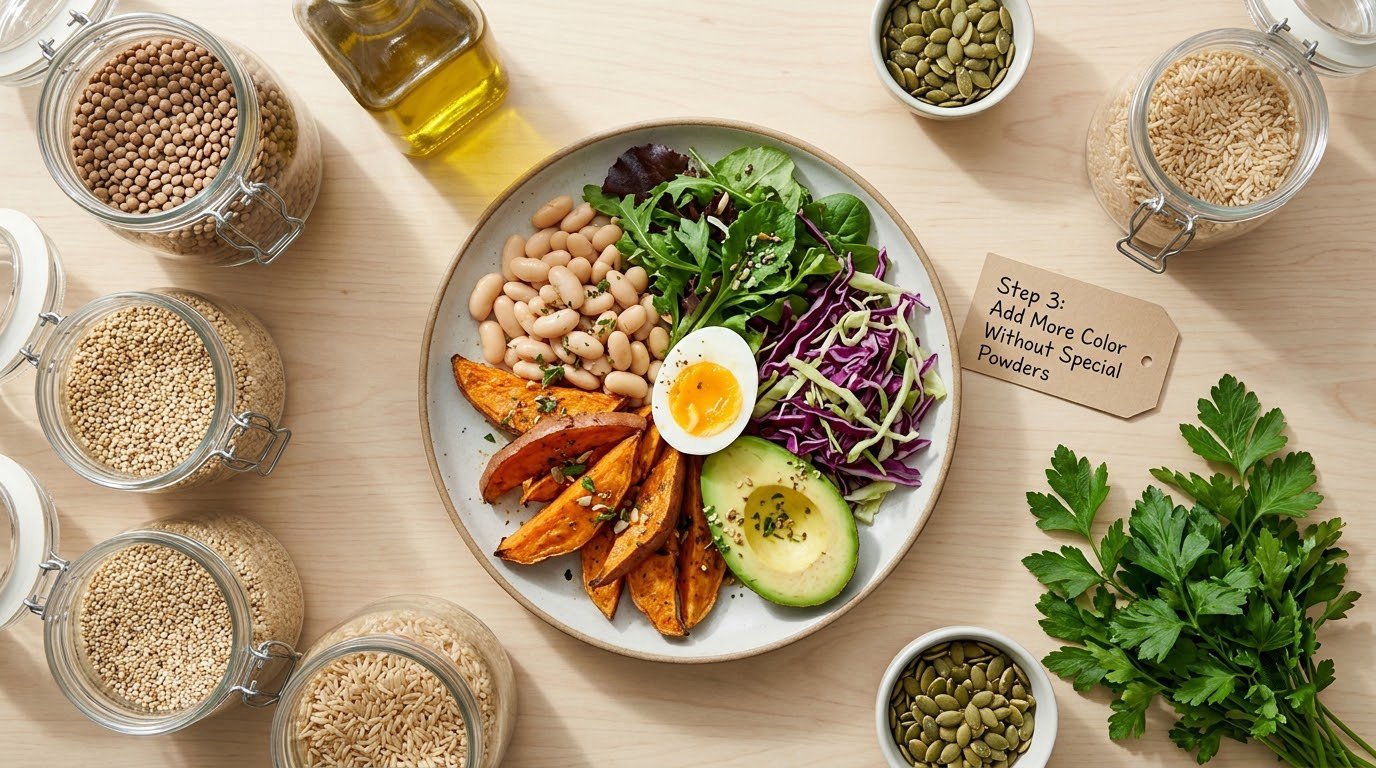
Color on the plate is the quickest read on micronutrient variety, and it costs nothing extra. Aim to eat a few different colors across a day rather than only green.
Frozen produce is the most useful trick here. Vegetables and berries destined for freezing are picked ripe and frozen quickly, so nutrient losses that happen during slow transport on fresh produce are much smaller. Frozen broccoli, peas, spinach, green beans and mixed peppers are usually the same food as fresh, with a longer life in your freezer and less waste going through the bin.
Shop seasonally when you can. Frozen berries in winter, frozen sweet potatoes year-round, fresh greens and herbs whenever the weather allows, and canned tomatoes and beans all count.
Preparation is where most color is lost. Cook vegetables briefly and with little water, save the cooking liquid for soups, and add delicate greens like spinach and cabbage at the very end. Raw is not automatically better here: cooking breaks down plant cell walls, which makes some nutrients easier to absorb, and lightly cooked food is easier to digest and easier to eat enough of.
Flavor combinations make plant variety less of a chore. Cabbage slaw with apple and a sharp dressing, spinach blended into a tomato soup, broccoli roasted with garlic and lemon, carrots with cumin, and a green salad with oranges and toasted walnuts all use the same techniques. If greens are a hard sell, blending them into a sauce hides them completely.
Step 4: Include Protein and Healthy Fat at Every Main Meal
Protein and fat are what turn a plate of vegetables into a meal. Missing them is the most common reason a “healthy” plate leaves you hungry twenty minutes later.
- Beans with rice: a complete pairing, cheap, and a one-pot meal when you cook the rice in the bean liquid.
- Yogurt with oats and fruit: works as breakfast or a snack, and the oats slow the meal down.
- Eggs with vegetables: a fast scramble or a frittata that uses whatever the crisper has left.
- Tofu with grains: pan-fried tofu over rice or quinoa with a soy-ginger sauce.
- Nut or seed butter with whole fruit: apple with peanut butter, banana with sunflower seed butter, pear with a spoonful of almond butter.
Keep portions general rather than chasing a number. Most people do well with a palm-sized serving of protein, a fist-sized serving of carbohydrate, and a thumb-sized serving of fat, adjusted by hunger and activity.
Vegetarians and vegans get protein from beans, lentils, tofu, seitan, eggs if they eat them, and dairy if they do not, and the combination approach matters more than any single food. If you want more ideas, our guide on eating enough protein on a vegetarian diet without powder goes deeper on the daily combinations.
Step 5: Use Flavor, Texture, and Variety for Consistency
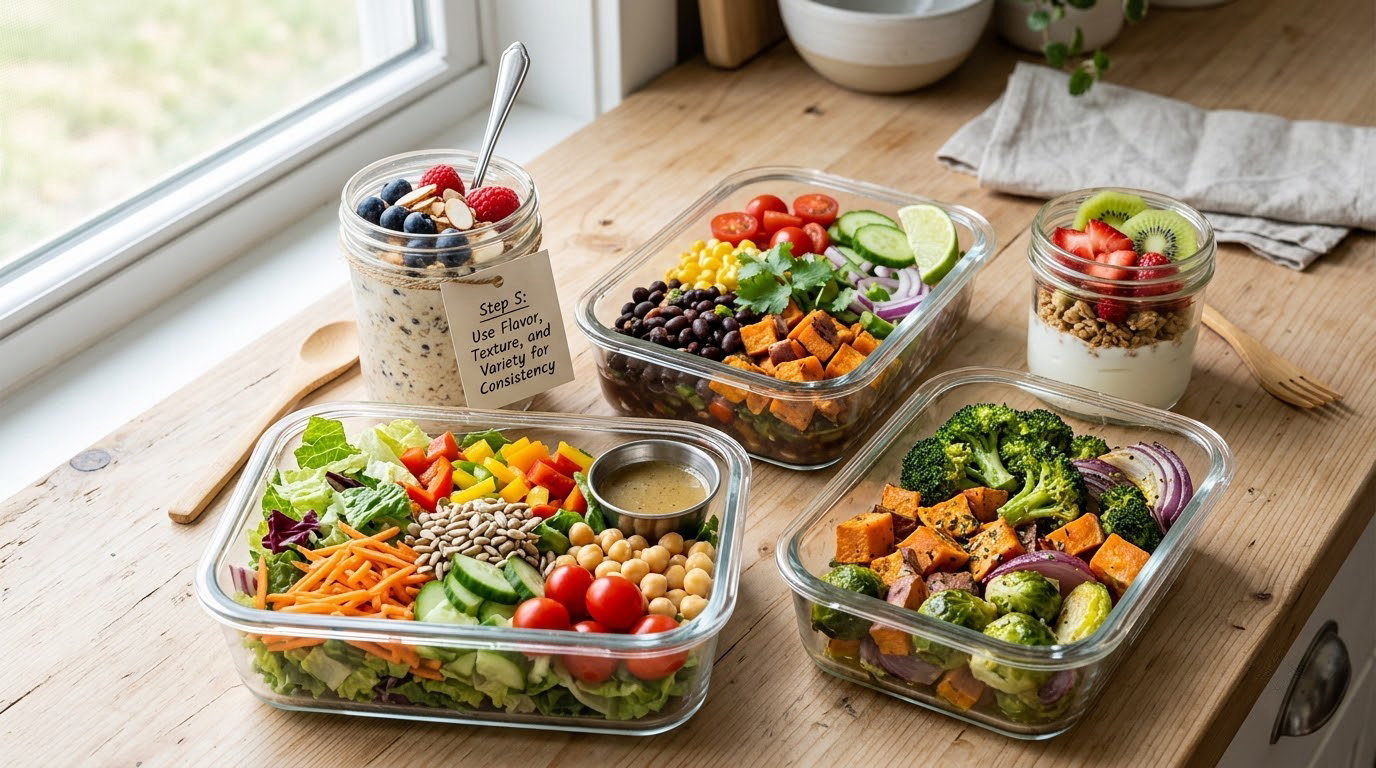
Nutrient-dense food only works if you eat it repeatedly, and repetition depends on taste. Acid, toasted spices, fresh herbs, crispy elements and something fermented will carry a plate much further than salt alone.
- Acid: lemon juice, vinegar, a spoon of yogurt or a pickled onion brightens almost anything.
- Toasting: dry-toast spices and nuts in a pan for a minute before they go in. It changes the flavor more than adding more ingredients.
- Fresh herbs: parsley, cilantro, basil, dill and mint turn leftovers into a different meal.
- Texture contrast: something crisp on something soft, which is what makes a grain bowl satisfying.
- Fermented foods: yogurt, sauerkraut, kimchi or miso add flavor and live cultures to the same bowl.
| Day | Breakfast | Lunch | Dinner |
|---|---|---|---|
| 1 | Overnight oats with yogurt and berries | Bean and rice bowl with salsa and avocado | Egg and vegetable scramble with toast |
| 2 | Eggs with spinach and toast | Lentil soup with a handful of greens | Sheet-pan chicken with frozen broccoli |
| 3 | Greek yogurt with oats, banana and seeds | Chickpea and tuna salad with olive oil | Tofu and vegetable rice bowl |
| 4 | Oatmeal with apple, cinnamon and peanut butter | Roasted vegetable and bean wrap | Pasta with canned tomato, garlic and frozen spinach |
| 5 | Leftover fried rice with an egg | Yogurt, fruit and nut snack box | Sweet potato, black bean and cabbage bowl |
None of that needs an imported ingredient. A mixed seed and nut blend you make at home covers the nut-butter, topping and snack slots in one go, and your own trail mix recipe is the fastest way to build a handful you actually look forward to eating.
Step 6: Shop and Prepare for the Week
Start at the pantry, not the produce section. Check what you already have: rice, oats, canned beans, tomatoes, oil, spices, eggs. Shopping last is where the money and the duplication both go.
Then write a short produce list built around color and what you will actually cook. Buy a mix of fresh and frozen: fresh for greens, herbs and anything you will eat within the week, frozen for everything else. Frozen keeps longer and stops the wilt-and-forget cycle that wastes a bag of spinach.
Choose two components to prepare ahead. Cooking a pot of rice and a batch of roasted vegetables on Sunday turns four dinners into thirty-minute meals. Soft-boiled eggs, a jar of salad dressing and a pot of bean soup scale the same way.
Store what you have made properly. Cooked food goes into the fridge within two hours, and most cooked rice, beans and vegetable dishes keep three to four days. Reheat until steaming all the way through, and reheat sauces and soups on the stove rather than in a microwave if you can, since the microwave leaves cold spots. Cool food in shallow containers so it chills quickly, and freeze anything you will not eat within four days.
When cooking meat or fish, follow the standard safe temperatures: 165 degrees Fahrenheit for poultry, 160 for ground meat, and 145 for whole cuts and fish, with a three-minute rest. If greens or beans are blanched before freezing, cool them quickly and blanch for two to three minutes so they stay bright and soft rather than mushy.
Common Mistakes
- Eating only raw food. Lightly cooked vegetables are easier to digest and some plant nutrients become more available with heat. The fix: cook most of your vegetables, and keep raw salads as one part of the week rather than the whole of it.
- Assuming one food replaces a variety diet. No single ingredient covers every nutrient, and nutrition communities are right to be skeptical of the term superfood. The fix: judge a food by what it delivers across a week, not by one nutrient it happens to be famous for.
- Choosing expensive powders over ordinary food. Most powder claims are a serving of vegetable or grain that you can eat whole, with the fiber intact. The fix: ask what specific nutrient the powder provides, then find the cheapest local food that delivers the same one.
- Neglecting protein or fat. A plate of vegetables and starch alone rarely satisfies. The fix: add beans, eggs, yogurt, tofu or fish, plus a spoon of oil, nuts or avocado, at every main meal.
- Overloading smoothies. A large blended drink can be a hundred calories of fruit with none of the fiber structure that makes a whole piece of fruit satisfying, and it does nothing for lunch. The fix: eat whole fruit most days and treat smoothies as an occasional convenience.
- Failing to plan for taste and texture. Blandness is the reason whole-food eating gets abandoned, not lack of willpower. The fix: plan one acid, one toasted spice and one fresh herb into the week’s cooking, and keep something crunchy in the fridge.
Two habits keep all of this going. Shop the perimeter first and buy a plan of meals before a plan of ingredients, and eat one genuinely filling meal a day instead of grazing on smaller ones you never feel satisfied by.
If greens are the sticking point, that is the most common problem and the most fixable one. Blending greens into sauces and cooked dishes changes a lot of people’s relationship with them.
Frequently Asked Questions
What are the most affordable nutrient-dense foods I can buy at a regular grocery store?
Beans and lentils, eggs, plain Greek yogurt, rolled oats, frozen vegetables, canned fish with bones, and cabbage are the usual answers. They are cheap, they keep, and they carry protein, fiber or micronutrients rather than just calories. Whole grains, squash, carrots and tinned tomatoes fill out the list and store for months in the cupboard.
Are frozen fruits and vegetables as nutrient-dense as fresh produce?
Generally yes. Produce destined for freezing is picked ripe and frozen quickly, which limits the nutrient loss that happens during slow transport and sitting on a shelf. Frozen is also less wasteful, since small fresh portions often spoil unused. Use frozen for cooking, and keep fresh for salads, herbs and anything eaten raw.
How can I get enough protein from whole foods without protein powder?
Eat a protein source at every meal and combine plant sources across the day: beans with rice, lentils with bread, or chickpeas with tahini all supply complementary amino acids. Eggs, Greek yogurt, cottage cheese, tofu and canned fish are straightforward options if you eat them. Most people find a palm-sized serving at each meal works without counting anything.
Do I have to eat everything raw to follow a whole-food diet?
No. Whole food describes how little processing a food has had, not its temperature. Cooking breaks down plant cell walls so some nutrients become easier to absorb, and it makes vegetables easier to eat in volume. A mix of raw salads and lightly cooked vegetables works better for most people than either extreme.
Can meal prepping help me avoid expensive specialty health foods?
Yes, because it shifts your buying toward ingredients that keep and cost less. Cooking a pot of beans, a batch of brown rice and a tray of roasted vegetables on a Sunday gives you several meals from the same ingredients. It also removes the tired-decision problem at 6pm, which is where most people end up ordering something instead.
Are superfood powders necessary for a healthy diet?
For most people, no. Whole foods supply the same nutrients along with fiber, and usually for far less money. Powders and supplements do have legitimate uses: a diagnosed vitamin B12 or vitamin D deficiency needs clinician-guided treatment, some vegans need a reliable B12 source, and a few people have specific medical reasons. Talk to a doctor or registered dietitian rather than self-treating.
Conclusion: Start With One Better Plate
Nutrient density is not a shopping list you need a specialist for. It is a habit of building meals from a carbohydrate, a protein, a fat and some color, then repeating the pattern with different everyday foods so nothing goes stale.
Before your next meal, buy one complex carbohydrate, one protein, one healthy fat and two colorful produce items, then put them on a plate together. That single plate is worth more than a shelf of specialty powders, and it works on whatever budget you actually have.
Nutrient needs vary with age, health conditions and medication, so talk to a doctor or registered dietitian about your own situation before changing how you eat.