
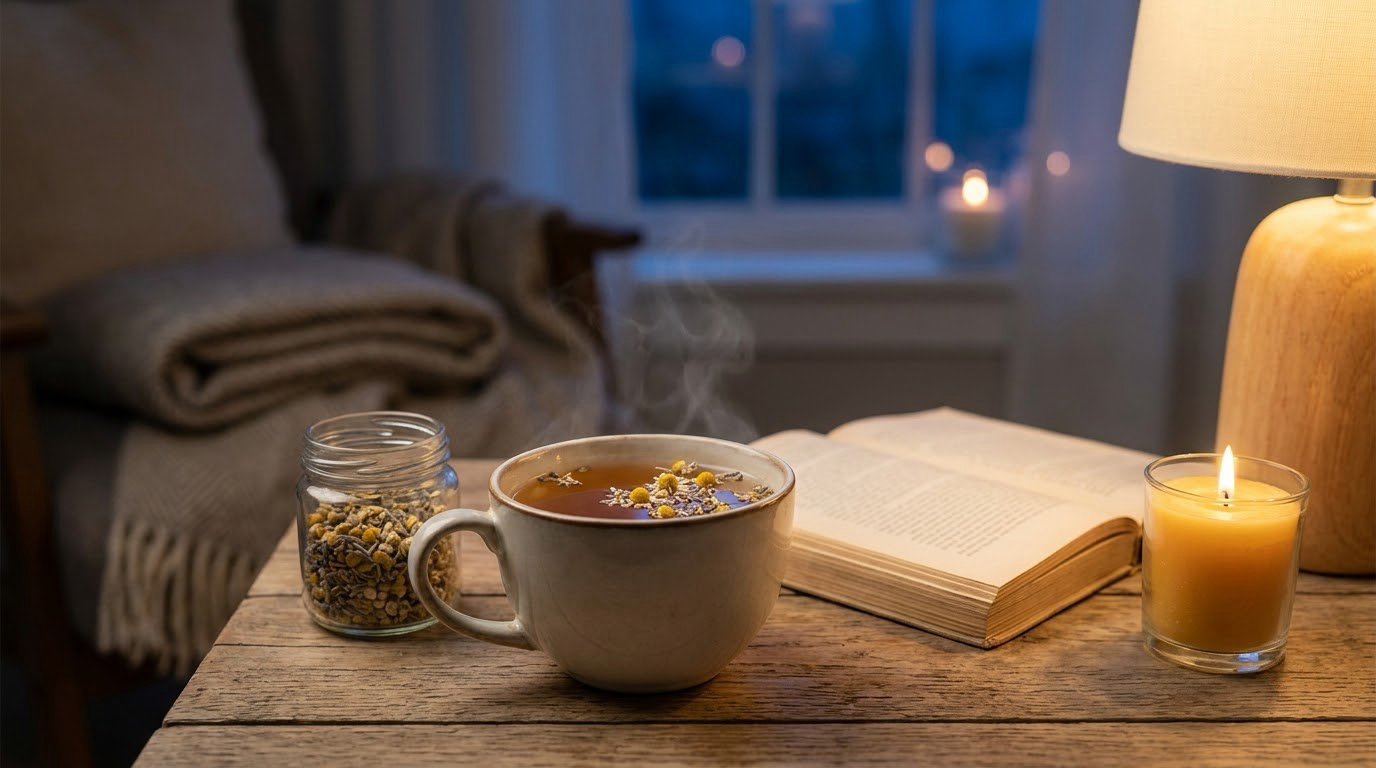
The herbal teas that help you wind down at night are simple, caffeine-free infusions built on a short list of botanicals: chamomile, lavender, rooibos, lemon balm, passionflower, valerian root, peppermint, tulsi, rosehip and licorice root. None of them is a sleep treatment, and none will knock you out. What they do well is give you a warm, repeatable signal that the day is over, which is the part most sleep advice leaves out.
The interesting part is that the ten are genuinely different drinks. Some taste like a warm apple, some taste like a candy shop, and one or two are an acquired taste you have to decide whether you actually enjoy. Taste is the single biggest reason a bedtime tea habit dies in week two, so it is worth choosing on flavor first and tradition second. This guide goes through all ten with flavor notes, customary use, brewing basics and the safety notes worth knowing before you start.
General information only, not medical advice. If you take prescription medicines, are pregnant or breastfeeding, or have a health condition, talk with a doctor or pharmacist before making any herbal tea a nightly habit.
Updated for October 2026
Table of Contents
- Herbal Teas That Help You Wind Down at Night at a Glance
- 1. Chamomile Tea for a Gentle Evening Routine
- 2. Lavender Tea for a Floral Nighttime Cup
- 3. Rooibos Tea for a Naturally Caffeine-Free Choice
- 4. Lemon Balm Tea for a Minty Bedtime Ritual
- 5. Passionflower Tea for a Light Fruity Blend
- 6. Valerian Root Tea for an Earthy Wind-Down Drink
- 7. Peppermint Tea for a Refreshing Herbal Evening
- 8. Tulsi Tea for a Spiced Herbal Cup
- 9. Rosehip Tea for a Fruity Tart Finish
- 10. Licorice Root Tea for a Smooth Sweet-Spiced Blend
- Frequently Asked Questions
- A Simple Place to Start
Herbal Teas That Help You Wind Down at Night at a Glance
Here is the whole list side by side, so you can rule things out fast. Read the caution column before you pick a row, not after.
| Tea | Flavor profile | Customary evening ritual | Caffeine | Best time to drink | Main caution |
|---|---|---|---|---|---|
| Chamomile | Mild, apple-like, sweet hay notes | A warm cup after dinner while the house goes quiet | None | 60 to 90 minutes before bed | Avoid if you are sensitive to ragweed or the daisy family |
| Lavender | Floral, perfumed, faintly bitter | An aromatic cup blended with chamomile or rooibos | None when blended with a caffeine-free base | 60 to 90 minutes before bed | Strong aroma can bother some people; check with a pharmacist if you take medicines |
| Rooibos | Smooth, woody, naturally a little sweet | The base of many evening blends, good iced | Naturally caffeine-free | Evening or with a late meal | Flavored versions can add other herbs, so read the label |
| Lemon balm | Lemon with a mint lift | A fresh or dried infusion drunk in a quiet room | None | 60 to 90 minutes before bed | Ask a clinician first if you take thyroid medicine |
| Passionflower | Mild, faintly fruity, light | An evening cup, often blended with lemon balm | None | 60 to 90 minutes before bed | Not a good match with sedatives or anticonvulsants without advice |
| Valerian root | Earthy, pungent, strongly scented | An occasional stronger cup rather than a nightly one | None | About an hour before bed | Can cause grogginess or, for some, the opposite of calm |
| Peppermint | Bright, cooling, sharply clean | After a heavy dinner, well before lying down | None | 2 or more hours before bed | May loosen the valve between stomach and esophagus in reflux sufferers |
| Tulsi | Clove, mint and a peppery finish | A spiced cup that stands in for an evening coffee | None | Early evening | Check with a clinician in pregnancy or if you take blood-thinning or blood-pressure medicines |
| Rosehip | Tart, lightly floral, a little sharp | A fruity caffeine-free swap for black tea | None | 2 or more hours before bed | Skip blends with undisclosed additions if you react to other herbs |
| Licorice root | Naturally sweet, warm anise | A sweet-spiced base in blends, not usually solo | None | Evening | Not suitable for some people with blood pressure, heart, kidney, liver or hormone-sensitive conditions |
1. Chamomile Tea for a Gentle Evening Routine
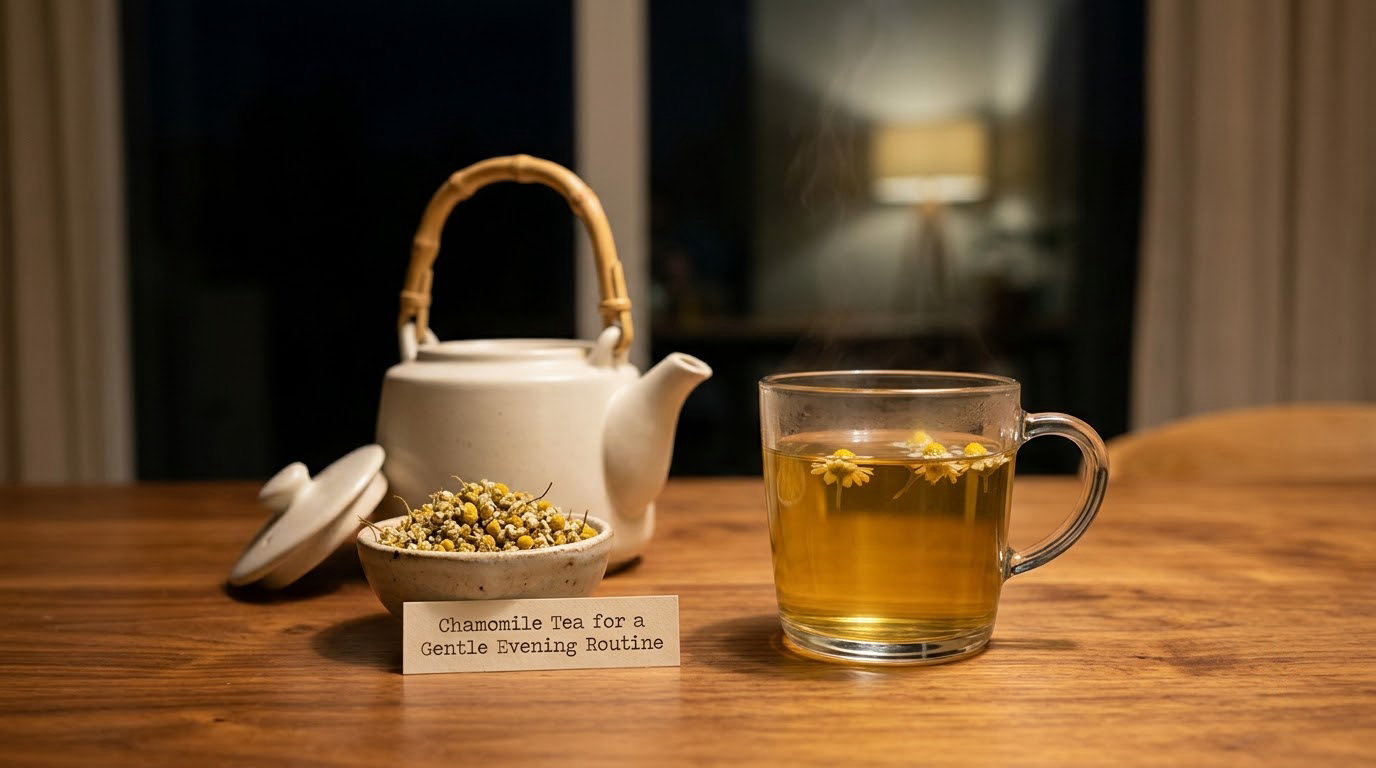
Chamomile is the cup most people picture when they picture a bedtime tea, and for good reason: it is mild enough that you can drink it without thinking about it. The flavor is soft and slightly sweet, with a faint apple note and a hay-like finish that most people tolerate easily even if they are not a tea person.
It has a long history of use as a calming evening drink, and its best-known constituent, apigenin, is a flavonoid that binds to GABA-A receptors, the same general system many sleep medicines act on. That is a mechanism, not a promise. The realistic expectation is a warm drink that makes bedtime feel less abrupt.
To brew it at home, cover a small amount of dried flowers or one or two tea bags with just-boiled water, let it sit covered for about five minutes, and strain. Keeping the lid on holds onto the volatile oils that give chamomile its aroma, and that aroma does real work in the ritual. Drink it about 60 to 90 minutes before bed rather than right at lights-out, so you are not still sipping when you want to be asleep.
One group should skip it: people with an allergy to ragweed, daisies, marigolds or chrysanthemums, since chamomile is in the same plant family and can cross-react.
2. Lavender Tea for a Floral Nighttime Cup
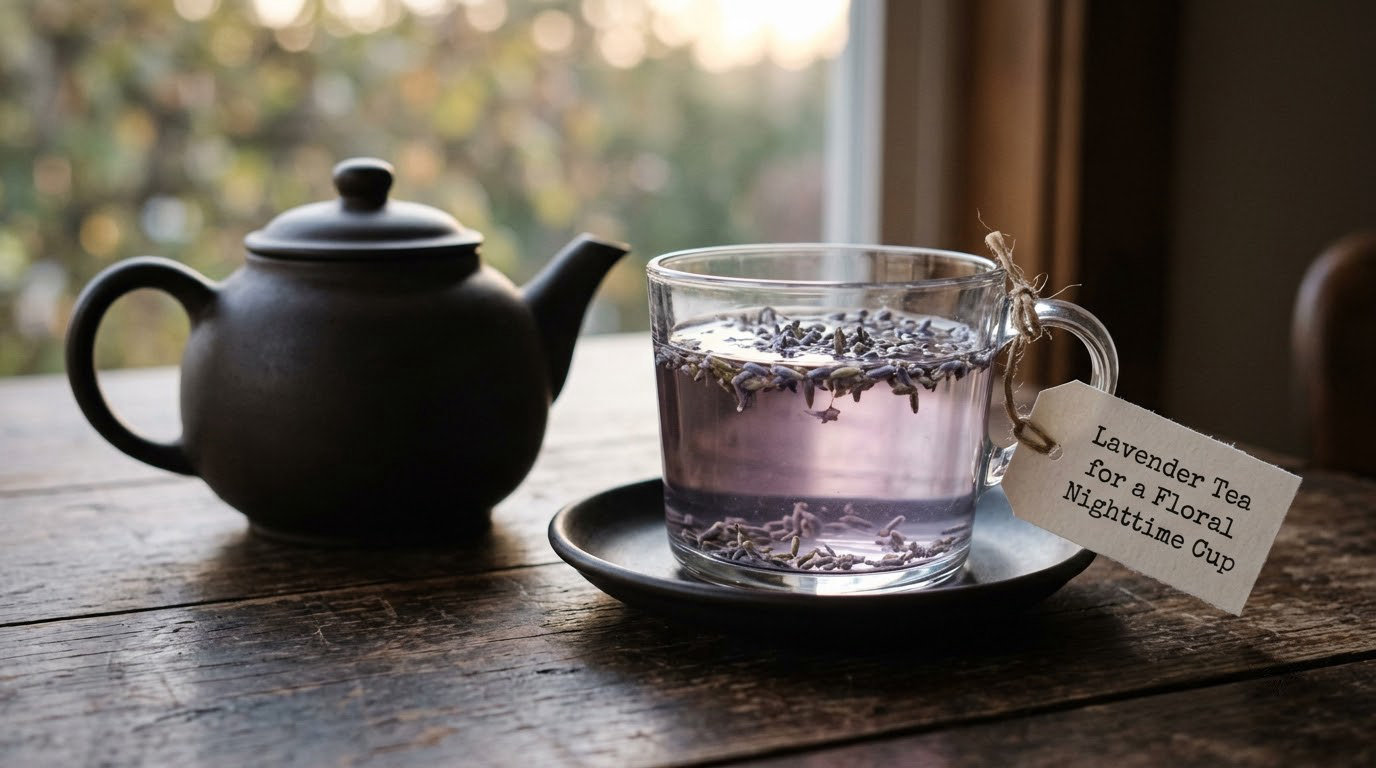
Lavender sells itself on aroma. A cup smells unmistakably floral and slightly soapy, and for a lot of people that smell alone becomes the cue that the evening has started.
Culinary lavender is usually blended rather than drunk alone, because the flavor is powerful and a little sharp. The most common combinations are lavender with chamomile, which softens the perfume, and lavender with rooibos, which adds a woody base with no caffeine at all. A small amount of culinary lavender in a larger pot of chamomile is enough; more than that and the cup becomes a perfume sample.
Brewing is the same as chamomile: just-boiled water, covered, about five minutes. The main caution is that the aroma is intense, and strong scents can be unpleasant for people with migraine or asthma, so a light blend is a safer first move than lavender on its own. If you take any prescription medicine, ask your pharmacist before making lavender a nightly drink, because the evidence on interactions is thin and easier to avoid than to reason about.
3. Rooibos Tea for a Naturally Caffeine-Free Choice
Rooibos is the practical pick for anyone who wants a warm evening drink with zero caffeine questions attached. It is not a stimulant, not a sedative, and not a caffeine source at all, which makes it an easy base for any evening blend you build yourself.
The flavor is smooth, woody and slightly sweet, with none of the grassy edge that puts people off plain herbal infusions. It also stands up to cold brewing, so a glass of rooibos over ice is a genuinely good late-afternoon option when you want a ritual without the jangle.
To brew it, use just-boiled water and steep covered for 5 to 7 minutes, which draws out more of the woody body. Most blends pair it with vanilla, citrus or berry flavors, and that is where the label matters: flavored rooibos can contain additional herbs, and some blends add black or green tea for a caffeine kick. If you want caffeine-free, check the ingredient list rather than trusting the front of the box.
4. Lemon Balm Tea for a Minty Bedtime Ritual
Lemon balm tastes like lemon with a cool mint lift, and unlike some herbal teas it works just as well from fresh leaves as from dried ones. If you grow herbs at all, a handful of fresh leaves crushed in the bottom of a mug with hot water is a perfectly good evening infusion.
It has a long customary use as a calming drink for a nervous or unsettled feeling, and its main recognized constituent is rosmarinic acid. Many people describe it as the gentlest of the calming herbs, which is exactly why it tends to appear as a carrier in blends, softening the sharper herbs around it.
Brew it covered for about five minutes with just-boiled water, and drink it in the same 60-to-90-minute window as chamomile. Two cautions matter here. Lemon balm may affect thyroid function, so anyone taking thyroid medicine or managing a thyroid condition should ask a clinician before drinking it regularly. It can also interact with sedatives and some medicines that are processed by the liver, so a pharmacist check is worth ten minutes of your evening.
5. Passionflower Tea for a Light Fruity Blend
Passionflower is the underrated member of this list. It tastes light and mildly fruity, with none of the earthy weight of valerian, which makes it far easier to drink nightly than its reputation suggests.
Its traditional use is as a quietening evening infusion, often paired with lemon balm in a blend. Be honest about the evidence: research on passionflower for sleep is limited and mostly small or older studies, so treat it as a pleasant calming drink with traditional backing rather than a proven fix.
Brew a single herb covered for about five to eight minutes, or chill it and serve over ice in the summer. The safety note is about combination rather than the plant itself. Because of its calming effect, do not combine it with sedatives, sleep medicines or anticonvulsant drugs without medical advice, and avoid it entirely during pregnancy unless your clinician says otherwise.
6. Valerian Root Tea for an Earthy Wind-Down Drink
Valerian root is the strongest-tasting member of this group and the one most often described as the most potent. It is also the one most likely to divide people. On tea forums, regular drinkers place it at the top of their personal effectiveness ranking while being the first to admit it tastes like wet earth and old socks.
Its history of use for restlessness and sleep is long and well documented in European herbal tradition, and valerenic acid is the compound usually credited. The honest framing is that tradition and mechanism are not the same as a proven treatment, and the research on valerian for sleep is mixed rather than settled.
Brew covered with just-boiled water for 5 to 10 minutes, and expect a genuinely strong cup. Drink it about an hour before bed, and treat it as an occasional stronger cup rather than an every-night habit. Valerian can leave you groggy, it stacks badly with alcohol and with sleep medicines, and it is generally not recommended before surgery. Avoid it during pregnancy and breastfeeding unless a clinician advises otherwise. A number of r/herbalism posters also describe a paradoxical reaction to valerian, feeling more alert and wired rather than drowsy, and that response is common enough to be worth taking seriously.
7. Peppermint Tea for a Refreshing Herbal Evening
Peppermint is the brightest drink on this list. It is clean, cooling and sharp, and it clears the palate after a heavy dinner in a way that chamomile never will.
That makes it a good evening choice for people whose problem at bedtime is digestive discomfort or post-meal heaviness rather than a busy mind. It is a caffeine-free herbal infusion, so it works as a straight swap for an evening black or green tea without any of the stimulant load.
Two practical points. First, mint can relax the valve between the stomach and the esophagus, so it can make reflux worse in people who already have it, and it is a poor choice right before lying down; keep it two or more hours ahead of bedtime. Second, if you are replacing your evening coffee habit with tea, choose plain peppermint or a caffeine-free herbal blend, not a mint-flavored black tea, which is caffeinated and defeats the entire exercise.
8. Tulsi Tea for a Spiced Herbal Cup
Tulsi, or holy basil, is what you drink when you want an evening cup with some flavor to it. The taste is layered: clove and mint up front, a peppery warmth underneath, and a slightly drying finish.
Unlike most herbs on this list, tulsi is usually described as an adaptogen, a botanical used to support the body’s response to stress rather than to sedate it. For many people that is the appeal, especially when poor sleep sits alongside a stressful stretch at work. It is a spiced cup rather than a soft one, which is useful if other herbal teas have started to feel flat.
Brew covered in just-boiled water for about five minutes and drink it in the early evening. Tulsi is a member of the basil family, so anyone with a basil allergy may react to it, and it is generally avoided during pregnancy. Because it may affect blood clotting and blood pressure, ask a pharmacist before making it a nightly habit if you take anticoagulants, blood-pressure medicine or diabetes medication.
9. Rosehip Tea for a Fruity Tart Finish
Rosehip is the answer for people who want an evening drink that tastes like something rather than like a wellness beverage. It is tart, lightly floral and faintly sharp, closer to a very mild cranberry drink than to a conventional tea.
It is naturally caffeine-free, which makes it an easy substitute for black tea in the evening when you still want a cup with some flavor but no stimulant effect. It also pairs well with chamomile or rooibos, since its tartness rounds out the woody base of a rooibos blend.
Pour just-boiled water over the hips, cover, and steep about five minutes; steep it longer and the bitterness starts to show. Keep the cup two or more hours before bed if you are sensitive to reflux, since any acidic drink can bother a settled stomach. The caution is about what you are buying rather than what you are drinking: many rosehip blends include other herbs that are not listed clearly on the front, so if you know you react to something, read the full ingredient list.
10. Licorice Root Tea for a Smooth Sweet-Spiced Blend
Licorice root is naturally sweet, with a warm anise flavor that needs no sugar at all. On its own it is more of a flavor component than a nighttime drink, which is why it shows up as the sweet-spiced base inside evening blends.
It also has the least forgiving safety profile of the ten. Licorice can raise blood pressure and affect potassium levels, and it is not suitable for everyone with high blood pressure, heart, kidney or liver conditions, or with hormone-sensitive conditions, including some pregnancy-related concerns. It should not be used as a nightly habit by anyone with those conditions without professional advice, and if you have no idea whether you fall into that group, ask a doctor or pharmacist first rather than reading a tea label.
Where it is fine, brew it covered in just-boiled water for 5 to 10 minutes, and treat it as a base to blend with rooibos or chamomile rather than a full cup on its own. It is the one item on this list I would put at the bottom of a beginner’s list for exactly that reason.
Frequently Asked Questions
How long before bed should I drink herbal tea?
Most sources land somewhere between 60 and 90 minutes before you lie down. That gap gives the warmth, the aroma and the act of sipping time to register as a cue that the day is over, and it leaves you free of a full cup in your stomach when you get horizontal. A smaller cup closer to bedtime is fine too, especially if you are sensitive to nighttime bathroom trips. Pick a window, keep it the same every night, and let the consistency do the work.
Are all herbal teas caffeine-free?
No. Most pure herbal infusions, including chamomile, lavender, rooibos, lemon balm, passionflower, valerian, peppermint, tulsi, rosehip and licorice root, contain no caffeine at all. The risk comes from blends and flavored products, which often add black or green tea for a caffeine kick, and from decaffeinated tea, which is only partly decaffeinated. If caffeine matters to your evening, read the ingredient list rather than relying on the word sleep or calm on the front of the box.
Can I drink calming herbal tea every night?
For gentle herbs such as chamomile, rooibos, lemon balm, rosehip and lavender, nightly use is generally considered low risk for most adults. Stronger herbs such as valerian, hops-type blends and licorice root are better treated as occasional cups. Tolerance is a real concept here: people often report that the same cup seems to stop doing anything after several weeks, and rotating two or three herbs tends to keep the habit alive. If you feel groggy in the morning, reduce the strength or stop.
Do herbal teas interact with medications?
They can, and the answer depends on the herb. Lemon balm and tulsi both warrant a pharmacist conversation if you take thyroid, blood-pressure, blood-thinning or diabetes medication. Passionflower and valerian should not be combined with sedatives, sleep medicines, anticonvulsants or alcohol without advice, and several herbs are processed by the liver alongside prescription drugs. Bring the actual box to your pharmacist, since blend ingredients are the part people most often misread.
What should I do if herbal tea does not help me sleep?
Treat that as information, not failure. First check the basics: is the cup caffeine-free, is it being drunk early enough, and is the routine consistent. A tea on its own rarely fixes difficulty falling asleep, and it is not a treatment for insomnia. If you regularly lie awake for a long time to fall asleep, wake often, or feel exhausted through the day, book an appointment with your doctor. Sleep problems that last weeks have causes worth finding, and a stronger herb is not the answer.
A Simple Place to Start
Start with chamomile or rooibos. Both are caffeine-free, both taste mild enough that you will not get sick of them, and neither carries the interaction warnings that the stronger herbs do. If chamomile reminds you too much of a candle, rooibos tastes like a warm woody drink instead, and it blends with almost anything.
Make one small serving, in a covered cup, 60 to 90 minutes before you intend to be in bed, and pair it with the rest of the wind-down rather than treating it as the wind-down. Screens off, lights low, phone in another room. That sequence matters more than which herb you chose, and it is the part you can repeat every night whether or not the tea is working.
Give it two weeks before you judge it, and keep the timing fixed. If you want to rotate, swap one herb at a time rather than changing everything, so you can still tell what your body liked.
Persistent trouble falling asleep, staying asleep, or feeling sleepy through the day is a medical matter, not a tea matter. Talk to a qualified healthcare professional about it, and bring any medicines you take with you.