
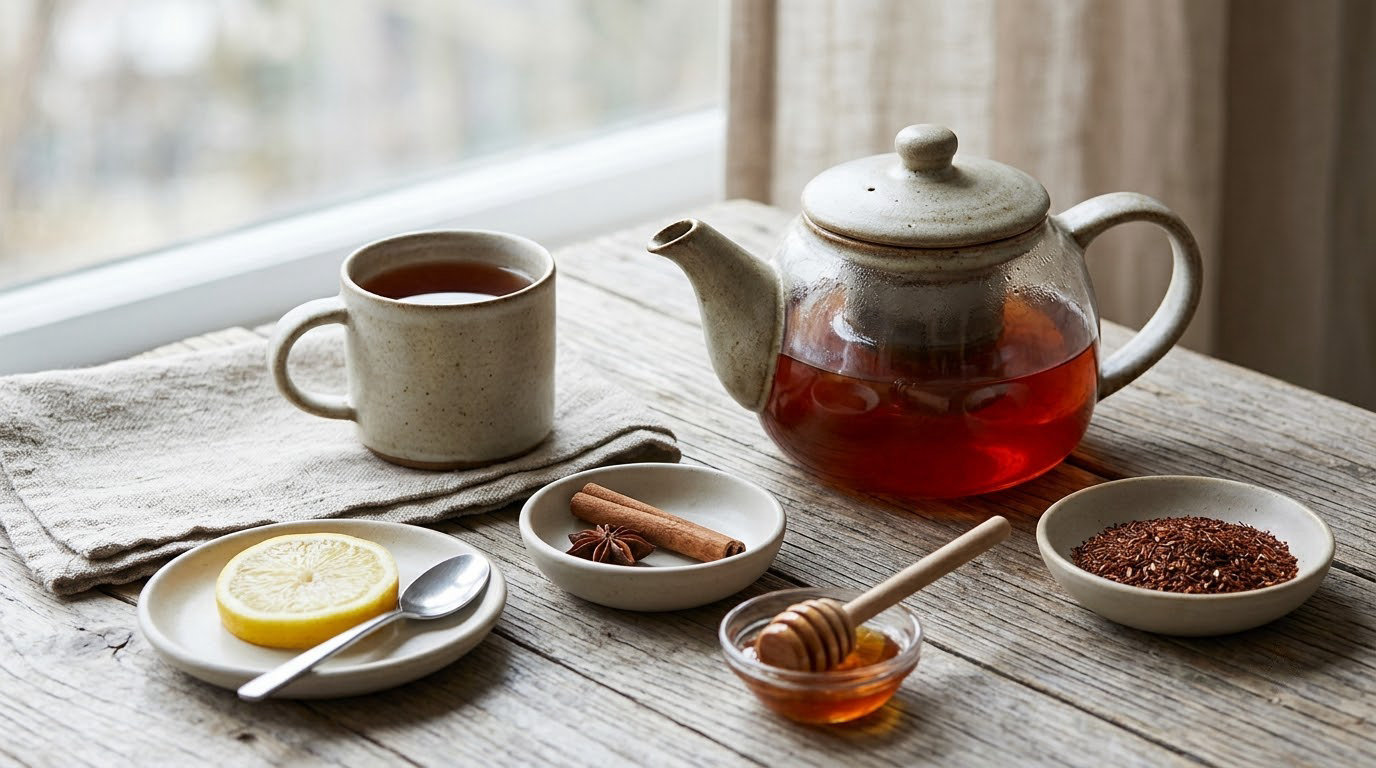
Most people who dislike rooibos are reacting to a badly brewed cup, not to the tea itself. Boil your water, use about 2 teaspoons of decent loose leaf per cup, steep it 5 to 7 minutes in filtered water, and drink it in the first few minutes while the aroma is still there. Add a small spoon of honey or a splash of milk only after the base cup tastes right.
Here is the short version, before the detail:
- Boiling water, not lukewarm. Rooibos is an herb, not a black tea, so heat and long steeping do not make it bitter the way they do with Camellia sinensis.
- 2 teaspoons of loose leaf per 250 ml cup, or a heaped tablespoon if you want strength without a long steep.
- 5 to 7 minutes in filtered or spring water, then a second steep of 2 to 3 minutes.
- Sweetener or milk at the end, never at the start of the brew.
Rooibos comes from Aspalathus linearis, a shrub native to the Cederberg mountains in South Africa, and it is not a true tea at all. The naturally oxidized leaf gives a sweet, woody, faintly earthy cup with almost no caffeine and far fewer tannins than black or green tea. That low tannin load is the key fact for the whole question, because it is why you can push heat and steeping time much further than any other leaf.
So before you buy anything new, work out what is actually wrong with your cup. Bitter, watery, muddy and dusty each have different causes and opposite fixes.
Table of Contents
What You Need
The brewing side is short. You need a kettle, a pot or mug with a lid, and a strainer or infuser that lets you pull the leaf out without pouring through the fines.
- Filtered or spring water. If you only have tap water, run it through a standard carafe filter first. Hard water dulls rooibos badly.
- Loose leaf at roughly 2 teaspoons per cup. A teabag works, but bagged rooibos is usually cut fine and contains dust, which extracts faster and muddies the cup.
- A timer. The difference between 3 minutes and 8 minutes is the difference between thin and full.
- A double strainer or a second fine mesh. Rooibos fines settle at the bottom of the mug and make a flat cup taste dusty.
For the flavor side, keep it simple until the base cup is good. Then pick one or two from this shelf: raw honey, maple syrup, coconut sugar or brown sugar; whole milk, oat milk, almond milk or coconut milk; a vanilla pod or extract; a strip of lemon or orange peel; grated ginger; a cinnamon stick; cardamom pods; rosehip; or a few dried cranberries or apricots.
Step-by-Step: How to Make Rooibos Tea Taste Better
1. Start with good-quality loose-leaf or flavored rooibos
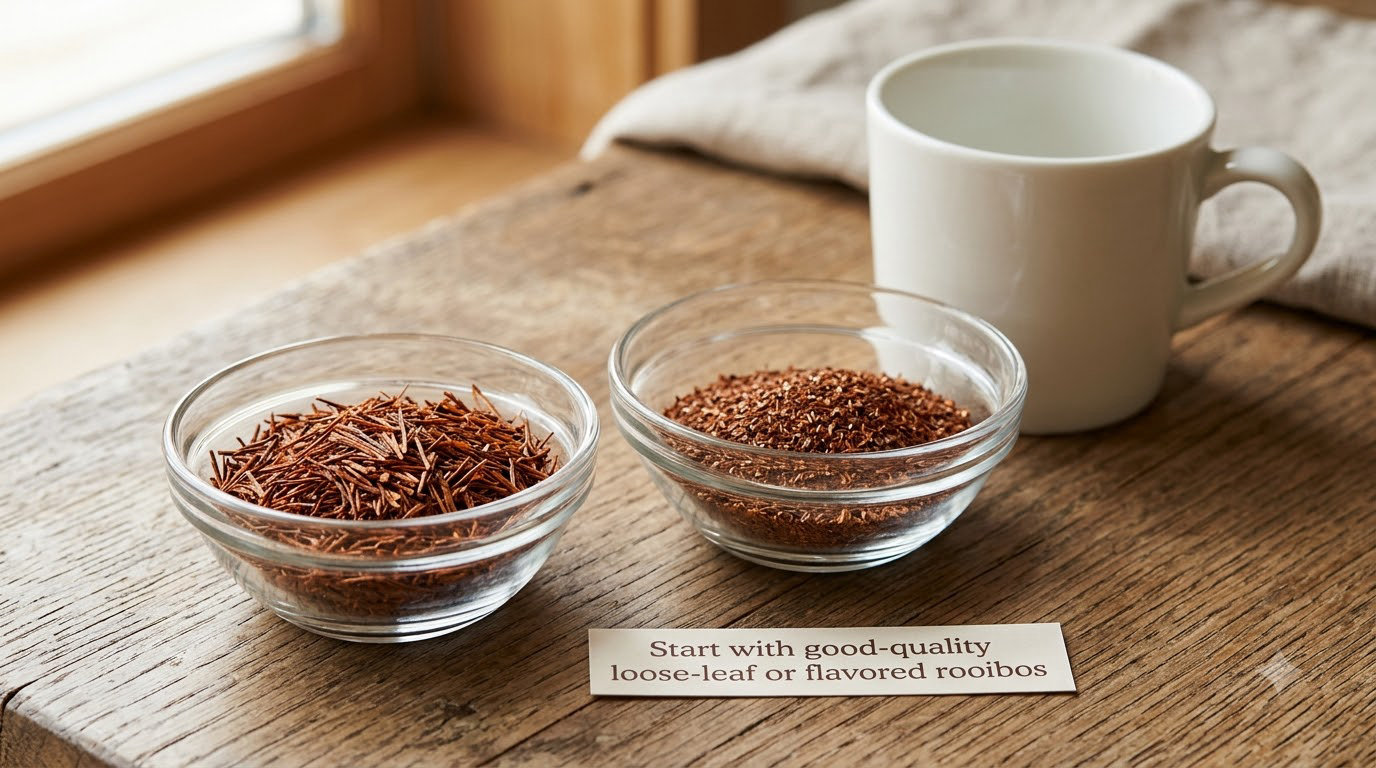
Leaf quality drives more of the cup than anything you add afterward. Look for long, uniform, needle-cut red-brown leaves. Dusty, dark, crumbly leaf means fines, and fines extract tannin and plant dust far faster than whole leaf does. That is why the same bag can taste clean for two minutes and then turn harsh at six.
Green rooibos is unoxidized, lighter and more grassy, with a hint of hay and less body. Red rooibos is fully oxidized, sweeter, woodier and more rounded. If you find red rooibos woody, green is worth a try before you blame your technique. If you find green rooibos thin and sweet, red will suit you better.
Blended rooibos is a legitimate shortcut, since vanilla, citrus and spice blends are often made with better leaf than a plain single-origin bag. Just check that the blend is mostly rooibos and that the leaf inside looks like leaf.
2. Use the right water temperature and steeping time to make rooibos taste better
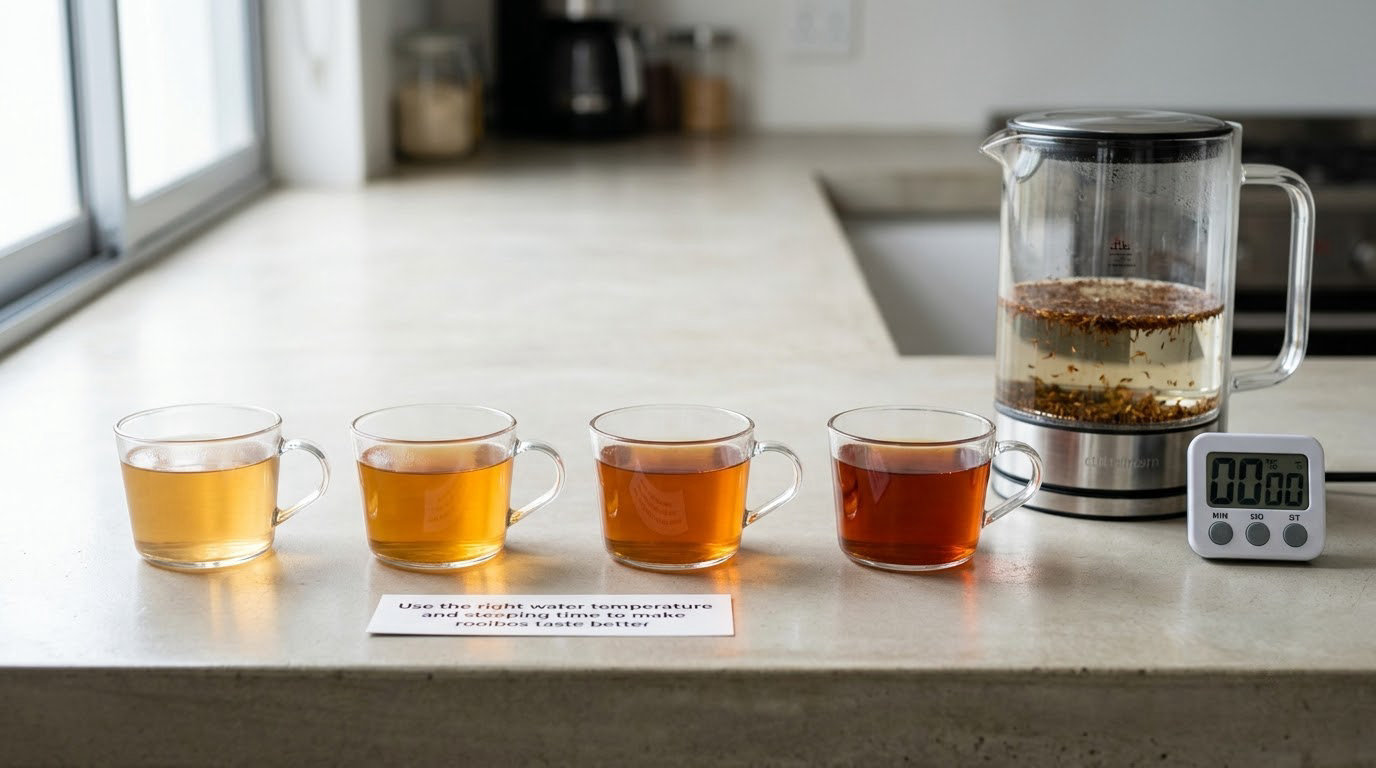
Here is where the advice online contradicts itself, so let us settle it. Some guides say never use boiling water and steep for one minute. Others say boil it for ten. Both are correct for different problems.
Boiling water plus a long steep builds sweetness and body. It is the right method when your cup tastes thin, watery or boring. Hotter-but-not-boiling water and a short steep builds brightness and clarity. Use that when your cup tastes harsh, dusty or tannic.
Rooibos contains no meaningful caffeine ceiling, and its tannin load is far below black tea, so a long boil does not punish you the way it would with a breakfast blend. Steep time is the easiest lever to change:
- 1 to 2 minutes. Pale, faintly sweet, very clean. Barely worth drinking on its own.
- 3 to 4 minutes. Light body, clear red-amber color, pleasant on its own if the leaf is good.
- 5 to 7 minutes. The sweet spot. Full color, rounded sweetness, noticeable body.
- 8 to 12 minutes. Strong and sweet, with a deeper woody note. Popular for iced tea, cold brew and dessert work.
- 6 to 8 hours cold. Smooth, low acidity, no bitterness at all. The best iced rooibos there is.
After the first steeping, pour off what you need, add fresh hot water and steep two to three minutes for a second cup. Rooibos gives you a reliable second and sometimes third steeping where a black tea bag would be done after one.
One more temperature point: drink it hot. The aroma in rooibos comes largely from volatile compounds that dissipate as the cup cools, which is why it seems to taste weaker at the bottom of the mug than it did at the top.
3. Add sweetness in a way that keeps the tea balanced
Rooibos takes sweetener unusually well. Because there is no tannic bite to fight, sugar reads as round and mellow instead of cloying.
- Raw honey. Floral and rounded, and the most natural fit for the rooibos vanilla-coumarin note. Stir it in while the tea is still hot so it dissolves.
- Maple syrup. Darker and more caramel than honey, which pairs well with cinnamon and ginger.
- Coconut or brown sugar. Both add a deeper caramel warmth and work better than white sugar in a latte.
- Agave or stevia. Fine for anyone avoiding sugar, though both flatten the floral top notes a little.
Start at half a teaspoon per cup and taste before adding more. Add sweetener while the tea is hot but after it has brewed, never in the pot, or you will dull the aroma you worked for.
4. Introduce dairy or a creamy alternative
Milk changes the mouthfeel more than it changes the flavor, and that is exactly why it rescues a cup people do not like. It rounds the woody edges and binds a little tannin.
- Whole milk. The richest and most traditional option. Heat it with a cinnamon stick and you get something close to a spiced rooibos latte.
- Oat milk. The best plant milk for frothing. Its faint cereal sweetness sits well with the grain notes in rooibos.
- Coconut milk. Thick and sweet, and it turns a cup into something closer to a dessert drink. Use half a cup, not more, or it will swallow the tea.
- Almond milk. Light and slightly nutty, so use more than you think and expect a thinner cup.
Practical method: brew the tea strong and hot, pour it into a jug, then steam or froth the milk separately and pour it in. Milk poured into a full, hot mug cools the cup too fast to drink, which loses the aroma again.
A basic rooibos latte is 2 teaspoons of leaf, 250 ml boiling water, steeped 6 minutes, strained, then topped with about 150 ml of frothed milk and one teaspoon of honey or maple syrup. A chai version adds 1 cinnamon stick, 4 cardamom pods, 3 cloves, and a thumb of grated ginger, simmered with the leaf in the water for the same 6 minutes and strained out before the milk goes in.
5. Build a flavor profile with spices, fruit, or botanicals
Once the base cup is good, add one strong flavor and one supporting one. Two is plenty; three turns rooibos into a potpourri.
- Vanilla. A split pod, or half a teaspoon of extract added off the heat. Vanilla and rooibos are close cousins flavor-wise.
- Citrus. Lemon peel added during the steep for a clean lift, orange peel for a sweeter, more roasted note. If your rooibos is already a citrus blend, add nothing more.
- Ginger. Fresh grated ginger, simmered with the leaf. Warming and good for the throat, and it covers woody notes well.
- Cinnamon and cardamom. The classic South African winter cup. Cardamom is the more interesting of the two because its floral top notes mirror rooibos.
- Rosehip. Tart and faintly apple-like. It is the strongest natural foil to rooibos sweetness and needs only two or three pieces.
- Dried fruit. Cranberries or apricots added during a long steep give a dessert-like cup with no sugar at all.
- Peppermint. A single leaf or two is enough. More than that and you are drinking mint tea with a memory of rooibos.
What to skip: heavy allspice or clove blends that swamp the leaf, and mixing rooibos into a pot already brewing strong black tea, which drags tannin into the cup and muddies it.
Common Mistakes
Misreading flatness as weak tea and adding more leaf. This is the most common error, and it walks people straight into bitterness. If your cup is watery and lifeless, the answer is usually more steep time at boiling heat, not more leaf. Try the same 2 teaspoons for 8 minutes before you touch the quantity.
Brewing in hard or heavily chlorinated tap water. Minerals dull rooibos and chlorine flattens the aroma completely. Filtered, purified or spring water fixes a bad cup in a way no amount of sweetener can. If your tap water is heavily chlorinated, let it stand uncovered for a few minutes before boiling.
Ignoring age and storage. Rooibos keeps well, but bulk or supermarket packets sitting open for months start tasting like dust and cardboard. Buy smaller quantities, store in an airtight tin away from light and heat, and use it within about six months of opening. Smell the dry leaf first: a clean, sweet hay-and-wood smell is fine, a flat dusty smell is not.
Two more problems worth naming. If your finished cup has grit at the bottom, double-strain it rather than stirring the sediment back in. And if your strainers, mugs or thermos permanently taste of rooibos, soak them in very hot water with a spoonful of baking soda for half an hour, then scrub and rinse.
Finally, drink it fresh. Sipping a mug over a two-hour window is the quiet reason many people say rooibos tastes like nothing.
Frequently Asked Questions
Is boiling water okay for rooibos tea?
Yes, and for most cups it is the better choice. Rooibos is a dried herb with very little tannin and no caffeine, so boiling water extracts sweetness and body without the astringency that turns a black tea bitter. Save the hot-but-not-boiling water for a quick steep when your cup is already tasting harsh, or when you are brewing green rooibos.
How long should I steep rooibos tea?
Five to seven minutes in boiling or near-boiling water gives the sweetest, most balanced cup. Under three minutes tastes thin, and beyond ten it becomes deep and woody rather than bitter. Rooibos re-steeps well, so pour off your cup, add fresh hot water and steep another two to three minutes for a second serving.
What can I add to rooibos tea to make it taste better?
Start with a small spoon of honey or maple syrup, or a splash of frothed milk, then build from there. Vanilla, lemon or orange peel, ginger, cinnamon, cardamom, a few rosehips, dried cranberries and a peppermint leaf all work well. Keep it to two additions so the rooibos note stays recognizable.
Does rooibos tea taste better with milk, and which kind?
Milk rounds the woody edges and softens the mouthfeel, so most people find it tastes better that way. Oat milk is the best plant option for a latte because it froths and has a mild sweetness that suits the grain notes in rooibos. Whole milk gives the richest result, coconut milk makes a dessert-like drink, and almond milk needs a larger splash to have any body.
What not to mix with rooibos tea?
Avoid heavy spice blends built around clove and allspice, which bury the delicate leaf, and avoid adding citrus peel to a rooibos blend that is already flavored with citrus. Mixing rooibos into a pot of strong black tea pulls tannin into the cup and makes it muddy. Strong flavored additions like bergamot also completely mask rooibos.
Is rooibos high in estrogen, and are there downsides to drinking it daily?
Rooibos is sometimes labeled estrogenic, but Aspalathus linearis is not an established phytoestrogen source, and the supporting evidence comes from isolated compounds tested at concentrations far above anything in a cup of tea. No hormonal effect has been confirmed at normal drinking amounts. Most people tolerate a few cups daily, though large intakes can cause stomach upset and tea tannins can reduce iron absorption.
Conclusion
If you only change one thing, change the steep. Boiling water, 2 teaspoons of loose leaf per cup, 5 to 7 minutes in filtered water, then taste it before you touch anything else. Once that base cup tastes right, a spoonful of honey or a splash of frothed milk takes it most of the way to a drink you will actually want to make again.