
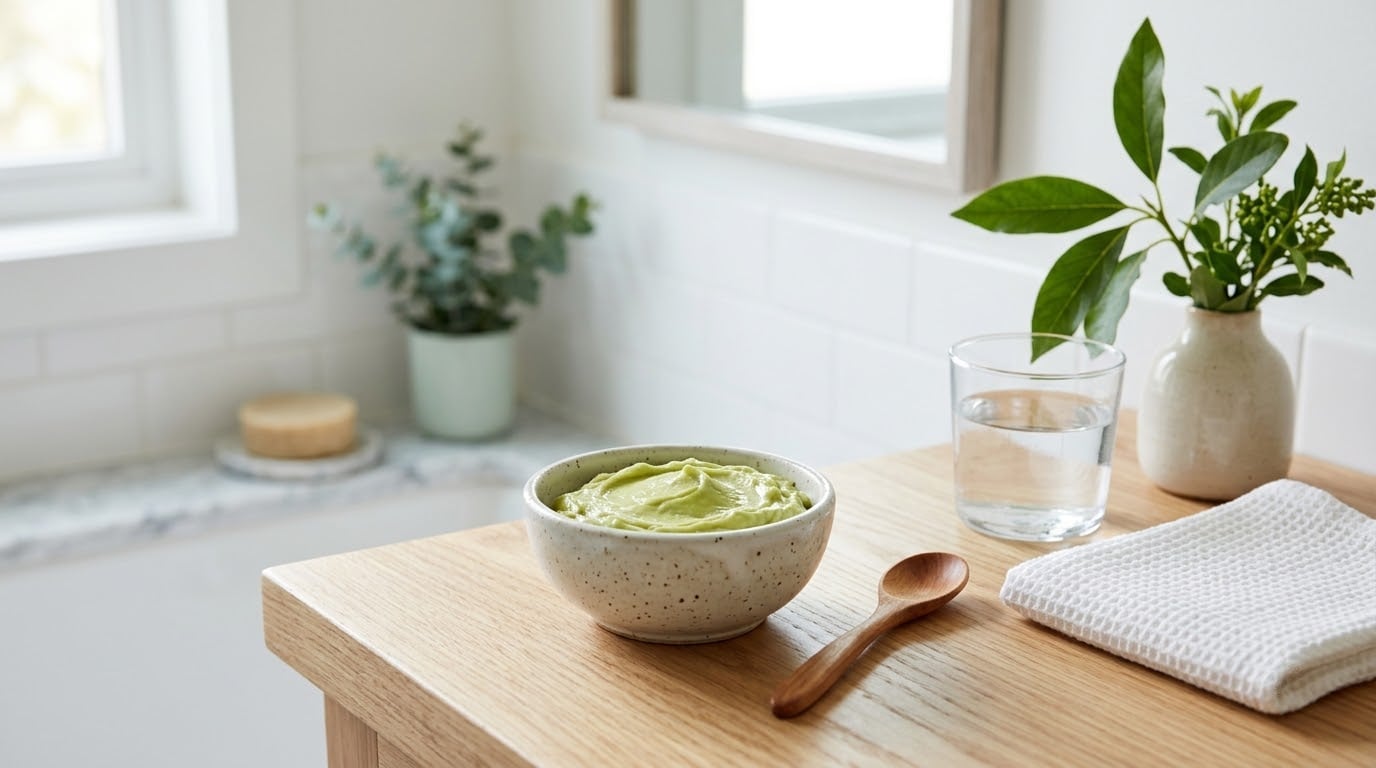
An avocado hair mask for dry hair is one ripe avocado mashed into a paste, stirred together with about 1 tablespoon of honey and 1 tablespoon of oil, then worked into damp hair for 20 to 30 minutes before a cool rinse. Prep takes five minutes, there is nothing to cook, and the whole thing costs less than a single salon treatment. If you learn only one thing from this guide, learn the rinse: two washes with cool water is what separates soft hair from hair that feels coated.
I make this roughly once a month, mostly in winter when the heating in my flat dries my ends out by mid-afternoon. The first time, I used three tablespoons of oil because it felt too thin to do anything, and my hair stayed heavy for a day. The version below is the one that works.
Table of Contents
- What You Need
- Step-by-Step: How to Make an Avocado Hair Mask for Dry Hair
- Common Mistakes
- Frequently Asked Questions
- How long should I leave an avocado hair mask on?
- Can I use an avocado hair mask on greasy or oily hair?
- Do I need to use a ripe avocado for a hair mask?
- Can I add coconut oil or honey to an avocado hair mask?
- How often should I use an avocado hair mask for dry hair?
- Will an avocado hair mask fix damaged or split ends?
What You Need
The base recipe is deliberately small. Every extra ingredient earns its place by doing something specific for dry hair, and adding more than two usually tips the mask into greasy territory.
Base recipe for dry hair
- 1 ripe avocado — scooped flesh, skin and pit removed
- 1 tablespoon raw honey — draws water into the strand and holds it there
- 1 tablespoon oil — seals that moisture in. Coconut oil for thick or curly hair, olive oil for fine hair, argan or sweet almond oil if you have them
- A pinch of water — only if the paste is too stiff to spread
Quantities by hair length: half an avocado for fine or shoulder-length hair, one for mid-length, two only if your hair is long, thick or very porous. A whole extra avocado in short hair is how people end up washing their hair three times.
Pick an avocado that yields to gentle pressure and smells nutty rather than grassy. If yours is still hard, how to ripen an avocado fast takes a day or two with a banana in the same bag, which is faster than fighting a lumpy mash later.
Optional add-ins for dry hair
- 1 egg yolk — protein, useful when hair breaks as fast as it dries. Never rinse it with hot water
- 1 tablespoon Greek yogurt — extra moisture with a little protein, and it thins a heavy paste
- 1 tablespoon aloe vera gel — light hydration for fine hair that goes flat with oil
- 1 teaspoon apple cider vinegar, added at rinse time only — helps lift residue, never in the mask itself
If oil is the ingredient you are about to buy or open, how to use coconut oil for a hair mask overnight covers the leave-in method in more detail, including why it is not the right choice for everyone.
Tools
A fork or potato masher, a wide bowl, a tint brush or your gloved hands, a wide-tooth comb, a shower cap, an old towel, and a second pillow or a heat pack if you want gentle warmth. Patch test the mix on your inner forearm and wait 24 hours if you use egg or any essential oil, and skip lemon juice entirely on color-treated or bleached hair.
Step-by-Step: How to Make an Avocado Hair Mask for Dry Hair
Six steps, roughly 35 minutes end to end. The order matters more than the ingredients: mash smooth first, mix thin second, apply to damp hair third.
Step 1: Prepare the avocado
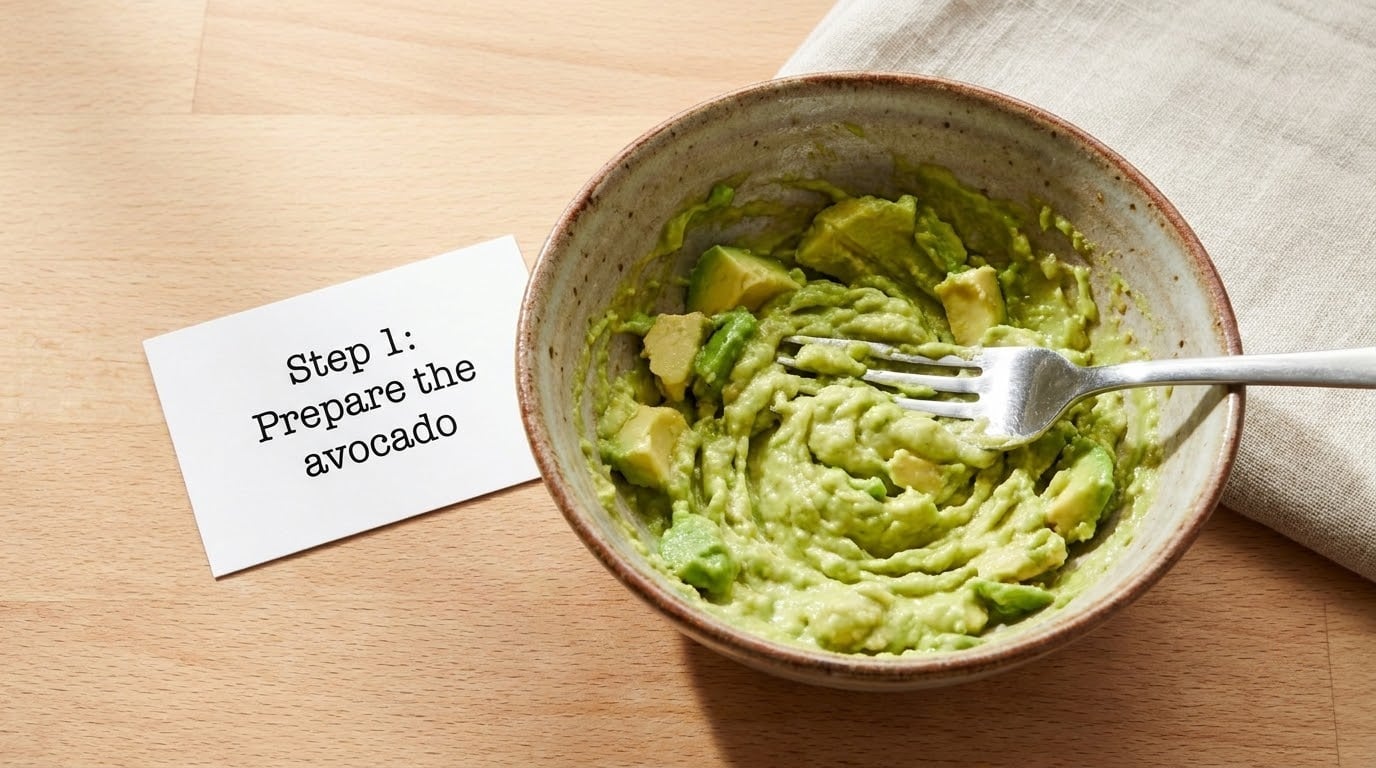
Scoop the flesh into a bowl and mash with a fork until there are no lumps and no chunks bigger than a pea. A fully ripe fruit needs almost no force; a firm one leaves stringy bits that comb through your hair like tiny green pebbles and take two washes to remove.
Give it one extra minute of mashing past the point where it looks done. If you own an immersion blender, ten seconds on low is faster, and blending is the one step worth doing properly because lumps are the single most common complaint in DIY hair communities.
You will know it is ready when it spreads like thick yogurt rather than sitting in a ball.
Step 2: Mix the mask
Add 1 tablespoon honey and 1 tablespoon oil to the mashed avocado and stir until the color evens out. If it is stiff enough to tear the hair as you spread it, stir in water a teaspoon at a time until it slides.
Thin is the correct direction. A loose mask spreads and rinses; a thick one sits on the surface and needs scrubbing out, and that scrubbing is where the breakage happens on already dry hair.
For severely dry, heat-damaged hair, stir in one egg yolk at this point. Community advice on r/Naturalhair consistently pairs avocado with egg or another protein because moisture alone does nothing for hair that snaps when you comb it. Keep the honey, drop the oil to half a tablespoon, and remember rule one: cool water only at the sink.
Step 3: Apply the avocado hair mask section by section
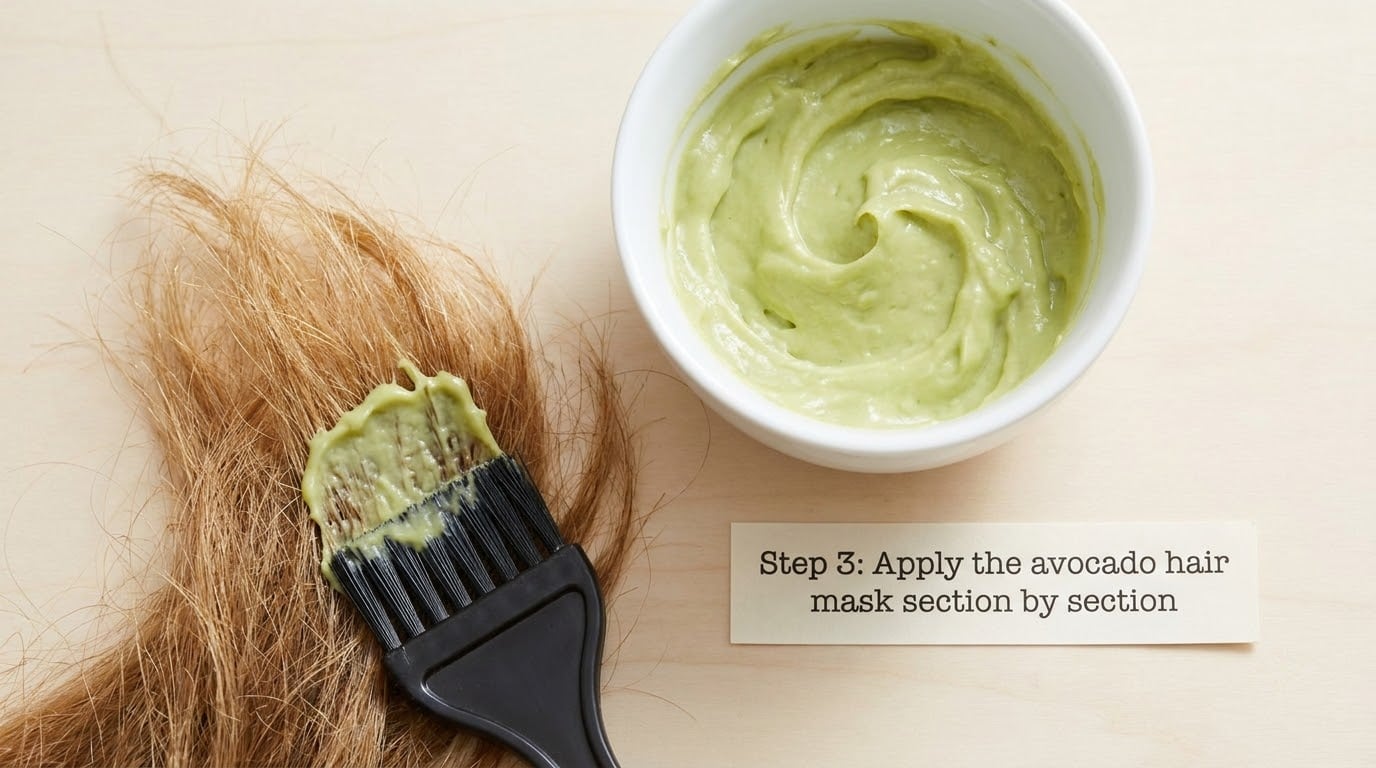
Hair goes in damp, not soaking and not towel-dried to the bone. Squeeze out the water so the hair is damp but does not drip. Section it into four or so pieces and work the mask down each one with your fingers or a tint brush, starting at the mid-lengths.
Your dry areas get the mask first. Push any leftover mixture into the ends and concentrate it where hair feels roughest, usually the front hairline, the temple area, and everything past your shoulder blade.
Stay off the scalp. Oil sitting at the roots for half an hour is the usual reason people decide an avocado mask made their hair oily, and massage into the scalp is a separate treatment with its own rules.
Comb through with a wide-tooth comb once the mask is distributed, so tangles come apart under the mask rather than during the rinse.
Step 4: Let it sit, rinse, and style
Twenty to thirty minutes is the range. Put it on, tie the hair up, cover with a shower cap or an old towel, and let your body heat do the work. Forty-five minutes is the ceiling; past that you are only increasing the chance of smell and residue. Do not leave it overnight.
A warm towel or a low heat pack held under a shower cap speeds things up by opening the cuticle a little so the oil gets in. Skip a blow dryer on high; that is the heat damage you were trying to fix.
Rinse with cool or lukewarm water first. There is no film or polymer in this mask, so you are just rinsing out fat and honey, and warm water spreads that fat further into the shaft. Work the shampoo into the lengths and midshaft, not the scalp, and wash a second time. On r/Haircare the most common post-mask complaint is residue that seems permanent; almost always it is one wash instead of two.
If the second rinse water still runs cloudy, finish with a dilute apple cider vinegar rinse — 1 tablespoon in a cup of water — then shampoo once more. Skip the vinegar on color-treated hair and on a scalp you have just treated.
Dry with a microfiber towel pressing, not rubbing, then style as usual. Hair feels softer the same day. Texture and shine improve over four to six weeks of consistent use, not in one sitting, so plan on two masks a week for the first month if your hair is genuinely bad, then one a week to hold it.
Common Mistakes
Nearly every disappointing avocado mask is one of these six problems. Work down the list and fix the one that matches.
- Using an unripe or half-ripe avocado. Firm flesh never fully mashes and shows up in your hair as green flecks. Ripen it a day ahead, or use a soft banana in place of half the avocado.
- Skipping the last two minutes of mashing. The bowl looks smooth against the spoon and still has lumps. Mash until you cannot see a single piece, and blend if you can.
- Making the mask too thick. Thick paste will not rinse, and you end up scrubbing your hair, which breaks it further. Loosen with water a teaspoon at a time.
- Using too much oil. This is the number one cause of greasy results. One tablespoon for shoulder-length hair is plenty; half a tablespoon if your hair gets flat by lunchtime. For the full picture on oil-only treatments, read how to use coconut oil on dry hair and its care routine.
- Rinsing with hot water, or rinsing once. Hot water spreads oil further up the strand and sets the protein in an egg mask into a gummy coating. Cool water, then two washes.
- Leaving it on too long, or overnight. Past 45 minutes you gain nothing and increase smell and buildup risk. Set a timer.
Skipping the patch test is a seventh, and it matters most if you use egg or any essential oil.
Avocado or coconut oil for dry hair?
This comes up constantly, and the honest answer is that they do different jobs. Avocado brings moisture, oil and a little protein. Coconut oil is almost pure lipid, and it penetrates and smooths well but adds no water-binding ingredient.
| Treatment | Moisture | Protein | Best for |
|---|---|---|---|
| Avocado and honey mask | High | Trace, more with egg | Dry, frizzy, heat-damaged hair |
| Avocado and coconut oil mask | Medium-high | Trace | Thick, curly, very porous hair |
| Coconut oil on its own | Low | None | Sealing moisture in, smoothing shine |
| Store-bought deep conditioner | Medium | Varies by formula | Convenience and consistency |
For severely dry hair, use both: the avocado and honey for moisture, the coconut oil to seal it.
How often to use it
| Hair condition | How often | When you should notice change |
|---|---|---|
| Mildly dry | Once a week | About two weeks |
| Dry and damaged | Twice a week for a month, then weekly | Four to six weeks |
| Oily scalp, dry ends | Once a week, mids and ends only | Three to four weeks |
| Color-treated or bleached | Every two weeks, no lemon or vinegar | Four weeks |
Frequently Asked Questions
How long should I leave an avocado hair mask on?
Leave it on for 20 to 30 minutes, and treat 45 minutes as a hard ceiling. The mask works by coating the hair shaft with fat and humectants, not by soaking in indefinitely, so extra time adds smell and residue without extra conditioning. Cover with a shower cap to hold warmth, and set a timer so it does not end up on overnight.
Can I use an avocado hair mask on greasy or oily hair?
Yes, but apply it to the mid-lengths and ends only, and cut the oil down to half a tablespoon or replace it with plain water and honey. Oil at the roots plus oil in the mask is the fastest route to flat, weighed-down hair. If your scalp gets oily within a day of use, the mask is too rich for you and once a week is plenty.
Do I need to use a ripe avocado for a hair mask?
A fully ripe one makes a much better mask. Soft flesh mashes to a smooth paste in under a minute, while firm flesh stays lumpy and leaves green flecks in your hair that are painful to comb out. If yours is not ripe yet, ripen it for a day or two, or swap half of it for a very ripe banana.
Can I add coconut oil or honey to an avocado hair mask?
Both, and both are in the base recipe. Honey is the humectant that pulls water into the strand; coconut oil is the seal that keeps that water in. One tablespoon each is plenty. Adding more oil is the most common reason a homemade avocado mask leaves hair looking heavy instead of soft.
How often should I use an avocado hair mask for dry hair?
Twice a week for a month if your hair is dry and damaged, then once a week to maintain it. Mildly dry hair needs only the weekly version. Most people notice softer, shinier texture after two to four weeks and a clearer difference in breakage around the six-week mark, so judge the recipe on a month of use rather than one session.
Will an avocado hair mask fix damaged or split ends?
No mask can reseal a split end, because the split is a physical break in the hair shaft. What the mask does is add slip and moisture, so the hair stops snapping further along and feels smoother while it grows out. For hair that breaks as fast as it dries, add one egg yolk for protein and expect visible change over four to six weeks.
Start tonight, and do it the boring way. One ripe avocado, one tablespoon of honey, one tablespoon of oil, twenty-five minutes under a shower cap, then two washes with cool water. That is the whole method, and the rinse is the part that decides whether you keep using it. Reviewed for 2026, and updated whenever new research on hair nutrition lands.