
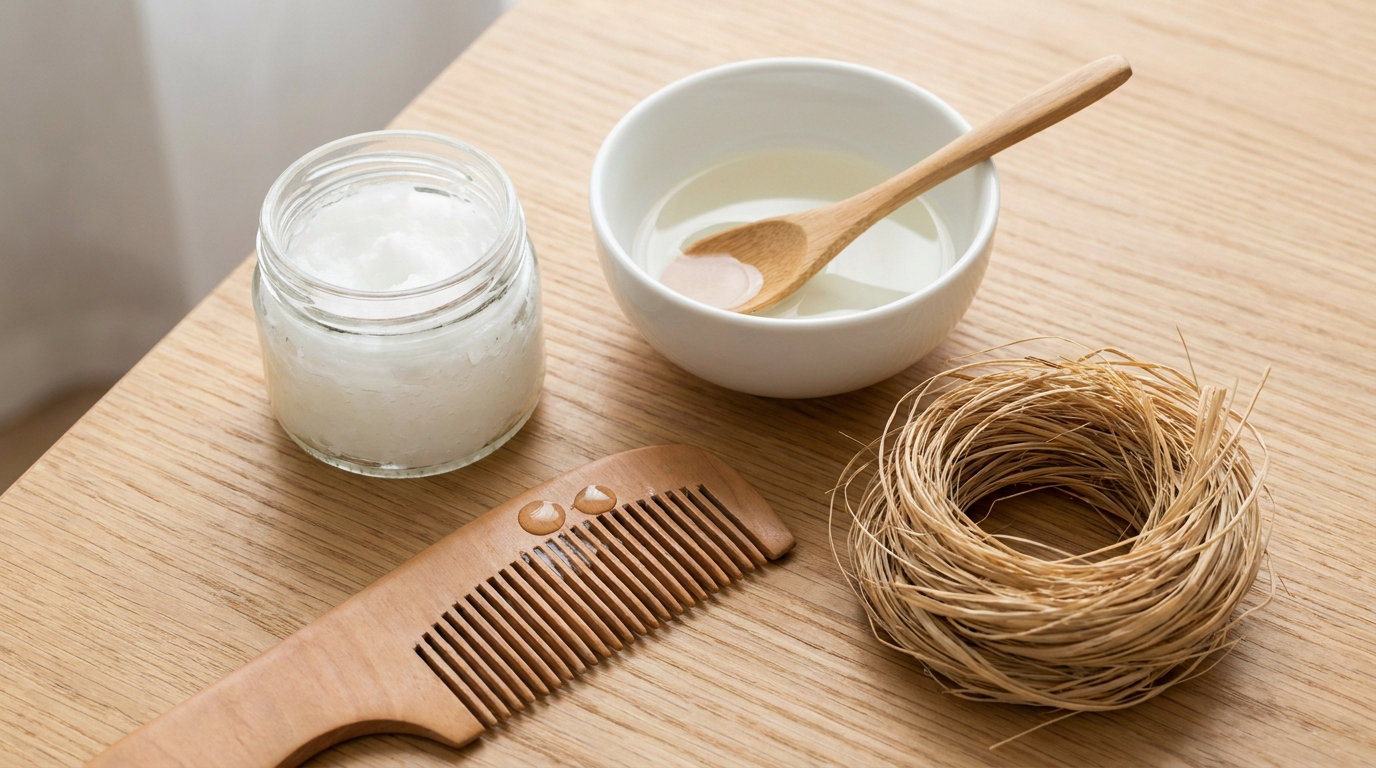
The short answer: how to use coconut oil on dry hair takes less than most guides make it sound. Warm about one teaspoon of coconut oil, press it into damp mid-lengths and ends rather than your scalp, leave it about 10 minutes, then shampoo twice until the water runs clear. The whole routine takes 20 minutes, it costs less than a cup of coffee, and the only real skill is using less oil than you think you need.
Coconut oil gets a bad reputation for greasy hair, and mostly that is a dosing problem. It is an emollient, which means it smooths and softens the surface of a strand and slows water moving in and out of it. Used heavily, it flattens fine hair and takes more than one wash to leave. Used sparingly on hair that is actually dry, it does its job quietly.
Below is the routine I would hand a friend who has never used it, followed by the mistakes that turn it into a bad afternoon. If you are short on time, the step-by-step section is the whole method. The rest is context.
Table of Contents
What You Need for a Coconut Oil Hair Treatment
You need very little. Most people already have everything except the oil itself, and that is the only item worth spending a little care on.
- Virgin or unrefined coconut oil for cosmetic use. Solid in the jar, clean coconut smell, one ingredient on the label if you can get it.
- A small bowl for warming the oil in warm water. A mug works.
- A wide-tooth comb or a soft brush to distribute without snagging.
- Your usual shampoo and conditioner. Nothing special, though a clarifying shampoo is useful if you are resetting from buildup.
- Section clips if your hair is long. Optional, but they make the ends-first approach much faster.
- An old towel or a shower cap only if you plan to leave the oil on longer than ten minutes.
No applicator, no heat gun, no special brush. Warm water in a bowl is the whole of the equipment, and it is safer than a microwave, which heats unevenly and creates hot spots that can burn the palm.
How to Use Coconut Oil on Dry Hair Step by Step
This is the method, and it takes about 20 minutes including washing. The governing principle is simple: the less oil you use, the better it works. Dry or porous hair takes it up readily. Oily hair, or hair that has been coated already, does not, and that gap is where most greasy-hair stories come from.
The routine suits dry, brittle, bleached, heat-damaged or very curly hair. Stop and reassess if you notice itching, redness or a rash, or if your hair feels harder to comb through after washing than it did before.
Step 1: Choose the Right Coconut Oil
Look for virgin or unrefined coconut oil labelled for cosmetic use. The ingredient list should be short, the smell should be a clean coconut rather than a perfume, and the texture should be solid or semi-solid at room temperature, which tells you it is the fraction that stays liquid on your skin and hair.
Refined coconut oil works too and has a lighter, less coconut smell, but the refining strips much of what was in it, so there is less point paying more for it if you want the conditioning effect. Skip anything blended with fragrance, essential oils or “hair serum” extras, since the added scent is not doing your hair any favours.
If you know you react to coconut, or you have a scalp condition that flares easily, use a different oil or skip this one. A little coconut in your food is not the same as a tablespoon of it sitting on your scalp for an hour, and reactions vary.
Step 2: Test It and Warm a Small Amount
Patch-test first. Put a small amount on the inside of your forearm or behind one ear, leave it for the time on the label, and stop if you see redness, itching, swelling or burning.
Then warm roughly one teaspoon, and no more, between clean palms or in a bowl of warm water for a minute. You want it liquid enough to spread, not hot. If you cannot comfortably hold the bowl, let it sit another minute.
One teaspoon is a genuinely small amount. It looks like almost nothing in your palm, and for shoulder-length hair it is the right starting point. Dense or long hair might need a little more. Fine hair usually needs half of what you have just measured out.
Step 3: Dampen or Dry the Hair
Both work, for different jobs. Slightly damp hair spreads the oil more evenly and detangles more easily, which makes it the better choice for a general weekly treatment on mid-lengths and ends. Fully dry hair gives you more concentrated contact with the strand, which is what you want for a longer pre-shampoo soak.
Whichever you pick, leave the scalp out of it. If the dryness is in your lengths and ends, that is where the oil goes. Oil on the scalp is the single most common route to hair that looks slick by the next morning, and it can also cause breakouts along the hairline if your skin runs oily.
Step 4: Apply the Oil Where It Is Needed
Use clean fingertips, and press rather than pour. Start at the ends, work upward through the mid-lengths in small sections, and keep your hands off the roots entirely. If your hair is long, clip the top section out of the way, coat the bottom section, then swap.
This is the part that decides whether you get soft hair or shiny hair. If you only remember one step of how to use coconut oil on dry hair, make it this one. Applying the oil the way you would apply water, in handfuls from the top, is how people end up washing twice out of habit rather than necessity.
Step 5: Distribute and Comb Gently
Smooth the hair down with clean hands to spread what you have applied, then work a wide-tooth comb from the ends upward in small passes. Start at the bottom. Pulling from the top first is how people turn a conditioning treatment into a shed-hair event.
You will know the distribution is right when the hair looks evenly coated with a soft sheen and separates easily. If the roots look dark and oily, or the ends are clumping into greasy points, you have used too much. Combing it out now is better than trying to fix it later.
Step 6: Leave It On Briefly, Then Wash It Out
Two options work. Rinse after about 10 minutes for a lightweight treatment, which is what most people want from a first attempt. Or leave it on for 30 minutes to a few hours under a shower cap, or overnight, for hair that is very dry, bleached or highly porous.
To wash: rinse with warm water and massage a small amount of shampoo into the scalp, not the lengths. Work the lather down through the mid-lengths and ends, where the oil actually is. Rinse, then repeat once. The second wash is not a myth, and it is the reason some people never get greasy hair back after a coconut oil treatment.
Follow with your usual conditioner on the lengths. If you are in hard-water territory, the film that makes coated hair feel stiff even after washing is often mineral, not oil, and a clarifying shampoo every few weeks is what clears it. Follow the label on your own products for how they want to be used.
To see whether the amount was right, run your fingers down a strand after it dries. Soft, smooth, a little heavier than untreated hair, and not sticky: that is the target. Sticky or limp within hours means you went over.
Common Mistakes That Can Make Hair Look Greasy
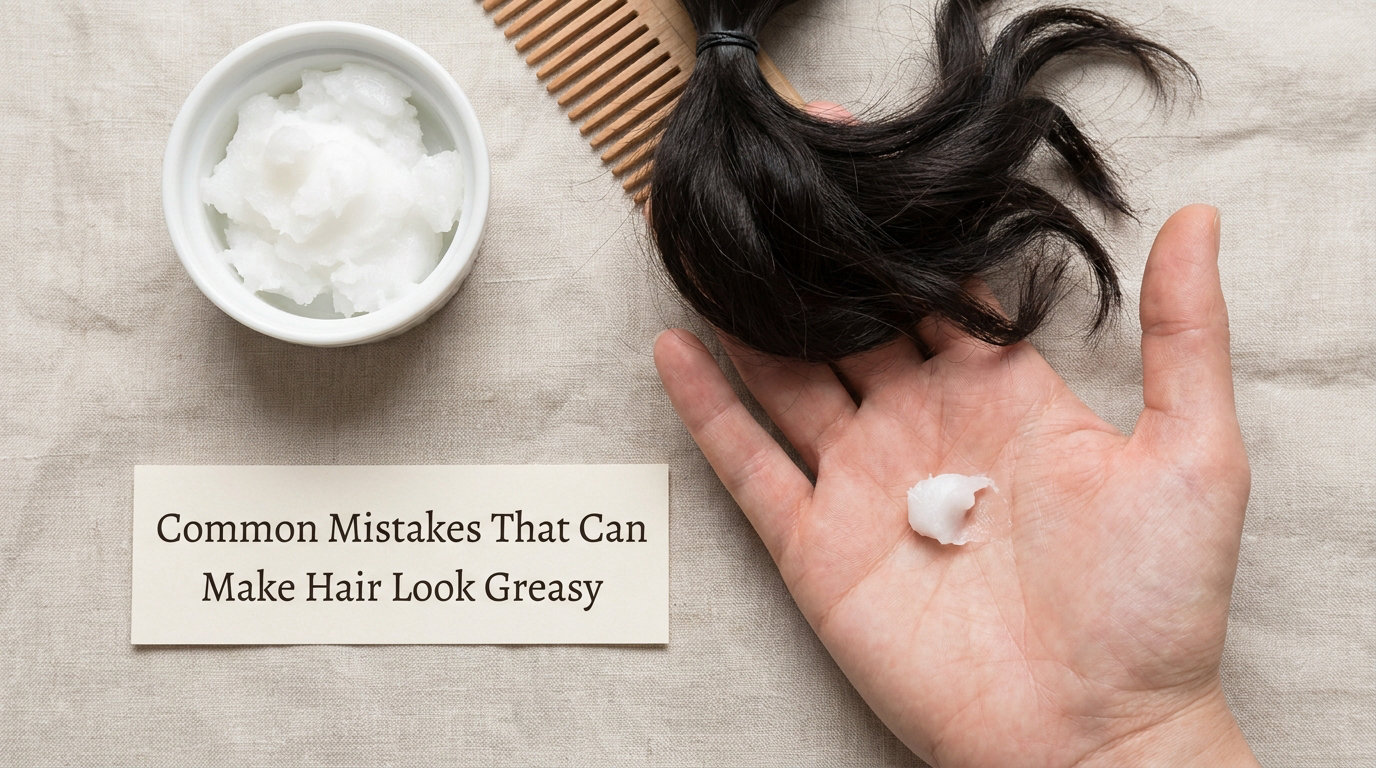
Almost every bad coconut oil experience traces back to one of six things. None of them mean the oil does not work for you.
Putting it on the scalp. The scalp has its own oil glands and does not need help. Keep the application on the mid-lengths and ends unless you are deliberately treating a dry, itchy scalp with a tiny amount, massaged in, and washed out.
Using more than necessary. A tablespoon looks modest in a bottle and heavy on hair. Halve what you think you need, then judge the result at the next wash.
Coating soaking-wet hair. Wet hair is already swollen with water and cannot take up much more. Blot it damp or let it dry more fully before you apply.
Skipping the second wash. One rinse leaves a film. Two gentle washes remove it properly, and the hair feels lighter afterwards rather than heavier.
Leaving it on for days. Overnight is fine for dry, porous hair. A coating left for a long stretch on hair that does not absorb oil well is how buildup starts, and buildup dulls everything.
Expecting repair. Coconut oil softens and smooths. It does not rebuild a damaged cuticle, replace missing protein or reattach a split end. A heavy oil treatment is a cosmetic smoothing step, not a fix.
If you are already in the greasy aftermath, reset with a clarifying shampoo, one wash, and a conditioner on the lengths. Skip oil for a week or two, then start again at half the amount.
How to Choose the Best Amount for Your Hair
More oil is not better. The right amount is the smallest one that gives you soft, shiny, manageable hair after the wash, and finding it means starting low and adjusting once or twice.
For fine or straight hair, stay at the lower end and keep it on the ends only. For medium hair, one teaspoon for shoulder length is the reference point. For thick, curly or coily hair, you can work up to two, applied in sections so the coverage is even. Length matters as much as thickness: hair past the mid-back usually wants more simply because there is more of it.
Porosity changes the picture too. Hair that drinks up product quickly, because it is bleached, permed or very porous, absorbs oil fast and needs less. Hair with low porosity sits slick and can take a thinner layer, because more just sits there.
| Hair type | Starting amount | Where it goes | Time before washing |
|---|---|---|---|
| Fine or straight | Half a teaspoon | Ends only | 10 minutes |
| Medium, shoulder length | 1 teaspoon | Mid-lengths and ends | 10 to 30 minutes |
| Thick, long or coarse | 1 to 2 teaspoons | Mid-lengths and ends, in sections | 30 minutes to a few hours |
| Bleached or highly porous | 1 teaspoon | Mid-lengths and ends | 30 minutes, or overnight under a cap |
| Low porosity, oily roots | A few drops | Ends only | 10 minutes |
Once a week is plenty for most people, and twice a week at most. In dry winter months you can lean toward the longer end; in humid weather, drop to once and cut the amount.
Users on r/longhair have long argued about whether virgin coconut oil does more than refined, and a thread there referenced a small-scale finding that hair can absorb roughly 15 percent of its weight in coconut oil within an hour. That figure is the reason the pre-wash, dry-hair method exists at all: the strand takes the oil in during the soak rather than sitting in it. It is also the reason more product does not help, because the hair fills up long before you run out.
When Coconut Oil May Not Be the Best Option
Coconut oil is an emollient. It coats, softens and smooths, and it can reduce how much internal protein your hair loses during washing and heat styling. That is a real effect, and it is a temporary one.
It cannot repair a damaged cuticle, replace protein that has already washed out, close a split end, regrow hair or treat a scalp condition. No credible research links coconut oil to faster hair growth, and anyone telling you it does is describing the illusion of thicker-looking hair, which is a different and much more modest claim.
Be careful with fine, straight or already-oily hair, where even a small amount can look slick. Be careful with protein-sensitive hair, which tends to be fine, fragile and stiff when overloaded, and which benefits more from a water-based treatment. Be careful with oily or acne-prone skin along the hairline, where a rich oil can cause breakouts.
If you have persistent itching, flaking, a rash, heavy shedding or breakage that is not improving, see a dermatologist or a qualified hair-care professional. Coconut oil sits on the surface; it is not a treatment for any of those, and treating them with oil can make them harder to assess.
Frequently Asked Questions
Does coconut oil work for dry and damaged hair?
It helps dry hair by softening it, slowing water loss and cutting down on the protein that washes out of the strand. It smooths frizz, softens brittle ends and makes hair easier to detangle. It does not rebuild a damaged cuticle or close a split end, so treat it as a conditioning step rather than a repair. Expect softer, shinier hair, and expect results to fade after a wash.
Can I leave coconut oil on my hair overnight?
Yes, if your hair is very dry, bleached or porous. Wrap your hair in a shower cap or a satin scarf so the oil stays on the lengths rather than your pillow. Overnight is not necessary for everyone, though. Fine, straight or low-porosity hair usually does better with a 10 to 30 minute soak, and leaving more oil on than your hair can absorb is how buildup starts.
How do I remove coconut oil buildup from my hair?
Wash twice. Massage shampoo into the scalp first, then work the lather down through the mid-lengths and ends where the oil actually sits. Rinse and repeat once. If hair still feels coated and dull, use a clarifying shampoo once, followed by conditioner on the lengths. Pause oil for a week or two, then restart at half the amount you used before.
Is coconut oil suitable for naturally curly or coily hair?
It suits most curly and coily hair, which is often dry and porous and can absorb oil quickly. Start with about one teaspoon, apply in sections to damp mid-lengths and ends, and leave it 10 to 30 minutes. A few drops left in on day two can refresh curls without weighing them down. Curly hair that is well moisturised may need much less than a straight-haired routine does.
Should I use coconut oil on a dry scalp?
Only a small amount, and only if the scalp is dry and not irritated. Warm oil in your fingertips, part your hair in small sections and massage a little into the scalp, then wash out after 10 minutes. Skip it if your scalp is oily, flaking heavily, itchy or inflamed, and see a dermatologist for persistent symptoms. Oil will not treat dandruff or a rash.
How often should I use coconut oil on dry hair?
Once a week is a good default for most hair types, and twice a week at most. In dry winter months you can use the longer soak; in humid weather, cut back to once and use less. Fine or oily hair needs the least. If your hair looks dull and heavy rather than soft and shiny, that is buildup, and the fix is to pause for a week or two rather than to wash harder.
Conclusion
Start with less than one teaspoon. If you want the short version of how to use coconut oil on dry hair, that is the whole of it: warm the oil, press it into damp mid-lengths and ends, keep it off the scalp, wait about 10 minutes, and shampoo twice until the water runs clear. Do that once a week and judge it at the second wash, not the first.
Consistency and a thorough rinse matter far more than a heavy coating. If your hair is soft and manageable afterward, the amount was right. If it is limp and sticky, halve it next time.