
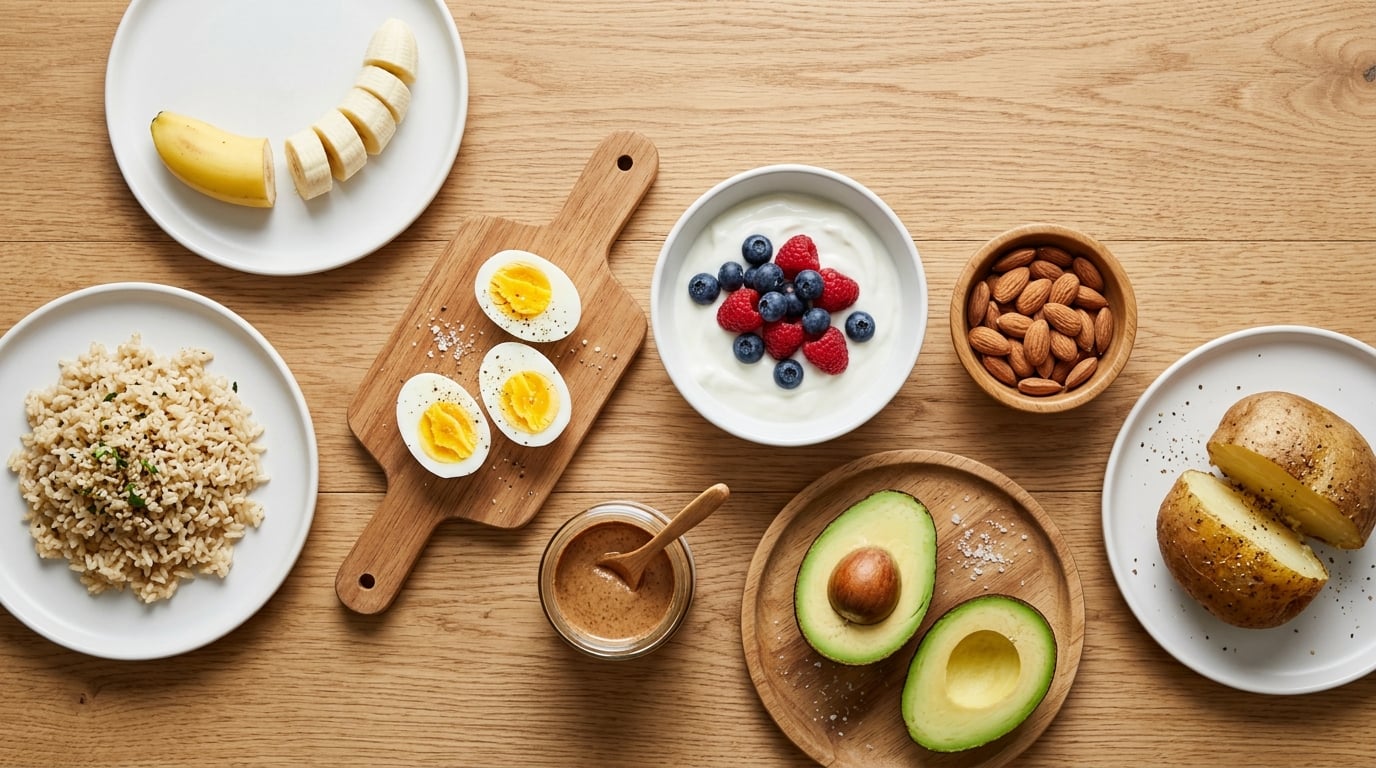
You do not need a protein shake after training. If you are wondering what to eat after a workout without a shake, the answer is ordinary food: get 20 to 40 grams of protein plus some carbohydrates within about two hours of your session. Greek yogurt, eggs on toast, rice with black beans, cottage cheese, or nut butter on a banana all work. Here are 20 options, with the protein math and prep time for each.
That premise matters more than it sounds. On fitness forums, the most repeated complaint about shakes is not flavor, it is that powder upsets people’s stomachs badly enough that they quit it. Real food sidesteps the problem entirely, and it brings fiber, micronutrients, and fats a scoop of powder never will.
Use the 20 to 40 gram range as a working target rather than a rule carved in stone. Someone training twice a week and eating well across the day can land near the bottom of that range. Someone chasing hypertrophy and eating poorly at every other meal needs the top of it.
Table of Contents
- What to Eat After a Workout Without a Shake at a Glance
- 1. Banana with Peanut Butter
- 2. Apple with Almond Butter
- 3. Rice with Black Beans
- 4. Baked Potato with Greek Yogurt
- 5. Eggs on Whole-Grain Toast
- 6. Cottage Cheese with Fruit
- 7. Tuna and Avocado Wrap
- 8. Oatmeal with Berries and Nuts
- 9. Hummus with Whole-Grain Pita and Vegetables
- 10. Grilled Chicken and Sweet Potato
- 11. Salmon with Quinoa
- 12. Lentil Soup with Whole-Grain Bread
- 13. Whole-Grain Toast with Avocado and Egg
- 14. Protein-Rich Cereal with Soy Milk
- 15. Edamame with Sea Salt
- 16. Turkey and Cheese Roll-Ups with Grapes
- 17. Yogurt Bowl with Granola and Seeds
- 18. Vegetable Rice Bowl with Tofu
- 19. Whole-Grain Crackers with Cheese and an Orange
- 20. Chocolate Energy Bites
- Frequently Asked Questions
- Conclusion
What to Eat After a Workout Without a Shake at a Glance
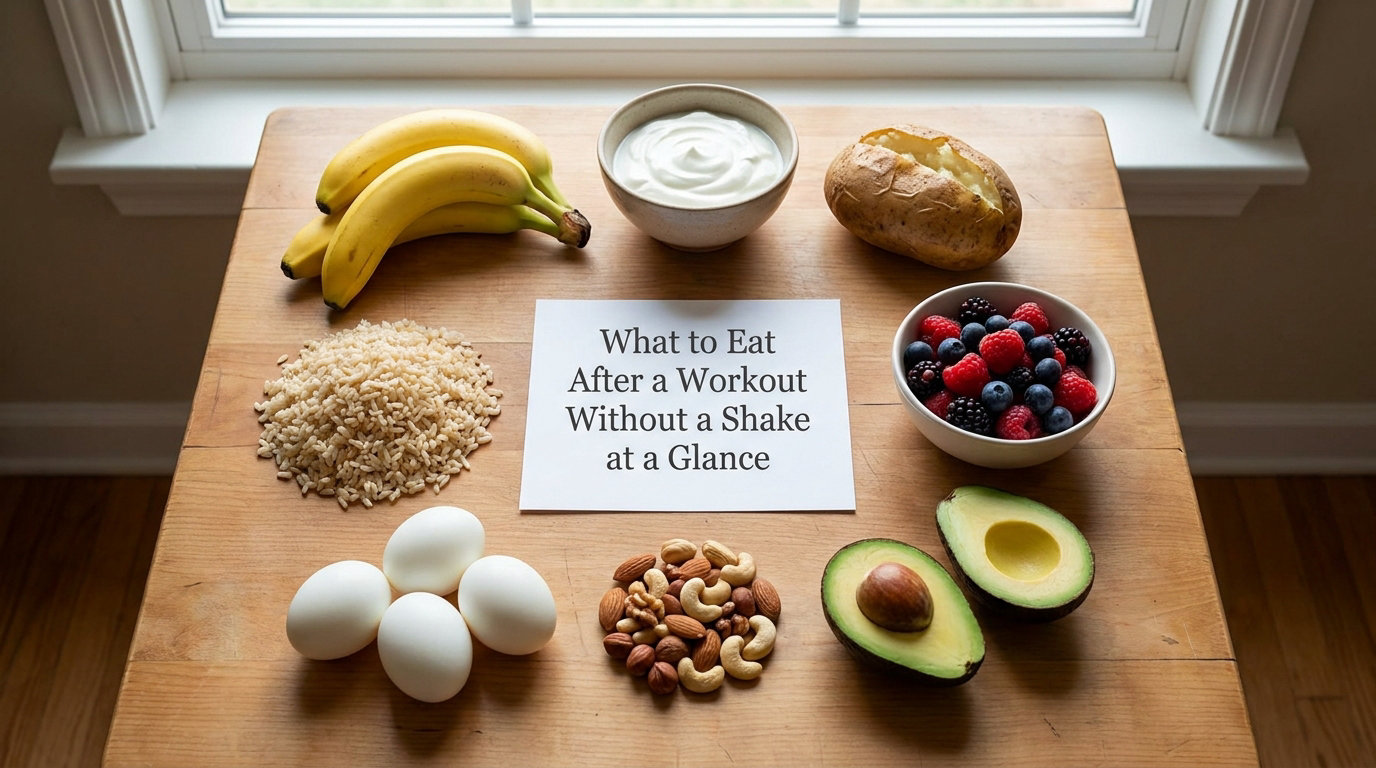
The table below sorts all 20 options by what they are actually good at. Use the strength column to match the food to your workout, and the timing column to decide how quickly it has to be on the plate.
| Food | Primary strength | Best timing | Snack or meal |
|---|---|---|---|
| Banana with peanut butter | Fast carbs plus fat | Within an hour of cardio or lifting | Snack |
| Apple with almond butter | Fiber with slow fat | Any time you are away from a kitchen | Snack |
| Rice with black beans | Carbs plus plant protein | After a heavy leg session | Meal |
| Baked potato with Greek yogurt | Carbs with high protein | After strength training | Meal or big snack |
| Eggs on whole-grain toast | Complete protein plus carbs | Within two hours of training | Meal |
| Cottage cheese with fruit | Slow-digesting protein | Evening training, or a light day | Snack |
| Tuna and avocado wrap | Protein with unsat fat | Lunchtime session or travel day | Meal |
| Oatmeal with berries and nuts | Slow carbs plus fats | Morning workouts | Meal |
| Hummus with pita and veg | Plant fat and protein | Afternoon training | Snack |
| Grilled chicken with sweet potato | Lean protein plus carbs | Post-workout dinner | Meal |
| Salmon with quinoa | Omega-3s plus protein | Twice a week or more | Meal |
| Lentil soup with bread | Fiber and sustained fullness | Long endurance sessions | Meal |
| Toast with avocado and egg | Balanced plate in ten minutes | Any session | Meal |
| Protein cereal with soy milk | Fast no-cook bowl | Under five minutes needed | Snack |
| Edamame with sea salt | Plant protein and carbs | On the go | Snack |
| Turkey and cheese roll-ups | No-cook protein and fat | Desk or gym-bag snacks | Snack |
| Yogurt with granola and seeds | Layered texture, quick build | Breakfast session or snack | Snack |
| Rice bowl with tofu | Meal-prep batch protein | Planned week of training | Meal |
| Crackers with cheese and orange | Four food groups in one plate | Light session, light hunger | Snack |
| Chocolate energy bites | Make-ahead portable carbs | Batch cook on a Sunday | Snack |
What to eat after a workout without a shake when you have five minutes or less
Time is the real reason people buy powder in the first place, so the fast lane deserves its own answer. Banana with peanut butter, apple with almond butter, cottage cheese with fruit, edamame, protein cereal with soy milk, and turkey roll-ups all take under five minutes and none of them need a stove.
Pair any of them with water and, if you trained hard in heat, something with sodium and potassium. Plain water alone is fine for a normal indoor session.
1. Banana with Peanut Butter
A banana is close to pure fast carbohydrate, and peanut butter brings roughly 7 grams of protein plus fat that slows the sugar spike. That pairing is the most-cited shake replacement on training forums, and it works because it is edible in four minutes flat.
One medium banana with two tablespoons of peanut butter lands around 7 grams of protein and 30 grams of carbohydrate. Split a second banana in if you just came out of a heavy strength session.
2. Apple with Almond Butter
An apple is portable, high in fiber, and almost impossible to spoil in a gym bag. Almond butter adds about 7 grams of protein per two tablespoons along with vitamin E and unsaturated fat.
On its own this is more of a carbohydrate snack than a recovery meal, so treat it as a top-up rather than the whole answer after a long session. Slice the apple if you want it to last longer.
3. Rice with Black Beans
Leftover rice and a can of black beans make the cheapest real post-workout meal most people will ever assemble. Rice refills glycogen after a leg day, and a cup of black beans adds about 15 grams of protein along with fiber that keeps you full for hours.
Build the bowl with one to two cups of rice, half a cup to a cup of beans, salsa, a squeeze of lime, and any extra vegetables from the crisper drawer. Cumin and smoked paprika on the beans do most of the work.
4. Baked Potato with Greek Yogurt
A baked potato is a large, cheap carbohydrate delivery vehicle, and plain Greek yogurt on top turns it into a real protein serving of roughly 17 grams in three-quarters of a cup. It looks indulgent and works out to about 25 grams of protein per plate.
Bake a batch of potatoes on Sunday and they reheat fast all week. Keep the yogurt plain so you are getting protein rather than sugar, and add chopped broccoli or spinach for color and fiber.
5. Eggs on Whole-Grain Toast
Two eggs give about 12 grams of complete protein, and whole-grain toast supplies the carbohydrate to start refilling glycogen. This is the most consistently repeated real-food post-workout combination in forum threads, mostly because it is boring in the best way.
Cook the eggs however you like, but the food safety rule is firm: cook whole eggs to 160°F (71°C) until the whites and yolk are firm. A boiled batch keeps for five days in the fridge, so the morning-after decision is already made.
6. Cottage Cheese with Fruit
Cottage cheese is about 28 grams of protein per cup, and casein digests slowly, which makes it a good late-evening option when you do not want to be hungry an hour later. Berries, sliced peaches, or pineapple all pair well and add vitamin C.
Half a cup to a cup is plenty on its own. It also works as the base for the yogurt bowl idea further down if you want something that eats more like breakfast.
7. Tuna and Avocado Wrap
A can of tuna in water brings roughly 25 grams of protein for very little effort, and avocado adds monounsaturated fat and fiber to slow digestion. On a whole-grain wrap with sliced tomato, this is a five-minute lunch that travels.
Mix the tuna with a spoon of Greek yogurt or mustard instead of mayonnaise to cut the fat, and keep the assembled wrap cold until you eat it. Any leftover tuna goes in the fridge within two hours of opening.
8. Oatmeal with Berries and Nuts
Half a cup of dry rolled oats cooked in milk gives about 8 grams of protein and a slow-release carbohydrate that suits morning workouts, when most people have not eaten much yet. Overnight oats do the same work with zero heat.
Top with a handful of blueberries and a tablespoon of almonds or walnuts. That combination comes up again and again in lifters’ threads as the breakfast that keeps them full until lunch.
9. Hummus with Whole-Grain Pita and Vegetables
A quarter cup of hummus carries about 6 grams of plant protein and a fair amount of fat, and the pita and carrot sticks supply the carbohydrate and crunch. It is a plate of food rather than a single item, which makes it satisfying after a long session.
Cut several pitas and a bag of vegetables on a Sunday. The whole snack plate holds about 10 grams of protein, so add a hard-boiled egg or a handful of almonds if you need to reach the 20 gram mark.
10. Grilled Chicken and Sweet Potato
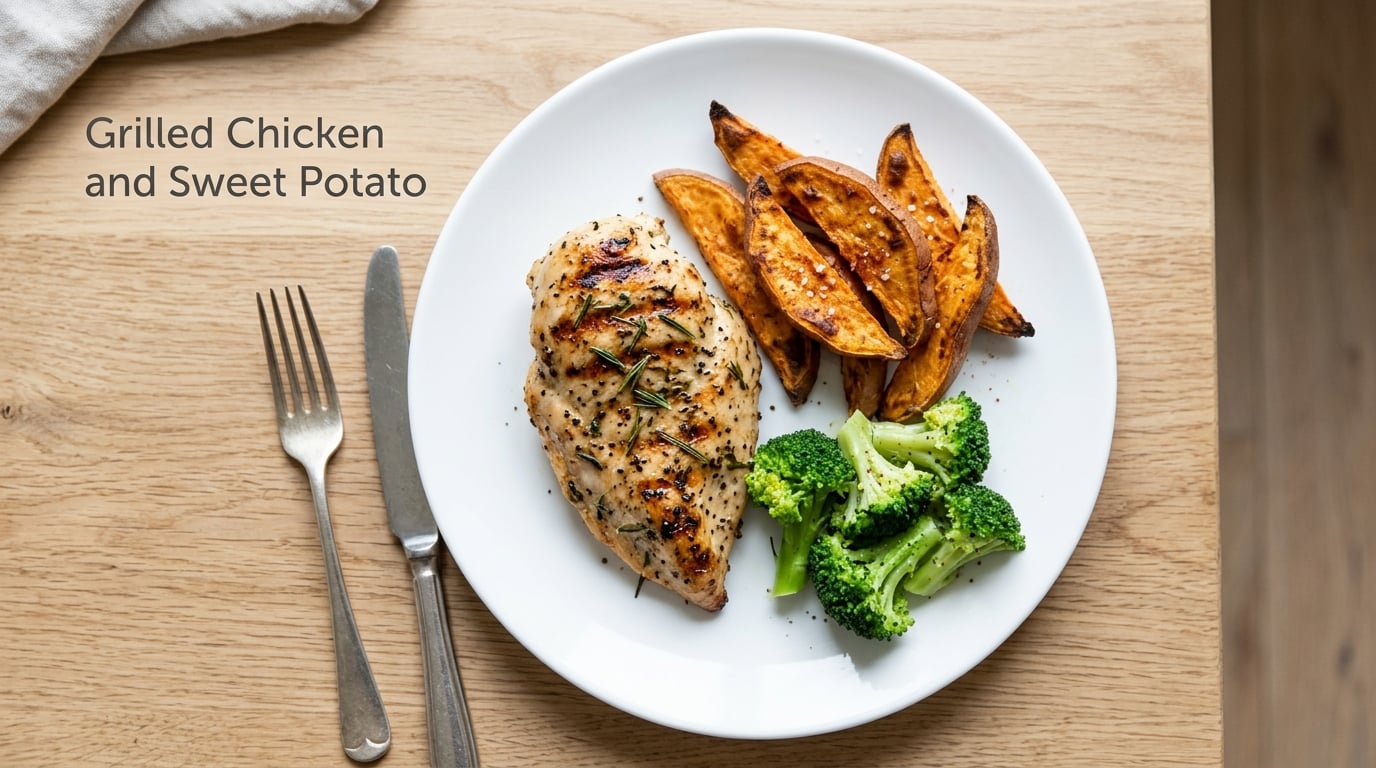
Chicken breast and sweet potato is the meal-prep default for a reason. A four-ounce cooked breast gives about 26 grams of protein, and a medium sweet potato puts roughly 25 grams of carbohydrate on the plate with potassium, beta-carotene, and a color that makes the meal look better than it is.
Roast a tray on Sunday and you have four meals decided. Chicken must reach 165°F (74°C) at the thickest point before it goes in the fridge, and cooked chicken and sweet potato keep three to four days. Reheat in a hot oven or microwave until steaming all the way through.
11. Salmon with Quinoa
Salmon delivers about 22 to 25 grams of protein per three-ounce portion along with EPA and DHA, the omega-3 fats linked in research to reduced exercise soreness. Quinoa adds about 8 grams of complete plant protein and a fluffy carbohydrate base in the same pot.
Cook both on one sheet pan: salmon at 400°F (204°C) until it flakes and reaches 145°F (63°C), quinoa alongside. Two salmon meals a week is a reasonable target for most people who train regularly.
12. Lentil Soup with Whole-Grain Bread
A bowl of lentil soup is one of the easiest ways to hit both ends of the target at once: a cup of cooked lentils carries about 18 grams of protein and a slow carbohydrate load that refills glycogen steadily. It is the pick for weekend long runs, where you need recovery fuel without heaviness.
Simmer carrots, celery, onion, a can of tomatoes, and a cup of red lentils for half an hour. Serve it with a slice of whole-grain bread, and this is what to eat after a workout without a shake when the session ran past an hour.
13. Whole-Grain Toast with Avocado and Egg
One slice of whole-grain toast, half a mashed avocado, and one egg gives you carbohydrate, unsaturated fat, and about 6 grams of protein in a single plate that takes ten minutes. It is the default answer for a training session that ended at an inconvenient hour.
Mash the avocado onto the toast first, then cook the egg in the same pan. For food safety, cook the egg until the white is set and the yolk is firm, or until it reaches 160°F (71°C).
14. Protein-Rich Cereal with Soy Milk
Cereal gets dismissed as a workout food, but a high-protein whole grain cereal in soy milk delivers around 10 grams of protein per bowl with almost no prep. Soy milk is the one to use here, since it carries close to 7 grams of protein per cup against roughly 1 gram for dairy-free almond milk.
Check the label and aim for a cereal listing 8 grams of protein or more per serving. Add a spoon of soy yogurt or a handful of pumpkin seeds if you want to push the bowl past 20 grams.
15. Edamame with Sea Salt
One cup of shelled edamame gives roughly 17 grams of plant protein plus 14 grams of carbohydrate, which makes it one of the better-snacking vegetables that exists. It comes out of the freezer in minutes and needs nothing but a pot of salted water.
Five minutes of boiling, or three in a microwave. Serve it alone as a snack, or toss it into a rice bowl, a salad, or a stir-fry to make a side dish into a meal.
16. Turkey and Cheese Roll-Ups with Grapes
Two slices of turkey and a slice of cheese rolled around a few grapes gives roughly 14 grams of protein, fat, and fruit in a package you can eat standing up. There is no cooking, no plate, and nothing to wash afterward.
Roll the tightest ones first with the seam facing down. Keep them in the fridge and eat them within three to four days of assembly, or refrigerate the sliced meat and roll to order so they stay fresh for the whole week.
17. Yogurt Bowl with Granola and Seeds
Greek yogurt, granola, and a tablespoon of seeds is a snack that reads like a small bowl of granola yogurt and lands around 20 grams of protein with plenty of crunch. It layers, so you control how sweet it tastes by how much granola goes on top.
Use plain yogurt so the protein is not hiding under added sugar. For a dairy-free version, unsweetened soy yogurt behaves identically here and holds the same protein range.
18. Vegetable Rice Bowl with Tofu
Tofu gives about 10 grams of protein per half block and takes on any sauce you give it, which makes it the workhorse of plant-based recovery meals. Over leftover rice with whatever vegetables are left, that is a complete plate.
Press the tofu for ten minutes, pan-fry until golden, and pour a sauce of soy, rice vinegar, ginger, and a little sesame over both the tofu and the rice. Keep cooked rice refrigerated and use it within three to four days, reheating until steaming hot all the way through.
19. Whole-Grain Crackers with Cheese and an Orange
This is a snack plate that covers four food groups without feeling assembled: crackers for carbohydrate, a slice or two of cheese for about 7 grams of protein and fat, and an orange for vitamin C and quick carbs. Good after a light session when a full meal would be too much.
Choose crackers with at least 3 grams of fiber per serving, and pair with real cheese rather than a cracker spread so the protein is not mostly added sugar.
20. Chocolate Energy Bites
Oats, nut butter, dates, and cocoa rolled into balls make a make-ahead post-workout snack that travels better than anything else on this list and delivers roughly 6 to 8 grams of protein a ball. Two of them covers the carb side as well.
Store them in an airtight container in the fridge for about a week, or freeze them for longer. Use nut butter with no added sugar and sweetened cocoa, and skip sweetened chocolate chips if you are keeping sugar low. Two balls is a sensible portion even though the recipe makes more than that.
Frequently Asked Questions
Can I skip a protein shake after a workout?
Yes. Whole food delivers the same amino acids a shake does, and it comes with fiber, fats, and micronutrients that powder omits. Aim for 20 to 40 grams of protein plus some carbohydrates within roughly two hours of training, and eat within three hours at the latest. If food cannot wait that long, something portable like banana with peanut butter or cottage cheese with fruit closes the gap.
Can you still build muscle without protein shakes?
You can. Muscle growth depends on progressive training and total daily protein, not on the delivery format of one post-workout item. Most people eat their protein across three or four meals anyway, so a shake covers only a fraction of the total. Use whole foods for most of your intake and treat timing as far less important than hitting your daily number.
What should I eat for protein after a workout?
Pick a food that gives 20 to 30 grams of protein in a serving you actually enjoy. Greek yogurt, cottage cheese, eggs, chicken breast, salmon, canned tuna, lentils, edamame, and tofu all fit. Add a carbohydrate source such as rice, potato, oats, or fruit, because glycogen refilling matters as much as protein, especially after cardio or leg day.
Are 2 eggs enough protein after a workout?
Two large eggs give about 12 grams of protein, which is a reasonable snack but low end of the 20 to 40 gram range. Pair them with whole-grain toast for carbohydrate, or add a cup of Greek yogurt, a scoop of beans, or a glass of milk to bring the total up. On their own after a heavy session, two eggs usually leaves you short.
What is the 2 hour protein rule?
It is a practical guideline, not a law of physiology. The old claim was that muscle protein synthesis collapses within an hour of training. Research has since shown the window is much wider, and total daily protein matters more than speed. Treat two hours as a convenient target, especially before your next session, and stay relaxed if dinner is at three hours.
What if I don’t eat protein immediately after a workout?
Nothing bad happens if you wait. Muscle protein synthesis stays elevated for hours after training rather than closing at a set time. What does matter is that you get enough protein later the same day, ideally within about three to five hours, and that you refuel before your next hard session. A shake is convenient, never mandatory.
Conclusion
Start by picking the option that matches how much time you have. Five minutes or less, eat a banana with peanut butter, cottage cheese with fruit, or edamame. Thirty minutes with a stove, cook eggs on whole-grain toast or rice with black beans. A full evening, go for grilled chicken with sweet potato or salmon with quinoa.
Across every option, the same three numbers matter: 20 to 40 grams of protein, a serving of carbohydrate to refill glycogen, and eating within a few hours of finishing. Whole food hits all three without the cost, taste, or digestive fallout that drives people off powder in the first place.
If you are training around an injury, managing a health condition, or unsure how much protein your body actually needs, talk to a doctor or registered dietitian before changing your plan. Otherwise, pick one food from this list you already like and eat it after your next session, and remember that what to eat after a workout without a shake is far less complicated than the marketing suggests.