
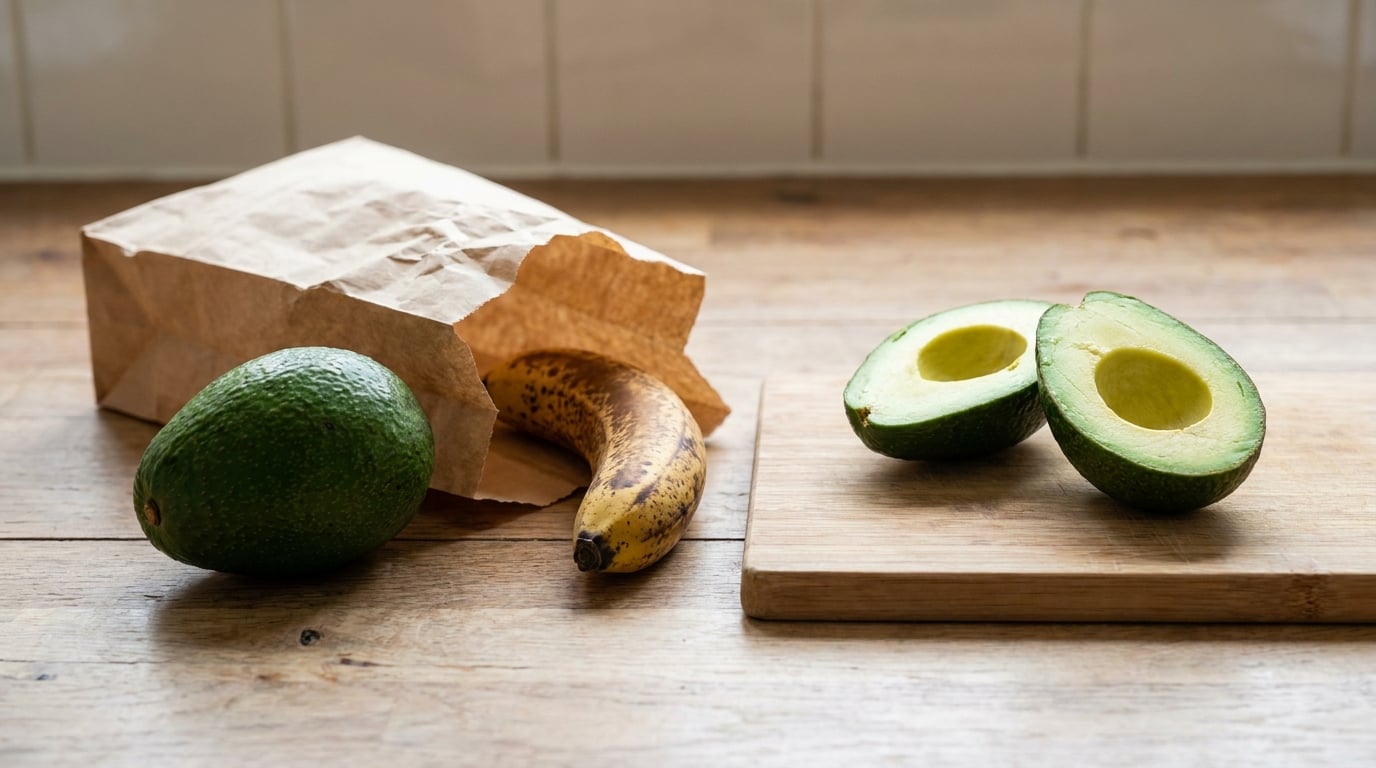
To ripen an avocado fast, put it in a brown paper bag with a ripe banana or apple, fold the top loosely, and leave it at room temperature for 1 to 3 days. The fruit traps its own ripening gas, and the banana or apple adds more, which is why a supermarket avocado that would take a week on the counter softens in a day or two this way. No oven, no microwave, no gadgets.
The catch is that “fast” has a ceiling. Paper bag and warmth change the pace of ripening, not the chemistry of it. If you need sliced avocado in your hand in ten minutes, no kitchen method will get you there with good flavor, and pretending otherwise is how people end up with a rubbery, faintly bitter mess. Heat-based methods cook the flesh soft rather than ripening it, and there is a real difference between the two.
Here is what actually works, ordered by how much time you have, plus the tests that tell you when the fruit is ready and the handful of habits that quietly undo all of it.
Table of Contents
What You Need
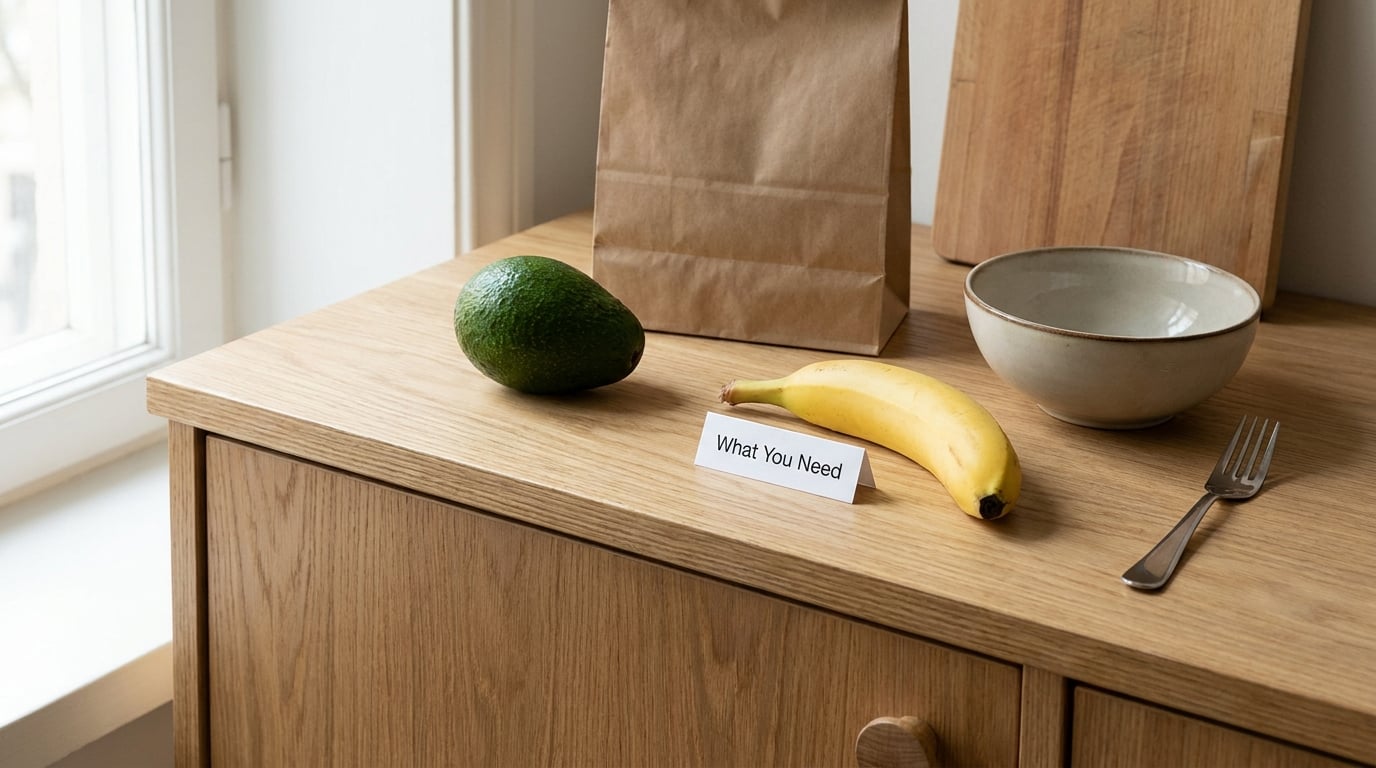
The whole method costs almost nothing and takes about fifteen seconds to set up. You need four things, and three of them are optional depending on how fast you need the fruit.
- A ripe banana or apple. One piece of fruit is enough for a bag with two or three avocados. The ripeness matters more than the type: a banana with brown speckles and a soft neck gives off far more ethylene gas than a firm yellow one.
- A brown paper bag. A lunch bag or the paper sack your avocados came home in both work. The paper lets a little gas escape while keeping enough of it around the fruit, which a plastic bag does not do.
- A bowl or a spot on the counter. If your kitchen is on the cool side, a bowl on top of the refrigerator gives you the gentle warmth that shortens the timeline.
- A fork, for the check. This is the tool that matters most and the one people skip. The stem test tells you more in five seconds than a week of squeezing.
That is the whole list. No thermometer, no foil, no microwave required for the method that works best.
Step-by-Step: How to Ripen an Avocado Fast
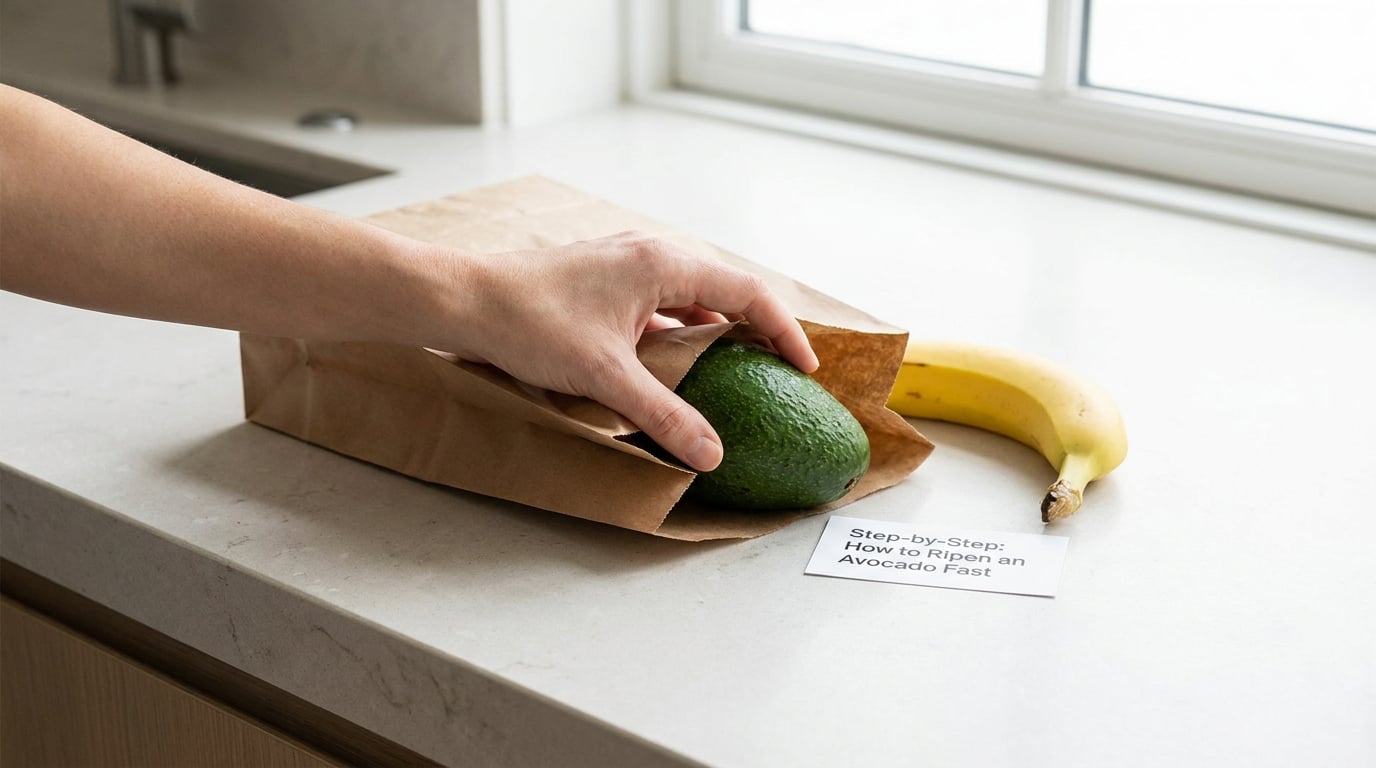
Here is the process in order, with the timing and the readiness check built in. The numbers assume avocados bought at typical firmness, the rock-hard ones you get from a supermarket rather than a market stall.
- Put the avocado in the bag. One fruit per bag if you want even ripening, more if you are in a hurry and do not mind checking twice a day.
- Add a ripe banana or apple. Two bananas for a bag of three or four avocados. Skip the fruit and the bag still helps, but not by much.
- Fold the top loosely. Close enough to hold the gas, loose enough that the paper does not bulge like a balloon. A sealed bag traps moisture as well as gas, and damp skin is how fruit rots instead of ripening.
- Set the bag somewhere warm and out of direct sun. A countertop, a cupboard, or a bowl sitting on top of the refrigerator. Ideal is roughly 68 to 75 F, which is warmer than a lot of kitchens and cooler than a sunny windowsill.
- Check twice a day with the stem test. Start checking after 12 hours. Soft avocados are ready in 12 to 24 hours, firmer ones take 1 to 3 days, and rock-hard fruit bought cold from a store can run to 4 or 5 days even with the trick.
How to Ripen an Avocado Fast With a Paper Bag and Ripe Fruit
Yes, avocados ripen quicker in a paper bag. The reason is that avocados are climacteric fruit, a term that means they keep releasing ethylene gas after they are picked rather than stopping when they leave the tree. That gas is the signal that tells the flesh to soften, turn creamy, and develop its flavor.
Left alone on a counter, most of that gas drifts away and the fruit ripens over 4 to 7 days. Fold it into a paper bag with a ripe banana and the concentration of ethylene around the fruit jumps, so the same fruit softens in a fraction of that time. The banana is a gas pump, not a heat source. Swapping it for an apple, a ripe peach, or a pear works the same way.
Any tip on how to ripen an avocado fast comes down to trapping that gas and giving it warmth to work in. Check with the stem test rather than by squeezing the skin, which tells you very little about the flesh underneath. If you prefer the paper bag but the fruit is still firm after two days, add a second banana and move the bag somewhere warmer. A batch ripens unevenly, so pull the one that feels ready and leave the rest going.
Use Warmth to Ripen an Avocado Faster
Gentle warmth speeds ripening, but only gentle warmth. The top of the refrigerator is the sweet spot for most kitchens: often 70 to 80 F, warm enough to help and nowhere near hot enough to cook anything.
Check the bag every 8 to 12 hours. Each time, feel the fruit lightly, then pop the stem cap. Warmed fruit can go from firm to overripe in a single afternoon, so treat the first sign of give as a reason to use it, not to keep waiting.
Avoid a sunny windowsill and avoid any spot near a stove or oven. Direct sun drives the fruit past ripe into bitter and rubbery very quickly, which is a disappointing thing to discover while slicing. If your kitchen stays cold, the warm bowl approach is the fix, and it costs you nothing but a little patience and a place to sit the bowl.
Check Whether the Avocado Is Ripe
Three checks, in order of how much they tell you. The stem test is the most reliable and takes five seconds.
- The stem test. Pull the small brown cap at the stem end. If it comes away easily and the skin underneath is bright green, the fruit is ready to eat. If the cap resists, it needs another day. If you see brown or black patches under the cap, move on to the next avocado.
- Gentle pressure. Press the skin near the stem with your thumb. A ripe Hass gives slightly under pressure, like the give in a ripe peach. No give at all means unripe. Mushy, dented, or leaking means overripe.
- Color, last. Hass avocados go from dark green to nearly black as they ripen, and skin color is far less reliable than the first two tests. Plenty of people throw out a perfectly good avocado for being black, which is a costly habit for no reason.
Overripe and spoiled are not the same thing. An overripe avocado is brown and soft, smells sweet, and is fine mashed into guacamole, blended into a mousse, or stirred through a batch of muffins. A spoiled one smells sour or off, has sunken or leaking skin, and shows dark watery patches under the skin.
Common Mistakes
Most avocados that refuse to ripen were not treated badly on purpose. One of these was probably involved, and the fix is simple once you know which one it is.
Sealing the avocado in a plastic bag. A zip-top bag or a closed tote traps humidity along with ethylene, and damp skin traps mold and rot instead of ripening. A paper bag holds the gas and lets moisture escape. If a plastic bag is all you have, punch a few holes in it and leave it open at the top.
Leaving the fruit in direct sun. Sunlight is not a ripening aid, it is a cooking method with no control dial. Fruit left on a sunny sill can go from firm to bitter and rubbery in an afternoon. Warmth helps; heat harms.
Judging ripeness by skin color alone. Hass skin darkens well past the point of peak eating quality, and some varieties barely change color at all. Use the stem test and the press test. Dark skin on a firm fruit is fine; light skin on a soft fruit is fine too.
Refrigerating an unripe avocado. A cold kitchen is the most common reason people are still slicing rock-hard fruit five days after buying it. Below about 50 F, ripening slows to a crawl and can appear to stop entirely. Keep unripe fruit at room temperature, and move it to the refrigerator only once it is ripe.
Discarding an avocado for being dark. Black skin does not mean spoiled. Cut it, look at the flesh, and smell it. Uniformly green-to-brown flesh with a clean, mild smell is good, no matter what the peel is doing.
Reaching for the microwave first. Two or three 30-second bursts will soften a hard avocado, and the flesh will be watery, uneven, and sometimes bitter. Use it for guacamole that gets mashed straight into the bowl. Do not use it for slicing, and do not put a Hass in an oven at 400 F hoping for a ripe fruit, because you will get a cooked one.
If you want a way to speed things up without any bag at all, submerge the avocado in a bowl of water and leave it on the counter. The water keeps the skin from drying out, and some home cooks add a spoonful of raw rice water, which has a mild fermenting effect. It is not as reliable as ethylene, but it costs nothing.
Frequently Asked Questions
How long does it take to ripen an avocado fast?
A hard avocado in a paper bag with a ripe banana usually softens in 1 to 3 days. Check after 12 hours, because fruit bought slightly under-ripe can be ready by the next evening, while rock-hard supermarket avocados can take 4 to 5 days. At room temperature, natural ripening without a bag takes 4 to 7 days. Test with the stem pop, not the skin color.
Does putting an avocado in a microwave make it ripen?
It softens, but it does not ripen. Two or three bursts of 30 seconds each will turn hard flesh into something watery and uneven, and sometimes faintly bitter, because the microwave cooks the fruit rather than triggering ripening. A microwaved avocado is fine mashed into guacamole or blended into a mousse. It will not slice cleanly, so keep the paper bag as your first choice.
What is the fastest way to soften a hard avocado?
The fastest method that keeps good flavor is a paper bag with a ripe banana, left in a warm room for at least 12 hours. If you need something in under 30 minutes, heat is the only option: 30-second microwave bursts for guacamole, or foil in a low oven for mashing and baking. Both soften the fruit in minutes at the cost of texture and flavor, and neither makes a good slicer.
How can I tell if an avocado is ripe without cutting it?
Use the stem test. Pull the small brown cap at the stem end. If it lifts off easily and the skin below is bright green, the fruit is ready. If it resists firmly, give it another day. Gentle thumb pressure near the stem is the second check: a slight give means ripe, no give means unripe. Skin color is the least reliable signal and should not decide it.
Can I use an overripe avocado?
Yes, and in many recipes it is better. Very soft, brown flesh with a sweet smell is ideal for guacamole, smoothies, chocolate mousse, and muffins, where the texture is mashed or blended anyway. A sour smell, sunken skin, leaking flesh, or watery dark patches underneath means it has gone past overripe and should be discarded. The smell test decides it in one second.
How do I keep cut avocado from turning brown?
Rub the exposed flesh with lemon or lime juice, press plastic wrap directly against the surface to remove air, and refrigerate it. Acid slows the browning reaction and the wrap limits its contact with oxygen. A pit left in the flesh helps a little but is not a substitute for either step. Use cut avocado within a day, at most two, and mash it with lime if you need it to last longer.
Conclusion
If you only remember one step, make it this: put the avocado in a brown paper bag with a ripe banana, fold the top loosely, and set the bag somewhere warm. Fifteen seconds of setup, and a usable fruit within a day or two.
After that, judge by texture rather than color. Pop the stem cap, press gently near the stem, and stop waiting the moment there is a slight give, because the window between ripe and overripe is short. If you cut into an unripe avocado by mistake, it will still soften if you press the halves back together, wrap them tightly, and refrigerate them, though the shelf life is shorter than a whole fruit.
Once the avocado is ripe, refrigerate it whole and use it within about three days. For cut flesh, coat it in lemon or lime juice, press wrap against the surface, and eat it the next day.