
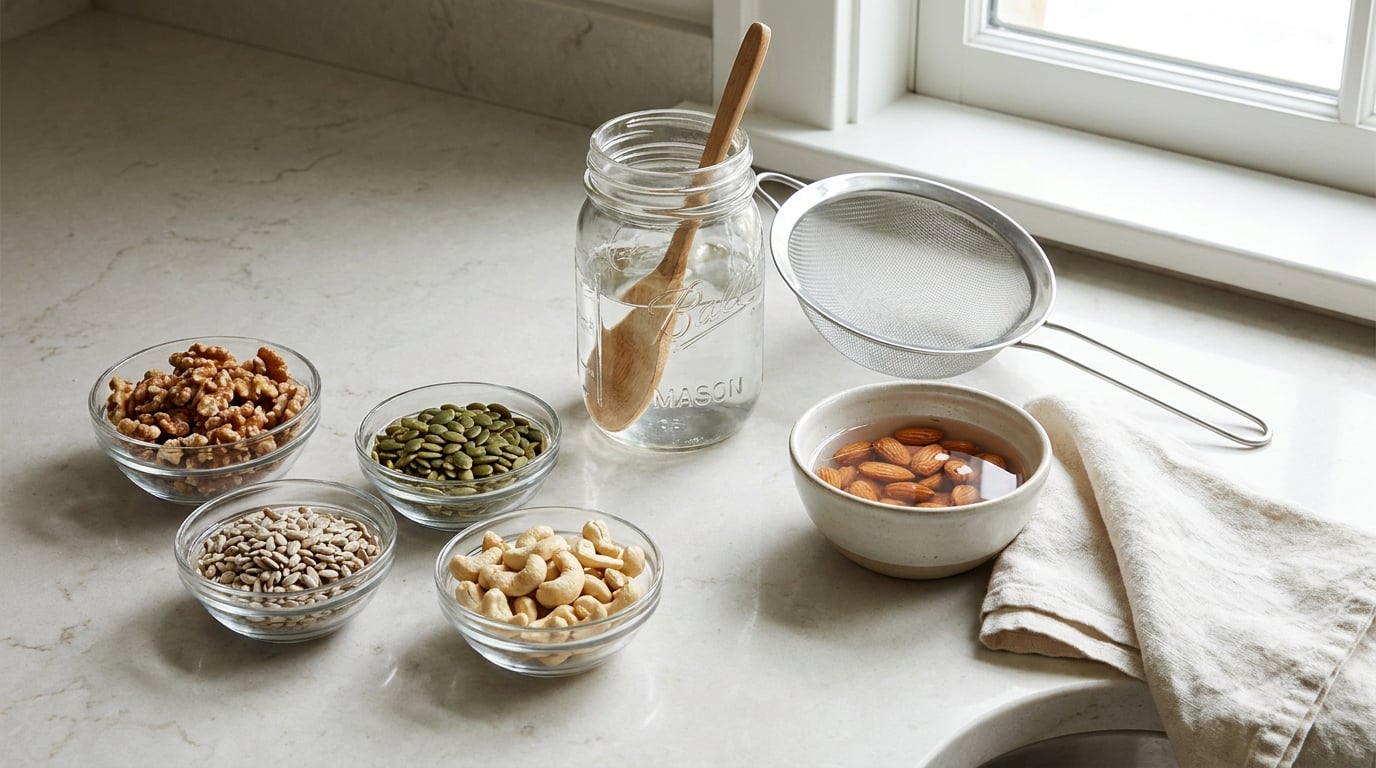
How to soak nuts and seeds before eating comes down to four moves: rinse them, cover them completely with cool water, optionally add a little salt, and wait until the texture softens, usually 2 to 12 hours. Most soaking happens at room temperature, then you drain, rinse again, and either dry the nuts and seeds or refrigerate them. The whole job takes about five minutes of active work plus the waiting.
Soaking is optional, not mandatory. It partially breaks down phytic acid, the compound in seeds that binds minerals like zinc and iron, and it makes raw nuts gentler on a sensitive stomach. I soak a jar of almonds every Sunday because raw ones have always felt heavy to me. If nuts never bother you, eat them straight from the bag.
Last updated: October 2026
Table of Contents
What You Need
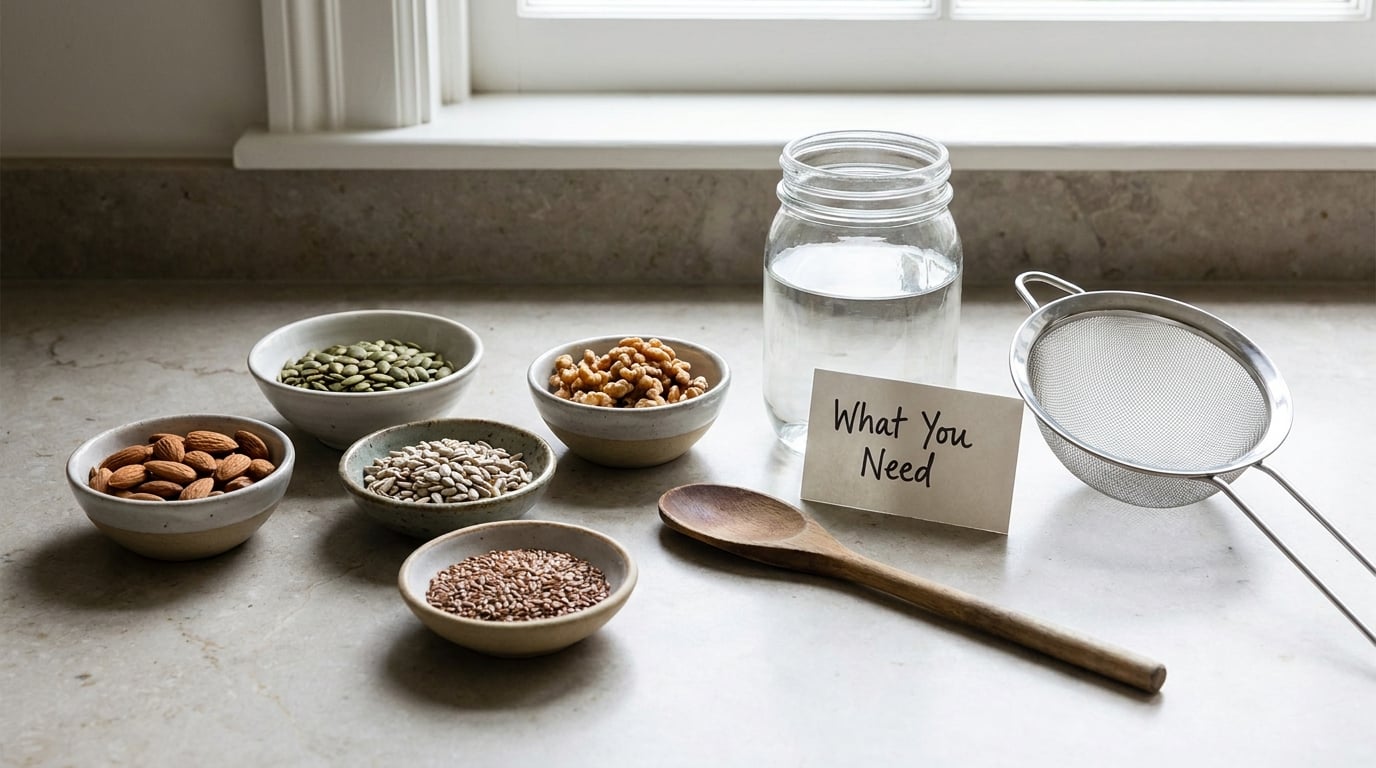
The equipment list is short because soaking is not a fussy process. You need the ingredients, water, a vessel, and somewhere to put the result afterward.
- The nuts or seeds: raw, unsalted, unroasted, and as fresh as you can get them. Raw is the point, since roasting and salting change how the kernel behaves in water.
- Cool water: filtered or spring water if your tap water tastes or smells odd. Cool, not hot, because warm water speeds up the growth of bacteria and mold on the surface.
- A wide bowl or a glass jar: large enough that everything swells without overflowing. A half-full mason jar of almonds roughly doubles in size overnight, so leave real headroom.
- A fine-mesh strainer or colander: essential for small seeds such as chia, hemp, and sesame that disappear down the drain otherwise.
- Measuring spoon: for water ratios, and for salt if you use it.
- A clean towel or a cooling rack: for drying.
- Salt, vinegar, or spices: entirely optional. Plain water does the job.
Step-by-Step: How to Soak Nuts and Seeds Before Eating
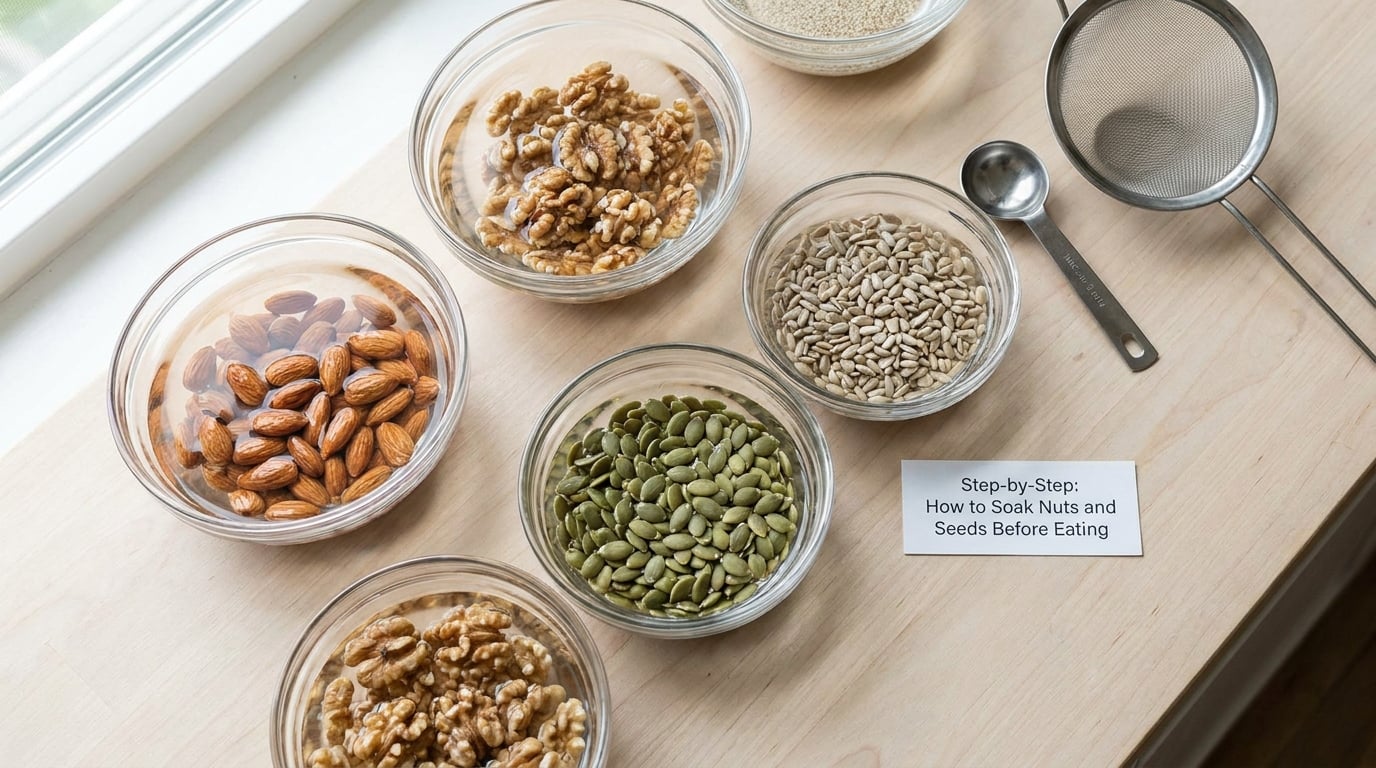
The basic method is the same for every ingredient: rinse, submerge, wait, drain, rinse, dry. The only thing that really changes between a pumpkin seed and an almond is how long it sits in the water.
Step 1: Choose the Nuts or Seeds
Buy raw, unroasted nuts and seeds. Skip anything that smells stale, tastes bitter, or has visible white, green, or grey fuzz on the shell, because moldy seeds will not improve with a few hours in water. Discard the whole batch rather than picking out the good pieces, since the off flavors move through the container quickly.
Plan your soak around size. Small seeds such as chia, hemp, and sesame swell fast and go slippery well before an almond changes. Large, dense nuts such as pecans and hazelnuts need the longest time. Seeds meant for sprouting follow their own schedule entirely, and that schedule is what the times below are drawn from.
Step 2: Rinse Before Soaking
Pour the nuts or seeds into a strainer and rinse them under cold running water. Rub the pieces between your fingers to knock off dust and any residue from the bag. Check for insects or broken, blackened pieces and pick them out.
Rinsing first matters more than it sounds. You are washing away surface mold spores and storage dirt before they sit in standing water for half a day, which is the exact combination that turns a good batch into a slimy one. Transfer the rinsed nuts or seeds into your clean bowl or jar.
Step 3: Add Water and Optional Flavorings
Add enough cool water to cover the nuts or seeds by at least an inch, and stir once so nothing is trapped against the bottom. As a practical rule, plan on roughly two to four parts water for every part of nuts, and closer to three parts for dense seeds like pumpkin and sunflower.
Filtered or spring water is worth using if your tap water has a strong chlorine taste or a mineral smell, since that flavor carries straight into the kernel. Salt, vinegar, and spices are optional. Traditional soaking methods call for about 1 teaspoon of salt per cup of nuts, but plenty of well-regarded sources use plain water and get the same texture change, and so do most home cooks I know.
If you do use salt, add it at the start and keep the amount modest. If you are on a sodium-restricted diet, skip it entirely rather than pouring the soaking water off later and wondering if any of the salt mattered.
Step 4: How Long to Soak Nuts and Seeds Until the Texture Changes
You will know the soak is done by feel, not by the clock. The nuts or seeds swell, the skins wrinkle, and a raw, chalky bite turns soft enough to crush between your fingers. Press one piece at the 4-hour mark, then again at 8, and you will learn what finished feels like for your own batch.
Here is the timing range to start from:
| Nut or seed | Soak time | Water ratio | Salt | Notes |
|---|---|---|---|---|
| Almonds | 8-12 hours | 3-4 parts water | Optional | The classic overnight soak |
| Cashews | 2-4 hours | 3 parts water | Optional | Never overnight, they turn slimy |
| Walnuts | 6-8 hours | 2-3 parts water | Optional | Break up with more water than almonds |
| Pecans | 6-8 hours | 3 parts water | Optional | Softens the dense shell |
| Hazelnuts | 8-12 hours | 3 parts water | Optional | Longer than most tree nuts |
| Pistachios | 6-8 hours | 3 parts water | Optional | Shelled pistachios soak faster |
| Brazil nuts | 2-4 hours | 2 parts water | Optional | High fat, no benefit from long soaking |
| Macadamia nuts | No soaking needed | Not needed | Not needed | Already soft and low in phytate |
| Pine nuts | No soaking needed | Not needed | Not needed | Soft, and they discolor quickly |
| Chestnuts | 8-12 hours | 3 parts water | Optional | Score the shell first |
| Pumpkin seeds | 6-8 hours | 3 parts water | Optional | Hold under water so they float |
| Sunflower seeds | 6-8 hours | 3 parts water | Optional | Shelled ones soak in about 4 hours |
| Sesame seeds | 2-4 hours | 3 parts water | Optional | Longer and they turn bitter |
| Chia seeds | No soaking needed | Not needed | Not needed | Ground at the table, they gel on their own |
| Flax seeds | No soaking needed | Not needed | Not needed | Grinding breaks the seed coat |
| Hemp seeds | No soaking needed | Not needed | Not needed | Very soft, and high in fat |
| Poppy seeds | 1-2 hours | 3 parts water | Optional | Very short soak, or they swell too much |
| Peanuts | 4-6 hours | 3 parts water | Optional | Soaking does not reduce allergy risk |
Change the water once during long soaks. For anything over 8 hours, drain and refill with fresh cool water around the 4-hour mark, which is also when you pick out anything that smells off. Some people add a pinch of salt to the fresh water on that second fill.
You can mix nuts in one jar, and readers ask about this often. Almonds, walnuts, and cashews together is the most common combination, and it works well if you follow the shortest time in the batch, since the cashews will be finished long before the almonds are. A single jar is convenient, but if you forget about it, everything in there over-soaks together.
Step 5: Drain and Rinse Thoroughly
Pour the contents into a strainer, discard the soaking water, and rinse the nuts or seeds under cold running water for 20 to 30 seconds. Stir them around so every piece gets hit. The goal is to wash away both the salt and the compounds that leached out into the water.
Now do the sniff and look test. Freshly soaked nuts and seeds smell mild and faintly nutty. A sour, musty, or vinegary smell means something has gone wrong, and sliminess that persists after rinsing is the same warning in texture form. Do not push past it, and do not taste-test to find out.
Step 6: Dry or Store the Soaked Ingredients
Spread the nuts or seeds in a single layer on a clean towel or a cooling rack and let them air-dry. A few hours on the counter works, and flipping them halfway helps the undersides. If you want them crunchy, a low oven at 150°F or lower finishes the job in a few hours, or a dehydrator set to about 110°F does the same thing more evenly. Use a separate oven thermometer if you want to be sure the real temperature matches the dial.
You can also eat them straight from the jar. Soaked nuts and seeds are fine wet, they just do not keep. Put them in an airtight container in the refrigerator and use them within two or three days.
Never leave soaked ingredients sitting on the counter in water, and never store them at room temperature in a closed container. Wet nuts and seeds are a good environment for mold and bacteria, and the danger window opens long before the nuts look wrong. Keep your refrigerator at or below 40°F (4°C), check the container each day, and throw the batch away at the first sign of mold, slime, or an off smell.
Common Mistakes
Most bad batches come from one of a handful of mistakes, and every one of them has an easy fix.
- Soaking too long. This is the big one, and cashews are the usual casualty. Past 4 hours they turn slimy and bitter. If you have left almonds in water for two days, drain and smell them; if anything is off, discard rather than rinse and hope.
- Using hot water. Warm water is not more activating, it just moves the whole batch into the temperature range where microbes multiply quickly. Cool water is slower and safer.
- Forgetting to rinse afterward. The soaking water carries away part of what you were trying to reduce. Skipping the final rinse throws that work out.
- Crowding the container. Nuts packed tight together with no room to swell soak unevenly, and the pieces in the middle can pick up an off smell from the ones at the edges.
- Soaking ingredients that were already rancid. Storage fat rancidity does not reverse in water. The nut will taste bad whether you soak it for 2 hours or 12.
- Leaving soaked food at room temperature too long. Water plus a warm counter plus hours of time is a mold recipe. Refrigerate or dry promptly, and keep the fridge at or below 40°F (4°C).
- Over-filling the jar. A jar of almonds left three-quarters full will overflow onto the counter by morning. Fill it no more than halfway.
Two habits fix most of the rest. I soak small batches, a cup or two at a time, so nothing goes to waste when a jar gets forgotten on the counter for a day. And I dry on a breathable towel rather than a sheet of paper towel, because a folded damp towel keeps the underside of every nut wet and slows everything down.
One more worth knowing: soaking does not change a nut allergy. If you react to almonds, soaked almonds are not a safe version. It is also not a replacement for a low-sodium diet or for any medical advice on kidney, iron, or thyroid conditions. If you have a diagnosed condition or a new digestive symptom, talk to a doctor or a registered dietitian before changing what you eat regularly.
Frequently Asked Questions
Why do people soak nuts and seeds?
Raw nuts and seeds carry phytic acid, which binds minerals such as zinc, iron, calcium, and magnesium in the gut, plus enzyme inhibitors that slow digestion. Soaking in water wakes up the seed’s own phytase enzyme, which starts breaking down that phytic acid, and leaches some of the water-soluble inhibitors into the water. The practical result is less bloating for some people and a softer, easier-to-chew kernel. The reduction is real but modest, so soaking is a helpful habit rather than a necessity.
How long should I soak nuts and seeds?
Most nuts need 6 to 12 hours at room temperature, which usually means overnight. Soft, high-fat nuts like cashews need only 2 to 4 hours and go slimy past that, and hard nuts like pecans and hazelnuts can take the full 12. Small seeds usually need no soaking at all, since grinding them breaks the coat. Judge by texture rather than time: the nut should swell, the skin should wrinkle, and it should crush easily between your fingers.
Do I need to add salt or vinegar to the soaking water?
No. Plain cool water softens the nuts and reduces phytic acid just as well as salted water for most people. Traditional methods use about 1 teaspoon of salt per cup of nuts, and some recipes add a splash of vinegar, mainly for flavor. If you follow that approach, use a modest amount and pour the soaking water off afterward. On a sodium-restricted diet, plain water is the simpler choice and there is no loss.
Should I soak nuts and seeds in the refrigerator?
You can, and it is the better choice if you are not around to drain them at the right moment, or if your kitchen runs warm. Cooling slows the softening process slightly, so allow a few extra hours. Most traditional soaking happens at room temperature, which is safe for a soak of a day or less. Never use warm or hot water, and never leave nuts sitting in water at room temperature beyond about a day.
How should soaked nuts and seeds be stored?
Dry them first if you want them to keep. Spread them in a single layer on a clean towel or a cooling rack, or use a dehydrator at about 110°F, then store the crunchy result in an airtight container in the refrigerator. If you want to eat them wet, keep them in an airtight container in the fridge and use them within two or three days. Keep the refrigerator at or below 40°F (4°C) and discard anything with mold, slime, or a sour smell.
Are all nuts and seeds safe to soak?
Most are, with a few exceptions. Macadamia nuts and pine nuts are already soft and low in phytate, so soaking gains little and pine nuts discolor quickly. Flax and chia seeds turn mucilaginous and are better ground fresh than soaked. Brazil nuts are very high in fat, and long soaking does nothing for them. Peanuts soak fine but soaking does not reduce allergy risk. And soaking never makes an ingredient safe for someone with a nut allergy.
Conclusion
Start small. Pick fresh raw nuts with no off smell, rinse them in cool clean water, and cover them by an inch. Use the shorter end of the time range first so you learn what finished feels like, then drain, rinse, and either dry them on a towel or refrigerate them the same day. That single habit is the whole method, and it costs you a jar and five minutes.