
Learning how to stop frizzy hair without heavy products is mostly a technique problem, not a shopping problem. Almost all of it comes from three things: a lifted cuticle, water moving in and out of the strand, and friction against rough surfaces. Change how you wash, detangle, dry and sleep on your hair, and the halo goes down without a single jar of cream. The whole routine takes about ten minutes in the shower and two minutes in the morning.
Below is the version I actually use, plus the handful of steps that do most of the work. If your hair is fine and goes limp after three drops of anything, read the product step carefully — that is where most people undo the rest of the routine.
Updated for October 2026.
What You Need
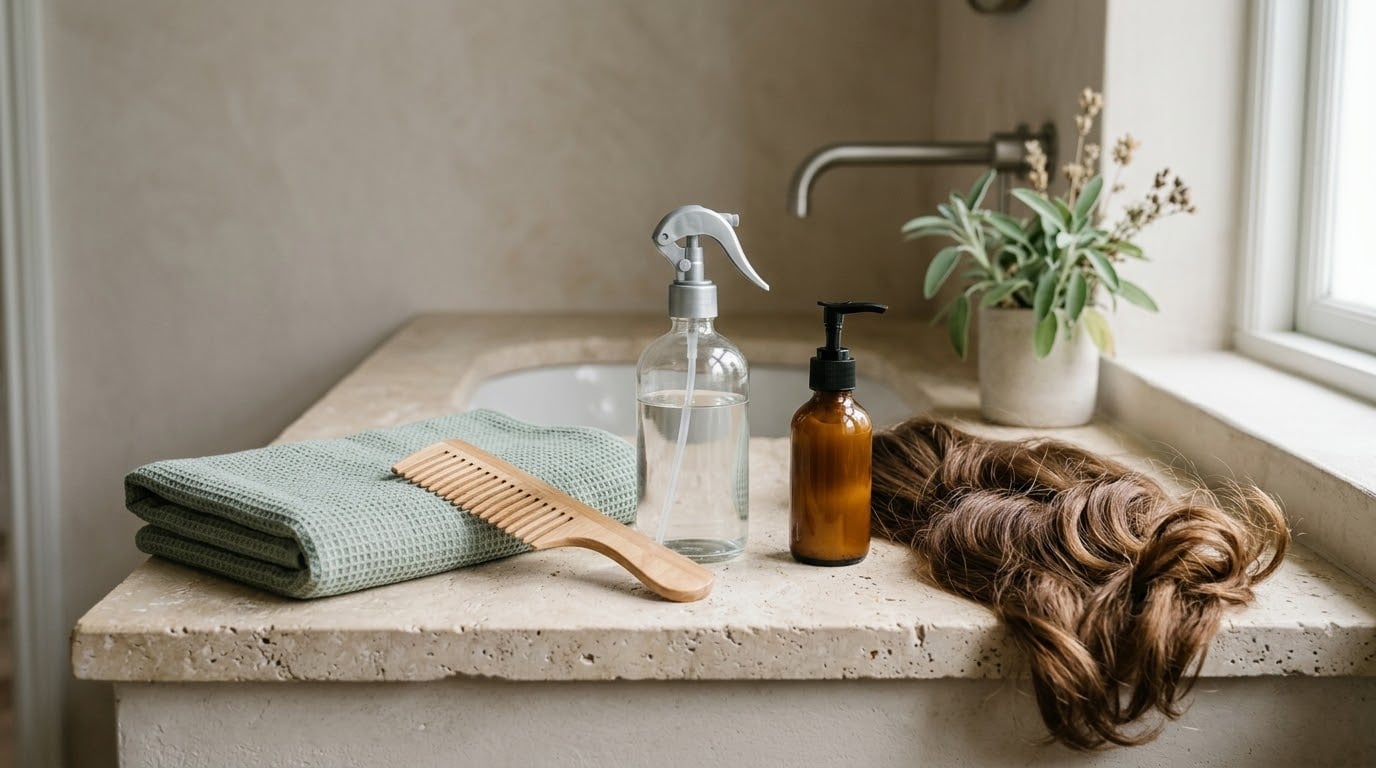
You need very little. Everything below is optional, and the routine works with nothing on the shelf at all if you would rather start there. A wide-tooth comb, a spray bottle and a soft towel get you most of the way. The techniques in the steps below do more for how to stop frizzy hair without heavy products than anything you could buy.
- A wide-tooth comb. Wide teeth spread the load along the strand instead of catching one point and pulling. A standard brush is fine for straight hair that’s already smooth, and a boar bristle brush is a good middle option for wavy hair that detangles easily.
- A microfiber towel or a cotton T-shirt. Both absorb water far faster than terry cloth and put almost no friction on the cuticle. An old soft T-shirt costs nothing and works nearly as well.
- A spray bottle. Filled with plain water, it is the cheapest styling tool there is. It reactivates light products and lets you reset hair mid-day without washing.
- Heat protectant, only if you blow-dry or use a tool. A lightweight spray version is plenty. Skip it entirely on air-dry days.
- One lightweight leave-in conditioner or styling cream, if you want one. Look for a water-based formula, a pump dispenser, and a weightless or non-greasy finish on the label. That is the whole selection process.
If you currently use a rich oil or butter, keep it for the ends rather than the whole length. One to two pumps on dry ends does far more for frizz than the same amount worked through the roots, and it is the difference between smooth and greasy by hour three.
Step-by-Step
Smoothing Hair Gently While Washing
Start in the shower with your comb in your hand, not your hair. Detangle before shampoo if your lengths tangle easily, working from the ends upward in small sections, and never force a snag through.
Shampoo goes on the scalp only. Work it in with your fingertips, not your nails, and let the suds travel down the lengths on their own.
Squeeze conditioner into your palm first rather than straight from the bottle. Apply it from ear level down, on damp not dripping hair, and spend thirty seconds smoothing it downward with your hand. That is the part that makes hair feel soft, and the part almost everyone skips.
Rinse with cool or lukewarm water for the last thirty seconds. Cool water flattens the cuticle and makes everything you did in the previous five minutes last longer. Then blot — press, do not rub — with a towel and move on.
How to tell it is working: right out of the shower, before any product, the hair should feel slick through the mid-lengths and ends. If it feels squeaky and light, you used too little conditioner or rinsed too much of it out.
Drying Hair Without Creating More Frizz
Squeeze, don’t scrunch. Squeeze the water out of your hair in the towel, then wrap and leave it for five to ten minutes while you get dressed. The towel absorbs instead of abrading, which is the difference between a smooth cuticle and a lifted one.
Air-drying is the lowest-frizz option available to you. Let hair dry completely before touching it, because hair is at its most fragile and its most flyaway-prone when it is partly dry.
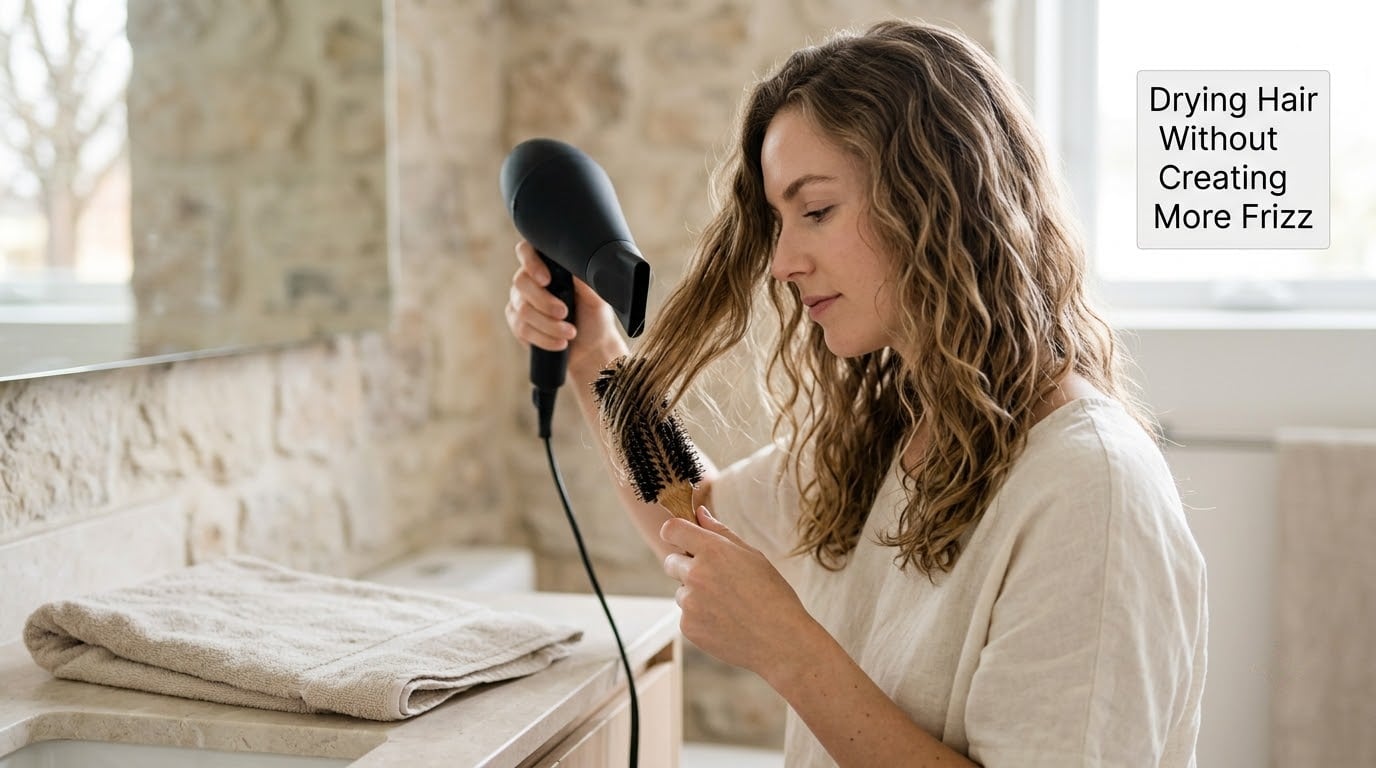
When you need a dryer, use medium heat, not high, and keep it moving. Hold it about six inches away, aim it down the strand rather than across it, and use a wide-tooth comb in your other hand to guide sections straight. Never park the nozzle on one spot.
How to tell it is working: the ends should be dry and cool to the touch, not hot. If the hair has been dryer-dried, the surface feels slightly stiff before you move your head. Bend it gently and it should move without breaking.
Using Lightweight Products for Definition
Use the smallest amount that changes the texture, applied to damp hair. One or two pumps of leave-in, spread between your palms, worked into the mid-lengths and ends with your fingers. Skip the roots entirely — product at the scalp is what makes hair look flat and greasy within hours, and it does nothing for frizz.
How to stop frizzy hair without heavy products comes down to this one decision: the lightest formula that still does the job. Water-based sprays and lotions sit at the top of the list because they rinse out and leave no film. Creams sit in the middle. Oils, butters and thick masks belong at the bottom, and even there they belong on the ends only.
To read a label, ignore the marketing words and look at three things: is the first ingredient water, does the bottle pump rather than scoop, and does the finish say weightless, non-greasy or air-dry friendly. Those three clues cover most of what you need to know.
If a product leaves a coated feeling the next morning, that is buildup, not frizz. Wash it out with a clarifying shampoo once, then go one rung lighter on the weight ladder. If you enjoy a longer treatment now and then, our guide to how to use coconut oil for a hair mask overnight covers the timing and how much is too much.
How to tell it is working: hair should move, and your fingers should still slide through it. If the strands feel sticky or clumped into groups, you used too much — rinse and start over with half.
Protecting Hair Between Washes
The hours between washes are where frizz quietly rebuilds. Replace your cotton pillowcase with satin or a smooth cotton one, or wear a loose braid or silk scarf to bed so the hair is not compressed in one direction for eight hours.
Brush less. Every pass of a brush is a pass of friction, and the hair is weakest at the roots and most fragile when dry. Detangle on damp hair before you leave the house instead of fighting tangles at night.
For second-day and third-day hair, mist a few sprays of water from the spray bottle, scrunch the mid-lengths upward, and let it air-dry. That is a full refresh, and it needs nothing from a bottle.
Cut heat styling back where you can. If you like the results, our walkthrough of how to use coconut oil on dry hair covers how to keep the shine without coating the lengths.
How to tell it is working: at the start of day three, most of the hair should still be combable in one pass. If you are working through tangles, something in the drying or brushing step is still too rough.
Common Mistakes
Almost every frizz routine that fails has one of these six problems in it. Each one has a specific correction, and fixing a single mistake often does more than adding a new product.
Rubbing wet hair with a towel. Wet hair stretches and the cuticle stands up; rubbing grinds it further open. Blot and squeeze with a microfiber towel or a cotton T-shirt instead, and keep rubbing to a minimum.
Skipping the conditioner, or rinsing it all out. Dry hair drinks water from humid air and swells unevenly, which is exactly what frizz looks like. Conditioner on damp mid-lengths and ends is the single highest-return step in this whole routine.
Very hot water, very hot dryers. Heat opens the cuticle and damages the internal structure, so frizz comes back faster every wash. Use a cool rinse and a medium dryer setting, and if you have to pick one habit to change, make it the rinse.
Product at the roots. Applying serum, oil or cream from the scalp down is why fine hair looks greasy and flat by lunch. Start at ear level and work down, every single time.
Overbrushing dry hair. Brushing feels like taming, but on dry or fragile hair it breaks the cuticle and creates more flyaways. Detangle damp, work upward from the ends, and stop when it slides through.
Touching and playing with your hair all day. Each time you push flyaways up, you are training them back down and out. It is the hardest habit to break and the one that shows up fastest in photos.
One more worth naming: using the wrong tool for the job. A stiff-bristle brush on wet hair is a detangling tool for straight hair only, and nothing else. If you are not sure, a wide-tooth comb works on every texture without exception.
Frequently Asked Questions
How long does it take to stop frizzy hair?
Two to three weeks of consistent washing, drying and brushing habits is a realistic window. You may notice less puffiness after the first wash, because a cool rinse and proper conditioning work immediately. The longer change comes from reduced friction and heat damage, which takes several cycles of hair growth to fully show. Judge progress on how the hair feels wet and how it behaves on day three, not on a single morning.
Can you control frizz without conditioner?
You can, but it is harder. Conditioner is what replaces moisture your hair lost, and without it the cuticle stays open and the hair drinks from humid air instead. If you would rather use nothing, prioritize technique: cool rinse, blot drying, low heat, less brushing, satin pillowcase. That alone helps a lot, especially on hair that is not already damaged or bleached.
What works for curly and wavy hair if heavy products make it greasy?
Curly and wavy hair usually needs more moisture, but it does not need more weight. Use a water-based leave-in applied to soaking-wet hair, scrunch it in, and let it air-dry fully. Plopping into a cotton T-shirt for ten to fifteen minutes replaces the towel rub that creates frizz. Curl-specific creams work, but start with half the amount on mid-lengths and ends, and never near the roots.
How do I pick a lightweight product that will not make my hair greasy?
Choose a pump bottle over a jar, check that water is the first ingredient, and look for weightless, non-greasy or air-dry friendly on the label. Start with one to two pumps on damp mid-lengths and ends, then add more next time only if you need to. If the hair feels coated the following morning, that is buildup, so clarify once and move one rung lighter on the weight ladder.
Does humidity change the routine?
Yes. High humidity adds water to the air, which the open cuticle absorbs faster than it can hold, so strands swell to different lengths and move out of alignment. The response is sealing rather than adding weight: a water-based leave-in or a light spray on damp hair before you leave the house, and a satin or silk pillowcase overnight. Technique still does more than product in humid weather, especially on fine hair.
Which deficiency causes frizzy hair?
Hair that is frizzy all the time can reflect low iron, low zinc, low vitamin D or an underactive thyroid, because each affects how the strand grows and how well it holds moisture. Frizz on its own is usually damage, dryness or friction rather than a deficiency, so technique comes first. If the hair is also thin, shedding unusually, or your skin and nails have changed, talk to your doctor or a registered dietitian rather than self-treating with supplements.
Conclusion
If you do one thing this week, make it the conditioner step: squeeze it into damp mid-lengths and ends, smooth it down with your hands, and finish with a cool rinse. That single change does more for how to stop frizzy hair without heavy products than anything else in this routine.
Then add the drying and sleeping habits, and keep one lightweight product at most. Adjust the amount and the weight of it to your hair type rather than adding a second and third step — fine hair needs less, not more, and thick hair needs more.