
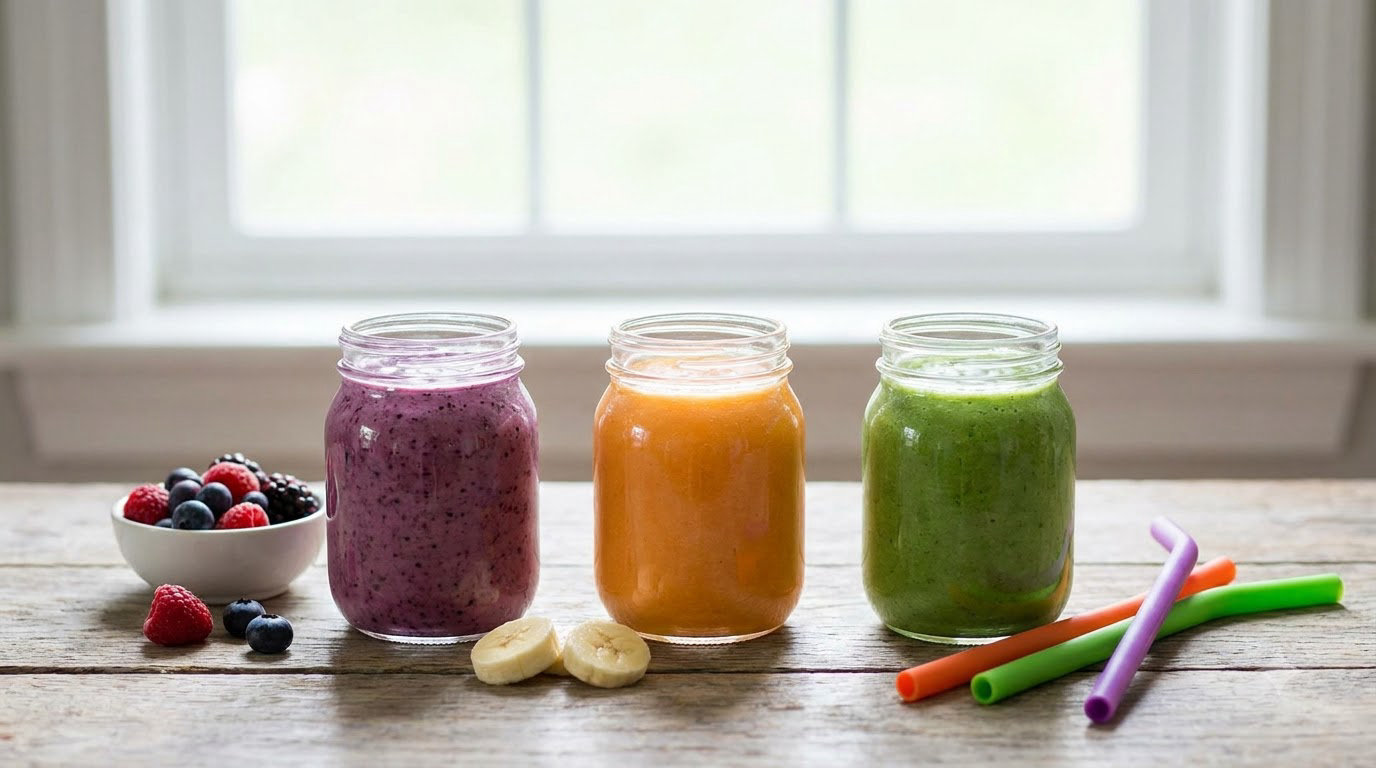
Most kids do not refuse smoothies because of the flavor. They refuse them because the color looks suspicious, a chunk of spinach is floating near the top, or the glass is too big. If you are figuring out how to make smoothies kids actually drink, the fix is a repeatable formula: 1 cup of base liquid, 1/2 cup fresh fruit, 1/2 cup frozen fruit, up to 1/2 cup vegetables, and a small amount of fat or thickener. Follow the ratio, blend longer than you think you need to, and serve about 4 ounces in a cup they picked out. That is the whole method. This guide covers the base liquids that work, the vegetables that disappear, the texture rules, the flavor pairings that ruin a drink, and how to serve so a single taste turns into a second glass.
Last updated: October 2026
A quick word on the debate about hiding vegetables. Plenty of parents in picky-eater communities would rather offer the real thing and let a child decide, and their reasoning is sound: a child who discovers the spinach can lose trust in every smoothie you hand over for years. Both camps can hold. Serve a plain fruit smoothie as the win you both agree on, then add a vegetable in small, announced steps while your child watches. Nothing in this guide asks you to pretend broccoli is chocolate.
| Part | Amount | Why it is there |
|---|---|---|
| Base liquid | 1 cup | Controls thickness and gives the blender something to work against |
| Fresh fruit | 1/2 cup | Sets the flavor and the color a child approves of |
| Frozen fruit | 1/2 cup | Chills the drink and makes it thick and creamy without ice |
| Vegetable | 1/4 to 1/2 cup | Fiber and micronutrients with a flavor the fruit covers |
| Fat or thickener | 1 to 2 tablespoons | Avocado, nut butter, chia or Greek yogurt for staying power |
Table of Contents
- What You Need
- Step-by-Step: How to Make Smoothies Kids Actually Drink
- Common Mistakes
- Frequently Asked Questions
- How can I make smoothies taste better to kids?
- Should I add vegetables to smoothies for children?
- How much added sugar is appropriate in a child’s smoothie?
- Are smoothies healthy enough to replace breakfast?
- How do I make a smoothie less thick for young children?
- What foods should I avoid putting in a child’s smoothie?
- What to Do First
What You Need
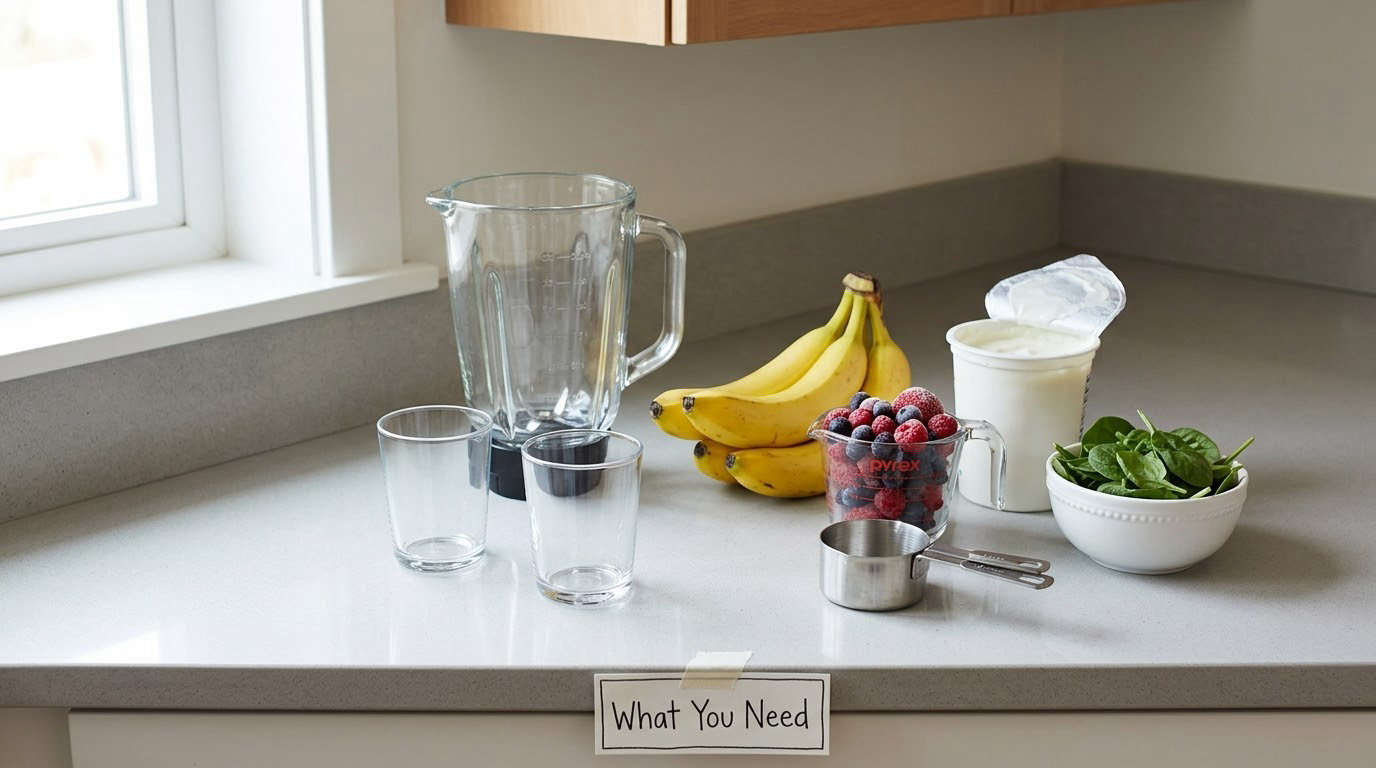
A high-performance blender gives you the smoothest result, and a personal bullet blender is faster for single servings. Texture is the number one reason a smoothie gets refused, so the machine matters more than the recipe list. If your blender leaves any grit, blend 30 seconds longer and add another splash of liquid.
Beyond the blender, you need very little. Keep a rotating stock of frozen bananas, frozen berries, and a bag of frozen spinach or cauliflower. Keep milk, unsweetened oat or coconut milk, and plain Greek yogurt on hand so you can change the base without a grocery run.
- Base liquids: dairy milk, unsweetened oat, coconut or soy milk, plain Greek yogurt, or water.
- Fruit: strawberries, mango, peaches, bananas, pineapple, oranges, blueberries.
- Vegetables that disappear: spinach, kale, cauliflower, zucchini, carrots, beets, sweet potato, butternut squash, pumpkin puree.
- Boosters: nut butter, chia seeds, hemp seeds, ground flaxseed, avocado, cocoa powder, vanilla extract.
- Tools: measuring cups, a silicone spatula for scraping the jar, and ice cube trays for freezing single portions.
- Serving: a clear cup your child likes, a straw, a reusable pouch, or a sippy cup for toddlers.
If your child helps, hand over the measuring cups and the produce at the measuring stage only. Stay at the controls for the blending itself; the blade assembly does not care who is curious.
Step-by-Step: How to Make Smoothies Kids Actually Drink
1. Start With a Flavor Your Child Recognizes
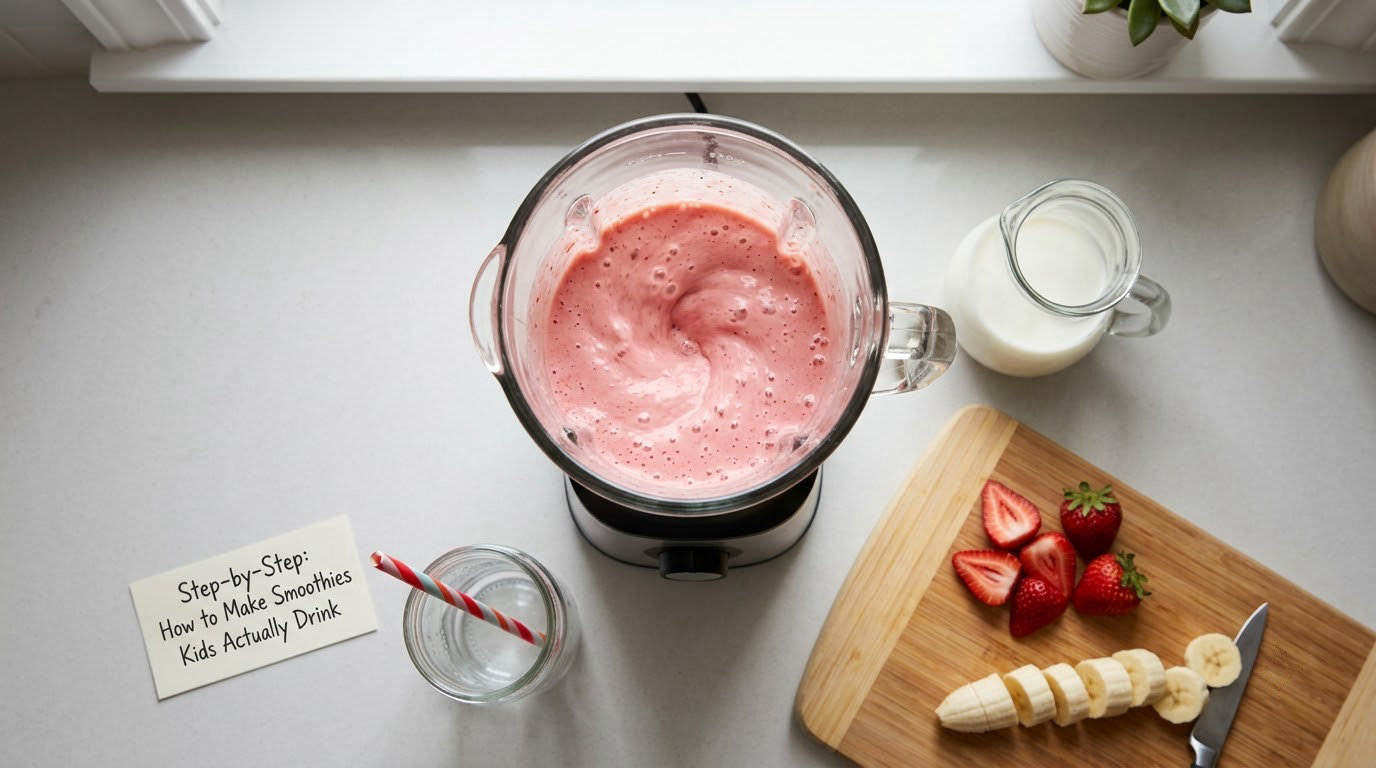
Green smoothies fail before anyone takes a sip, so pick the color you are trying to win first. Strawberry, mango, peach and berry bases come out pink, orange, red and purple, and those are the colors that get finished. Save the leafy greens for week three, not week one.
Begin with something your child already eats on its own. Parents on r/Cooking and r/PickyEaters described the same approach: start with what the kid likes, then add frozen fruit plus a small amount of spinach or kale, a spoonful at a time, rather than everything at once.
Freeze the greens on their own in a bag so they never touch the counter, and read about how to freeze spinach and kale for smoothies before your first batch. Frozen greens lose the raw, grassy taste that makes kids spot them instantly.
Some pairings lift a drink, others end the experiment permanently:
- Works well: banana and berry, mango and coconut, peach and vanilla, cocoa and banana, orange and cream, strawberry and banana.
- Avoid: banana and kiwi, avocado and tomato, pea and pineapple, celery with citrus, chocolate and kiwi.
Those bad pairings fail for a reason. Kiwi and celery carry a sharp grassy note that survives blending, and chocolate makes anything tart taste sour instead of sweet. One bad glass can sour the whole idea of smoothies for a kid, so keep those two groups in separate weeks, not the same cup.
2. Control the Texture and Temperature
Liquid goes in first, every time. It stops the blades from jamming, gives you something to add to, and the fastest way to fix a drink that turns out too thick. A high-speed blender with liquid at the bottom turns out noticeably silkier than the same recipe loaded dry.
Frozen fruit does the work ice would, without watering the drink down. Half a cup of frozen banana gives you a milkshake consistency that reads as dessert, which is the single biggest acceptance driver you have. Fresh fruit alone will give you a thin drink, and thin drinks get pushed away.
Serve at room temperature or slightly cool. A smoothie straight from the blender at freezing temperature is jarring to a young child and makes the fruit taste sour. Let it sit on the counter for 8 to 10 minutes after blending, or add a tablespoon of room temperature milk to bring it down.
3. Add Nutritious Ingredients Without Forcing Them
Keep vegetables at 1/4 cup until the child drinks the fruit-only version willingly, then move to 1/2 cup. That ceiling matters. Parents reported that a small amount of frozen spinach or kale was enough to do the work, and kale plus carrots are described in picky-eater circles as the classic vegetables that vanish into fruit.
Hard vegetables need help. Steam carrots, beets, sweet potato and butternut squash for 5 minutes before blending, and cooking water becomes part of your liquid. It removes the bitterness that survives every blender speed.
Avocado, nut butter and seeds add fat and fiber with almost no flavor of their own. Start with 1 tablespoon of chia or ground flaxseed, 1 tablespoon of almond or peanut butter, or a quarter of an avocado. For a coffee-adult flavor that still reads as dessert, see how to use maca powder in smoothies and oatmeal.
4. Blend, Taste, and Adjust
Blend 60 seconds, stop, scrape down the sides with a spatula, and blend another 30. Any chunk ends the experience, so give it the extra 30 seconds. Taste it yourself before you pour it.
Fixes for the four usual problems:
- Too thick to sip: add milk or water one tablespoon at a time until it moves like a drink.
- Too thin: add a quarter banana or 2 tablespoons of plain Greek yogurt, or add 4 to 5 ice cubes and blend again.
- Bitter greens on the finish: add another 1/4 cup of fruit and a squeeze of lemon juice; the fruit usually wins.
- Too sweet: add more of the plain base liquid and a handful of ice. Never reach for honey in a drink for a child under one.
5. Serve Small and Let Children Choose
Start with 4 ounces in a clear cup. A small portion that gets finished beats a large one that gets abandoned, and a leftover cup sitting on the counter all afternoon becomes a drink your child refuses on principle.
Give them a real choice between two things you approve: a pink straw or a purple one, a spoon or a wide straw, one of two fruits. Choice about the vessel buys you patience about the contents. Let the child press the blender button or pour the last few ounces into the glass.
Offer, do not force. A single taste with no pressure is enough for the first round. If they say no, say fine and pour yourself a glass from the same batch, because an adult drinking the thing you refused is a surprisingly effective sales pitch.
Common Mistakes
Too much vegetable too soon. A parent in r/Parenting described a child who had a complete meltdown over visible spinach, and that glass ended smoothies in that house for a while. Correction: cap vegetables at 1/4 cup for the first two weeks, freeze them, and let the child see you add them.
A smoothie that is too thick. Spoon-thick drinks turn into work for a small child. Correction: aim for the consistency of thin milkshake, and keep milk at the ready to add at the end.
Using sweetener to fix blandness. Honey, sugar and flavored syrups cover a weak recipe and create a habit you did not want. Correction: more fruit, a ripe banana, or a splash of vanilla, then blend again.
Serving an adult-sized glass. A 16-ounce smoothie looks like a lot of work to a four-year-old. Correction: 4 ounces, refill on request.
Believing the presentation rescues the flavor. A fun straw does not fix anything that tastes like vegetables. Correction: fix the flavor first, decorate second.
Making the same two recipes for two years. Parents get stuck and children burn out. Correction: keep a written rotation of six or seven base flavors, and change the fruit before you change the rules.
Frequently Asked Questions
How can I make smoothies taste better to kids?
Start with a fruit they already eat on its own, keep the drink pink or orange rather than green, and let a frozen banana do the sweetening instead of added sugar. Taste it yourself before serving and adjust until no vegetable is detectable on the finish. Serve 4 ounces in a clear cup they chose, and expect the second glass to take a week.
Should I add vegetables to smoothies for children?
Yes, and up to 1/2 cup per 8-ounce serving. Spinach, kale, cauliflower, zucchini and carrots disappear most easily, especially frozen or steamed for 5 minutes. Introduce them a tablespoon at a time after your child drinks the fruit-only version willingly, and let them watch you add the greens so nothing feels hidden.
How much added sugar is appropriate in a child’s smoothie?
As close to none as you can manage. Pediatric guidance is to keep added sugar under 10 percent of a child’s daily calories, so a cup of sweetened drink can use up most of that before lunch. Fruit brings its own sugar and needs no sweetener. For ages 1 to 3, most pediatricians also cap juice-type drinks at about 4 ounces a day.
Are smoothies healthy enough to replace breakfast?
A smoothie alone is not a complete breakfast. Fruit, vegetable, fat and fiber are there, but protein and calories are often too low to carry a morning, and drinking instead of chewing can leave a child hungry an hour later. Pair one with eggs, yogurt, toast or nut butter on the side, and keep whole fruit in the rotation too.
How do I make a smoothie less thick for young children?
Add milk, unsweetened oat milk or water one tablespoon at a time and blend 15 seconds after each addition. Aim for the consistency of thin milkshake so it flows through a sippy cup or wide straw. You can also skip the frozen fruit entirely for a thinner drink, or blend in 4 to 5 ice cubes if thickening is what you actually want.
What foods should I avoid putting in a child’s smoothie?
Skip whole nuts, whole grapes and hard raw chunks for children under 3, since blended drinks do not eliminate choking risk from hard pieces added after blending. Avoid kiwi and celery in large amounts because of their sharp grassy taste, and skip honey for infants under 12 months. Check with your pediatrician about allergy concerns for any ingredient your child has not had before.
What to Do First
Make one glass this week with a fruit your child already likes, half of it frozen, and no vegetables at all. Get that one finished. Then add a tablespoon of frozen spinach, then another, and stop the week a child stops drinking it. The formula does the heavy lifting, but the base flavor is what gets the glass finished.