
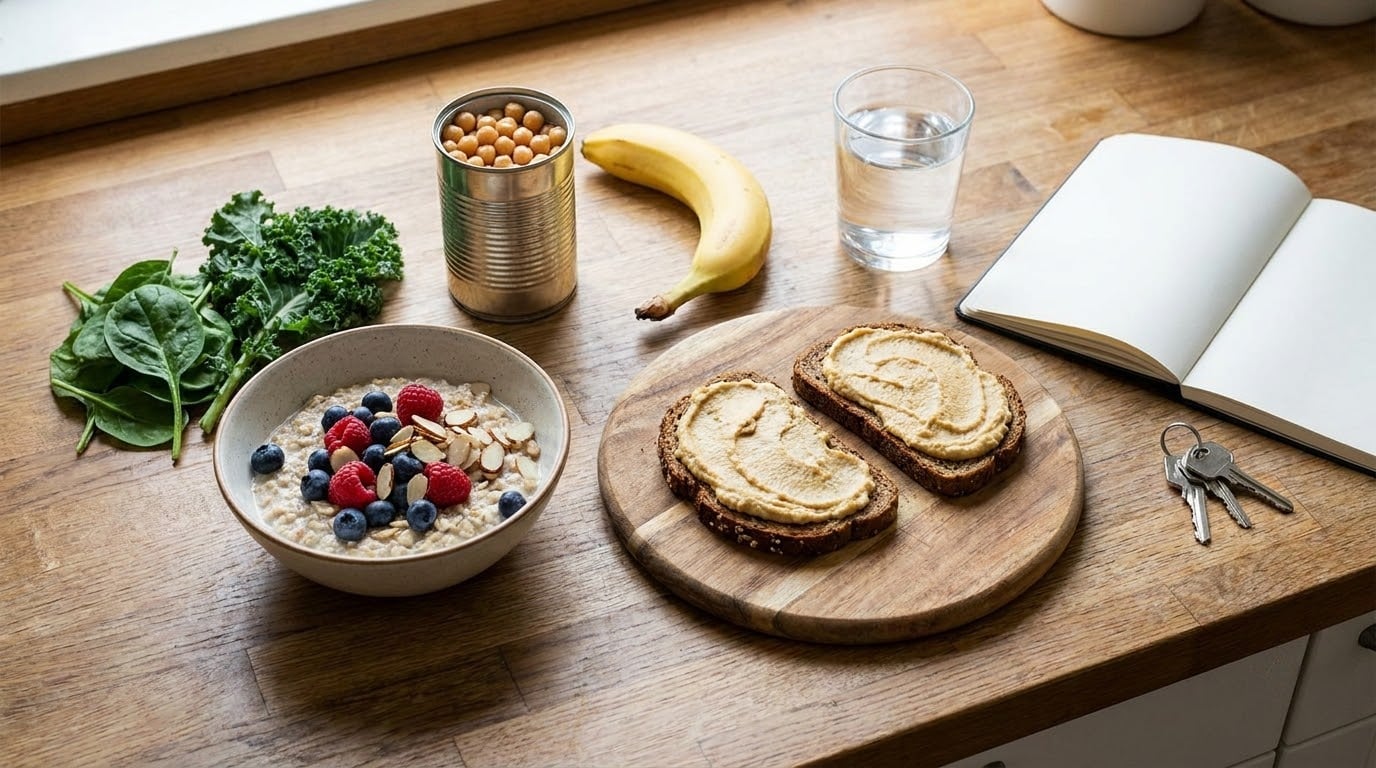
How to eat well when you are stressed comes down to one formula: build every meal and snack from a protein, a complex carbohydrate, something colourful and plant-based, and a small amount of fat. Stress changes what you crave, so the job is not willpower. It is making the easy option the good option before the hard day starts.
Most of us hit this at the worst possible moment. A deadline lands, a difficult meeting runs long, and by six in the evening the only thing in reach is whatever is quickest. This guide gives you a shopping list, a five-step routine and a set of swaps you can use whether you have thirty minutes or thirty seconds.
Nothing here treats food as a treatment for stress or anxiety. If your eating has changed sharply, if you feel unable to eat, or if stress is affecting your mood, sleep or digestion, talk to a doctor or a registered dietitian. Nutrition helps, but it is one part of a bigger picture.
Table of Contents
- What You Need to Eat Well When You Are Stressed
- Step-by-Step
- Common Mistakes
- Frequently Asked Questions
- What should I eat when I am stressed and do not have much energy?
- How can I avoid stress eating without cutting out my favorite foods?
- Are easy snacks for stress really filling enough to replace a meal?
- How much water and caffeine should I have during a stressful day?
- Can what I eat change my stress levels or anxiety symptoms?
- When should I talk with a doctor or registered dietitian about eating and stress?
- Conclusion
What You Need to Eat Well When You Are Stressed
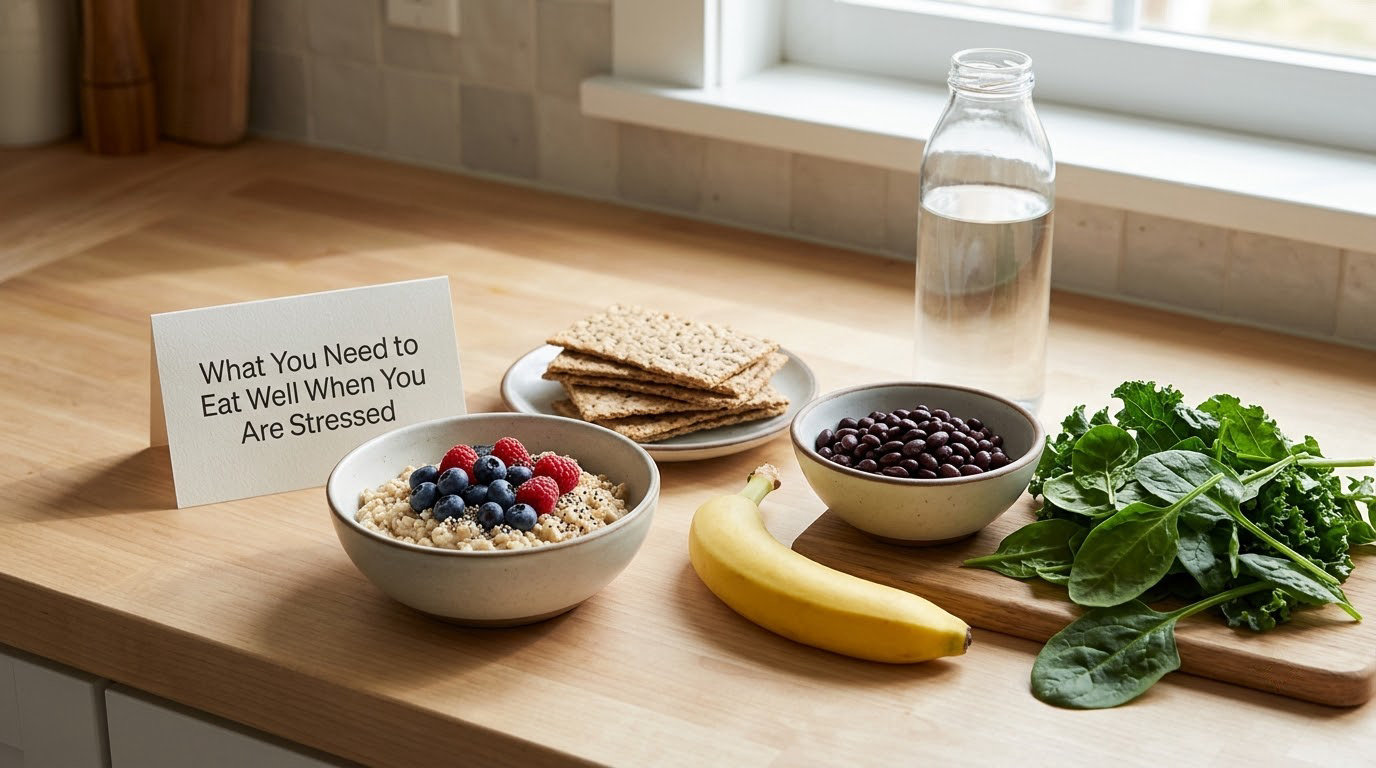
You need very little. A stressful week is the worst possible time to start a new cooking habit, so this list is built around foods that survive in a cupboard and a fridge and need almost no energy to turn into a meal.
Keep these within reach, and swap freely. Having the option available is what does the work, not having the perfect version of it.
- Two or three no-cook foods. Fruit with nut butter, plain yogurt with oats, sliced vegetables with hummus, or a tin of beans straight from the cupboard with a spoon.
- A grain you already like. Oats, brown rice, whole-grain bread or pasta. Any of these makes a perfectly good base when you cannot face cooking.
- A reliable protein. Eggs, canned beans or chickpeas, frozen fish fillets, plain yogurt, tofu, or leftover chicken. Frozen is fine and usually cheaper.
- Vegetables that need no knife skills. Frozen peas, spinach and chopped broccoli go from freezer to plate in minutes, and raw carrots and peppers are fine straight from the bag.
- A drinkable carbohydrate. A banana, a glass of milk, or a plain yogurt you can eat with a spoon when chewing feels like too much.
- Water where you can see it. A bottle on your desk does more for hydration than any plan you intend to follow.
Treat this as a starting list, not a prescription. If you hate oatmeal, buy toast. If you cannot stomach anything cold, choose warm. The goal is a small collection of dependable options, not a perfect kitchen.
Budget matters too, because money stress is stress. Someone on a tight food budget named nuts, dried fruit, breadsticks, crackers, dips, cereal, raw vegetables, cheese and canned protein as the foods that reliably got them through high-stress weeks on the r/EatCheapAndHealthy subreddit. Dried lentils, tinned sardines, eggs and frozen vegetables do the same work for less.
One safety note while you batch-cook. Cool cooked rice and other leftovers within two hours, keep them in the fridge, and use them within three to four days. When cooking poultry, take the internal temperature to 165°F (74°C) with a thermometer rather than guessing from the outside.
Step-by-Step
Five steps, in the order they help most. Start at step one and do not worry about the rest until it feels automatic, because a routine you actually keep beats a routine you abandon in week two.
1. Keep Easy Meals and Snacks on Hand
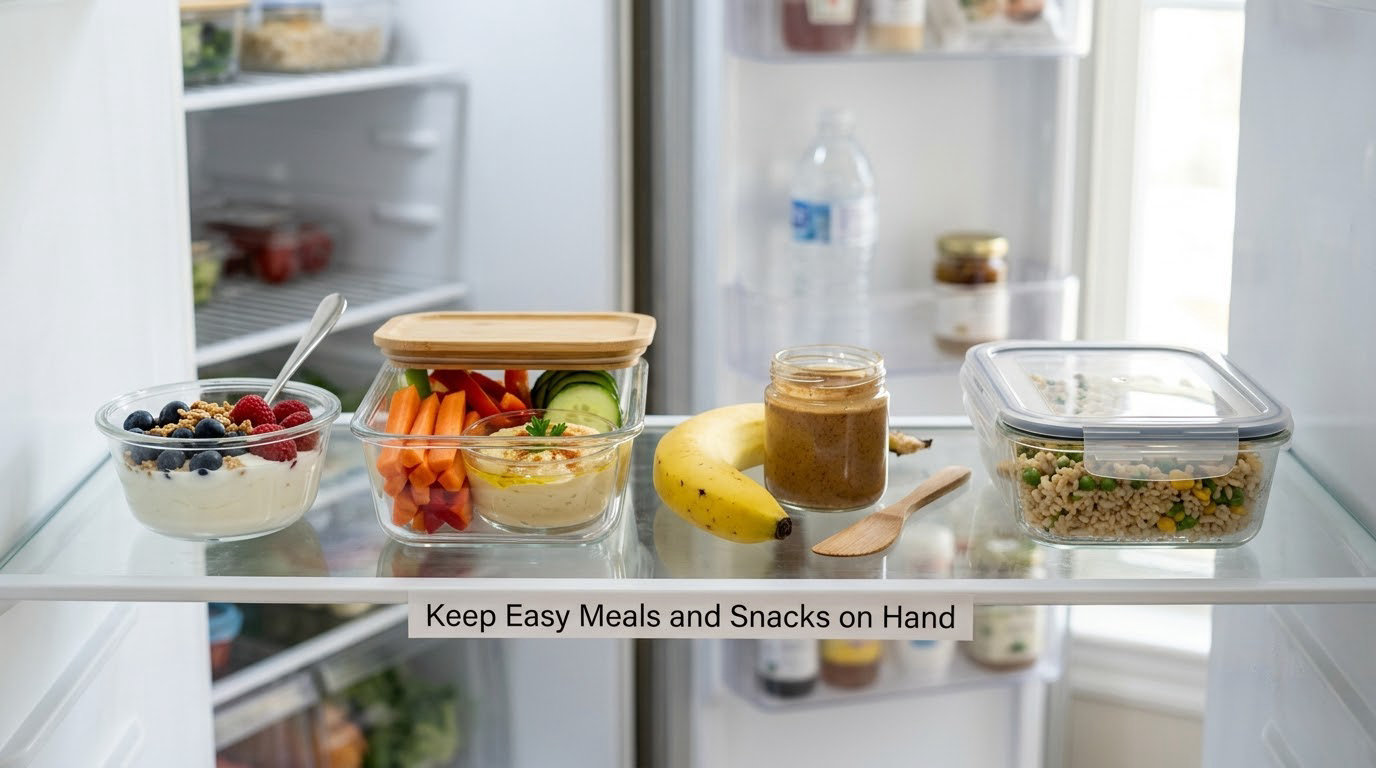
Put the easy options where you can see them, not where you have to think. A bowl of fruit on the counter, yogurt at eye level in the fridge, cut vegetables in a container at the front, a jar of nut butter on the desk.
Build a short rotation of five or six foods you never have to cook. Fruit with nut butter, yogurt with oats and berries, vegetables with hummus, leftover rice with a fried egg, a sandwich on whole-grain bread, or a tin of beans with toast. A plate of any two of these counts as a real meal on a day when you have nothing left to give.
How you will know it works: you notice you are eating something within a few minutes of being hungry, instead of discovering at eight in the evening that you never ate. The measure is frequency, not perfection. Most weeks, three unplanned meals is the failure state, not one skipped lunch.
2. Build a Balanced Plate Without Overthinking It
Use the same four-part formula every time: a palm-sized portion of protein, a fist-sized portion of a complex carbohydrate, two handfuls of colourful plant food, and a small amount of fat such as olive oil, nuts, seeds or avocado.
It works because it removes the decision. On a normal evening you weigh options, compare recipes and check what is in the cupboard. Under stress that process burns energy you do not have, so a fixed formula takes about five seconds and gets you a decent plate.
Examples: beans and rice with a large spoonful of salad and oil; scrambled eggs with toast and spinach; yogurt, oats and a handful of berries; a bowl of soup with bread and cheese on the side. You do not need all four parts to be large. It is a floor, not a target to hit perfectly.
How you will know it works: the meal holds you for two to three hours instead of leaving you hunting for something ten minutes later. That is the blood sugar signal to listen to. A plate that leaves you searching ten minutes later was missing protein, fat or fibre, whatever the labels say.
3. Choose Foods That Support Calm, Steady Energy
Fibre, protein and unsaturated fats slow digestion, and that is the whole point. Most comfort food is built to spike blood sugar fast, and the crash that follows is not just tiredness. It feels like more stress, which drives the next craving.
Several food groups earn their place on a stressful day. Magnesium-rich foods include beans, cashews, pumpkin seeds, spinach, oats and dark chocolate, and magnesium is involved in hundreds of enzyme reactions. Oily fish, walnuts, flaxseed and chia supply omega-3 fats that are part of normal brain function. Fermented foods such as yogurt, kefir, sauerkraut and kimchi bring live cultures that feed the gut-brain axis, the communication link between your gut and your nervous system.
Then there is caffeine, which is the most common quiet driver of afternoon stress eating. It spikes cortisol, and cortisol in turn raises appetite. Most adults do well with around 400mg a day, roughly four cups of coffee or tea, and less is often better on a bad week. Green and black tea both contain L-theanine, which is associated with a calmer alert state.
How you will know it works: fewer 3pm crashes, and fewer trips to the biscuit tin. A steadier day is a quieter appetite.
4. Plan for the Stressful Moments in Your Day
Most stress eating happens in predictable slots. Prepare for those slots rather than trying to win every one of them.
The rushed morning. Oats you can cook while you get dressed, a banana with nut butter, or yogurt and fruit eaten standing up. Keep the two or three options in a drawer rather than making a decision at 6:45am.
The desk. A snack that involves no crumbs and no smell is a lifesaver in shared offices: a handful of nuts, apple slices with nut butter, or a protein bar. The ones that crumble and smell strongly will get you talked to, and social pressure is the last thing you need.
The deadline evening. A ten-minute dinner beats nothing. Sheet-pan vegetables at high heat, pasta with a jar of sauce and frozen spinach, eggs on toast, or soup from a tin with bread. A one-pan dinner that starts within five minutes of getting home is worth more than a perfect recipe nobody has the energy for.
The night. Night-time eating is its own pattern rather than hunger, often boredom plus a screen plus an unfinished task. Have something waiting that is deliberately small: yogurt, a few crackers with cheese, a banana, or a small bowl of cereal. Eat it away from the desk if you can, then close the day’s tasks with one written line about what is done, so the loop has an ending.
The days when you cannot eat at all. Anxiety and panic can shut appetite down entirely, and people describe being unable to swallow solid food. This is a real pattern, not a character flaw, and the fix is to lower the texture bar rather than the nutritional one. A protein shake, a smoothie, or warm soup requires less than a sandwich. Soft and drinkable still counts as a meal, and several small ones count as a day of eating.
How you will know it works: you recognise your three worst moments and have something named for each of them. Preparation beats motivation on every one of them.
5. Eat Regularly and Gently
Eat on a rough schedule, not an exact one. When meals land within a couple of hours of each other, cravings usually calm down, because most snacking is an attempt to fix a low blood sugar that has been ignored since breakfast.
Where you can, slow down a little. Ten minutes without a screen, sitting down, tasting the first two bites. You are not tracking calories, you are giving your body a chance to notice that it is fed, which it cannot do while it is being rushed.
Stay flexible when your appetite changes. Hungry on a calm day and not hungry on a hard one is normal and not a reason to feel you have failed. Where a rigid diet plan makes stress eating worse, which people often report with very restrictive approaches such as fasting or carnivore, a more flexible structure is usually the more useful one.
Then add the non-food parts, because food is one coping tool out of many. Ten slow breaths, a short walk, a hot shower, a call with someone, or writing down what is actually bothering you. People looking to stop stress eating often find that adding one or two non-food options works better than white-knuckling it.
How you will know it works: eating stops being something that happens to you and starts being something you do on purpose, most days, without a fight.
Common Mistakes
Most nutrition mistakes under stress are not about knowledge. They are about too little time, too little energy, and too many decisions. Here are the four I see most often, with the fix for each.
Skipping meals and then eating heavily at night
This is the single most common pattern, and it is a blood sugar problem more than a willpower problem. A day of coffee and skipping lunch builds a large deficit, and the body cashes it in at night when you finally sit down. Fix: eat something small and unplanned by 3pm. It does not need to be a meal, just a gap that keeps the evening from being the whole day’s food.
Living on highly processed snacks
Highly palatable food is engineered to be hard to stop eating, and when you are tired and dysregulated, that is exactly when it wins. Fix: do not ban it. Build one better option into the same routine, so both are available. If you will eat the biscuits anyway, having yogurt and berries on the counter as well is a realistic improvement.
Under-drinking water and over-drinking caffeine
Mild dehydration reads as hunger and tiredness, which pushes you toward food you do not need. Meanwhile caffeine pushes cortisol up and appetite with it. Fix: keep a filled bottle where you work and drink it before the second coffee, rather than trying to hit a number of glasses.
Turning food into a set of rules
Good and bad food framing is the engine of the guilt cycle. After a hard day you eat something you have labelled bad, then feel bad, then reach for food to feel better, and the loop is complete. Fix: drop the labels. Ask whether the choice supports you, and if the answer is no, choose differently next time without turning the last choice into a character verdict.
A swap table is more useful than a ban list. Most of the changes are small, and small is what survives a bad week.
| What the stress is asking for | A better swap that still feels like a treat |
|---|---|
| Milk chocolate | Dark chocolate with a handful of berries |
| Crisps | Salted nuts or a crunchy roasted chickpea mix |
| Sweet fizzy drink | Sparkling water with sliced fruit and a little citrus |
| White bread sandwiches | Whole-grain sourdough with the same fillings |
| Pastries from the office | Yogurt with oats, or fruit with nut butter |
| Late-night takeaway | Toast with peanut butter, or a small bowl of cereal with milk |
Two more worth naming. Rigid restrictive plans often backfire, because deprivation makes food louder rather than quieter. And if weight is a concern while you are stress eating, wait until your eating is steady before touching calories. Restriction on top of stress is how a temporary habit becomes a long one.
Frequently Asked Questions
What should I eat when I am stressed and do not have much energy?
Keep it to foods that need no decisions: yogurt with oats, fruit with nut butter, a sandwich, soup with bread, or eggs on toast. A palm of protein, a fist of complex carbohydrate, two handfuls of something plant-based and a little fat covers the plate. Eating something small and unremarkable beats skipping the meal and overeating later, which is what most exhausted days turn into.
How can I avoid stress eating without cutting out my favorite foods?
Do not remove them. Cravings under stress are intense, and a rule you break in one evening becomes a reason to give up entirely. Instead, add a second option to the same moment: dark chocolate alongside the milk chocolate, yogurt alongside the pastry, sparkling water alongside the soda. Over a few weeks the better choice starts winning on its own merit rather than on your discipline.
Are easy snacks for stress really filling enough to replace a meal?
A snack replaces a meal when it pairs protein with fibre or fat, such as apple slices with nut butter, yogurt with oats, or crackers with cheese and vegetables. A packet of crackers alone will not hold you, and neither will most sweet biscuits, because the carbohydrate arrives fast and leaves quickly. If you know you are eating to get through a long stretch, eat a small proper meal instead.
How much water and caffeine should I have during a stressful day?
Aim for pale-yellow urine and drink water before you feel thirsty, which usually means keeping a filled bottle in front of you rather than counting glasses. Most adults do well with up to about 400mg of caffeine a day, roughly four cups of coffee or tea, and during a high-stress week less often feels better. Caffeine raises cortisol, and cortisol raises appetite.
Can what I eat change my stress levels or anxiety symptoms?
Diet does not treat stress or anxiety, and no food cures them. It does affect the ground you are standing on: steady blood sugar, regular meals and adequate nutrients influence energy, sleep and mood, which change how well you cope with a hard day. Keep expectations realistic and keep any treatment your doctor has given you. Treat food as support for the plan, not a replacement for it.
When should I talk with a doctor or registered dietitian about eating and stress?
Speak to a professional if stress eating is happening most days, if you are unable to eat, if you feel unable to stop even when you decide to, if it is affecting your sleep or your weight in a way that worries you, or if you are avoiding food because of how you feel about yourself. The same applies if stress comes with low mood, panic or disrupted sleep, since those deserve support beyond a meal plan.
Conclusion
If you do one thing this week, stock one easy meal and one easy snack. Not a plan, not a reset, not a new app. Yogurt and fruit in the fridge, nut butter in the cupboard, and a tin of beans for the night when cooking is not happening.
Then build your plate the same way every time: protein, complex carbohydrate, something colourful and plant-based, a little fat. Small and repeatable beats ambitious and abandoned, and on a bad week that is the difference between eating well and wondering where the day went.