
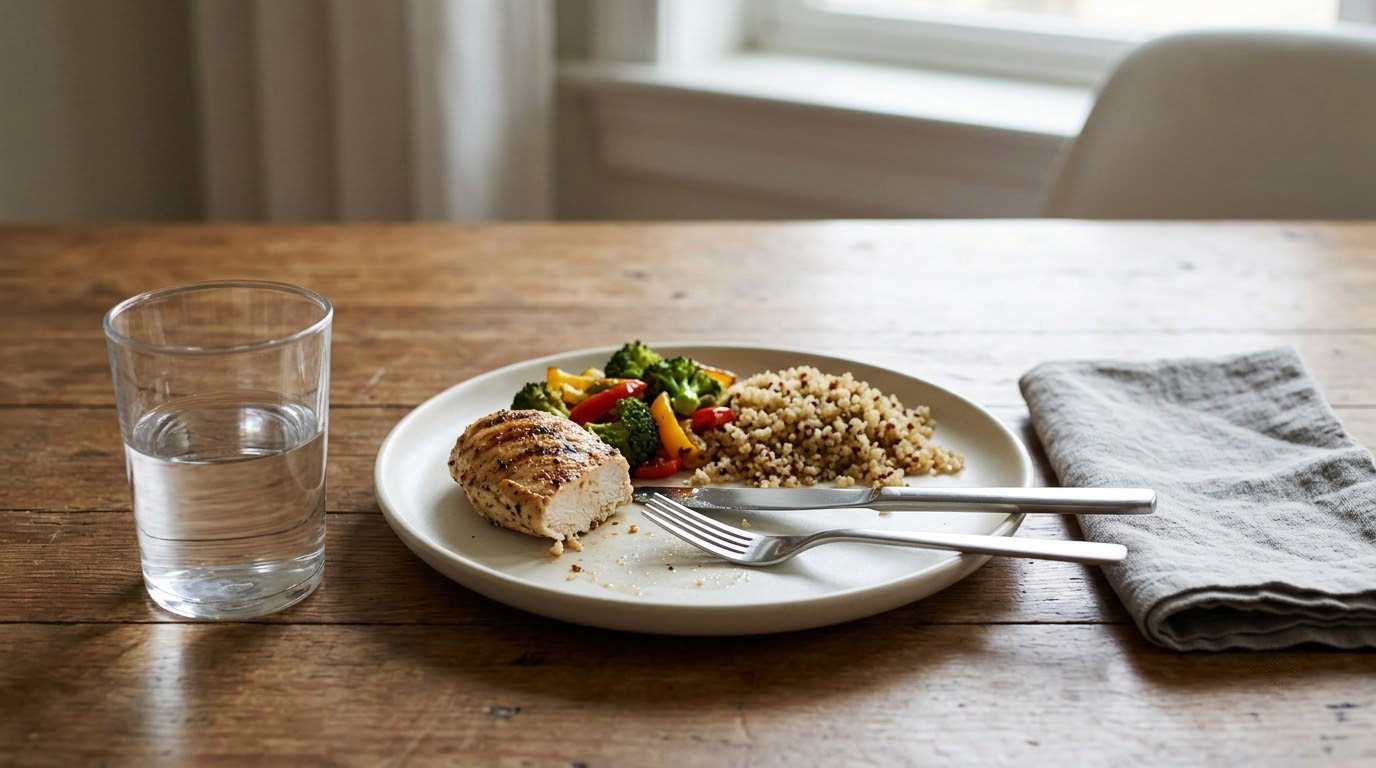
To eat slower and feel full sooner, stretch each meal over 20 to 30 minutes, chew each bite until it is well broken down, put your utensils down between bites, and put screens away. Those four changes give your body time to send fullness signals to your brain, so you notice satisfaction while food is still on the plate instead of after you clear the fridge.
Most people eat a meal in about 12 minutes without noticing. That speed matters less than it sounds, because the brain registers a comfortably full stomach on a delay of roughly 20 minutes from the start of eating. A fast meal ends before that signal arrives, and the extra eating that follows is usually the part you regret.
Nothing here requires a special diet or a kitchen gadget. If you want the full picture before you start, the sections below cover what you need, a one-meal routine, the foods that make slow eating easier, and the mistakes that quietly undo the whole thing.
What You Need
You need a place to sit and about twenty minutes. That is the entire equipment list.
A plate or bowl matters more than it sounds, because it gives you a clear edge to stop at, and a fork slows you down mechanically in a way that fingers do not. A glass of water is worth having nearby for two reasons: it works as a built-in pause between courses, and people regularly mistake thirst for a second hunger signal.
On the food side, favor things that are minimally processed and high in fiber or protein. Whole grains, beans and lentils, vegetables, fruit, nuts, seeds, and plain yogurt do more for meal satisfaction than anything you add after the fact.
One note before you begin. If you have a diagnosed medical condition, allergies, a history of choking or swallowing difficulty, or ongoing digestive symptoms, talk with your doctor or a registered dietitian first. The guidance here is general information, not a treatment plan.
Step-by-Step
Here is the sequence that works at an ordinary weeknight dinner, followed by the food choices and the habit that make it stick.
How to Eat Slower and Feel Full Sooner at One Meal
Start by sitting down before the food arrives, not after you have taken the first bite. Three slow breaths at the table do more than any intention you set while cooking.
Serve a portion you are certain you can finish comfortably, and keep the rest out of sight. Most oversized portions are not a hunger decision; they are a default serving decision made by a bigger bowl.
Begin with the vegetables or fruit, then move to protein and grains. Starting with fiber-rich food gives the stomach time and volume before the calorie-dense parts of the meal arrive.
Take bites about a third the size you normally would, and chew until the food is soft and well mixed with saliva. Counting to thirty helps some people, but the texture test is more reliable than a number.
Set your utensils down between bites and pick them up again when you are ready for the next one. This single habit is the one that changes the pace of a whole meal, because it converts eating from a continuous action into a series of decisions.
When the first portion is gone, wait fifteen minutes before deciding whether you want more. Most of the time the answer is no, and sometimes the answer is a glass of water or a piece of fruit instead of seconds.
Use These Foods to Support Fullness
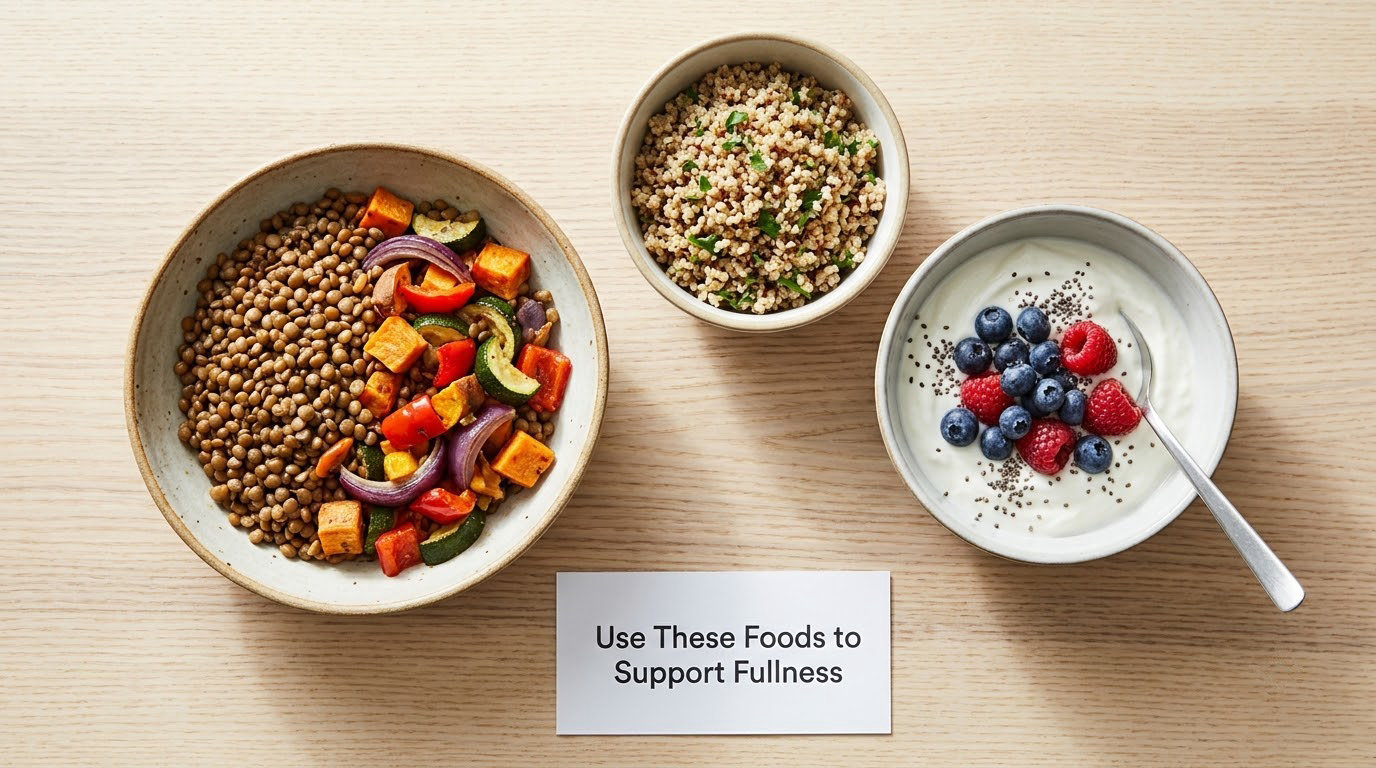
Slow eating gives your body time to hear fullness signals. If you eat slower and feel full sooner, the food on the plate decides how long that signal lasts, which is why the two habits work better together than either one alone.
Protein stays in digestion for hours, which is why a plate with a protein component satisfies you long after a plate of crackers does. Greek yogurt with berries and chia seeds is an easy example, as is a bean-based chili with a big spoon of vegetables folded in.
Fiber adds bulk and slows how quickly food leaves the stomach. Lentils with roasted vegetables, oats topped with nuts and fruit, or a whole grain with beans on the side all do this without any special shopping.
Water-rich produce counts too. Cucumber, tomato, melon, oranges, and leafy greens deliver volume and water at once, and they take time to eat, which is a bonus.
Nuts and seeds bring fat and protein in small portions, and whole grains such as brown rice or whole wheat pasta hold up better than refined versions in a mixed meal. Balance matters more than any single item, so build the plate from several of these groups rather than hunting for one perfect food.
Mistakes to Skip While You Practice
The most common beginner mistake is counting chews like a metronome. Thirty is a reasonable average, but tough greens need more and soft yogurt needs less, and a rigid count turns a meal into homework.
The second is chasing a stopwatch. A 20-minute target is a useful benchmark, but treating it like a pass or fail test makes you eat mechanically instead of attentively.
The third is trying to change everything at once. If you only remove the phone from the table this week, you have already done something most people never manage.
Build a Repeatable Mindful Eating Routine
Habits form around anchors, so attach the change to something you already do. Sit down, put your phone in another room, take three breaths, then pick up your fork. That sequence is short enough to survive a bad week.
Give yourself a phone-free eating window rather than a phone-free day. Fifteen minutes of undistracted eating at lunch is more realistic than a silent dinner, and it is where the practice actually compounds.
Keep meal timing reasonably consistent when that works for your life, and add a two-question check-in afterward: am I satisfied, and what am I hungry for later? Those two answers do more than any food log.
Progress is uneven. You will eat fast on busy days, and that is fine; the aim is a pattern across weeks, not a perfect meal every night. The people who stick with it are rarely the ones who never slip up.
Common Mistakes
Rushing is the first one, and the fix is structural rather than motivational. Knowing how to eat slower and feel full sooner starts with a timer for the first half of your meal, while the second half stays unhurried.
Eating while working, driving, or watching a show is the second. Attention is the scarce resource here, so the fix is environmental: move the phone out of reach before the food does, rather than relying on willpower mid-meal.
Confusing thirst with hunger comes up constantly. Fix it by drinking a full glass of water and waiting ten minutes before reaching for a second portion.
Stacking large portions is a serving-size problem. Serve half, finish it, and keep the rest in the kitchen; the second helping stops being a decision once it is already on your plate.
Liquid calories are a quieter trap, because a large drink goes down quickly and adds little fullness. Choose water, sparkling water, or an unsweetened tea, and treat a sweetened drink as a separate item rather than a neutral accompaniment.
Skipping meals tends to produce the fastest eating of the day later on. A moderate breakfast or snack with protein and fiber usually makes the evening meal easier to slow down.
Confusing discomfort with fullness is worth naming. Bloating, gas, and nausea are not the same signal as satisfaction, and pushing past discomfort for the sake of clearing the plate works against the whole practice.
On a fifteen-minute lunch break, you do not need a full mindful routine. Take the first five bites without your laptop, eat from a smaller plate, and sit somewhere that is not your desk chair. On family dinners, model the pace instead of instructing it; children copy what they see at the table far more readily than what they are told.
And if slow eating is not your problem, it is worth saying plainly. Some people already eat slowly and are still hungry minutes later, which points to meal composition and portion size rather than pace. Adding protein and fiber fixes more cases than any timing trick.
Frequently Asked Questions
Will I feel full faster if I eat slower?
You will not feel full sooner than a normal meal would make you feel. What changes is that you notice fullness while there is still food left, instead of ten minutes after the plate is empty. Slower eating gives your stomach time to signal fullness to your brain, which takes roughly 20 minutes from the start of the meal.
How many times should I chew each bite?
Most nutrition guidance suggests around 20 to 30 chews per bite, but the number matters less than the result. Chew until the food is soft and mixed with saliva rather than counting silently in your head. Tough greens and dense grains need more work than soft yogurt or ripe fruit.
What does 80% fullness feel like?
It feels satisfied rather than stuffed. You are no longer hungry, the meal still has some appeal, and you could comfortably walk away from the table. On a 1 to 10 scale, most people describe this as a 6 or a 7. Eating to a 10 usually means stretching past comfortable into uncomfortable.
How long should a meal take to eat?
Around 20 to 30 minutes for a main meal is a useful target, and it works because your fullness signals take about that long to reach your brain. A ten-minute meal usually ends before those signals do. Snacks do not need the same time, but a slow snack is still easier to stop eating than a fast one.
How do I eat slower on a 15-minute lunch break?
You do not need a full mindful routine. Sit somewhere other than your desk, put your laptop away for the first half of the meal, and serve a smaller portion than usual. Starting with vegetables or fruit and pausing ten minutes before considering seconds covers most of the benefit without adding a single minute to your day.
When should I talk to a doctor about eating and fullness?
Talk with a doctor or registered dietitian if you have persistent pain, choking or difficulty swallowing, ongoing bloating, vomiting, or rapid unintended weight change. Appetite that has changed sharply and persistently is worth investigating rather than adjusting with eating techniques. The habits here are general guidance and not a substitute for individualized medical advice.
Conclusion
Start with one thing at your very next meal: slow down for the first three bites, put your utensils down between them, and begin with a food you actually enjoy. That is a small enough change to repeat, and repeatability is what makes it work in 2026 and every year after.
If eating comes with pain, choking, difficulty swallowing, or symptoms that keep coming back, see a doctor or registered dietitian rather than adjusting your habits on your own.