
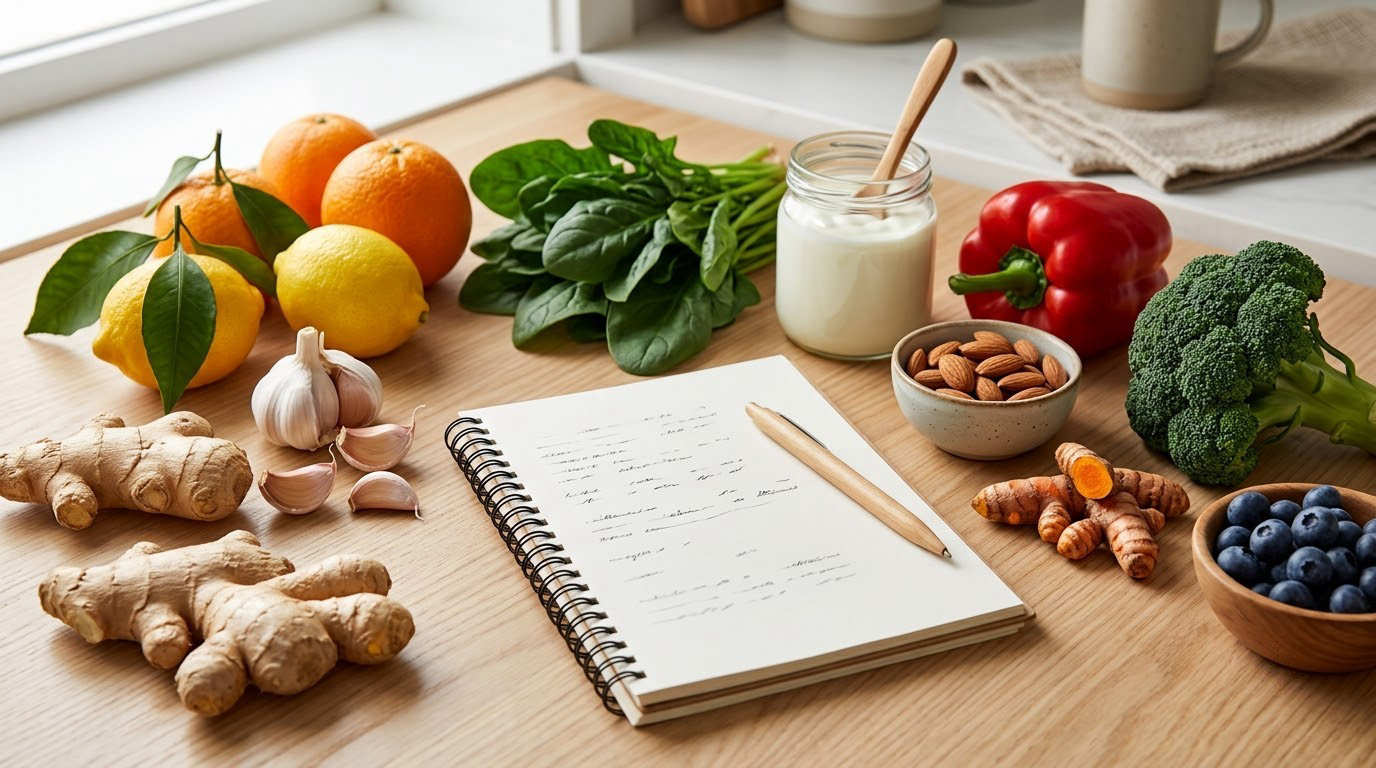
An immune supporting shopping list is a grocery checklist built around the foods that supply the nutrients immune function runs on, grouped by aisle and by how you will actually cook them. Learning how to build an immune supporting shopping list takes about fifteen minutes of planning and saves the weekly scramble for things you never meant to buy.
The honest version first: there is no single food that fixes immunity. What works is variety, repeated week after week, and the boring list that most families on forums have quietly converged on — onions, mushrooms, garlic, dark leafy greens and something brothy. If you are managing a medical condition, pregnant, or immunocompromised, talk to your doctor or a registered dietitian before changing what you eat.
What follows is the method, not a fixed list. Work through the steps in order, and the finished page in your hand turns into a route through the store instead of a random pile of produce.
Table of Contents
- What You Need Before You Shop
- Step-by-Step: How to Build an Immune Supporting Shopping List
- Step 1: Plan Your Meals and Snacks First
- Step 2: Build a Varied Produce Base
- Step 3: Add Protein Foods and Iron-Rich Staples
- Step 4: Choose Whole Grains and Fiber-Rich Carbs
- Step 5: Stock Healthy Fats and Flavor Builders
- Step 6: Add Flexible Pantry and Freezer Staples
- Step 7: Review the List for Balance, Budget and Storage
- Common Mistakes
- Frequently Asked Questions
- What foods should I put on an immune-supporting shopping list?
- Do I need supplements to support my immune system?
- How can I build a healthy grocery list on a budget?
- Which vegetables and fruits should I buy most often?
- Can frozen or canned foods be useful for immune-supportive eating?
- How should I adjust the list for allergies or a plant-based diet?
- Conclusion: Start With Your Next Three Meals
What You Need Before You Shop
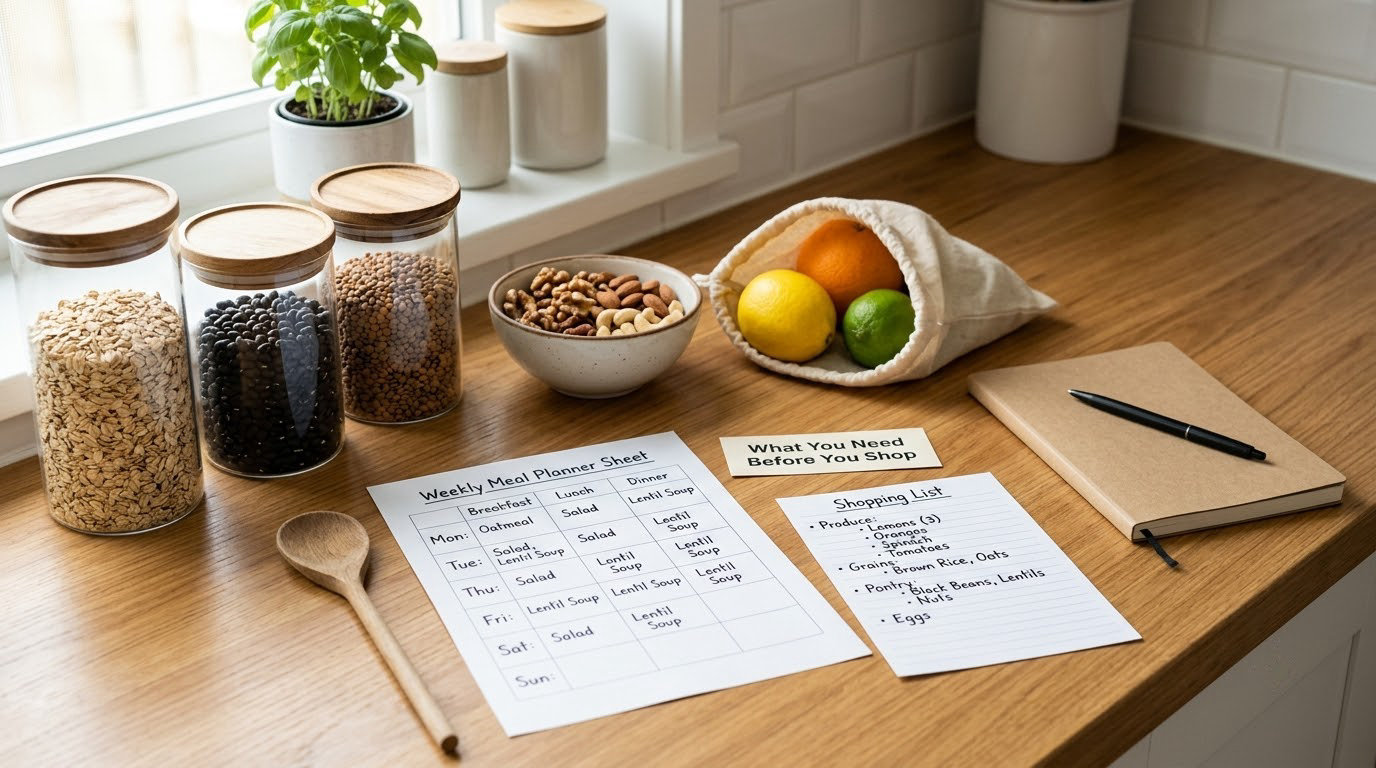
You need very little. A pen, a list you can rewrite, and about fifteen quiet minutes somewhere other than the checkout lane.
Before you write a single item, gather four things:
- A meal schedule. Look at the next week and count how many dinners, lunches and snacks you actually need to cover. A list built for seven dinners is realistic; one built for fourteen imaginary ones is how half your produce ends up in the compost.
- Your household rules. Allergies, vegetarian or plant-based preferences, how many people you feed, and whether anyone will actually eat Brussels sprouts.
- Storage reality. If you have one crisper drawer and a freezer that is already full of ice, plan around that. Know how much room you have before you decide how much to buy.
- Your food categories. Fresh and frozen produce, protein foods, whole grains and other fiber-rich carbs, healthy fats, fermented and dairy items, and shelf-stable pantry goods.
Within those categories, ten items show up on nearly every version of this list, which makes them a sensible starting skeleton: garlic and onions, mushrooms, dark leafy greens, a cruciferous vegetable, a root vegetable or winter squash, a vitamin C fruit or two, a protein you like, plain yogurt with live cultures, a handful of nuts or seeds, and one fermented food beyond the yogurt.
If you are starting from zero and want the label side of this under control too, how to read an ingredient list on a food package is worth ten minutes of your time before you go.
Step-by-Step: How to Build an Immune Supporting Shopping List
Step 1: Plan Your Meals and Snacks First
Start from meals, not from nutrients. Write down the dinners you will realistically cook this week, including the two you know will be leftovers, and the breakfasts that take under five minutes.
Then list the ingredients those meals share. Three or four overlap — garlic, olive oil, onions, a grain — and those become your efficiency core, because every one of them does double duty across several meals.
You know it worked when your list reads like a set of recipes instead of a nutrition exam. If you cannot name three meals that use an item, leave it off.
Step 2: Build a Varied Produce Base
Color is the fastest shortcut to variety. Aim for a mix of dark leafy greens, a cruciferous vegetable, a root vegetable or squash, a bright-colored fruit, and something orange or yellow.
Mix formats too. Fresh for the week you will cook first, frozen for the week after, canned for shelf life. Frozen vegetables and fruit are usually picked and frozen at peak ripeness, which makes them nutritionally comparable to fresh and far less wasteful.
A practical base for one or two people: a bag of spinach or kale, a head of cabbage or broccoli, a couple of carrots or a small squash, two peppers or a bundle of broccoli rabe if you can use them, one lemon, and a bag of frozen berries.
Two notes worth keeping. Citrus is an easy vitamin C source but it is not required — bell peppers, strawberries and potatoes deliver vitamin C too, and vitamin C supplements do not prevent colds. And buy some produce ripe and some unripe, so it ripens on your counter while you work through the ripe pile.
Step 3: Add Protein Foods and Iron-Rich Staples
Protein matters here because antibodies are proteins, and a body running short on amino acids has less raw material to work with. Plant proteins carry iron and zinc as well, which is the reason beans and lentils sit on almost every immune supporting list in print.
Rotate rather than repeat. Canned beans and lentils, frozen peas, tofu, eggs, poultry, fish, plain yogurt, and a few handfuls of nuts or seeds across the week beats the same chicken breast seven nights running.
If you eat plant-based, this is the step to spend more time on. Vitamin B12 is not naturally present in plant foods, zinc and iron from plants are less readily absorbed than from animal sources, and vitamin D depends heavily on fortified foods or a supplement. Your dietitian, not a shopping list, should confirm your plan.
Step 4: Choose Whole Grains and Fiber-Rich Carbs
Pick two grains you will actually cook and one you will keep as a backup. Rolled oats, brown rice, quinoa, whole-wheat tortillas, whole-grain bread and buckwheat all fit ordinary weeknight meals, and the fiber in them feeds the bacteria that live along your gut lining.
That gut link is the part most people miss. A large share of your immune cells sit in and around the gut, so fiber and fermented foods are doing quiet background work that no single vitamin does.
For a fast route from this category to an actual meal, try how to build a grain bowl from pantry staples — it turns a handful of grains, canned beans and whatever vegetables you have into something that looks planned.
Step 5: Stock Healthy Fats and Flavor Builders
Unsaturated fats carry the fat-soluble vitamins through the meal, so they are not a side note. Olive oil, avocado, tahini, walnuts, chia, flax and pumpkin seeds cover it — pick two or three, not all of them.
Then spend real attention on flavor. Garlic, onion, ginger, turmeric, cinnamon, dried herbs, lemon juice and a decent hot sauce are what make a bowl of beans and rice something you want again on Thursday. They are also how you eat fewer highly processed foods without feeling deprived.
One small habit with actual payoff: crush or chop garlic and let it sit for about ten minutes before cooking. The flavor gets deeper, and the allicin compound that makes garlic interesting is more available.
Step 6: Add Flexible Pantry and Freezer Staples
This is the layer that saves you on a week when life goes sideways. Canned beans, canned tomatoes, broth, nut butter, seeds, rice, pasta, oats and a few jars of fermented foods like sauerkraut, kimchi or miso do not spoil, so they wait patiently until you need them.
Freezer staples work the same way: bags of frozen berries, spinach, broccoli, peas and edamame turn into a meal in the time it takes the water to boil.
For fermented foods, buy the refrigerated version. Shelf-stable fermented items have been heat-treated, which kills the live cultures you are paying for — check the label for live and active cultures, and remember that plain yogurt with no added sugar is the easier daily option.
Bone broth or plain chicken broth belongs here too. It is the most-repeated answer in the health forums we read, mostly because it turns leftover vegetables and chicken into an actual meal.
Step 7: Review the List for Balance, Budget and Storage
Now read the finished list back like a store manager. Are there five different vegetables, or the same one three times? What will sit in the crisper until it turns to sludge? What duplicates something you already have in the pantry?
For each perishable item, pick a form: fresh if you will cook it in the first few days, frozen if it needs to last the month, canned or shelf-stable if it needs to last the season. That single decision kills most of the food waste people complain about.
Then run five quick label checks. Added sugar per serving, especially in yogurt and granola. Sodium in broth, canned beans and sauces. Live and active cultures on anything fermented. Whether a milk or plant milk is vitamin D fortified. And whether the first ingredient is the one you are actually buying it for — the ingredient list is sorted by weight, so that matters.
For scaling, this is where the list gets realistic. For a family of four, roughly double the produce and protein, and add pantry items only once rather than four times. For one person, halve the fresh produce and lean harder on frozen and canned, which is also the cheapest route to the same nutrient targets.
Finally, write the date on the list and set a restock rhythm. A produce top-up midweek for the things that spoil fastest beats a single large trip that leaves spinach wilting in the back of the fridge.
Common Mistakes
Chasing one superfood. The most common error, and the one the forums call out hardest. Elderberry syrup, echinacea, a single expensive powder — none of them replace a varied diet, and the repeat-purchase cost adds up fast. Fix: spend the money on produce and protein instead, and treat anything in the supplement aisle as a conversation with your doctor.
Buying produce you will not cook. Spoiled spinach is the single biggest reason people abandon a healthy list. Fix: buy one unfamiliar vegetable and two that are already favorites, and skip the fourth salad base.
Letting the processed aisle take over. It is cheaper per calorie and quicker, and it quietly crowds out the fiber and protein you planned for. Fix: walk the perimeter of the store first, then go back for the packaged things.
Ignoring storage. Fix: check how you will store each item before you buy it. Onions and garlic want a cool, dry, ventilated spot, not the fridge. Potatoes and onions go apart. Frozen food needs a freezer that is actually cold enough.
Not adjusting for allergies or preferences. A list that ignores a nut allergy or a child who refuses vegetables fails the week it is written. Fix: build the flavor and texture into the meal — soups, smoothies and sauces hide vegetables far better than a salad does, and hidden-vegetable methods work better than negotiation.
Two smaller habits that pay off more than they cost. Grind flax fresh rather than buying it pre-ground, and write your list in categories so the store route follows the order you wrote it in.
Frequently Asked Questions
What foods should I put on an immune-supporting shopping list?
Build around categories rather than one hero food: dark leafy greens, a cruciferous vegetable, a root vegetable or squash, a vitamin C fruit, protein foods such as beans, lentils, tofu, eggs, fish or yogurt, whole grains, nuts and seeds, and one fermented food. Garlic, onion, ginger and olive oil tie several meals together at once, which makes the list cheaper and faster to cook.
Do I need supplements to support my immune system?
Most people do not, if they are eating a varied diet. Vitamin D is the exception many people run low on in winter, because it comes mainly from sunlight and a small number of foods, so ask your doctor about testing before you supplement. Everything else is easier to get from food, and supplement claims outrun the evidence for most immune products.
How can I build a healthy grocery list on a budget?
Shift your spending rather than cutting it. Buy frozen vegetables and fruit instead of fresh, canned beans and fish instead of fresh, and buy nuts, seeds and grains in larger packages you portion out yourself. Beans, lentils, eggs, oats, cabbage, squash and frozen berries cover most of the nutrient targets for far less per serving than any supplement.
Which vegetables and fruits should I buy most often?
Keep the ones you will actually eat on rotation: dark leafy greens, cabbage or broccoli, carrots or sweet potato, onions and garlic, plus a vitamin C source such as citrus, strawberries, bell peppers or potatoes. Citrus is common but not required. Variety across all of them matters far more than picking the single best fruit.
Can frozen or canned foods be useful for immune-supportive eating?
Yes, and they are often the more practical choice. Frozen produce is generally picked and frozen near peak ripeness, so it holds its nutrients well and lasts for months without spoiling. Canned beans, tomatoes and fish keep their nutrition in the can, just watch the sodium and rinse the beans. The only real exception is fermented foods, which need to stay refrigerated.
How should I adjust the list for allergies or a plant-based diet?
Swap out what you cannot eat and replace the nutrient rather than the item. For a plant-based pattern, plan around vitamin B12, vitamin D, zinc, iron and omega-3s deliberately, since the richest sources of several are animal-based or fortified. For allergies, lean on seeds, legumes and grains as the protein core and get the variety from spices and fermented foods. A registered dietitian can fine-tune both.
Conclusion: Start With Your Next Three Meals
Do not rebuild your whole diet this week. Pick the next three meals, write down what they need, and add two or three foods you already buy plus two you do not — a cruciferous vegetable, a protein, something fermented, a handful of seeds.
Repeat that every Sunday and you will have built an immune supporting shopping list the slow, boring, effective way. Treat it as a guide to balanced everyday eating, not a treatment, and take any specific questions to a doctor or registered dietitian.
This guide was reviewed for 2026.