
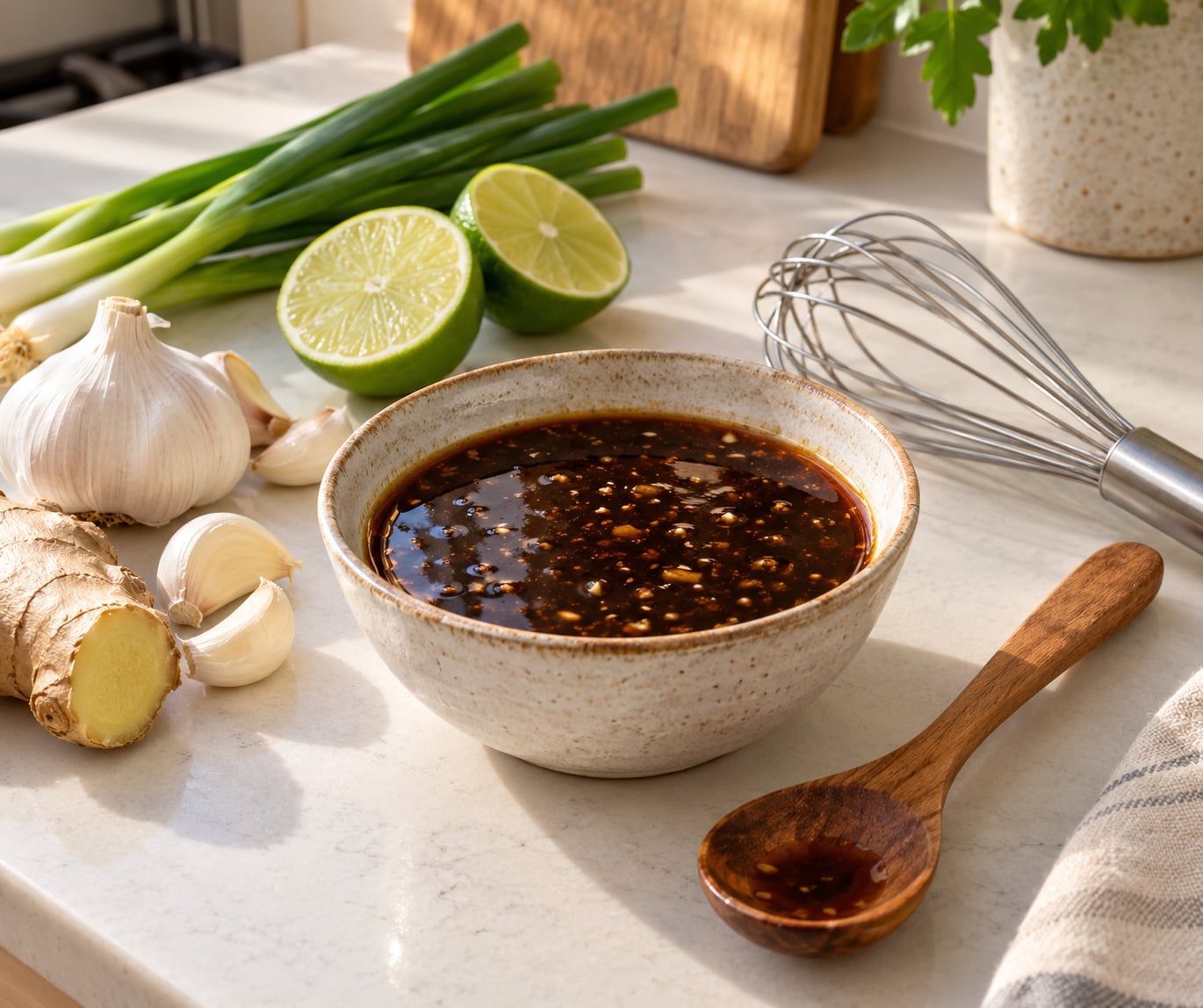
How to make a healthy stir fry sauce takes about five minutes: whisk low-sodium soy sauce with rice vinegar, a spoonful of maple syrup, toasted sesame oil, fresh garlic and ginger, plus a cornstarch slurry for gloss. You control the salt and the sugar, and the sauce clings to your vegetables instead of sliding off them.
Most bottled stir fry sauces land somewhere between 600 and 900mg of sodium and 10 to 15g of added sugar per serving, and most homemade recipes on the internet are not much better. The fix is not a complicated recipe. It is a ratio you can taste and adjust.
Below is the method I use: a base formula, four steps, and the fixes for every way it can go wrong.
Table of Contents
What You Need to Make a Healthy Stir Fry Sauce
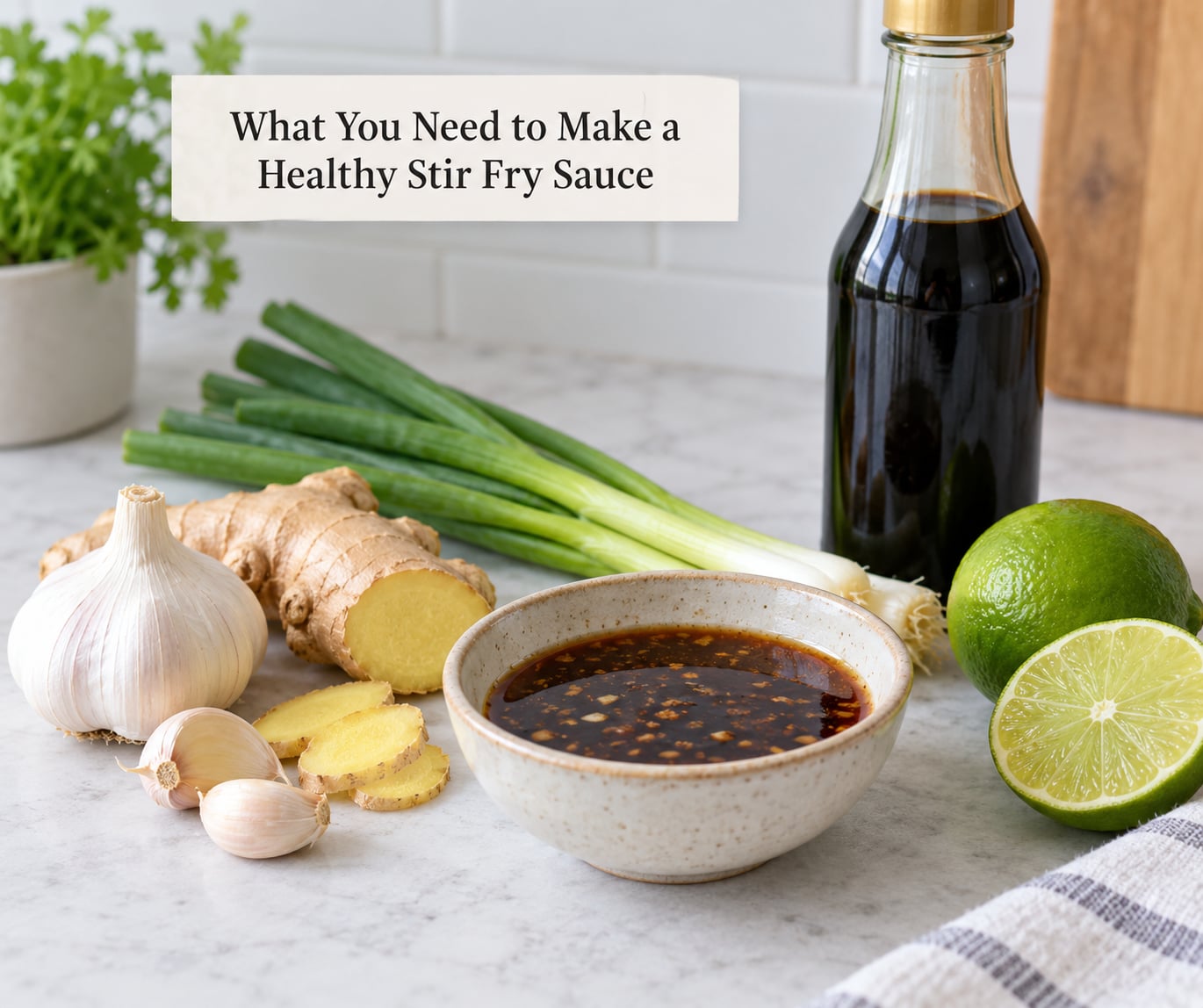
This makes roughly one cup of sauce, enough for about a pound of chicken, shrimp or tofu, or eight cups of raw vegetables. Everything comes from a regular pantry except the two fresh aromatics.
- 1/4 cup low-sodium soy sauce (tamari or coconut aminos if you need it gluten-free)
- 2 tablespoons rice vinegar (lime juice works, use a little less)
- 1 tablespoon pure maple syrup (honey, or rice syrup for a vegan version)
- 2 tablespoons toasted sesame oil
- 3 cloves garlic, grated or pressed
- 1 tablespoon fresh ginger, grated
- 1 tablespoon cornstarch mixed with 2 tablespoons cold water
- 1 tablespoon water or low-sodium broth, held back for adjusting
Heat is an add-on, not part of the base: half a teaspoon of red pepper flakes, or 1 to 2 teaspoons of sriracha or chili crisp. If you like having broth or stock on hand for thinning sauces and for cooking grains, how to make vegetable broth from kitchen scraps takes an afternoon and gives you a free cup for freezing.
Tools you actually need
A small bowl and a whisk, or a mason jar with a tight lid if you plan to shake it instead. A microplane for the garlic and ginger, a wok or a 12-inch skillet, and about a tablespoon of neutral oil for the pan. That is the whole list.
What it costs you in sodium
Nearly all the sodium arrives in the soy sauce. A tablespoon of standard soy sauce usually lands around 880mg, while low-sodium versions sit closer to 500mg, so check the label on your bottle rather than trusting the front of the package.
That makes two tablespoons of low-sodium soy sauce roughly 1,000mg of sodium, which is a quarter of the daily limit for most adults. If that number matters to you, the fix is simple: cut the soy sauce to one tablespoon, add one tablespoon of broth or water, and lean on the vinegar, ginger and sesame oil for the rest of the flavor. You land near 500mg without losing the savory backbone.
Step-by-Step
Step 1: Choose a Sauce Style
Decide the profile before you measure anything. A mild sauce for kids leans sweet and sour with no heat. A balanced sauce is the one most people mean by stir fry sauce: savory, tangy, lightly sweet. A spicy version doubles the chili and adds a spoonful of gochujang. A creamy version stirs in a tablespoon of peanut butter or tahini after the sauce is mixed, right before it hits the pan. If tahini is a new flavor for you, how to make a tahini dressing that is not bitter shows how to get past the bitterness that makes people give it up.
Whichever style you pick, start from the same ratio: two parts savory, one part acid, one part sweet, one part aromatic and fat. Two tablespoons of soy sauce, two tablespoons of vinegar, one tablespoon of maple syrup, and roughly a tablespoon each of garlic and sesame oil lands close to it.
Working from parts instead of cups is what makes the method repeatable. Double it for a batch, halve it for two people, and the balance holds.
You can also stop at three ingredients: soy sauce, rice vinegar and sesame oil. It is thinner and less sweet, but it is a legitimate sauce, and it takes ten seconds to make.
Step 2: Mix the Sauce Base
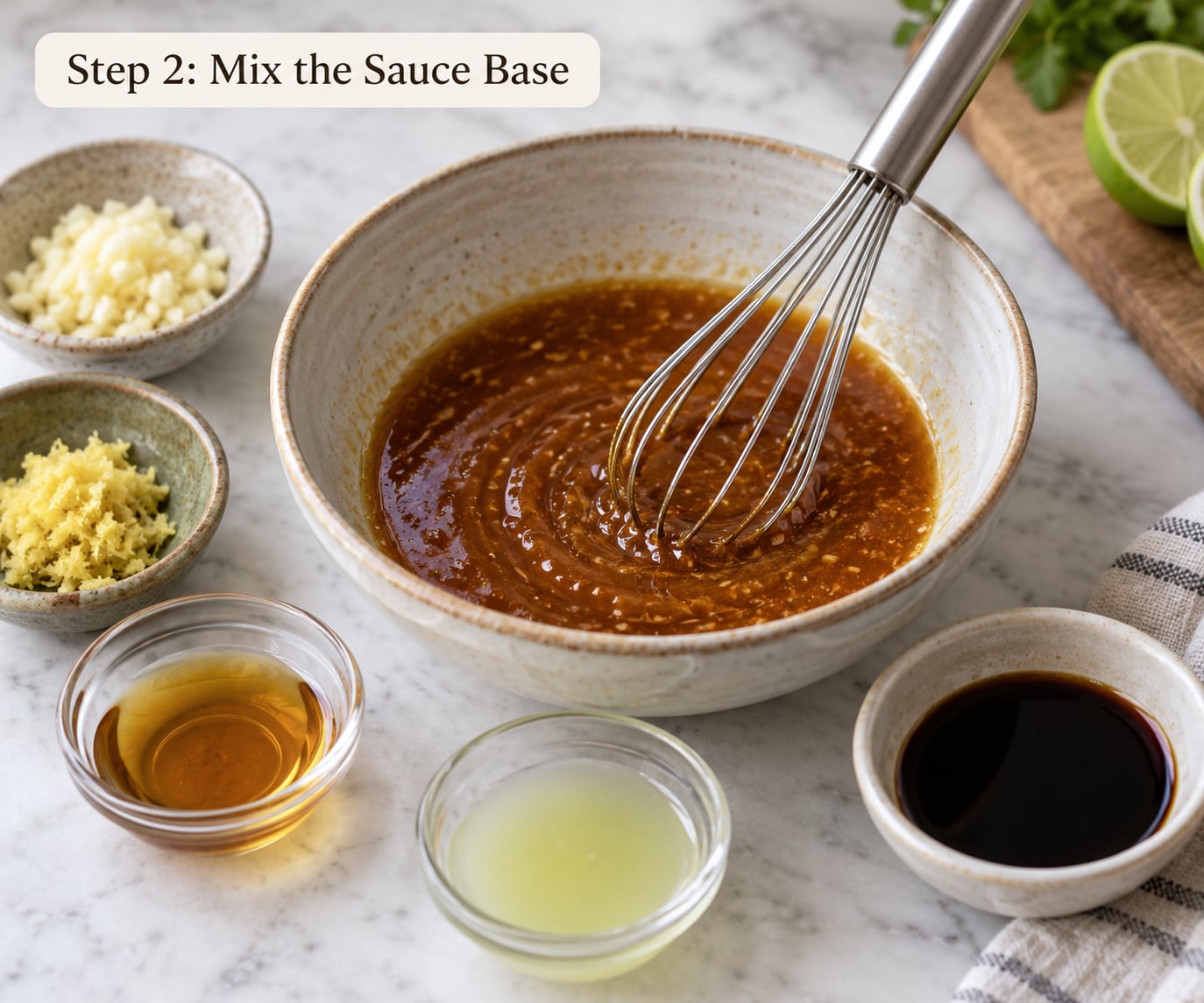
Put the soy sauce, vinegar, maple syrup and the extra tablespoon of water in a bowl first and whisk until the maple syrup disappears. Then add the sesame oil and the grated garlic and ginger, whisking again until the aromatics are suspended.
Stir the cornstarch slurry in last, whisking as it goes in. The slurry has to be mixed with cold water first, not tipped in as dry powder, or you will find lumps in the sauce for the rest of the night.
Taste it with a clean spoon before it goes anywhere near a hot pan. This is the moment to add salt or more sweetener if you want them, because once the sauce hits heat the flavors tighten and everything tastes stronger.
For meal prep, put the same ingredients in a mason jar, screw the lid on, and shake hard for fifteen seconds. The jar version is faster than a whisk and travels better to work. Expect the oil to separate and sit at the top when it comes out of the fridge, which is normal. Shake it again for ten seconds before it goes in the pan.
The same idea applies to the rest of the kitchen. A basic vinaigrette you can adjust to taste is covered in how to make a salad dressing without store bought, and once you can do that, stir fry sauce is the same instinct applied to a hot pan.
Step 3: Adjust the Flavor and Thickness
Sauce rarely comes out right the first time, and knowing which knob to turn saves you from dumping the whole bowl. Making it repeatable is mostly about these six fixes.
- Tastes salty. Too much soy sauce, or it has reduced in the pan. Add broth or water a tablespoon at a time, then a squeeze of lime or a splash more vinegar.
- Tastes sweet. Maple syrup or honey is the loudest flavor. Add rice vinegar or citrus juice first, then a spoon of broth, and hold back the sweetener next time.
- Too thin. Not enough starch, or added too early to a crowded pan. Stir in another teaspoon of slurry and let it bubble for 30 to 45 seconds.
- Too thick. Too much starch, or it sat and set while cooling. Whisk in warm water a tablespoon at a time until it pours.
- Not enough heat. Flakes were used sparingly or not at all. Add sriracha, chili crisp, or a spoonful of gochujang a little at a time.
- Clumpy. Cornstarch went in dry, or the sauce boiled too hard. Whisk hard, or push the lumps through a fine strainer, and mix the slurry with cold water next time.
The visual cue is easy to read. A sauce that will cling coats the back of a spoon in a thin glossy film and drips slowly off the edge. A sauce that is too thin runs like broth and pools in the bottom of the pan. A sauce that is too thick pulls into a paste and clings to everything, including the spoon you are stirring with.
Step 4: Cook the Stir Fry and Add the Sauce Last
Heat a tablespoon of neutral oil in a wok or skillet over medium-high heat. Cook your protein first and set it aside, then stir-fry the vegetables in a single layer. Crowded pans steam instead of sear, which is why the sauce ends up thin and watery.
Once the vegetables are crisp-tender and the protein is cooked through, pour the sauce in and stir. It should bubble almost immediately and thicken within about a minute. Pull the pan off the heat as soon as it looks glossy, because the sauce keeps thickening after the burner is off and the sweetener scorches fast.
Use roughly a quarter cup of sauce per pound of protein, or one cup for eight cups of raw vegetables. The same sauce works as a marinade, a noodle-bowl dressing, or a dipping sauce for steamed dumplings.
For food safety, cook poultry to 165F (74C), ground meat to 160F (71C), and whole cuts of beef, pork and lamb along with fish to 145F (63C). If you are not confident about a reading, a food thermometer is the only reliable answer.
Refrigerate leftovers in an airtight container and eat them within three to four days. The sauce itself keeps about two weeks refrigerated and freezes well for up to three months in a jar with room left for expansion.
Common Mistakes
Most unhappy stir fries come down to one of seven things, and every one of them has a quick fix.
Pouring soy sauce until it looks right. Measure it with a tablespoon. Eyeballing is how a quarter cup becomes half a cup, and soy sauce does not cook off in the first minute.
Adding the sauce too early. Sugar browns and burns at high heat, and a sauce that sits in a hot pan for five minutes reduces to something sticky and bitter. Add it last, stir, and take the pan off within a minute.
Tipping in dry cornstarch. Always mix it with cold water first. That slurry is the whole difference between a glossy sauce and one with pale little lumps in it.
Using jarred garlic and dried ginger. Dried aromatics carry very little of the fresh oils that make a stir fry smell good. Frozen crushed ginger is the one substitute people report working fine when fresh ginger is out of reach.
Skipping the thickener. Without starch, most sauces run thin in a hot pan. Half a teaspoon is often enough.
Forgetting to shake the jar. The sesame oil rises to the top during storage. Ten seconds of shaking fixes it, and that is the whole reason people think their make-ahead sauce went bad.
Crowding the pan. Cook in two batches if you have to. A crowded pan drops below the temperature needed to sear, releases water from the vegetables, and gives you a watery sauce no amount of cornstarch will fix.
For meal prep, mix a double or quadruple batch, keep it in the fridge, and scoop it over cooked vegetables at the end of the week. Freezing extra sauce in a jar means a weeknight stir fry becomes a ten-minute job on a Tuesday.
Frequently Asked Questions
What is the healthiest stir fry sauce?
The healthiest version is the one you mix yourself, because you control the sodium, the added sugar and the oil. Build it on low-sodium soy sauce for umami, rice vinegar for brightness, a small spoonful of maple syrup instead of corn syrup, toasted sesame oil for fat, and fresh garlic and ginger rather than dried. Skip MSG, seed oils and preservatives entirely, and keep the sweetener at one tablespoon for a full cup of sauce.
How can I make stir fry sauce without soy sauce?
Coconut aminos are the easiest swap and are the option most often recommended on low-sodium cooking forums, where they are described as naturally sweet, lower in salt, and a little like a light teriyaki on their own. Use about three tablespoons in place of a quarter cup of soy sauce. Add a teaspoon of miso or a spoonful of nutritional yeast if you want the savory depth to carry a full pound of meat.
How do I keep a stir fry sauce from being too salty?
Measure the soy sauce with a tablespoon instead of pouring it, and dilute with broth or water. Cutting to one tablespoon of low-sodium soy sauce and adding a tablespoon of broth brings a serving close to 500mg of sodium while the vinegar, ginger and sesame oil keep the flavor full. If a sauce has already reduced past salty in the pan, it cannot be fixed, which is why the sauce goes in last.
Can I make healthy stir fry sauce ahead of time?
Yes, and it is one of the better reasons to make it yourself. Mix the sauce in a mason jar and keep it refrigerated in an airtight container for about two weeks, or freeze it for up to three months. The sesame oil will separate as it sits, so shake the jar hard for ten seconds before each use. Add the cornstarch slurry at cooking time rather than in the jar if you prefer a thinner sauce.
How do I thicken a healthy stir fry sauce without cornstarch?
Arrowroot starch behaves almost identically to cornstarch and gives a clear gloss rather than a cloudy one, so it is a direct substitute teaspoon for teaspoon. A small spoon of nut butter, tahini or miso also thickens a sauce while adding flavor. Reduce the sauce over medium-high heat for another minute or two, which concentrates it without adding anything at all.
Is a stir fry sauce healthy for weight loss?
A homemade sauce can fit a weight loss plan, because most of the calories in a stir fry come from the oil used to cook and the sauce is a small part of the meal. One tablespoon of a sauce like this is well under 60 calories. For personal guidance on calories, sodium or any medical concern, a registered dietitian or your doctor is the right person to ask, and this article is general information only.
Conclusion
The whole formula is two parts savory, one part acid, one part sweet, one part aromatic and fat, with a cornstarch slurry whisked in cold water to give it gloss. Start with a small bowl, taste it before it ever touches a hot pan, and add the sauce last so nothing burns.
Once you have that down, the same base turns into peanut, teriyaki-style, Thai-style or sweet-and-sour with one extra ingredient, and it works over vegetables, tofu, chicken, shrimp or a bowl of brown rice.