
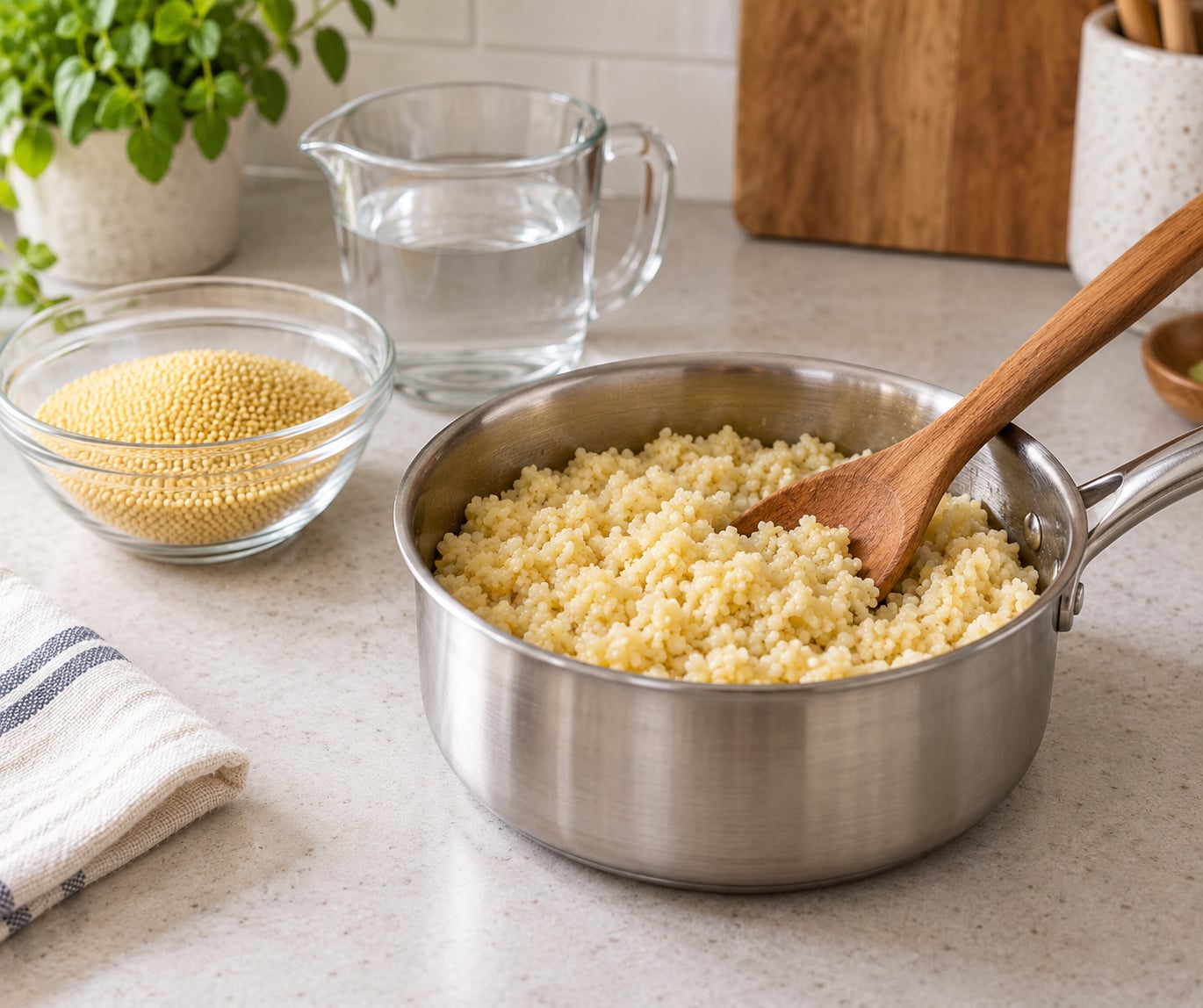
To cook millet so it is fluffy, use about 2 cups of water for every 1 cup of millet, toast the dry grain in the pan for a minute or two before any liquid goes in, and let the pot sit off the heat for five minutes before you fluff it. That takes roughly 25 minutes from the stovetop to the table, and no soaking is required.
Here is how to cook millet so it is fluffy, step by step, along with what to do about a batch that turned out mushy or crunchy. The short version: millet is a small, dense whole grain with an intact bran layer, so it drinks liquid faster than rice does and needs a resting period to finish cooking on its own.
Table of Contents
What You Need
Everything for this method is already in your kitchen. You need a saucepan with a heavy bottom and a lid that fits tightly enough to hold steam, a measuring cup, a fine-mesh sieve and a fork for fluffing.
- A heavy-bottomed saucepan with a tight lid. A thin pan spikes in temperature and scorches the bottom of the grain before the water has finished absorbing. A lid that sits flush traps the steam that finishes cooking the centres.
- Measuring cups rather than a spoon. A level 1 cup of millet with 2 cups of water is the whole recipe. Spooning grain gives you inconsistent amounts, and that is where a lot of bad batches start.
- A sieve and a fork. One for rinsing, one for fluffing. Fluffing with a fork separates grains gently; stirring with a spoon tends to mash them.
- Optional: 1 teaspoon of oil, a pinch of salt, herbs or garlic. Oil is what makes toasting possible, salt goes in with the water, and herbs or aromatics go in after cooking.
For the grain itself, white millet gives the fluffiest result because it has had the hull removed. Hulled millet cooks almost identically and is widely available. Whole millet, with the bran still on, is nuttier and darker but firmer, so give it a 20-minute soak in cool water first or add a few minutes to the simmer.
Whatever you use, the ratio is flexible rather than fixed. Start at 1 part millet to 2 parts water, then adjust by a quarter cup depending on your pot and your variety. Larger, denser millets such as kodo and barnyard lean toward 2.25 parts water; little and foxtail sit happily at 1.75 to 2.
How to cook lentils so they hold their shape follows the same logic, by the way. Small grains with intact skins need more liquid and a rest than most recipes bother to explain.
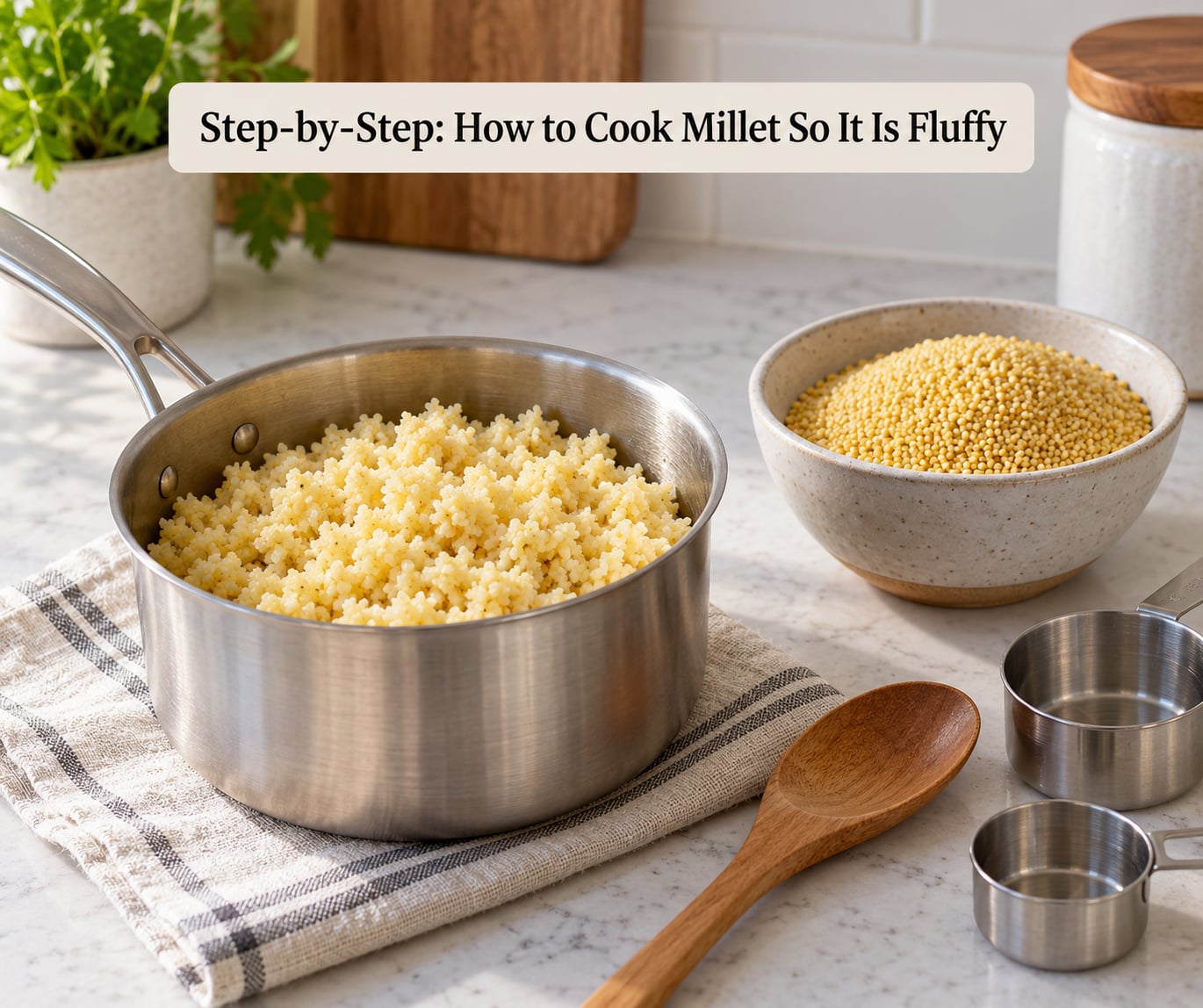
Step-by-Step: How to Cook Millet So It Is Fluffy
1. Measure and Rinse the Millet
Measure 1 cup of millet and 2 cups of water, then rinse the grain in a sieve under cool running water until the water runs mostly clear. Two or three rinses is normal, and the water will look cloudy at first.
That cloudy water is surface starch, and rinsing it off is what lets the grains stay separate instead of knitting into a gummy mass. If you bought whole millet, cover it with cool water and leave it for 20 minutes, then drain it well before the next step.
2. Toast the Millet for More Flavor
Heat 1 teaspoon of oil in your saucepan over medium heat, add the drained millet and stir for 1 to 2 minutes until it smells nutty and looks slightly darker. Keep the grains moving the whole time.
This step is optional but worth doing. Toasting dries the surface of each grain and coats it with a thin film of oil, so grains slide past each other rather than bonding. Millet browns quickly, so stop at a light golden smell rather than chasing deep colour; anything darker starts tasting bitter.
3. Add Water and Bring to a Boil
Pour in the 2 cups of measured water, add a pinch of salt, and stir once to make sure no grain is stuck to the bottom of the pan. Bring it to a full boil, then drop the heat to its lowest setting and cover the pot tightly.
That single stir matters. Water poured over dry toasted millet is the main reason grains weld themselves to the pan base, and once they are stuck they scorch. A covered pot is the second half of the method, since the trapped steam circulates around the grains and cooks them far more evenly than a rolling boil would.
4. Simmer Until the Water Is Absorbed
Cook at a gentle simmer for 15 to 18 minutes, then start checking at 15 minutes. Lift the lid and look at the bottom of the pan rather than stirring.
You are looking for two cues together: all the liquid has disappeared from the bottom, and the grains are tender while still holding their shape. Press one grain between your fingers and it should give easily without smearing into paste. If liquid is still visible, put the lid back on for another 2 to 3 minutes. If the liquid is gone but the grains feel chalky, a minute or two of residual heat will usually finish them.
Turn the heat off the moment the liquid disappears. That is the single biggest reason millet goes from fluffy to sticky, because uncovered heat keeps driving off water and concentrating the remaining starch.
5. Fluff and Let It Steam: The Final Step for Fluffy Millet
Take the pot off the heat, remove the lid, and fluff the millet gently with a fork from the bottom of the pan upward. Then leave it uncovered for 5 minutes before serving.
Here is how to cook millet so it is fluffy in the way most people miss: the rest is not an optional pause. As the millet sits, the steam still trapped between the grains works its way inward and cooks the centres without adding any more water, and the separate grains cool away from each other instead of touching in a warm, wet mass. Skip it and the pot steams itself into porridge.
Season only now, while fluffing. Salt, butter, lemon juice, herbs, garlic or a spoon of olive oil all go in after cooking, since salt added earlier toughens the bran and pulls moisture into the middle of the grain.
Common Mistakes
Nearly every disappointing batch traces back to one of these. Each one has a specific correction rather than a vague instruction to be more careful.
Mushy or watery millet. You used a rice ratio, or you lifted the lid mid-cook. Millet needs more liquid than rice, not less, but it also cannot handle steam escaping. Next time measure 2 cups of water per cup of grain and leave the lid alone once it is on.
Gummy, sticky grains that clump. You skipped the rinse. Surface starch is what binds everything together, and a quick rinse under the tap fixes it in ten seconds.
A hard centre with tender edges. The pot was too large, the heat was too high, or the millet was released early from a pressure cooker. Use a heavy pan on your lowest setting, and give whole millet its soak.
Chewy grains and a bitter taste. You pushed the toast past light golden. Millet has a thin bran and scorches long before most people expect, so pull it off the heat as soon as it smells nutty.
Soggy millet that never dries out. You skipped the 5-minute uncovered rest. Leave it until the steam stops rising, even if you are in a hurry.
Scorched layer on the bottom of the pan. Crowding or high heat. Millet expands as it cooks, so use a pot with room for a third more volume than the dry grain, and never take the lid off to stir after the boil.
Conflicting advice about soaking and rinsing. Rinse always, it costs you nothing. Soak only whole or unpolished millet, and even then 20 minutes is plenty.
Easy Tips for Consistently Fluffy Millet
A few habits will make the results repeatable even when your pot or your batch of millet changes.
Use a lid that fits. If yours sits loose, set a plate over the top and press a towel around the rim. Steady steam is what turns the heat down into even cooking.
Fluff from the bottom. Work the fork up through the base of the pot rather than stirring the surface. Compacted millet at the bottom stays gummy even when the top looks fine.
Double it safely. Cooking twice the grain in the same pot changes the water ratio and traps too much steam. Cook in two pans instead, or make one pot and eat the second batch within a few days.
Add vegetables late. Chopped peppers, zucchini, peas or corn can go in for the last 5 minutes of simmering. Anything watery, like tomato or courgette, should go in after cooking and drain off.
Adjust for cookware and variety. Thick cast iron runs hotter and dries out faster, so check at 13 minutes and add a splash of hot water if the bottom looks dry. Give kodo and barnyard 18 to 20 minutes; give little millet and foxtail 14 to 16.
Store it properly. Cool cooked millet uncovered on a plate so steam escapes, then move it to an airtight container in the fridge for up to 3 to 4 days. Keep cooked grains below 40°F and reheat them until steaming hot all the way through, 165°F.
Reheat with water. Millet firms up in the fridge. Put a splash of water in the pan, cover, and warm it over low heat for 3 to 4 minutes, fluffing again at the end. A damp paper towel in the container does the same job in a microwave.
If you cook grains in bulk, our guide to how to batch cook for the week without getting bored is worth a read before you commit to a big pot. And if you like the texture you get here, you will like the same careful approach in how to cook dried beans without soaking, where the soaking question gets the same honest answer.
Frequently Asked Questions
How much water do I need to make millet fluffy?
Two cups of water per cup of millet is the reliable starting point for light, separate grains. Kodo, barnyard and pearl millet are thirstier and want closer to 2.25 to 2.5 cups. Little and foxtail millet are fine at 1.75 cups. Measure with a cup rather than a spoon, and remember that too much water is the usual reason millet turns to porridge.
Should I rinse millet before cooking it?
Yes, always rinse. Two or three rinses in a fine sieve remove the surface starch and any dust from the hull, which is what keeps the grains separate and stops the cooked millet from turning gummy. Soaking is a different question: only whole or unpolished millet really needs it, and 20 minutes in cool water is enough.
Why is my millet sticky or mushy?
Almost always water. Millet needs more liquid than rice, so a rice ratio leaves it underdone and pasty, while too much water plus a lifted lid leaves it swimming. Skipping the rinse is the other culprit, because surface starch binds the grains together. Cook covered on the lowest heat, never lift the lid, then rest the pot off the heat for five minutes.
Can I cook millet in a rice cooker?
Yes, use the white rice setting with 1 cup of millet and 2 cups of water for every cup of grain. Skip the multigrain setting, which runs wetter and is the usual reason rice cooker millet comes out like porridge. Most machines finish in about 20 minutes, then let the pot sit for 10 minutes before you open the lid and fluff.
How long does cooked millet last in the fridge?
Three to four days in an airtight container in the fridge, once it has cooled uncovered on a plate so steam can escape. Cooled millet firms up because the starch sets, so reheat with a splash of water, covered, over low heat for 3 to 4 minutes, or with a damp paper towel in the microwave. Reheat only the amount you plan to eat.
What to Do First
Measure 1 cup of millet and 2 cups of water, and get the ratio right before anything else. Rinse the grain, toast it for two minutes, then cook it covered on your lowest heat until the liquid is gone and give it five minutes off the heat before you fluff. Almost every fluffy batch starts with those three decisions, not with the grain you bought.