
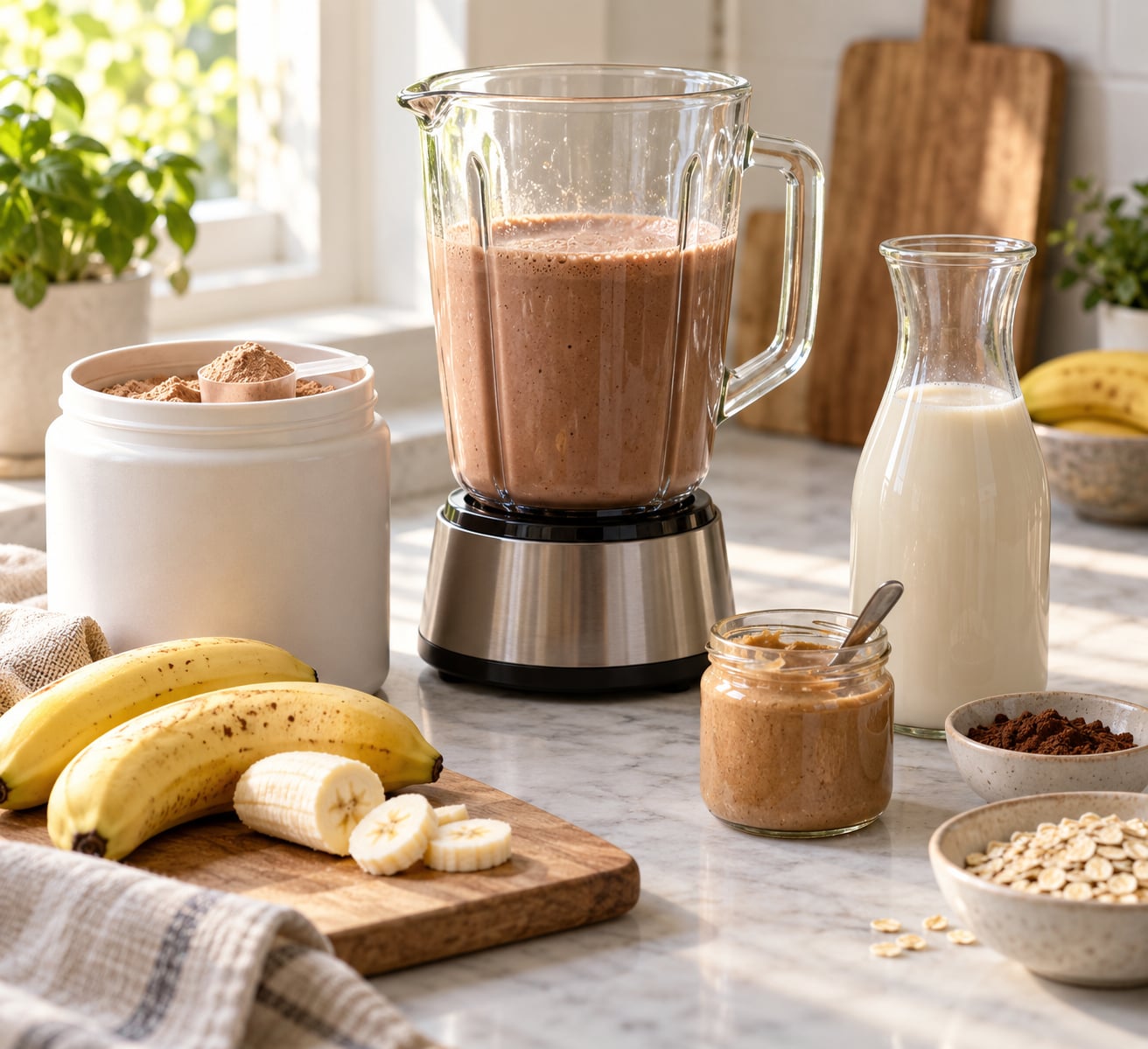
A vegan protein shake is one scoop of plant protein powder, about a cup of plant milk, a cup of frozen fruit, and a tablespoon of nut butter, blended until smooth. That four-part formula takes about two minutes and lands anywhere from 20 to 30 grams of protein per glass. Making it at home means you control the sweetness, the thickness, and what goes in it.
Most bad shakes are not a protein problem. They are a ratio problem, usually too much powder and too little liquid. Fix that and the rest is easy.
I’ve been blending these on weekday mornings for years, and the formula has barely changed: liquid first, protein second, fruit third, fat last. Once you know the four parts, you can swap any of them and still get something drinkable.
Table of Contents
- What You Need
- Step-by-Step: How to Make a Vegan Protein Shake at Home
- Common Mistakes and How to Fix Them
- Frequently Asked Questions
- What is the easiest vegan protein shake recipe for beginners?
- Do I need a blender to make a vegan protein shake at home?
- Can I make a vegan protein shake without protein powder?
- Why is my vegan protein shake thick or chunky?
- Can I use almond milk, oat milk, or another plant-based liquid?
- How long can I store a homemade vegan protein shake?
- Conclusion
What You Need
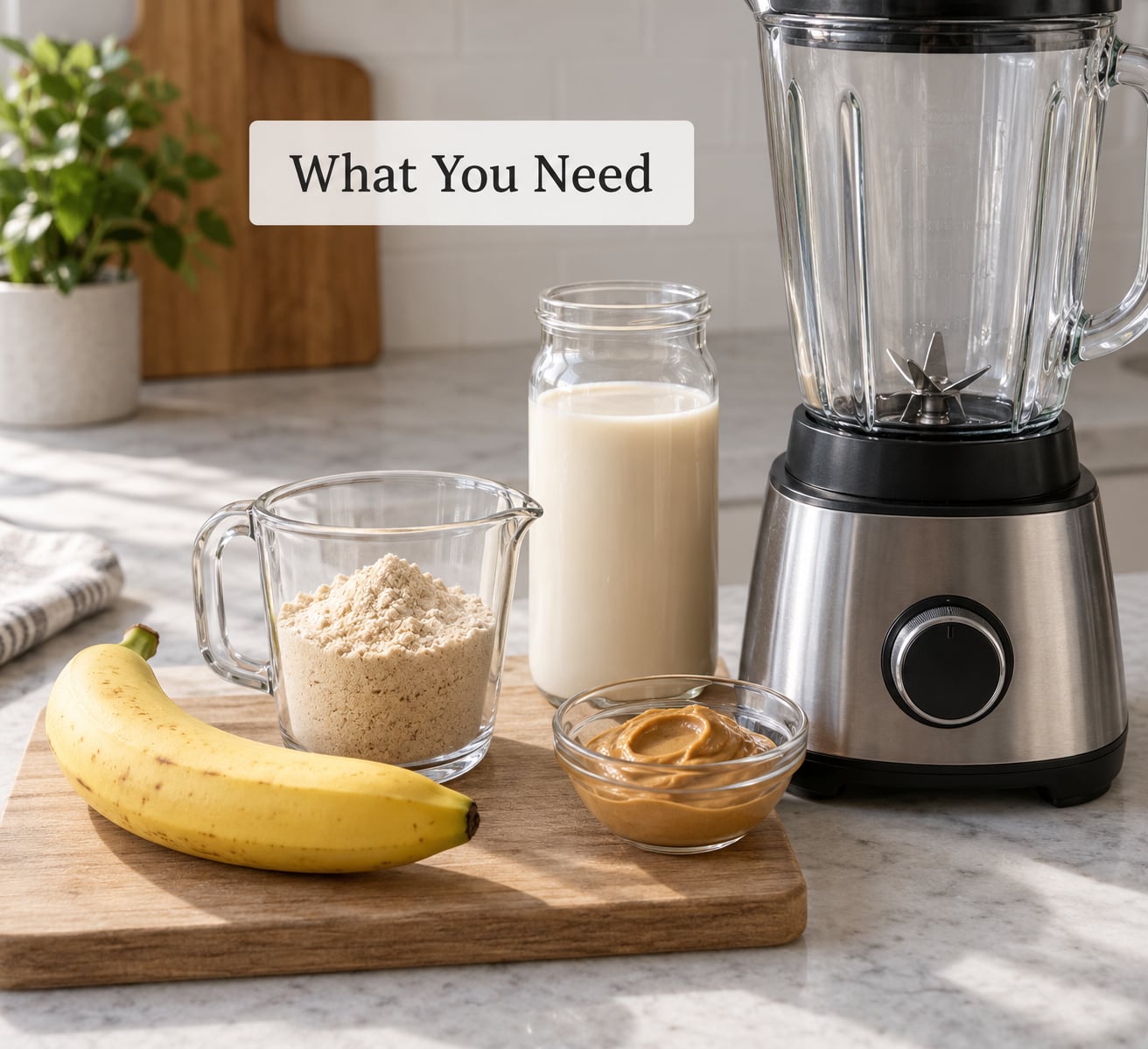
You need very little to make a vegan protein shake at home. A blender and four ingredients cover about ninety percent of what people want from a shake. Everything else is optional seasoning.
The one piece of equipment worth spending on is the blender. A 1000-watt or higher machine handles frozen fruit and ice without leaving grit. Personal blenders work fine for softer recipes but struggle with a full cup of frozen banana plus ice. More on that below.
The four parts of the base formula
- Liquid: 240 ml (about 1 cup) of plant milk. Oat, almond, soy, and coconut milk all work, and so does cold water if you want the flavor to come entirely from the powder and fruit.
- Protein: 25 to 30 g of plant protein powder, which is usually one scoop of a standard 25 g serving.
- Fruit: 1 cup, frozen if you have it. Frozen banana is the backbone of most recipes; berries work equally well.
- Fat: 1 tablespoon of nut or seed butter, or half an avocado. Fat is what makes the shake filling instead of merely thirsty.
Plant proteins and what each one brings
Pea protein is the most common and mixes cleanly, though some people find it makes them bloated. Rice protein is mild and blends well on its own. Soy protein is a complete protein and inexpensive. Hemp protein adds a slight earthiness that fruit hides easily.
Blends are often the easiest starting point for a beginner because flavor and texture are already balanced in the tub. If you want more protein without more volume, a how to read a protein powder label guide helps you compare grams of protein per serving rather than scoop size, which varies a lot between brands.
Liquid swaps
Almond milk is thin and neutral. Oat milk is creamier and makes a thicker shake. Soy milk adds a few more grams of protein per cup. Coconut milk is the richest option and turns the shake closer to a smoothie. Unsweetened versions let the fruit do the sweetening, which is usually the better place for sugar to come from.
Optional boosters
- 1 tablespoon chia or ground flaxseed for thickness and extra omega-3s
- A handful of spinach or kale, which you will not taste once blended with fruit
- 1 tablespoon cacao powder for a chocolate version without added sugar
- Cinnamon, a pinch of salt, or a splash of vanilla extract for depth
- Rolled oats blended in, or silken tofu for a no-powder shake
Step-by-Step: How to Make a Vegan Protein Shake at Home
Step 1: Choose Your Plant Protein
Start with one scoop, about 25 grams of protein. That is enough for a filling shake and it is much easier to blend than a double scoop, which is where most gritty shakes come from. You can always add a second half scoop later.
Look at two numbers on the tub: grams of protein per serving, and the serving size in grams. Some scoops weigh 30 g, others 45 g, so serving counts are not comparable across brands.
If you are building up to daily protein intake from food rather than shakes, how to eat enough protein on a vegetarian diet without powder covers the whole-food side of the same goal. Many people use both together.
Step 2: Add Liquid, Fruit, and Flavor to Your Vegan Protein Shake
Liquid goes in the blender first, always. It stops the powder from clumping against the blades and gives the blades something to pull.
Then add protein, then fruit, then fat and flavorings. This order matters more than it sounds. Powder dumped on top of fruit sits on the blades and stays grainy, while powder added to liquid disperses before anything thick touches it.
For a thinner shake, use more liquid and fresh fruit. For a thicker, meal-replacement texture, use less liquid and frozen fruit, and add a spoon of oats or chia. A cup of frozen banana plus a handful of ice gets you close to a smoothie without any of it.
Step 3: Blend Until Smooth
Blend on high for 45 to 60 seconds. If your blender has a smoothie or soup setting, use it. Stop once the color is even and no flecks of powder or ice remain at the top.
If you only have a lower-power blender, soften the recipe rather than running the machine longer. Let the frozen fruit sit out for 20 to 30 minutes, drop the ice, and skip the oats. Those three changes cover most of what a weak motor cannot handle.
Do not over-blend. Beyond about 90 seconds on high, plant protein and nut butter start to heat up and foam, which gives the shake a soapy, aerated texture.
Step 4: Adjust, Pour, and Store
Taste it before you pour it. Too thick means a splash more liquid, blended briefly. Too thin means more ice or a scoop of frozen fruit. Weak flavor is usually a lack of fat and a pinch of salt, not more sweetener.
Drink it within an hour if you can. Separatation is normal after that, because plant proteins and nut butters do not contain the same stabilizers that keep a commercial shake together. A quick shake in the jar brings most of it back.
For the fridge, use a sealed container and finish it within 24 hours. For longer storage, freeze it in a jar with room at the top for expansion, or freeze the ingredients dry in bags and blend fresh.
If you batch it, portion fruit, greens, and seeds into freezer bags ahead and keep the powder separate. Drop the bag contents into the blender, add liquid and powder, and you have shaved five minutes off the morning.
Common Mistakes and How to Fix Them
Gritty or chalky shakes almost always come from three things: too much powder, powder added on top of the fruit, or not enough blending time. Fix the order first, since it costs nothing.
A shake that is too thick to drink is usually one scoop of powder with too little liquid. Add 60 ml more plant milk at a time and pulse. Going in small increments stops you from overshooting into thin.
Foamy, soap-like shakes mean you blended too long on high. Nut butters and soy milk proteins aerate under sustained heat. Stop at 60 seconds and let the shake settle for a minute.
White beans and chickpeas blend into a smooth shake with no bean taste once you have cocoa, banana, and peanut butter in there. Use about half a cup of rinsed white beans, and make sure they are blended with the liquid, not stacked on top.
Separation in the fridge is cosmetic rather than a safety problem within 24 hours. It comes from the natural settling of fiber and nut butter. Shake hard for fifteen seconds and it comes back together.
Boredom is the reason most people quit shakes by week three. Change one variable at a time, not all four. Swap the fruit, then the flavor, then the base recipe.
If you are making shakes for someone who will not drink a green smoothie no matter how you disguise it, the ideas in how to make smoothies kids actually drink are built around flavor and texture, which is exactly the same problem in a smaller person.
Frequently Asked Questions
What is the easiest vegan protein shake recipe for beginners?
One scoop of plant protein powder, 240 ml of oat milk, one frozen banana, and one tablespoon of peanut butter, blended for 60 seconds. That combination hits every part of the formula at once: protein, liquid, fruit for sweetness and thickness, and fat for staying power. It tastes good enough that most people stop fiddling after a few rounds.
Do I need a blender to make a vegan protein shake at home?
A blender makes it far easier, since frozen fruit and ice need one. You can also use a shaker bottle with a spring whisk ball if you skip ice and frozen fruit, and blend the ingredients as a drink rather than a smoothie. A stick blender in a tall glass works too, and lets you drink straight from the cup. Expect a thinner result either way.
Can I make a vegan protein shake without protein powder?
Yes, and it works well. Silken tofu, rinsed white beans, cooked lentils, and hemp hearts all blend smooth and add protein. A common recipe is half a cup of silken tofu, one frozen banana, two tablespoons of hemp seeds, and a cup of plant milk, which lands in the range of 25 grams of protein. Expect a thicker texture than a powder shake, so add liquid slowly.
Why is my vegan protein shake thick or chunky?
Three usual causes: too little liquid for the amount of powder, powder added on top of the fruit instead of into the liquid, and a blender that cannot handle frozen ingredients. Add plant milk in 60 ml increments, always pour the liquid first, and let frozen fruit sit out for 20 to 30 minutes on weaker machines. If it is still gritty, your blender probably needs more time or more power.
Can I use almond milk, oat milk, or another plant-based liquid?
All of them work. Almond milk is thin and neutral, oat milk is creamier and thickens the shake, soy milk contributes a few more grams of protein, and coconut milk is rich enough to turn the recipe into a smoothie. Cold water works as well if you are using unflavored powder and do not mind a thinner drink. Unsweetened varieties let the fruit handle the sweetness.
How long can I store a homemade vegan protein shake?
Refrigerate it in a sealed container and drink it within 24 hours. Homemade shakes lack the stabilizers that keep commercial ones stable, so separation is normal and a hard shake usually fixes it. For longer storage, freeze the ingredients dry in individual bags rather than freezing the blended drink, and blend fresh when you want one. Do not leave a shake at room temperature for more than two hours.
Conclusion
Start with the simple formula: one scoop of plant protein, one cup of plant milk, one cup of frozen fruit, one tablespoon of nut butter. Blend the liquid first, add the powder next, and give it 60 seconds on high.
Taste it, adjust the liquid in small increments, and change one ingredient at a time until it tastes like something you will actually drink tomorrow. If your daily protein numbers are the reason you started, a registered dietitian can help you work out how much you need alongside food.