
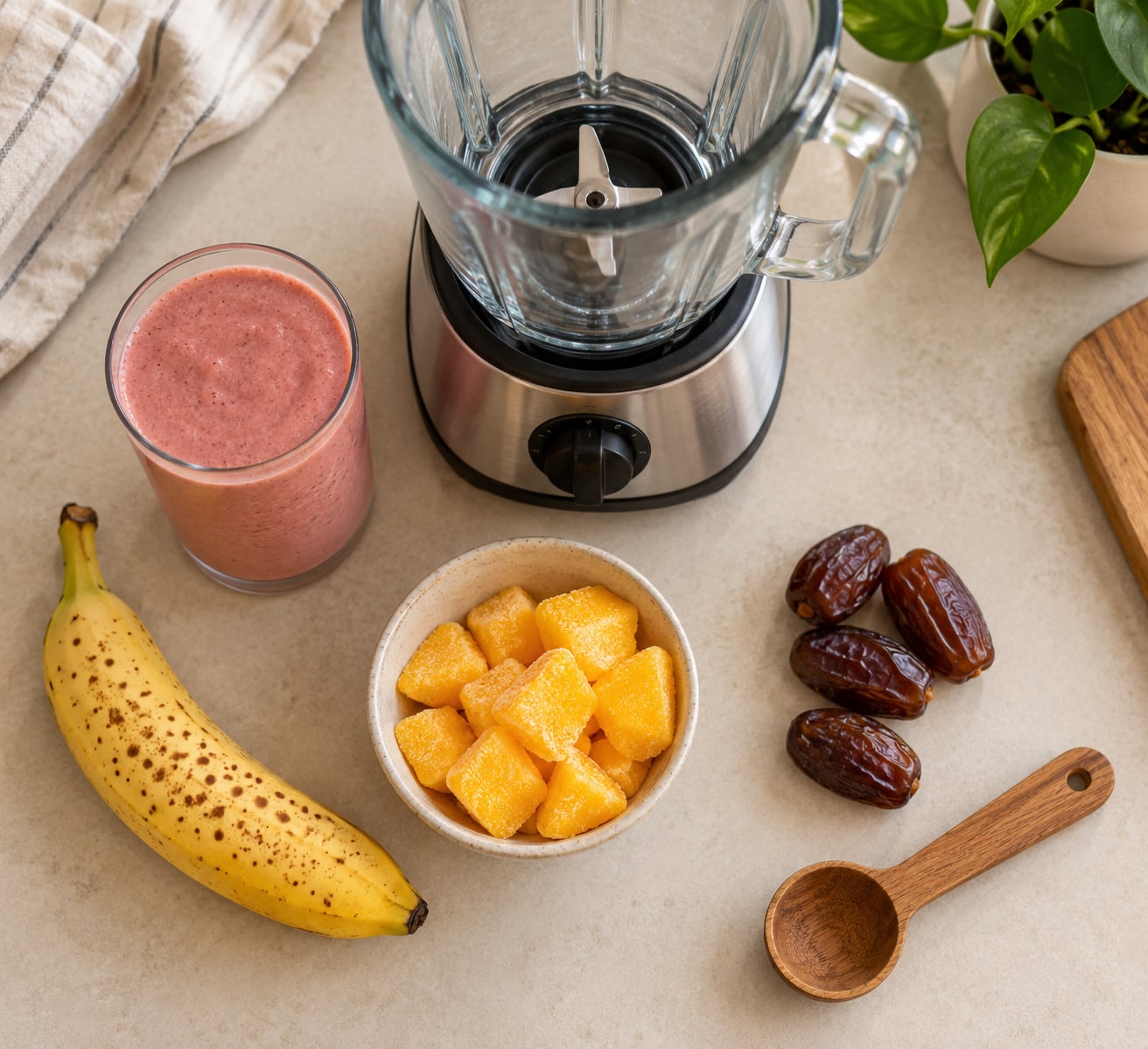
To sweeten a smoothie without sugar, use one very ripe banana, one or two pitted Medjool dates soaked in hot water, or a few drops of a zero-calorie sweetener, then add vanilla and a pinch of salt so the sweetness you already have actually registers on your tongue.
Most flat smoothies are not missing sugar. They are missing aroma, fat and salt, which is why the same banana tastes sweeter in a blender than it does in a bowl. Building sweetness in that order means you can stop reaching for the honey jar every time a green smoothie comes out tasting like grass.
Everything here takes about five minutes of active work. No special equipment beyond a blender you already own, and no added sugar of any kind.
Table of Contents
What You Need
Keep a short list on the fridge door and you will never again open the cupboard at 7am with no idea what to add.
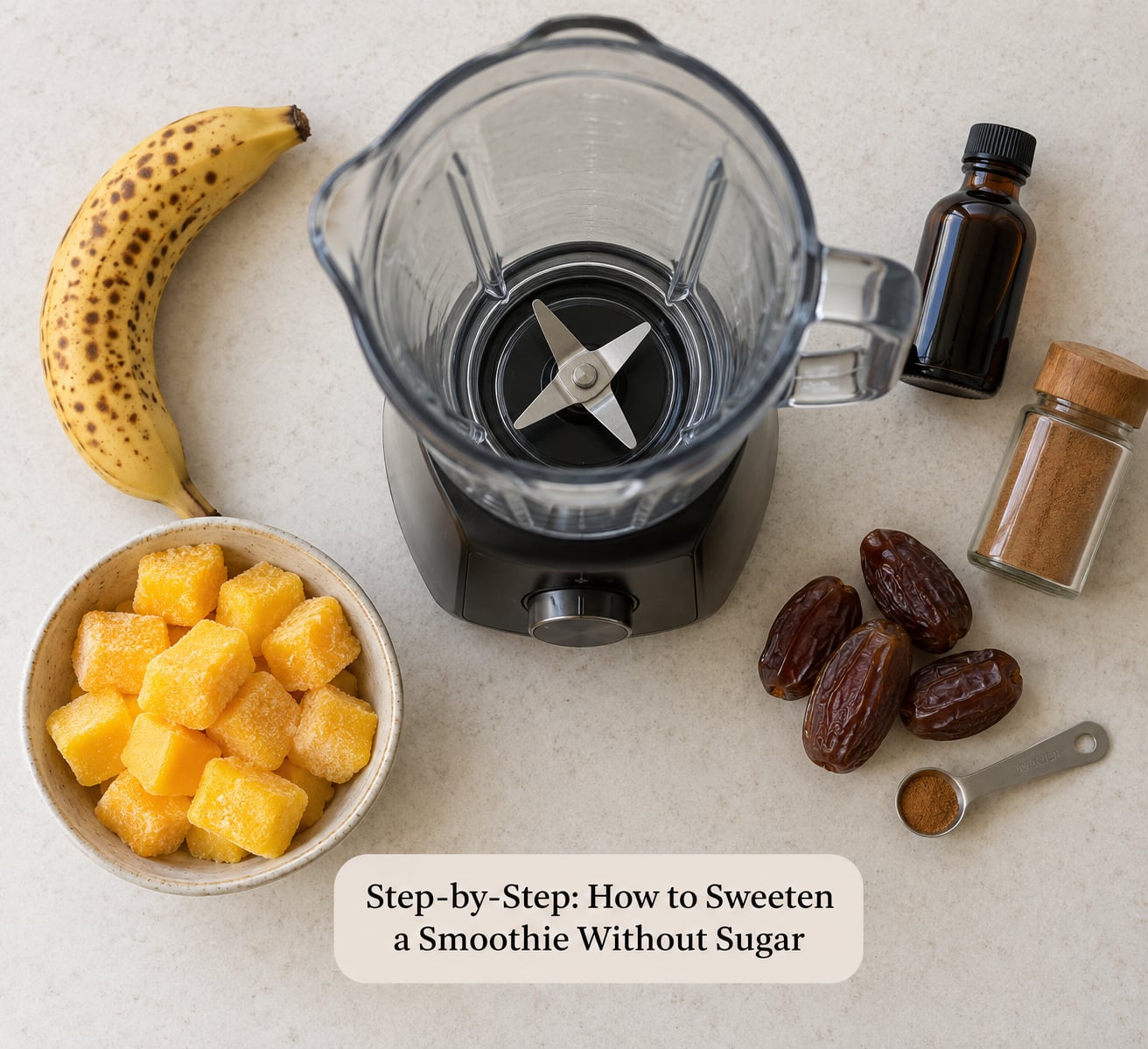
- Ripe or frozen fruit: bananas, mango, pineapple, strawberries, peaches. Bananas are the workhorse; mango and pineapple carry more aroma.
- Dried fruit: Medjool dates, and prunes if you like a deeper, less candy-like sweetness.
- Aroma builders: pure vanilla extract, ground cinnamon, fresh ginger, cardamom, cocoa or cacao powder, matcha, lemon or lime zest.
- Salt: pink Himalayan salt or plain sea salt. A quarter teaspoon does more for perceived sweetness than another piece of fruit.
- Zero-calorie sweetener, optional: stevia drops, monk fruit or allulose, for the days you want dessert-level sweetness without fruit.
- A creamy base: plain Greek yogurt, unsweetened milk or a plant milk, a tablespoon of nut butter or tahini.
- A measuring spoon and a taste spoon: the taste spoon is the tool people skip and the one that changes everything.
If you are working on the sugar in your shopping basket more broadly, how to spot hidden sugar on a label covers the same skill for packaged food.
Step-by-Step: How to Sweeten a Smoothie Without Sugar
Use Ripe or Frozen Fruit for Natural Sweetness
Ripe beats pretty. A banana with brown freckles has more sugar and more aroma than a pale one, and that aroma is what your tongue reads as sweetness once it is blended and aerated.
Frozen fruit is even better for flavor, because freezing breaks down cell walls and concentrates the taste. It also carries less of the raw, starchy edge that makes a green smoothie taste green. Use frozen mango or pineapple in place of the banana when you want sweetness without any banana flavor at all.
Balance two fruits rather than doubling one. Mango plus a little strawberry, or pineapple plus a half banana, tastes round instead of one-note. Aim for roughly one cup of fruit per 12 to 16 ounces of liquid, then adjust from there.
Add Dates to Sweeten a Smoothie Without Sugar
One pitted Medjool date is the single most useful thing in a no-sugar smoothie. Two get you a dessert-sweet drink.
If your dates are dry and hard, cover them with hot water and let them sit five minutes before they go in the blender. The soaking water is sweet too, so you can pour some of it in as your liquid and cut back on the milk. If you skip the soak and blend dry dates, you will probably end up with a gritty drink and a bitter aftertaste.
Dates are not for everybody. Two more is where I stop, because three or four turns the drink into candy and eats up volume you probably want for greens. If you dislike the caramel flavor, use prunes instead: one pitted prune does roughly the work of one date.
Build Flavor with Vanilla, Cinnamon, and Ginger
A half teaspoon of vanilla extract does not add sugar, and it does make the whole glass taste sweeter. Cinnamon and ginger warm the flavor so the fruit reads as riper than it is, and cocoa or matcha take a green smoothie somewhere dessert-like without a single gram of added sugar.
Measure the spice with a small spoon. A quarter teaspoon of cinnamon is right; a full tablespoon is a cinnamony cup of coffee and nobody wants that. The same goes for fresh ginger, where a 1/4-inch coin of peeled root is plenty for a 16-ounce blend.
Use Fruit Ice or a Fruit Purée
Fruit ice is the closest thing to a concentrated sweetener that still counts as whole food. Blend half a cup of fruit with a splash of liquid, pour it into an ice cube tray and freeze it. Drop two or three cubes in place of plain ice and you get more sweetness and a thicker, creamier pour with nothing added.
Frozen purée works the same way when you do not want to plan ahead. A third of a cup thaws fast and thickens the drink. The trick with either is to cut your liquid back by the same amount, because fruit ice and purée are already mostly water, and adding them on top of a full liquid base gives you a thin, watery glass.
Choose a Flavorful Base Instead of Simply Adding More Sweetener
The base decides whether the drink feels like a meal or a drink. Plain Greek yogurt adds protein and body, nut butter adds fat that carries aroma further, and seeds such as chia or hemp add texture without taking the sweetness down.
Be careful with the base swap that catches most people: flavored yogurt, sweetened protein powder and sweetened plant milks. Swapping vanilla yogurt for plain yogurt is often the single biggest jump in perceived sweetness, and the first two or three glasses will taste bitter before your palate adjusts. That adjustment is real and it takes two to three weeks of consistency, which is why most people quit a week early. If that sounds familiar, cutting back on sugar gradually covers the same curve.
A small amount of fat makes a genuine difference to how sweet something tastes. A tablespoon of almond butter or a quarter avocado smooths the edges and carries the aroma, which is why cocoa and matcha smoothies almost always taste sweeter with fat in them.
Taste, Adjust, and Serve
Taste before you pour. Put a small amount on a spoon, wait three seconds, then decide what is missing.
| What you taste | What to add | How much |
|---|---|---|
| Sour or tart | Pitted date or half a ripe banana | 1 at a time |
| Flat, no aroma | Vanilla extract | 1/2 teaspoon |
| Bland but balanced | Salt, then taste again | 1/4 teaspoon |
| Thin and watery | Fruit ice, ice or less liquid | 2 cubes or 2 tablespoons |
| Too thin on flavor | Cinnamon, ginger, cocoa or cardamom | 1/4 teaspoon |
| Green or bitter | More ripe fruit, a spoon of nut butter | 1 tablespoon |
| Too sweet already | Liquid, lime juice, a handful of greens | To taste |
Serve immediately where you can. A smoothie that sits for an hour flattens out as the aroma escapes, which is one more reason a fridge-stable blend tastes duller than the one you just made. If you are batching, blend in individual cups rather than one big jar so nothing sits waiting. When a blend does need to rest, our guide to why smoothies separate in the fridge explains the fix.
Common Mistakes
Most flat smoothies come down to one of seven habits, and all of them are easy to change.
- Too many dates: three or four in one glass reads as candy and drowns out the vegetables. Add one at a time and taste.
- Underripe fruit: a hard banana blended into a green mix contributes starch and aroma from the green side, not sweetness. Use spotted fruit, or use a different fruit entirely.
- Assuming every sweetener is sugar-free: agave, honey, maple, coconut sugar and date syrup are all sugar. They are not added white sugar, but they are sugar, and a tablespoon of any of them is roughly 12 to 14 grams.
- Hidden sugar in the base: flavored yogurt, flavored protein powder and sweetened almond milk are the three most common re-entries. Check the label for added sugars per serving before you pour.
- Juice as the liquid: orange and apple juice blend smooth, taste sweet and deliver a fast sugar hit with none of the fiber structure of whole fruit. Use water, unsweetened milk or the soaking water from your dates.
- Skipping the flavor balancer: a pinch of salt and a splash of vanilla do the work of a whole extra fruit. Skipping them is why so many no-sugar smoothies taste like punishment.
- Not adjusting texture after adding fruit: more fruit means more liquid and more mass. Blend again with a couple of ice cubes instead of reaching for another sweetener.
One more worth knowing: over-blending warms the drink and flattens the aroma. Sixty seconds is usually enough on a modern blender. If your smoothie tastes dull no matter what you add, blend less and taste again.
Frequently Asked Questions
What is the best way to sweeten a smoothie without sugar?
A very ripe or frozen banana is the simplest starting point, and one or two pitted Medjool dates soaked in hot water give the most concentrated sweetness with fiber. Then add a half teaspoon of vanilla and a quarter teaspoon of salt, which make the existing fruit sweetness register more strongly without adding anything. Taste with a spoon before serving and adjust one ingredient at a time.
Are dates healthier than sugar for smoothies?
Different, rather than simply healthier. A pitted Medjool date carries roughly 16 grams of sugar, most of it fructose, but it arrives with fiber, potassium and polyphenols that table sugar does not have, which slows digestion compared with the same sugar on its own. Dates also add volume and body, so you often need less than you would with loose sugar. If you are managing blood sugar, your dietitian can tell you how many fit your plan.
Can I use frozen fruit to make a smoothie sweeter?
Yes, and it is often better than fresh. Freezing breaks down cell walls and concentrates the flavor, so a frozen mango or pineapple reads sweeter and less raw than its fresh version. Frozen fruit also thickens the drink because it breaks down into a slush, which means you can cut the liquid back and avoid a watery glass. The only drawback is that a frozen banana can taste starchy if it was underripe before freezing.
What natural flavors make a smoothie taste sweet without adding sugar?
Vanilla extract, cinnamon, fresh ginger, cardamom, cocoa or cacao powder, matcha and lemon or lime zest all increase perceived sweetness without adding sugar. A quarter teaspoon of salt does the same job. None of them add sugar grams, but they change how your tongue reads the fruit that is already in the glass, which is why a cocoa and vanilla green smoothie tastes like dessert while containing no sweetener at all.
Is a sugar-free smoothie the same as a smoothie with no added sugar?
No, and the difference matters on a food label. No added sugar means nothing extra was stirred in, so a banana and a glass of milk still contain their own natural sugar. Sugar-free means the drink contains zero sugar of any kind, which is nearly impossible with whole fruit in it. For most home cooks who want to cut sugar, no added sugar is the useful goal because it still lets you eat fruit.
Conclusion
Start with one very ripe banana, or two dates soaked in hot water, and add vanilla plus a quarter teaspoon of salt. Taste with a spoon, then fix one thing at a time instead of throwing in more fruit.
That is the whole method behind how to sweeten a smoothie without sugar: sweetness comes from ripe fruit and aroma, not from a sweetener. Give it two or three weeks of plain yogurt and plain milk before you decide your palate cannot manage it.
If you are changing how you eat sugar more broadly or you are managing blood sugar, a registered dietitian can tell you which amounts fit your situation.