

You do not need to quit sugar overnight to make progress. The most reliable way to cut back on sugar without going cold turkey is to trim your usual amount by about a fifth every week, give your palate a few days to adjust at each step, and keep the foods you actually enjoy in the picture at a smaller size.
That approach takes three to four weeks instead of three days, and the difference matters. An abrupt cut puts you through real withdrawal symptoms and an all-or-nothing rebound. A taper keeps each change small enough that your taste buds barely register it, which is exactly why it holds.
The average American eats roughly 22 teaspoons of added sugar a day. The American Heart Association suggests about 6 teaspoons for women and 9 for men, and the World Health Organization recommends keeping free sugars under 10 percent of daily calories, ideally closer to 5. You do not have to hit those numbers to feel the benefit. Cutting a fifth of what you eat now is a real, measurable improvement.
What You Need
Nothing here requires a special product, a branded program or a detox tea. You need four ordinary things and a month of patience.
- A nutrition facts label. Any packaged food in your kitchen works. The bottom of the panel is where added sugar is listed in grams, and the serving size above it decides what that number really means for you.
- Measuring cups or a kitchen scale. Most people underestimate their pours by a wide margin, and a surprising part of daily added sugar is sugar we add ourselves.
- A notebook or phone note. Three to five days of honest recording tells you more than a month of guessing. Write down the time, what you had and roughly how much.
- Water, and a decent mug. Most of the sugar reduction happens in beverages, and plain water or sparkling water has to be within reach for the swap to hold.
- A four-week window. Anything shorter and you are guessing. Four weeks covers two weeks of real reduction and two weeks of settling in.
If you have a condition that affects blood sugar, are pregnant, or are managing diabetes, talk to your doctor or a registered dietitian nutritionist before changing your intake. The plan below is general information, not medical advice.
Step-by-Step
Step 1: Set a realistic baseline
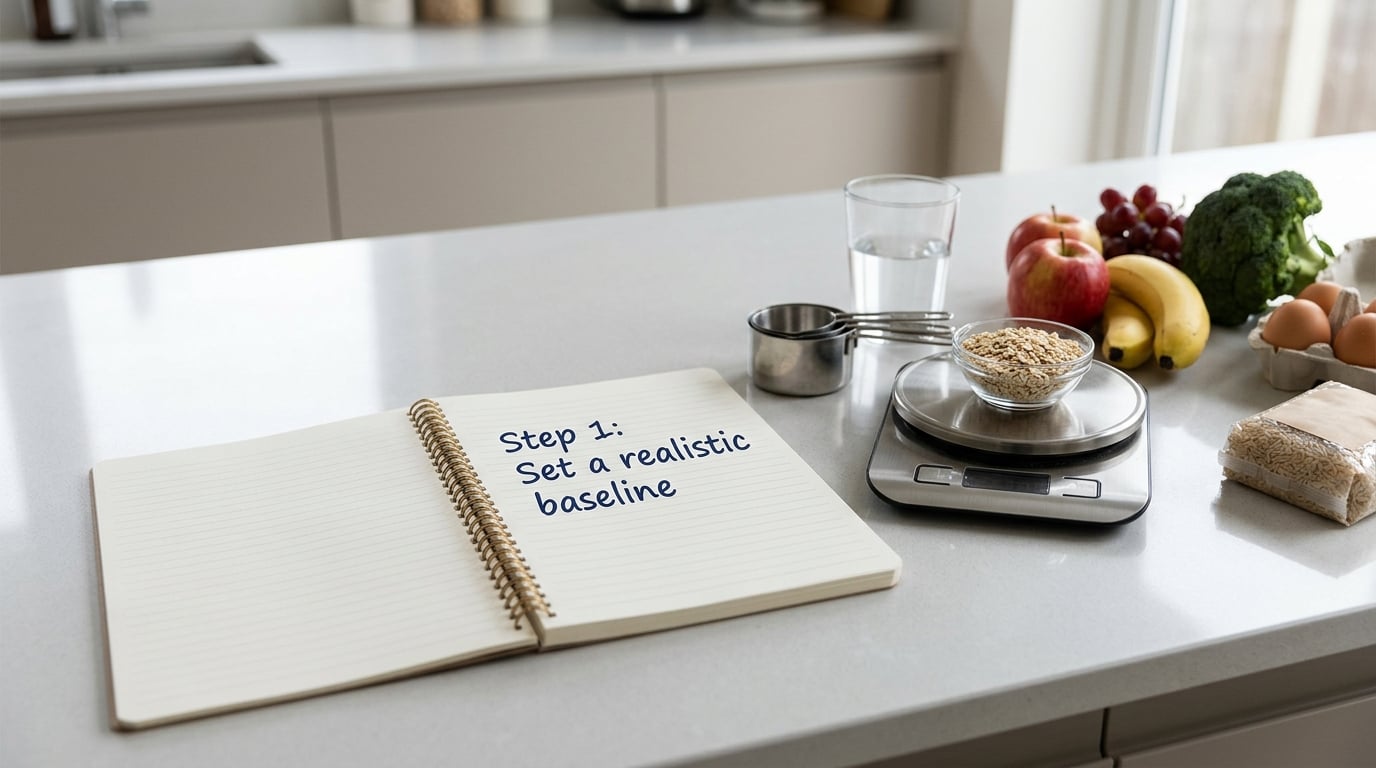
Before you change anything, watch yourself for three to five days. Record every drink, dessert, packaged snack and dollop of syrup, with rough amounts and times of day.
Most people are surprised by one category rather than all of them. It is usually a daily sweetened coffee, an afternoon soda habit, or a grazing pattern that lands on whatever is closest. People who have tapered sugar describe the first week as observation rather than effort, and the entries themselves become the checklist for the next three weeks.
How do you know the baseline worked? You should be able to name your top three sources without hesitating, and roughly estimate your usual daily teaspoons from serving sizes. If you cannot name them, keep logging for two more days.
Step 2: Identify the biggest sources of added sugar
Added sugar is not the same as total sugar on a label. Total sugar includes what is in fruit and plain milk, which arrive packaged with fiber or protein and behave differently. Added sugar is the sucrose, glucose, fructose and syrups that went in during processing.
Check three things on the label: the serving size, the added sugars line in grams, and the ingredient list. A 20 percent daily value is 10 grams, or about 2.5 teaspoons, and since sugar is 4 calories per gram, 4 grams of added sugar is 16 calories. A cereal box listing several sources of sugar in the ingredients usually has more of them than you would guess from the front of the box.
Do not rely on claims alone. A package can say no added sugar, low sugar or made with real sugar and still be worth a second look at serving size and the rest of the ingredient list. Compare two similar products side by side, since the difference between them is often three or four grams per serving and nobody tastes the difference once it is halved.
For packaged foods where a specific product is unclear, skip it and pick the one with the lowest added sugar per serving among options you would actually eat. An accurate baseline of 45 grams becomes 36 in week one, which is far easier to picture than a vague instruction to eat less sugar.
Step 3: Make one or two manageable swaps
How to cut back on sugar without going cold turkey comes down to changing one or two things at a time and holding them for at least four days. Doing five things at once is the most common way people quit a plan in week one.
- Soda or energy drinks. Swap one per day for sparkling water with a slice of lemon or lime. Keep the second one for now.
- Sweetened coffee or tea. Drop the sugar by one teaspoon per week, or switch half of it to a low-calorie sweetener temporarily while your palate adjusts.
- Sweetened yogurt. Plain yogurt with fresh or frozen fruit gives you the same bowl with a fraction of the sugar.
- Dessert most days. Keep it, eat it earlier in the day, and halve the portion. Frequency is usually a bigger problem than portion size.
- Syrup on pancakes. Use half as much and add cinnamon and sliced banana. The volume looks the same, so the bowl still reads as breakfast.
- Juice. This is the hardest swap in the group, because juice is a meal ritual more than a thirst response. Whole fruit delivers the same sweetness with fiber intact, and sparkling water plus a citrus wedge covers the glass in your hand.
Sugar reduction communities repeat the same advice about the hardest swap: replace the drink, not the moment. The craving is tied to the coffee break, the afternoon slump or the vending machine run, so the replacement has to arrive in the same place at the same time.
Step 4: Adjust the flavors you already enjoy
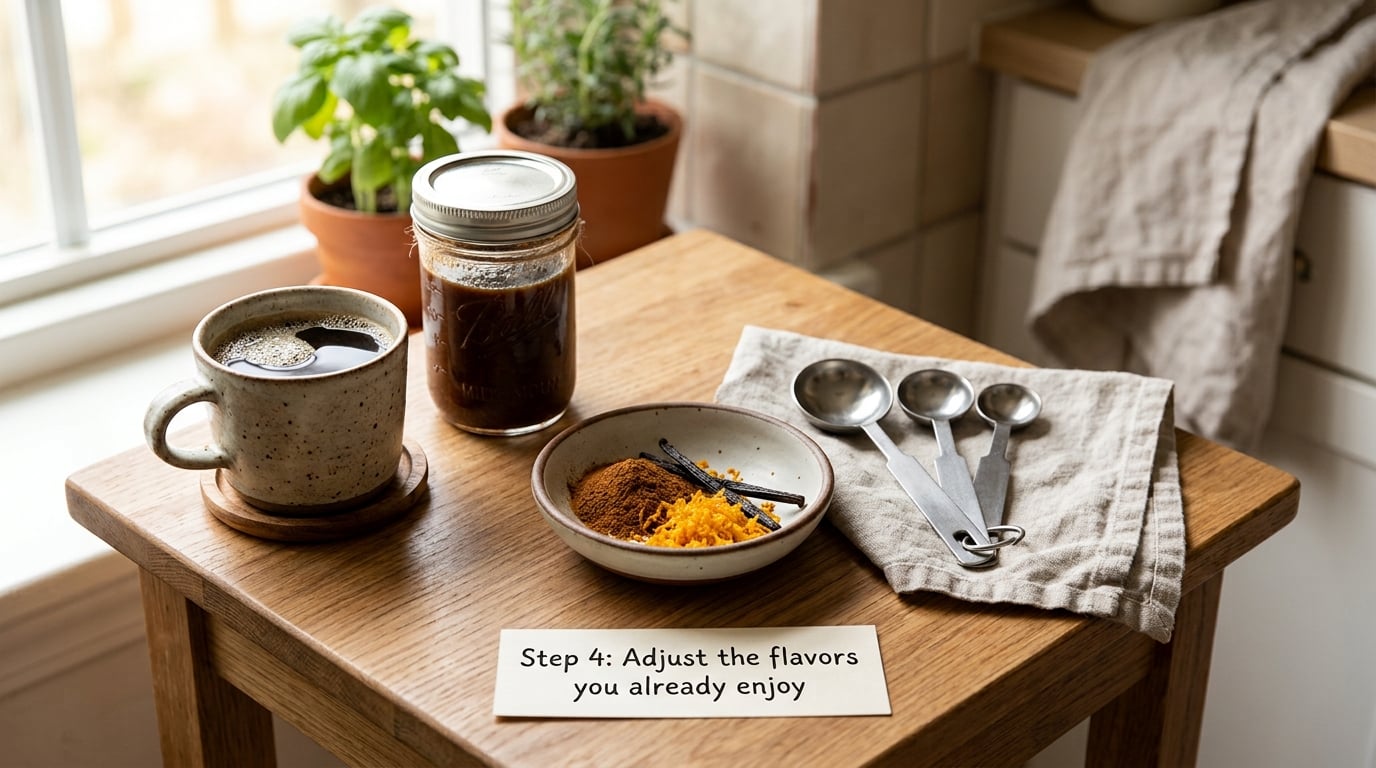
Cutting the sugar you add yourself is the fastest lever most people overlook, because the amounts are small but the frequency is daily. Your palate recalibrates over roughly two to four weeks of consistent exposure, and small reductions usually land below what you can consciously taste.
Lean on flavors that read as sweet without sugar: cinnamon, vanilla extract, ginger, nutmeg, cardamom, and citrus zest. Warm water with a pinch of cinnamon in the morning is a recurring home remedy among people cutting back, and it costs almost nothing.
Apply this to the places sugar hides in your cooking. Barbecue sauce, salad dressing, marinades and pasta sauces often carry two to three tablespoons per serving, and cutting that by a third changes very little about the finished dish. In oatmeal, bake the fruit instead of adding brown sugar and the topping turns caramelized. In baked goods, cut the sugar by a quarter and add a spoonful of applesauce or ripe mashed banana for moisture, then cut another quarter the following month.
You will notice the change far more in week one than in week three, and by week four most people describe their food as tasting better rather than blander. That recalibration is the mechanism behind the whole plan.
Step 5: Plan meals and snacks before cravings appear
The 3pm urge is rarely about sugar. It is usually an unbalanced lunch, too little water, a short night of sleep, or a high-stress morning. People who taper successfully tend to talk less about willpower and more about what was already on the plate.
Build meals and snacks around protein, fiber and fat. Eggs with avocado at breakfast, Greek yogurt with nuts, a bean-based lunch, and a snack of fruit with a handful of almonds blunt the sharpest version of a sugar craving. Skipping meals is a fast route to the 4pm vending machine, so regular eating matters more than any single food choice.
Three cheap levers sit underneath everything else. Drink a full glass of water and wait ten minutes before reaching for a snack. Protect your sleep, because a short night reliably raises next-day cravings. Move your body daily, even a twenty-minute walk, which uses up the restless energy a craving tends to arrive with.
If cravings show up consistently in the same window, plan a deliberate snack for that window instead of fighting it. A scheduled piece of dark chocolate is easier than a daily negotiation with the cookie tin.
Step 6: Track, review, and keep the changes that work
At the end of two weeks, read your notes again. Which swap felt automatic? Which one required daily willpower? What time of day still causes trouble?
Then keep what worked, drop what did not, and move on to the next step. A useful first step is cutting about 20 percent of your baseline, then another 20 percent the following week. People who succeed describe the first five to ten days as the hardest part and cravings becoming manageable somewhere in the second or third week.
When you slip, do not restart at week one and do not compensate by skipping meals. A single doughnut is a data point, not a failed plan. The recovery move is simple: acknowledge it, go back to your current week’s target at the very next meal, and keep the habits that were working. The all-or-nothing reaction is what turns a small slip into a full abandonment.
One honest note on results: energy and cravings usually improve before weight does, and an early plateau in the first month reads as failure when it is simply normal. Keep measuring grams, not pounds, for the first four weeks.
Common Mistakes
Cutting out all carbohydrates. Bread, pasta and fruit are not the target; added sugar is. Removing all carbs produces fatigue, irritability and a rebound, and it makes the change impossible to keep. Correction: cut added sugar, keep whole grains and whole fruit. Maintenance tip: keep one carb source you love in every meal so the plan never feels like a diet.
Treating fruit as the enemy. Whole fruit comes with fiber, water and chewing resistance, which slows absorption compared with juice or a sweet pastry. Correction: eat fruit whole, watch portions of dried fruit and juice, and keep the fruit. Maintenance tip: keep a bowl of whole fruit visible at home.
Leaning on sugar substitutes forever. Lower-calorie sweeteners can be a useful bridge while your palate adjusts, but using them permanently may keep you training toward sweetness. The evidence is mixed, and the honest position is that they work as a temporary tool rather than a destination. Correction: use them for two to three months while you retrain. Maintenance tip: taper them off gradually rather than stopping cold.
Skipping meals to compensate. Very low intake drives the strongest cravings later in the day. Correction: eat regularly and build each meal around protein and fiber. Maintenance tip: keep a set eating schedule even on busy days.
Changing everything in week one. Five simultaneous changes is why most plans collapse by the second weekend. Correction: one or two swaps at a time, held for four days each. Maintenance tip: add a new change only when the last one stopped requiring thought.
Expecting day one to feel good. Mild headaches, grogginess and irritability in the first week are common and temporary, and people who taper push through them by keeping meals and hydration steady. Correction: expect the dip and prepare for it. Maintenance tip: keep a plan for the worst evening, usually a walk, an early night and a planned snack.
Frequently Asked Questions
How long does it take to cut back on sugar without withdrawal?
Most people who taper report that cravings become manageable within two to three weeks, and that the first five to ten days are the hardest. Mild headache, fatigue and irritability in that first week are common and pass. Cutting about 20 percent per week, rather than stopping outright, keeps symptoms mild enough to work through.
What is the easiest way to cut back on sugar intake?
Start with what is liquid. Sugary drinks are the largest single source of added sugar for most people, and swapping one per day for sparkling water with citrus is a 30-second change with no meal prep. Once that holds for a week, move to the sugar you add to your own food, like coffee, cereal and sauce.
What kills sugar cravings naturally?
For most people it is a combination, not one trick: protein, fiber and fat in the meal to blunt the spike, a full glass of water and a ten-minute wait, consistent sleep, and a planned snack for the time of day that usually gets you. Warm water with a pinch of cinnamon is a common home remedy, and unsweetened tea, coffee or sparkling water work as an immediate intervention.
Is fruit sugar a problem too?
Whole fruit is not the same as added sugar. Fruit arrives with fiber, water and structure, which slows absorption and raises satiety, while added sugar arrives alone and quickly. Watch portions of juice and dried fruit, since those concentrate the sugar without the fiber. Most guidance treats whole fruit as fine and added sugar as the item to reduce.
What happens if I eat sugar again after cutting back?
Nothing dramatic. A craving is a signal, not a failure, and one treat does not undo weeks of work. Do not skip meals to compensate and do not restart the plan from scratch. Go back to your current week’s target at the very next meal and keep going. All-or-nothing thinking is what turns a slip into an abandonment.
When should I talk to a doctor or dietitian?
Talk to your doctor or a registered dietitian nutritionist before changing your intake if you have diabetes or another condition that affects blood sugar, are pregnant or breastfeeding, or take regular medication. It also makes sense if you have a history of disordered eating, since rigid food rules can be unhelpful there. This plan is general information, not medical advice.
Conclusion
Cutting back on sugar without going cold turkey is mostly a matter of step size. Pick the one source that clearly runs your day, swap it for something you will actually drink or eat, and let four days pass before adding another change.
Two swaps done consistently beat five attempted in a weekend. When you review your notes after two weeks, keep the ones that stopped needing willpower, and treat any slip as a signal to adjust rather than a reason to start over. This guide was written for 2026 and follows the most current mainstream nutrition guidance available, but your own circumstances may call for advice from a professional.