
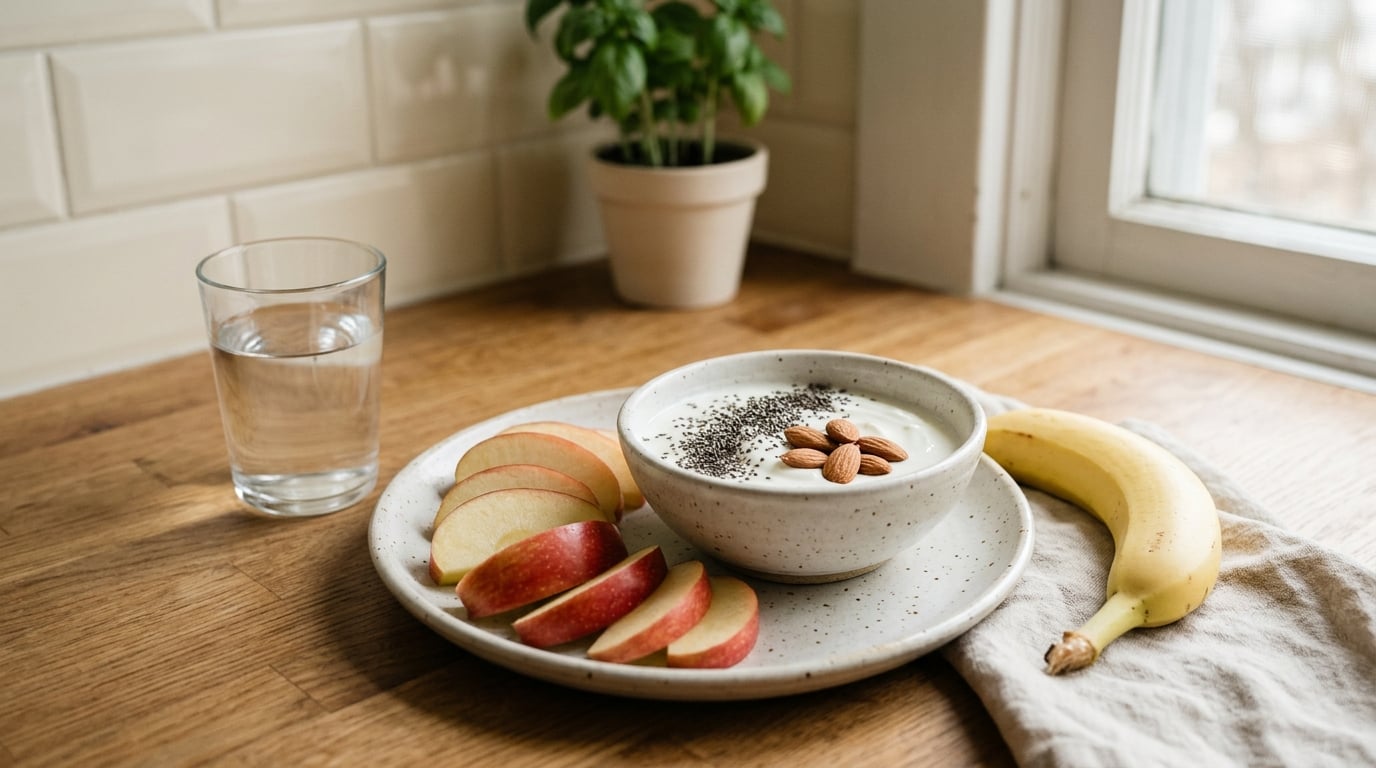
To stop sugar cravings in the afternoon, the answer is a meal that carries you to 3pm and a snack you already planned: build lunch around protein, fiber and some fat, drink a glass of water, then eat a small snack before the craving window opens. You can start this today, and nothing on the list needs to be bought.
The mid-afternoon craving usually has less to do with willpower than with timing. Blood sugar climbs after lunch and then settles, and most people’s alertness naturally dips between roughly 2 and 4pm. A tired brain looking for the fastest fix reaches for something sweet, which spikes, crashes, and leaves you hunting again an hour later. Break one link in that loop and the afternoon gets noticeably easier.
Updated for October 2026. This is general information for healthy adults, not medical advice.
Table of Contents
- What You Need
- Step-by-Step
- Common Mistakes
- Tips for Keeping Afternoon Cravings Manageable
- Frequently Asked Questions
- What time should I eat an afternoon snack?
- Should I drink coffee or tea to stop an afternoon sugar craving?
- Is fruit enough when I have an afternoon sugar craving?
- Can natural sweeteners or supplements help stop sugar cravings?
- Why do I crave sugar when I am tired?
- When should I ask a doctor or registered dietitian about cravings?
- Conclusion
What You Need
Four things, and you likely own three of them already.
- A water bottle that sits within arm’s reach at your desk, not one in a bag somewhere.
- A lunch with staying power — a protein, a fiber source, and a little fat in the same meal.
- A planned afternoon snack, portioned and in front of you before 2pm.
- Optional natural sweeteners like cinnamon, vanilla or a small amount of maple syrup, used sparingly so sweet food still tastes sweet.
No superfood, detox powder, or supplement is required. People searching for a single ingredient that kills cravings usually find a sales page instead. What actually moves the needle is boring and repeatable: a better lunch, a scheduled snack, and a short pause before you eat.
Step-by-Step
Five steps, in this order, and then one follow-up to make it stick. Steps one through three prevent most of the craving. Steps four and five handle the afternoons when it still shows up.
1. Stabilize Your Morning and Lunch
Lunch does most of the work here, because the craving at 3pm is usually a report about lunch. A meal built from a protein, a fiber-rich carbohydrate, and some unsaturated fat digests more slowly than one built from refined carbs alone, so glucose climbs gently instead of spiking.
Two combinations I come back to. The first: a bowl of beans or lentils over brown rice with olive oil, tomatoes, and any roasted vegetable in the fridge. The second: sliced chicken or chickpeas over a big salad with whole-grain crackers, plus a handful of nuts on the side. Both can be assembled in ten minutes from leftovers.
How do you know lunch did enough? If you are not physically hungry at 2pm, it probably worked. The 3pm reach-for-the-cookie feeling should be about the cookie, not about the emptiness underneath it. If you are genuinely starving by early afternoon, the fix is usually more food, not more discipline.
2. Drink Water and Check for Actual Hunger
Mild dehydration and hunger feel remarkably similar: tired head, low focus, wanting something quick. Drink a full glass of water and wait ten minutes before deciding. Plenty of people report that the craving thinned out or vanished in that window — and the afternoon headache went with it.
Water is not the whole answer, though. It is a useful test, not an explanation for every craving. A glass of water will not fix a carb-heavy lunch or a bad night’s sleep.
Here is a simple check. Ask four questions: Am I hungry in a way that would be satisfied by an egg? Am I just tired? Am I bored? Am I reacting to stress or a routine break? Only the first one is real hunger, and only the first one is answered by eating. The other three are answered by water, a short walk, a phone call, or a deliberate snack you chose earlier rather than whatever is nearest the desk.
3. Plan a Balanced Afternoon Snack
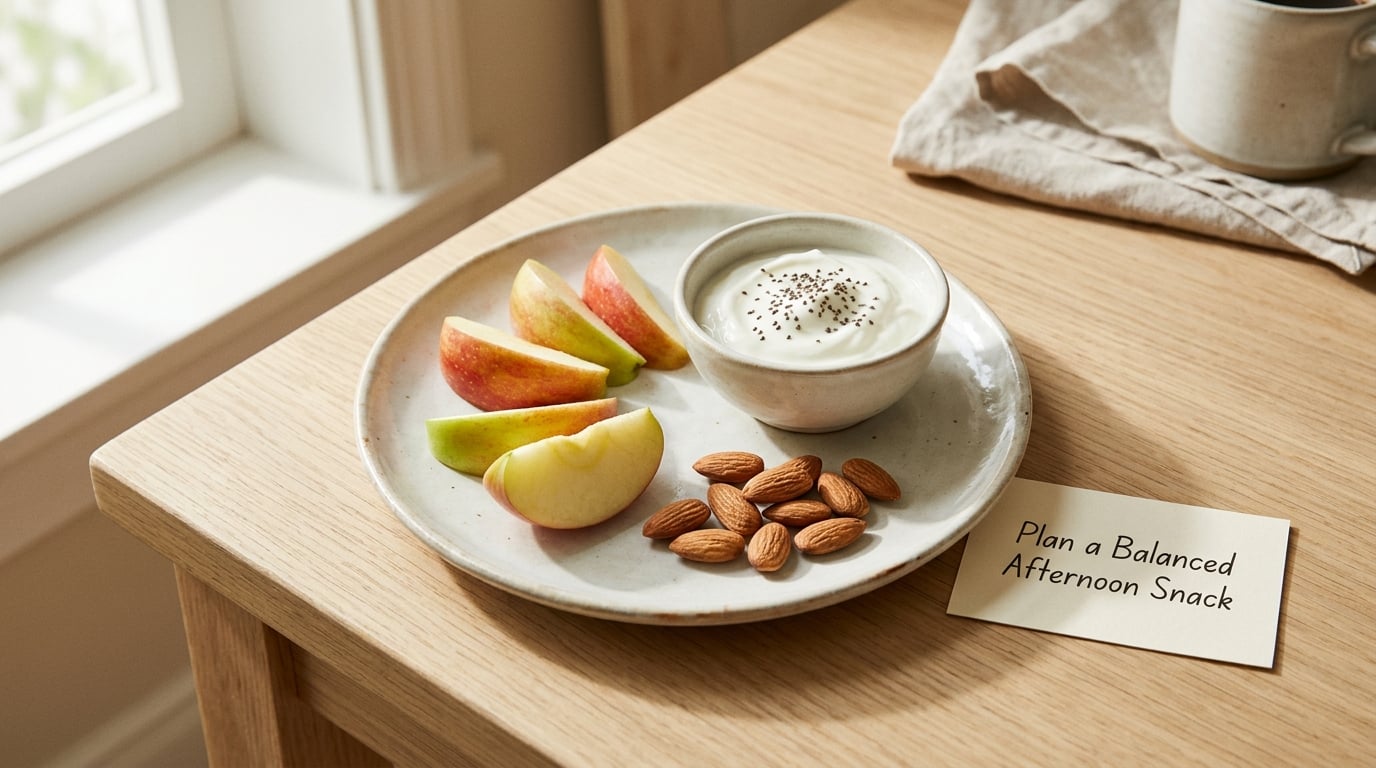
Eat the snack before the craving arrives, not during it. A planned snack at 2:30 is a decision; a snack triggered at 3:15 is a reaction, and reactions are harder to steer. Pair a carbohydrate source with protein, fiber, or fat, and keep the portion about the size of your fist.
What works in practice: a small apple with a tablespoon of peanut butter, plain Greek yogurt with a spoon of chia seeds, whole-grain toast with mashed avocado and a sprinkle of black pepper, or three dried apricots with a dozen almonds. Each one has a carbohydrate and something that slows it down. Eating every few hours rather than two huge meals showed up again and again in forum threads about afternoon slumps, and it is the change people report noticing first.
If you have no kitchen and no fridge at work, the shelf-stable options are the ones that travel: nuts, roasted chickpeas, whole-grain crackers, a shelf-stable nut butter packet, or a low-sugar protein bar with the sugar number read before you buy. Check labels, because granola bars, cereal and yogurt are where hidden sugar hides.
4. Pause Before Reaching for Sugar
The ten-minute pause is the single most useful technique I know, and it is less effortful than it sounds. Name the trigger out loud — “it’s 3:10 and this meeting was awful” — because a craving you have labelled tends to loosen its grip. Get water. Stand up and move for five minutes, even if it is only the stairs. Then ask again whether you are actually hungry.
Delaying is not white-knuckling, and it is not forbidding sugar. You are giving your body a few minutes to finish the crash it is currently riding, which usually takes less time than the walk to the kitchen. People who use the pause report that the urge fades rather than intensifies, though on a bad day it may only drop from a ten to a four. A four is easy to eat around.
5. Choose a Satisfying Smaller Treat If Needed
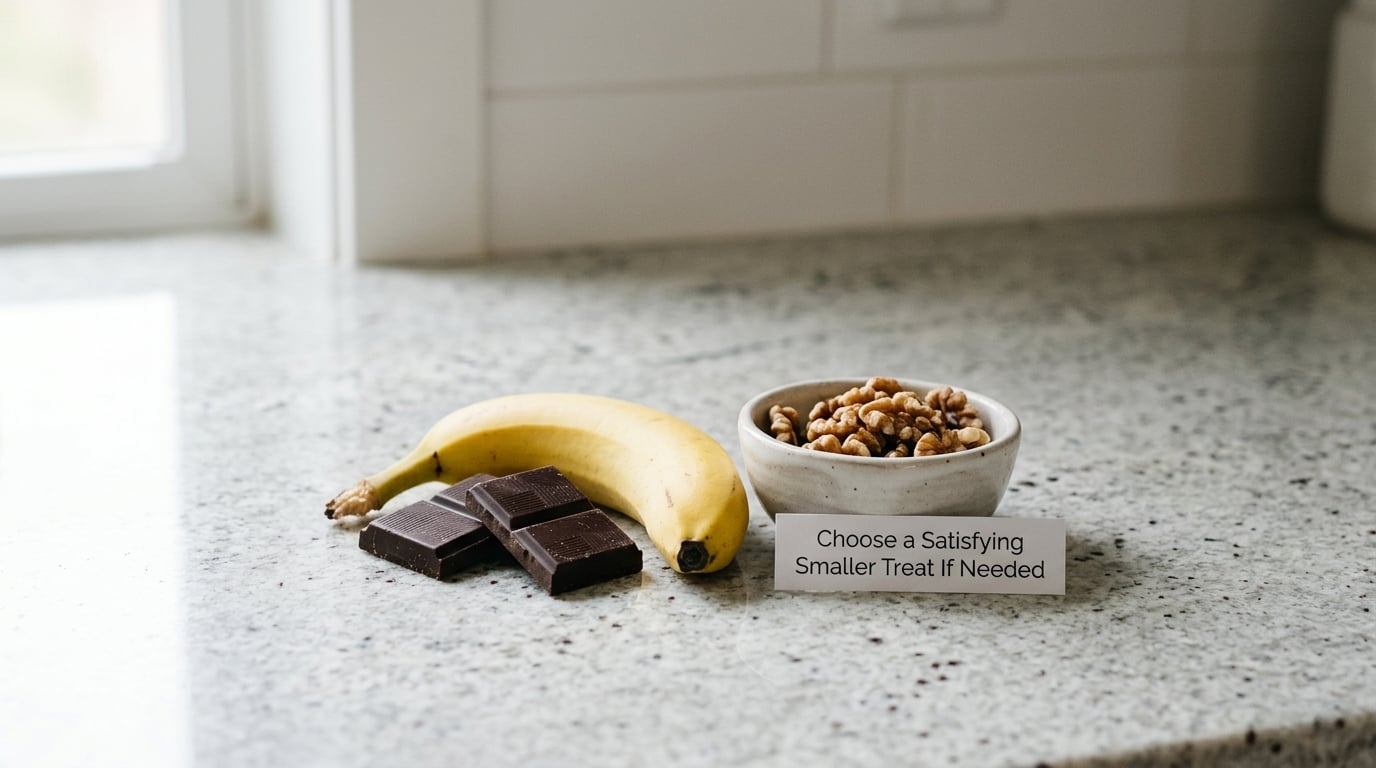
If the balanced snack did not cover it, having something sweet is a legitimate outcome, not a failure. Portion control and satisfaction matter more than the label on the food. Aim for roughly 150 calories and eat it slowly, after the snack, not instead of it.
By portion and staying power, here is how the usual options compare. Two squares of dark chocolate, about 100 to 120 calories, melt slowly and last longest because the fat arrives before you finish. Two dates with a teaspoon of nut butter, roughly 140 calories, are very sweet and fiber-rich, which makes them satisfying but easy to overdo. Baked fruit — apple or pear slices with cinnamon — sits around 100 calories and is a good everyday default, though it is a different experience rather than an equal substitute for a chocolate craving.
Take the portion, eat it at a table rather than over a keyboard, and then stop. Forum posters consistently report that a small deliberate portion of the real thing is far more sustainable than abstinence, and fewer of them describe the rebound binges that white-knuckling tends to produce.
6. Adjust the Routine Over the Next Two Weeks
Two weeks of notes will tell you more than a month of guessing. Most people find the craving is tied to something specific — a late lunch, a skipped breakfast, a short night, a hard call — and that pattern is fixable.
A check-in this simple is enough:
- What time did the craving hit, and how strong was it from 1 to 10?
- Was I physically hungry, or was it tiredness, boredom or stress?
- What did I eat for breakfast, lunch and the planned snack?
- How many hours did I sleep the night before?
- What did I choose, and how did I feel an hour later?
If cravings are landing at 3:10 every day after a carby lunch, change the lunch. If they cluster on days you slept five hours, that is a sleep problem, not a willpower problem. If cravings are sudden, intense, or arrived alongside other symptoms, that is a conversation to have with a doctor rather than a diary entry. A registered dietitian is the right person for patterns that keep repeating despite a decent routine, and for cravings tied to a condition or medication.
Common Mistakes
Going restrictive during the day. Cutting carbs hard at lunch reliably produces a bigger rebound by 3pm. Fix: keep the carbohydrate, change the company it keeps — add protein, fiber and fat to the same meal.
Eating only fruit. Fruit is a fine snack, but fruit alone can leave you wanting again twenty minutes later because there is no protein or fat holding it. Fix: pair it with nuts, yogurt, or nut butter.
Skipping meals and “saving calories.” A skipped or tiny lunch guarantees a 3pm detour. Fix: eat three meals, and add the planned snack if you are hungry at 2pm.
Blaming dehydration for everything. Water helps, and a glass plus a ten-minute wait is a good test. But treating thirst as the single cause means ignoring a meal that was never balanced. Fix: run the water test, and if nothing changes, look at lunch and sleep.
Keeping sweets in plain sight. If a cookie jar is on your desk at eye level, the 3pm decision happens whether or not you are hungry. Fix: out of sight, out of mind — and keep a planned snack visible instead, so the visible thing is the better option.
Using artificial or natural sweeteners as the main solution. For a lot of people these do nothing, and some report they increase the wanting. Fix: use them occasionally if you like them, and put your effort into meals, sleep and portions.
Expecting it to disappear in a day. Cutting added sugar sharply can produce real withdrawal feelings for a couple of days that people often mistake for failure. Fix: reduce gradually and give the adjustment a couple of weeks. The difference between that window and steady progress is the whole game.
Believing a vitamin deficiency explains it. Questions about magnesium, chromium and zinc come up constantly online, and the evidence for deficiency causing sugar cravings in otherwise healthy adults is weak. Fix: treat nutrient claims skeptically and focus on meals, hydration, movement and sleep.
Tips for Keeping Afternoon Cravings Manageable
- Set a snack alarm. Most people who succeed here eat on a schedule rather than on hunger.
- Keep a trigger list. Note the three most common setups — meetings, skipped lunches, low sleep — so you recognize them early.
- Eat slowly. A snack finished in four minutes leaves you hunting at 3:45.
- Get outside for daylight and a short walk. Ten minutes of movement takes the edge off a craving more reliably than willpower does.
- Protect sleep. Short nights are the single most underrated driver of afternoon sugar wanting.
- Build meals around fiber and protein. This is less about counting anything than about not letting lunch be a pile of refined carbs.
- Watch the drinks. A sweet coffee at 2pm can be the actual cause of the 3pm vending machine trip, even when lunch was fine.
None of this is a guarantee. Some afternoons you will have the cookie anyway, and that is genuinely fine.
Frequently Asked Questions
What time should I eat an afternoon snack?
Most people do best with an afternoon snack between 2pm and 3:30pm, before the craving window opens. Eating a little earlier beats waiting until 4pm, because a snack you planned is a decision and a snack you react to is harder to steer. If you are genuinely hungry at 1pm, eat then instead and move the next one slightly earlier. Keep the portion around the size of your fist, and pair a carbohydrate with protein, fiber or fat.
Should I drink coffee or tea to stop an afternoon sugar craving?
Coffee can help with the foggy part of the 3pm slump, and tea is a gentler option if caffeine makes you jittery. Neither one reliably reduces sugar cravings, and both can make things worse when they come with sugar, syrup or a pastry. Watch sweetened drinks carefully: a large coffee can hold more added sugar than a cookie. If you drink it, choose an unsweetened or lightly sweetened cup and pair it with water.
Is fruit enough when I have an afternoon sugar craving?
Fruit is a good afternoon choice, but on its own it may not hold you, because it is mostly carbohydrate with little protein or fat. Pair it with something that slows digestion: a tablespoon of nut butter, a handful of nuts, or plain Greek yogurt. If the craving is specifically for chocolate, baked fruit with cinnamon satisfies a different urge rather than an identical one, and that is worth knowing before you decide it did not work.
Can natural sweeteners or supplements help stop sugar cravings?
There is no supplement with strong evidence that stops sugar cravings in otherwise healthy adults, and pages promising one are usually selling something. Cinnamon, vanilla and a small amount of maple syrup can make food taste sweet with less added sugar, which helps some people eat less overall. Claims that magnesium, chromium or zinc deficiencies cause sugar cravings are not well supported. If a supplement is on your list for another reason, raise it with your doctor.
Why do I crave sugar when I am tired?
Fatigue and hunger produce a very similar signal, and a tired brain seeks the fastest available energy, which is sugar. Short sleep makes it worse, because a night of five hours raises appetite for high-sugar food the following day. Attention dips between roughly 2 and 4pm for most people regardless of sleep, which is why the timing is so consistent. Check sleep, water and lunch before assuming the craving is about willpower.
When should I ask a doctor or registered dietitian about cravings?
Ask a doctor if cravings are sudden and intense, arrived alongside other symptoms such as frequent thirst, unexplained weight change, fatigue or blurred vision, or if they follow a change in medication. Pregnancy is another common reason to talk to a clinician. A registered dietitian is useful when cravings repeat daily despite a balanced routine, when they disrupt sleep, or when restrictive eating has become a pattern. Persistent, distressing cravings deserve support rather than another diet.
Conclusion
To stop sugar cravings in the afternoon, start with three things today: build a lunch with protein, fiber and some fat, put a portioned snack on your calendar for 2:30, and keep a glass of water where you can see it. When the craving still shows up, take the ten-minute pause, and if hunger is real afterwards, have a small deliberate portion of something sweet and enjoy it.
Keep notes for two weeks and adjust one thing at a time. If cravings are persistent, distressing, or arrived suddenly alongside other symptoms, speak with a doctor or a registered dietitian — that is a support step, not a failure, and this plan is general information rather than medical advice.