
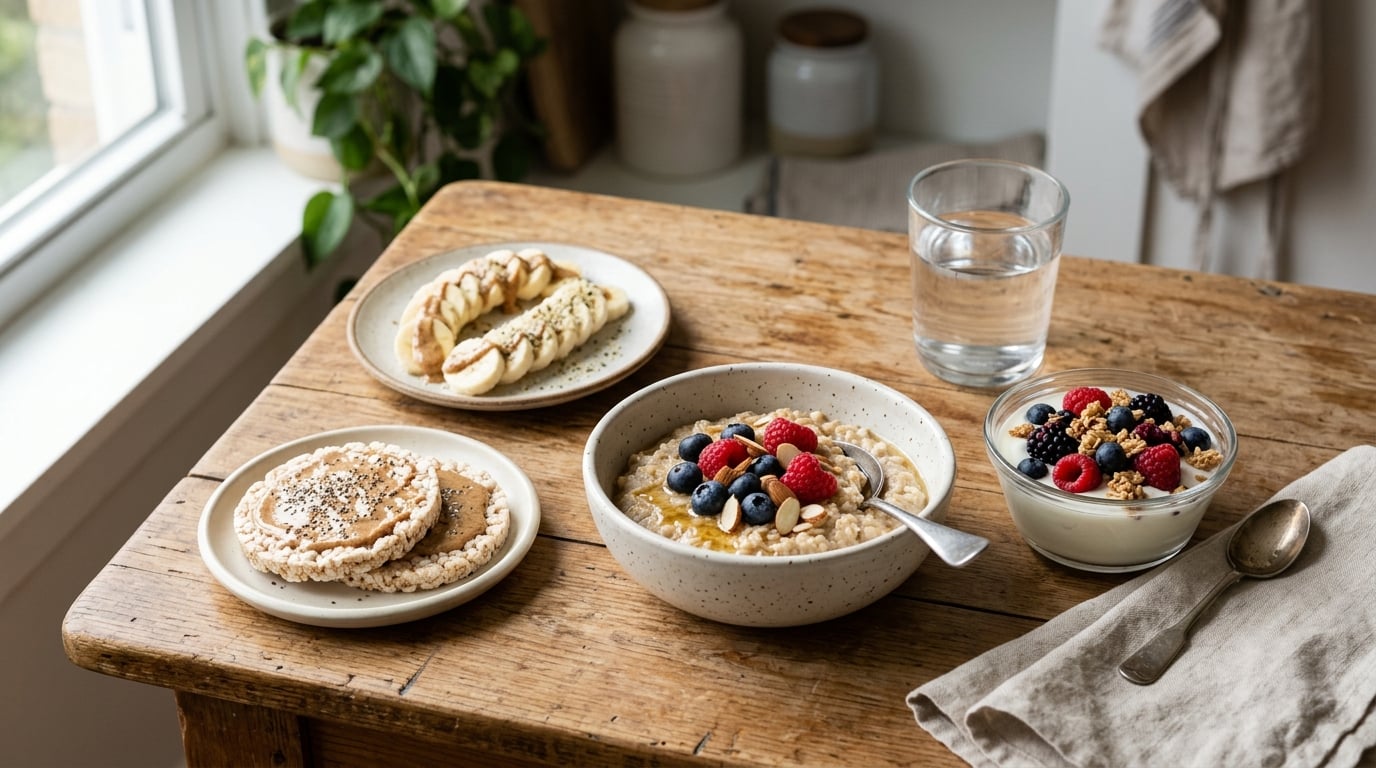
The short answer for what to eat before a morning workout: a small, easily digested carbohydrate snack 20 to 45 minutes before you start, plus a modest amount of protein and very little fat or fiber. A banana, a few dates, rice cakes with honey, or a small bowl of oatmeal all work. The right choice depends on how hard and how long you’re training, how much time you have, and how your stomach behaves at 6am.
Most people get this wrong in one of two directions. They skip food entirely and wonder why the session felt flat. Or they eat a full fried breakfast and spend the warm-up feeling queasy.
Table of Contents
- What Should You Eat Before a Morning Workout?
- How Much Should You Eat Before Exercising?
- How Long Before a Morning Workout Should I Eat?
- Best Foods for a Morning Workout
- What to Avoid Before a Morning Workout
- How to Choose Food for Your Workout Type
- Simple Pre-Workout Timing Checklist
- Frequently Asked Questions
- Conclusion
What Should You Eat Before a Morning Workout?
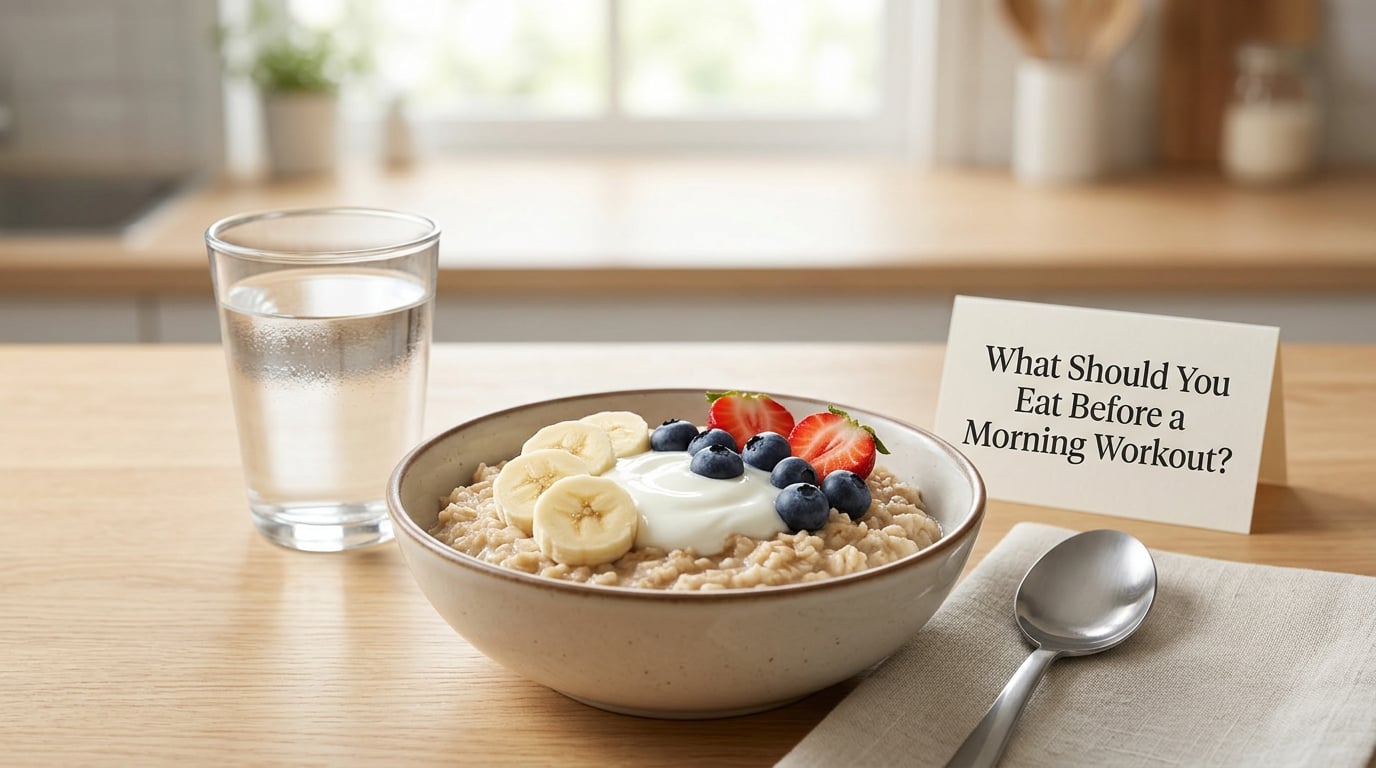
Carbohydrates do the heavy lifting, because they are the fuel your muscles actually burn during hard efforts. Add a moderate amount of protein to blunt muscle protein breakdown, and keep fat and fiber low in the final hour so your stomach stays quiet while you move.
Early sessions have a specific problem. After seven to nine hours of sleep, your liver glycogen, the store that keeps your blood sugar steady, is largely drained overnight. You wake up at your lowest blood sugar of the day, so a small amount of fast carbs goes further than it would at noon.
Timing matters as much as the food. A heavy meal still sitting in your stomach while you run, jump, or twist is the most common cause of cramps, nausea, and that mid-workout bathroom dash. The right pick is the food that gives you energy and stays out of the way.
How Much Should You Eat Before Exercising?
Most morning sessions need between 100 and 300 calories, roughly 30 to 60 grams of carbohydrate. Under-eating leaves you without fuel; over-eating makes movement uncomfortable. The table below covers the usual ranges by session length.
| Session length | What to aim for | Example portions |
|---|---|---|
| Under 30 minutes | Small, almost liquid, low fiber | Half a banana, a few sips of a sports drink |
| 30 to 60 minutes | 30 to 45 g of carbs, light protein | One banana, or two rice cakes with honey |
| 60 to 90 minutes | 45 to 60 g of carbs, some protein | Overnight oats with a banana, or a banana with peanut butter |
| Over 90 minutes | 60 g or more, plus a carb source in your bag | Oatmeal with honey and raisins, plus dates or gels during the session |
Adjust from there. Eat by how hungry you actually are, not by what the plan says, and scale up when the session is long, cold, or one of your harder ones of the week. If you feel heavy, cut the portion rather than skipping the snack entirely.
How Long Before a Morning Workout Should I Eat?
Digestion time is the single biggest factor. Roughly speaking, a small snack needs 20 to 30 minutes, a normal breakfast needs 60 to 90 minutes, and a large meal needs two to three hours before anything jumpy or inverted.
If you only have ten minutes, drink your carbs instead. A smoothie, sports drink, or blended banana and oats leaves the stomach faster than the same food chewed.
Watch the gap in the other direction too. Three hours of sleep after eating means blood sugar has already dipped again, and you may spend the whole session under-fuelled. That is the “bonked” feeling that gets blamed on the workout but is really about empty glycogen.
Best Foods for a Morning Workout
Carbohydrate-rich foods move fastest. A banana, white toast with honey, rice cakes, dates, pretzels, or a sports drink all digest quickly and carry the energy you need without slowing you down.
Protein-containing choices add staying power. Greek yogurt with honey, a scoop of protein powder blended with milk or water, or eggs on toast help limit muscle protein breakdown during the session and keep you from getting ravenous right after.
Lower-volume foods are the ones people tolerate best when they have no appetite. Applesauce, a banana, a handful of dried fruit, or a small cup of oat-based drink give you carbs with almost nothing to chew.
One honest note on all of this: the same meal that works for one person turns another’s stomach upside down. Treat every suggestion as a test rather than a rule.
Easy Pre-Workout Breakfast Ideas
Banana with peanut butter: spread a thin layer on one slice of toast, or eat them together. Keep the nut butter to about a tablespoon so fat doesn’t slow digestion.
Overnight oats: stir oats, milk, and a little honey together the night before, refrigerate, and top with a sliced banana when you wake up. You eat it cold and it takes no cooking.
Greek yogurt with fruit: half a cup of yogurt with a few spoonfuls of berries or a drizzle of honey. If dairy bothers your stomach in the morning, use coconut yogurt or a soy alternative.
Rice cakes with honey or jam: two cakes, eaten slowly with water. Very low fiber, easy to find, and they travel well in a gym bag.
Smoothie: blend a banana, a handful of oats, milk or water, and a scoop of protein if you want it. Skip the high-fiber greens if crunch is not on the agenda.
Adjust for allergies and sensitivities by swapping the base: any nut butter becomes sunflower seed butter, dairy becomes a fortified plant milk, and gluten-free oats or rice cakes cover a wheat or gluten restriction. Nut butter in a school or office kitchen is a common concern, so sunflower butter solves that too.
What to Avoid Before a Morning Workout
Greasy or high-fat foods slow gastric emptying and are the most common reason people feel sick mid-session. That covers fried anything, fatty meat, cheese-heavy meals, and large amounts of nut butter.
A large fiber load in the last hour is the other big one. Beans, lentils, a big salad, and large portions of whole grains absorb water in the gut and pull blood flow toward digestion, which is a bad combination with running, HIIT, and hanging leg raises. Whole grains are not off-limits, just smaller and earlier.
Large sugary drinks and candy deliver a sharp blood sugar spike followed by a drop, which some people feel as nausea 20 minutes later. Excess caffeine has its own issue: more than about 200mg, or coffee on an empty stomach, can cause jitters and stomach discomfort. Alcohol is worth naming too, since it dehydrates you and ruins the next morning’s session.
None of these are universal rules. Individual tolerance varies, and the aim is to learn which ones actually trouble you rather than cutting everything out forever.
How to Choose Food for Your Workout Type
Cardio and running punish volume and fiber most, so keep it small and liquid-friendly. Strength training tolerates a larger meal, and most people do better with 30 to 60 grams of carbs plus protein. HIIT sits in between: enough fuel to work hard, small enough to avoid nausea during the intervals.
Endurance sessions over an hour need real carbohydrate, and a backup fuel source in your bag. Yoga, mobility, and a short walk usually need nothing beyond water, since any more tends to feel like work.
For the fasted question: training on an empty stomach works fine for low-intensity work, and the fat-burning claim is often oversold anyway. For anything hard, long, or heavy on strength, a small snack makes the session noticeably better. If fasted training leaves you lightheaded, that is your answer.
A useful test is to run one hard session fasted, then repeat it with a banana 30 minutes beforehand. The difference usually settles the question for you faster than any argument.
Simple Pre-Workout Timing Checklist
Three questions decide what you eat. How much time do you actually have? What did you have for dinner last night? And do you want to be hungry again an hour in?
Five minutes available: drink it. A sports drink, a blended smoothie, or even milk with a scoop of protein gets carbs in fast. Coffee is fine with it.
Thirty minutes available: one banana, or two rice cakes with honey, plus coffee. Add a few dates if you are heading into something long.
One hour or more: a small bowl of oatmeal, overnight oats, or banana with peanut butter on toast. If dinner last night was carb-heavy and you slept well, you can go lighter on the portion.
The night before is worth planning too. A carbohydrate-forward dinner gives you a better starting point at 5am than a heavy protein-and-fat meal does, and that is the cheapest timing trick there is.
Drink water when you wake up, before you eat. Most people are mildly dehydrated after a night’s sleep, and starting with a large glass costs nothing.
Frequently Asked Questions
Can I work out without eating in the morning?
Yes, for low-intensity sessions like yoga, mobility work, or a short walk. For hard strength training, HIIT, or anything over 45 minutes, most people perform better with a small carb snack 20 to 45 minutes beforehand because overnight liver glycogen is already low. If you go fasted and feel lightheaded or flat by mid-session, that is a sign to add fuel. Individual tolerance varies, so test both ways.
Should I eat a banana before a morning workout?
A banana is one of the most reliable pre-workout choices. It is roughly 25 grams of easily digested carbohydrate, low in fat and fiber, and needs no preparation. One works well 20 to 45 minutes before most sessions. Two is reasonable before a long run or a big training day, but heavier portions can feel uncomfortable during intervals or ab work. Add nut butter if you want more staying power.
Is coffee necessary before exercising?
No, it is optional, not necessary. Most coffee contains about 80 to 100 milligrams of caffeine per cup, which can help perceived effort. Timing matters more than the cup: leave 30 to 45 minutes before training so it takes effect. More than roughly 200 milligrams, or coffee on an empty stomach, can cause jitters, nausea, and an uncomfortable warm-up. Black coffee with a carb snack is a common combination.
What can I eat before a workout when I only have five minutes?
Choose something you can eat or drink immediately without cooking. A banana, a handful of dates, a few rice cakes, or a handful of dry cereal all work. If even that is too much, drink your carbs instead: a sports drink, a smoothie, or milk with a scoop of protein powder. Preparing oats, a shake, and fruit the night before removes the time problem almost entirely.
Do I need protein before a morning workout?
It helps, but it is not the priority. Carbohydrate is the fuel you burn during the session, while protein mainly limits muscle protein breakdown and helps with recovery afterward. Around 20 grams, from Greek yogurt, eggs, or a scoop of protein powder mixed into a drink, is a sensible target. For short sessions, carbs alone are fine. If you train fasted, eating a fuller protein breakfast afterward matters more.
Conclusion
Start with one small combination you already know you tolerate: a banana with a little peanut butter, or rice cakes with honey, 20 to 45 minutes before you start. Then adjust the portion and the timing based on how the session felt and how long you trained. For personal advice on nutrition or any warning signs such as dizziness or repeated nausea, speak with a doctor or a registered dietitian.