
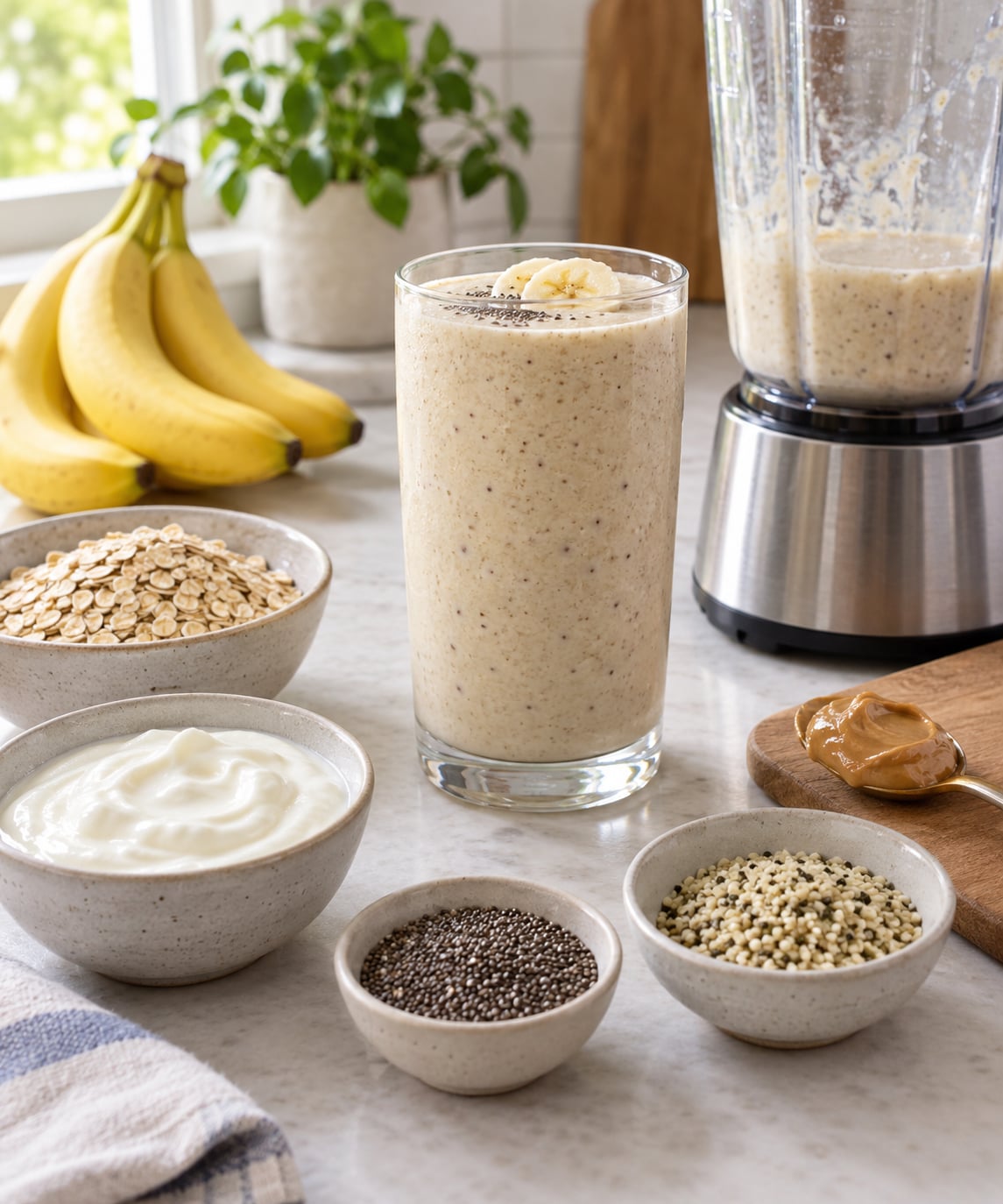
You absolutely can. A protein smoothie without protein powder gets all of its protein from ordinary food: Greek yogurt or milk, silken tofu, nut or seed butter, hemp and chia seeds, rolled oats, beans. Blend the right combination and one 12-ounce glass lands somewhere between 20 and 35 grams of protein, which covers what most people expect from a shake.
The trick is that protein adds up arithmetically instead of arriving in a scoop. Once you know what each ingredient contributes, building a high protein smoothie without protein powder takes about five minutes and no special equipment beyond a blender. It also tastes better than the powders most people are trying to avoid, which is why this method has outlasted a lot of supplement marketing.
If your goal is a bigger daily number rather than one glass, our guide to eating enough protein on a vegetarian diet without powder covers how several whole-food sources stack up across a full day.
Table of Contents
- What You Need
- Step-by-Step: Building the Smoothie Without Protein Powder
- Frequently Asked Questions
- What can I use instead of protein powder in a smoothie?
- How much protein does a homemade smoothie have without protein powder?
- Can I make a protein smoothie with oats and yogurt?
- What is the best liquid for a creamy smoothie without protein powder?
- Can I prepare a protein-free smoothie the night before?
- Is a whole-food smoothie better than a protein shake?
- Conclusion
What You Need
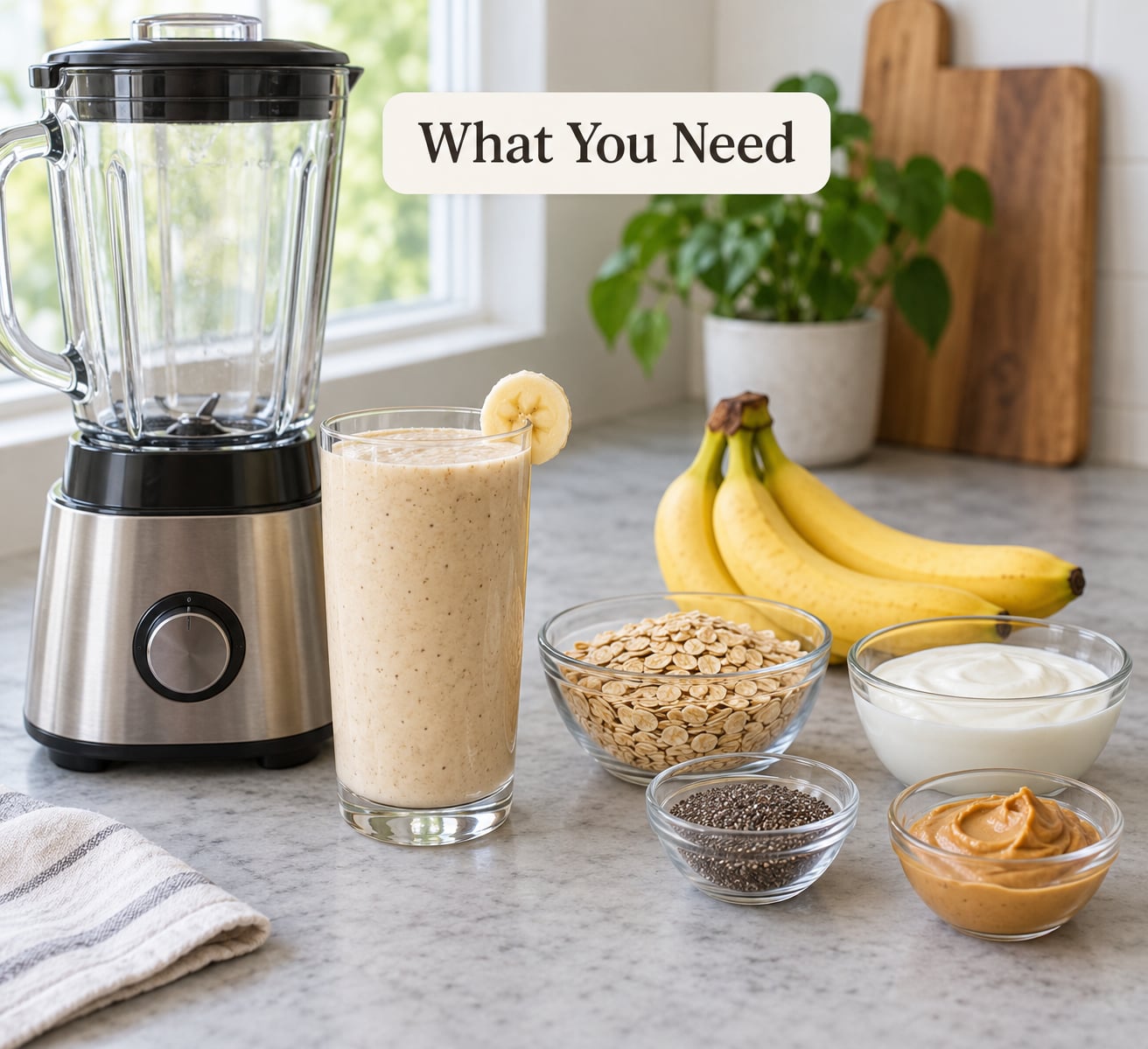
A blender is the only tool that matters, and any cup-style model will do. A high-speed blender gives you the smoothest result, mostly because it pulverizes flax and hemp into nothing, but a cheap personal blender works fine if you grind the dry seeds first. A measuring cup, a spoon and a bowl for the seeds are enough for everything else.
Each ingredient in a protein smoothie does one of four jobs: it supplies protein, it thickens, it adds fat and texture, or it provides liquid. Keeping those roles straight is what makes the recipe adjustable later instead of a fixed list.
The protein base. Greek yogurt, Icelandic skyr, cottage cheese, milk, soy milk or silken tofu carry most of the grams. Dairy is the densest option per serving and needs no soaking or grinding.
The thickener. Frozen banana, rolled oats, chia, flax and a little avocado make the drink eatable with a spoon instead of a straw. Frozen fruit also chills it, so you rarely need ice.
The fat and extra protein layer. Peanut butter, almond butter, tahini, hemp hearts and pumpkin seeds contribute protein along with fat and fiber, which is what keeps you full.
The liquid. Milk, soy milk, oat milk or water. This is the dial you turn at the end to loosen the blend.
Here is what the usual suspects contribute per standard measure. Labels vary by brand, so treat these as working numbers and check your own carton when the grams matter to you.
| Ingredient | Measure | Protein | Flavor and texture note |
|---|---|---|---|
| Plain Greek yogurt, nonfat | 1 cup (245 g) | about 24 g | Tart, thick, creamy. The backbone of most dairy versions. |
| Icelandic skyr | 1 cup (245 g) | about 22 g | Milder and thinner than Greek yogurt, very high protein. |
| Cottage cheese, 2 percent | 1/2 cup (113 g) | about 14 g | Lumps unless blended alone first; adds body. |
| Whole milk | 1 cup (244 g) | about 8 g | Neutral, smooth, easy to swap any direction. |
| Unsweetened soy milk | 1 cup (240 g) | about 7 g | The strongest plant milk for protein by a wide margin. |
| Silken tofu | 1/2 cup (120 g) | about 6 g | Neutral and creamy; vanishes into fruit flavors. |
| Extra-firm tofu | 1/2 cup (120 g) | about 12 g | Grainier. Blend smooth or the texture shows. |
| Edamame, shelled | 1/2 cup (82 g) | about 9 g | Sweet, grassy; takes longer to break down. |
| White beans, drained | 1/2 cup (89 g) | about 7 g | Completely flavorless, which is the point. |
| Peanut butter | 2 tbsp (32 g) | about 8 g | Roasty, sweet, thickens fast. Use the natural kind. |
| Almond butter | 2 tbsp (32 g) | about 7 g | Milder and thinner than peanut, slightly gritty. |
| Tahini | 2 tbsp (30 g) | about 5 g | Bitter and nutty; a teaspoon of cocoa balances it. |
| Hemp hearts | 3 tbsp (30 g) | about 10 g | Highest protein per tablespoon of any seed. Earthy. |
| Chia seeds | 2 tbsp (24 g) | about 4 g | No flavor, thickens sharply, needs liquid and time. |
| Ground flaxseed | 2 tbsp (14 g) | about 4 g | Nutty, gel-like. Whole flax will not blend, so grind it. |
| Rolled oats | 1/2 cup (40 g) | about 5 g | Blends into cream. Soaking overnight removes grittiness. |
| Cooked quinoa | 1/2 cup (93 g) | about 4 g | Mild, loose. Blends to a smooth pudding texture. |
| Frozen banana | 1 medium (90 g) | about 1 g | Negligible protein, total responsibility for creaminess. |
| Spinach | 2 cups (60 g) | about 2 g | A few grams, and no one can taste it. |
One quick note on swaps, because this is where most improvising goes wrong. Nonfat Greek yogurt can be swapped for skyr one for one. Soy milk and dairy milk trade places freely, though almond and rice milk drop to one or two grams and you will need to make up the difference elsewhere. Nut butter for nut butter is a straight swap; seed butter is lower protein, so add a tablespoon more.
Beans and silken tofu are the most underrated swaps here. Half a cup of white beans adds about 7 grams and no flavor at all, which makes them the cleanest way to move a banana smoothie from 20 grams to 27 without changing the taste.
Step-by-Step: Building the Smoothie Without Protein Powder
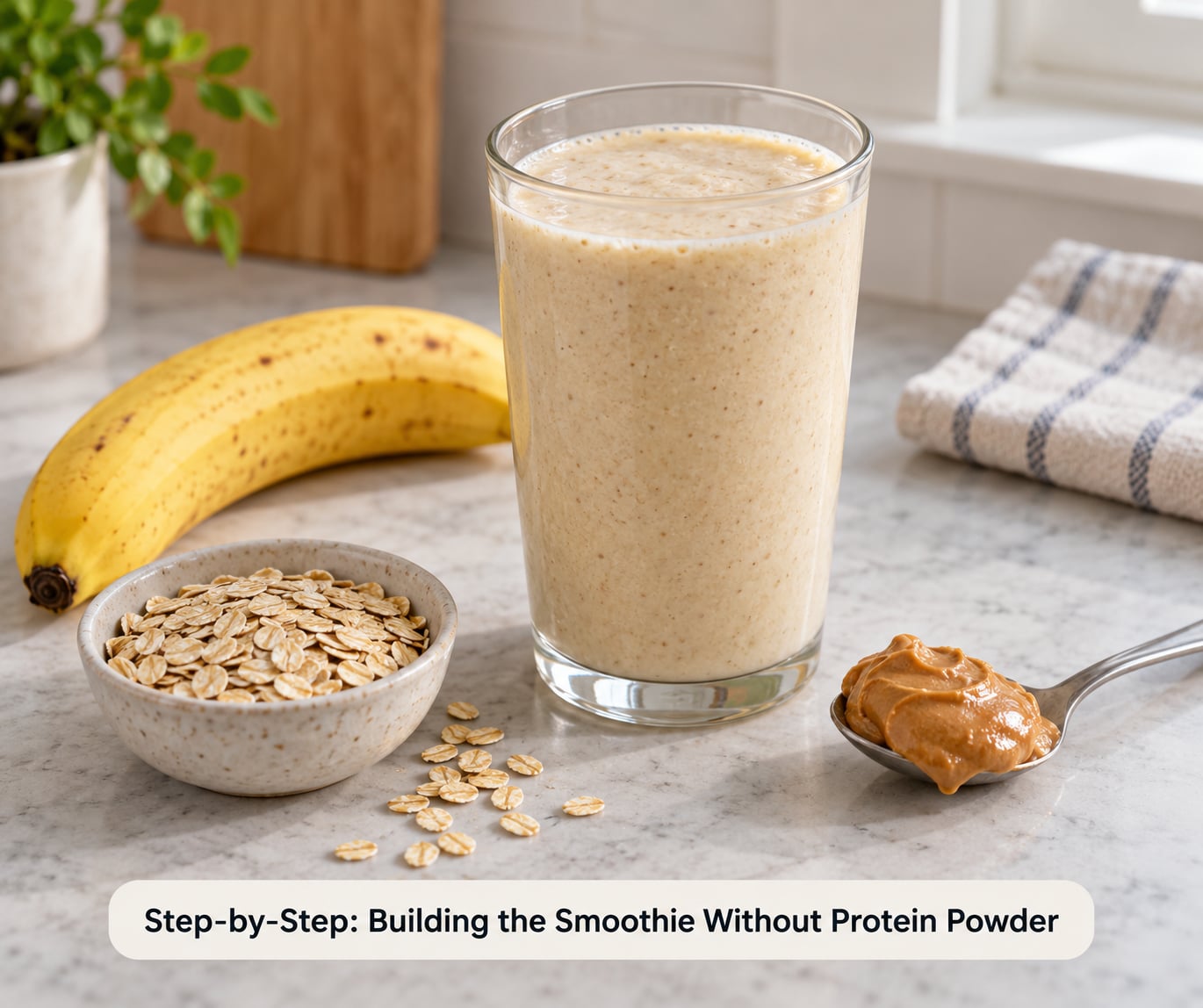
Add the Thick and Protein-Strong Ingredients First
The base formula I keep coming back to: 1 cup Greek yogurt, 1 frozen banana, 2 tablespoons peanut butter, 3 tablespoons hemp hearts, 1/2 cup rolled oats, and 1/2 cup milk. That lands around 34 grams of protein with enough body to count as a meal.
The order matters more than people expect. Put the seeds, oats and nut butter in the empty blender first and pulse for about 15 seconds until they stop looking like separate ingredients. This is the single trick that fixes most complaints about chalky or grainy whole-food smoothies, and it costs you nothing.
After the dry blend, add the frozen banana and yogurt, then the liquid. If you are using chia or whole flax, those need more care: chia wants ten minutes of sitting in liquid to gel, and whole flax will stay visible no matter how long you blend, so grind it in a coffee grinder first.
Silken tofu and cottage cheese also get their moment alone. Half a cup of either, blended by itself for 30 seconds, becomes a smooth cream that then disappears into fruit instead of staying in suspicious white flecks.
Blend Until Smooth and Adjust the Texture
Start on low, push to high, and give it a full 45 to 60 seconds. Stop the motor when the stream from the lid comes out with no visible seed or oat particles. Most under-blended smoothies still have whole pieces of banana hiding against the walls.
If it is too thick to drink, add liquid a tablespoon at a time and pulse five seconds between additions. A second banana half or two more ice cubes fix a thin batch instead, and ice keeps the temperature down while you do it.
How do you know it worked? Pour it and tilt the glass. If it holds a slow, thick ribbon rather than running flat, the texture is where you want it. The whole thing should take under five minutes from lid to glass, most of which is the 60 seconds of actual blending.
Serve it straight away for the thickest result. If you are making it ahead, see the separation note below, since that is a storage issue rather than a blending one.
Flavor It and Choose the Right Liquid
Banana, cinnamon and a small scoop of vanilla is the least fussy combination and the one most likely to become your default. Half a teaspoon of cinnamon does most of the work; more than that and it tastes like a candle.
Berry and vanilla works with frozen mixed berries or strawberries blended with banana, and the acidity hides any dairy sharpness. Chocolate and peanut butter is the one to measure carefully: one tablespoon of cocoa powder, two of peanut butter, one frozen banana and a splash of milk, no sugar needed.
The liquid decides how the whole thing behaves. Milk and soy milk give the creamiest result because their fat and solids emulsify with the yogurt. Oat milk is neutral and adds a little body. Water is fine, but the drink will be thinner and slightly more separated. Almond and rice milks are thin and low-protein, so plan on adding another protein source if you use them.
On sweetness, frozen fruit alone is usually enough. If you want more, add a Medjool date or half a banana before blending, and skip any added sugar entirely. Nut butter is the other easy source, which is natural peanut butter with nothing else in the jar worth using.
Common Mistakes and the Fix for Each
The smoothie is gritty or has visible flecks. You skipped the dry blend. Grind the seeds, oats and nut butter alone first for 15 seconds, then add the wet ingredients. If whole flax is the culprit, it is not a blender problem; grind it before it goes in.
The smoothie came out thin and watery. You used too much liquid or unfrozen fruit. Add a banana half or two ice cubes and pulse. For future batches, freeze the fruit flat on a tray first so it holds its shape longer in the blender.
It tastes too sweet. A ripe banana plus sweetened yogurt plus nut butter adds up fast. Use frozen banana, which is less sweet than ripe, and plain unsweetened yogurt. Dates are the better sweetener because they blend in cleanly.
The nut butter takes over everything. Two tablespoons is plenty in a 16-ounce drink. Any more and the roast flavor drowns the fruit. Almond or sunflower seed butter is the milder swap if you want the body without the roast.
It separates in the fridge overnight. That is normal for a yogurt and oat blend, and shaking it hard for ten seconds brings it back. We wrote about the mechanics in why smoothies separate and how to fix it. Keeping it in the fridge rather than the freezer is the other half of the fix.
A last flavor note for anyone making these for kids: frozen fruit does more for acceptance than anything you do afterward. Our smoothie ideas that kids actually drink covers the balance side of that.
Frequently Asked Questions
What can I use instead of protein powder in a smoothie?
Greek yogurt, milk, soy milk, silken tofu, cottage cheese, nut butter, hemp hearts, chia, ground flax, rolled oats and beans all work. One cup of plain Greek yogurt gives roughly 24 grams, two tablespoons of peanut butter about 8, and three tablespoons of hemp hearts about 10. Combine two or three of those and you reach shake territory without a single scoop of powder.
How much protein does a homemade smoothie have without protein powder?
It depends entirely on what you stack. A banana and oat smoothie with no protein-forward ingredient can land under 5 grams, while the same drink plus Greek yogurt, peanut butter and hemp hearts reaches 30 to 35. Read the labels on your yogurt and nut butter, add the numbers up, and you will always know within a couple of grams. That arithmetic is the whole method.
Can I make a protein smoothie with oats and yogurt?
Yes, and it is one of the easiest versions. Half a cup of rolled oats adds about 5 grams, a cup of plain Greek yogurt about 24, and a frozen banana holds it together. Pulse the oats dry first for fifteen seconds and the whole thing turns creamy rather than grainy. Soaking the oats in the liquid overnight makes it even smoother if you have ten minutes.
What is the best liquid for a creamy smoothie without protein powder?
Milk and unsweetened soy milk give the creamiest result because their natural solids emulsify with yogurt and nut butter. Oat milk is neutral and adds a little body. Water works, though the drink will be thinner and separate faster, and almond or rice milk is thin and low in protein. If your goal is protein, check the carton before pouring.
Can I prepare a protein-free smoothie the night before?
You can, but stir in the liquid base only when you plan to drink it. Rolled oats and chia keep absorbing liquid overnight, which turns a drinkable smoothie into something closer to oatmeal. Most yogurt and oat blends also split in the fridge, so give the sealed jar a hard shake for ten seconds before opening it. A banana blended in at the end revives the texture.
Is a whole-food smoothie better than a protein shake?
It depends on what you are optimizing for. Whole foods bring fiber, micronutrients and healthy fats alongside the protein, and they usually cost less per serving. A protein powder shake is faster, more portable, and far easier to hit a precise gram target with. Many people keep both: a whole-food smoothie for breakfast and a shake for the days when the protein number really matters.
Conclusion
Start with the version you can repeat on a tired Tuesday: one cup of plain Greek yogurt, one frozen banana, two tablespoons of peanut butter, three tablespoons of hemp hearts, half a cup of rolled oats and a splash of milk. Blend the dry ingredients first, give it a full minute, and you have roughly 34 grams of protein with a texture closer to a milkshake than a juice.
Once that works, treat it as four roles rather than a recipe. Swap the yogurt for silken tofu and soy milk for a dairy-free version, add half a cup of white beans when you want seven more grams for no flavor, and use milk or oat milk to loosen the blend. Check your own product labels, since protein per serving varies a lot between brands.
If you are working toward a specific daily number, or you have kidney disease, are pregnant, or are training around a medical condition, talk to a registered dietitian or your doctor about what your body actually needs. The gram math above is general food information, not personal advice.
Updated for 2026.