
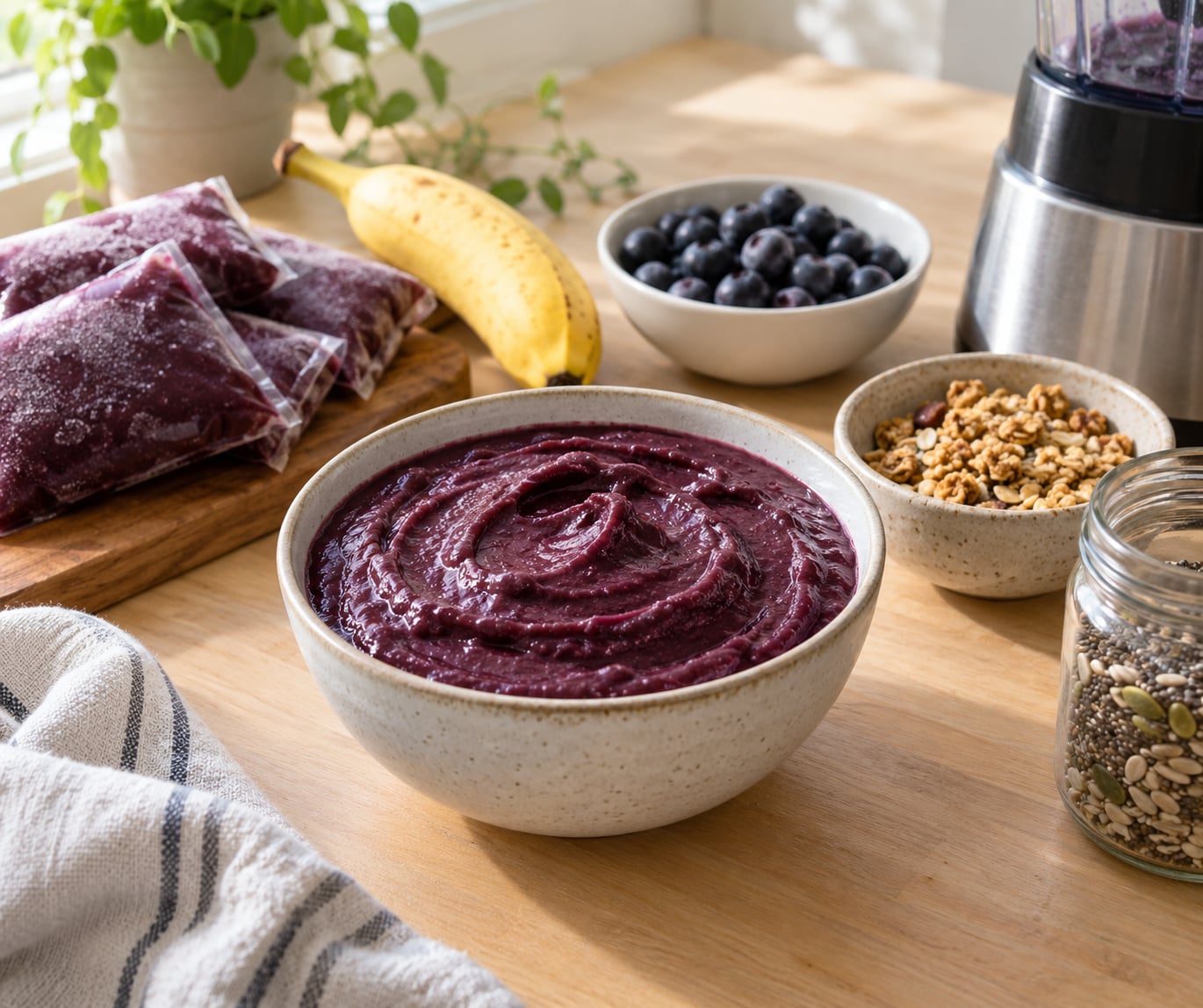
To make a healthy acai bowl at home, blend 100 g of unsweetened frozen acai puree with half a frozen banana and 2 to 3 tablespoons of liquid, then top it with fruit, seeds and measured granola. The whole thing takes about 10 minutes and no cooking at all. The trick is holding the liquid back until the puree has started to break down.
Most cafe bowls are thick, sweet and enormous, which is why they are satisfying and why they also tend to run past 500 calories. Nothing about the fruit needs to change to fix that. Control the liquid, keep the sweetener in the fruit, and add toppings you would actually eat on a plate.
Table of Contents
What You Need for a Healthy Acai Bowl at Home
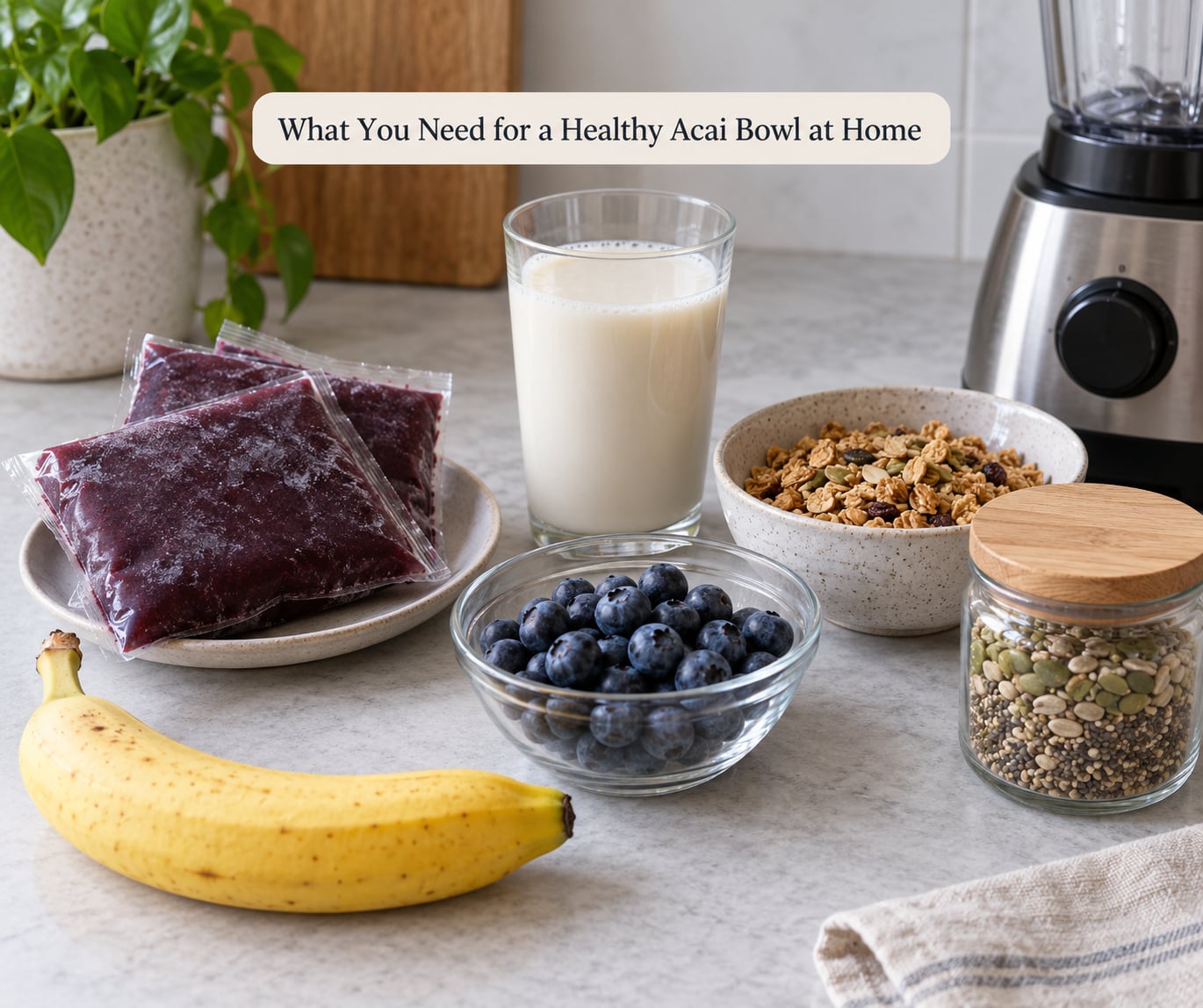
You need very little. Four things build the base, and everything else is optional.
- Frozen acai puree — one 100 g packet, plain and unsweetened. Avoid packets with cane sugar or honey in the ingredient list.
- Frozen fruit — half a banana, or 100 g of frozen mango, berries or pineapple if you are going banana-free.
- Liquid — 2 to 3 tablespoons of coconut water, almond milk or plain coconut milk. Yogurt works too, and thickens as it blends.
- A high-speed blender — the only real tool that matters. A blade-style personal blender struggles with frozen packs.
For toppings, set out whatever you actually like to eat: sliced banana, blueberries, strawberries, granola, hemp seeds, chia seeds, almond butter, coconut flakes or a spoonful of dark chocolate. Keeping them in small dishes at the counter makes the bowl feel like a real meal instead of a scoop of frozen fruit.
Food safety note for the fruit side only: if you cut melons, pineapple or cut mango and set them out, refrigerate anything left over within two hours, or one hour in hot weather.
Step-by-Step
How to Make a Healthy Acai Bowl at Home: Blend the Base
Break up the frozen acai packet by hitting it a few times on the counter, then drop it into the blender with the frozen banana and 2 tablespoons of liquid. Start with the small amount. You can always add more, but you cannot take liquid back out once the bowl is loose.
For the creamiest base, use 3 to 4 tablespoons of plain Greek yogurt in place of the liquid. It adds protein and holds thickness without tasting sweet, as long as you pick the plain one rather than vanilla or fruit-flavoured. For a vegan bowl, thick coconut milk or a blend of coconut water with 1 tablespoon of hemp or chia seeds gives you the same body.
Add Fruit and Blend Until Thick
Frozen fruit is what makes the bowl thick, so keep it frozen until it goes in. Blend the puree and banana first, on low, until the pack has broken up and the mixture stops moving like a solid block.
Now add the rest of your frozen fruit, one piece at a time through the lid. If your blender has no tamper, add fruit in smaller handfuls and pause to shake the jug between pulses, which redistributes what is sitting on top of the blades. Mango and pineapple blend smoothest. Strawberries and blueberries are fine but a little more acidic, so add them later if you want the flavour rounder.
You are ready when a spoon dragged through the mixture leaves a clean trail and the bowl holds its shape for a second before slowly closing. If it levels out like a smoothie, add more frozen fruit. If it stays stiff, let it run another fifteen seconds.
Pour the Acai Bowl
Chill the bowl in the freezer for five minutes while you finish the blend. A cold bowl slows everything down, which buys you the minute you need to arrange the toppings without a puddle forming underneath.
Spoon the mixture in rather than pouring, and level the top with the back of the spoon. Working fast matters more than plating skill here. Acai starts to loosen within a few minutes of leaving the freezer, so eat it right away, the way you would soft serve.
Add Toppings for Balance and Texture
A bowl tastes balanced when it has four things on it: something sweet from fruit, something with protein, something with fat, and something crunchy. One tablespoon of almond butter and a tablespoon of hemp seeds add up quickly, and they are what turn a bowl of frozen fruit into something you can stay full on.
Granola is the usual culprit. A third of a cup of a typical granola is around 200 calories with a fair amount of added sugar, so measure it with a tablespoon rather than pouring. If you want the crunch without the sugar, toast plain rolled oats with coconut flakes and a little cinnamon in a dry pan for a few minutes.
Good combinations, each going a different direction:
- Classic berry — sliced banana, blueberries, a tablespoon of hemp seeds, a small handful of granola.
- Green and creamy — spinach (a handful disappears completely), coconut milk as the liquid, kiwi and chia on top.
- Tropical — frozen mango base, then pineapple, coconut flakes and a spoon of almond butter.
- Chocolate — blend one tablespoon of cocoa powder into the base, finish with banana slices and two squares of dark chocolate.
- Post-workout — Greek yogurt base, protein powder blended in, then banana, peanut butter and oats.
Adjust the Bowl to Your Preferences
Banana is the usual thickener, so swapping it changes both the texture and the sugar. Extra frozen berries or mango give a thinner bowl, which you can thicken with chia or hemp seeds, or with avocado half a fruit if you like the creaminess. Readers without banana or avocado in the kitchen have reported getting on well with extra frozen berries and flaxseed milk.
To go lower in sugar, drop the banana entirely, skip sweetened yogurt and honey drizzle, and lean on berries plus a little cinnamon or vanilla in the blend. Acai itself is tart rather than sweet, so balance it with fat rather than sugar: nut butter, seeds or avocado do the job without adding much.
Portion size matters more than most people expect. A 100 g base with measured toppings usually lands between 300 and 400 calories, which is a normal breakfast. Pile on the granola and it doubles. If you want a lighter bowl, blend half the base and save the rest in the freezer for the next day, as smoothie ideas for kids actually get eaten shows, thin the serving with half the toppings, and add the crunchy elements last.
Common Mistakes
The bowl is runny. Almost always too much liquid. Next time start at one tablespoon, and add the rest only after the puree has softened. Two more pieces of frozen banana will rescue a loose bowl too.
The blender stalls and sounds strained. Stop it. Do not hold the button and hope. Frozen packs need to be redistributed, so scrape the jug down with a silicone spatula, add a little more frozen fruit and pulse again. Forcing a stall is how motors burn out.
No tamper, and the fruit sits on the blades. Most home blenders ship without one. Use small additions, pulse in ten-second bursts, and tilt the jug to let the fruit fall toward the blades. If your machine still cannot cope, a fork is better than nothing.
It tastes too sour. Normal for unsweetened puree, and not a sign it has gone off. Add banana, a few strawberries or a teaspoon of vanilla. Sourness is not spoilage; a bad batch smells off and has a watery, separated texture.
The granola goes soggy. Put crunchy toppings on last, right before you eat, and use a wide shallow bowl rather than a deep one. Extra-large portions of granola are the other half of the problem, so measure them.
You overserved. A 100 g packet plus toppings is a full bowl. Anything larger is a second bowl, not one serving.
Storage. A blended bowl keeps in the fridge for a day or two, though it will soften. For longer, freeze the base in a silicone ice cube tray and blend the cubes with a splash of liquid when you want one, adding fresh toppings after. Always refreeze within two hours.
Frequently Asked Questions
Is frozen acai better than acai powder for a healthy bowl?
For a thick, creamy bowl, frozen puree wins. It has body built in and you only add fruit and a little liquid, so the blend turns spoonable in under two minutes. Acai powder works too: blend it with frozen fruit and a creamy base such as yogurt or coconut milk, since powder on its own has no thickness to give. It is also the cheaper route and easier to find, just less convenient.
What should I add to make an acai bowl less sweet?
Skip the sweetened elements first: honey drizzle, syrup, sweetened yogurt and flavored granola all add sugar on top of fruit that already carries plenty. Use plain frozen acai with berries instead of banana, add a little cinnamon or vanilla for warmth, and finish with fat such as almond butter or seeds, which softens the tartness without sugar. Measured granola, about a tablespoon, keeps the crunch.
Can I make an acai bowl without banana?
Yes. Replace it with an equal weight of frozen mango, pineapple or mixed berries, which will not thicken quite as much, so add 1 tablespoon of chia or hemp seeds to compensate. Some readers avoiding banana and avocado have reported good results with extra berries and flaxseed milk. Expect a lighter, more tart bowl, and a spoon rather than a fork.
How do I get a thick acai bowl instead of a smoothie?
Three things decide it: frozen fruit, minimal liquid, and blending order. Start with 100 g frozen acai puree and 2 tablespoons of liquid only, blend until the pack breaks up, then add frozen fruit in small handfuls. A spoon dragged through the mixture should leave a clean trail. Greek yogurt, nut butter or 1 tablespoon of seeds thicken it further without more liquid.
Is acai healthy if I add granola, fruit, and toppings?
It can be, but the toppings decide it. A third of a cup of granola can run near 200 calories with added sugar, and sweetened yogurt or honey pushes it higher. Build around plain frozen acai, berries, seeds and nut butter, then measure granola with a tablespoon. On that basis a bowl lands around 300 to 400 calories. Acai is a fruit, so it fits into a balanced diet rather than working some special trick.
Can I prepare an acai bowl ahead of time?
You can prep the components, not the finished bowl. Frozen acai packs, cut fruit and measured toppings can sit in the fridge overnight, ready to go. Blended base keeps in the fridge for a day or two, or freezes well in a silicone ice cube tray for a few weeks. Blend the cubes with a splash of liquid and add crunchy toppings last, so nothing goes soft.
Conclusion
Start with the plain version: 100 g of unsweetened frozen acai puree, half a frozen banana, 2 tablespoons of coconut water, blended thick and eaten straight from a chilled bowl. Once that tastes right to you, add toppings one at a time rather than all at once, so you can tell which ones are earning their place. If you are managing blood sugar or your weight, or you have a medical condition, a registered dietitian can help you fit bowls into your plan properly.