
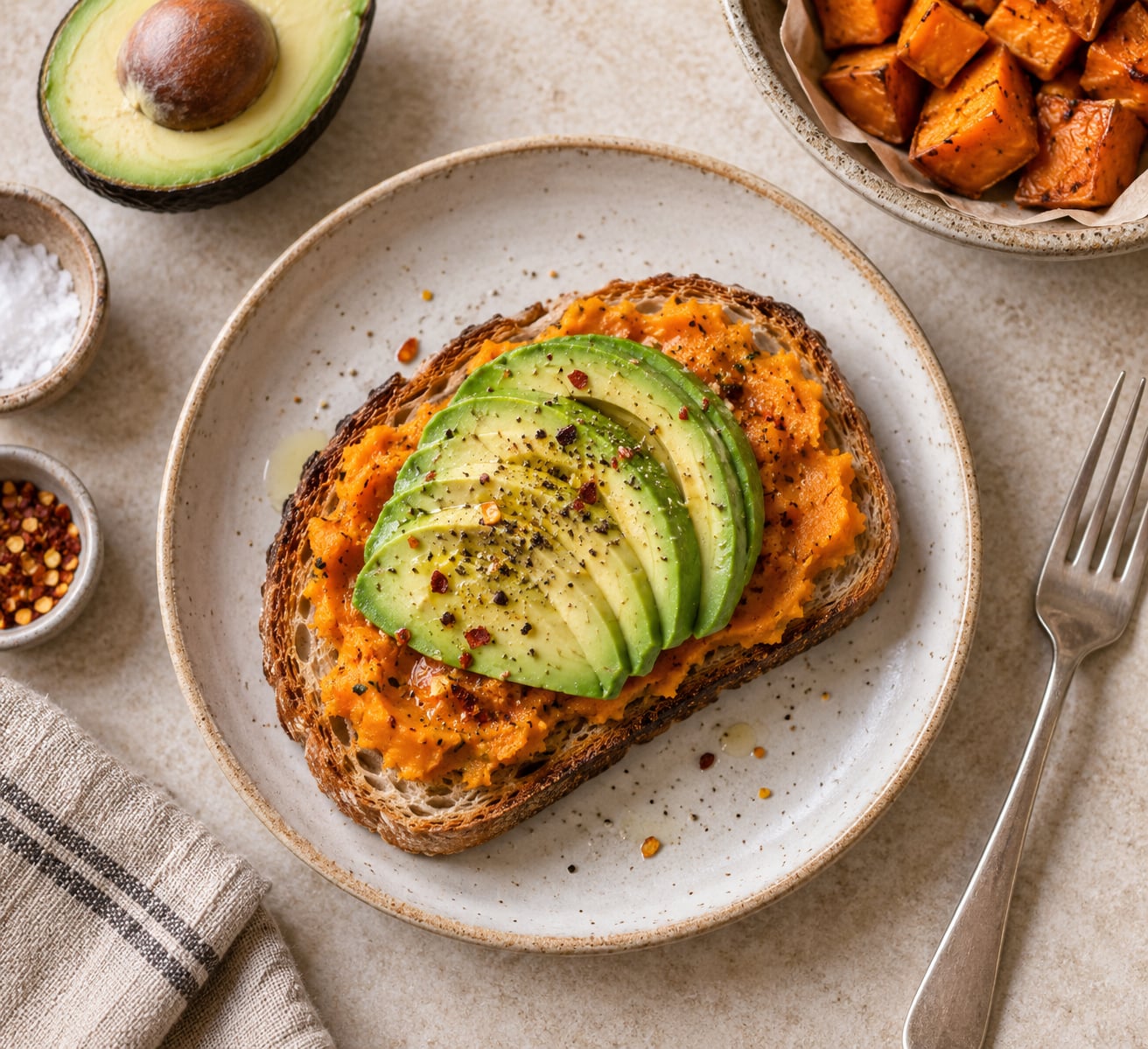
Sweet potato toast is a slice of roasted or baked sweet potato used as the bread under your toppings, so learning how to make sweet potato toast is mostly about getting that base tender inside and browned outside. The whole thing takes about 30 minutes in a hot oven, and the only real skill involved is slicing a sweet potato without losing a fingertip to the mandoline. Once you have a sturdy slice, it works with almost anything you would put on sourdough.
I make this on weekend mornings when I have a sweet potato sitting around, and it turned into one of those reliable meals. The honest part first: sweet potato will never crunch like wheat bread. It browns and softens, and the fix is managing moisture rather than fighting it. That is most of what this guide is about.
Table of Contents
- What You Need
- Step-by-Step: How to Make Sweet Potato Toast
- Common Mistakes and Easy Fixes
- Frequently Asked Questions
- Can I use canned sweet potatoes for sweet potato toast?
- How do I keep sweet potato toast from getting soggy?
- What can I put on sweet potato toast besides avocado?
- How do I make sweet potato toast filling enough for breakfast?
- Can I prepare sweet potato toast ahead of time?
- Is sweet potato toast better with bread or a large tortilla?
- Get to It: Your Sweet Potato Toast Starting Point
What You Need
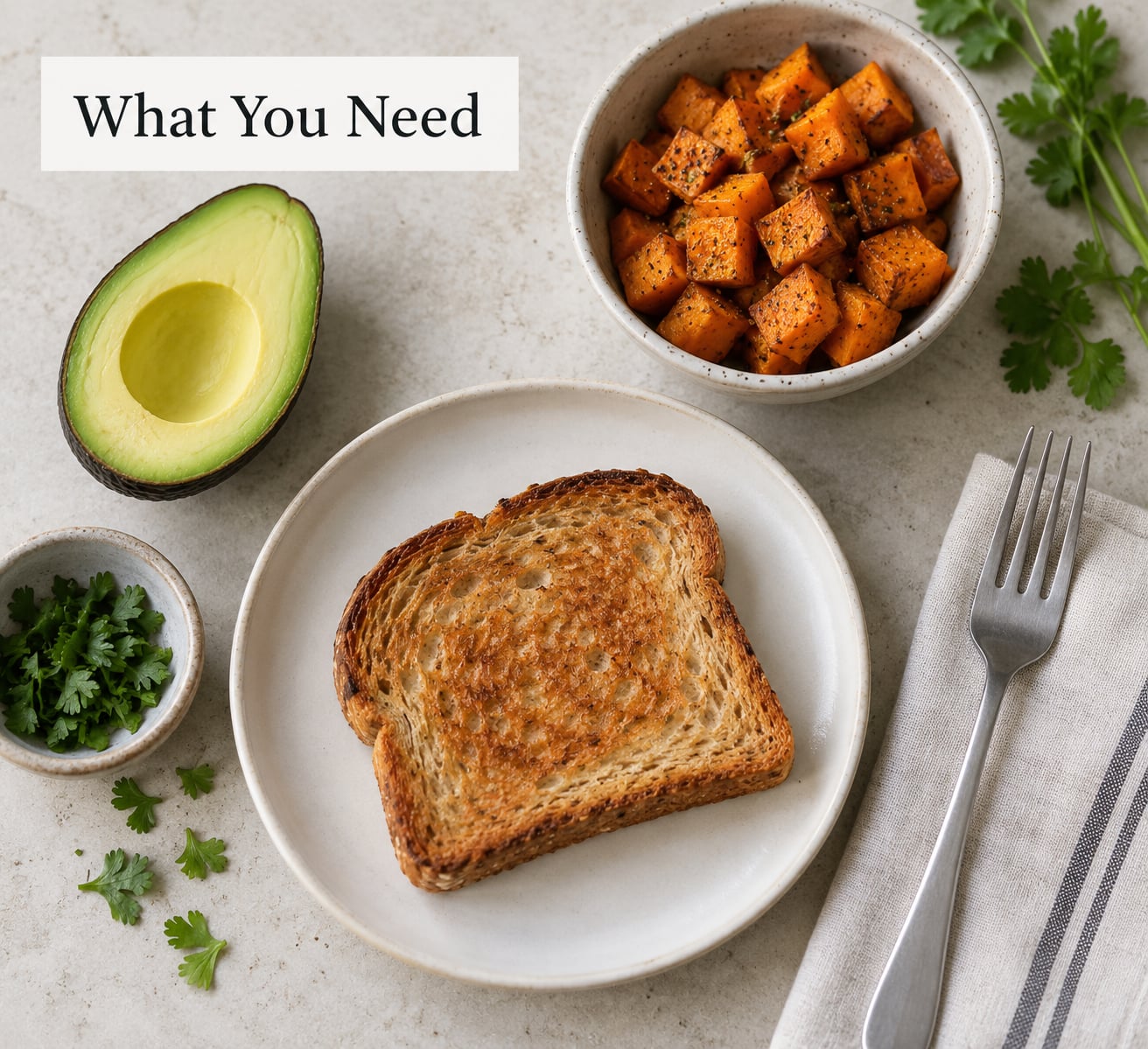
You need very little, and most of it is optional.
- One large sweet potato (roughly the size of a closed fist). Choose a moist orange-fleshed variety rather than a pale, starchy one. Skip anything with soft spots.
- One slice of sturdy bread such as sourdough, rye, or a thick whole-grain cut. Toast it, do not just use it raw.
- One tablespoon of oil, plus salt and black pepper. Some people skip the oil entirely and are happy with the result.
- A topping: mashed sweet potato, avocado, yogurt, eggs, nut butter, or whatever you like.
- Optional tools: a mandoline slicer for even planks, parchment paper, and a cooling rack for crisping.
A word on yams, because it comes up constantly. What is labeled a yam in most US grocery stores is a sweet potato, and it works fine. True yams are a different, starchier root that is not usually sold in produce here. Buy what is cheap, skip anything with wrinkled or moldy skin, and move on.
Step-by-Step: How to Make Sweet Potato Toast
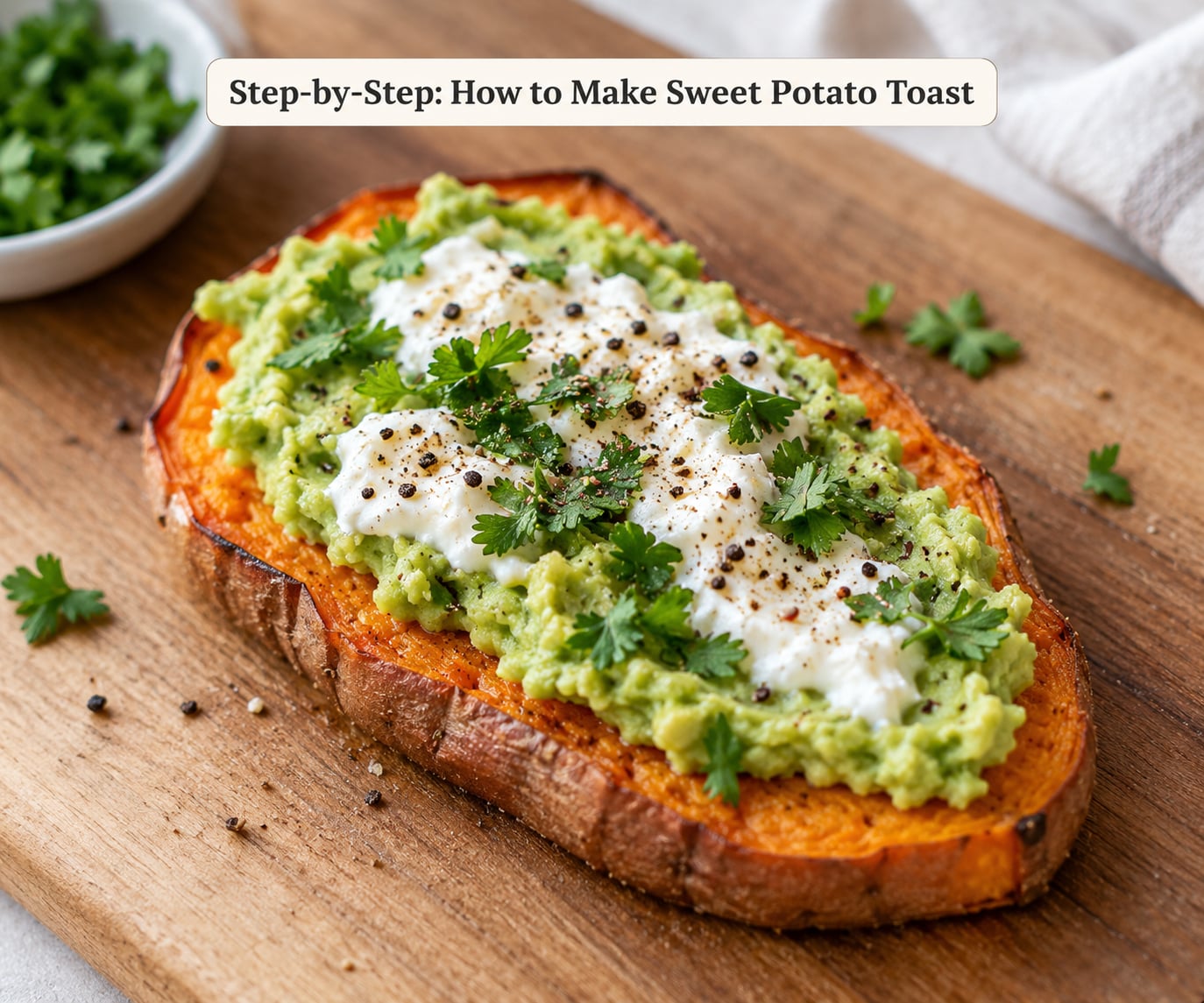
Step 1: Prepare the Sweet Potato
Wash the sweet potato and peel it if you want a smoother, softer texture. Leaving the skin on works too, and it holds the plank together better under a heavy topping.
Cut it into planks about a quarter to a half inch thick, running the cut the length of the potato. Lengthwise slices are wider and more toast-like, and they are much easier to eat. If your potato is skinny, cut it crosswise into rounds instead.
A mandoline gives you even slices in seconds, which matters because uneven thickness is the number one reason batches cook unevenly. If you use one, set it to the thickest setting first, clamp the potato properly, and keep your fingers well back from the blade. The lower blade travels closer to the food, so keep the guard down.
Now cook the slices. Oven: heat to 400°F (200°C), spread the planks on a parchment-lined baking sheet, and roast for 25 to 30 minutes, flipping once at the halfway mark. Air fryer at 380 to 400°F: 10 to 16 minutes, flipping at the 8-minute mark. Microwave on a plate for 3 to 4 minutes works in a pinch, but the slices will be soft rather than browned. They are done when a fork slides in without resistance and the edges look dry.
If you are going the mash-onto-toast route rather than using the slices as the bread, dice a whole sweet potato with the skin on, roast the cubes at 400°F for 25 to 30 minutes until fork-tender, and mash them in Step 3. Roast them rather than boiling them. Boiled mash is watery, and watery mash is exactly the problem that turns toast to mush.
Step 2: Toast the Bread
Toast your bread properly. A pale slice will buckle under a wet topping no matter how well you did the sweet potato. You want it deep golden and audible when you tap it, which usually means a second cycle or a couple extra minutes in the toaster oven.
Rye and whole-grain sourdough hold up best. A soft white sandwich bread falls apart the moment something wet touches it. If you are skipping bread entirely, a large tortilla or a corn tortilla cut in half gives you the same job, and it is a good option for gluten-free cooking.
Step 3: Mash and Season the Sweet Potato
Mash the roasted cubes with a fork or a masher, keeping some texture. A smooth puree is harder to hold on a slice of toast than a roughly mashed one.
Loosen it with a splash of milk, water, or olive oil, and add salt, black pepper, and a small amount of butter or ghee. The seasoning is not optional, because a sweet potato carries less flavor than it does sweetness, and a lightly sweet base on a piece of toast tends to read as flat. Cinnamon, smoked paprika, or a spoonful of tahini all work, depending on where you are heading.
Add the liquid a teaspoon at a time. This is where most people go wrong, and the symptom shows up two minutes later as a puddle at the bottom of the toast.
Step 4: Assemble the Toast
Spread a thin layer of butter, oil, or mashed sweet potato on the hot toast first, which gives you an adhesive surface for whatever comes next. Then spoon the mash over and press it down gently with the back of the spoon so it settles into the bread instead of sliding off.
Aim for about a third of a cup of mash per slice for breakfast. That reads as generous without turning the toast into a pile that will not hold together when you pick it up. For a light lunch, half that amount works. For two servings of the mash itself, roast two medium sweet potatoes rather than doubling one large one on the same sheet, or the second batch steams instead of roasts.
Step 5: Finish and Serve
Add your toppings in order of moisture. Creamy things go on first, then crunchy things last, so the crunch survives. Salt and pepper finish the plate, and a few fresh herbs or a squeeze of lemon wake the whole thing up.
Serve it right away while the contrast between the crisp toast and the warm mash is still there. If you are doing brunch, a fried or poached egg on top turns this into a full meal, which is what I do most mornings when I want it to hold me past 10 am.
For a gluten-free or vegan version, the only change is the base and the spread: use a corn tortilla, and skip the butter for olive oil or a dairy-free spread. For a low-carb swap, use a single roasted plank as the bread with the mash spooned lightly on top. Each slice of roasted sweet potato carries roughly 25 to 30 calories and about 2 grams of fiber, depending on size, which puts it in the same neighborhood as a slice of wheat bread on calories while adding fiber and beta-carotene.
Common Mistakes and Easy Fixes
The toast goes soggy. The sweet potato is too wet and the toast was not crisp enough. Drain the mash well, season it earlier than feels natural so salt pulls out moisture, and toast the bread a second cycle. Serving on a plate rather than a cutting board helps too, because steam softens the underside.
Edges burn while the centers stay soft. Your oven runs hot or the pan is overcrowded. Move the rack one notch lower, give each slice space, and pull them at 25 minutes rather than 30. Convection roasts faster, so drop the temperature by 25°F if you are using it.
Flavor tastes flat or overly sweet. Add salt, then acid. A squeeze of lemon, a splash of vinegar, or a spoon of tangy yogurt fixes a dull plate faster than more salt does.
The slice falls apart when you pick it up. Either the plank is too thin or the topping is too wet and too heavy. Cut a quarter inch thicker, use a denser bread, and add wet toppings in a thinner layer.
Slices cook unevenly. The cut is inconsistent. Compare two pieces end to end before they go in the oven, and re-cut the thin one down. A mandoline is the fastest fix, and using it with the guard engaged keeps it safe.
You made a big batch and want it tomorrow. Cool the slices completely, layer them in an airtight container with parchment between each layer, and refrigerate for up to four days. Reheat in a hot oven or air fryer rather than the microwave, which only makes them softer. Freezing works, but thawed slices are noticeably less crisp.
Frequently Asked Questions
Can I use canned sweet potatoes for sweet potato toast?
Yes, and it is the fastest route. Drain the slices well and pat them dry with paper towels, then roast or air-fry them until the edges brown, roughly 20 minutes at 400 degrees F. Canned sweet potato carries more water than fresh, so seasoning and a hot oven matter more than usual. Mashing it works too, just cook off extra moisture on the sheet first.
How do I keep sweet potato toast from getting soggy?
Toast the bread darker than feels right, mash the sweet potato ahead of time and drain it well, and put the mash on only once everything else is ready. Salt the mash a few minutes before serving, since salt draws out water. A thin swipe of butter or oil on the toast gives the mash something to grip instead of sliding straight off.
What can I put on sweet potato toast besides avocado?
A lot, honestly. Savory options include scrambled or fried eggs, cottage cheese, feta with arugula and balsamic, smoked salmon, black beans with salsa, and shredded cheddar. Sweet options include peanut or almond butter with banana and cinnamon, Greek yogurt with berries and hemp seeds, cottage cheese with pear, and nut butter with a drizzle of honey. Any of them pairs well with a hot drink.
How do I make sweet potato toast filling enough for breakfast?
Add protein and fat rather than more carbohydrate. A poached or fried egg, cottage cheese, Greek yogurt, or nut butter turns it into a real meal, and a tablespoon of olive oil or tahini in the mash adds staying power. Going with about a third of a cup of mash per slice helps too, since the bread underneath is small.
Can I prepare sweet potato toast ahead of time?
Yes, and the components separate well. Roast the planks and mash the sweet potato a few days ahead, refrigerate both in airtight containers, and keep the bread un-toasted. Assemble and toast at serving time so nothing goes soft. Fully assembled toasts do not travel well, but a batch of components will carry you through several easy mornings.
Is sweet potato toast better with bread or a large tortilla?
Bread wins on flavor and crunch, and it is the better answer for a weekend breakfast. A large tortilla works well when you want the dish gluten-free or need to cut calories, and it holds up fine once toasted until crisp. Small corn tortillas fall apart quickly under a moist topping, so toast them twice if you go that route.
Get to It: Your Sweet Potato Toast Starting Point
Start with one sweet potato and one slice of dark sourdough. Roast the planks at 400°F for 25 to 30 minutes, mash them with a splash of oil and a decent pinch of salt, then toast the bread darker than you usually would. Eat it with an egg or peanut butter and berries, and you have a breakfast that took half an hour of mostly oven time.